Firefighters Everywhere

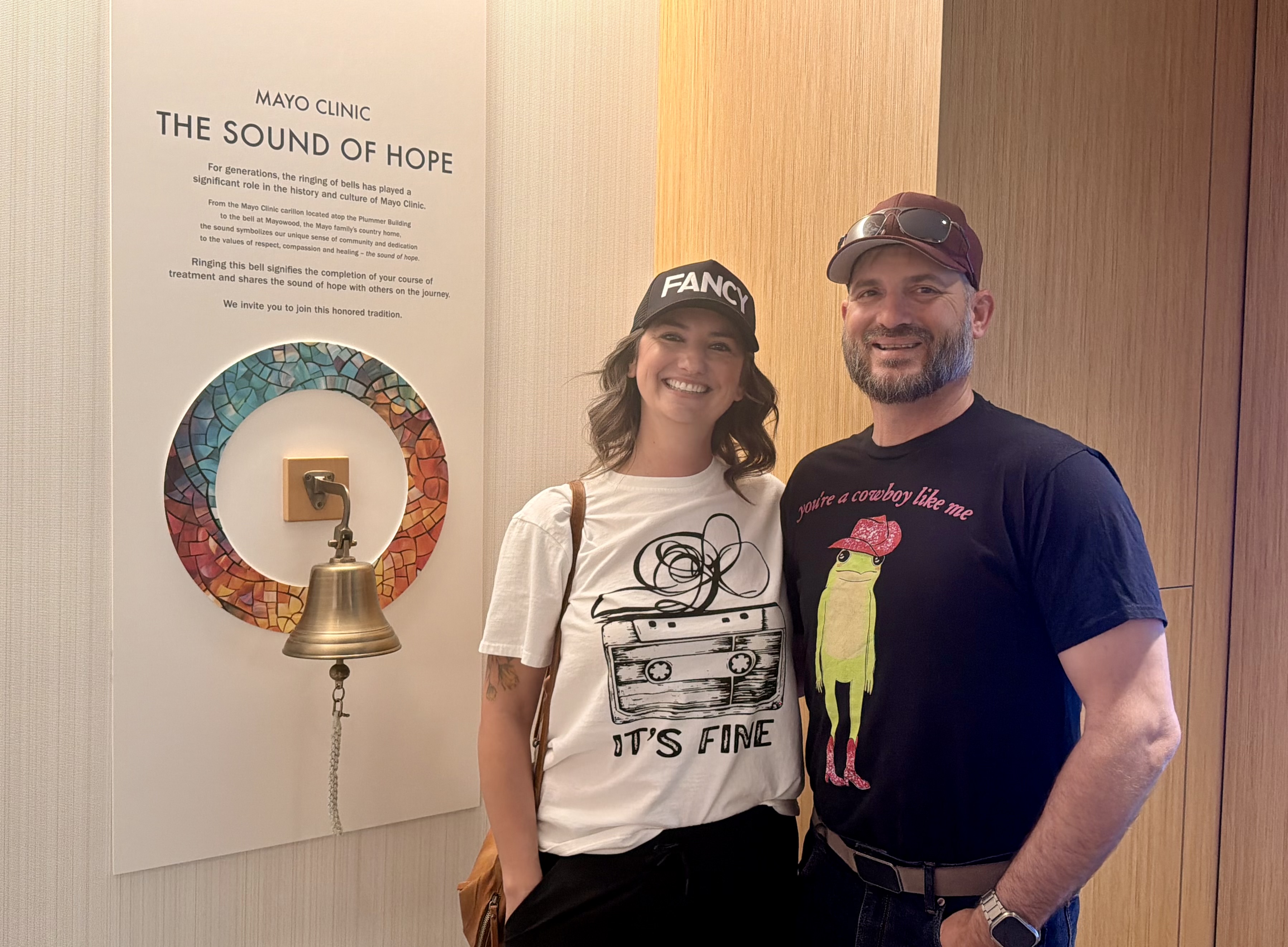
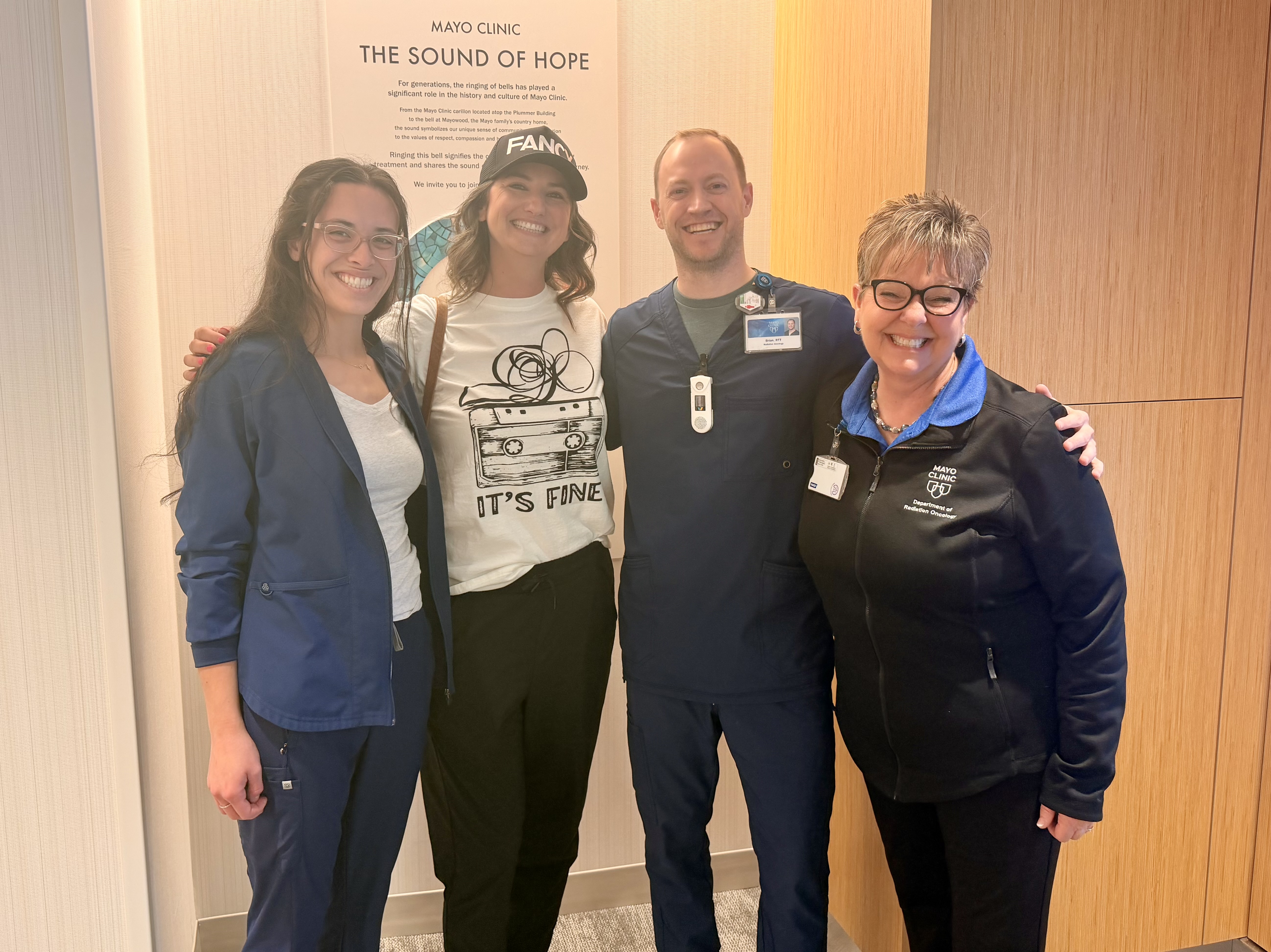
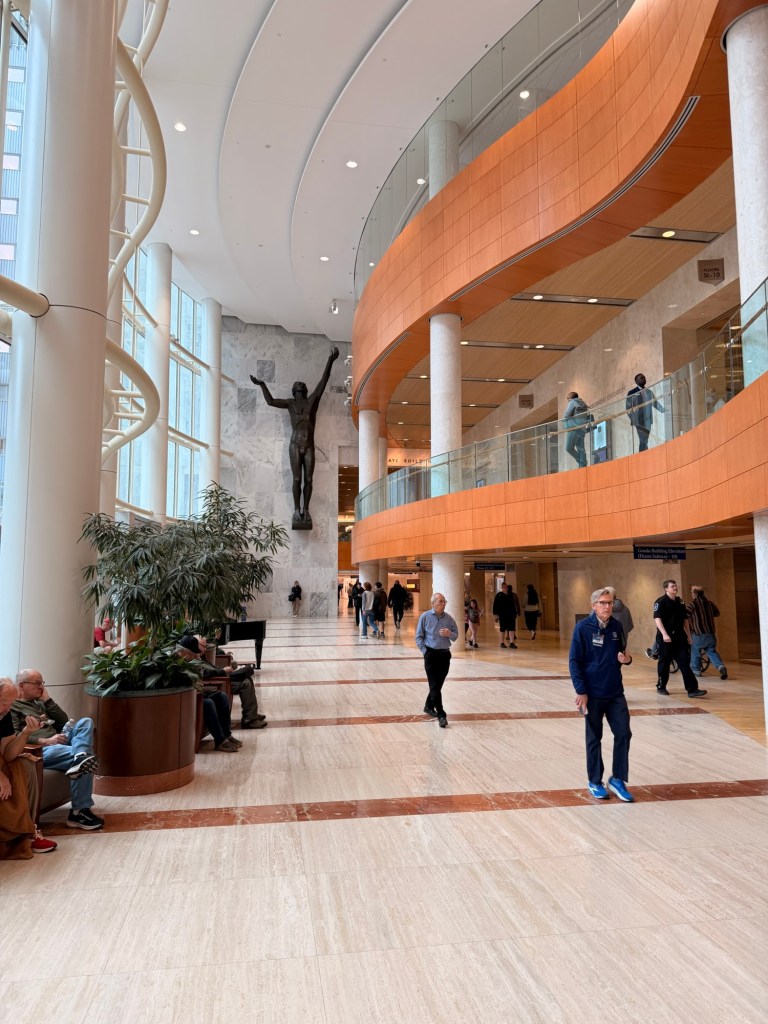
I stood in line with my husband at the pharmacy in the Subway level of Mayo Clinic. It was Tuesday, which means we survived a week of worry and wondering if our insurance was going to cooperate so that I could continue the doctor’s recommended path for proton radiation to treat the cancer that has grown back outside of my esophagus. I could spend some time here describing how derailing and mentally defeating it was to get news that puts you completely out of control of your healthcare plan even though you’ve done all the right things to be prepared by way of paying plenty of our paycheck for insurance, but I don’t want to dwell and you can about imagine. It was awful and frustrating and distracting. But when I got the call on Thursday that the third appeal was the charm, I couldn’t help but laugh at the fact that my definition of a reason to celebrate has come down to getting the radiation treatment I wanted. It’s like I won the lottery. Everyone in the room with me at work had to be interrupted to hear the news, and they all cheered too. 

Life is weird. 

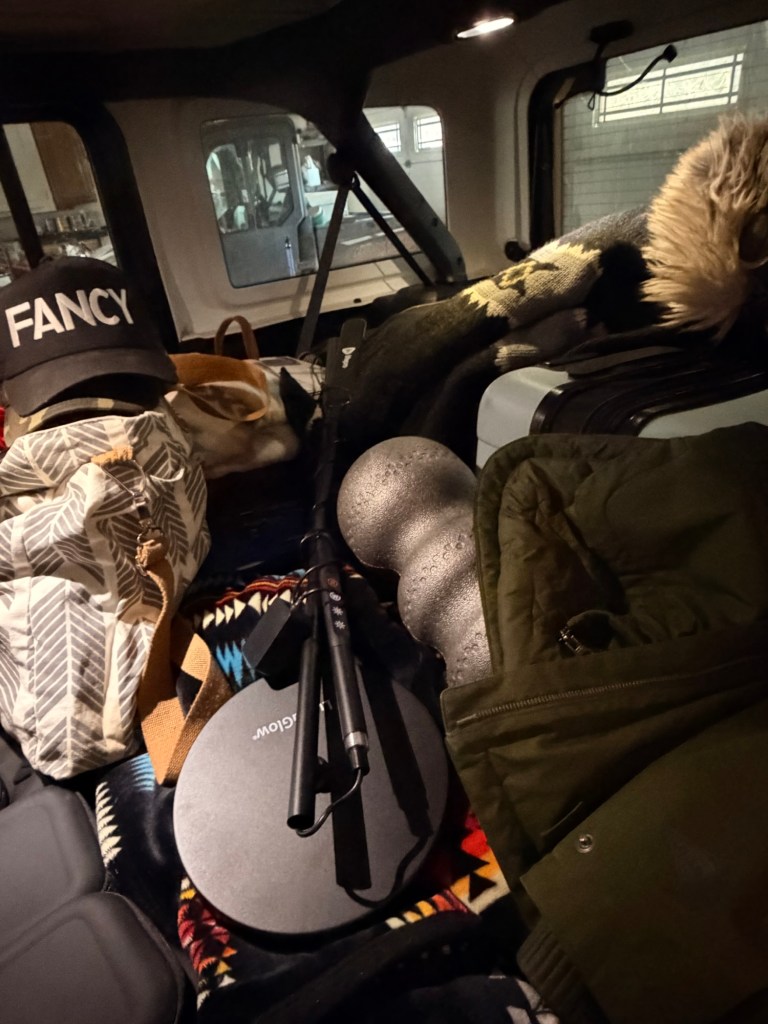
All the things I think I’ll need

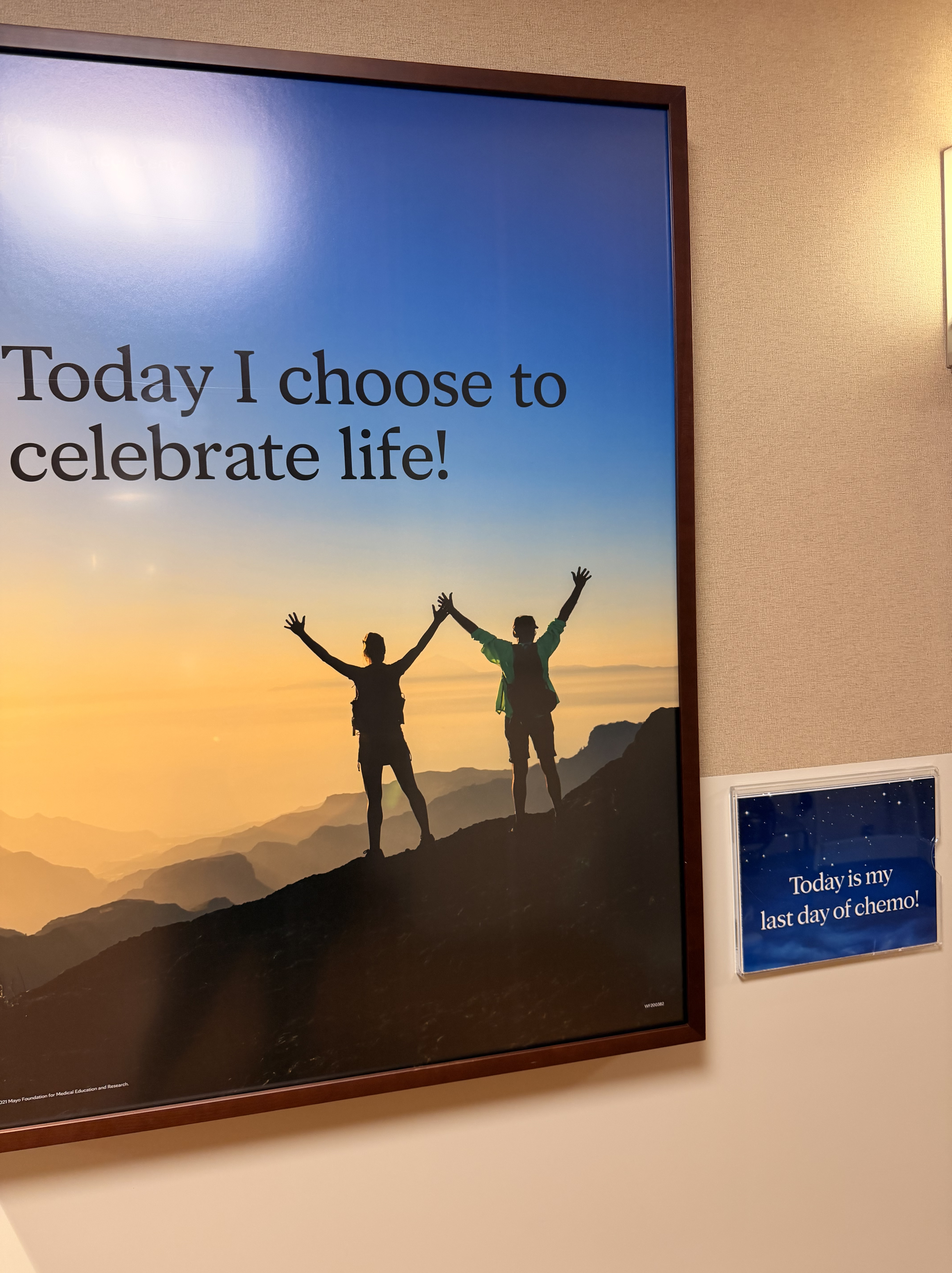
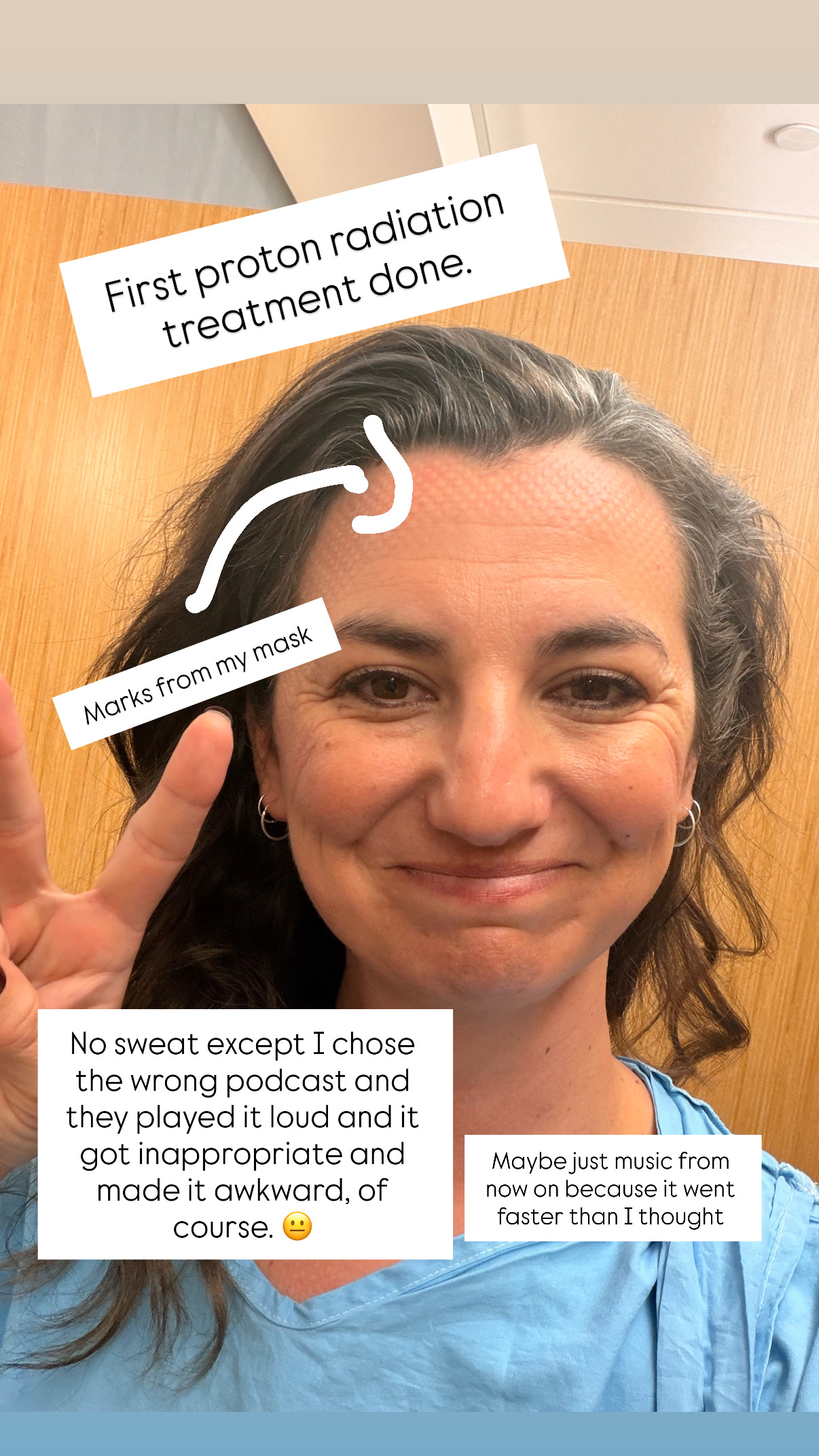
And so anyway, there I was in line at the pharmacy after we packed up that Jeep again, made the mental preparations and care preparations for our daughters, again, and drove the eleven hours to Rochester to start the process. The first dose of radiation went easier than I thought, despite the fact I made it awkward by having them play a podcast over the system that turned inappropriate for mixed company. But the radiation team didn’t seem phased at all by the detailed conversation about prostate checks coming through the loudspeakers, and in hindsight I was so focused on my poor entertainment choice and my sweaty armpits that maybe it was a good distraction. And so, we moved on to the next day’s appointments of blood draws and MRIs and a long conversation about chemo treatment that I wasn’t prepared for. By the time I was in line to pick up a second round of medication that included three different prescriptions for anti-nausea medication before my first round of weekly chemo started, I was beginning to feel a bit sorry for myself.

But among the many life lessons and gifts that time spent at the Mayo Clinic gives you, maybe the most important one is to put your circumstances in context—or to put you in your place, so to speak. Which is exactly what happened when a mom pulled in line behind us pushing her seven-year-old son in a wheelchair with a little chicken fuzz of blond, balding hair coming out of his beanie, holding a stuffed cat, wearing a mask. My throat tightened for him instead of me as I walked up to the counter to get my lesson in nausea care, which I’m glad to report, I haven’t needed to be implemented thus far. 
So that’s where we are on the details of it all. I wanted to catch you up, so many of you have expressed so much kindness and concern. But this brings me to the sentiment I really wanted to share, and I’m not sure if I’m going to articulate it the way it deserves to be articulated, but I’ll try. 

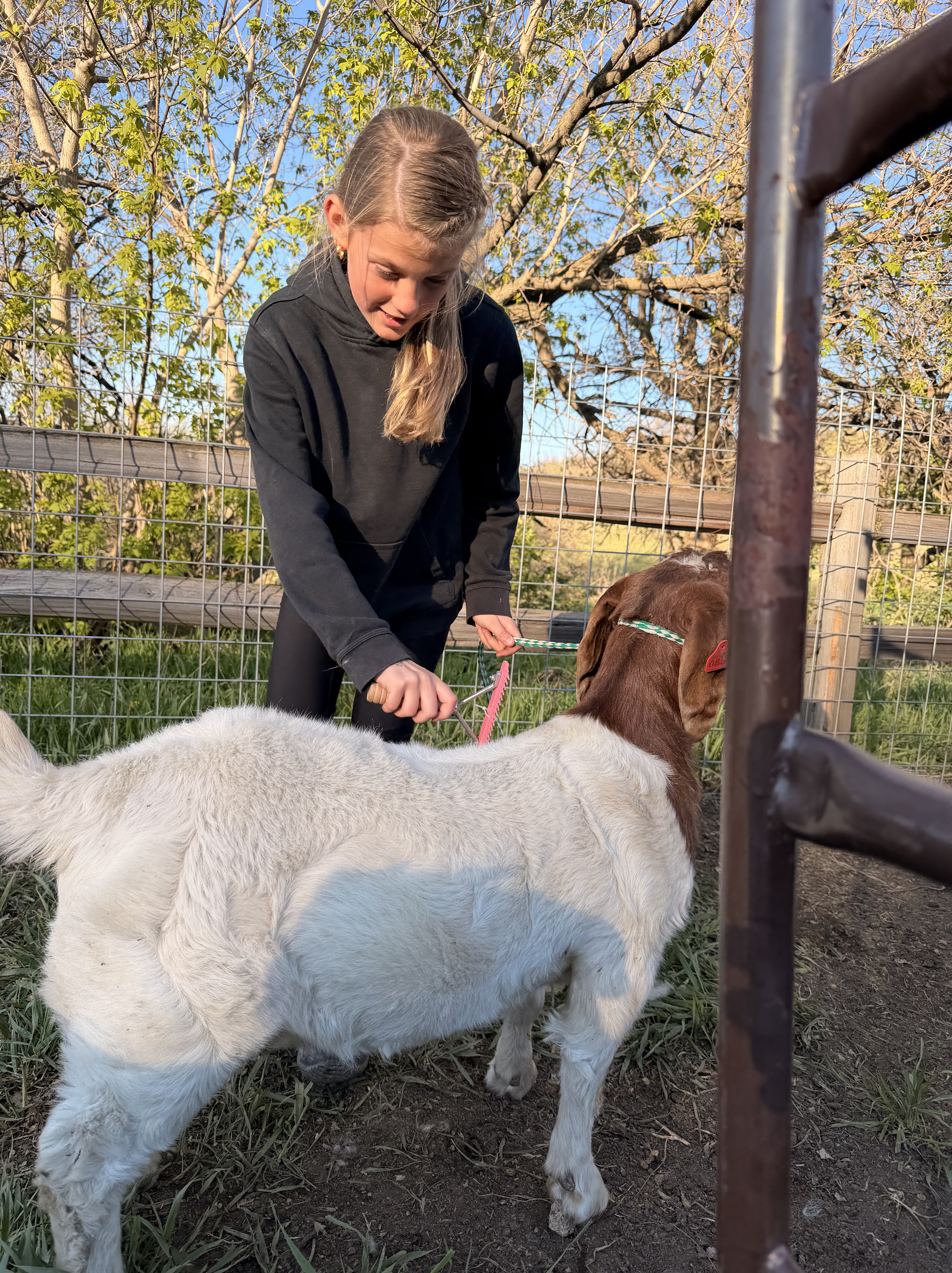
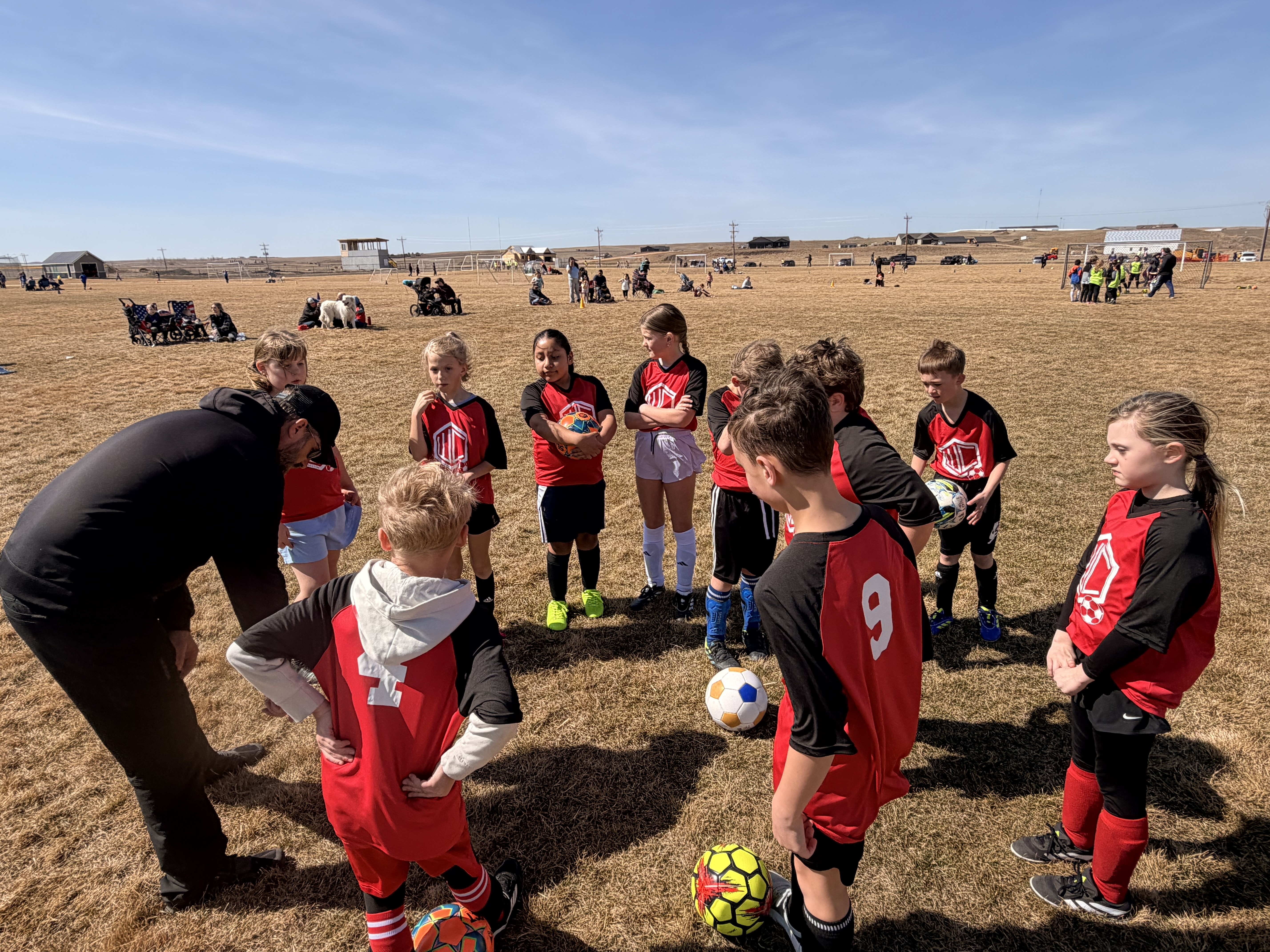
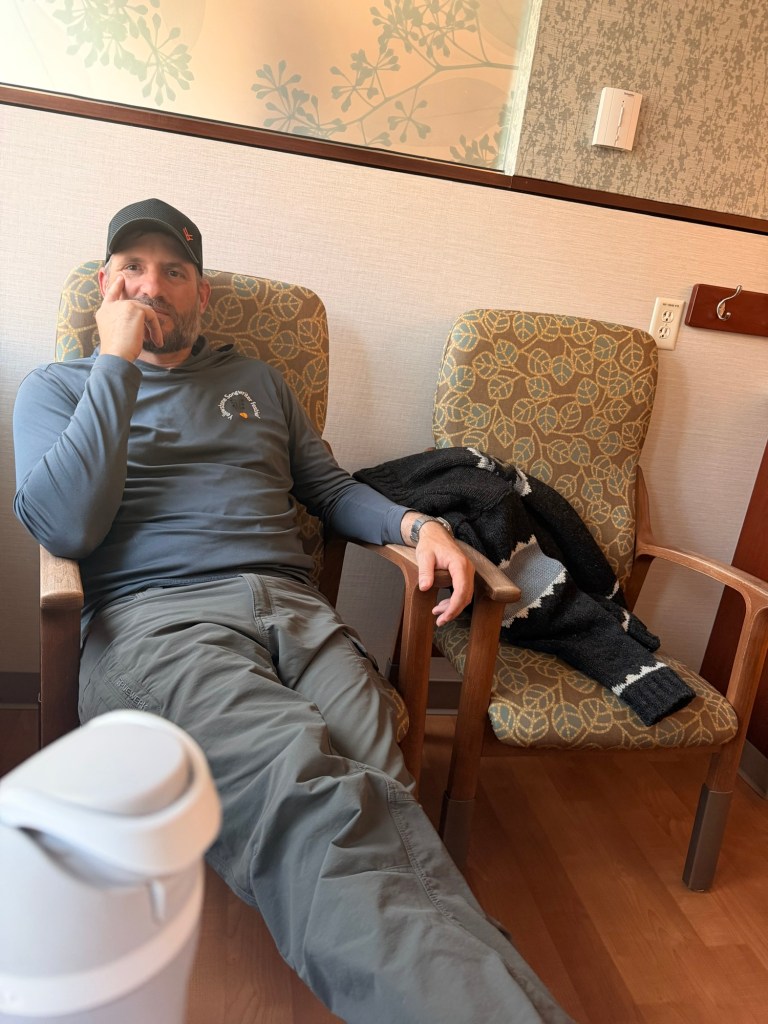
My husband drove me eleven hours to Rochester and back, and Rochester again. He made arrangements for his business and to be home for the kids when I’m gone and kept his duties as soccer coach and goat wrangler so the girls don’t have to miss out on a thing. He sat with me in every waiting room so far, which in just these last two days totaled nearly twenty hours. He makes sure we have a plan for our meals and navigates construction and parking garages and helps me stay out of my head by annoying me just the right amount on purpose. And he has never complained once, only that he wishes it was happening to him instead (And also at our GPS).  But all around us in one of the best clinics in the country, thousands and thousands of people are caring for the ones they love in similar ways, day in and day out. They push a wheelchair, they hold a hand, they write down questions and listen for the answers, they read the maps and park the cars and ask for a blanket and push the call buttons and worry but try not to show it. They buy the lunch and deliver the lunch and don’t get frustrated if only a few bites are taken. They tell jokes and read things out loud that they find funny. They say, “It’s ok. You’re going to be ok,” and “What can I do for you?” and “I’ll get this.”   I’ve heard kind and soothing words spoken in every corner of this facility, except for that one lady in the surgery waiting room who told her husband to shut up, but that was fair. He was talking on speaker phone and everyone agreed, quietly chuckling to themselves in total understanding. 
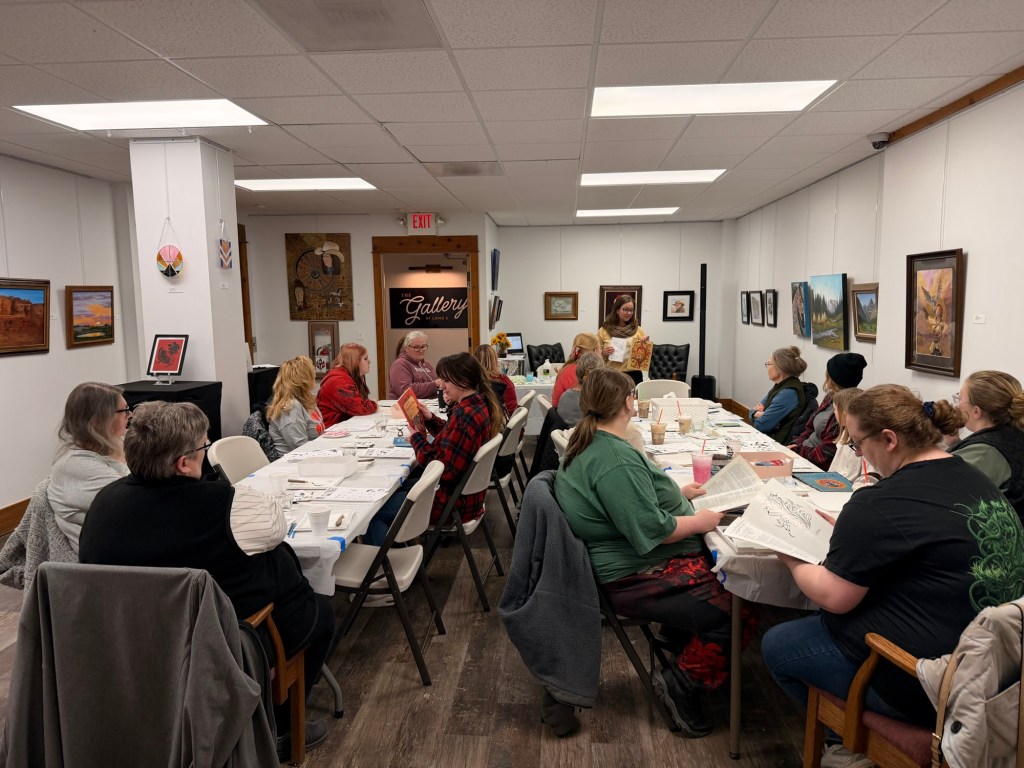
We’re all so vulnerable here, in varying states of worry, panic, grief and relief. To be surrounded by it every day is a lesson in humanity and humility, and I want to declare that I notice it. Your world is on fire the same as the hundreds of other fires sitting with you in the waiting room, passing you by in the halls, pushing the elevator button…standing in line for medication with their baby.

I dropped my husband off at the airport this morning. He’s flying home to drive the girls back to me for Easter, so for a couple days I’ll be alone in a house that a generous couple offered me as a place to stay during my treatment. There are fire-fighters everywhere. 

Thank you for reading and tending to this flame. If you need me, I’ll be here setting up a more appropriate listening choice for my treatment tonight.

The Swimming Part

Before I share last week’s column, I want to say I wrote this a week ago after a great vacation in Florida with the looming plan that I was leaving for Mayo Clinic immediately after we returned for six weeks of proton radiation treatment and once a week chemo to treat a reoccurring cancer in two places that has grown outside my esophagus. And so we prepared the girls and ourselves mentally, had all the arrangements made for their care while Chad drove me and got me settled in, packed all the things I thought I would need for that length of stay in a house that has been a blessing offered up to us from a very thoughtful and generous couple, and we hit the road. But as soon as we got to the highway, not even ten miles out, I got the call that our insurance did not want to cover the cost of my proton radiation, and after an appeal, that decision stood firm. And with that, they said they were going to try for one more appeal, because my doctors believed firmly that proton radiation (which is a newer form of radiation treatment that can pinpoint the cancer that needs to be radiated within millimeters, creating less damage to surrounding organs, which reduces the risks of creating subsequent cancers down the road) was the best course of action for me given my history and age.

Insurance disagreed, reinforcing what I think we can all agree can be a pretty brutal system we have here. Cue the angry and frustrated and worried week that followed as I unloaded my things, went back to work and prayed they changed their minds.

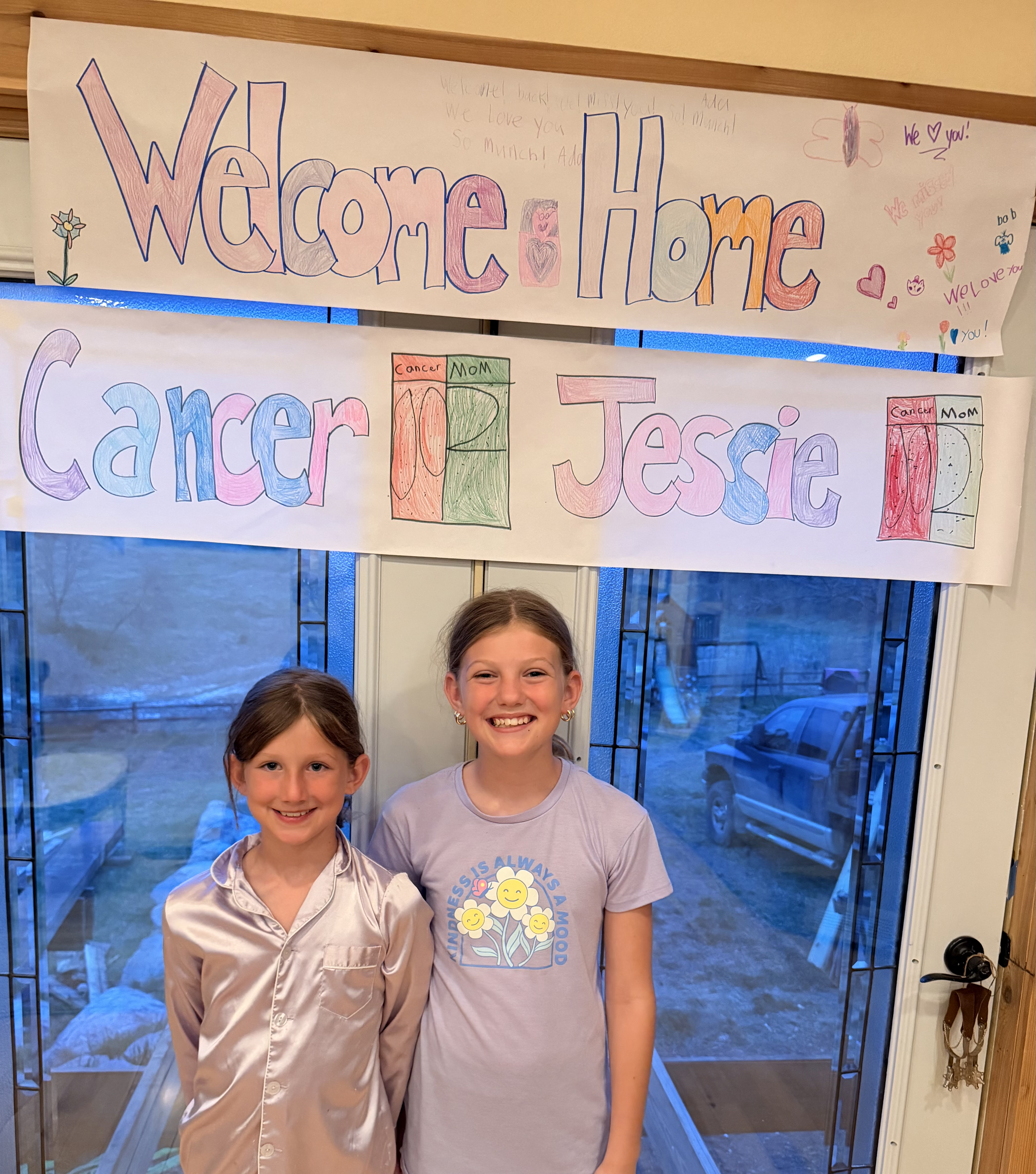
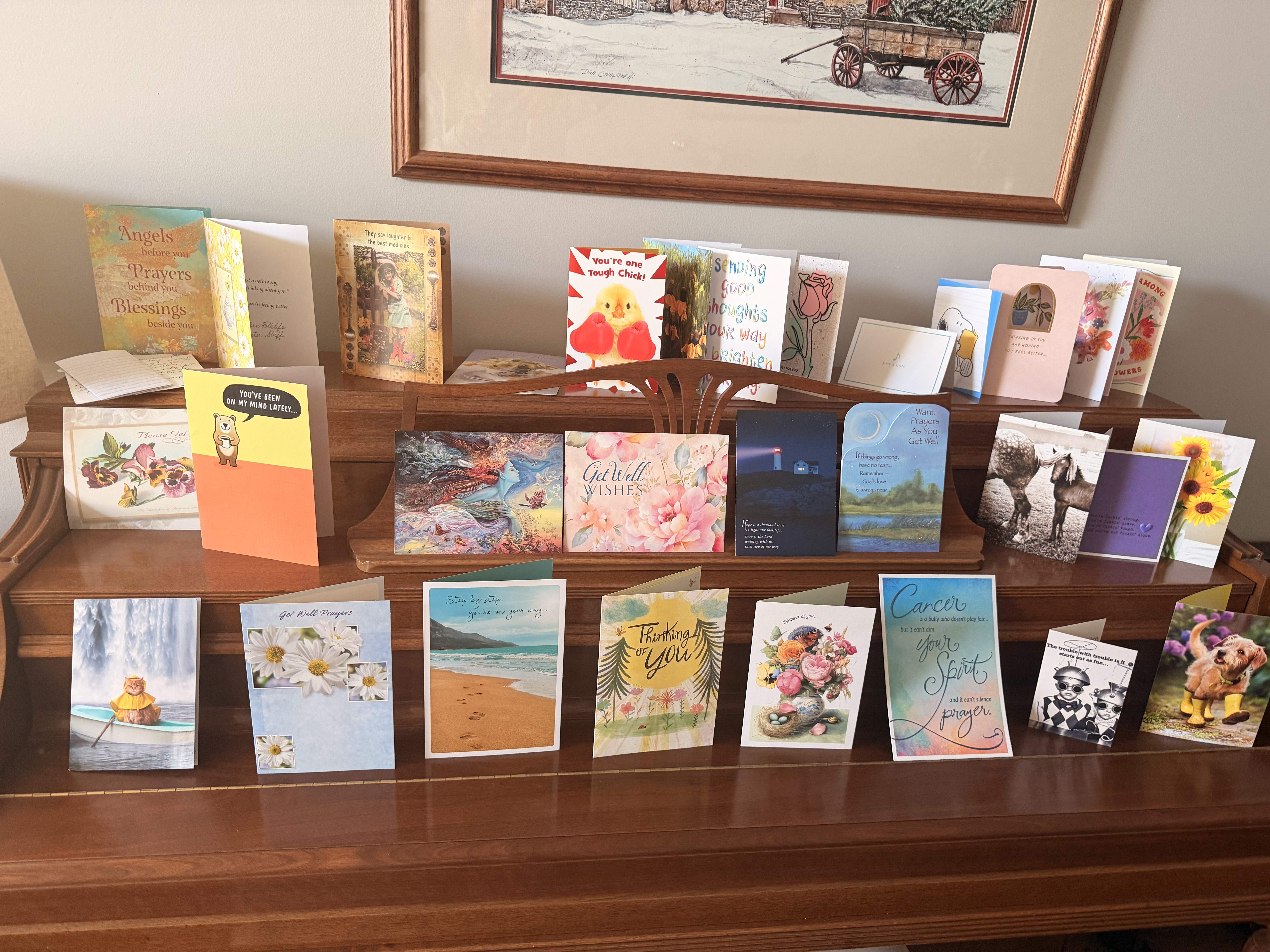
Which I’m happy to report they did, thanks to the relentlessness of my advocates at Mayo Clinic. So here I am now, settled into the house with two long days of tests and treatments under my belt. Two rounds of radiation went well and my first round of chemo was very well tolerated with no negative reactions. I just dropped Chad off at the airport so he can get back home and he will bring the girls to spend Easter with me here, and so there is something to look forward to and I’m not letting myself feel lonesome yet. All of the calls, texts, gifts and well wishes have been so heartwarming and helpful and I thank you all from the bottom of my heart. And thanks mom and dad for letting me use your Jeep so I don’t have to drive the giant mom-mobile into these parking garages and also I look way cooler in it, which is important.

Ok, so now you’re all caught up, which I think was necessary given the space I was in when I wrote last week’s column. Love you, I’m gonna be alright.

The Swimming Part

Several years ago, my in-laws took the family to Florida to experience a Disney vacation. This was a time in our lives when Chad and I were not parents yet, but we took our roles as aunt and uncle to our young nieces and nephew very seriously. On this trip that meant that we moved ahead of the group, made plans and schedules for the next rides, secured fast passes and kept everyone as hyped as seven and nine-year-olds and their haggered parents could possibly be after the initial wow factor wears off and everyone’s hot, hungry and overwhelmed in a sea of people. Despite the unseasonably cold Florida weather and a theme-park sold out of sweatshirts and getting stuck in a tiny boat in the broke-down “It’s a Small World” ride for longer than any human being should have to listen to that song on repeat in German, and the look of terror in my nephew’s eyes while he screamed “Get me outta here!” on the jungle safari cruise when the fake hippo came launching out of the water looking too real –oh, and the one incident I’ll never live down where I used my five-year-old niece as a shield to Shamo’s wave in front of all of my in-laws and Jesus—the family trip lives in my memory as one of my favorites

You know what the kids remember all these years later now that they are teenagers and grown adults with jobs? Swimming in the backyard pool at the Airbnb in sixty-degree weather. Which is typical, and also a bit of a relief knowing that Shamo, the hippo and the animatronic dancing people didn’t scar anyone for life.

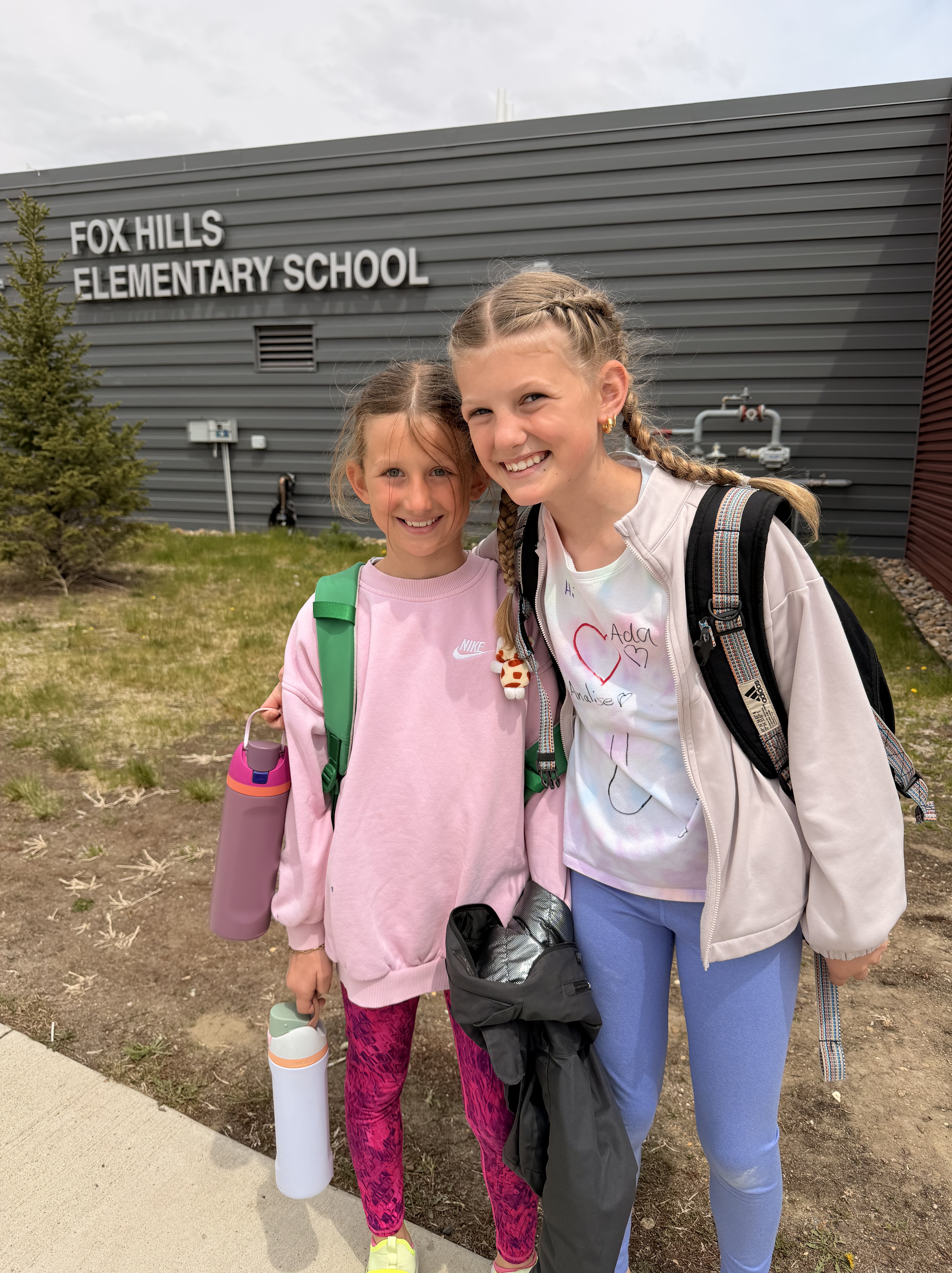
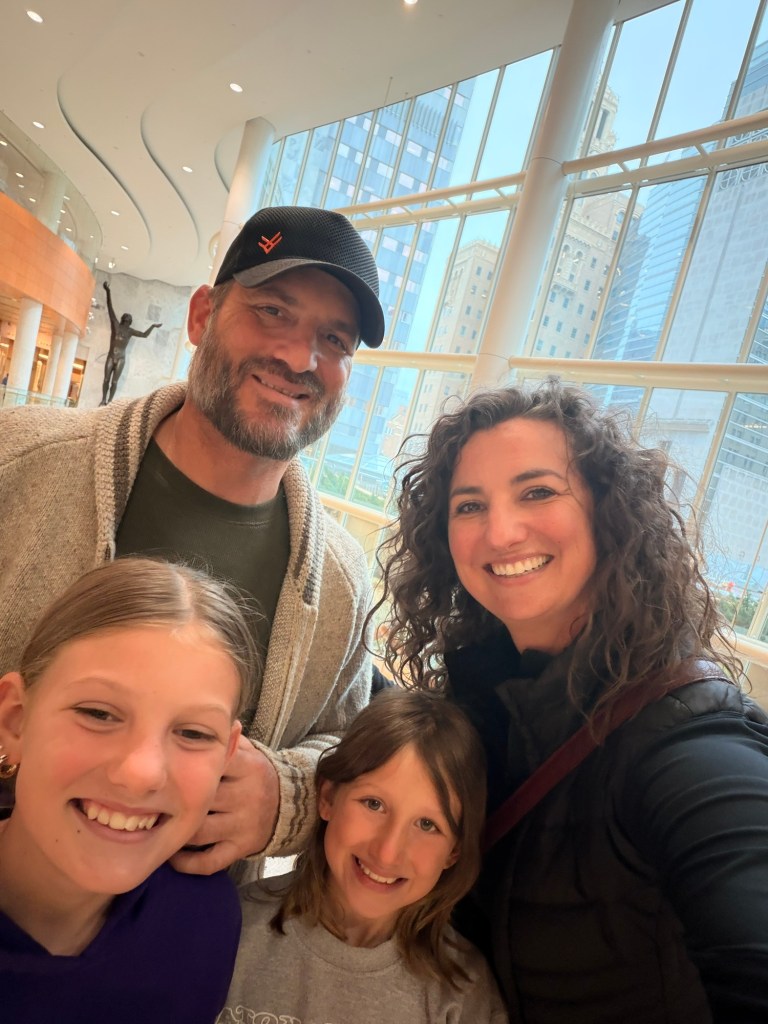
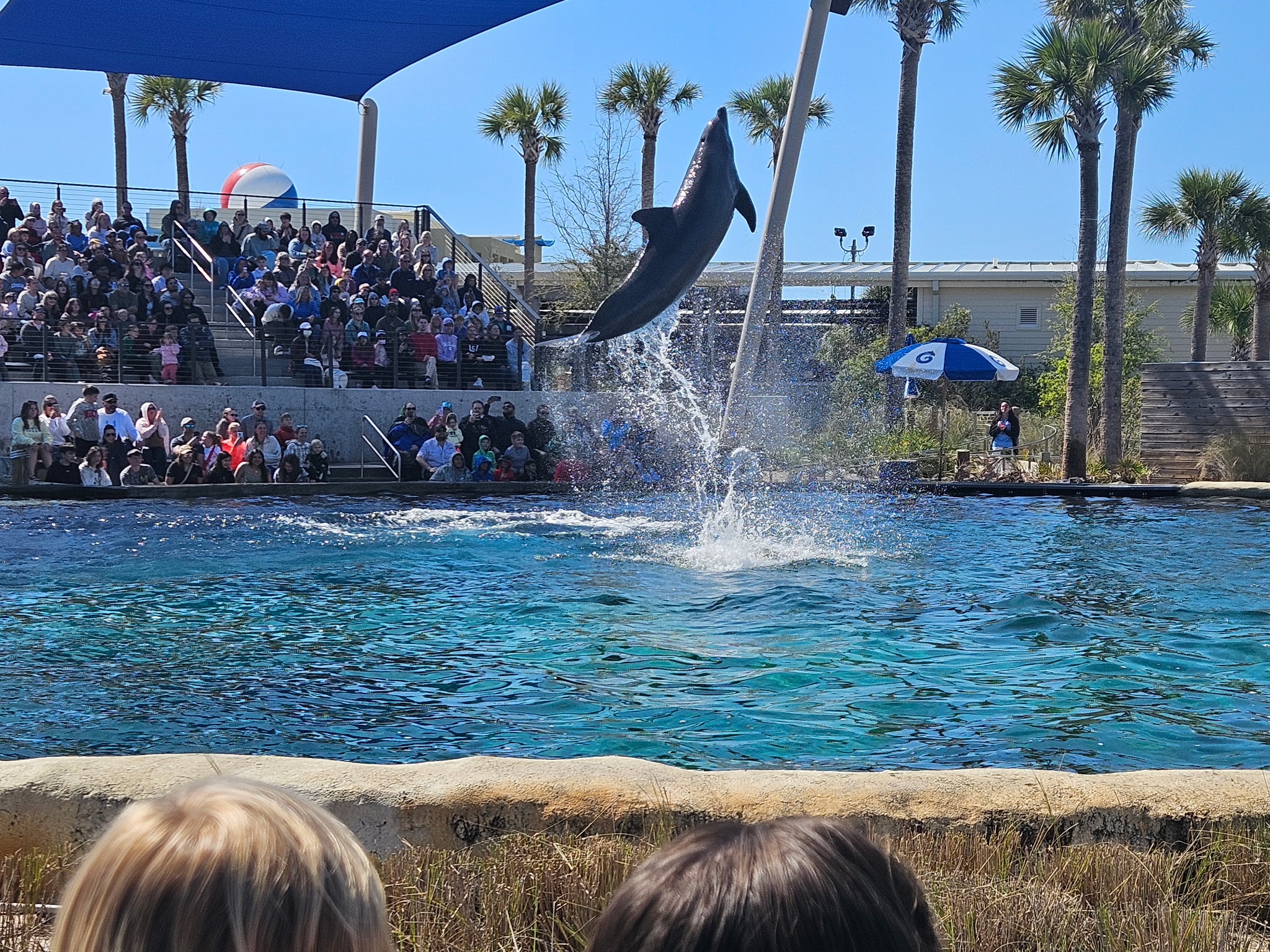
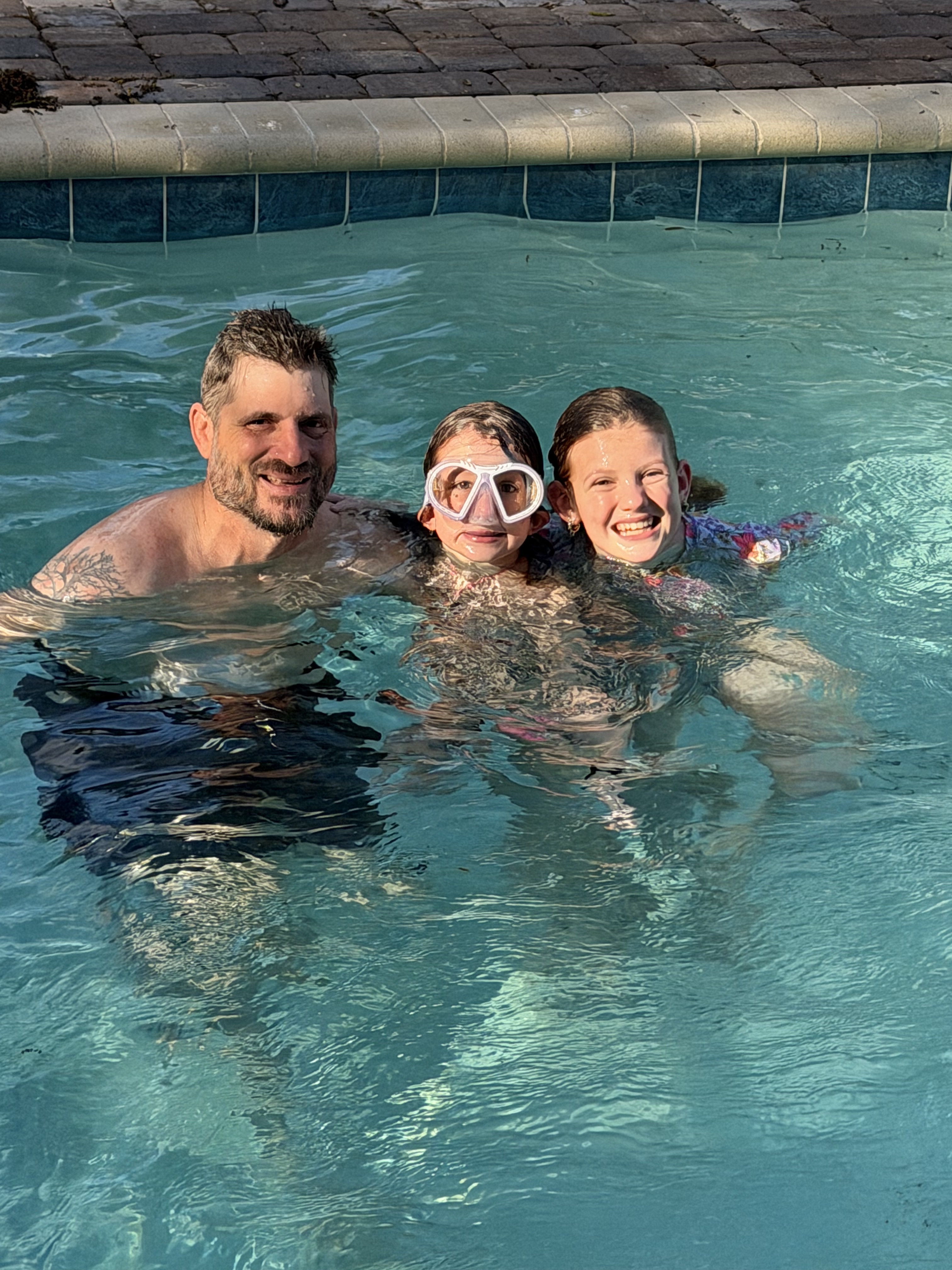
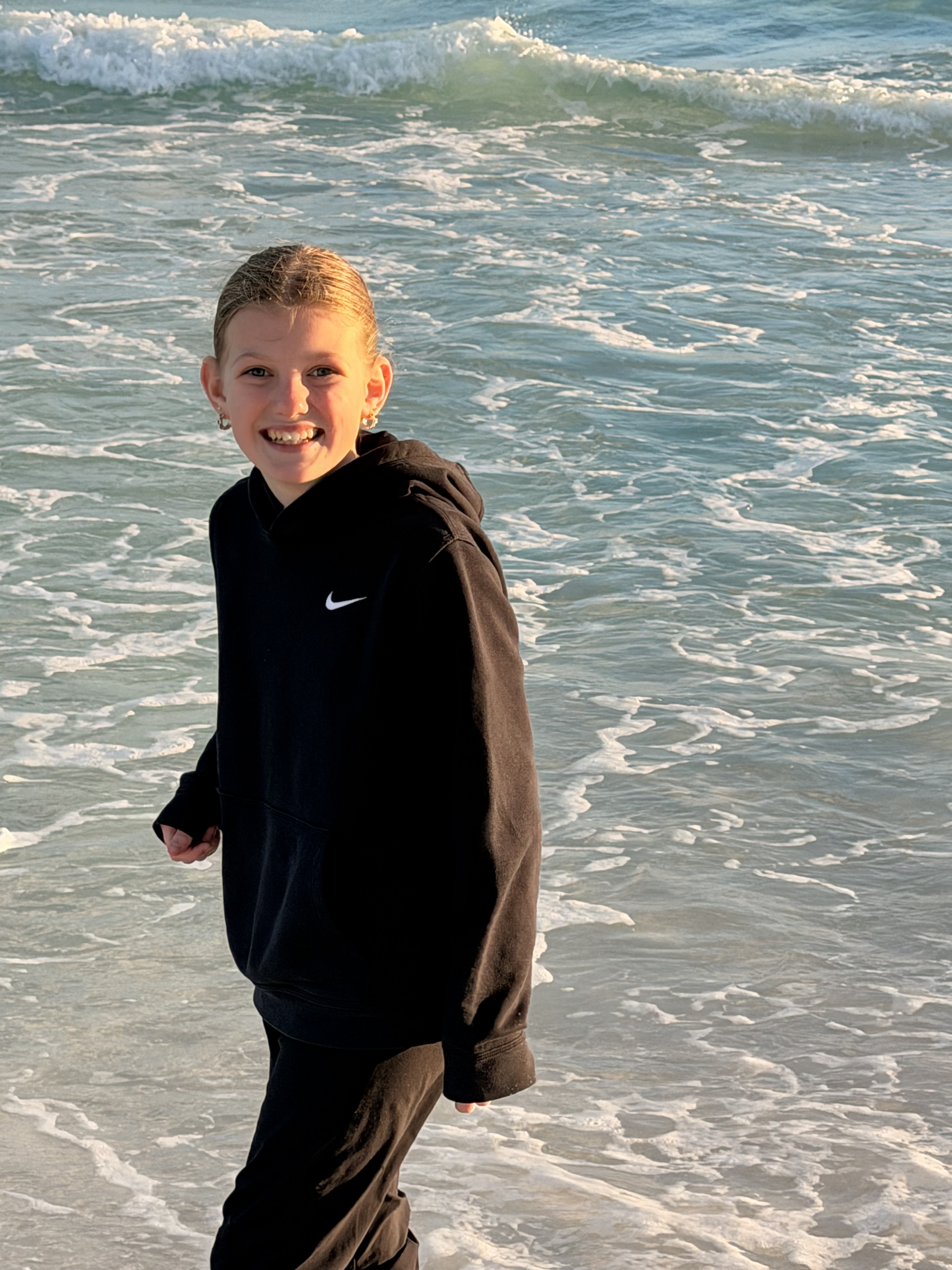
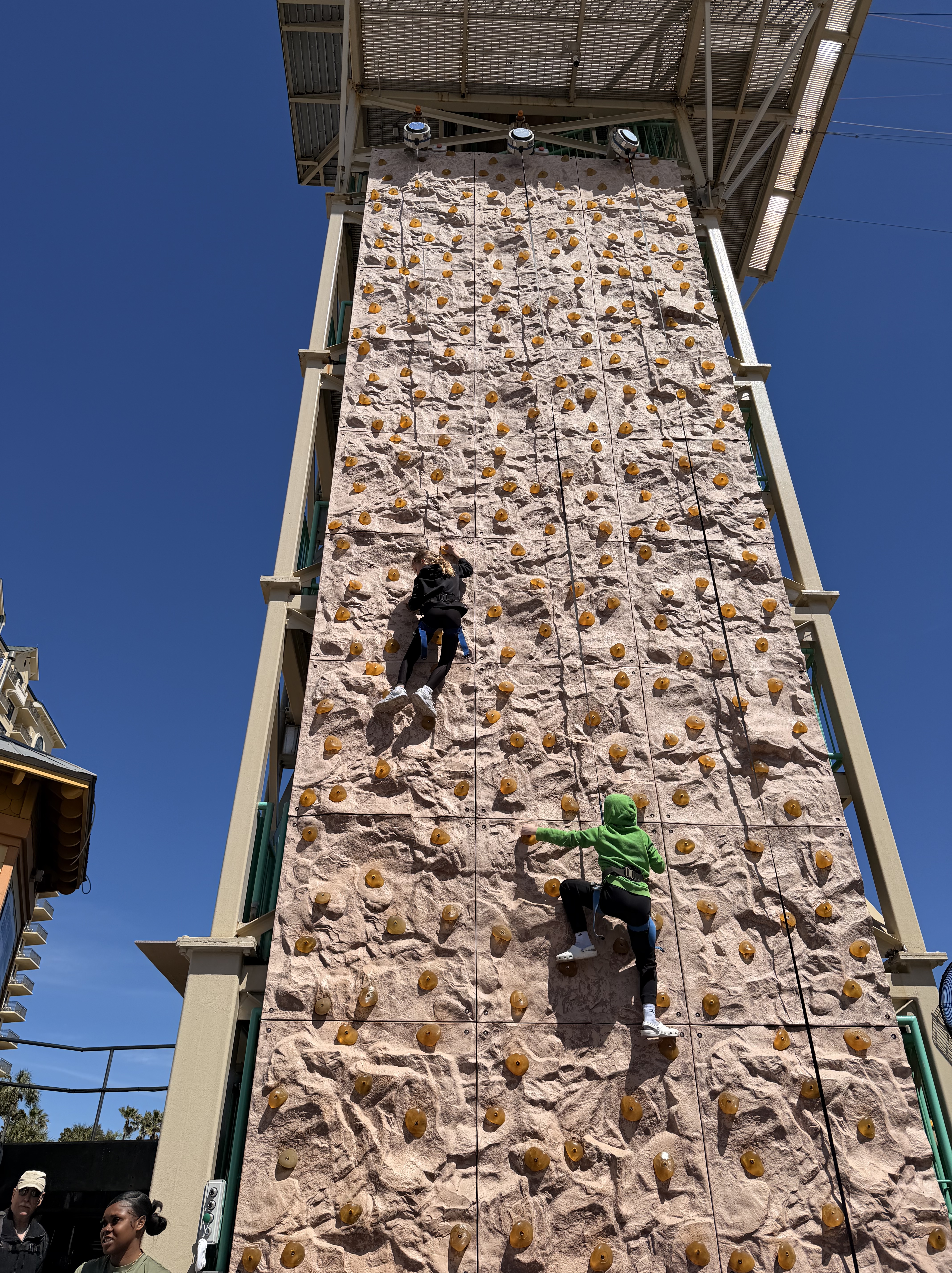
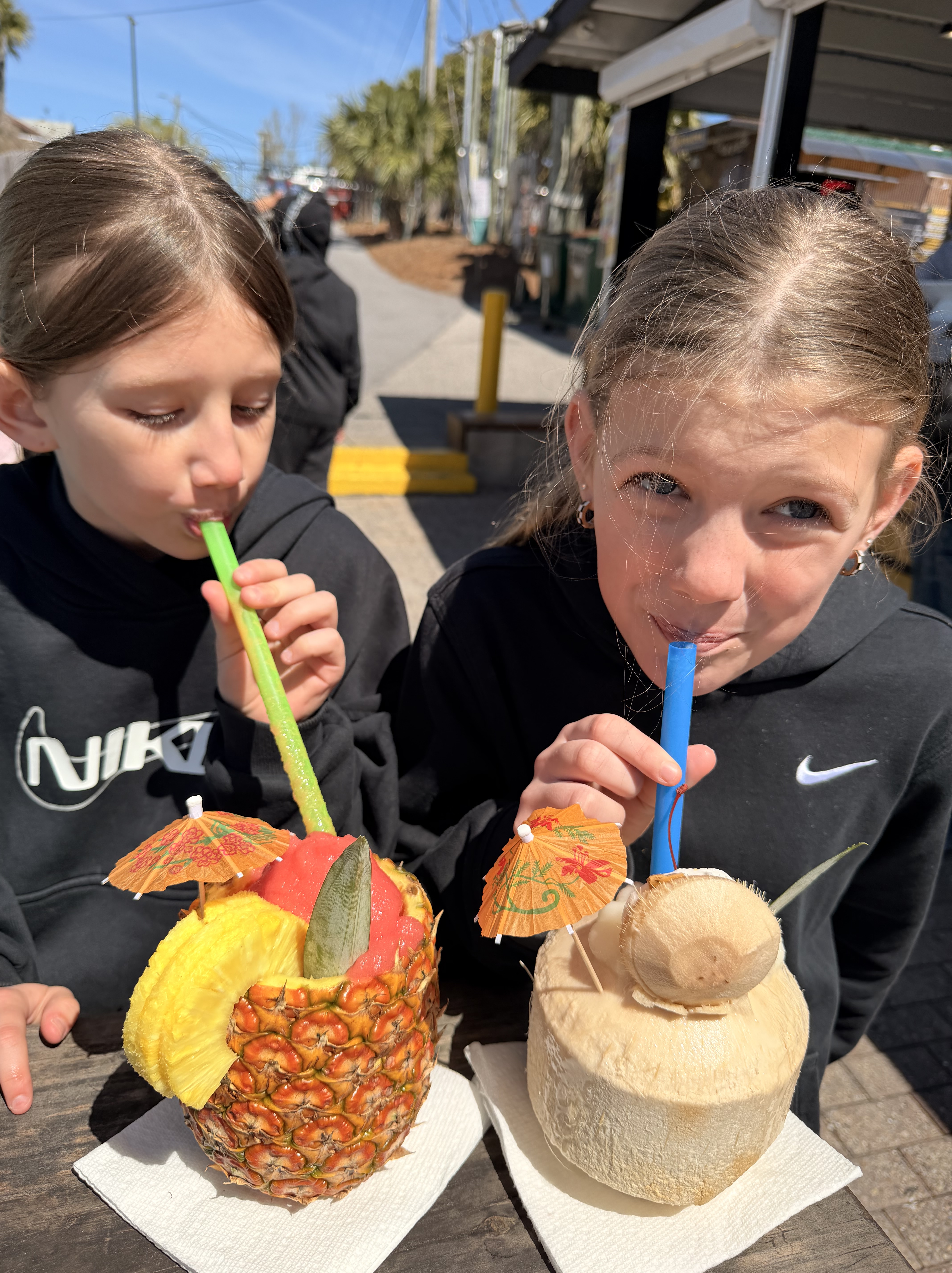
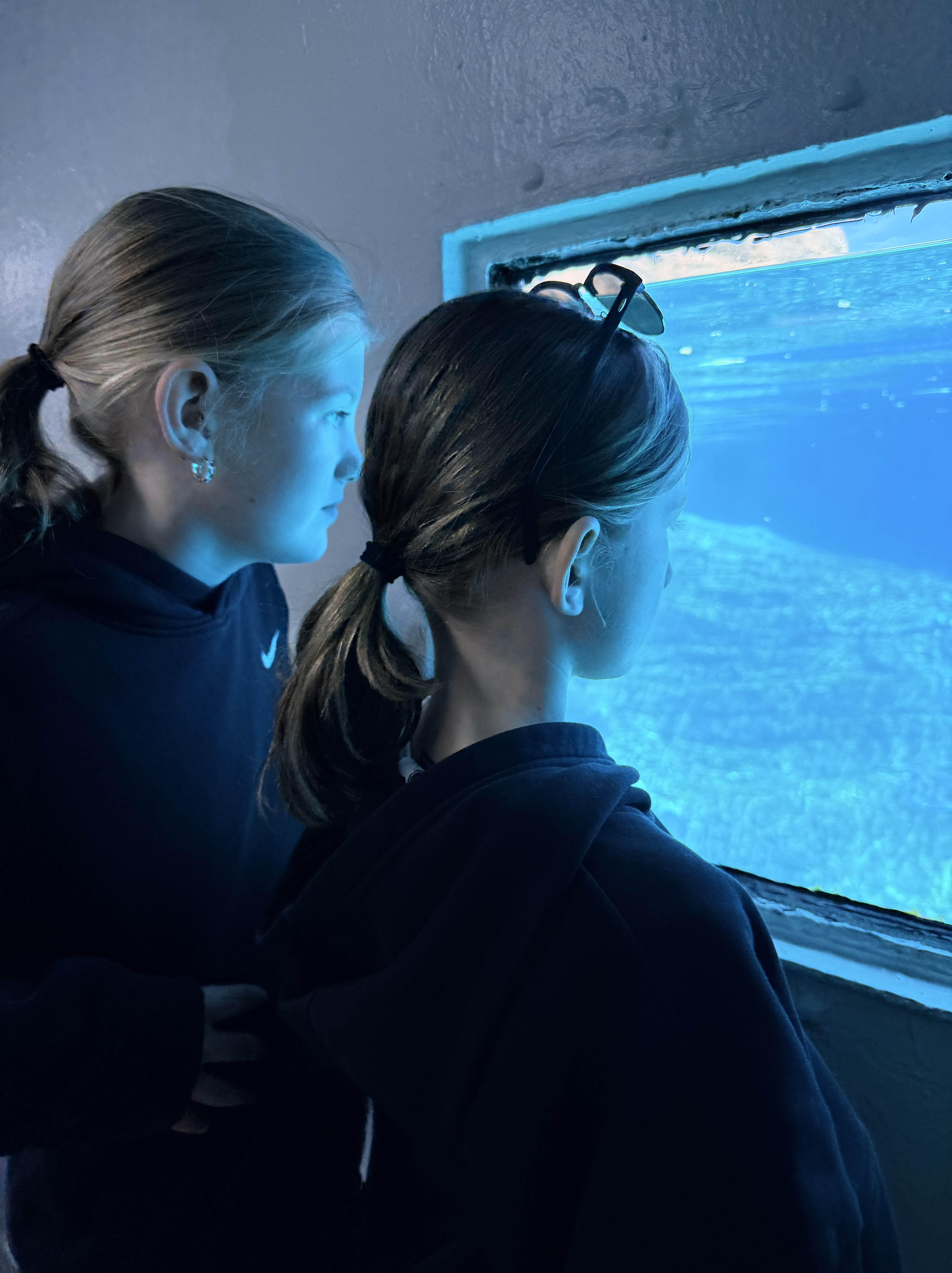
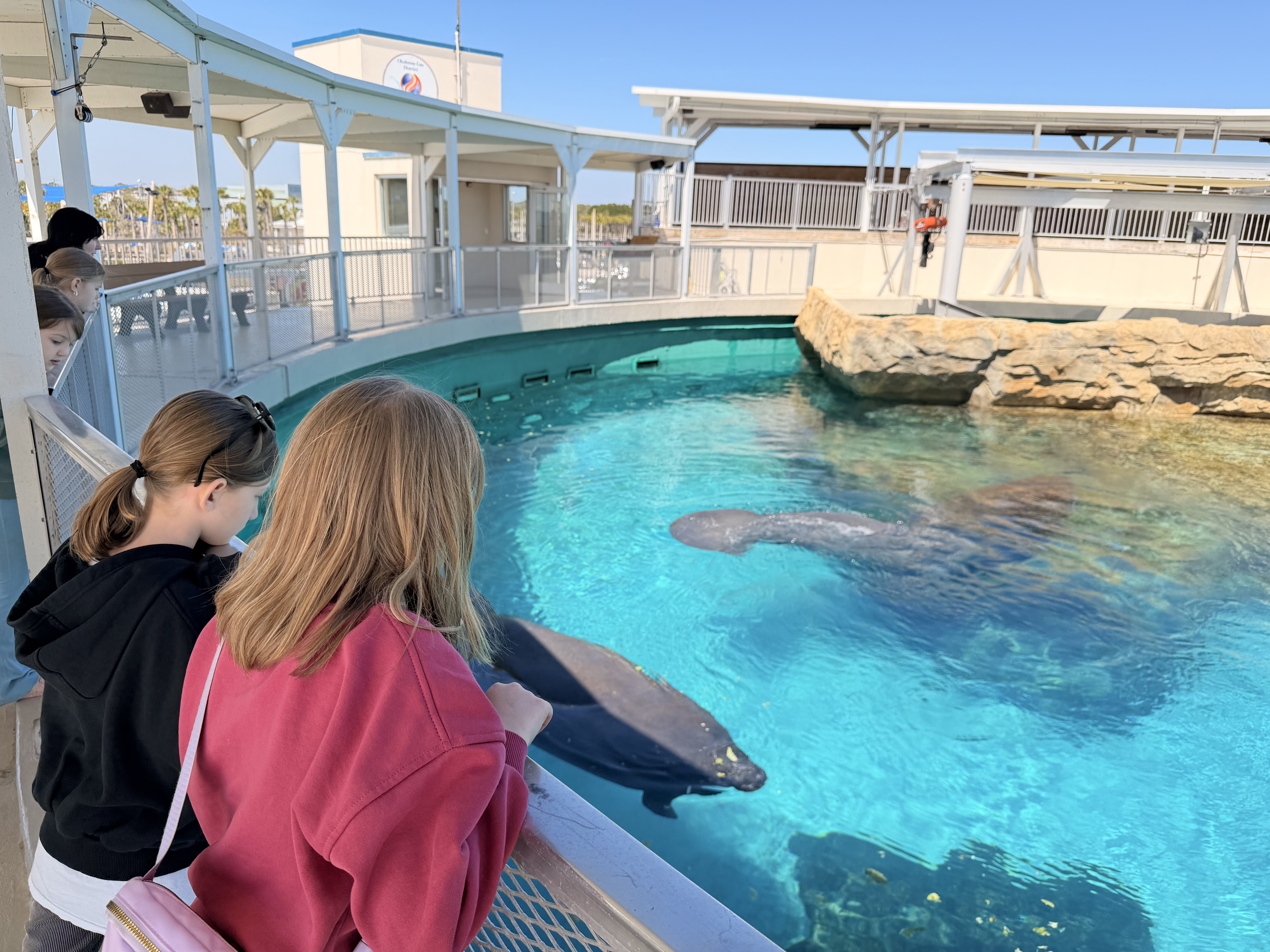
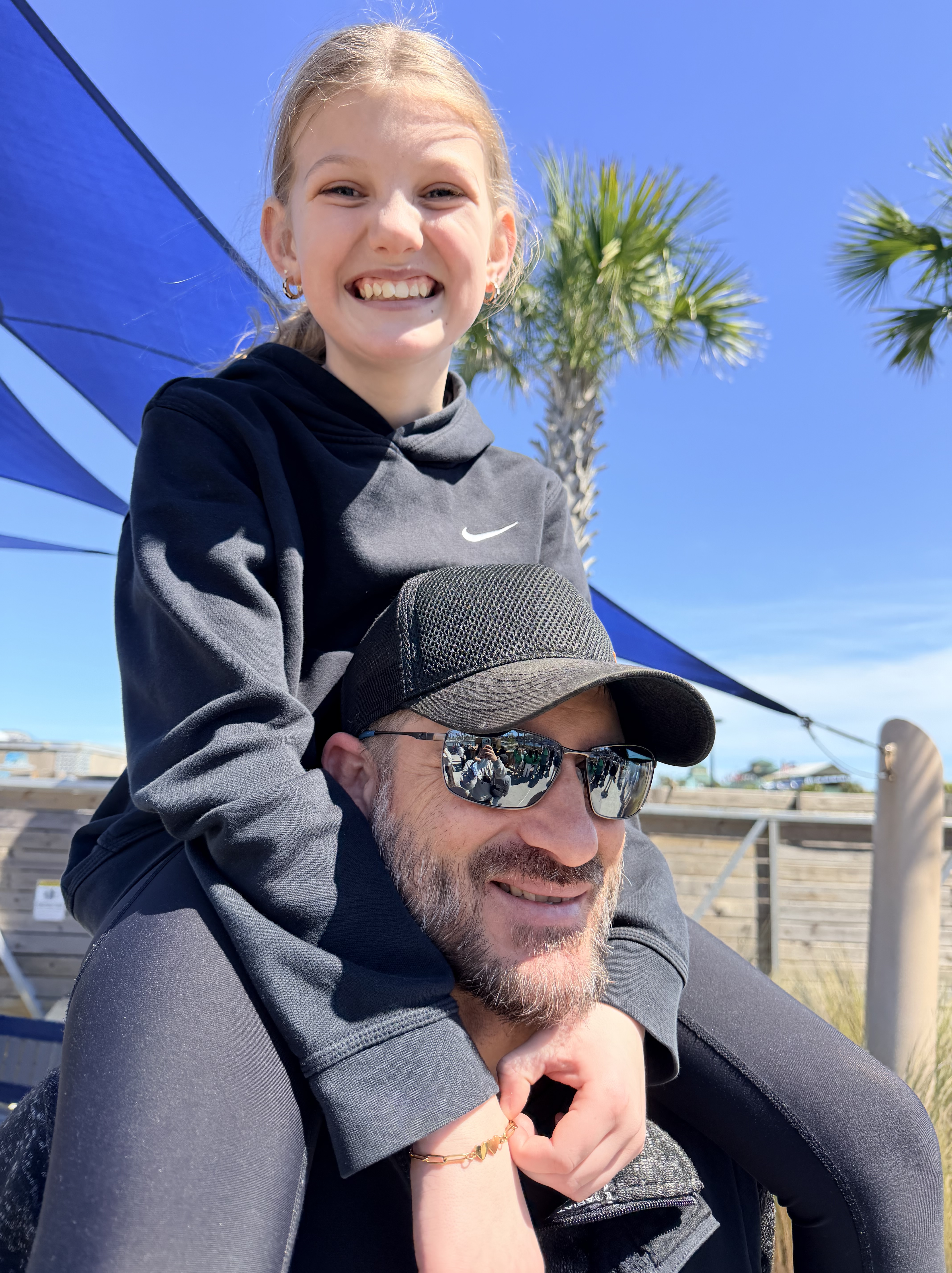
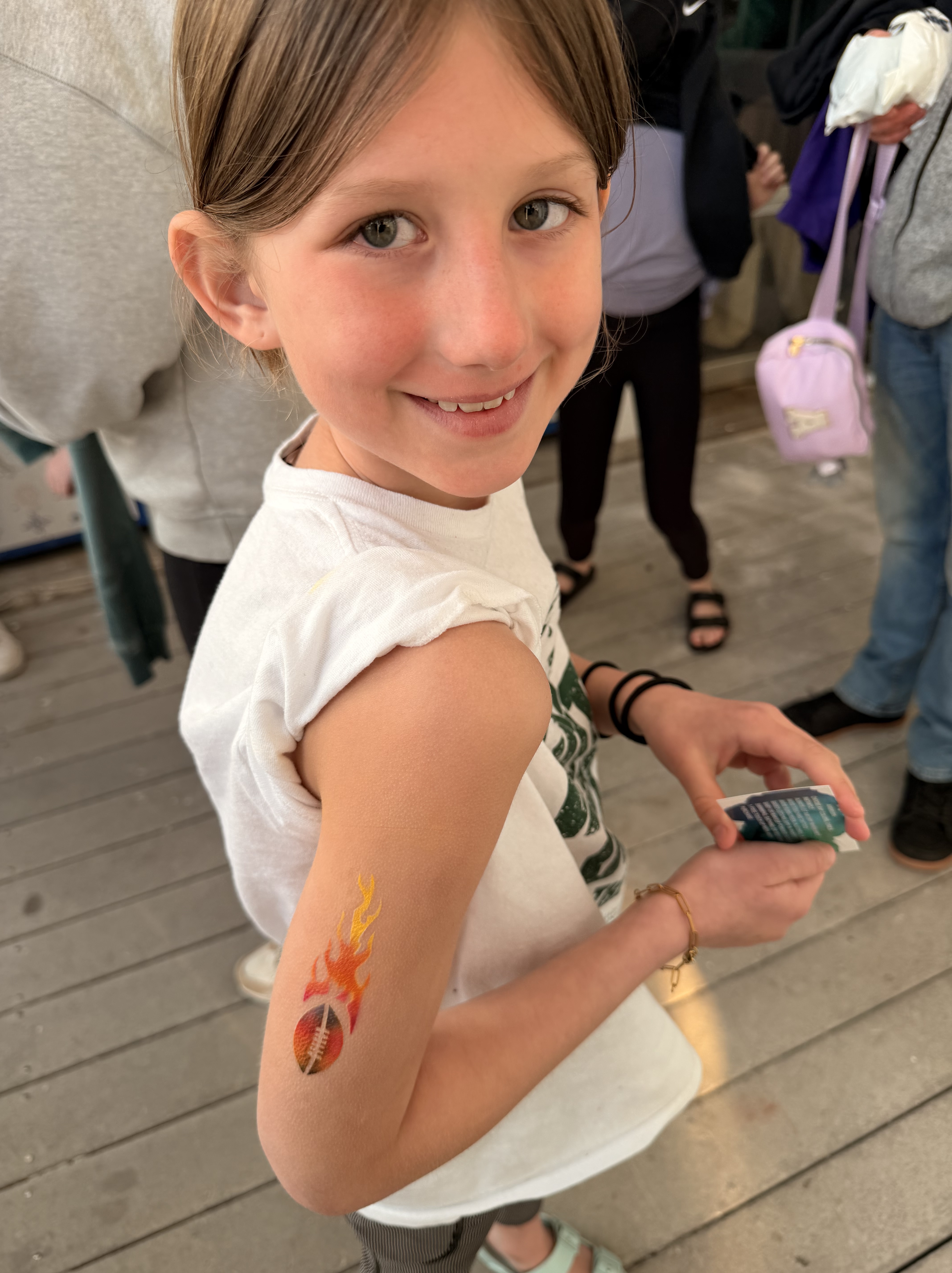
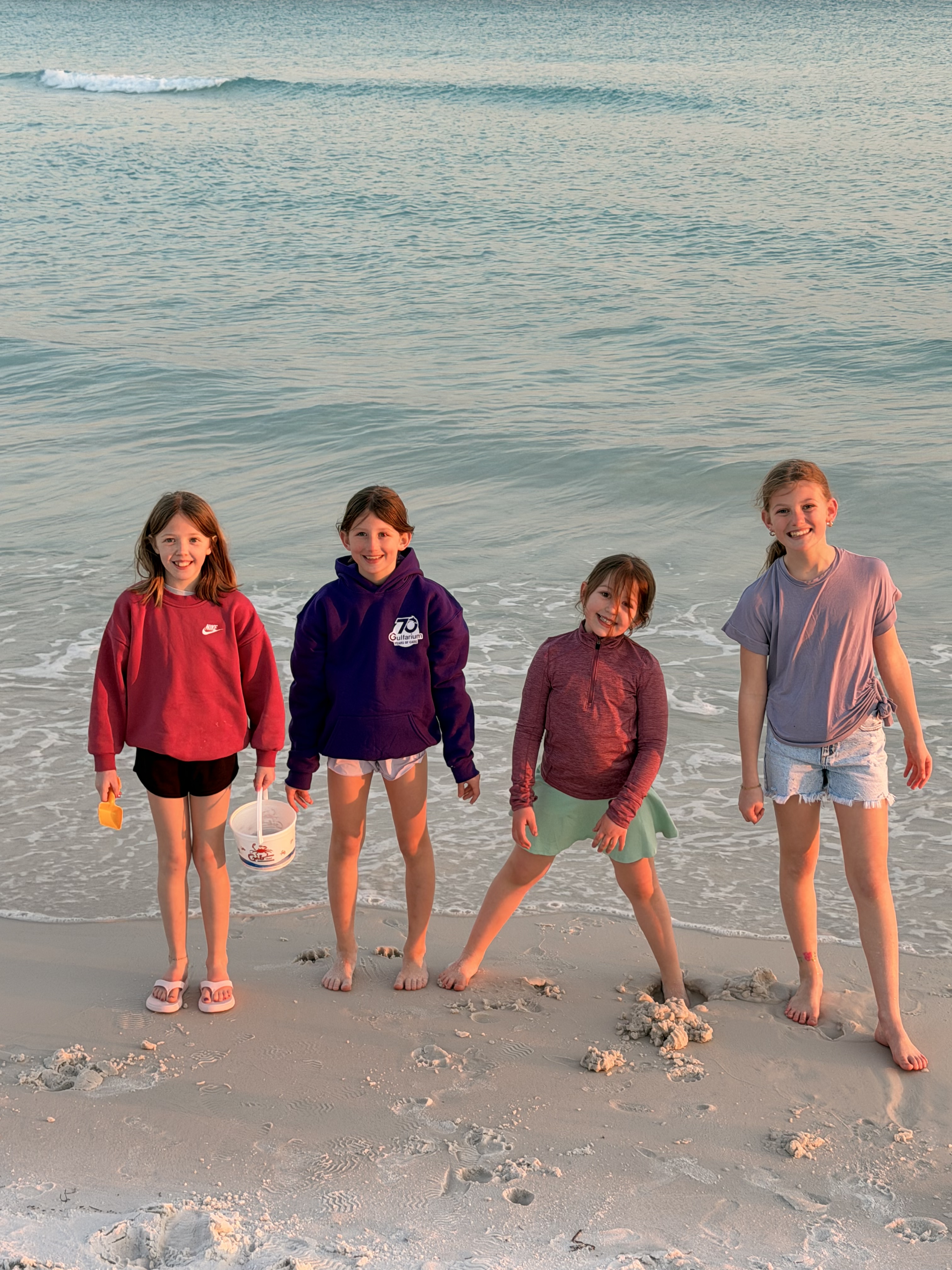
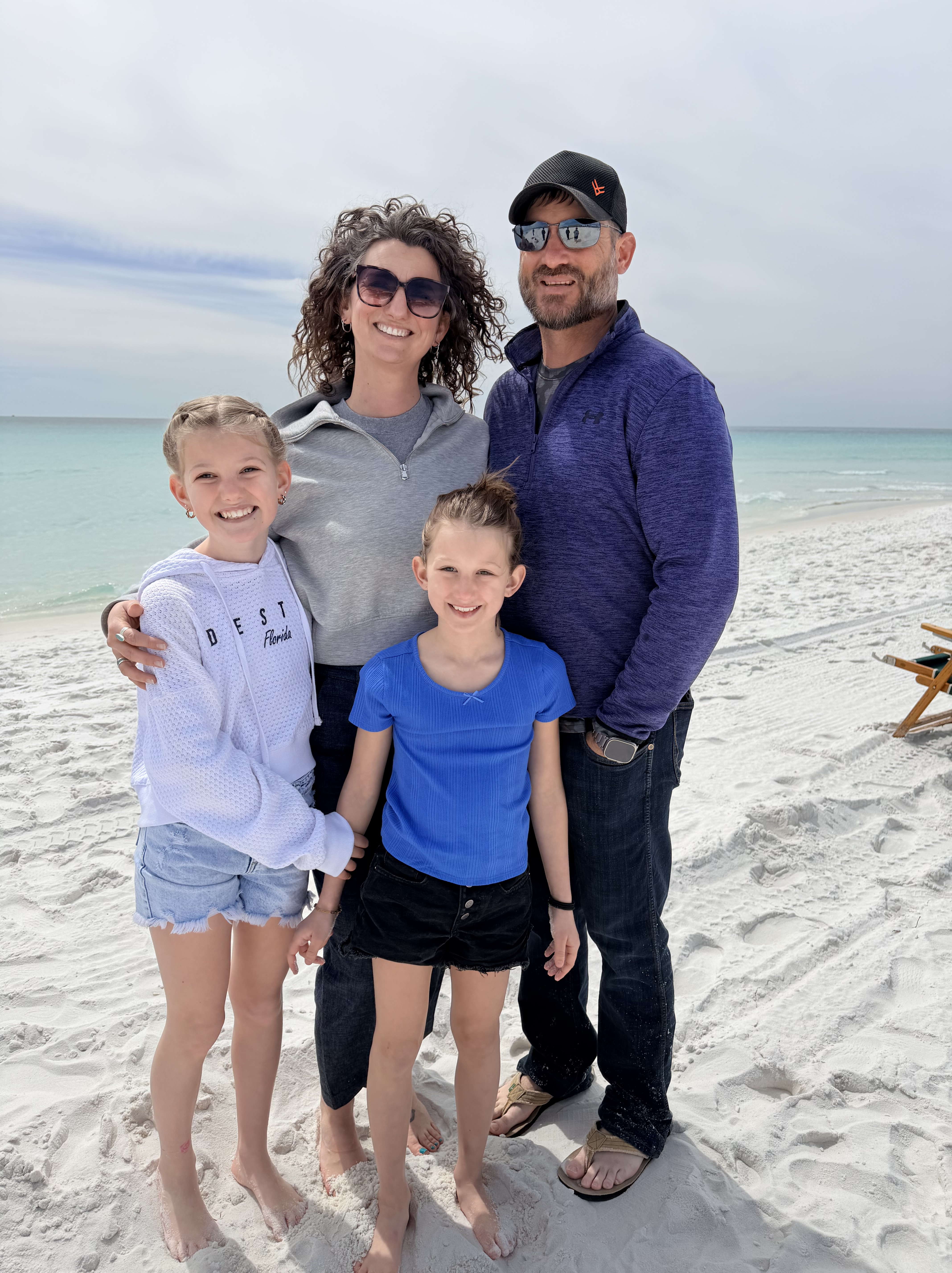
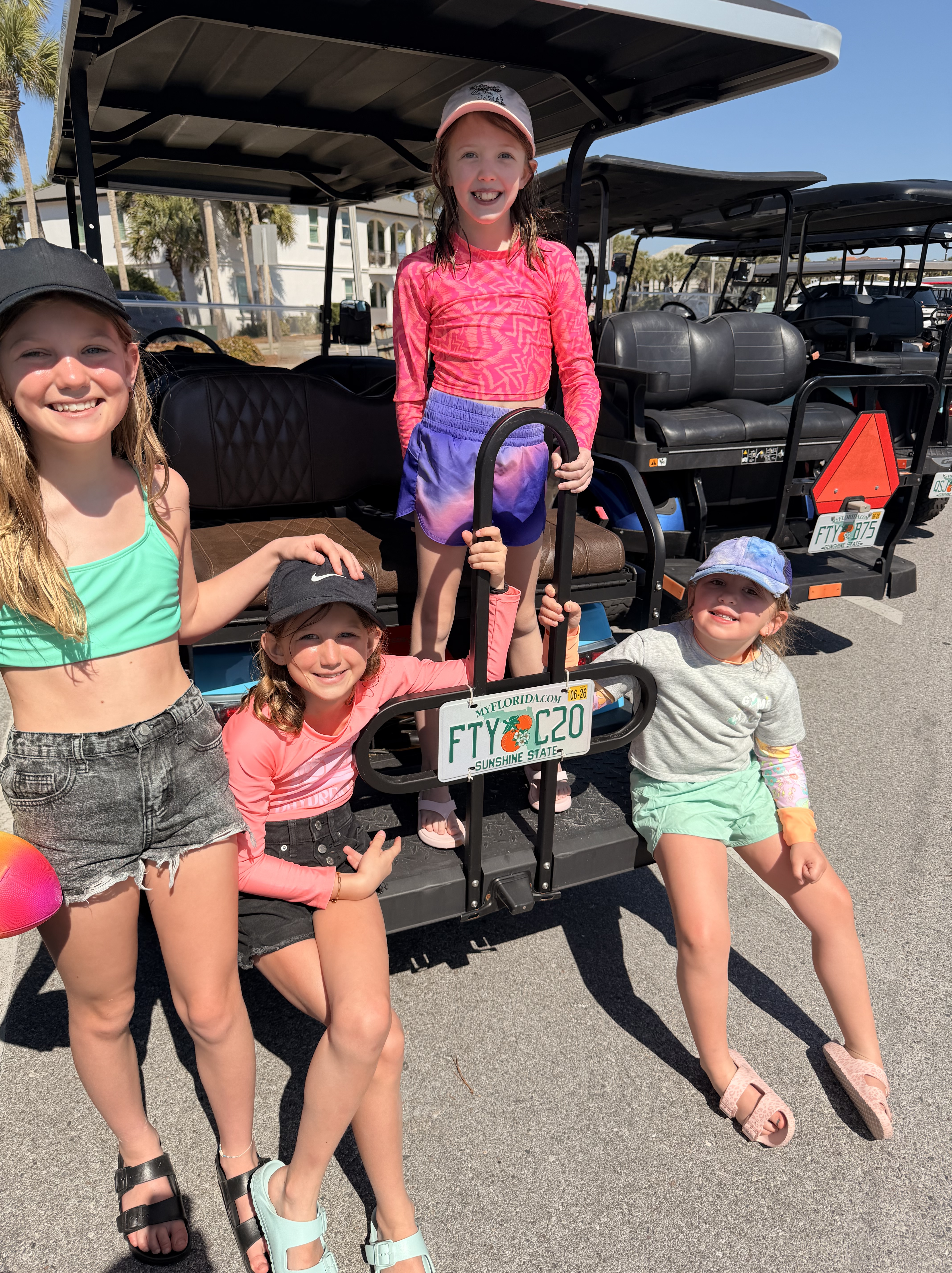
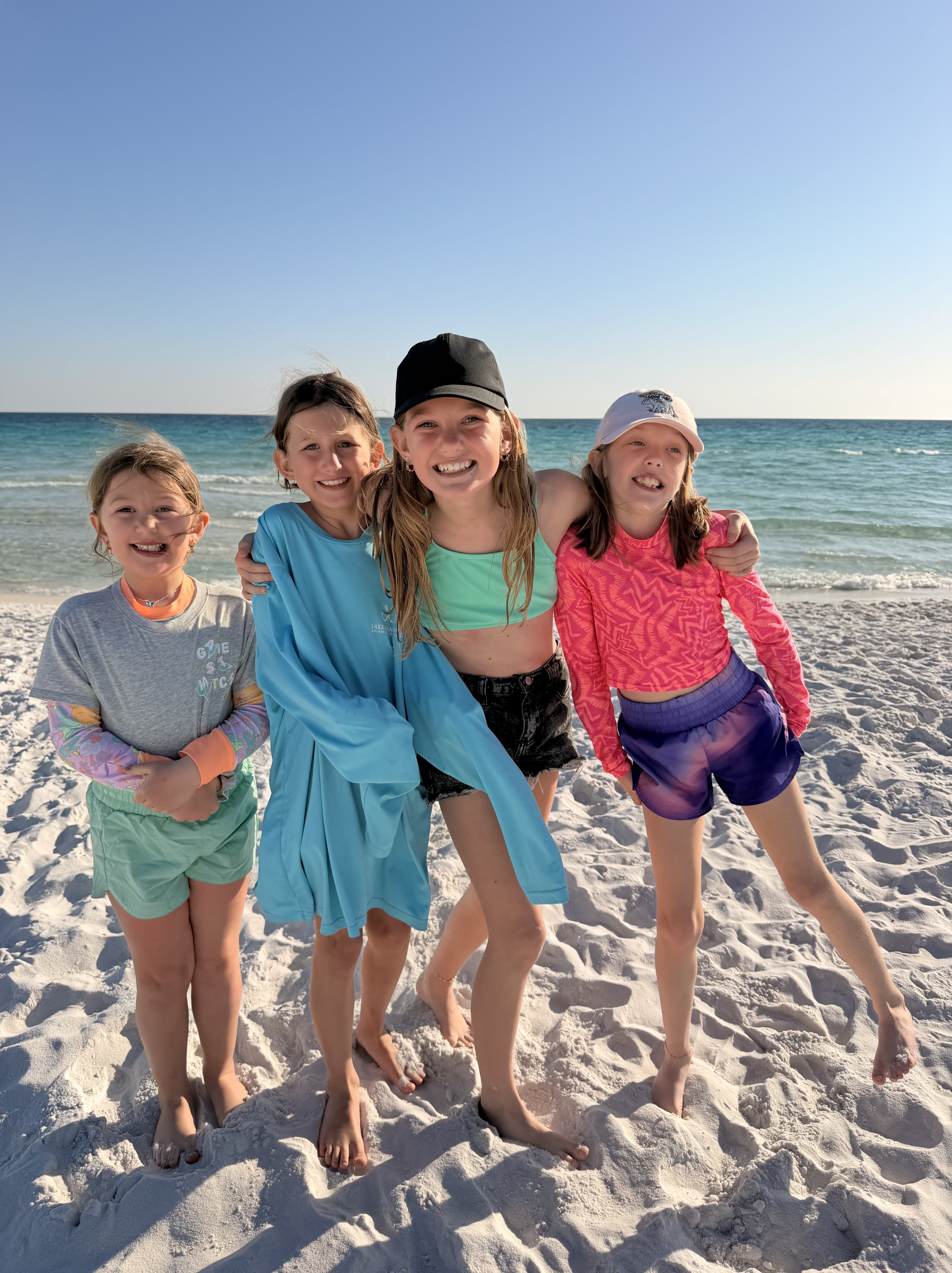
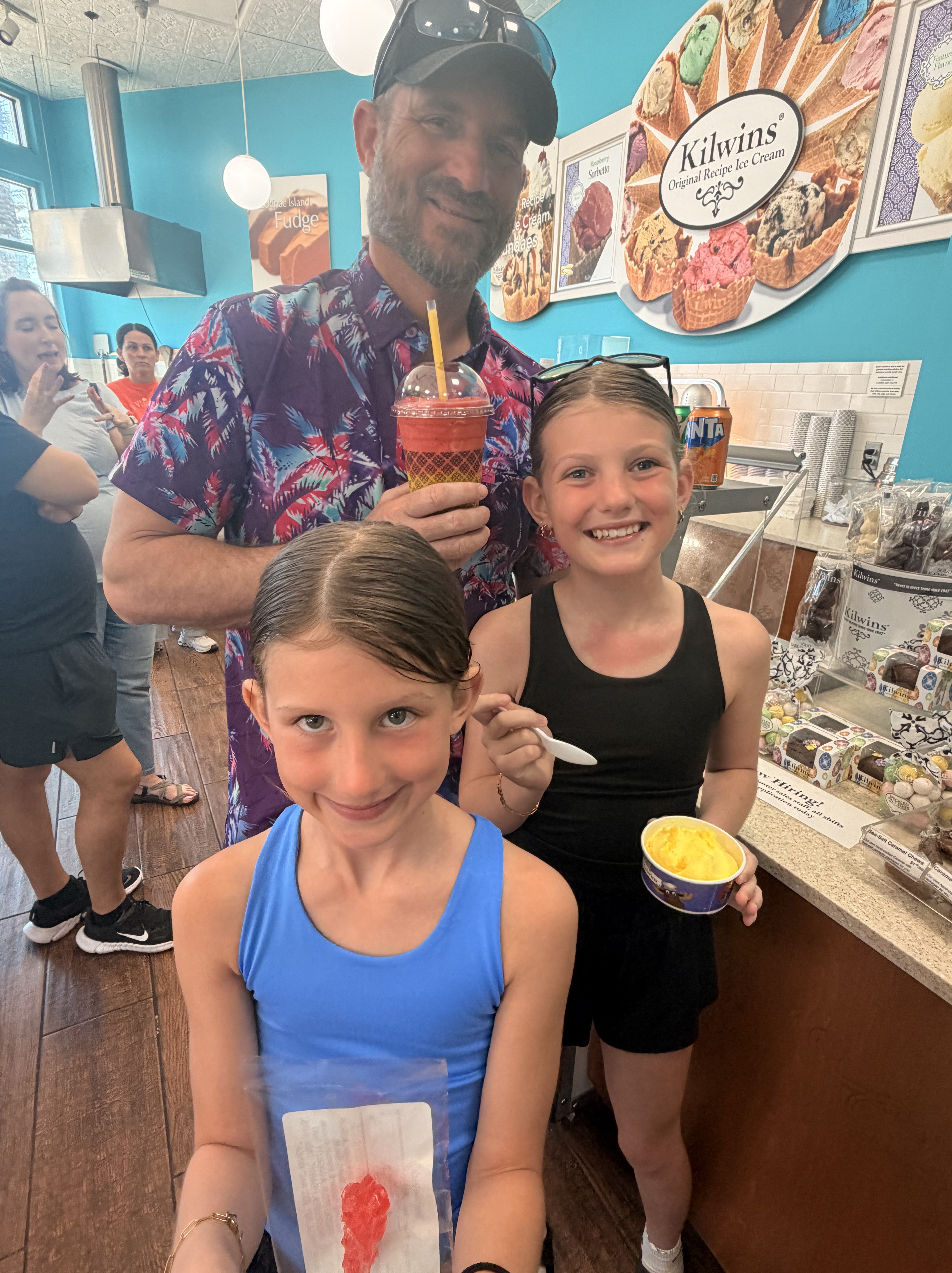
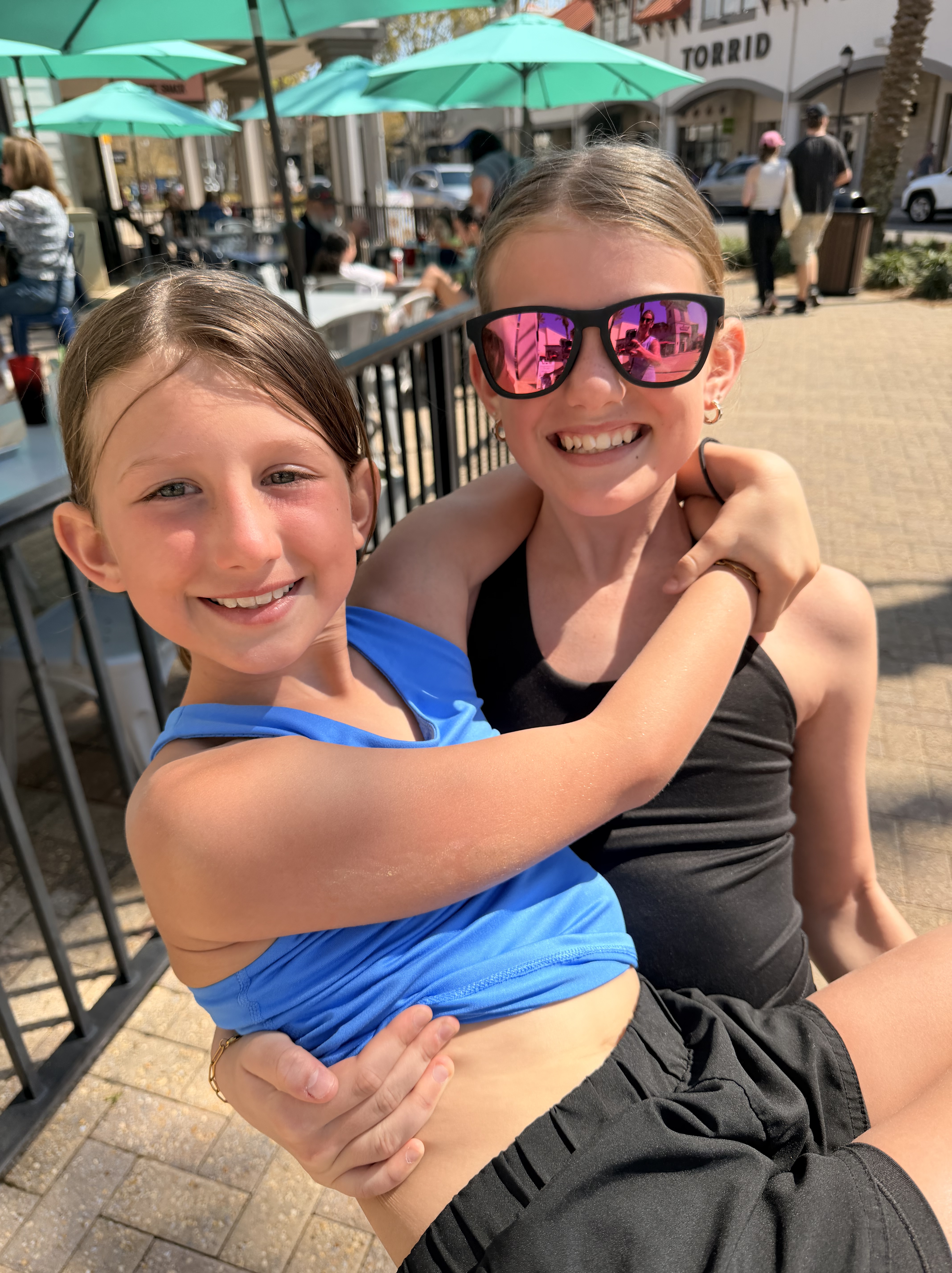
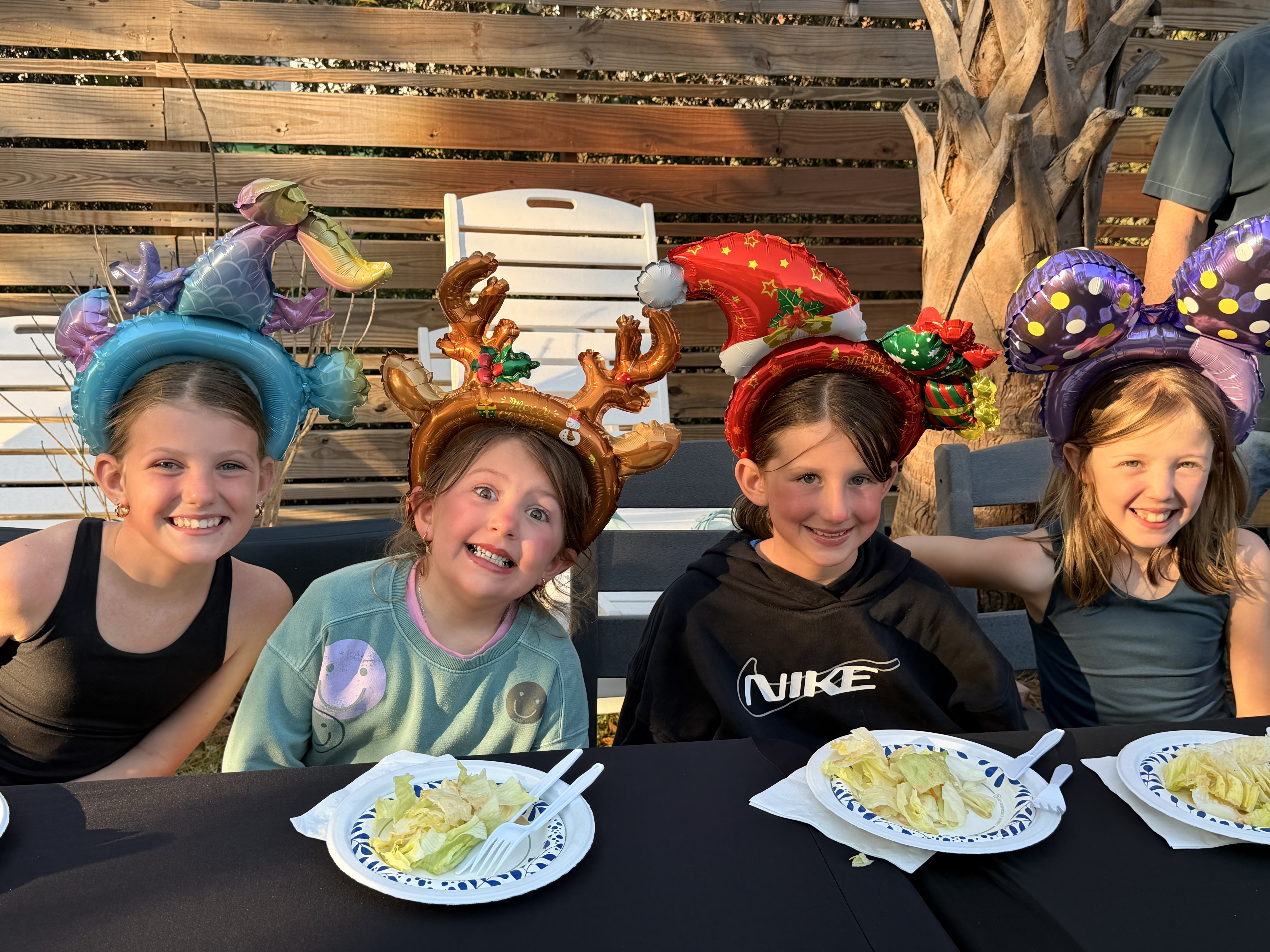
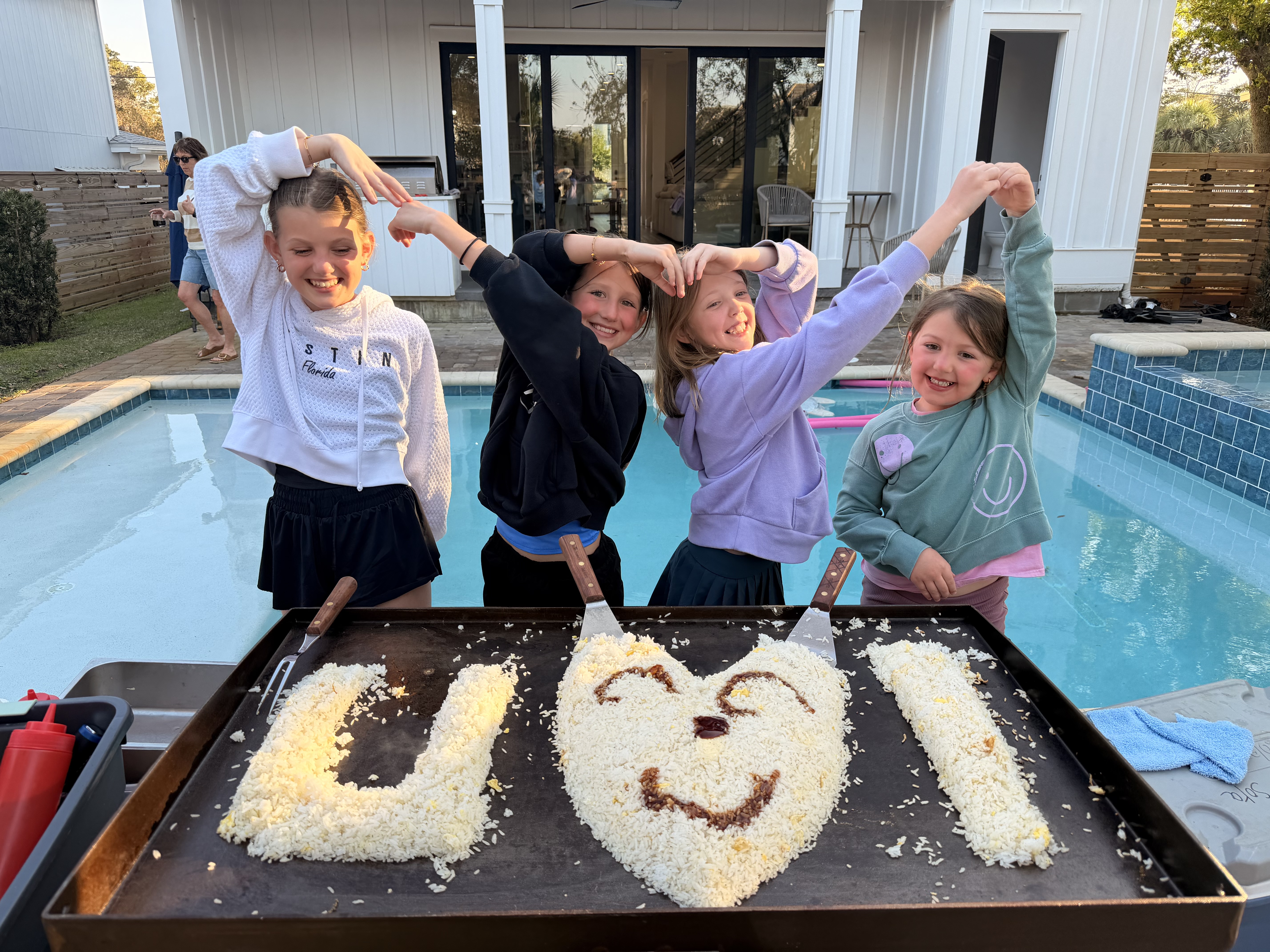
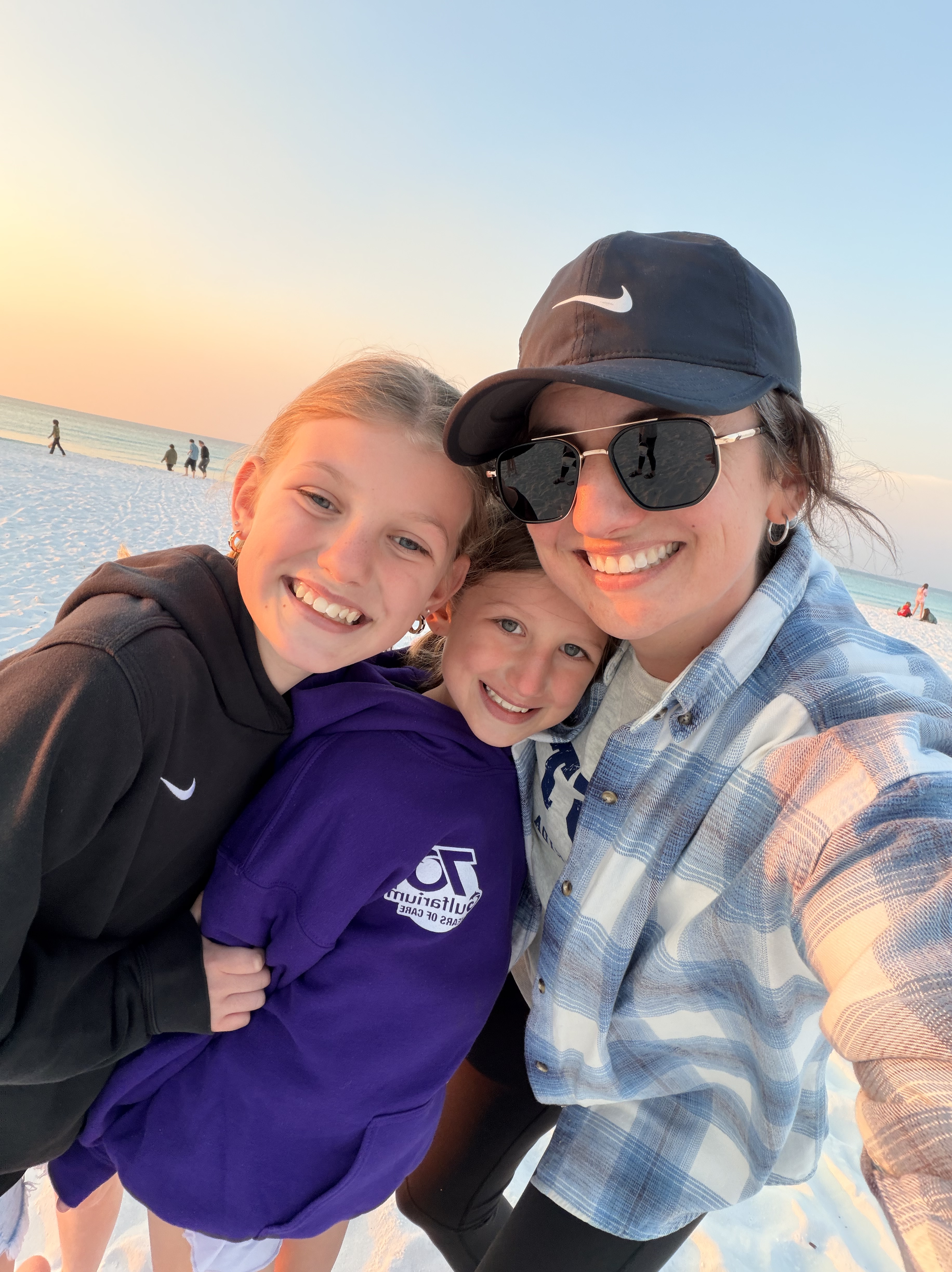
Last week I watched my daughters flip and splash and jump and chatter in a similar pool in Florida with their cousins. The sun had gone down, lighting the water up dramatic and perfect for the dolphin, whale, narwhal and squid show they were putting on for everyone after supper.My parents treated the entire family to a spring break trip to the beach in Florida and it was our last night of six days spent watching these kids swim in the warm pool, despite, again, the unseasonably cool temperatures that had us all shivering on the beach in double sweatshirts. A few days before we wandered around an aquarium and watched a dolphin show, and so they were recreating what they learned to much applause. That week we offered up arcade trips and go carts, beach walks, shopping and ice cream outings, but when the sun came up, before breakfast or the first pour of coffee, those kids were in the pool and that’s where they stayed. It’s all they wanted to do. They swam so much their skin turned raw and I had to slather them in Aquafor and coax them out for a sandwich and a drink of water before they turned around and cannonballed back in.

This trip had a sort of heaviness to it as we tried to forget that waiting for us on the other side was weeks of disruption to our lives as I relocate for cancer treatments in Rochester. Despite my best efforts to pretend that it wasn’t inevitable, that sort of thing sits lodged in your chest until it’s over. And it was on my daughters’ minds too as they would grab me in passing and say quietly “I don’t want you to leave.” I’d give them a squeeze and then they’d be off. Turns out a 90-degree pool is good medicine for lingering dread.

I type this at my kitchen table back in the real world. My packed bags are all splayed out open on the floor of my room after our first plan to leave was suddenly delayed by insurance issues we’re scrambling to resolve. Turns out even the best laid plans for the worst reasons aren’t set in stone and I’m left feeling like my nephew on that safari ride screaming “Get me outta here!”  Or my niece stunned and shivering after a big whale’s splash, unprotected. Treatment will happen soon, one way or another. Hopefully, in time, I’ll only remember the swimming part.  

I close my eyes and think of my ten-year-old daughter, the last to leave the pool on the last night of our vacation. She asked her dad if she could stay in a little longer to spin and dive and sing on her own while the younger girls got ready for bed and the adults packed up to go home. She wanted a little more time to play, a little more time before facing the thing coming that will be hard. A little more time before growing up.

“Watching her swim out there by herself, it makes me choke up,” my husband said that night as we got in bed. “She’s just so innocent, and it goes so fast.”

“Remember when all you wanted to do was swim?” I said, tears lodged in my throat.

I continued folding my sandy clothes.

Dear Daughters:Make Lemonade

Before I share this week’s column I just want to send a heartfelt thank you to everyone who has reached out the past week with support and love regarding this recent development in my cancer story. Every word has been held closely to our hearts and we love you.

We are home now and packing for a family spring break trip and when we get back I’ll be headed straight to Rochester for 6 1/2 weeks of radiation with a small weekly dose of chemo for good measure. I have a place to stay there and a good doctor who says we have like a 95 percent chance of getting rid of it this go ‘round. So I’ll take those odds and I’ll cuss a little and head that way to do the thing with all your words of encouragement as my wings.

The following column I wrote on my phone in between scans and pokes and prods last week. I turned it in three minutes to deadline while the girls were at home with my parents and then Chad’s parents. Dealing with health issues and kids who are old enough to be worried is new for me. I hope I do right by them.

(Also, before I left, Chad put on a timer for three minutes and let them say as many and whatever cuss words they wanted in that time, which is probably not the best parenting choice, but I would highly recommend. In fact, I’m about to go do it myself…)

Anyways, here’s to zapping some tumors and being pissed and annoyed and grateful and worried and hopeful…and here’s my letter to my daughters.

Mayo Clinic

Dear Daughters,

I’m writing to you 694 miles away from the ranch, drinking coffee from a paper cup with your dad outside a big hospital. We drove all day yesterday to get here, or I should say, your dad drove all day while I managed what we were going to listen to, where we would stop to eat and how to get there. 

I’ve spent thousands of hours driving thousands of miles beside this man, for dozens of reasons. This reason, in particular, is so doctors can take pictures of the inside of my body to make a plan to get rid of cancer that has slowly crept back into our lives.

Yes, it’s in my body, but it affects our lives, your lives especially. It means that for a time I will have to be away, and I won’t get to drive you to school, or pick you up, or make you supper, or do your hair, or argue with you about bedtime and cleaning your rooms. And that’s hard for me and you, too.

But it’s all just temporary. A blip. And it gives you a chance to spend more time with your grandparents, who love you and want to help. And your aunts and uncles, too. And your dad, which will be fun, you’ll have him to yourself for a bit, even though he’ll probably make you do the laundry. You’ll make memories through this bump in our ordinary lives, and they will be good ones, even though I know you’re nervous.

This is what I’ve learned in my life — that good stuff comes from the hard stuff. Almost always the best stuff actually. And I want to say I’m sorry you have to learn it early, daughters, but actually I’m not. The earlier you can learn that life, no matter how much we’ve tried to make it comfortable and uncomplicated for you so far, eventually has a way of showing us we have limited control, and we need to manage what we have carefully.

What does that mean exactly? You’ve probably heard the phrase, “When life hands you lemons, make lemonade.” And that sounds cute, because lemons can be sweetened easily with sugar. But real life lemons vary in scope and scariness, like losing a friend or missing a buzzer-beating shot or failing a major test or crashing a car or getting sick or your mom having cancer.

But the lemonade part is the attitude you choose to keep at the forefront of your actions. And it’s also the people who love you and how you love them back in the hard times.

So here’s a real example of how you can make lemonade now, dear daughters, while I’m gone for a couple of months zapping this cancer: stand by your dad in the kitchen and let him teach you how to cook your favorite supper. Or pick a new recipe every week to try together. He will love to show you, and you will gain a new skill. Then break the rules and pile in the big bed together to sleep every night. Shoot more hoops together because it makes you happy, play more cards because it makes you laugh.

Or, when Nana is here, ask her to bring her sewing machine and make a fluffy pillow together. Or read your dragon book to her at night and ask for one more chapter.

Have Grandma Beth take you shopping, that’s her love language. Ask Papa Gene if you can help him feed cows and cut the twine with your little pocket knife.

But most importantly, I think, is to be helpful. Do the dishes without being asked, and turn the music up loud and sing while you do it. Learn to fold your laundry, and put it away. Take care of your pets, give the dogs more attention. Wipe the bathroom sink after you brush your teeth. Organize your drawers. Being helpful makes you feel useful and more brave and less scared. 

I know, I’ve been practicing it my whole life. I’m practicing it right now actually.

Dear daughters, in your life you will be the driver and the one who needs to be driven, and we are lucky to have people in our lives willing to take the wheel. Learn from them, let them love on you and be grateful.

It’s all gonna be in the rearview mirror soon, kids. And we’re going to be sweeter for it.

Make Art. It’s an Emergency.

“Make art now. It’s an emergency.”

I saw this sentiment come across my feed the other day and it made me pause for a minute. Art as an emergency? It shouldn’t make sense, but it does. Entirely. In fact, I wish I would have thought to put it as bluntly. 

Emergency indicates a frantic moment forward to fix something that is broken, but the process of making art and music is quite often slow and methodical, one that’s personal, meditative, trial and error and try again. To make a painting, for most of us, is not lucrative. To sing at the top of our lungs in the car or out in the hills with your kids makes us no money at all. Dancing in the kitchen, you may argue, is not going to save a life. 

But could it? 

Recently I received confirmation the cancer that was cut out of my airway over five years ago has slowly crept back, this time on the outside of my esophagus. After a month or so in the weird and worried place of not really knowing what it all means, I’ve learned that it’s time to head back to Mayo clinic to handle it. After some testing and intake in Rochester this week, I’ll be there for six weeks of radiation treatment and a low dose of once-a-week chemo. We’ve been keeping an eye on this, it’s treatable and I’m going to be fine, but ugh. It’s annoying. 

Is that a word anyone uses for a cancer diagnosis? I don’t know, but I think I’m grateful for it. To be annoyed means I’m not in imminent danger, or in pain. It just means I’m inconvenienced.

But let me tell you the worst part about a reoccurring cancer diagnosis for me (and maybe some of you who have found yourselves in similar situations can agree) it’s hands down sharing the news with the people who love and worry about you. 

I hate it. I don’t want to be the reason anyone worries. That’s a big one for me. Don’t worry. Don’t worry about me. There’s that part. 

And I don’t want to be away from them. 

That’s the other one.

But what you want in times like these doesn’t matter. You do what you have to do and then you get called brave, even though brave indicates a choice. There’s no choice. There’s just the next step. 

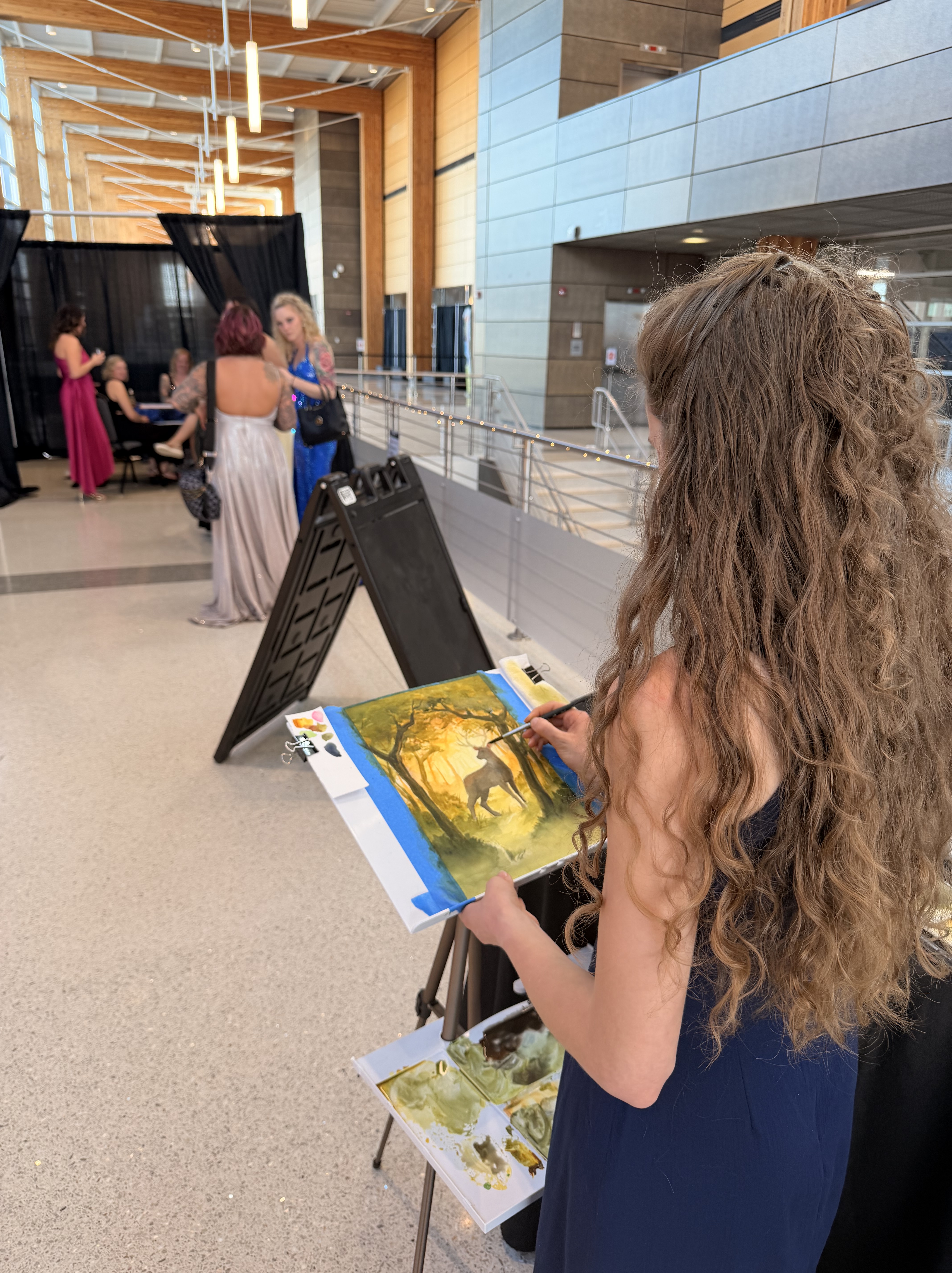
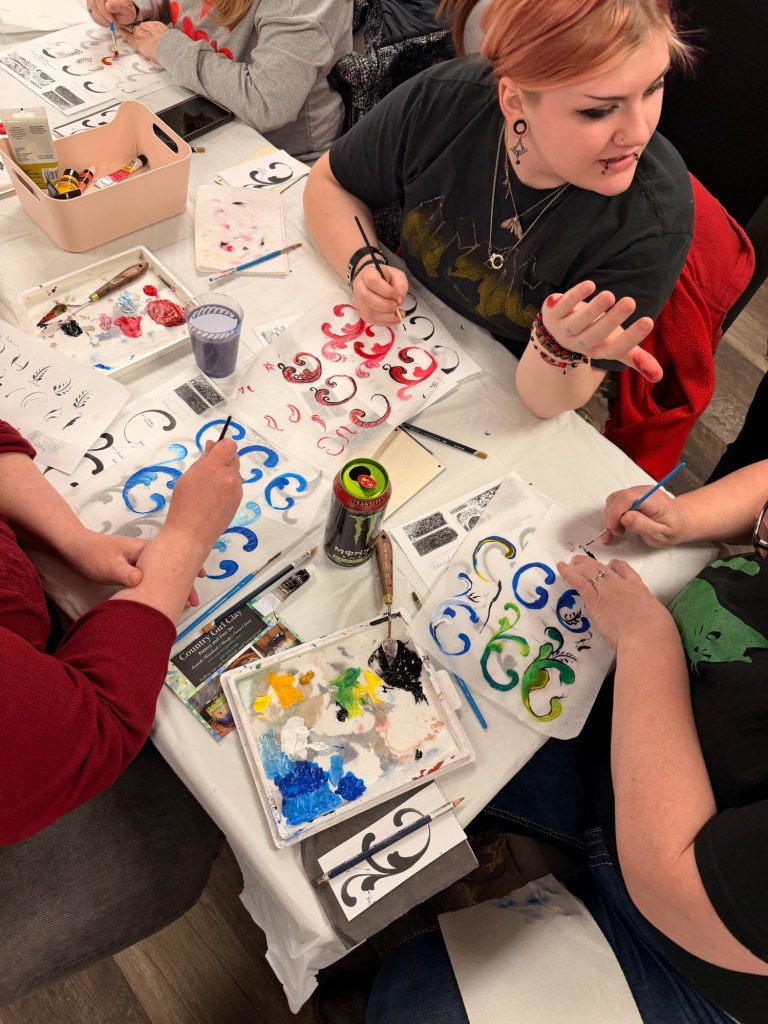
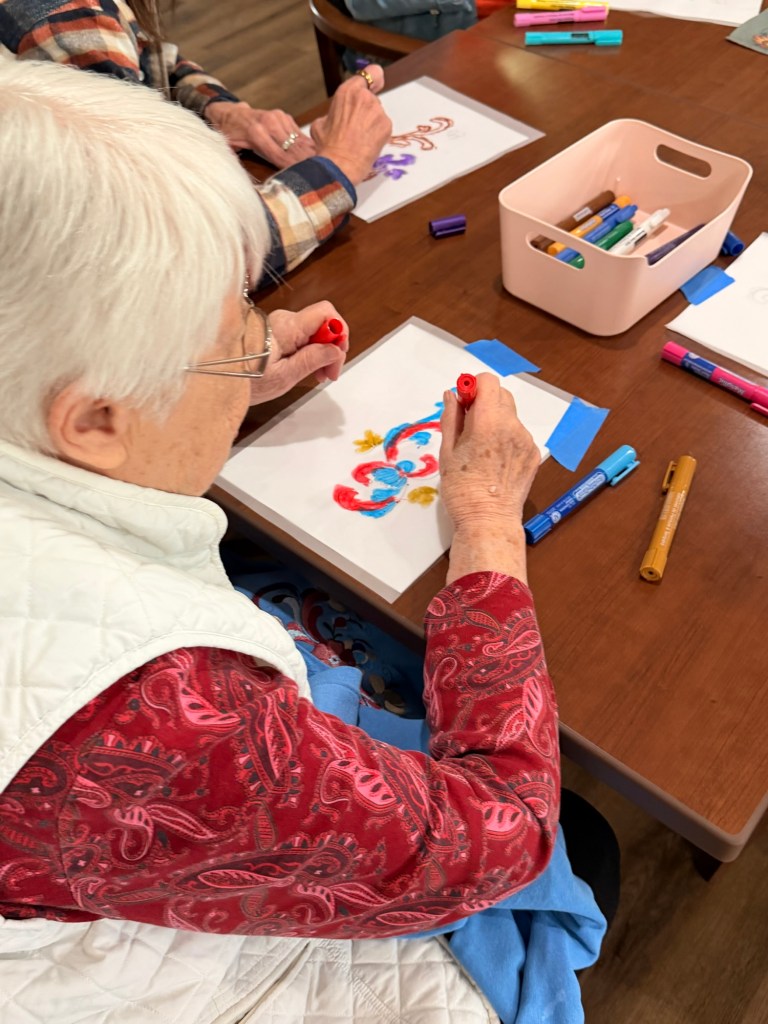
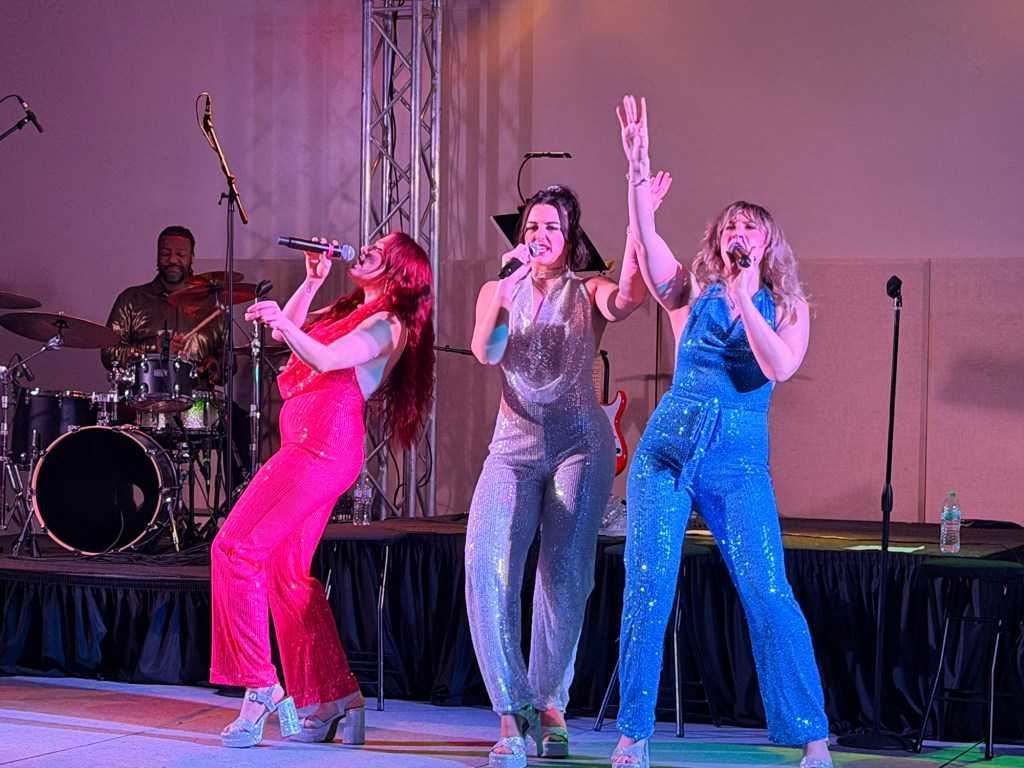
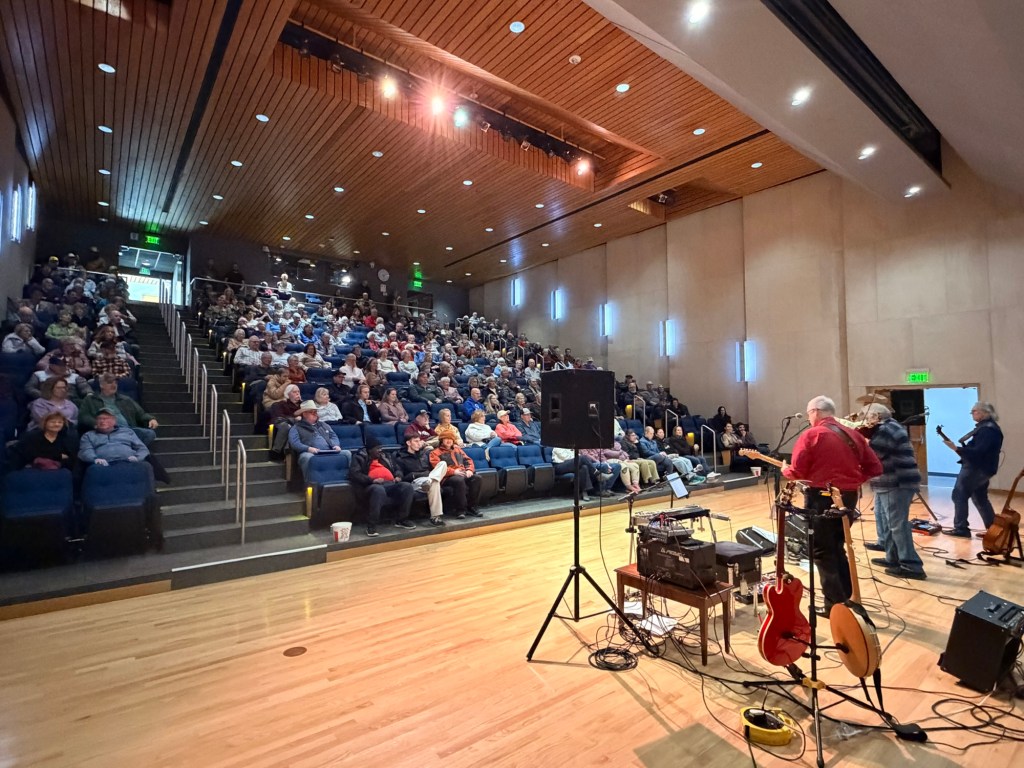
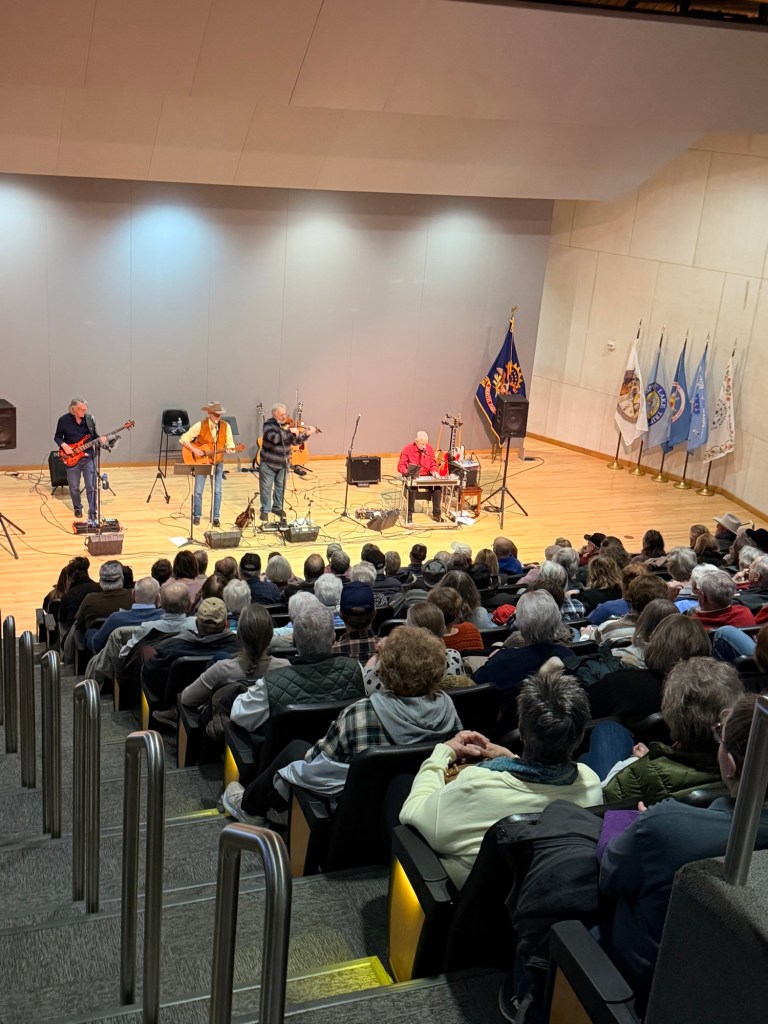
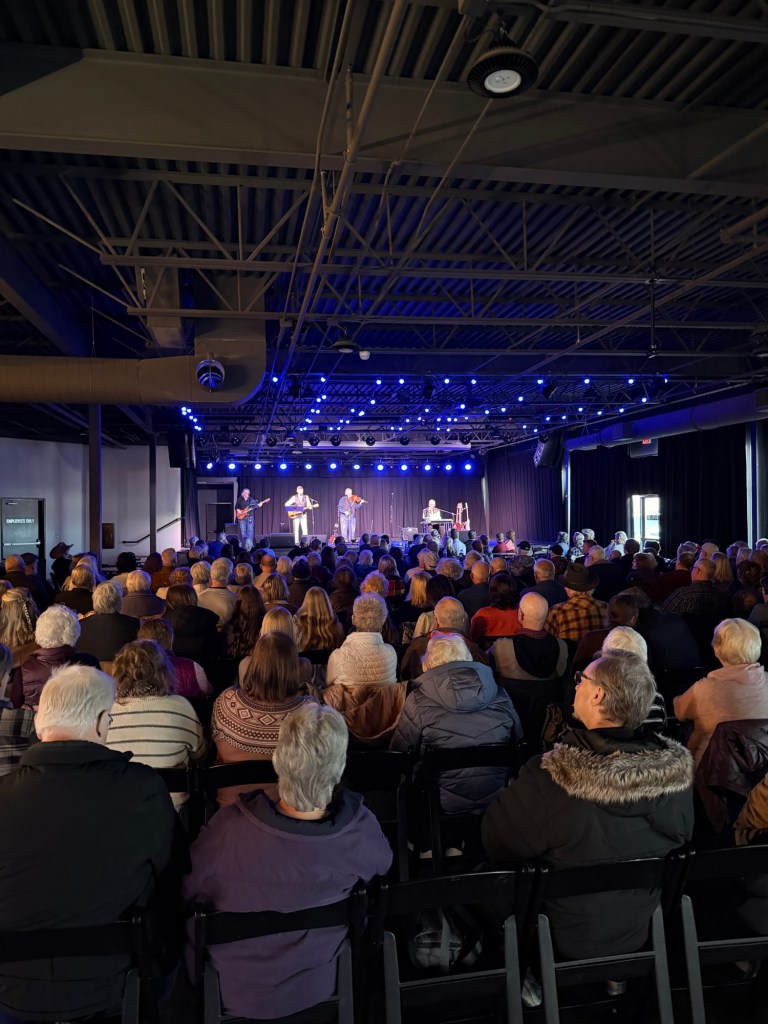
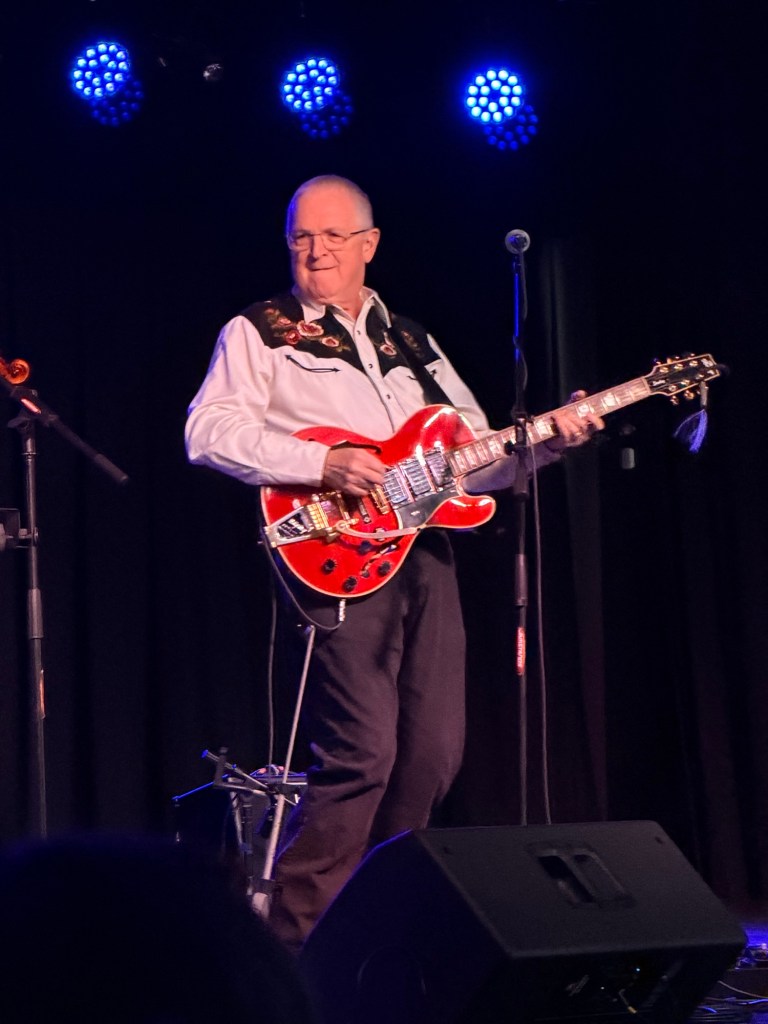
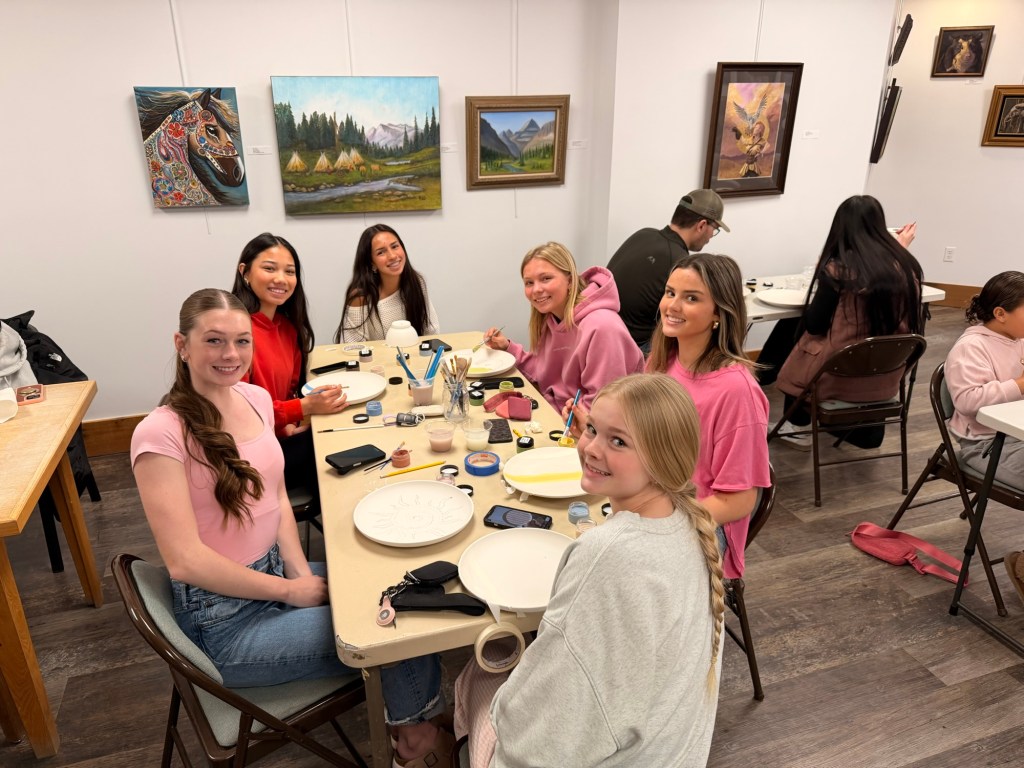
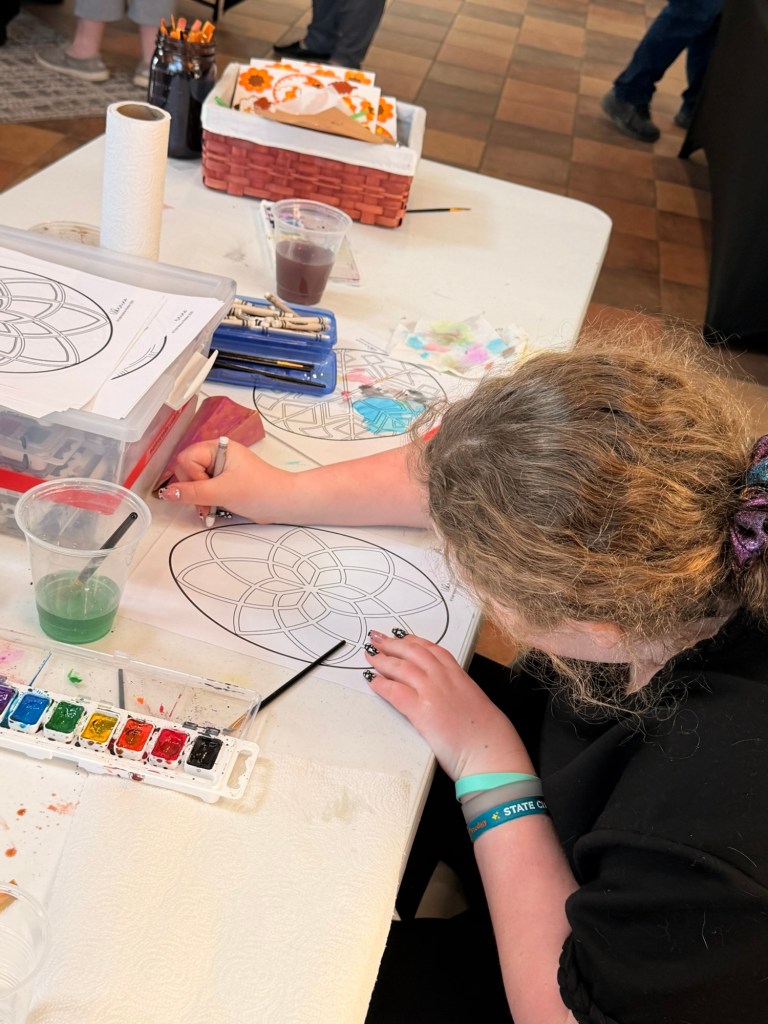
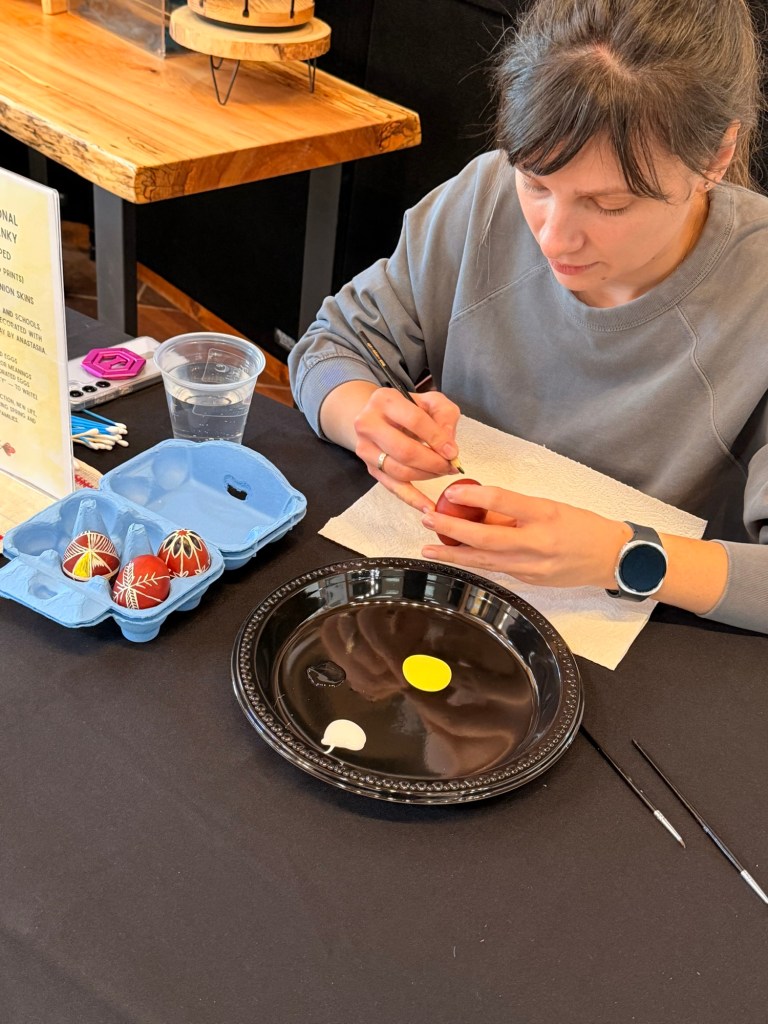
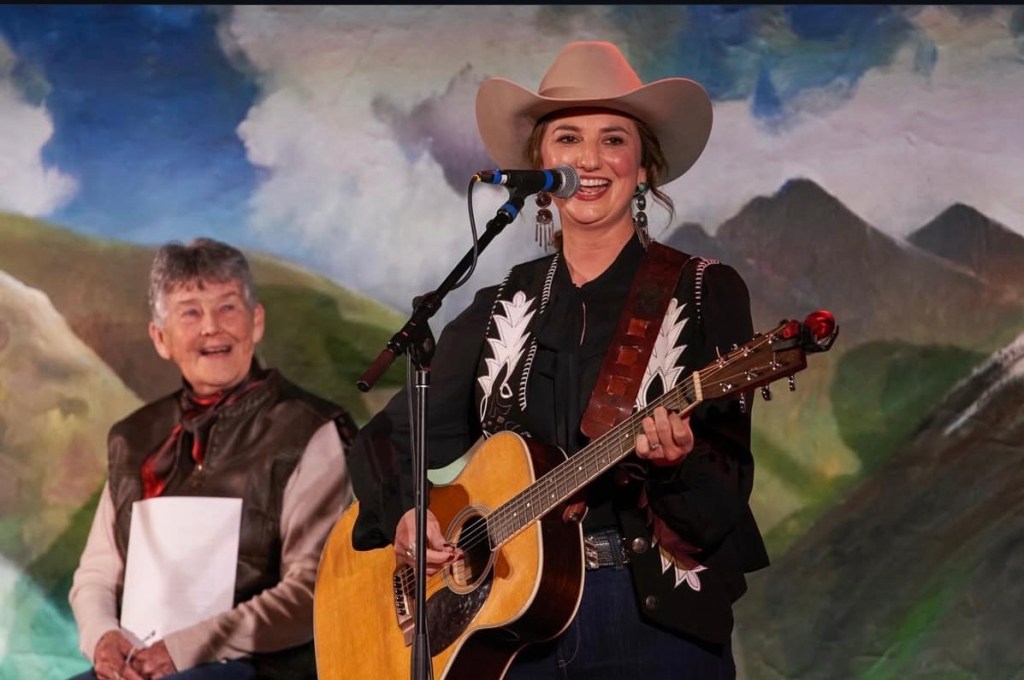
Which brings me to the art. I’ve spent most of my career working to figure out how to bring more of it to rooms of people in rural communities. And over the course of six months or so I’ve seen that vision really blossom in the work we’re doing with our arts foundation. And I’ve felt it more profoundly on the stages on which I have been so fortunate to stand and sing. The rooms have been full, every seat in the crowd there waiting to listen, to tap their toes, to feel connected to something. Every chair sat behind an easel waiting for instruction, or body hovered over a paint pallet looking to create, is there to make something that wasn’t there before. Not for money. Not for acclaim. Not for anything but the learning, the sitting together, the laughing, the making. 

What is that?

 What brings people out of their homes or out of the everyday tasks of being human to create or witness art? And why is it hard to explain? Maybe because it’s primal? Like, we weren’t born to live behind computer screens, or to move eighty-miles-per-hour down a four-lane highway for hours a day. We weren’t born to know tax structure or the best product made to clean our floors. But turn on some music and watch a baby start to wiggle. Give a toddler a brush and watch her create circles. Grab your husband’s hands and he might just spin you around. Sing “You are my Sunshine” to your ailing grandmother and watch her toes tap and her lips move to sing along.

I told my kids the news the other day. They cried a bit because cancer is scary. I told them I was going to be just fine, but daddy might make them do the laundry when I’m gone. I showed them my muscles; they showed me theirs and then hit the ground to do some pushups. They can do more than me. Way more.  

After school, they asked me if it was still ok to feel happy. It hadn’t occurred to me that I needed to give them that permission, but now I know. We turned up the music loud on the way home, they sang the National Anthem at the top of their lungs in the kitchen while I made supper. They sit at the table and draw pictures of aliens and unicorns and a girl on a hill with long black hair. They dance down the hallway with the music on blast on the way to bed. I sit behind my guitar in the dark when they’re sleeping and things I didn’t know I had to say come out of my mouth in a song. 

We lose this instinct, and we lose ourselves in the sorrow and callouses that living creates.  We can’t let it happen. It’s an emergency.

“Nothing’s Forever” a Podcast Interview

Heya! Happy Friday! I’m celebrating the weekend by watching the snow fall, practicing my set for a couple concerts across the state next week (see you in Moorhead, MN?) and catching a rodeo in town on Saturday night. I heard there is going to be a trick rider and Rosie is PUMPED. (Because, according to her announcement at her pre-school graduation, that is her career aspiration.)

Recently I had the chance to sit down and talk to the brilliant and resilient Jackie M. Stebbins. I met her at a women’s writing event and in the short time we had together we could just tell we were cut from the same cloth. Jackie is a former accomplished attorney who operated her own law firm until her life was sidetracked by autoimmune encephalitis. Autoimmune encephalitis is a rare and can be fatal brain illness that is caused by a person’s immune system mistakenly attacking healthy brain cells. Jackie is now a writer and motivational speaker. She uses her high energy personality, positive attitude, and story to spread awareness about autoimmune encephalitis and to share her inspirational resilience.

Throughout my life as a writer and performer I am consistently reminded of the importance of sharing our stories, not just of hope and success, but of struggle. Jackie is honest about both and is using her struggle to help others feel seen and heard.

It’s hard for me to listen back to hear myself talk on these programs. But with Jackie, I was given space to really open up about how health struggles affect every aspect of your life, and the lives of those around you. She gave me that space and does so with others as well. I am proud of this conversation about music, motherhood, cancer and pushing through. Thank you Jackie. We could have talked for hours.

Listen to the podcast below and pick up Jackie’s book here: “Unwillable: A Journey to Reclaim my Brain” or on Amazon or Barnes and Noble.

Hope to see you in Moorhead on March 28.

Scars

Listen to the podcast here or on Spotify, Apple podcasts or wherever you get your podcasts

Three summers ago, when my daughters were four and two, we brought them to the shores of Lake Sakakawea to take a boat ride and get an ice cream cone at the marina. I was only a couple months or so post-surgery to remove the tumor that had been blocking a large part of my airway, the one that sliced me right down the middle and left me with three scars where the tubes went and one big one that, for a while, and at that time when it was fresh, resembled a zipper, nice and straight starting at my clavicle and running all the way down my sternum.

I like to think now, from far away, it makes me look like I have the cleavage God never gifted me, but I digress…

Anyway, at that time I wanted to do anything and everything that got me out of the house and distracted from the pain of healing up and the worry and fear that would cling to the back of my throat if I laid too still or it got too quiet. Not that it was ever quiet those days with two daughters young and healthy and growing in the summer sun, a blessing that would keep me out of my head and into their latest art project or wild thing they were attempting to catch. So that hot day we all put on our swimming suits under our shorts and summer dresses and headed out to do what normal families do when they don’t have a mom recovering from major surgery and are spared, at least for now, the black cloud of cancer or loss, as if any breathing adult is walking around completely free from burdens.  As if being a human isn’t knowing what could happen, what inevitably is going to happen, and mowing the lawn or ordering the cocktail or training for the race despite it or because of it, depending on the day. Depending on the outlook.

The girls swam and made sandcastles and swatted away the horseflies and we probably ate the sandwiches my husband made or maybe we made the decision to just grab a cheeseburger at the marina restaurant, what we all wanted to do in the first place. Truth is, I don’t remember the exact details of the day. I don’t remember what my daughters’ swimsuits looked like or even the little nuances we swore we’d never forget, like all the words two-year-old Rosie mis-pronounced or the soft pudge of their toddler cheeks under my smooches, but I do remember I couldn’t lift them then, so they would hold my hand and ask me when. And I do remember they would want to see that scar, to face it, to know about it, even when it was fresh and scabbed and weird and new. And they were young, and I was their mom and while I only had a few years of this parenting thing under my hat, I understood quickly that if I wasn’t scared, then they weren’t scared and so I wore that swimming suit and put on the sunscreen and lived in the world with my big new scar and that was it. This was a part of us now.

I have a point to make here and I get to it more quickly when I tell this story on stagewhen it’s my mission to argue that our failures and imperfections, our bumps and bruises and struggles aren’t for hiding, but for acknowledging, and here’s why. From across the yard of that marina, while I was standing up by the picnic tables to help situate my daughters, a man waved at me and yelled “Hey!” I looked up thinking that I knew him, but I didn’t know him, and so I just yelled “hey” back because we’re friendly here. And then he pointed to his chest and loudly asked (because he was across the yard) “Heart surgery!?”

“No!” I replied, understanding in a few beats, what he was asking. “Tumor!” I yelled back, suddenly and weirdly feeling a little proud that a stranger noticed and acknowledged the very thing that had been running and disrupting my life for months and months.

“Oh, heart surgery here!” he yelled back, pointing again to his chest before giving me a wave and getting back to living a life he was given thanks to that scar under his shirt.

Once, right after my surgery and before this stranger and I nonchalantly hollered at each other about the most terrifying time in our lives, I had a woman ask me why I didn’t hide my scar. She said her husband had one too, but she buttons his shirts up to the top for him if he forgets. She’s embarrassed? Maybe. Or maybe it just reminds her how scared she can be. 

I told her I wear it for all the people who would have given anything to wear this scar if it meant they had one more day here with their kids, or in their garden or on their boat fishing the rocky shores and stopping in the marina to grab a bucket of minnows and a candy bar. It never occurred to me to hide it, but her question made me wonder why, really. The exchange with the stranger on the edge of that lake that had me proudly declaring the imperfection to him and my daughters and anyone withing yelling range, solidified the reason—if you allow yourself to be truly seen, scars and all, others see themselves in you. I argue the act brings with it more hope and acceptance and love than anything else we can do for one another, and that can make all the difference in the healing part.

And also, sometimes, those imperfections can make you look like you have cleavage, at least maybe, from far away…if you squint…

On pain and carrying on

Dealing with chronic pain requires taking things one day at a time
Forum Communications

To those of you who are suffering with chronic pain and showing up to your life, day in and day out as best as you can, today I want to say “I see you.”

For the past year or so, before the scope and sternum surgery that removed the tumor from my airway and declared me cancer free, and for the months since, I have been dealing with chronic headaches and nerve pain that is always there, sometimes putting me flat on my back and other times relenting just enough to allow me to do something other than think about the pain. I’ve been doctoring, researching, trying medications and treatments, changing my diet, justifying it as a repercussion of the trauma my body endured and crying in frustration because I want my life back to the way it was before.

Today I feel like I’m finding a light at the end of the tunnel, help through physical therapy and check-ins at Mayo Clinic, and I’m feeling hopeful. Hopeful enough to realize that maybe it’s time to share it here. Because people on the street, or at the grocery store, and, of course, in my circle of family and close friends, they ask me how I’m feeling. And, in the spirit of being honest, I’ve made a promise to myself after what I’ve been through, to not beg off on that question. In the spirit that my story, even if it’s not pretty right now, might help someone else.

And so, I tell them: I’m still recovering. I’m hopeful I’ll get to the other side of this.

But man, when you’re in the middle of it, in the middle of work that needs to go on, in the middle of motherhood and trying to be a good partner instead of a sick partner, in the middle of wearing out the optimism, putting off big plans not to mention the laundry, and worst of all, shushing my children when I should be dancing with them in the kitchen, it’s hard.

Because it turns out that the level of their voices, their enthusiasm, temper, frustrations or needs don’t quiet down because we aren’t feeling well. In fact, I think, these children might amp up just to see if we’re still the momma or daddy they know us to be. Turns out we still want to/need to be a parent even when it physically hurts to raise our voice or comb their hair. And the house seems small when we so desperately need a rest, especially when they find us at the moment we’ve finally fallen asleep, or snuck away for a shower. They want to climb in the bed or get help with doll clothes or need a drink or to tell us how her sister wronged her. And we listen while our body aches or works so hard to heal it feels like we’re drowning…

And so this is another lesson I’m learning in compassion during the past year or so of getting rid of cancer and trying to heal up a body that is screaming at me. Because I’ve been smiling and carrying on as best as I can despite it, it occurred to me that there are people around me doing the same thing day in and day out, working and raising kids, taking care of aging parents and businesses, serving on boards, continuing to show up while coping with physical pain or mental illness that tries its hardest to break them down. And when you ask them how they are, they will say, “Oh, just fine, thank you.”

And so today, while I’m feeling good and hopeful, feeling like I have a plan and that I can see the other side, I just want to tell you that you are strong and brave and doing good. I pray you get well if you can, and if you can’t, you find relief from the pain and a peace to the chaos.

And while I’m here, thank you a million times to the partners, family and friends who are fully and completely here for us, to pick up when and where we can’t.

Here’s to one day at a time and a better tomorrow.

Resiliency

Resiliency
Forum Communications

Those of you who have been following along here know that this spring I was diagnosed with a cancerous tumor that laid a good portion of real estate down in my airway, nearly blocking both of my lungs entirely.

Five months, two surgeries and a big ‘ol scar later, here I am, cancer free and able look back on this as a blip. Hopefully it stays a blip…

And there were many things I learned during this process, of course, but what has been the most interesting outcome has been people asking me how I stayed strong and kept hope during the uncertainty and pain, as if holding the scar meant I held some sort of secret.

Because don’t we all need some hope about now?  Don’t we all just want someone to tell us it’s all going to be ok?

The truth, of course, is that I haven’t always stayed optimistic. I didn’t always hold hope up. I had plenty of moments of completely losing it, going to the darkest possible outcome in the middle of the night, or when the sun was shining, or when my kids wouldn’t stop whining in the car for fruit snacks I didn’t pack…

I had my moments.

I still do.

I’m still terrified sometimes. 

But not as terrified as I am grateful.

When I was first diagnosed with the tumor in Bismarck, my husband and I sat down with my doctor to take a look at it and make plans for Mayo Clinic. I remember telling them, “I can’t believe I recorded an entire album with this thing!”

And then my usually stoic husband chimed in–“Maybe you should rename it ‘Tumor Tunes.’” My doctor about choked on his mask and we all started laughing.

And I didn’t know then how bad it was going to get, or what the next six months were going to look like, but after I let my thoughts wander, I find that I somehow always default back to the place where everything is ok. Because being terrified doesn’t work for me if the end goal is that I want to go on living.

It doesn’t mean that I’m naïve, or unaware of precautions or process or the worst of it, but I’m pretty good at convincing myself that I will, we will, get to the other side, whatever that side looks like.

Having that mindset then frees up some space for things like laughing. Because even in a personal crisis, the world keeps on turning and I didn’t want to miss it.

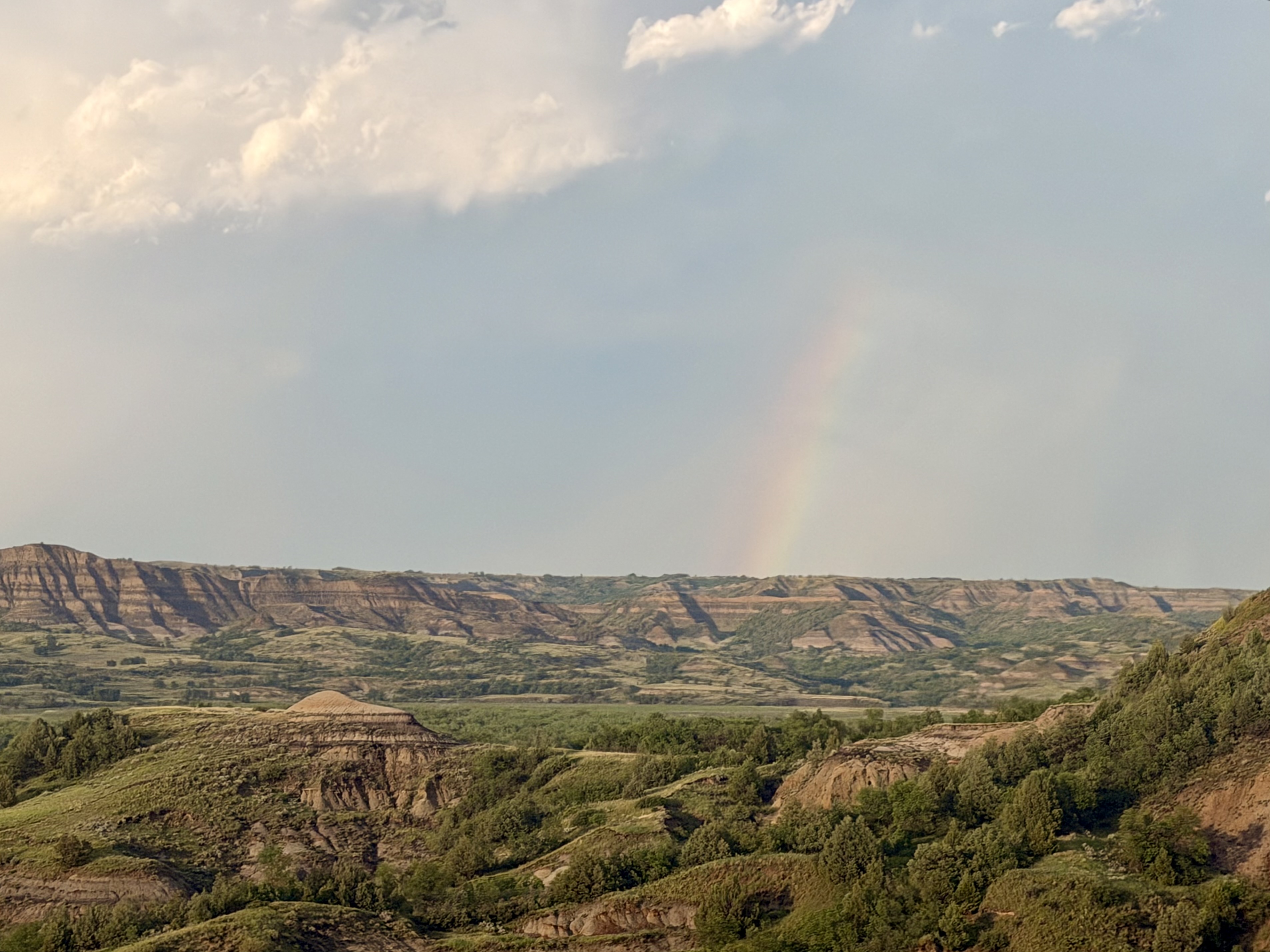
But am I saying optimism is hope? In some cases, yes. But being raised out here in the rough country of western North Dakota, I’ve watched enough calves brought inside from winter storms, witnessed Mother Nature change the best laid plans and have been bucked off of enough to be able to confidently call bull on that ‘ol phrase  “Get back up on that horse again.”

Yeah, sometimes getting back up is the only way to get through. But other times resiliency means knowing when to put that horse out to pasture before he kills you.

Knowing when to quit can often be the bravest thing we can do.

But you don’t have to be brave to be tough. Sometimes in order to see what we’re capable of, we have to be scared out of our minds. What turns us from afraid to resilient is what we do about it.

I wish I could ask my immigrant great grandfather Severin about how he felt coming across a million miles of ocean from Norway to lay claim on a property he’d never laid eyes on.  Or what it was like riding his bicycle 80 miles cross-country to his homestead. Think he was scared as a teenager on that ocean, wondering if he’d ever see his homeland again? Think he was scared raising 12 children on this unforgiving landscape.

Think he was scared walking through a herd of cattle that a group of cowboys ran across his farmstead and sorting out the ones they had stolen from him, one by one?

And if I could ask my great grandparents what made them keep fighting through the fear and tough times, I bet they would say what my grandparents would say, what my parents would say and what I would say now to my daughters now…

If it’s worth fighting for, it will give you a fight. And if that fight looks like sailing the ocean or walking miles alone, then you do it, even when you’re scared as hell. 

But sometimes the fight looks like asking for help, and, you wouldn’t guess it, but that might be the hardest part of all of it. But then, when you come up for air, screaming and kicking and ready to live again, you will know exactly how to pass it on.

The heartbeats in between

The heartbeats in between 
Forum Communications

My husband and I celebrated our wedding anniversary in my surgeon’s office on the fourth floor of Mayo Clinic, almost 700 miles from the oak tree on the ranch in western North Dakota where we were married 14 years ago when I was on the edge of turning 23. We vowed for better or for worse, in sickness and in health, as if we really knew what that meant at all.

But we never know what’s coming, do we? We’ve sure learned that lesson in these 14 years, watching our plans try their hardest to fly out the window while we hang on for dear life. Turns out, even when you think you might never come up for air, there’s always the surface, the other side of the hard things. We just have to wait for it.

And so we treated our latest visit to Rochester as if we already knew the news. Eight weeks out of a sternotomy to remove a cancerous tumor attached to my airway, I was feeling a bit more like myself, a bit more like laughing, a bit lighter from the weight of pain easing. After dropping the kids with the in-laws we took to the road like we were going on vacation. Because why not? We were together. We were OK. We were driving along Interstate and highway surrounded by sunflower fields reaching toward the sky and corn taller than two of us stacked up.

We spent the five days between doctors and tests eating as much as we could and finding shelter from the rain and sun under Minnesota trees and patio umbrellas. Once, as we were indulging in a 2 p.m. cocktail and late lunch, the woman a table over stood up to tell us that we really know how to live. We didn’t know if it was the calamari, the drinks or the loud laughter, but we decided it was the best compliment we could have received.

To know how to live.

BF134834-02BE-44CA-92B1-5D6B2FCDFBD3

I’ll tell you now that the doctor, on our 14th wedding anniversary, told us I am going to be OK. He said he couldn’t have done a better job repairing my airway. And that the cancer? Well, he got it all.

Life will now look like a big scar down the middle of my chest and a CT scan every six months for the foreseeable future to make sure the cancer stays gone, moving it to the back of my mind, instead of the center of our worries.

And for that we are the lucky ones.

Fourteen years ago I carried sunflowers in my bouquet as I walked down the “aisle” in that cow pasture, toward the man who would become my husband that day. Little did I know that it takes so much more than a wedding to make a marriage. Little did I know that the only thing you can really count on is that things go wrong.

And then, right again.

As we headed west out of Rochester and toward the rolling buttes of home, I imagined those fields of sunflowers waving us on into a new year, a new season, spectators with encouraging smiles, reminding me of the love and support we’ve received from our family, friends and community during these past several months.\

3A8043A5-9938-45F0-9FEB-2624DFA031C6

Reminding me that life is just a series of triumphs, roadblocks, joy and heartache. But my favorite times have always been the millions and billions of heartbeats in between.

On the road to recovery

I had an interview this morning with a local news station about my health this week. It’s still weird to be talking as a cancer patient, especially when I thought I would be using this time to perform and promote on behalf of the new album. But as we all know, plans change, you’re not promised tomorrow and I’m nothing if I’m not resilient. I’m happy to share my story if it inspires someone to fight for their health and for the life that they want.

You can watch the piece at the link below:

Watford City recording artist on the road to recovery after cancer diagnosis

Screen Shot 2020-08-01 at 1.29.42 PM

Pre-order a signed copy of the new album, Playing Favorites at jessieveedermusic.com 

Playing Favorites Album Art

Peace, love and good vibes only,

Jessie ❤️