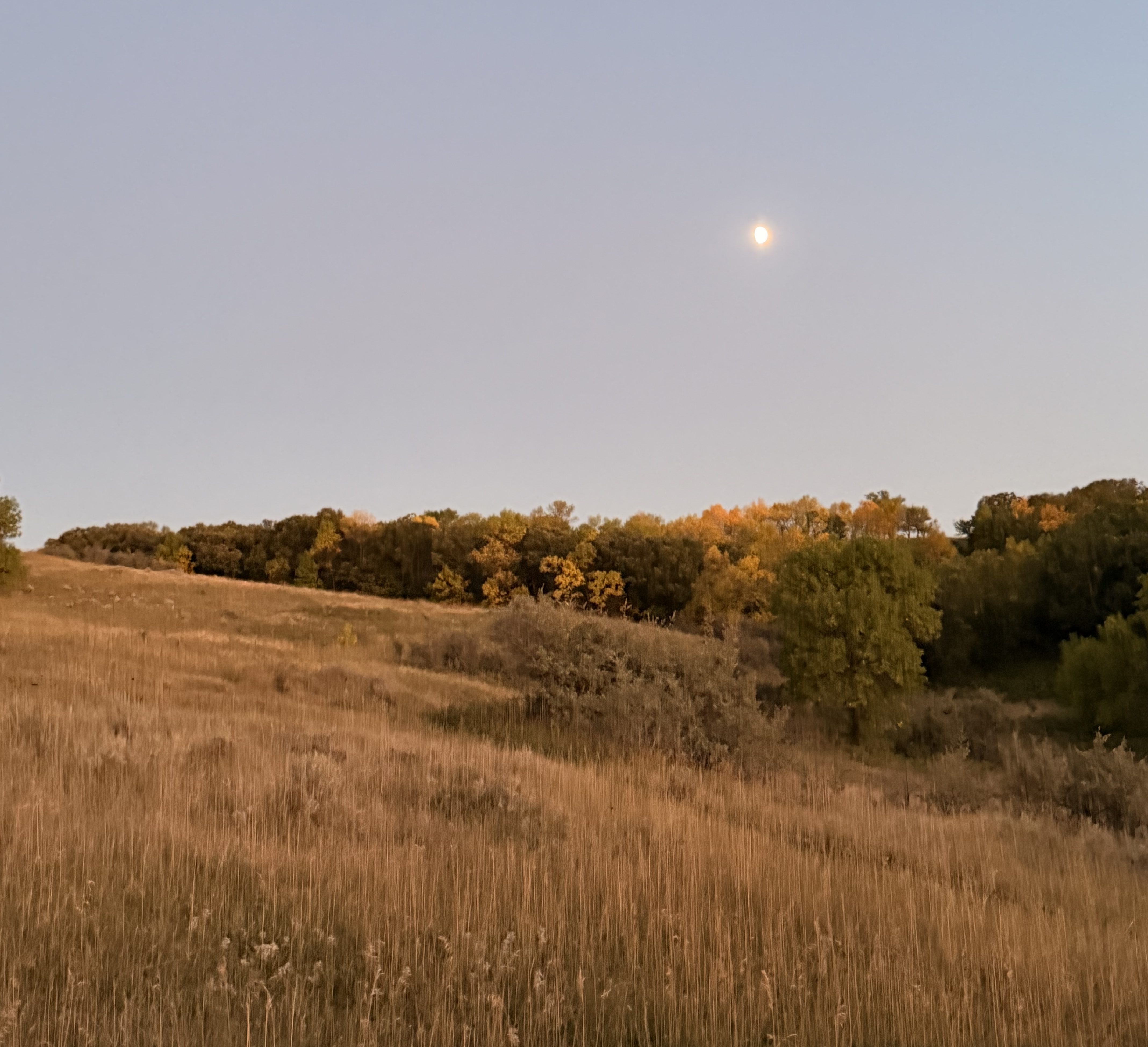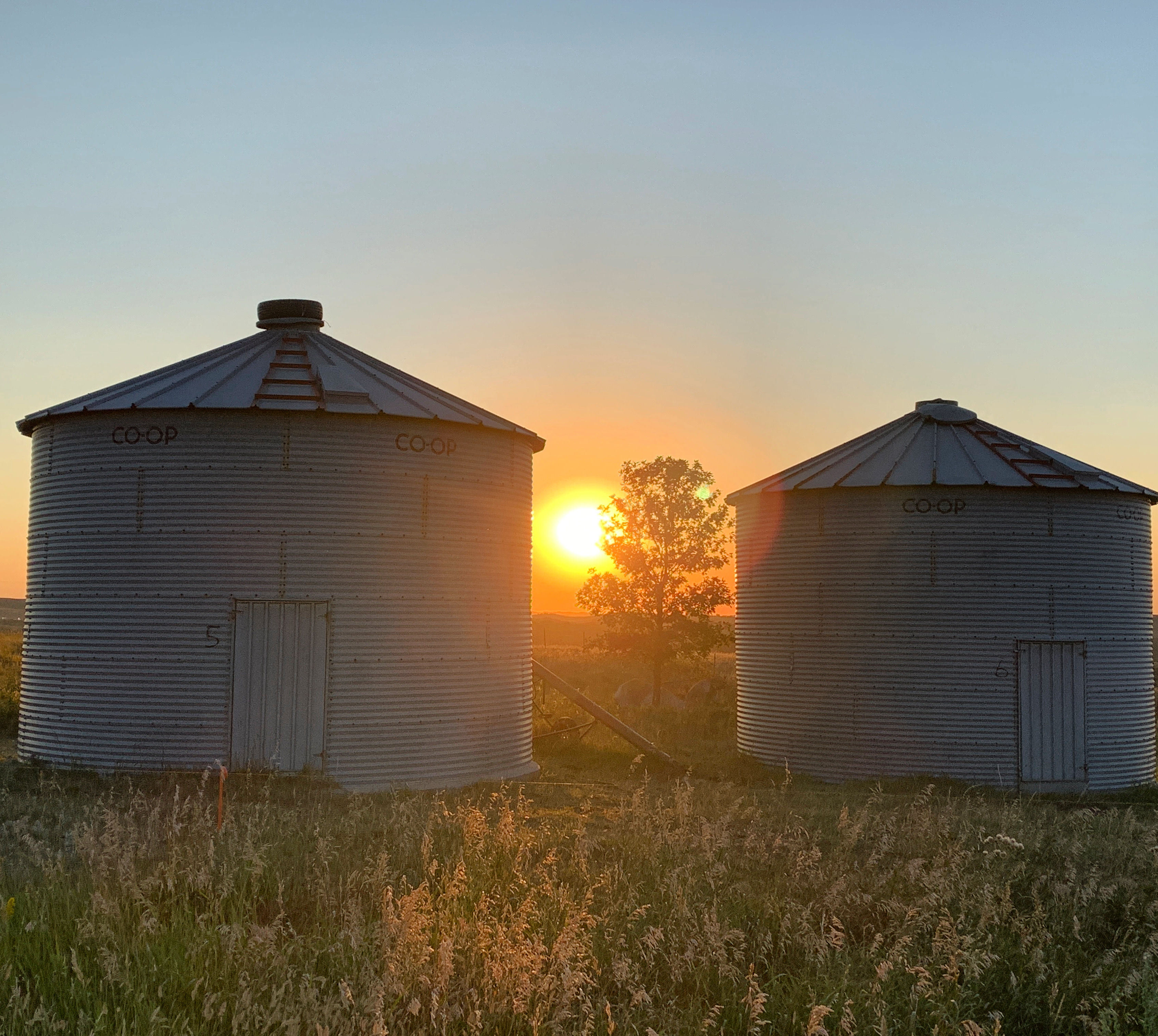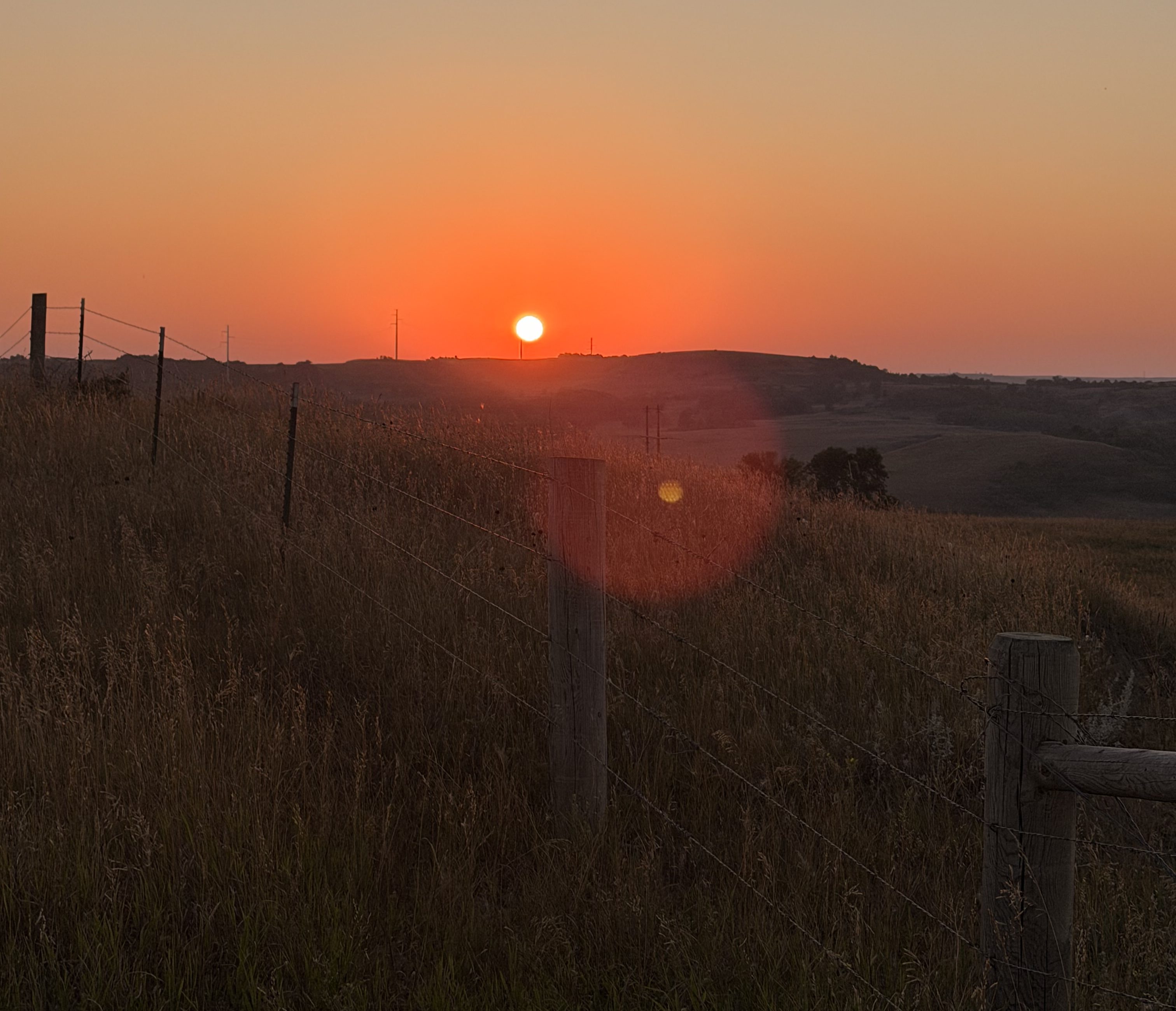
It will be hot in the summer

It will be hot in the summer. It will be the end of July heading into the dog days and the air conditioning on your main floor might not keep up. And the day before you were working outside and it was 95 degrees and the sweat dripped off your forehead and into your eyes. And it slithered down your back too, soaked through your shirt, but you found a bit of shade for a break and a drink of water, and you caught a little breeze and you said out loud, “Breeze feels good,” and he said, “Yeah, sure does,” and only a hot summer day makes you love a tiny bit of wind that way.

It will be hot in the summer and the air conditioning on your main floor might not keep up, but maybe there’s a basement and maybe it’s Sunday and maybe it’s so cold down there you need a blanket to cover the two of you on the old couch while you watch a movie you picked and he hates. And maybe you fall asleep anyway and maybe he doesn’t move because he likes the way your head feels heavy against his chest that way, the way it used to, I guess the way it always has, when you fall asleep on him. It’s been a long time, and it was a hot day and maybe you’ll think there’s nothing better in the world than that nap.

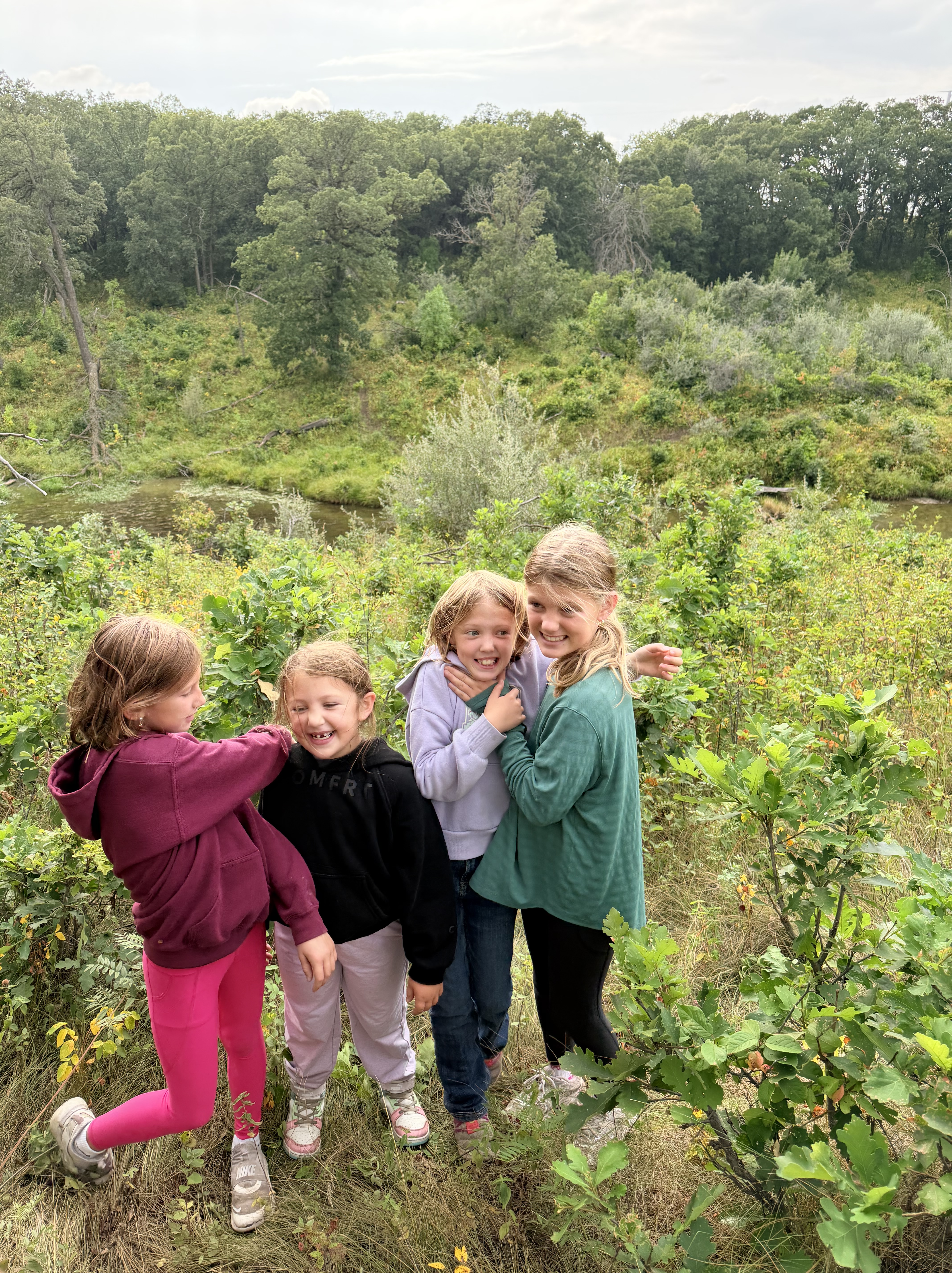
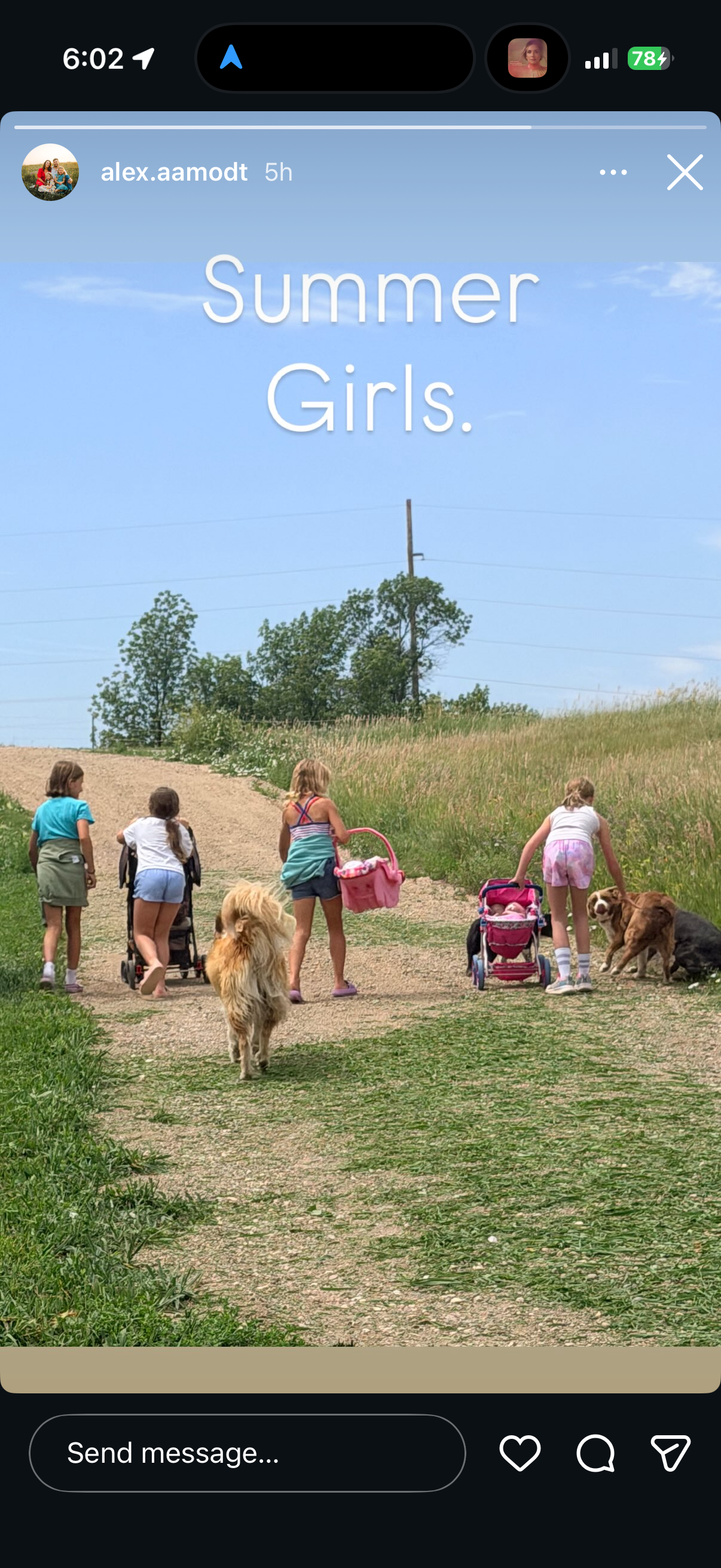
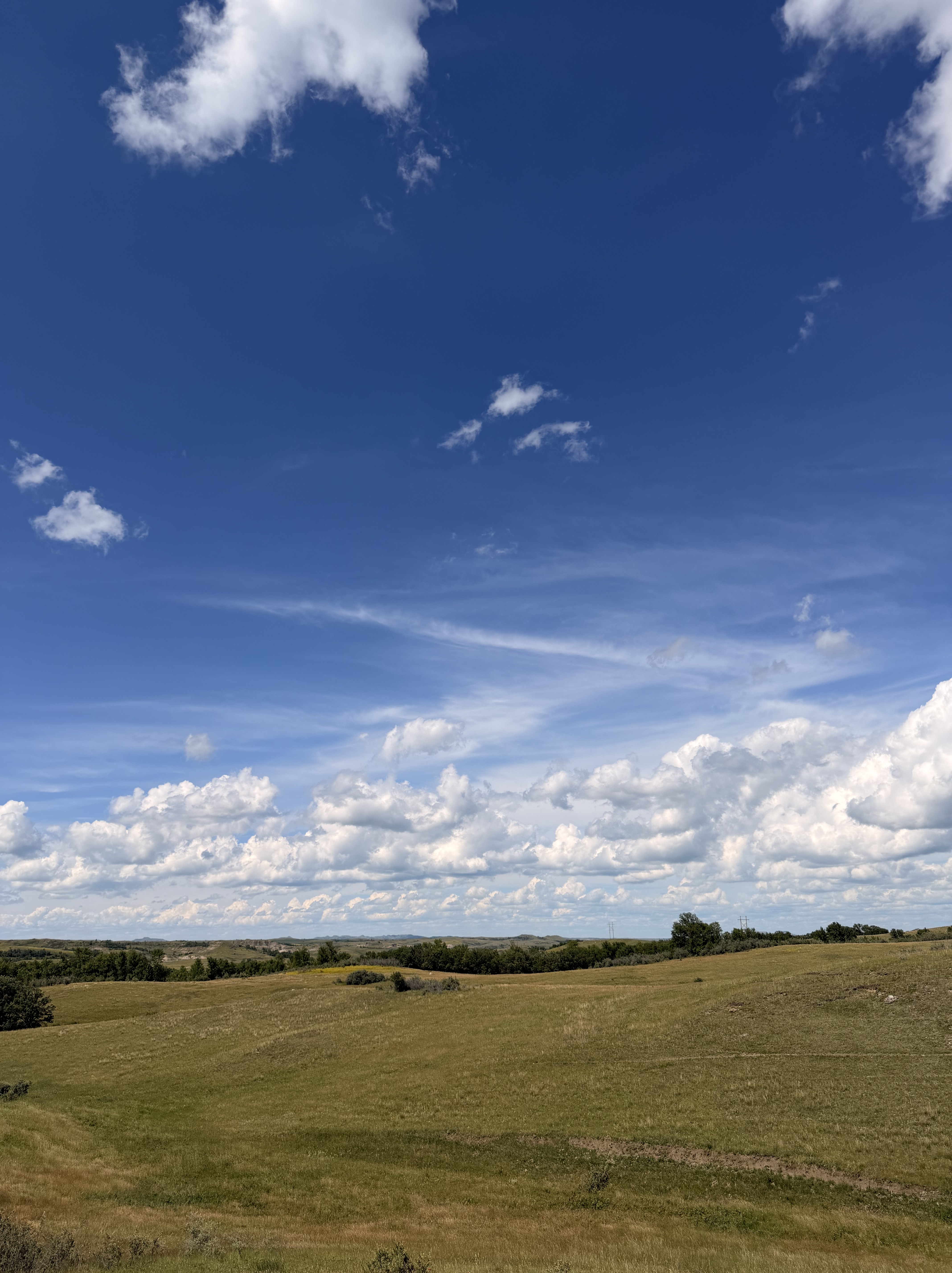
It will be hot in the summer, and it will be the end of July heading into August and maybe your cousin will call to tell you to put on your swimming suit and get on your bike because the sprinkler’s on under the trampoline and maybe you’ll jump and slide and giggle for hours, grass clipping stuck to your little bare feet, the sun and the water helping you grow like a flower.

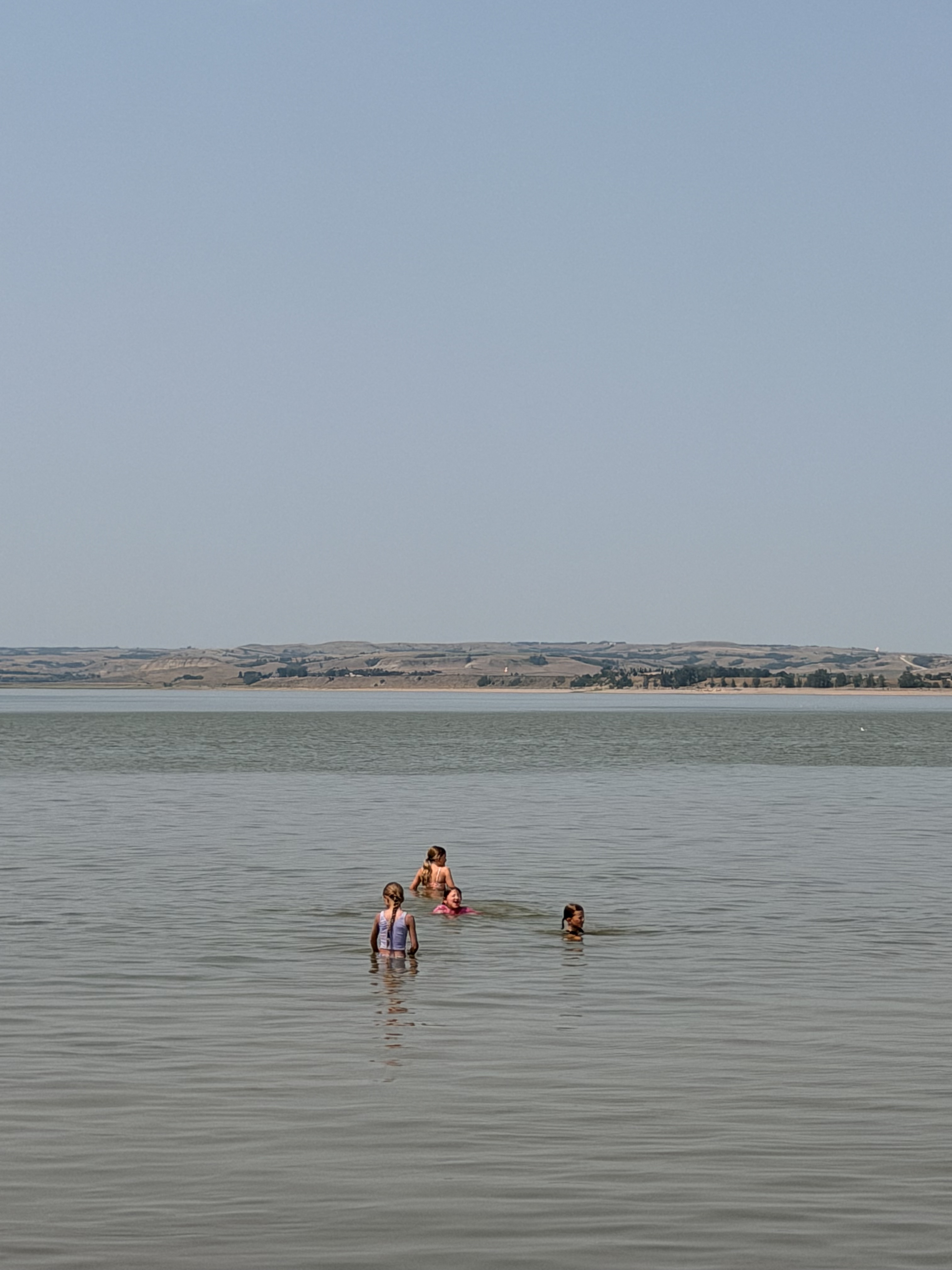
It will be hot in the summer, and it will be the end of July and maybe you had no plans for a Saturday and maybe you were feeling bad about that because it seems like everyone you know is at a lake or in a pool somewhere. So then maybe you just decide to throw your camp chair in the back of the car and head there yourself because who says you can’t just go jump in that big lake on your own? It doesn’t have to cost a thing to sit on the shore, maybe just the $3.99 bag of sunflower seeds and the two Coors Lights you keep in the back of the fridge. And the bug spray because the black flies bite out here in the heat, but it’s hot in the summer and that shore is yours too and so you take it and you wade in slowly, up to your waist before you let the cold water finally rush over your head—you pop back up to face the sun smiling.

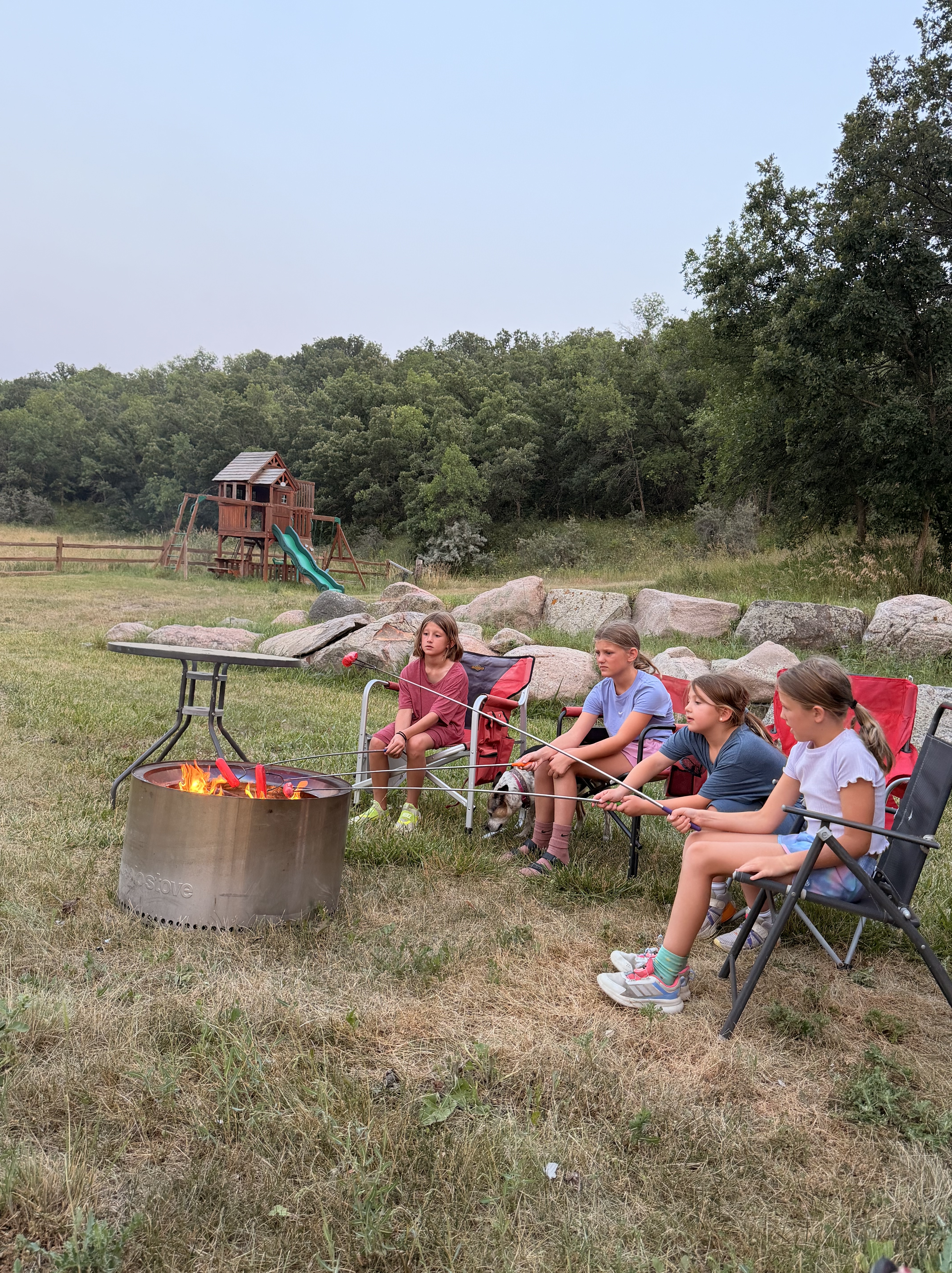
It will be hot in the summer, and it will be August and in four days your job will end, and school will start and you will be seventeen. Maybe it’s a Friday night and maybe you call your friend who has one of those big round pools that sits above the ground in her backyard and you have floated back there with her almost every hot afternoon of your childhood, and so this day will be no different except that in four days you will be in your school clothes again, no watermelon pool ring in sight, and it makes you feel nostalgic for the moment you’re still in, but missing already somehow, and that’s the first time you’ve felt something like that. It’s summer and it’s hot and your legs are tan and your best friend’s face is freckled, and you don’t say much then, you just sing along to the songs you know on her mix and float and float and float.

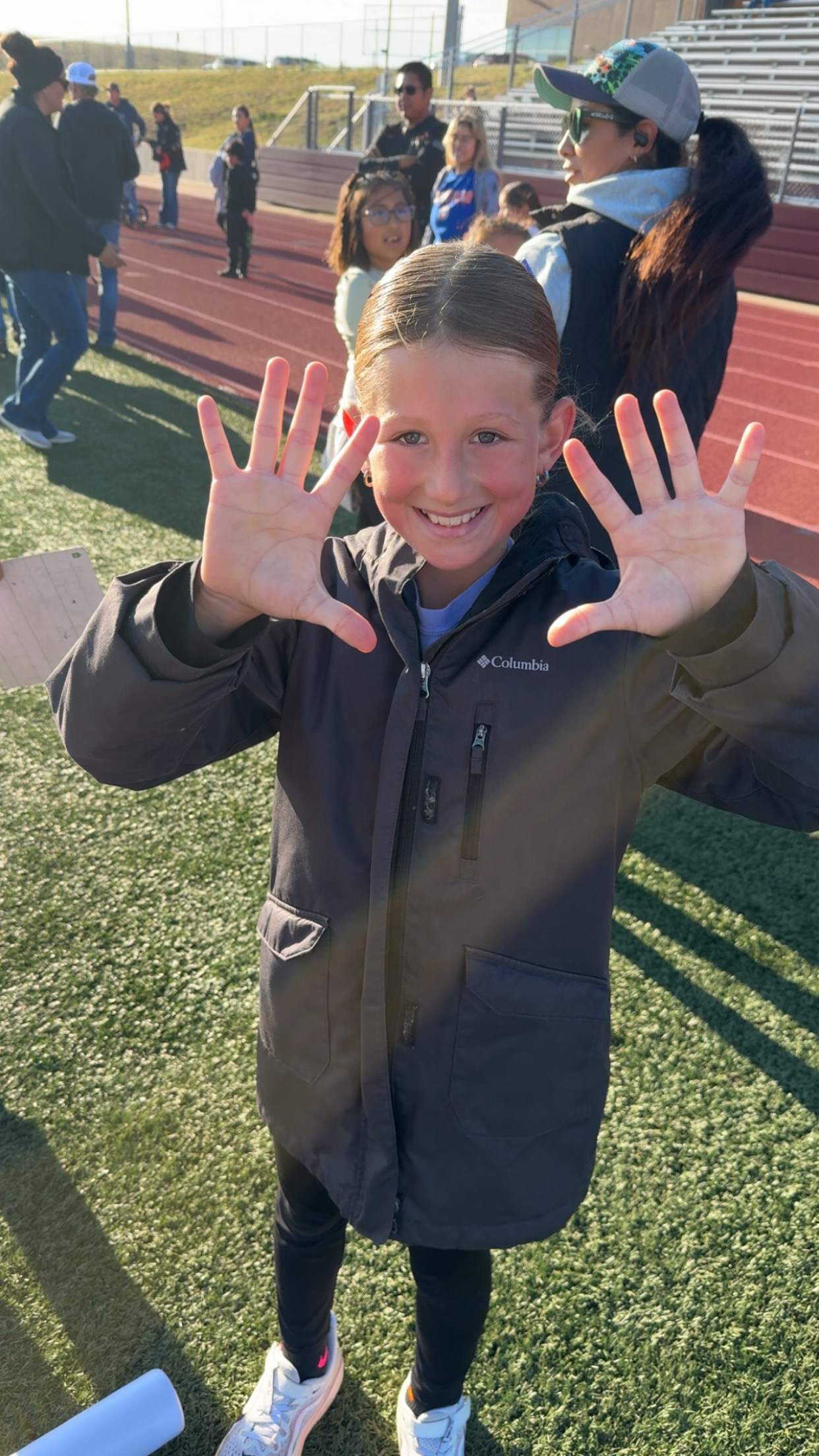
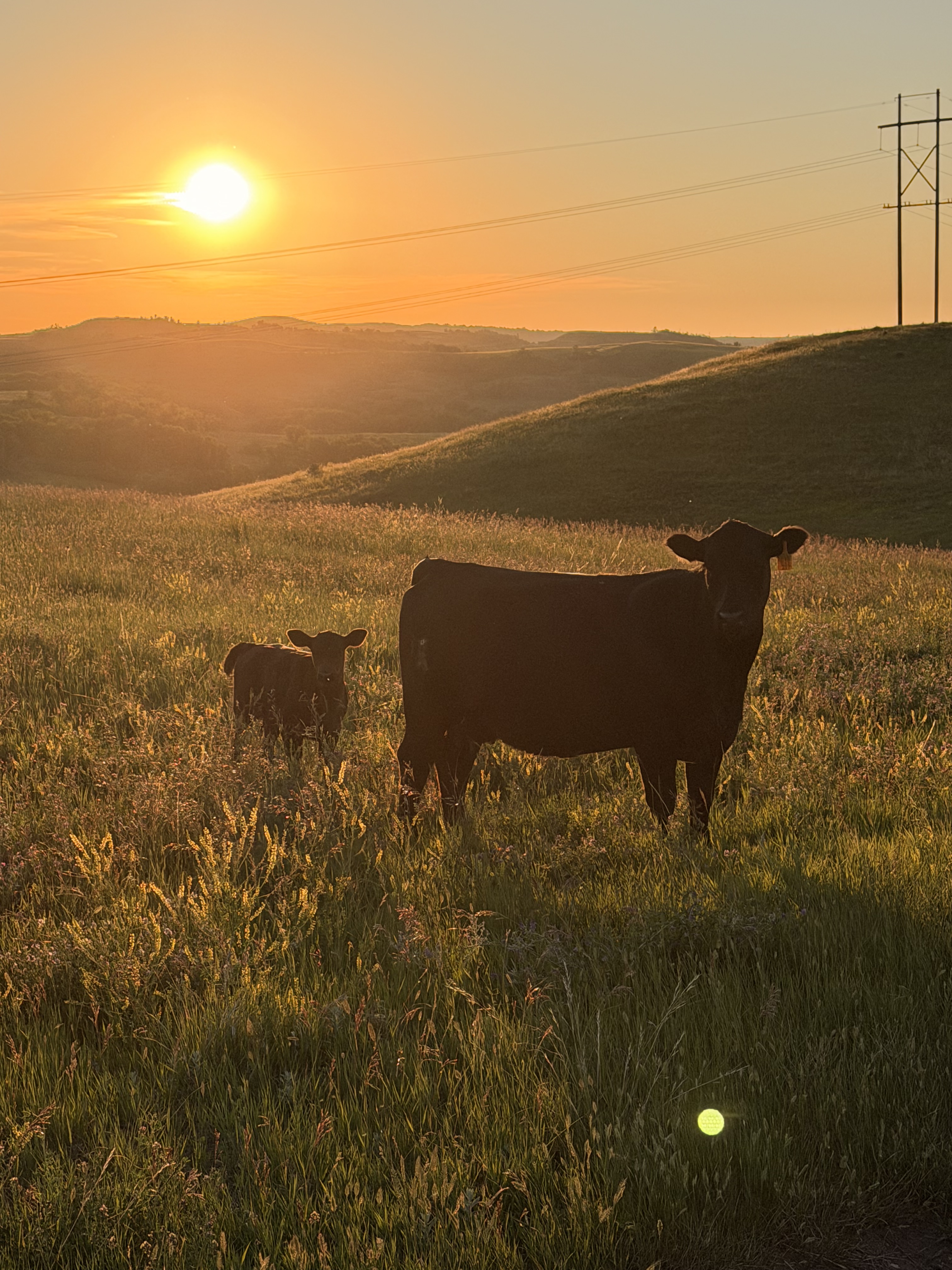
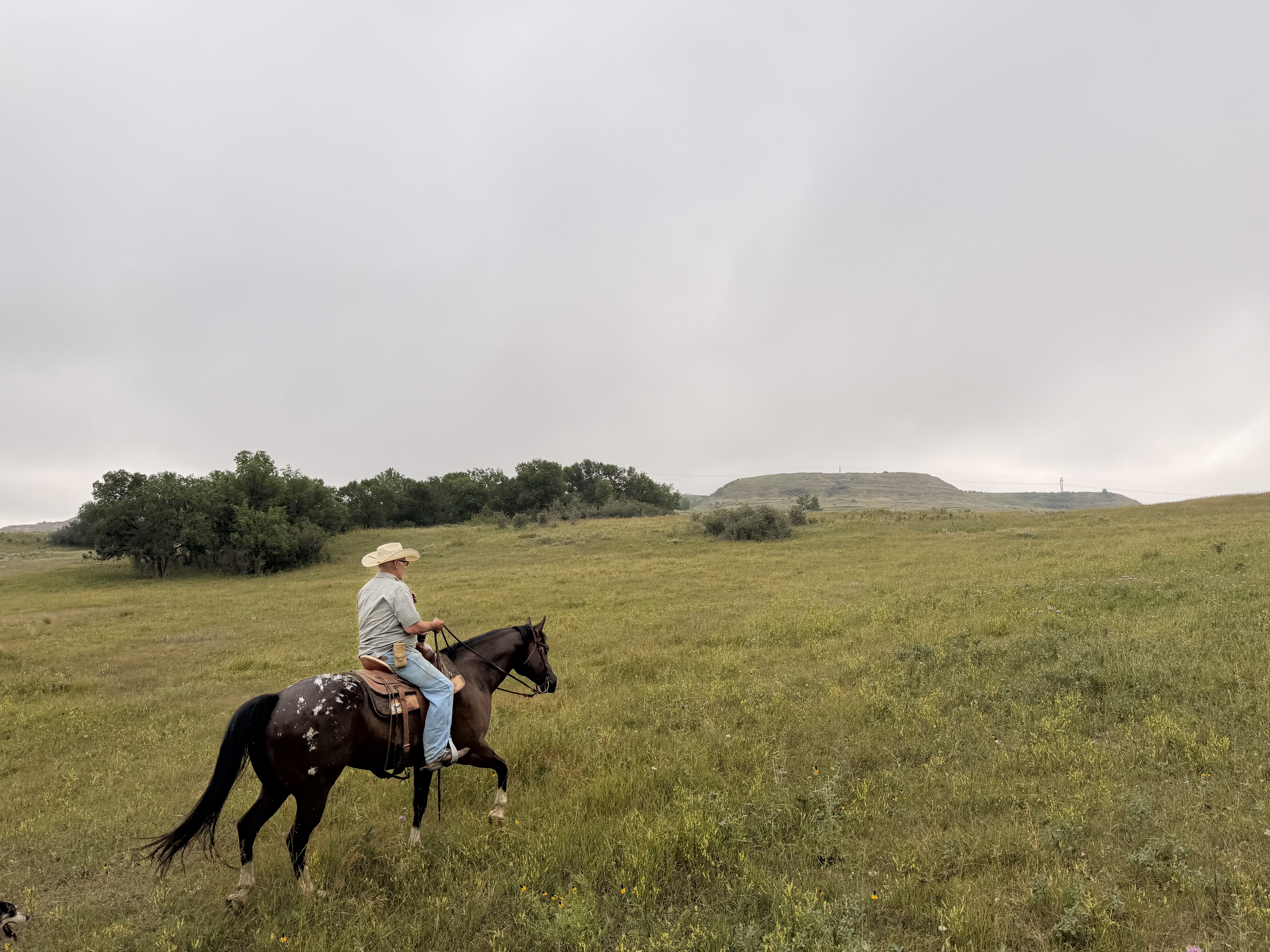
It will be hot in the summer and it will be the end of July heading into the dog days and the cows will need to be moved so you will wake up early to help your dad to beat the heat and the flies, even though maybe you didn’t get in last night until 1 am. And maybe you’ll be glad you did because it will be so foggy and so cool in those early hours that you will forget that in just a few hours that fog will be chased away by the scorching sun. But it won’t matter then, you’re awake now, up with the early risers for the best part of the summer day, because it will be hot, and the sweat will drip off your forehead and into your eyes, it will be hot in the summer, but maybe there will be a breeze. It will be hot in the summer, but maybe there will be a cool basement or a big lake. It will be hot in the summer, but maybe there will be a backyard hose, or a little pool or a foggy morning and most certainly it will be hot in the summer but most certainly it won’t be for long…

Not so special hill

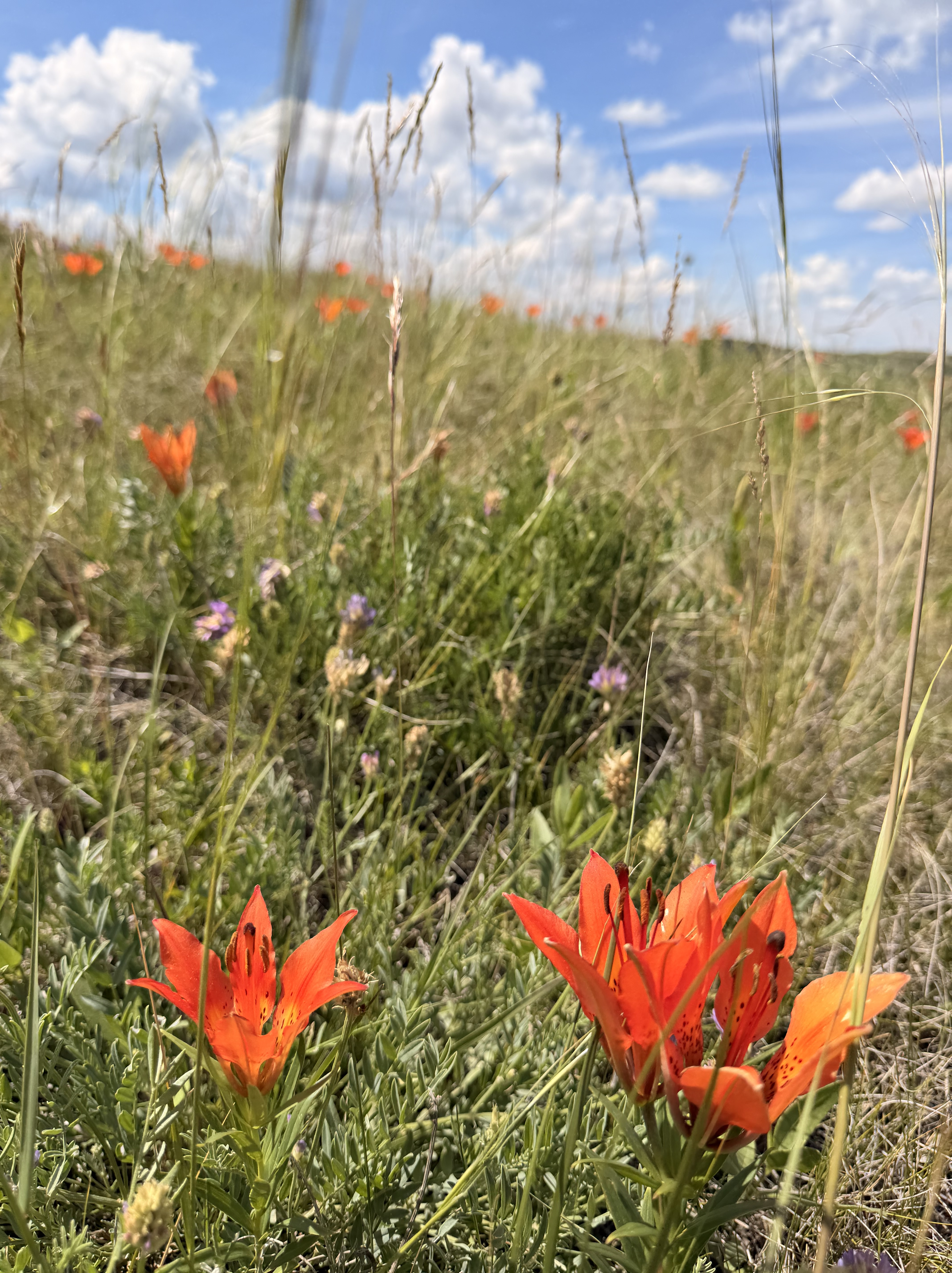
Let me tell you about a hillside on the ranch that never used to be special.

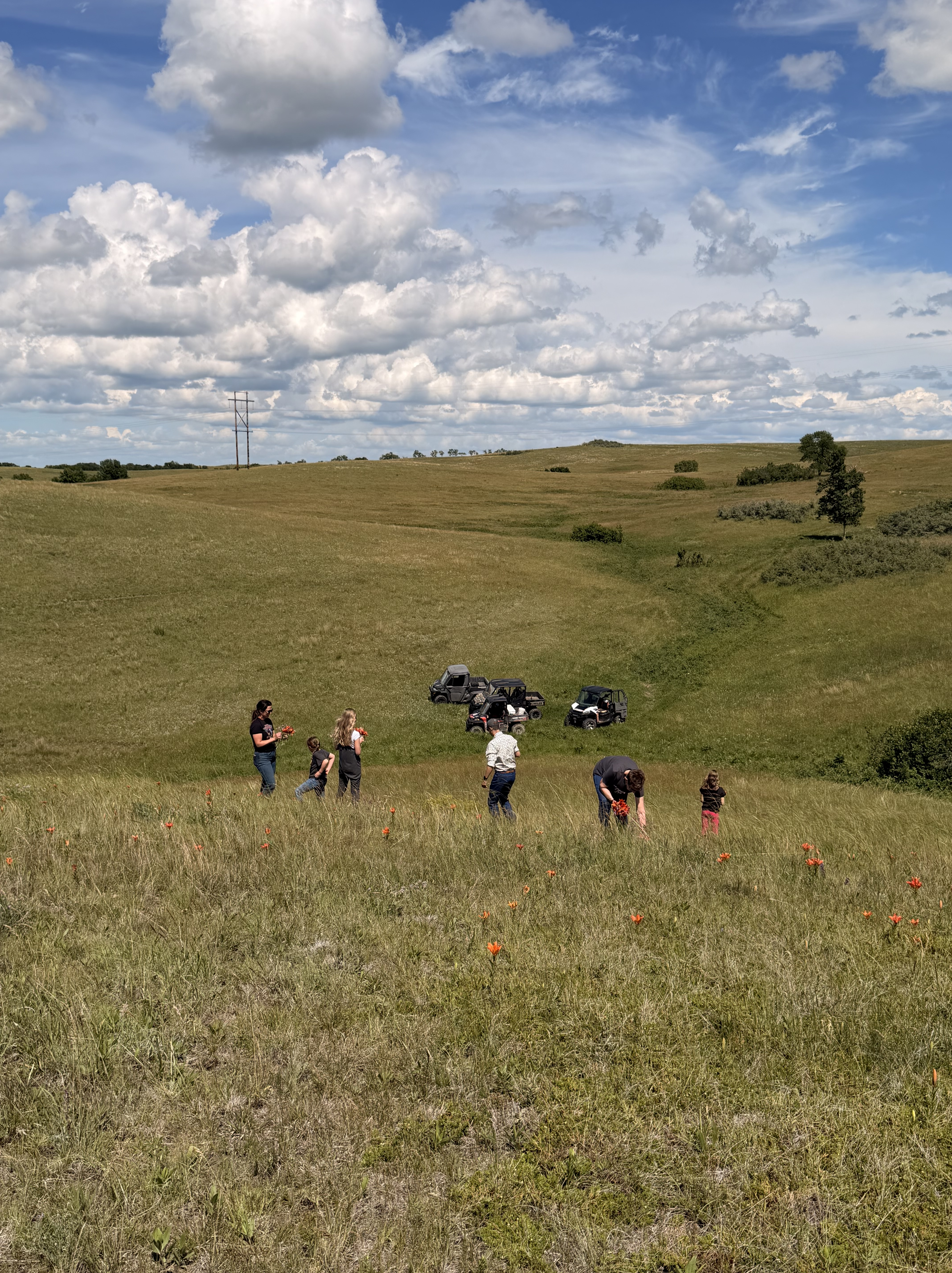
It was just a mildly steep slope along the edge of the fields, covered in creeping juniper growing in rocky and clay soil. We ride to the top occasionally to check the landscape for cows or move past it pushing them home. The hill pops up on the other side of the fence from what used to be fields. And so, I suppose my grandpa and dad used to drive past it in the tractor, digging up soil, and then planting seeds, and then turning alfalfa into bales before that field was turned into what we called “The CRP” for most of my childhood

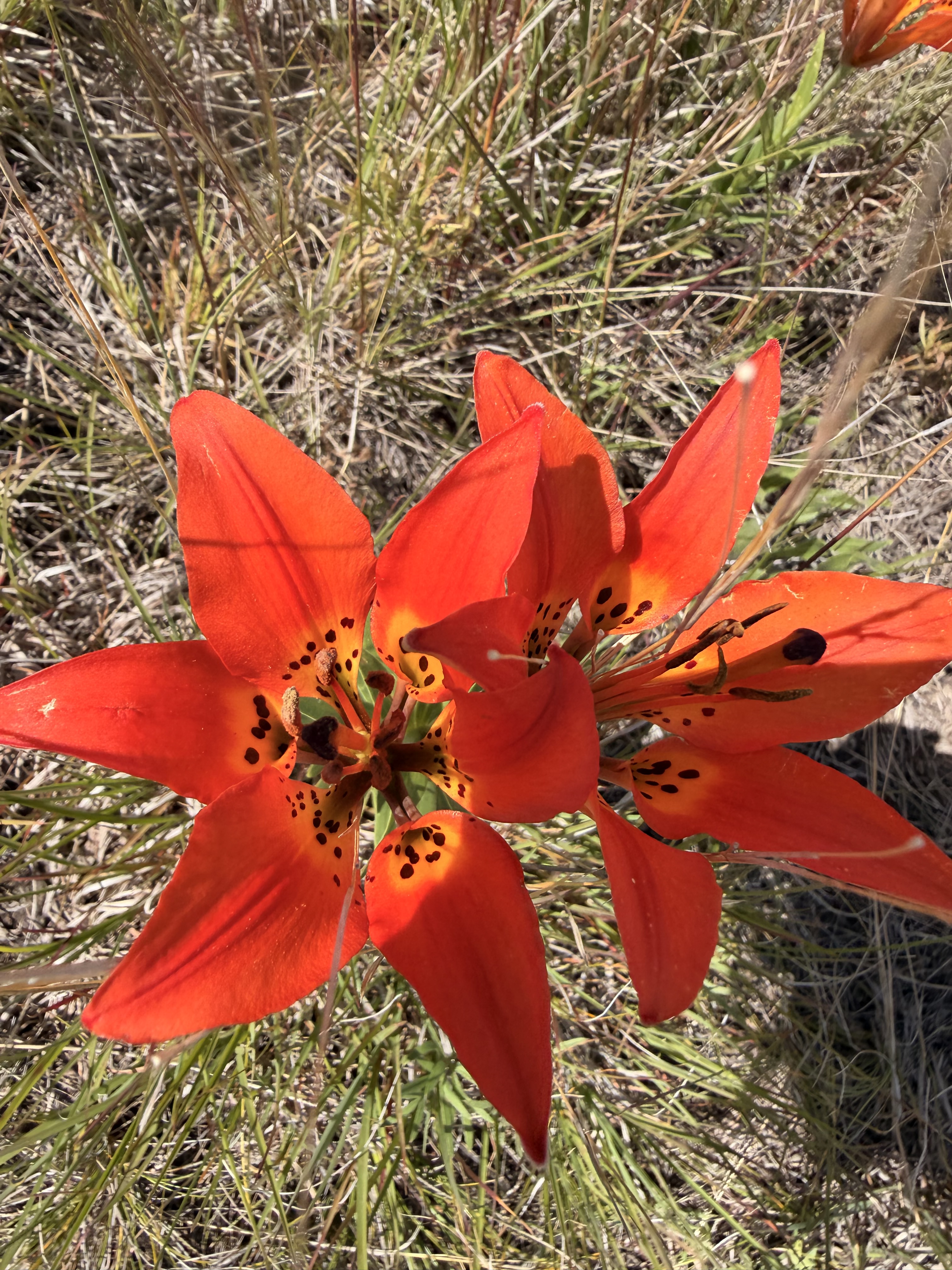
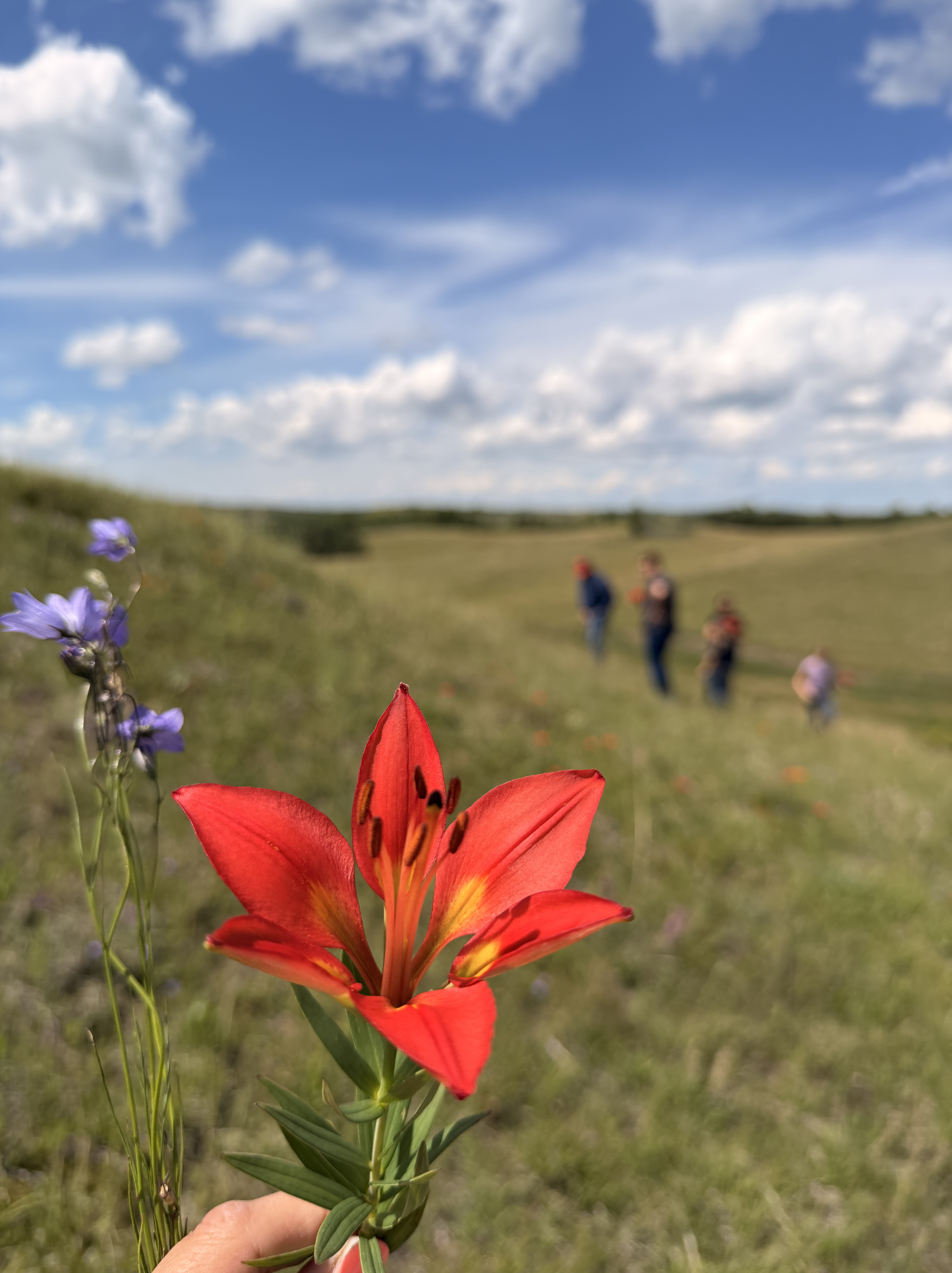
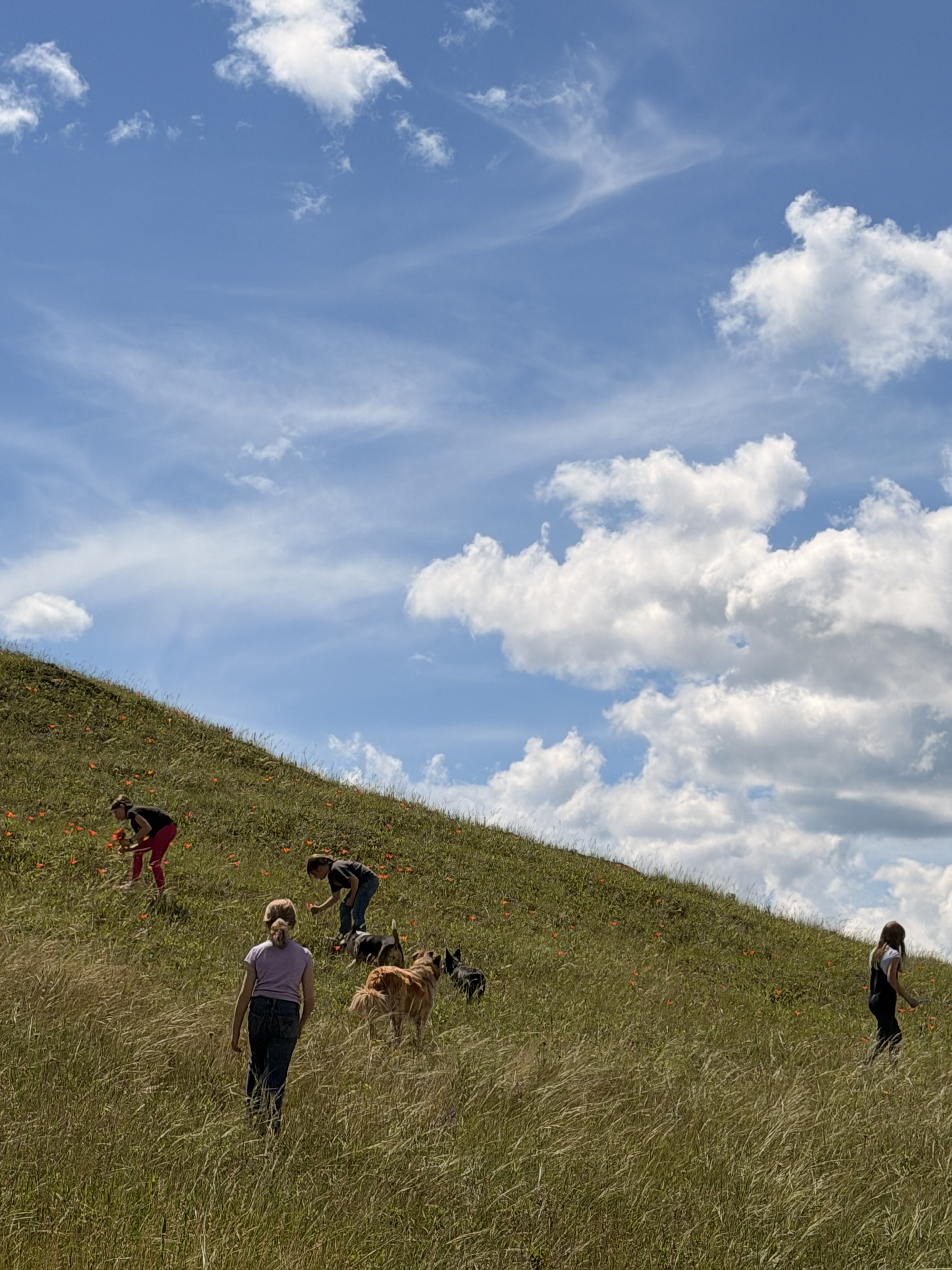
The soil on that hillside is no good for grazing or planting, but from up there you can see for miles in every direction, although it’s not a hill located in a spot convenient for lingering and looking. There is no real trail that connects you to it. If you’re walking, it’s a good mile and a half cross country and three fences to crawl from the main county road. If you’re driving a pickup or an ATV, I hope it has good shocks because those old fields are bumpy. I once drove out there when I was nine months pregnant with Rosie hoping I’d bounce her out.  Riding horseback is the best way to get there if you need to go there and that’s how my dad and my little sister discovered, one late June morning, that the hill wasn’t just a hill, but one covered from top to bottom in bright orange wildflowers we call the tiger lily.

Now, timing is everything on this discovery. These wildflowers have always been coveted on our place in the same way as the juneberries and wild raspberries are in the poky and buzzing brush patches of the low spots in the summer pastures. If you’re from anywhere in the rural north, you understand the weight and urgency of fleeting summer moments. And these moments hang heavy in the sweet juice of wild berries, waiting impatiently for you to find them and pluck them for your pockets and pies before the birds fill their bellies. And you have a window of only a few days to get there, which turns the hunt and gather into a sort of ritual that makes the find taste sweeter, the sky a little bluer, the breeze much more appreciated.

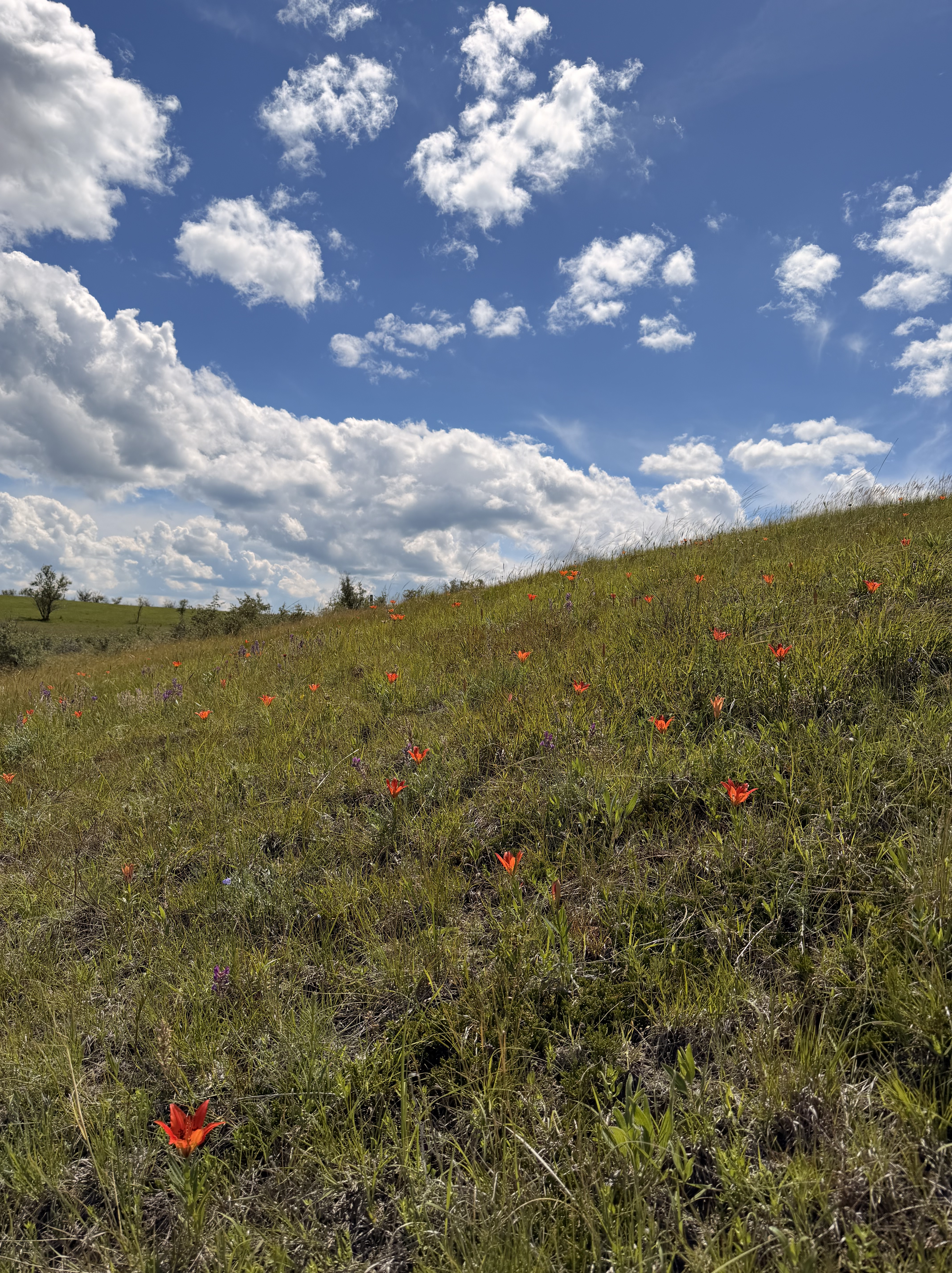
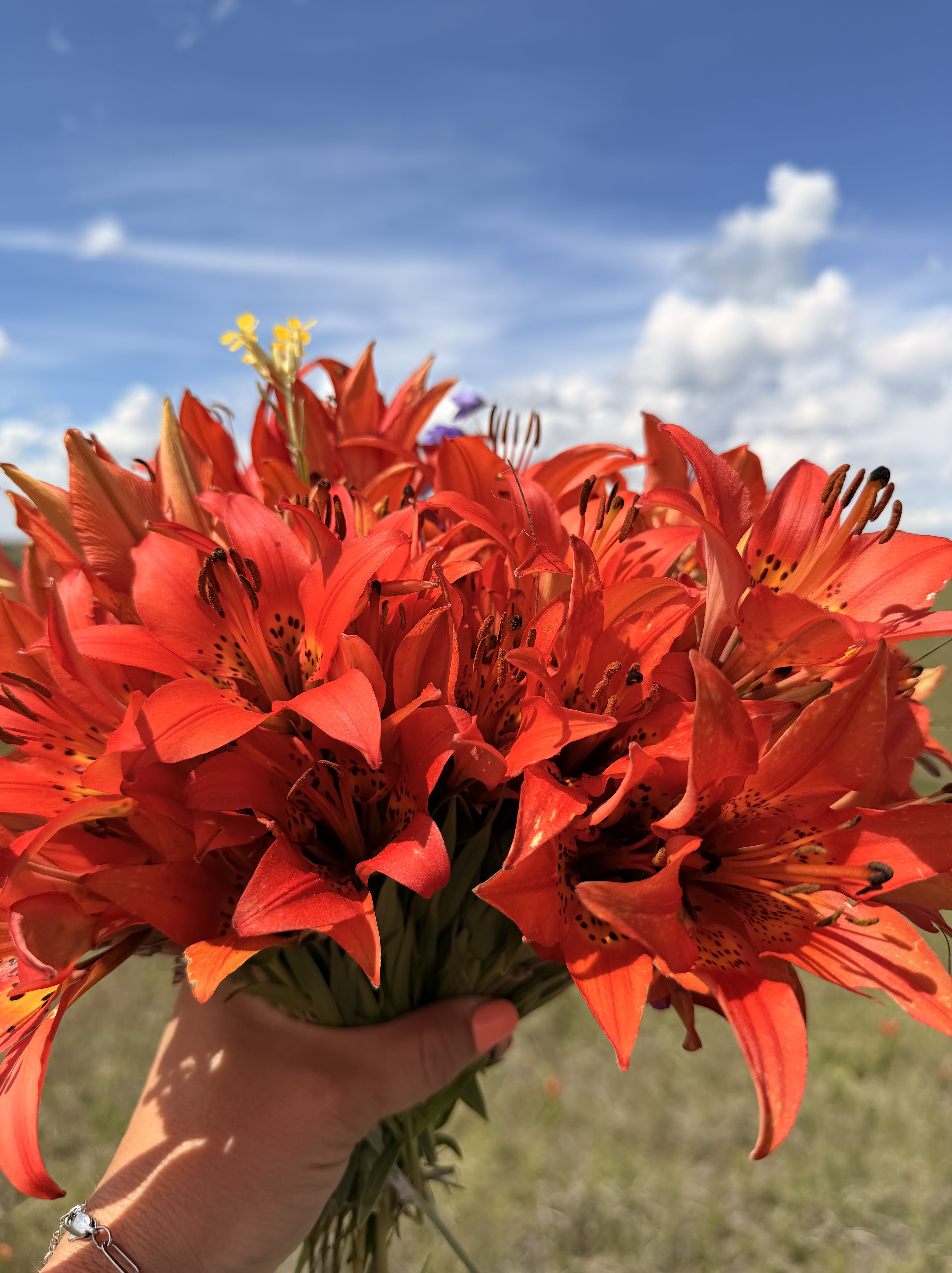
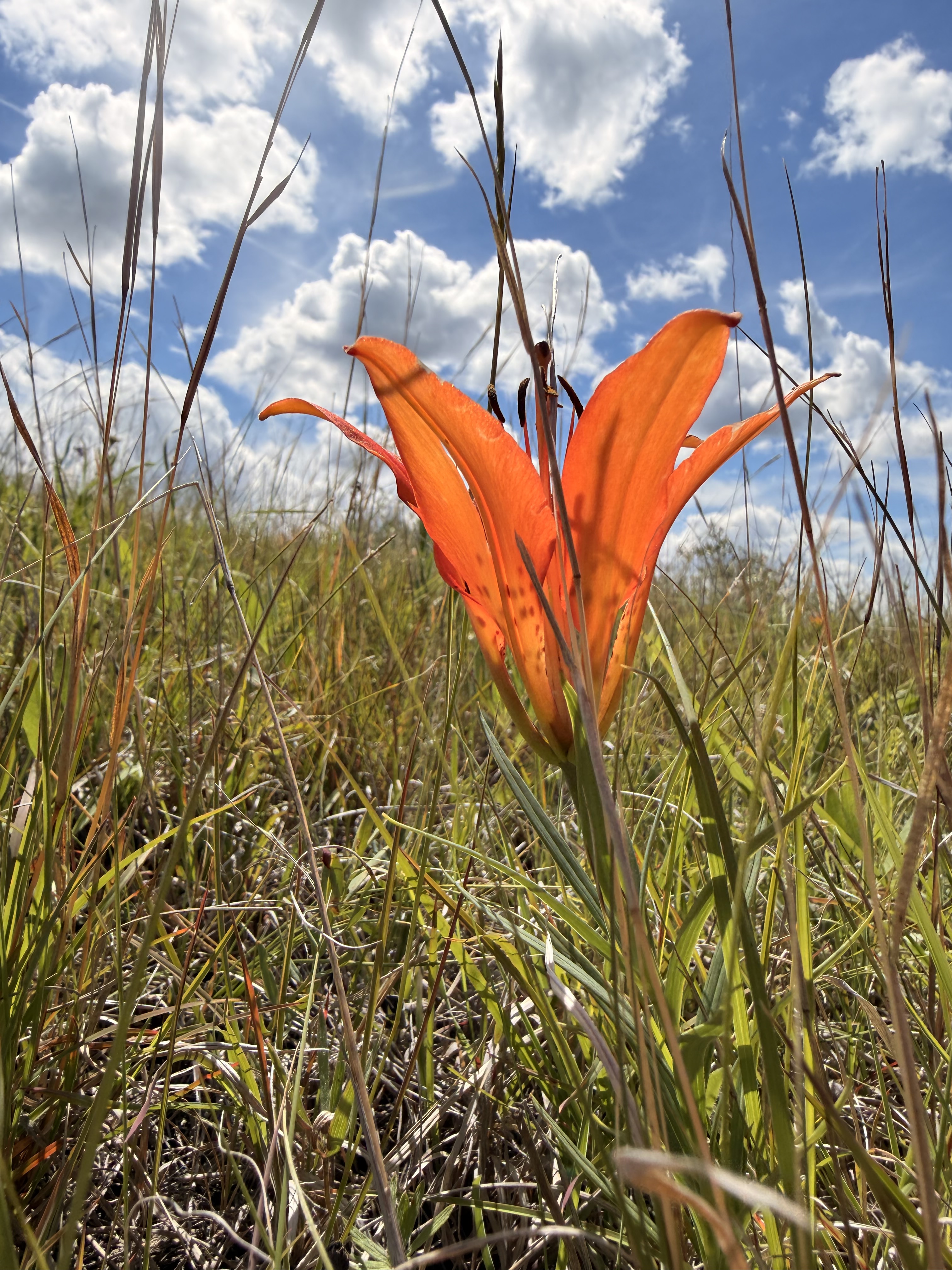
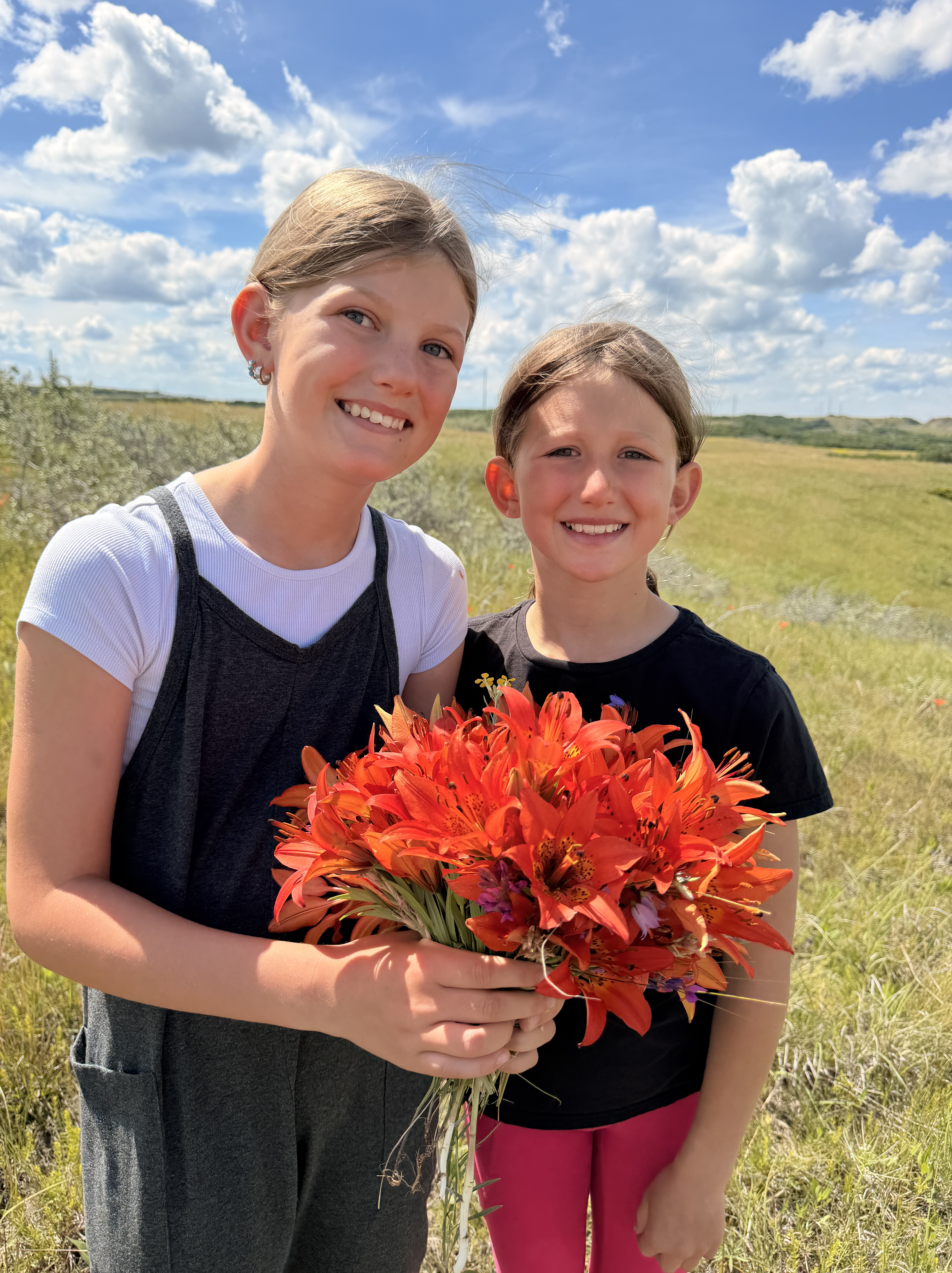
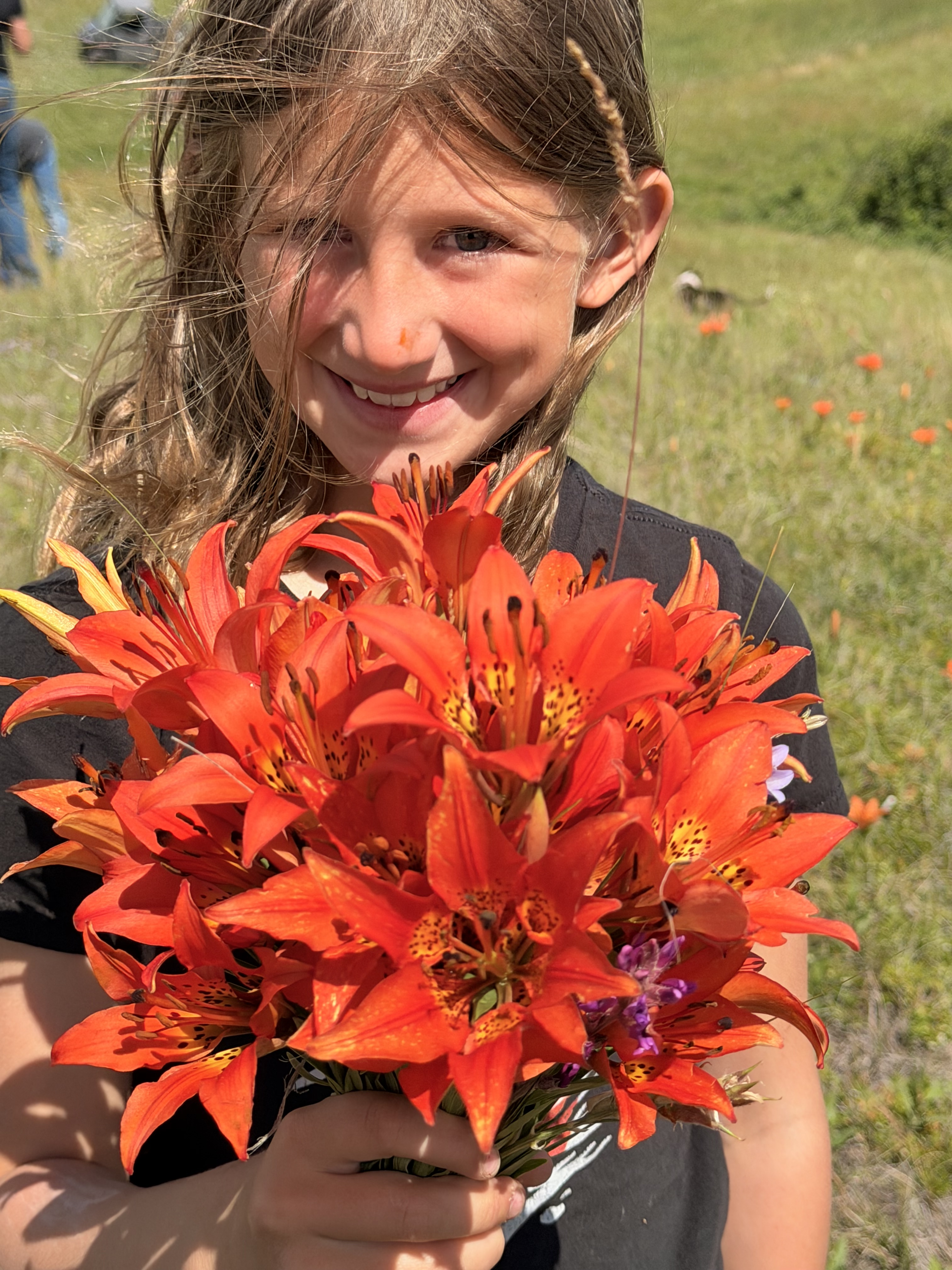
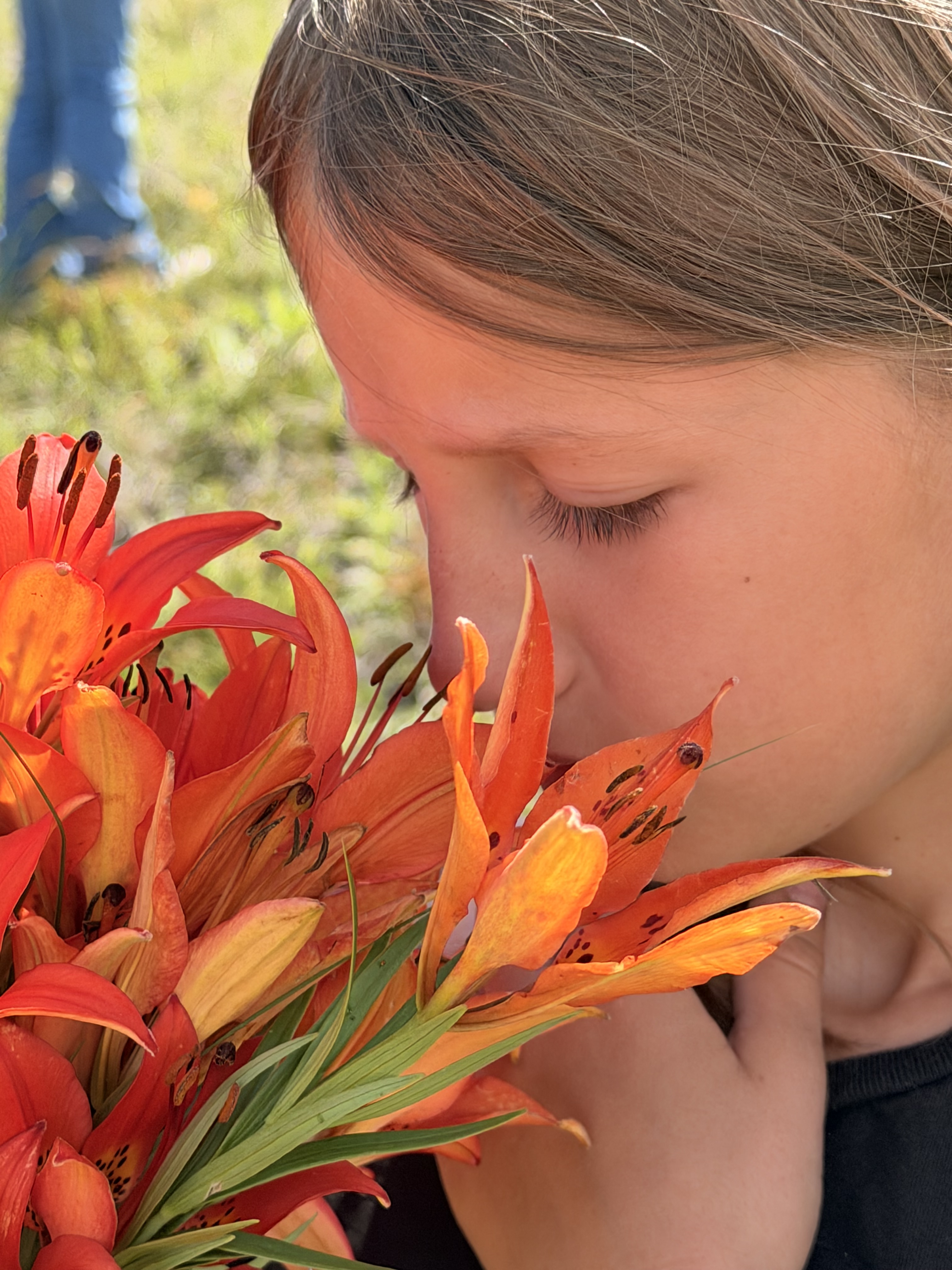
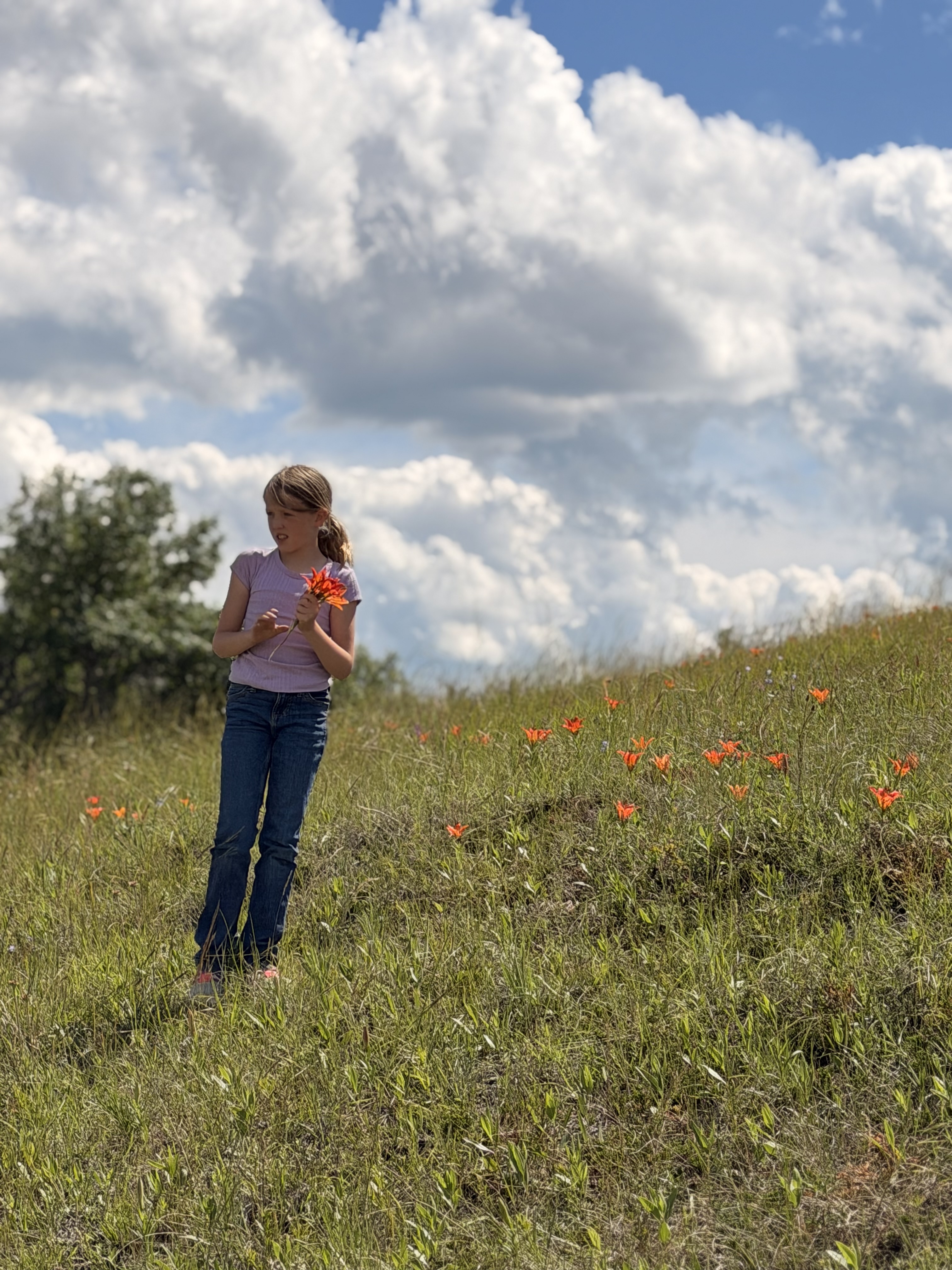
The wild tiger lily acts the same, not because the birds are after them, but because time and the heat of the sun are. If my sister and my dad would have timed their ride a week before or a week later, they would have missed the magic that lay dormant under those creeping juniper each winter, waiting for the right mix of heat and rain to reach toward the sky and bloom. Who knows how long those tiger lilies were growing and spreading across that hillside before a human eye detected them and made a fuss. And a fuss we make, because usually you only find these flowers growing in pairs or fours dotted sporadically deep in the back pastures. But this find, that day, about five or so years ago, it was a harvest. My sister couldn’t wait to come home and take me back there to see for myself, to fill my hands in a wide grip with their stems and put them in that special old green mason jar on my kitchen table.

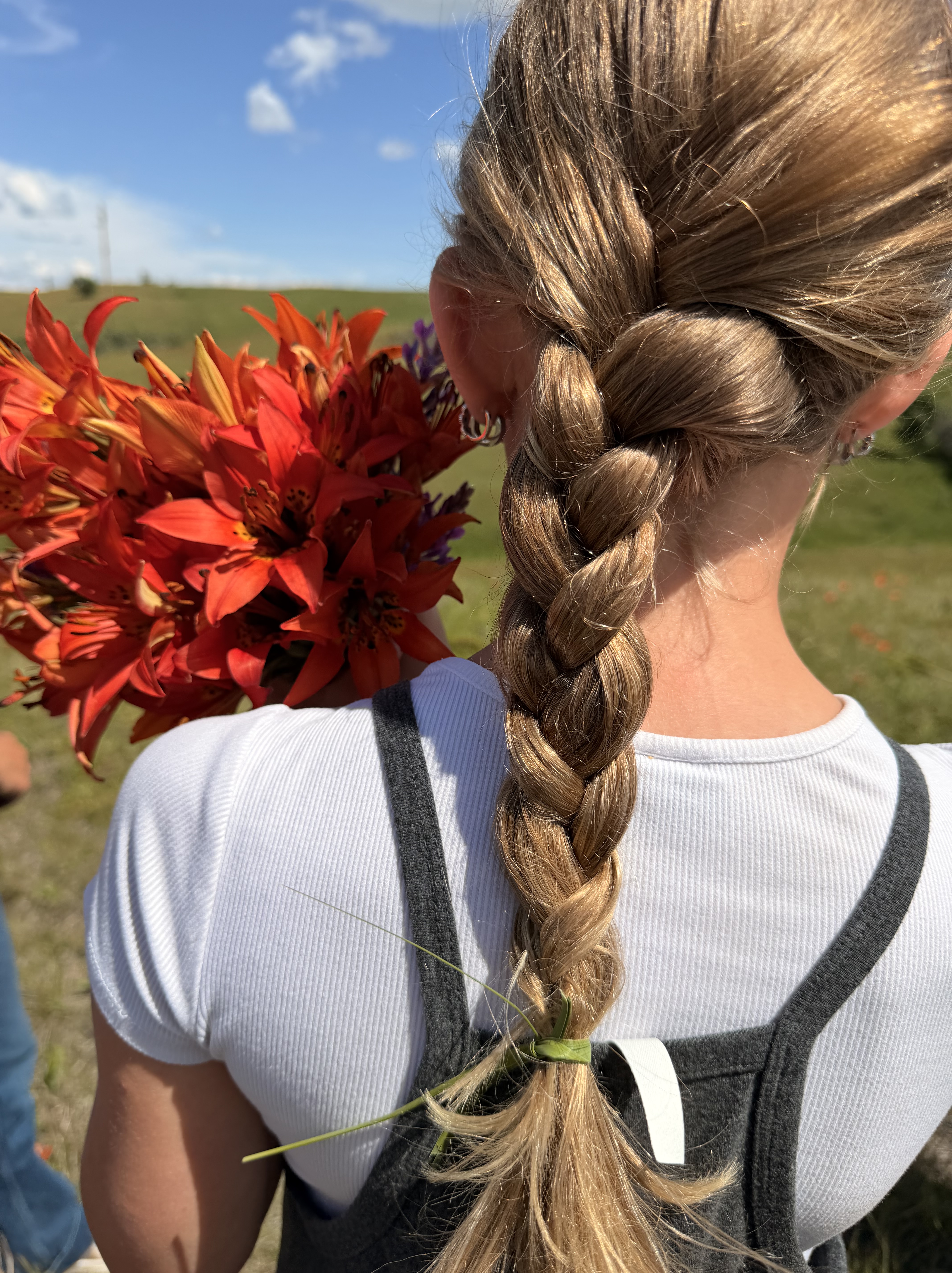
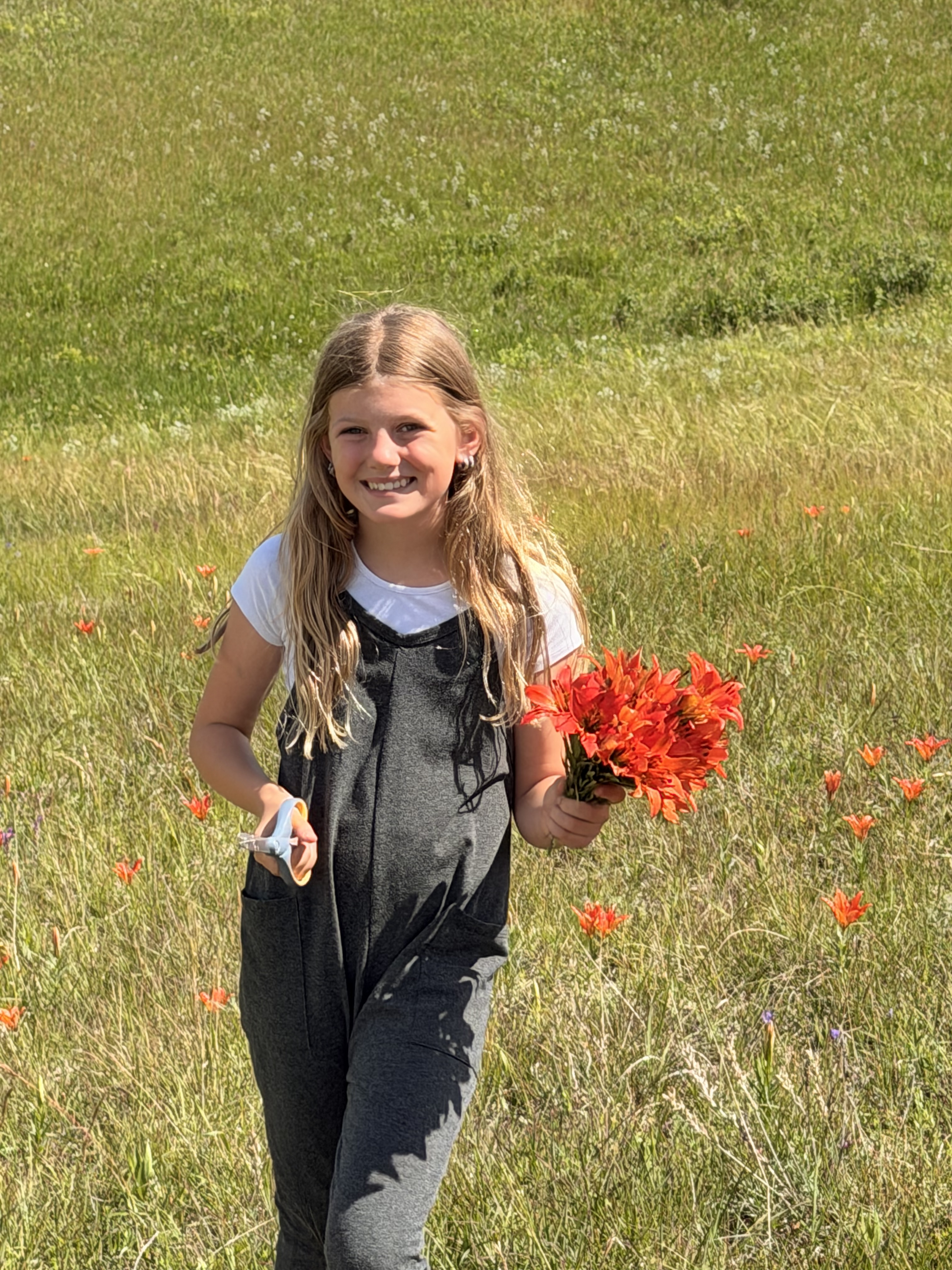
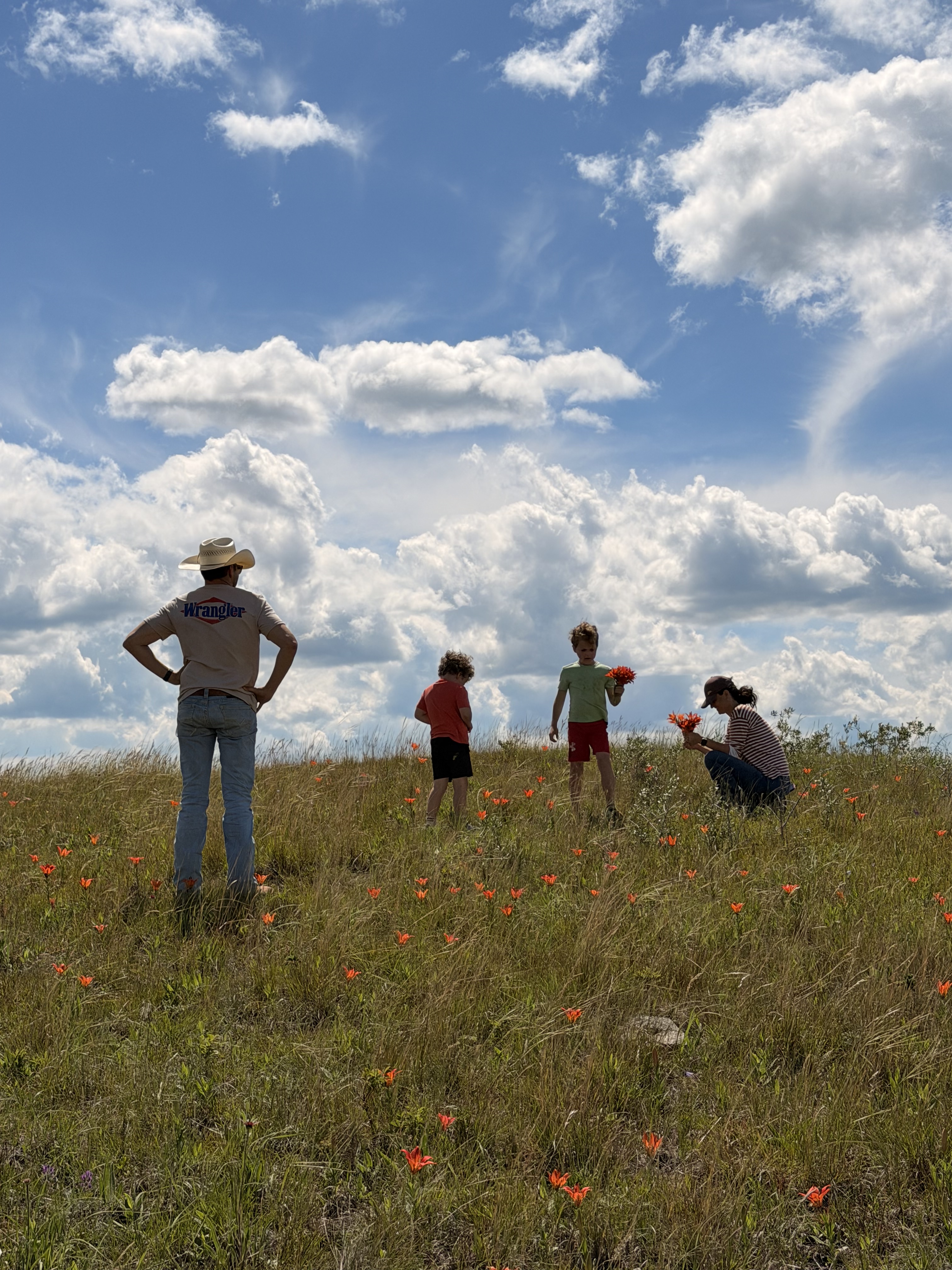
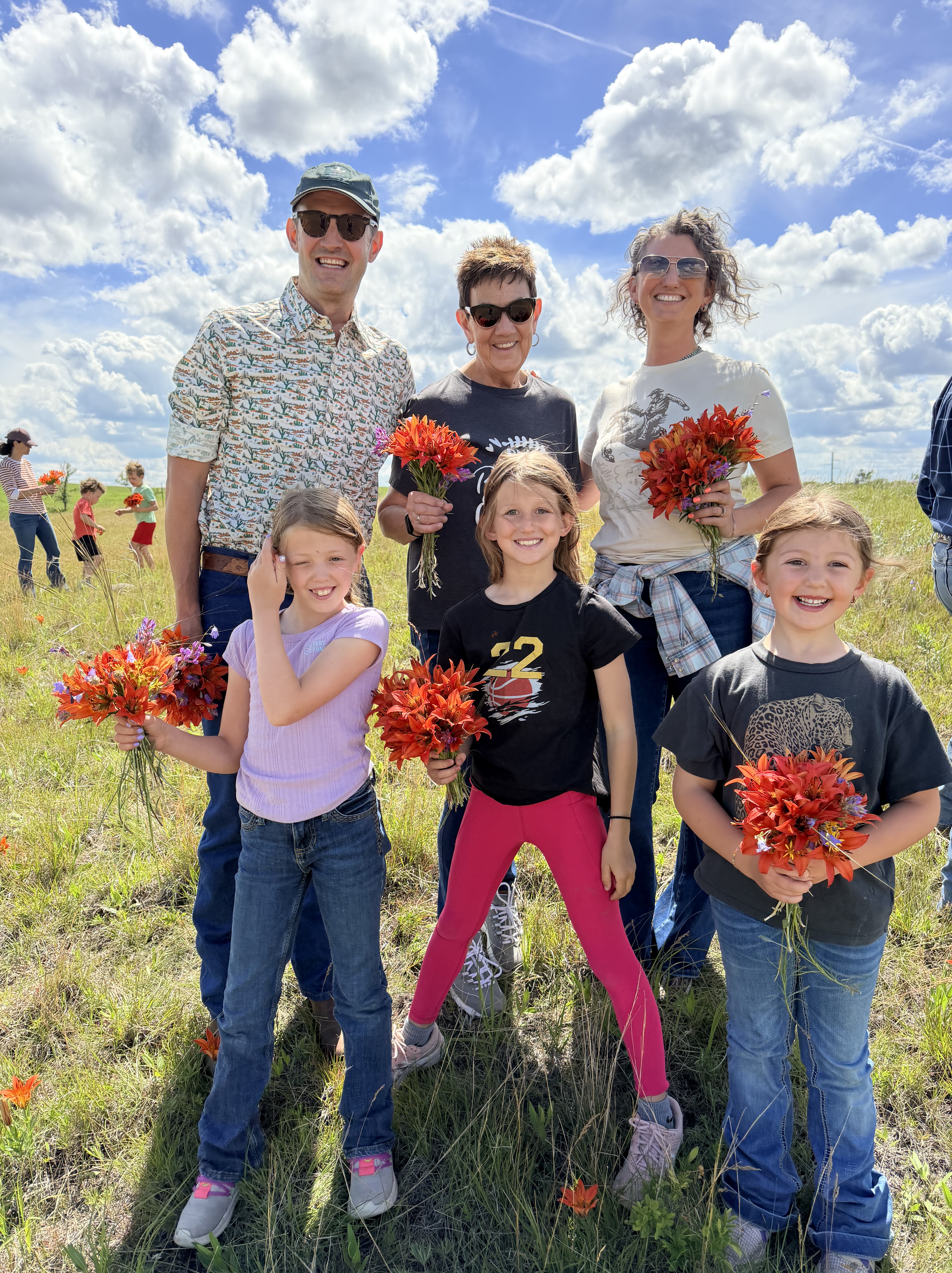
And so we’ve done it every year since. The end of June rolls around and we say to one another “We should go check on the tiger lilies,” and so we round up our daughters and cram them, and sometimes their baby dolls, and all the time the dogs too, and we bring a little basket and some scissors so as not to pull up the roots and we make the drive up off the mailbox, along the field trail then off into the bumps through the gate and down the hill so we can walk up and collect along the way.  With each visit that hilltop gets a bit more special to us as we remember our daughters and how small they used to be, their dirty blonde hair tinting gold with the sun, blowing back as they stand on a big rock with their arms out and sing into the sky, a small collection of mis-matched wildflowers tight in their fists.

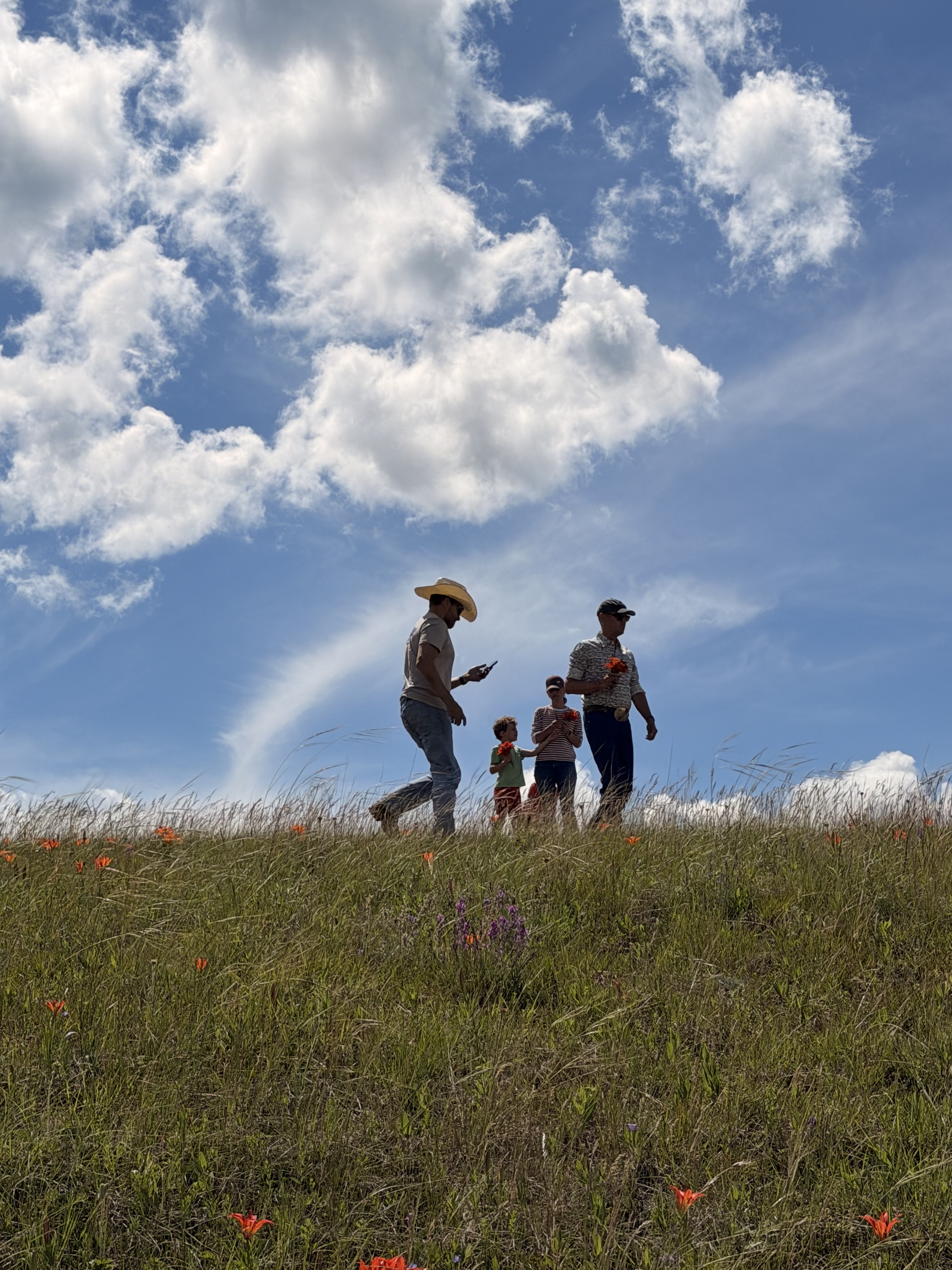
This year our cousins and aunts and uncles from our dad’s side were here to visit the ranch that is so special to all of us. When planning things to eat and places to take them, my little sister and I looked at each other and remembered that it was tiger lily season. And so, after lunch on a sunny Friday afternoon every all-terrain vehicle we possessed between the four places was loaded up with relatives driving in a slow-moving wagon train inching across this sacred landscape on our way to show them how an ordinary hill can be magic. And all of us up there, big cousins, little cousins, great aunts and uncles, grampas and moms and dads and kids and spouses, connected by a bloodline and the land under our feet, wandered out, climbed up, said things like ‘oh, look at that!’ and ‘so beautiful’ and ‘look at the view’ and ‘look at the sky’ and ‘look, two blossoms on one stem’ and, if they were like Rosie, sneezed at least three-thousand times while collecting and taking photos and, because you can’t really help it, fist full of flowers, climbed to the very top, opened our arms and lifted our faces to the blue sky, all together on this once not so special hill.

Snow on the backs of horses

It’s March now, and I feel the chilled surrender that January brings start to break up and separate inside of me, even as I stand under a gray sky that blends into the horizon as if it weren’t a sky at all but a continuation of the snowy landscape…below us, above us…surrounding us.

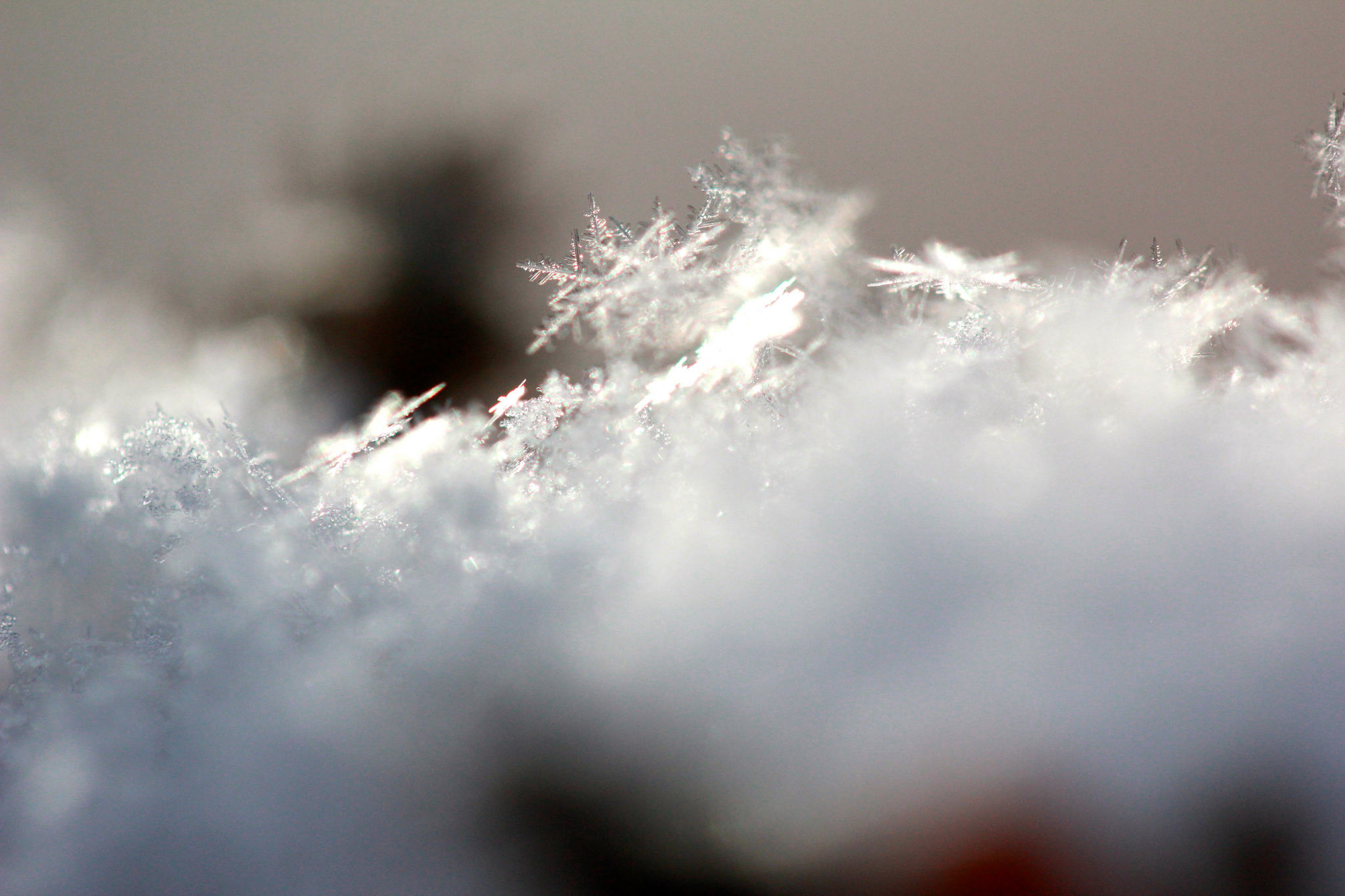
Flakes fell from that sky yesterday afternoon, big and soft and gentle they drifted down to the icy earth and coaxed me from behind my windows to come outside and stick out my tongue.

When the snow falls like this, not sideways or blowing or whipping at our faces, but peaceful and steady and quiet, it’s a small gift. I feel like I’m tucked into the mountains instead of exposed and vulnerable on the prairie. I feel like, even in the final days before March, that someone has shaken the snow globe just the right amount to calm me down and give me some hope for warmer weather.

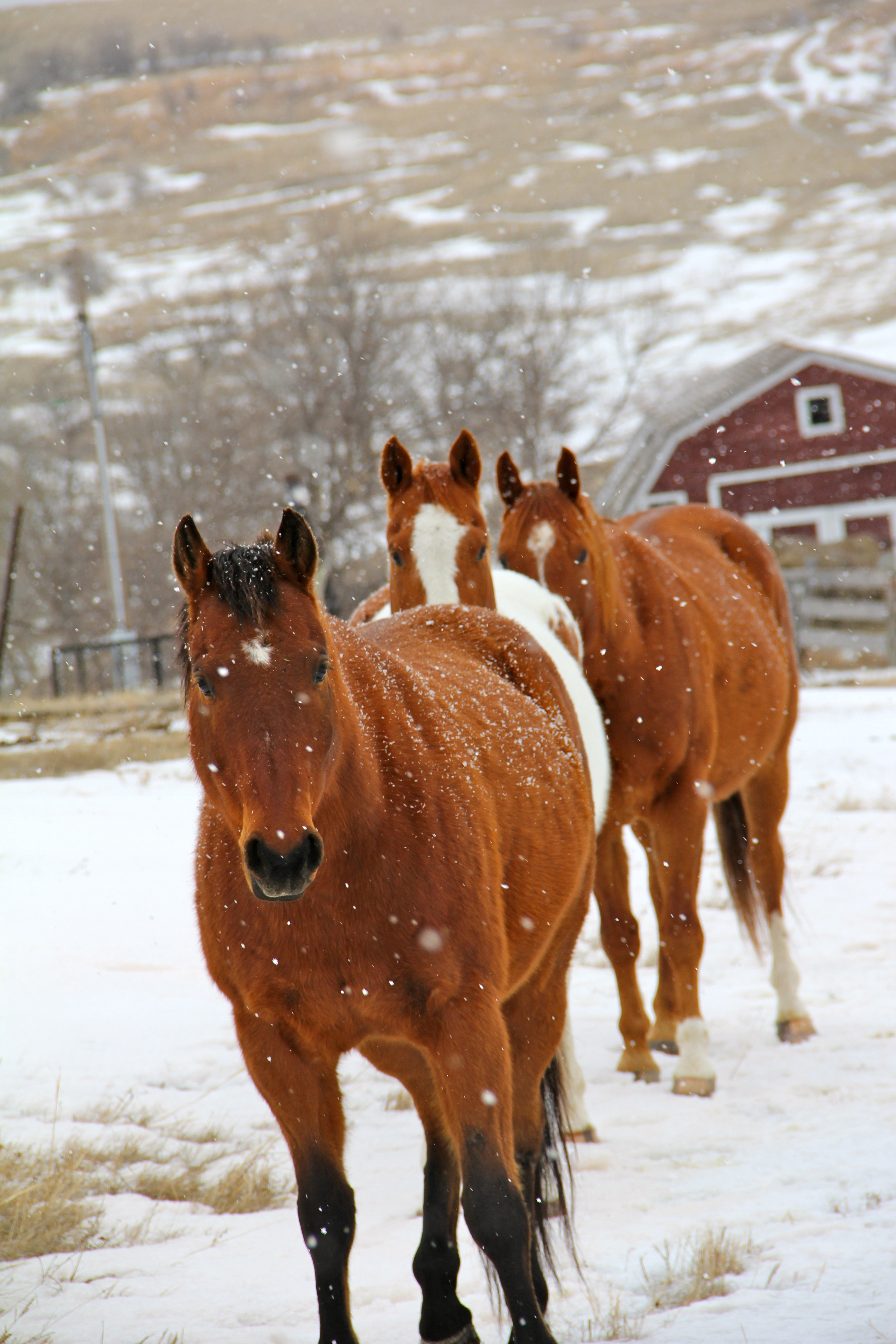
When the snow falls like this, I go look for the horses. I want to see what those flakes look like as they settle on their warm backs, on their soft muzzles and furry ears. I trudge to the barnyard or to the fields and wait for them to spot me, watching as they move toward that figure in a knit cap and boots to her knees, an irregular dot on a landscape they know by heart.

I know what they want as they stick their noses in my pockets, sniff and fight for the first spot in line next to me. I know they want a scratch between their ears.

I know they want a bite of grain.
They know I can get it for them.
Our horses in the winter take on a completely different persona. The extra layer of fur they grow to protect them from the weather makes them appear less regal and more approachable.

Softer.

I like to take off my mitten and run my fingers through that wool, rubbing them down to the skin underneath where they keep the smell of clover and the warmth of the afternoon sun. I like to put my face up to their velvet noses and look into those eyes and wonder if they miss the green grass as much as I do.

On this snowy, gray, almost March afternoon the horses are my closest link to an inevitable summer that doesn’t seem so inevitable under this knit hat, under this colorless sky.

I lead them to the grain bin and open the door, shoveling out scoops of grain onto the frozen ground. They argue over whose pile is whose, nipping a bit and moving from spot to spot like a living carrousel. I talk to  them, “whoah boys, easy” and walk away from the herd with an extra scoop for the gelding who gets bullied, his head bobbing and snorting behind me.

In a month or so the ground will thaw and the fur on the back of these animals will let loose and shake off, revealing the slick and silky coat of chestnut, white, deep brown, gold and black underneath. We will brush them off, untangle their manes, check their feet and climb on their backs and those four legs will carry us over the hills and down in the draws and to the fields where we will watch for elk or deer or stray cattle as the sun sinks below the horizon.

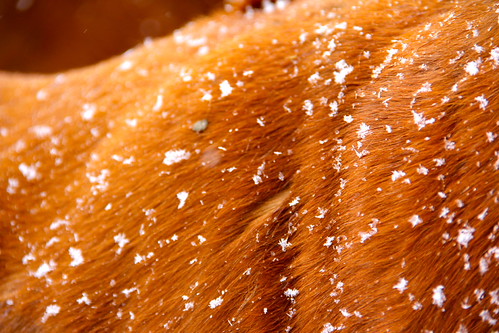
I move my hand across the mare’s back, clearing away the snowflakes that have settled in her long hair and I rest my cheek there, breathing in the scent of hay and dust and warmer days.

She’s settled into chewing now, his head low and hovering above the pile of grain I placed before him. He’s calm and steady so I can linger there for a moment and wonder if he tastes summer in the grain the same way I smell it in her skin.

My farewell to winter is long, lingering and ceremonious.

But it has begun. At last, it has begun.

Owl song

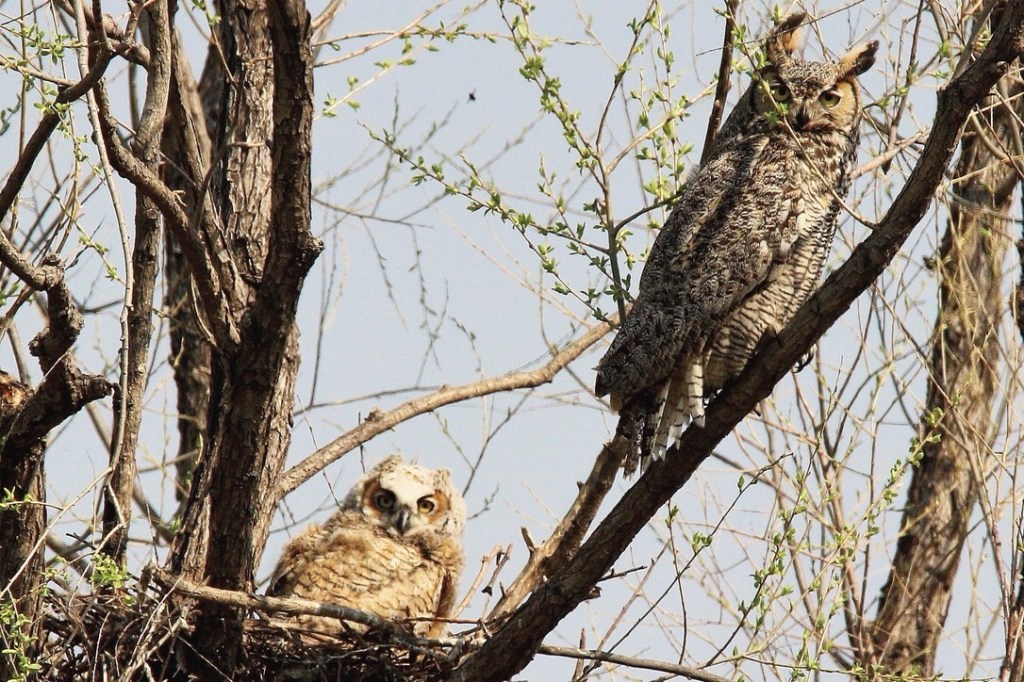
I woke up this morning to our owl hooting outside our bedroom window. I call it our owl because he lives in the trees where we live too. I see him sometimes when I pull down our drive at dusk, perched on the road or on the top of an old oak tree. It isn’t often, but when I get to witness his big wings spread and swoop silently away in the disruption of my headlights, I feel like a witness to a sacred thing.

And so, the declaration of the owl’s presence was the first thing I said to my husband when I woke up this morning. “The owl was hooting,” I declared before my eyes were even fully awake. He opened his arms up and I buried my head there for a few moments before pouring the kids their morning cereal.

I read somewhere that in many spiritual traditions, seeing an owl is a reminder to pay attention to your inner wisdom. In some cultures, an owl hoot is viewed as a sign of spiritual protection or a guide through personal transformation or spiritual growth. A little more digging into the symbolism of the owl uncovers a dozen differing and conflicting interpretations of the animal’s presence in your life, from a hoot at night signifying immanent death to an owl’s call predicting the gender of an unborn baby.

I don’t know what it means for me that I’ve been hearing the hoot of our owl more regularly lately, except maybe that I’m listening, and that it’s comforting to me somehow to be reminded we’re out here making our casseroles and snuggling under blankets alongside the wild things, especially when the world seems heavy.

When we built our house, we put in big glass doors that slide open to the tall hill and stock dam outside. Everyone that comes to visit will first take a stop by each door to look out, hands in their pockets, to see what might come over that big hill, or walk toward that water for a drink. They’ll press their faces closer to the glass and I’ll worry that they’ll notice how are deck needs to be redone, or the grill that needs to be cleaned, but they never do. They’re looking beyond that always, into the grass and the trees and the sky.

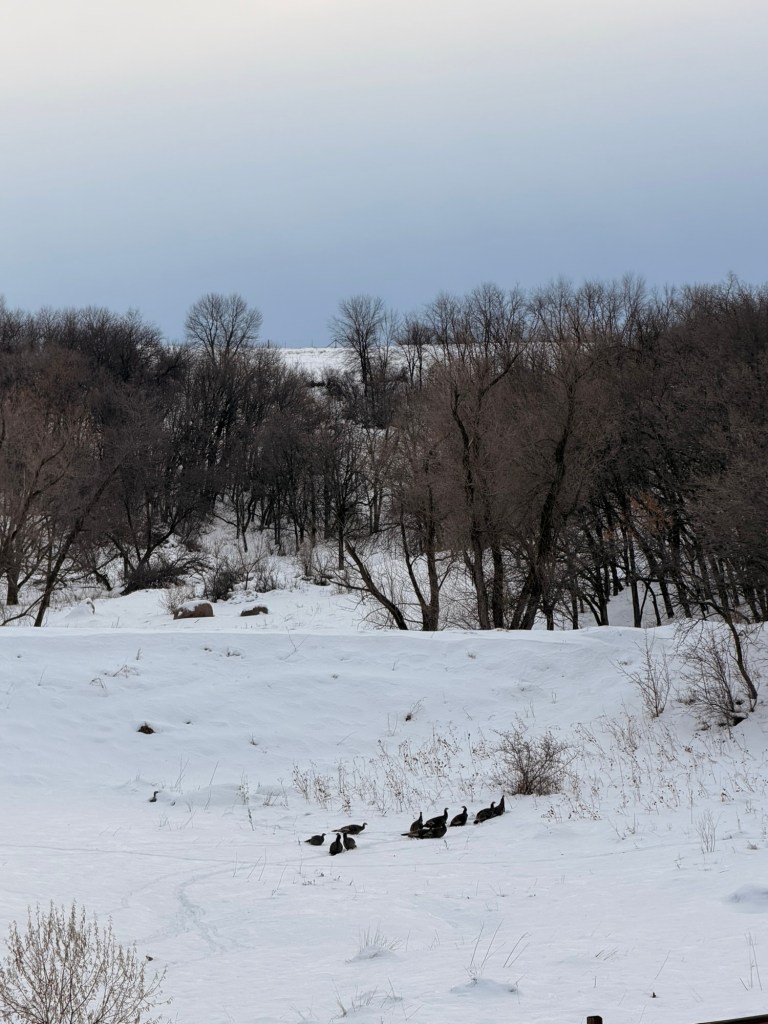
This morning the fog settled in the low spots and blocked the sunrise. The turkeys came down to wander through the swing set and pick at the old tomato plants in my garden.

Later a coyote will come up over that hill and slink down through the path in the oaks and ash. The doe and her two fawns will eat acorns by the tire swing and it’s warm today, so the squirrels will be out, fat and frantic and chattering in the treetops where our owl sleeps.

There was a time this was the only news a human could know, and in this they looked for more meaning. In all this evolution of language and technology, connectedness and schooling and travel and religion, still, where’s the answer?

What will become of us?I close my eyes and listen for the owl call.

The Peace of Wild Things

When despair for the world grows in me

and I wake in the night at the least sound

in fear of what my life and my children’s lives may be,

I go and lie down where the wood drake

rests in his beauty on the water, and the great heron feeds.

I come into the peace of wild things

who do not tax their lives with forethought

of grief. I come into the presence of still water.

And I feel above me the day-blind stars

waiting with their light. For a time

I rest in the grace of the world, and am free.

Wendell Berry

from The Peace of Wild Things And Other Poems (Penguin, 2018)

Only in dreams

I just woke up from a dream where I was in my grandma’s old house on the ranch. I was in the basement in the top bunk of the bedroom with the hot-lava colored carpet, under a new blanket, noticing the spiderwebs in the corners of the ceiling and barn-wood covered wall. I asked the girl in the bed next to me, someone I knew in the dream but don’t know in the real world, how strange it is to feel like you’re nine-years-old again when you’re in your gramma’s house. And then I flicked a spider off my covers and walked across the hallway to the next room to find that my daughters had been there, they had set up a school-room for their dolls, using the nightstand and the bed with the scratchy comforter.  The dolls were lined up neat in the space and I scanned my eyes across each one and then I cried.

There are places I can only visit now in my dreams, but it seems I go this little house more than any other place in my memory.

We had a childhood friend who we lost in an accident a few years out of high school. He loved to work on cars and had the neatest handwriting and sat behind me in science class and always had a stick of gum to share. He was smart and neat, a mix of sweet and serious. I think of him always in his corduroy FFA jacket or at Charlie’s working on our friend’s race car. He was the first boy to ever buy me flowers. I was in seventh grade and I didn’t know how to act when a boy buys you flowers. I know I said thank you, I know I did that much, but then what? Like the old house I’ll never visit again, too quickly he became someone I now only see in dreams. And, again, like the old house, out of all the people I’ve lost, for some reason, he visits most often. And it’s always good to see him, except I wish that it could be that he lived on his farm on the other side of town and he works on tractors with his boys and my husband would text him to come over for New Years Eve and he should bring beer and the kids of course. I like to imagine he would have made his way back home like us, because I think that’s what he would have wanted.

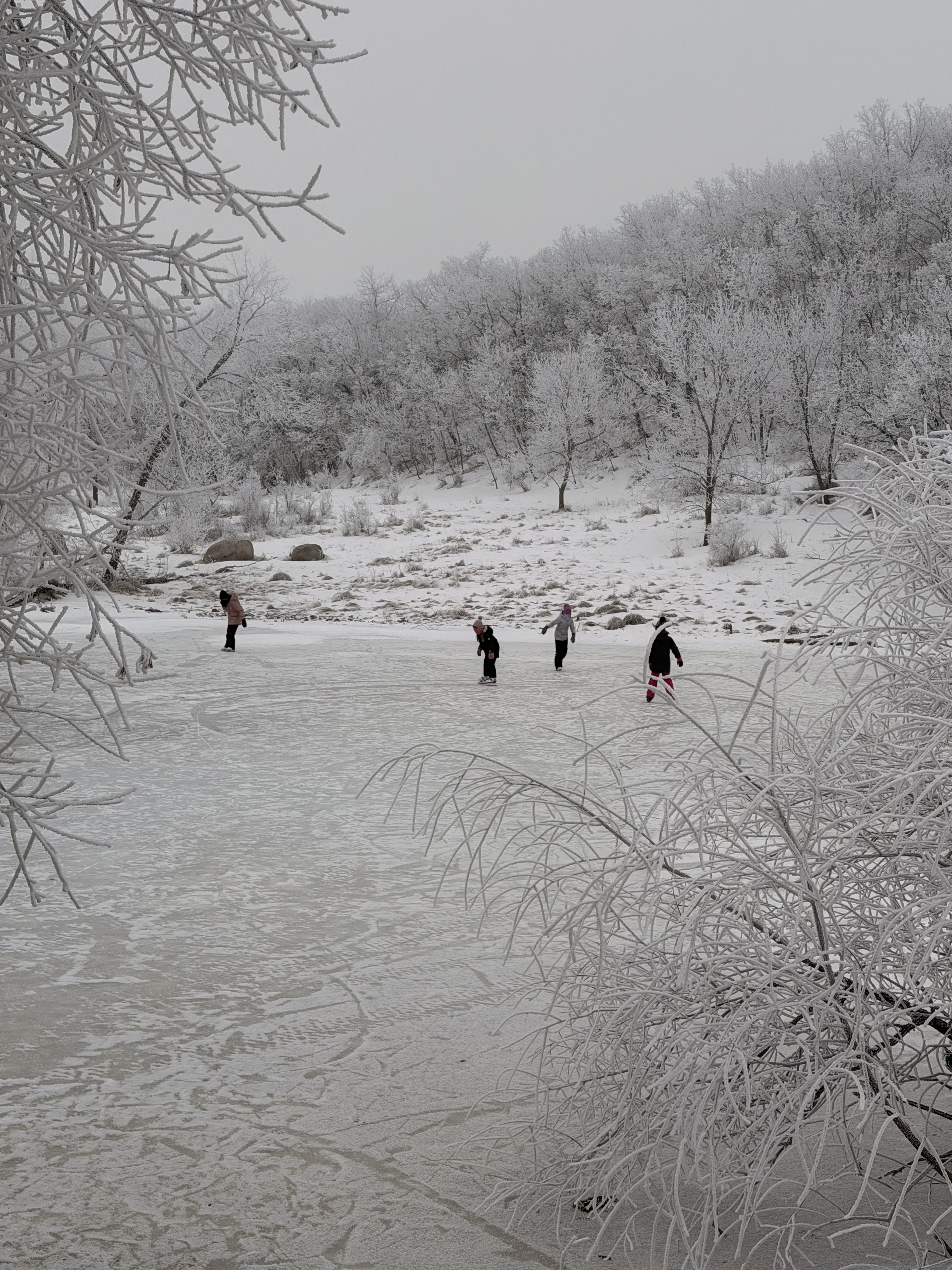
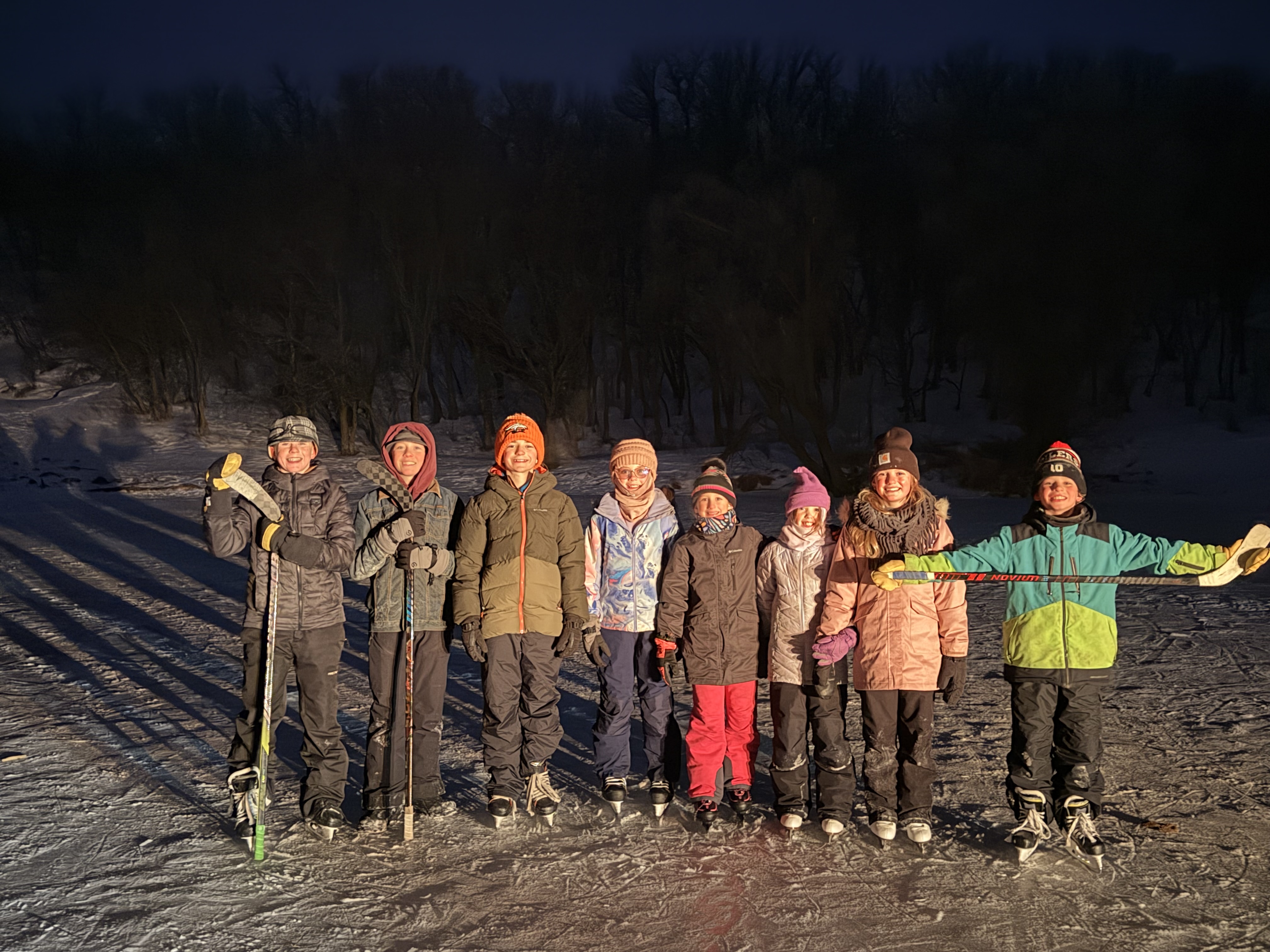
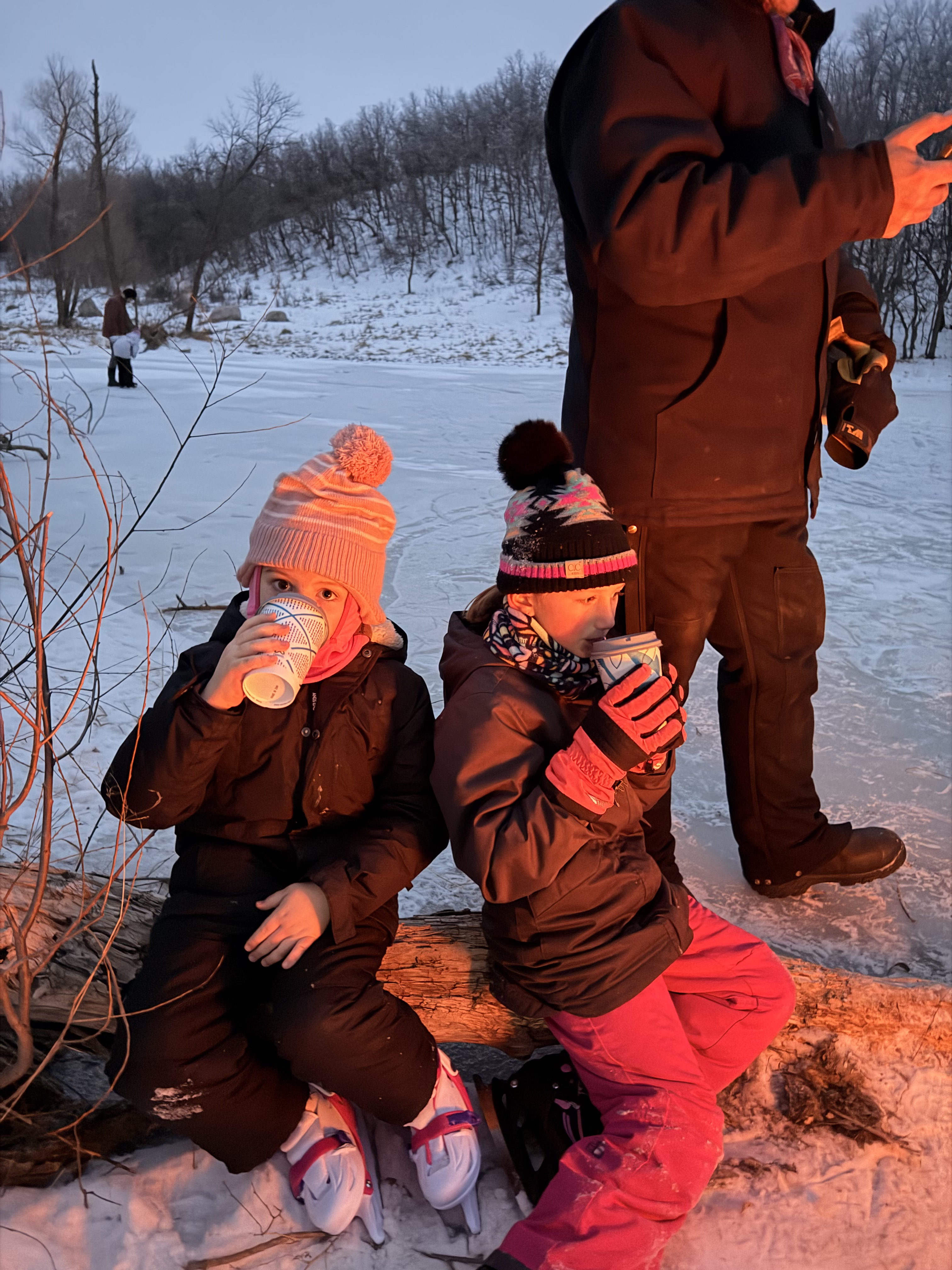
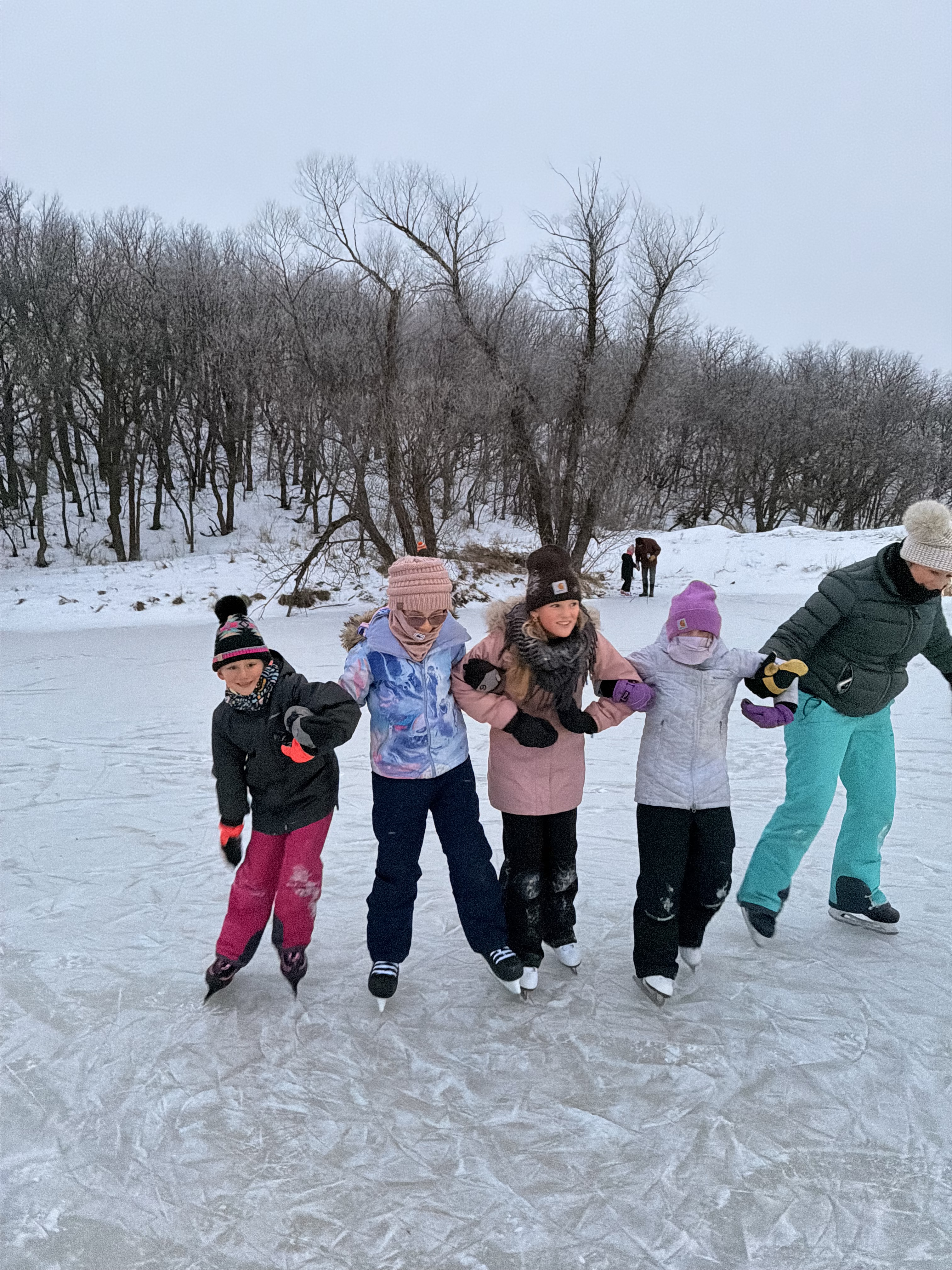
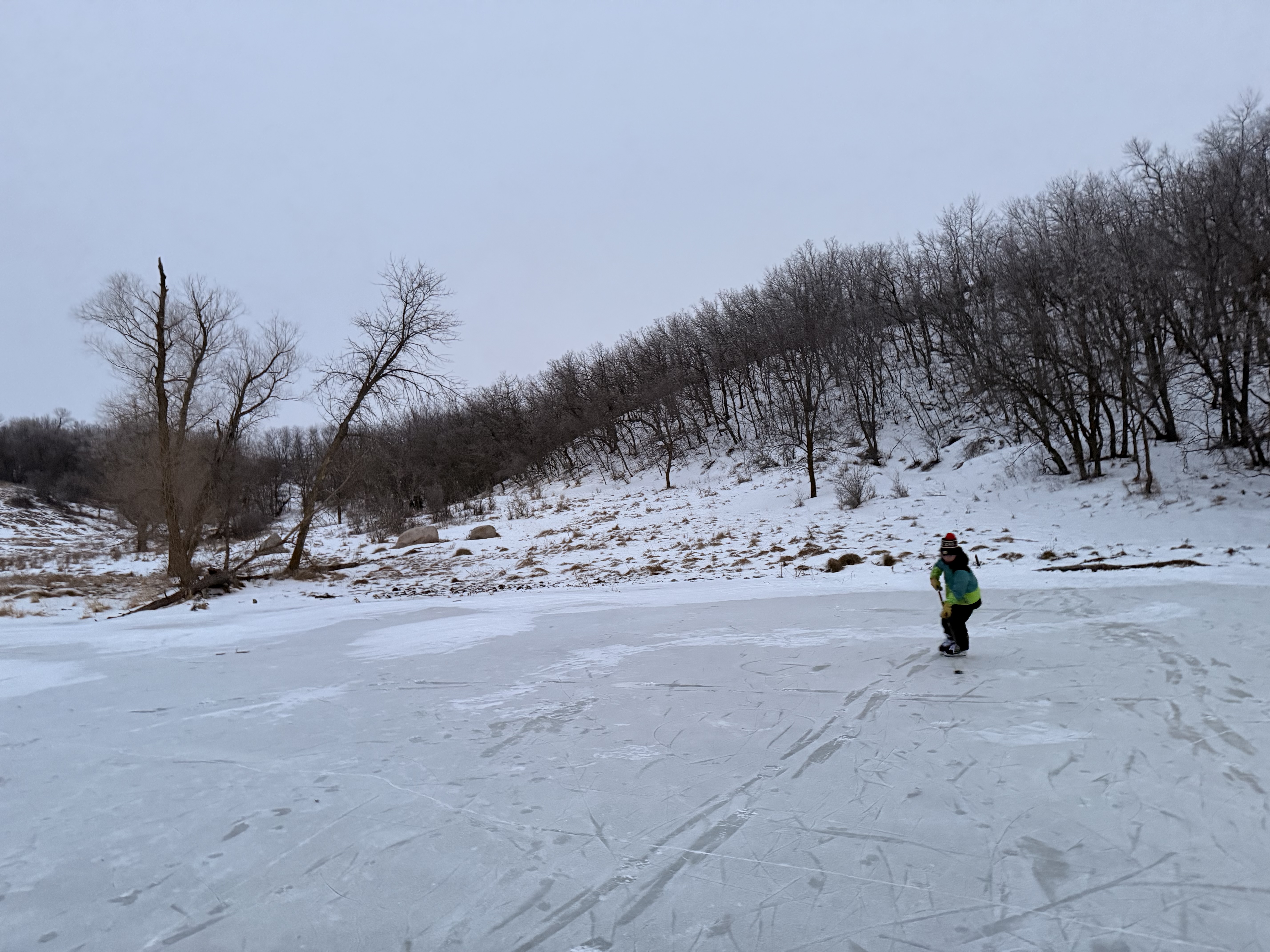
The stock dam outside our house has frozen over smooth this winter, good enough for the girls to shove stocking feet in ice skates and head over the hill to glide around under the watch of the big hill we call Pots and Pans and the tall oak and ash. I stand on the side and watch them spin and fall and laugh and bruise their knees under fluffy snowpants. I wonder if I should buy my own ice skates this winter, it’s been years since I’ve been on them, but man, it used to be so fun. My little sister and I would walk down to the creek and shovel the snow off, then sit on the bank and lace up our skates. I remember one winter the snow didn’t need to be cleared and we could skate all the way up that little creek, like a magical icy trail among the trees. I watch my girls working on spins with their arms out and know there are versions of myself that I can never be again, not even if I put on the skates.

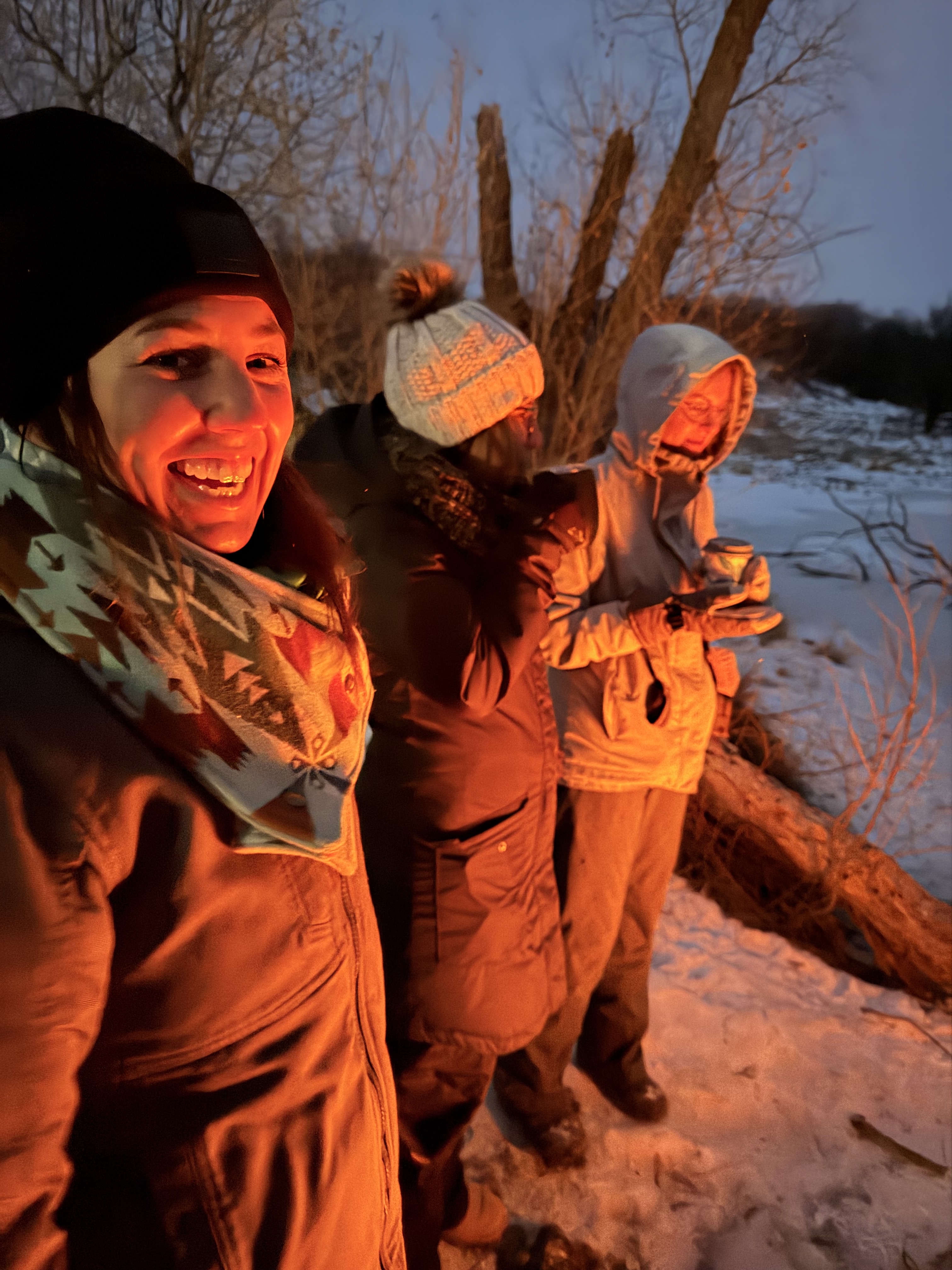
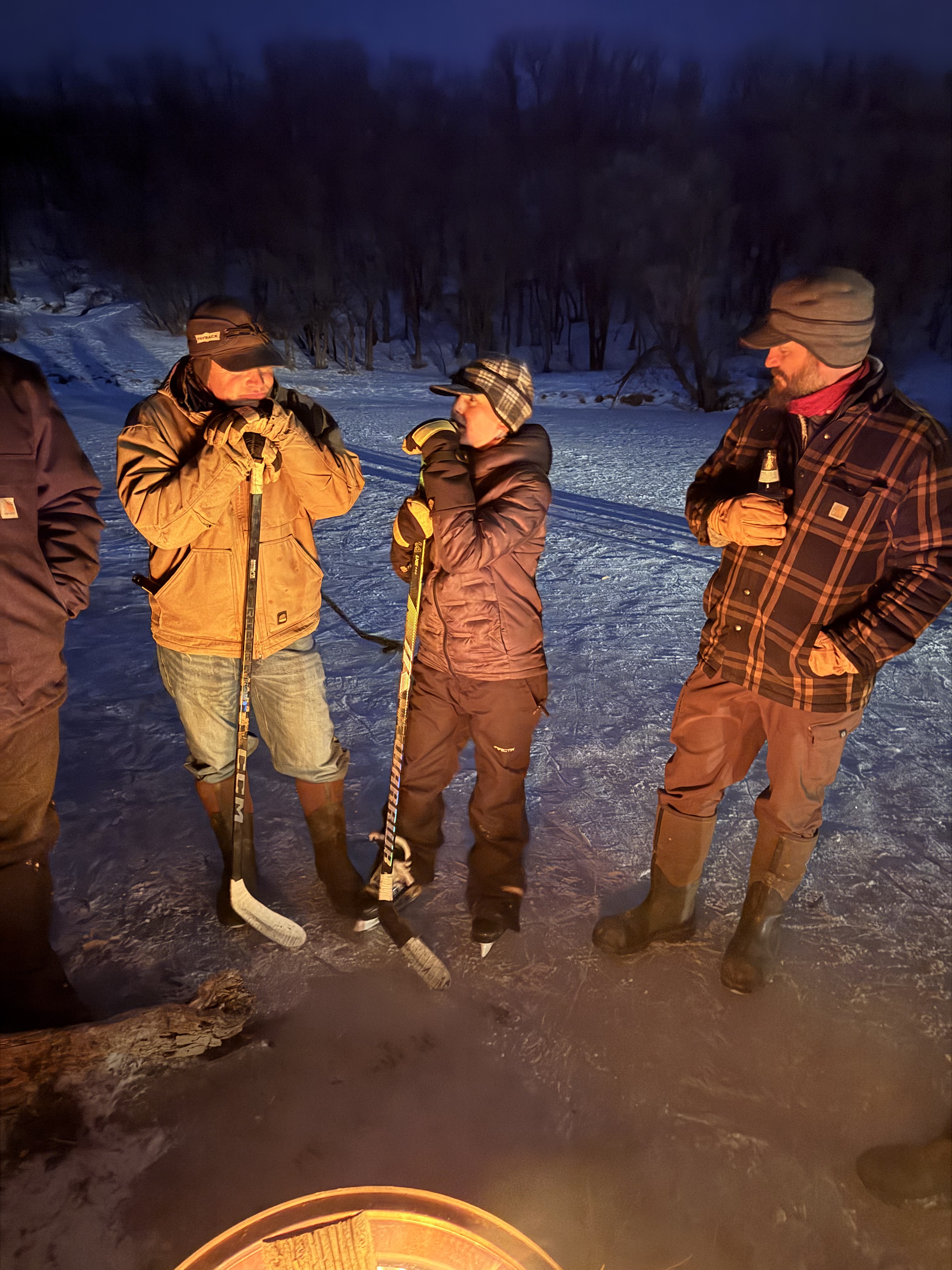
On New Years Eve I will ask my husband to build a fire on the side of that dam and we will invite our neighbors and family to come and skate. We’ll do this to create a memory for those kids and to recreate the good ones we have tied to this season. Because, yes, there are places we can only go in our dreams, and people we will only find there now. But while we’re here, while we’re here, maybe we should, maybe we could, make something for us to dream about…

The big chair and the tree

Have you ever experienced a moment in your life where, in the middle of it, you’ve heard the voice in your head say, this is it, this is a memory now? 

I have several I go back to now and again, but the recent quietly falling snow has reminded me of this one—my husband and I sitting together, squished side by side in the big leather chair with the big leather ottoman that we had purchased second hand from our landlord the year before. We had only been married a couple years, and we moved that big piece of furniture into our very first house with the level of optimism and delusion you only really get when you’re in your early twenties. And we had it big enough to think that buying a repossessed house that needed to be completely gutted to be livable was a choice that was going to get us closer to the big dream. Little did we know that gutting a house, while trying and failing to start a family, would threaten to gut us too, like the big dream getting the best of us before we even really got started. 

But at night, after coming home from full-time, adult jobs to a house full of ripped up carpet, tools on the countertops and unusable spaces, we would tinker a bit on a project, maybe I would go for a walk with the dogs, we would feed ourselves and then we would sit on that big chair together under a blanket and it would all feel manageable somehow. 

It was in this timeframe in our lives I had my first and only Christmas tree meltdown. The winters we lived in that big, broken house were relentless. The snow never stopped falling and it would drift so high up against the south side of the house that our dog would climb the bank to sit on the roof of our garage and keep watch on the neighborhood. Over those two years, we lost six pregnancies while we worked to renovate about the same number of rooms on that godforsaken house. All this is to say, those rooms and the rooms in my mind didn’t seem well-kept enough to deserve a tree, and so I procrastinated the whole thing, though my husband insisted. We needed a tree. And so he took me down to the grocery store parking lot where they bring trees in from places that can grow trees and we picked one that was perfect and alive and full and we put it in the back of my husband’s pickup and we brought it to the not-done-yet house and we moved our big chair over a bit and we put that tree by the big picture window that faced the street and I put on the bulbs and lights I bought new from Walmart. And they were pretty enough. It was all pretty enough, and sweet and what you do on Christmas. 

And I hated it anyway. Like, I had a total disdain for this tree. I remember it clearly, the sight of it made me angry. It made me cry and it made me frustrated and I tried to blame it on the ornaments with no sentimental value or the fact that it was leaning a bit even though it wasn’t leaning at all. And I remember my husband being so patient with me, but I was not patient at all. I was irrational and at the time I didn’t know why. I just thought I was going crazy in this house with endless wallpaper to peel and sawdust to sweep and this tree, with it’s stupid glass bulbs and not one single baby-hand-print-ornament hanging on it, was just standing there in this mess, mocking me. 

But that night, despite my unreasonable attitude, my husband and I sat in that big chair, his right arm under my back, my head on his shoulder, and we watched the twinkle of the tree against the window while outside the big flakes were falling under the warmth of the street lights. Everything was quiet then, even the thoughts in my head. They stopped too to tell me, this is it. This is what matters, right here squished in this chair. Girl, this is what peace is. Remember it. 

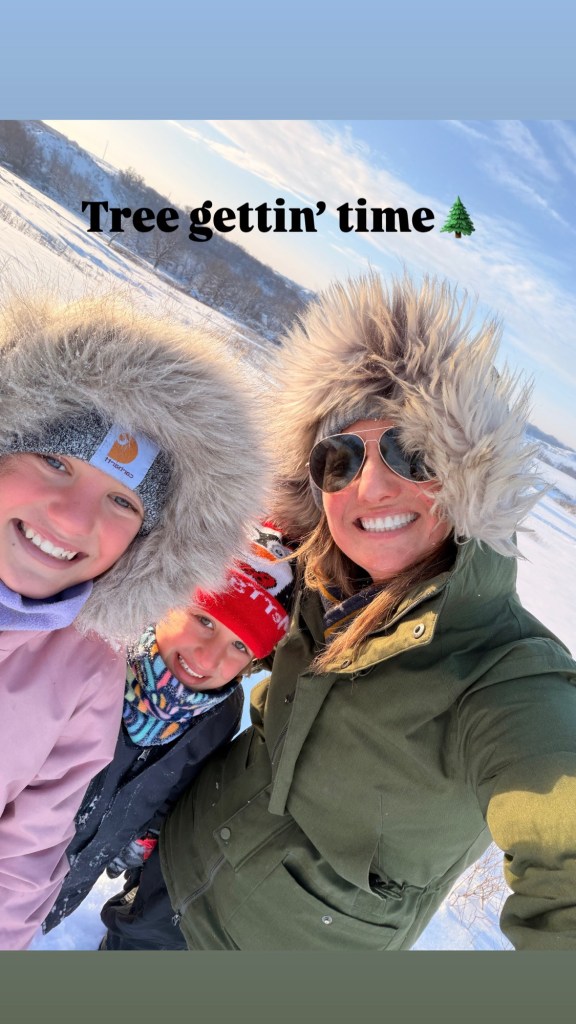
Last weekend I watched our daughters pile out of my dad’s big tractor and plop their little snow-suited bodies in the piles of big snow that had fallen on the ranch the past few days. They rode along with him as he cleared a path for our pickup to drive out in the West pasture to find a Christmas tree to cut and decorate. The sun had just come out and the sky was as blue as it can look, making that fresh snow sparkle and our daughters just ran like wild animals across that pasture while we examined the spindly wild cedars in the hills.

The sight of them, with my dad and my husband and the laughing was closer to heaven than it was to that grocery store parking lot I stood in all those years ago.

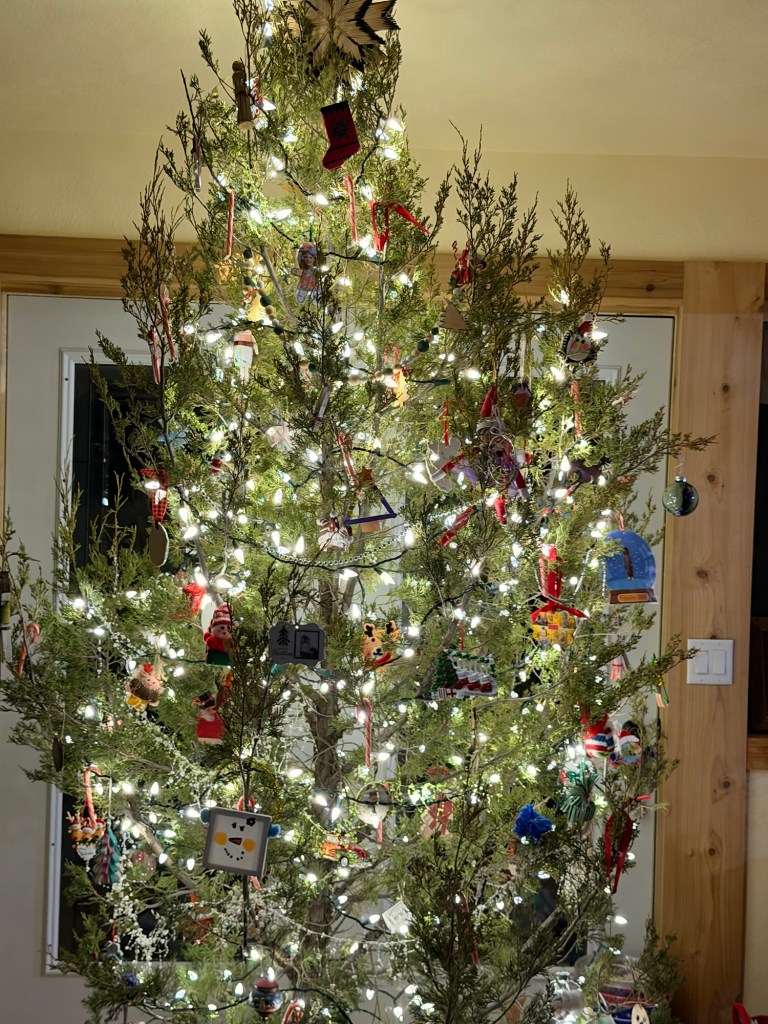
The tree we picked? Way less beautiful by magazine standards. And it’s filled with candy canes now, and homemade ornaments and it will probably fall over at some point because these trees usually do. And the years will pass and I know I won’t remember that tree, but that day? It will be with me forever.

And, well, I guess I just wanted to tell you that. I wanted to tell you that in case you needed to hear it.

From lost to found in the Badlands

WATFORD CITY, N.D. — If you missed the news, I’m here to tell you that the Theodore Roosevelt National Park, located in western North Dakota, has been named as one of the Best of the World for 2026 by National Geographic.

That’s a big deal for us because we love to sing its praises. It’s a magical place indeed, because of its rugged and unique beauty, but also because somehow, it’s remained a bit of a secret. That means it’s a national park where you may be lucky enough to actually find yourself alone out there, which I consider a pretty special gift.

So to honor the honor, I want to share a piece I wrote several years ago when I went searching for a quiet moment in the north unit of the Theodore Roosevelt National Park.
And if you’re looking for a place to be inspired, make it the Badlands. Stop into the Visitor Center in Watford City before you go, we’ll be happy to sell you some treats and give you some tips!

From lost to found in the Badlands

Well, fall came dancing along in all its glory and we sure didn’t need the calendar to tell us so. Just like the uncharacteristically warm weather, the leaves on the trees were not about to take the subtle approach to the season change.

Overnight, the ash leaves turned from green to gold, the vines bright red, the grass and flowers exploded seeds, and even the slow and steady oaks began letting go of their acorns and turning one leaf over to gold at a time.

After a challenging week, I was ready to celebrate autumn the way it deserved to be celebrated. I was ready to let go of my agenda and frolic in it, climb a big hill and feel the warm breeze in my hair.

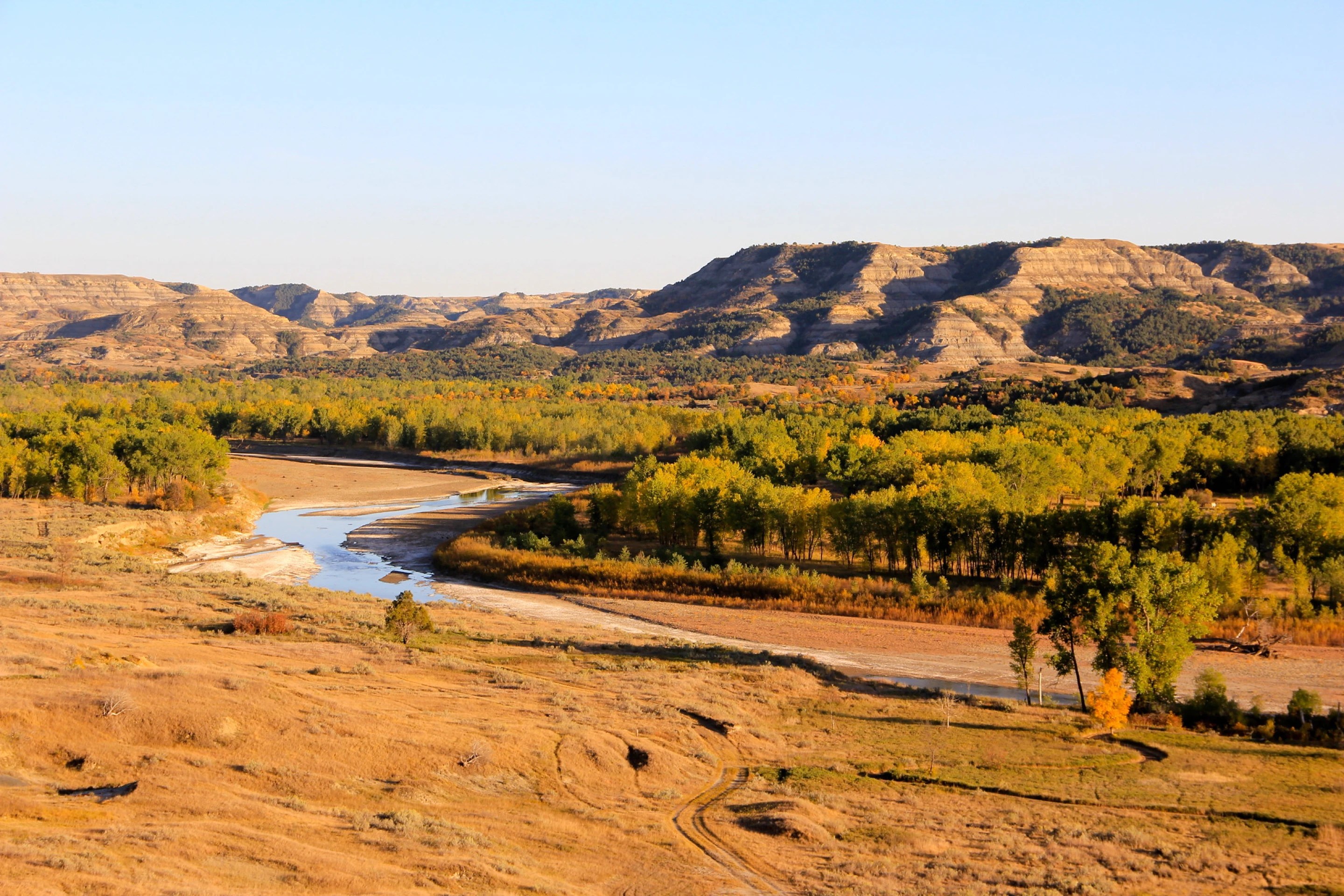
After a trip to the big town for an appointment, I pointed my car down the busy highway filled with lines of trucks, pickups and SUVs that moved humans at full speed along that paved ribbon of road that winds through buttes and half-cut wheat fields, across the Little Missouri River that sparkles and meanders under the big blue sky and slowly sinking sun.

I wanted to meander, too. I wanted to meander among the things out here that are allowed a slow change, a subtle move toward hibernation, a good long preparation for a show like no other, a recital of how to slow down gracefully.

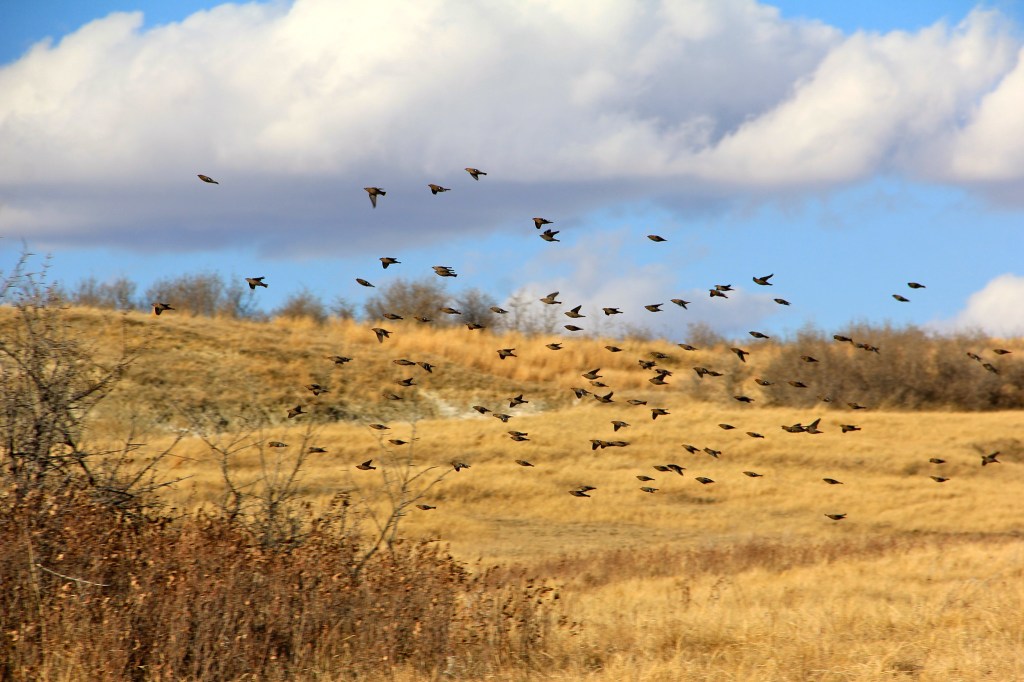
And I couldn’t help but wonder while I tried to keep my eyes on the road despite the neon yellow trees waving at me from the ditches, if these people who were sharing my path were seeing this. Did they notice that the tree was waving to them, too? Were they commenting on how the crows have gathered?

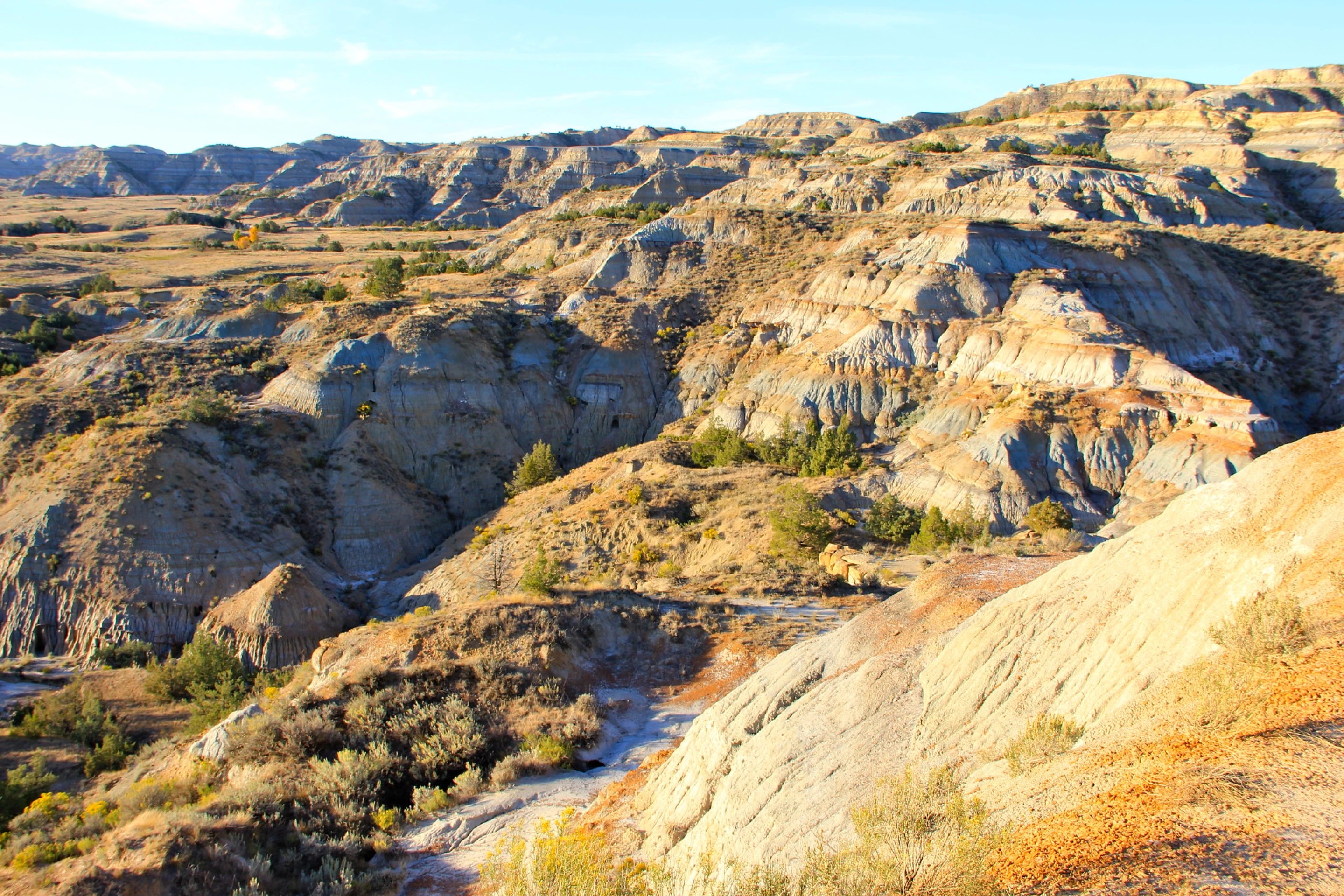
As we came down through the brakes that move us through the Badlands, did they notice how the layers of the buttes — the line of red scoria, the black coal, the clay — did they notice how, in the late afternoon light, the landscape looked like a giant canvas created with wisps of an artist’s brush?

Did they see that river? I mean, really see it when they passed over the bridge? Did they take note of how it has receded a bit? And as they approached the sign that read “Theodore Roosevelt National Park-North Unit,” a sign that indicated they were indeed on the home stretch to their destination perhaps, only 15 miles to the town to stop for gas, to make it home, to take a rest on a long truck route, were they enticed like I was that afternoon to stop for a bit?

Because what could be better than breathing in fall from inside a place that exists raw and pure? A park. A reserve. A spot saved specifically to ensure that nature is allowed to go on doing what it does best while undisturbed by the agenda of the human race, which at that point I was convinced didn’t have a handle on how to live gracefully in a world designed for us, let alone accept and live harmoniously among what we can’t control or may not understand — like the change of weather and the seasons and the sun beating down on the hard earth.
And I was guilty as well of taking this for granted. I was guilty of driving by this spot time and time again as it called to me to take a rest, to visit, to have a walk or a seat or a climb.

But not that day. That day I needed its therapy. I needed to park my car and stretch my limbs and take a look around.

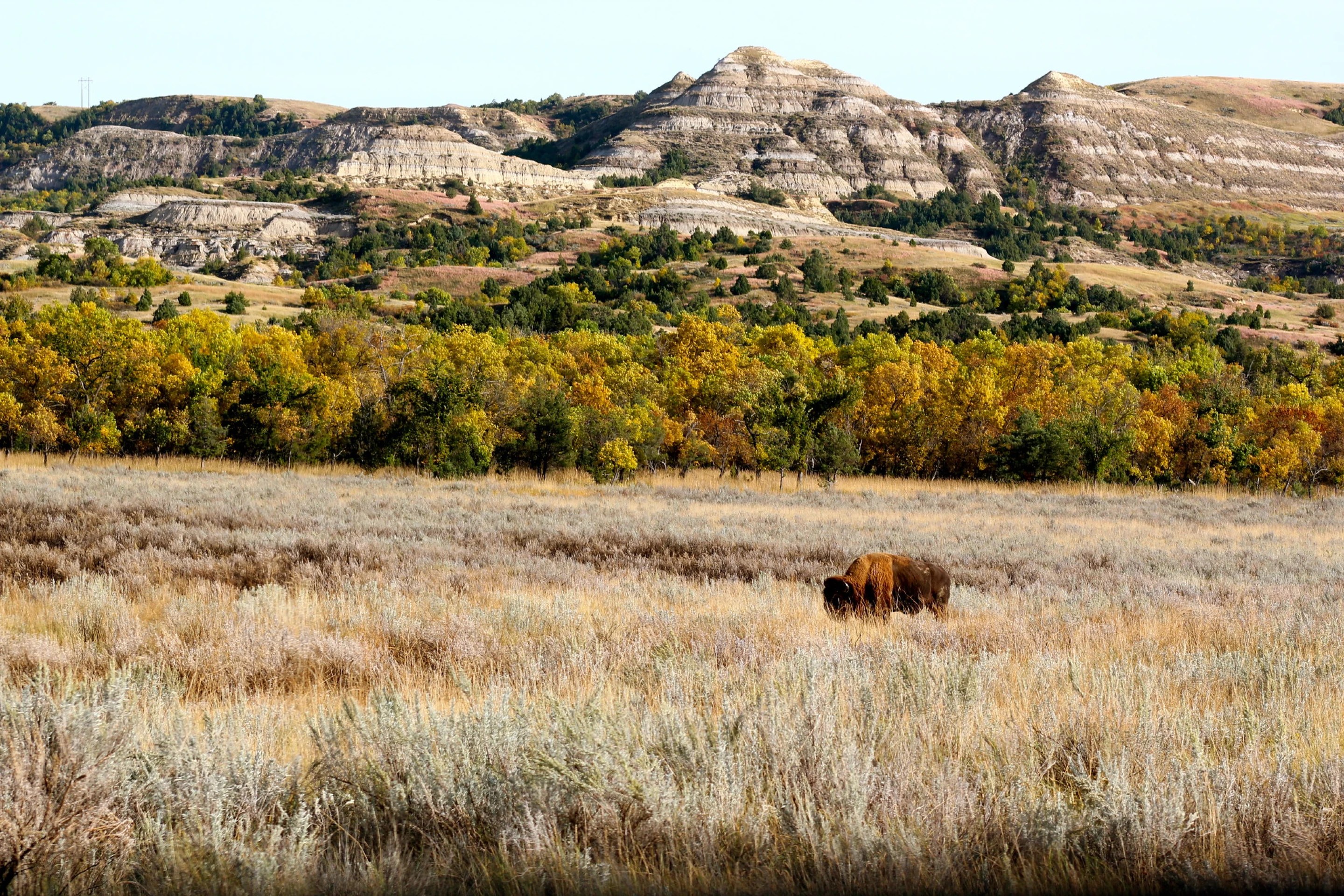
From the top of Battleship Butte. From the trail at the river bottom. From the flat where the bison graze.

So as I pulled my cap down and took to the familiar trail that wound up that big, daunting and famous butte along the road, I took notice of the breeze clattering the drying leaves together, the birds frantically preparing for the chill, the grasshoppers flinging their bodies at the dried grass and rocks …

And then I noticed I was alone.

Alone as I scrambled and pulled my tired body up the steep and rocky trail toward the top of my world as two bison grazed on the flat below the buttes.

Alone as I reached my destination with no other ears around to hear me catch my breath and then sigh in awe at the colors and solitude.

Alone as I watched those bison move and graze, a spectator in a different world, a spy on a giant rock.
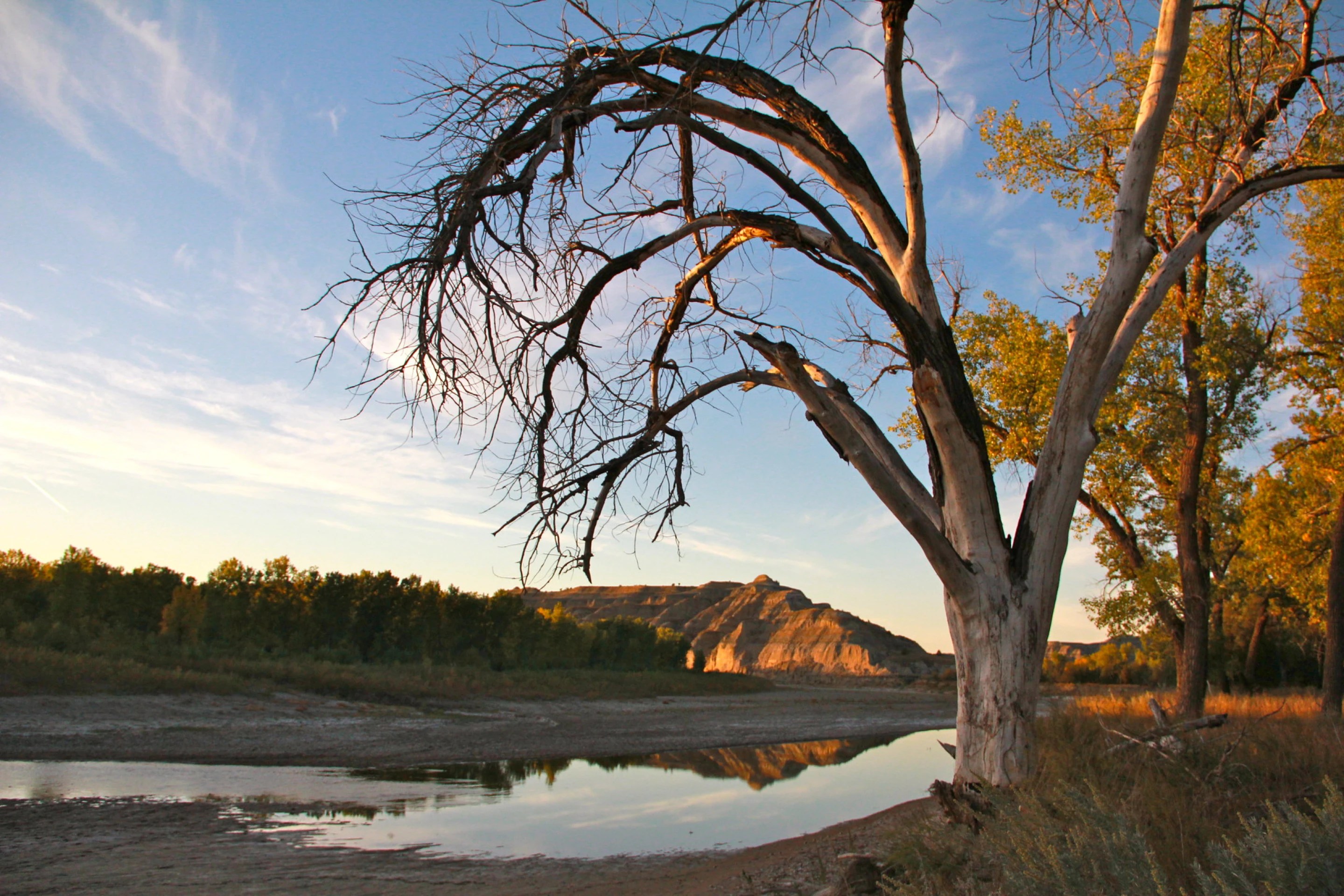
Alone to take my time as I noticed how the trees sparkled on the river bottom against the sinking sun. No one to tell me that’s enough, enough photos, enough time, enough gazing.
Alone as I walked toward the river and there was no one there to stop me from following it a little bit farther, to see what it looked like on the other side of the bend.

No one there but me and a head full of thoughts and worries that were being pushed out of the way to make room for the scenery, the quiet, the wildlife tracks and magnificent colors and trails before me.

And because I was alone, I was able to notice that after a few weeks gone missing, I was becoming myself again. The self that understood this was my habitat and my home. The self that knows the seasons will always change, the leaves will dry up, the acorns will fall, the birds will fly away from the cold or prepare for it, the grasshoppers will finish their rituals, the snow will come and coat the hard earth, then melt with the warm sun, changing the landscape, as the water runs through and cuts the cracks in the earth.

And the bison will roam, and the antelope will, too, and the prairie dogs will burrow, the pheasants will roost, and the bugs will hum and buzz and disappear, knowing, or not knowing, that their lives are fragile, just like ours out here where we can find ourselves alone.


The wheels of the past

Fall has settled in at the ranch and we’ve been spending some time working the cows and moving the cows and contemplating the market and thinking about next year’s goals. With the crisp of its arrival comes the regret of not accomplishing all we set out to accomplish in the warmer, fleeting, summer months. It’s always this way on the ranch, and I would argue, gets worse as we get older and so do the fences and buildings that need to be repaired, rebuilt or torn down.

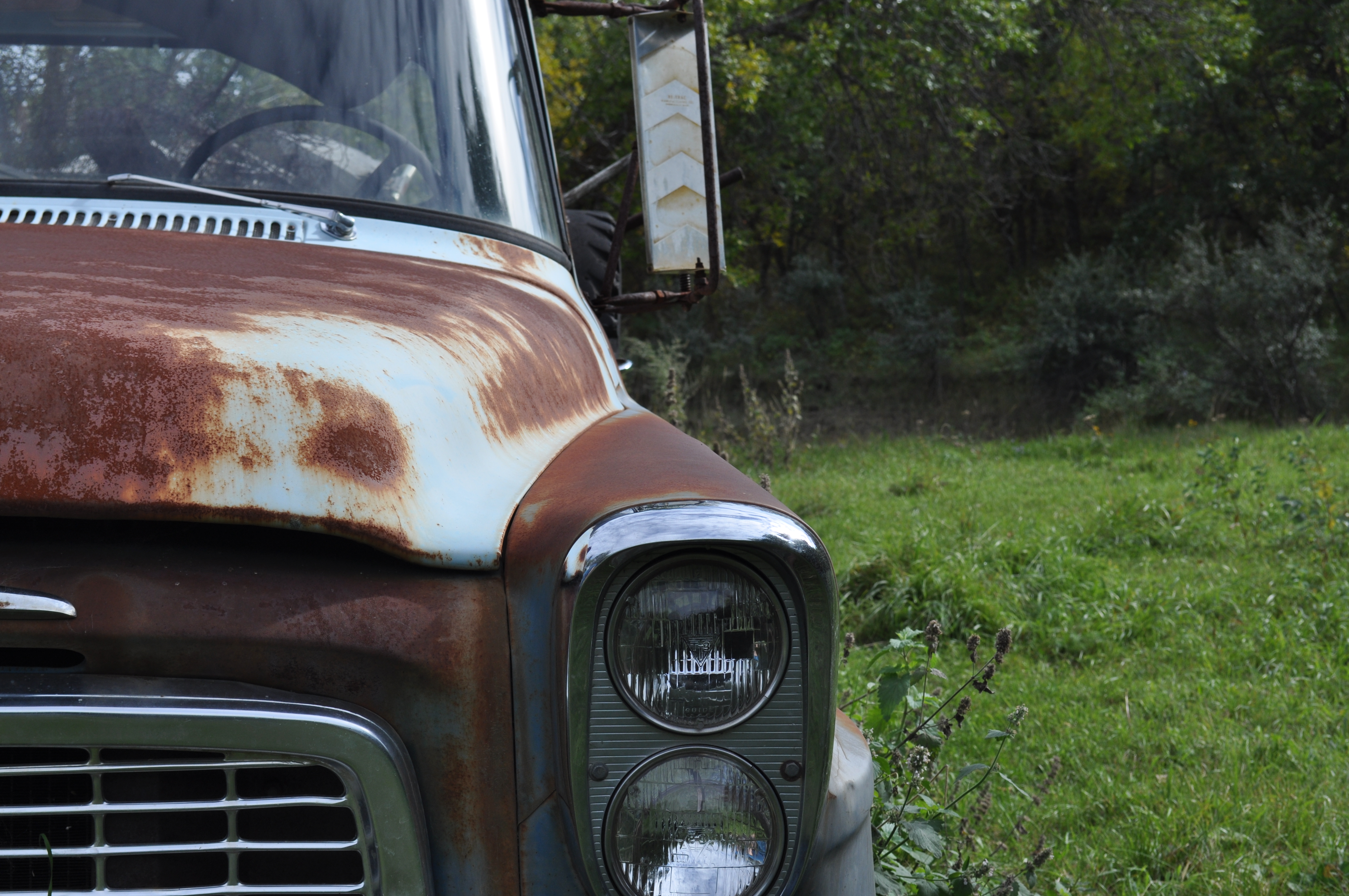
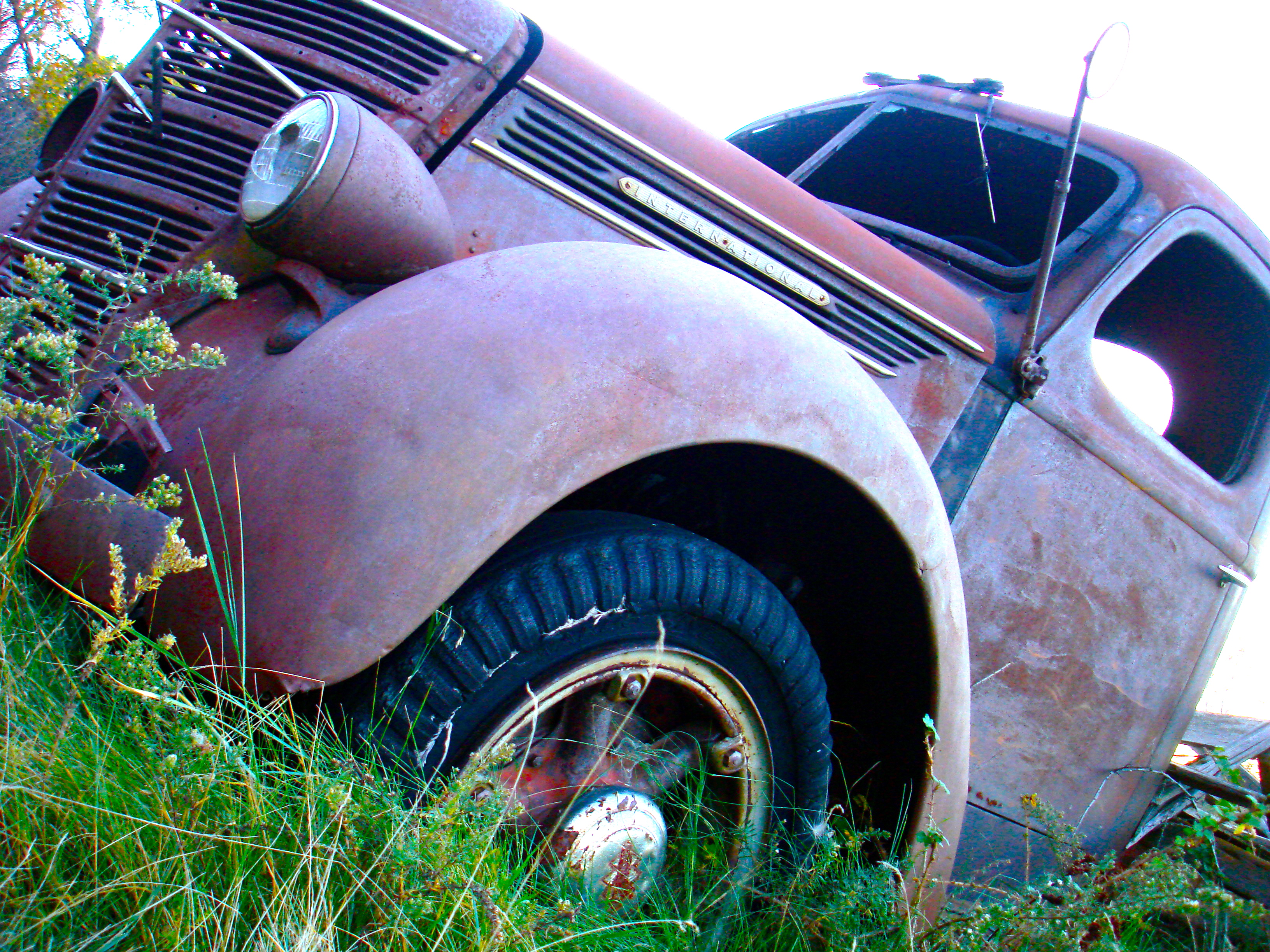
Like most farms and ranches, we have a couple places on our land that have become graveyards for old equipment, cars, campers, boats or mowers. They sit in the draws as a reminder of a part of your life you used to live. When I was a kid, these graveyards were full of my great uncles’ fancy old cars, my great grandpa’s pickup, dad’s snowmobiles and dirt bikes and machinery that at some point was declared beyond repair. Or maybe it wasn’t. Maybe they just couldn’t get to the repair part, or didn’t have the tool or the money and there it sat. The issue of time has always been an issue of time out here, no matter the decade.

As a kid I used to love to snoop around in these places. I would sit in driver’s seats and play with the shifter and the push the pedals and the buttons on the radio and pretend I was speeding down the road, my imagination somehow in the past with a future me at the wheel. I loved the smell of the dust that puffed up from the ripped and cracked seats and the sound the rusty springs made under the weight of my ten-year-old body bundled up against the bite of the wind. And I liked feeling like I was discovering a secret about these things and inventing the characters they might have driven along the backroads.

Old Truck

Most of my memories about visiting these relics take place in autumn when the heat has blown off making way for the frost. The burdock has headed out and the pig weeds and creeping jenny’s growing up and around the running boards and wheel wells is dry and stomped out by the cows. The flies and wasps have gone to their graves and so sitting in old cars doesn’t feel sweltering, but sort of haunted.

October 9, 2010. Rearview

Haunted. This season will do that to a person. Last week after a particularly windy and chilly morning spent moving cows with my dad and my husband, I sat on my palomino in our corrals along the edge of the west pasture while my husband worked on connecting a tired old gate to its latch and my dad tested the fussy water system in the tank. I was the kind of cold that got to my fingers and toes and turned them the same numb they used to get when I was a kid in this very same corral, in this very same wind, waiting on dad.

I looked over at that wooden chute standing weathered and worn connected, just barely now, to old posts and deteriorating rails. These corrals hadn’t been used in years, but the cold stinging my bones brought me back to the time I was a kid in this very same spot, bundled up as much as a kid could be bundled up, waiting on Dad to fix something. Or maybe we were running calves through that chute, vaccinating or doctoring and I wasn’t being useful after dismounting my horse and so I was colder than everyone else. And I remembered then how I disappeared from the bite of the relentless wind by laying my entire body down in the corner of those corrals, low, low, low enough to bury me in the grass. I remember the smell of the dirt and the way the clouds looked moving graceful and alarmingly quick across a sky that was deceivingly blue for such a brutal day. In my memory I was there for hours, cold and bundled and huddled and waiting for the job to be done. But time isn’t the same when you’re young. It moves slow like the water through a creek in the fall. Even slower when you’re cold.

These days feel more like the clouds in the wind.

I’m no longer the little girl I used to be out here. But how could it be when my bones are the same kind of cold? My fingers. My toes. This tall grass. My dad in his scotch cap. These old corrals. The smell of this horse and the dirt.

I looked up then and noticed those clouds flying and I felt the way I used to feel sitting those old cars so long ago.  Haunted.

Only the nostalgia is mine this time, not someone else’s mysterious story. That future is here now and she’s’ holding tight to the wheel of the past…

What’s Better?

What’s better than a slice of garden tomato on a slab of fresh, homemade toasted bread? With a little mayo mix spread and a sprinkle of salt? Well, maybe if you add a fresh cucumber to the mix. That’s the best. And crispy bacon too, if you have it, but you don’t need it. You really only need that fresh tomato and that crusty bread.

What’s better than a fluffy, tiny kitten snuggled in the nook of your arm on a rainy Sunday when the tasks you had to do have been done or saved for later and the only real pressing issue is this nap you’re about to take with this kitten purring and safe. And maybe it’s quiet in the house, but maybe you have kids and so the chatter of their pretend play is in the background as your eye lids get heavy. You might only drift off for a moment, but everyone’s home. Everyone’s safe. It’s Sunday. You can relax. What’s better?

What’s better than soup on the stove? The kind you put together with the person you love hovering in the kitchen to tell you about their day, or tease you a bit about the mess, or add a few more sprinkles of garlic and another bay leaf when you turn your back. What’s better than the smell of a recipe you’ve made together for over a decade, knowing you all love it. Knowing you’re all about to dig in and be full. Maybe adding a cheese sandwich, I guess. That could make it better. But you don’t need it. The soup stands on its own.

What’s better than your old ranch dog sitting next to you on the bench seat  of an old pickup in the crisp cool fog of a fall morning as the sun is starting to appear?

What’s better than that dog eagerly awaiting the work ahead, coming to the call to push the cattle out of the brush or pull the strays back in with the herd? What’s better? Maybe that old ranch dog gets let in the house by your young daughters to be called up on the couch to watch “Peter Pan.”  And he won’t look you in the eye when you admire the scene because he’s nervous that you might blow his cover as a house dog now and make him go out. But you don’t. You couldn’t. He’s a good boy, and not too stinky tonight. He’s mellowed out with his old age, and he’s earned it. He sleeps in your daughter’s bed now and you can’t help but notice the funny juxtaposition of his job as ruthless cattle hound by day and stuffed animal at night. This dog too, contains multitudes. What’s better?

What’s better than laying down next to your seven-year-old at bedtime and listening to her read you a chapter out of her favorite book? What’s better than her little voice swelling with inflection as she notices the exclamation points and quotation marks and so she becomes the character. It’s been a long day, but her bed is cozy and you drift off a bit until she stumbles with a word and you wake up, sleepily correcting her. She shuts off the bedside lamp because her eyes are sleepy too and in the dark she asks you a question about the stars that you can’t really answer because who really knows? Who really knows the depth of the universe and if there is anyone else out there, among those stars, who might be wondering too…

What’s better? What’s better?  

Bullseye Season

It’s bullseye season here at the ranch. The leaves start changing, the air cools down, the black flies find their way into my kitchen to make me crazy and my husband and daughters take out their targets and bows and get to practicing shooting arrows.

My husband has been into archery since he was a young kid. His most shared stories of his childhood are of him sitting alone in a hunting blind for hours without anything but those swarming flies to entertain him. The flies and the snacks and lunch he always finished eating well before noon. When the girls dare say they’re bored around here, the hunting blind stories are the stories he pulls out.

Yes, archery is a sport of patience and calm and, most of all passion. It takes a special kind of mindset to stay completely still and quiet for hours on end, often in the freezing cold or wild wind, or, my nightmare, way up high in a tree stand.

I’ve accompanied my husband on bow hunting excursions around the ranch in the past, before the kids arrived. It was one of my favorite things to do with my him because I could get out in the hills, photograph some wildlife, get some air in my lungs and get in quality time while he scoped the draws and skyline for bucks.

 And if you’re planning on doing the same with your husband, may I suggest not wearing swishy pants and only humming the song that’s in your head in your head. Turns out unwrapping a candy bar while he’s glassing the horizon isn’t good protocol either. 

But, what do you call a man who isn’t a comedian, but doesn’t take anything too seriously?  Like, oh well, you swish-swish-swished your way across two miles of pasture and scared everything wild and living away within earshot, but I’m glad you’re here and glad you wore enough warm layers and glad you brought snacks. That’s the guy I married. Turns out being married to me was just preparing him for a lifetime of raising daughters.

He’s unflappable, that man. And our daughters adore him. And I love to see it because when they’re out there shooting bows at that target with him or leading the way on a dirt-bike excursion to the alfalfa fields, it reminds me so much of the reasons I adored my dad as a little girl. The way he continued to enjoy life and pursue his passions even in the thick of the responsibilities of middle age and ranching and professional obligations somehow wasn’t lost on me, even as a kid. He liked deer hunting? I was going along, rain or shine. Playing guitar? I’m sitting at his feet watching his fingers. Training horses? Put me on the next one.  The same didn’t apply to him teaching me to drive a stick shift, but I would like to continue to repress that memory.

From the archives

We’re in the season of parenting where our kids are getting older and beginning the phases of coming into their own. When they were babies, it was fun to dream about the interests they may have or the talents they would develop, and now, here we are, watching who they are becoming right before our eyes. There have been many times in the past year or so that I have second-guessed if we are doing enough to help them cultivate their passions. We’re in the generation of parenting where there is a lot of pressure to sign kids up for extracurriculars at a younger and younger age to help them hone skills as early as possible. But if I’m being honest, my instinct has always been to try to give my kids more free time, not less. Now, all the sudden I’m feeling like maybe my almost eight-year-old and almost ten-year-old should be mastering more skills and honing in closer on their passions. Is it this age where they start becoming a little obsessed with things they love? Would they ever be obsessed enough to sit in a hunting blind for eight hours with nothing but the flies and the bag of snacks to entertain them?

I don’t know. And, honestly, I don’t know if obsession/extreme passion for rodeo or goats or basketball or archery or hockey is always the ultimate goal for every kid. Maybe for some it’s just about doing it and having fun and learning something, although I have tried to sell that concept to my youngest and most competitive daughter and it didn’t land well.

In the meantime, it’s bullseye season at our house and a reminder that the best thing we can do for our kids is to show them what it looks like to enjoy something and to work at it and how to learn and improve.

And then, when it comes time for them to accompany their dad on a hunt, I will remind them to skip the swishy pants, although I doubt he would mind, as long as they’re coming along.

And to me, well, that’s what I call a parenting bullseye.