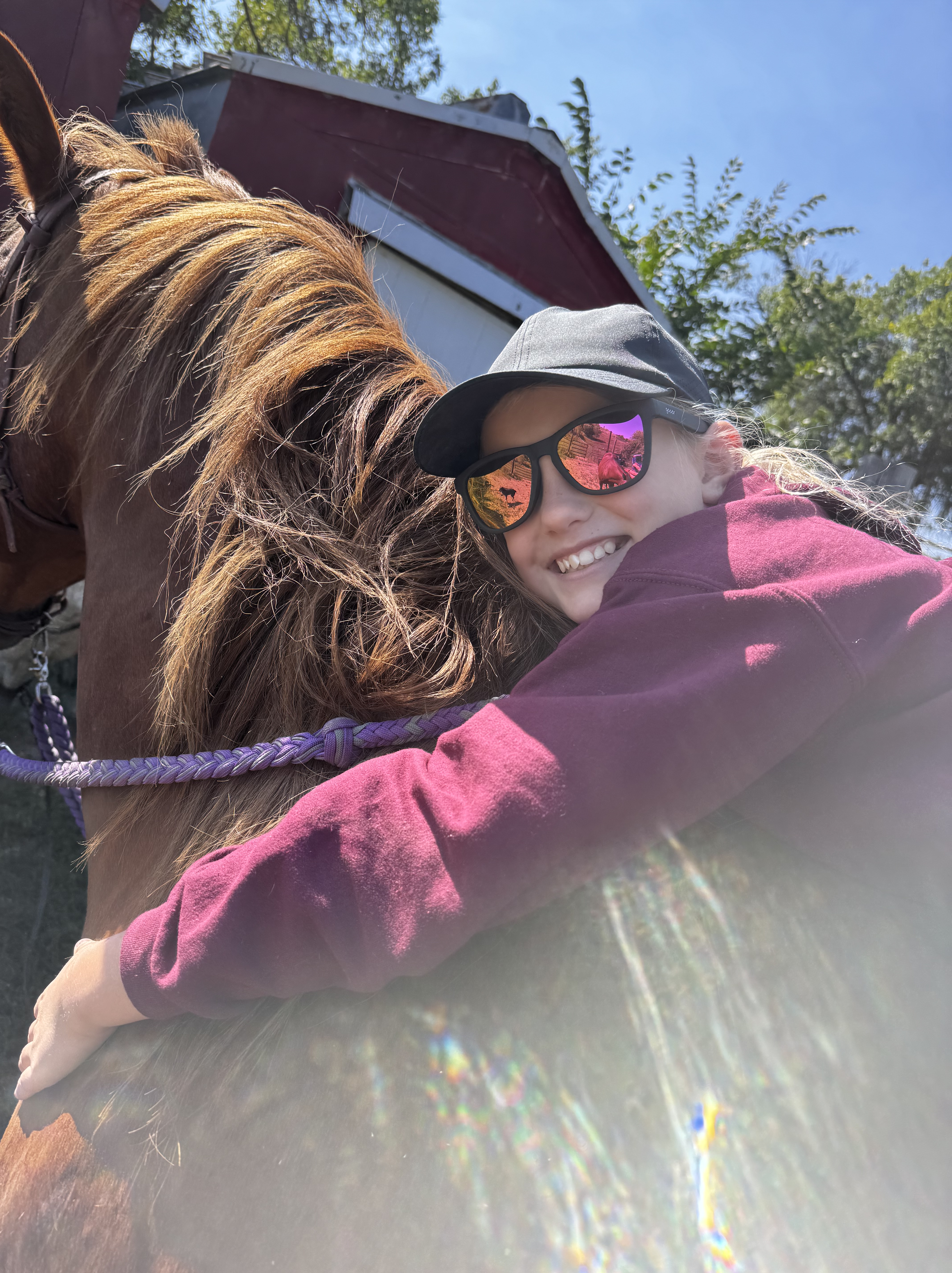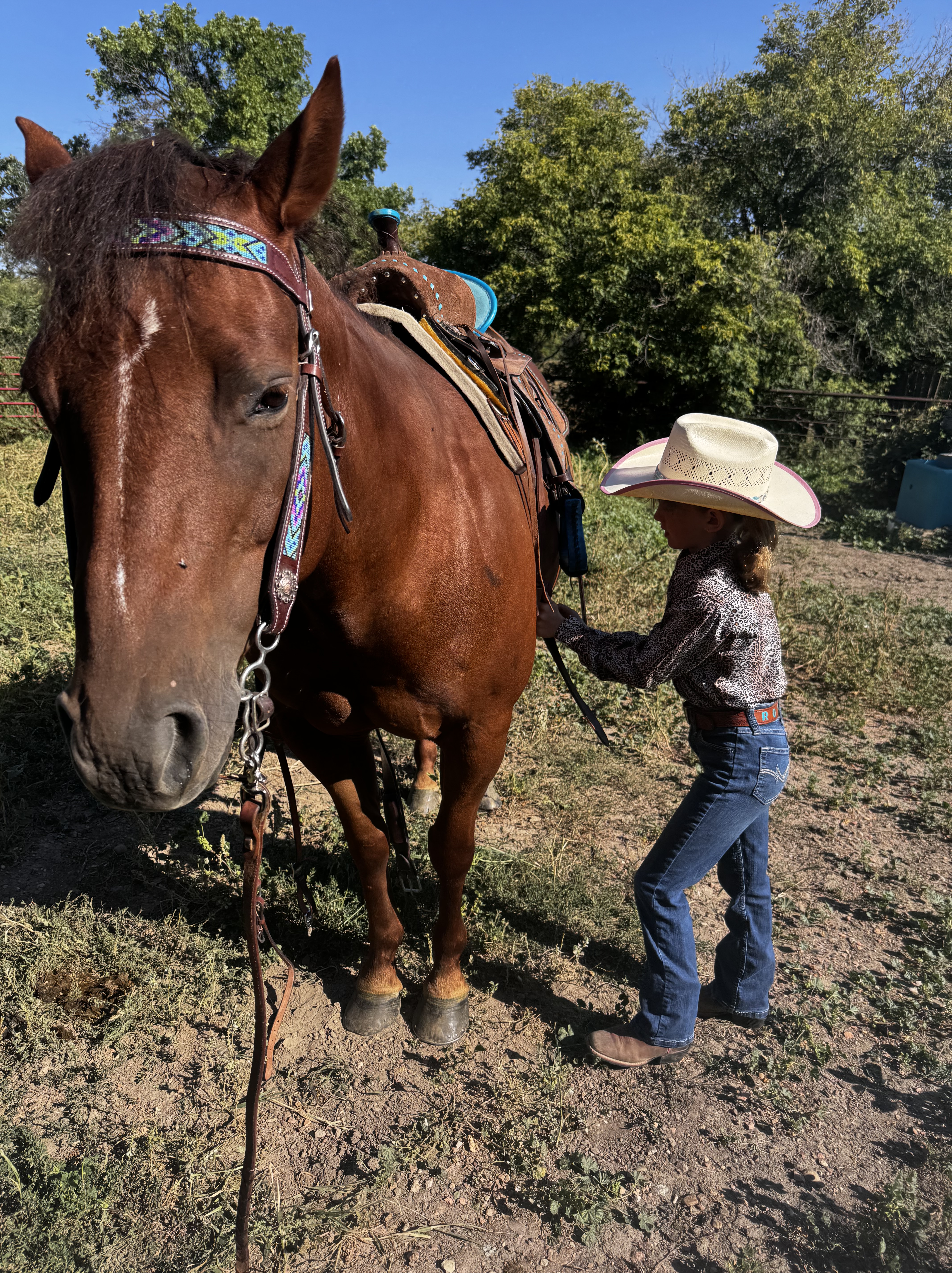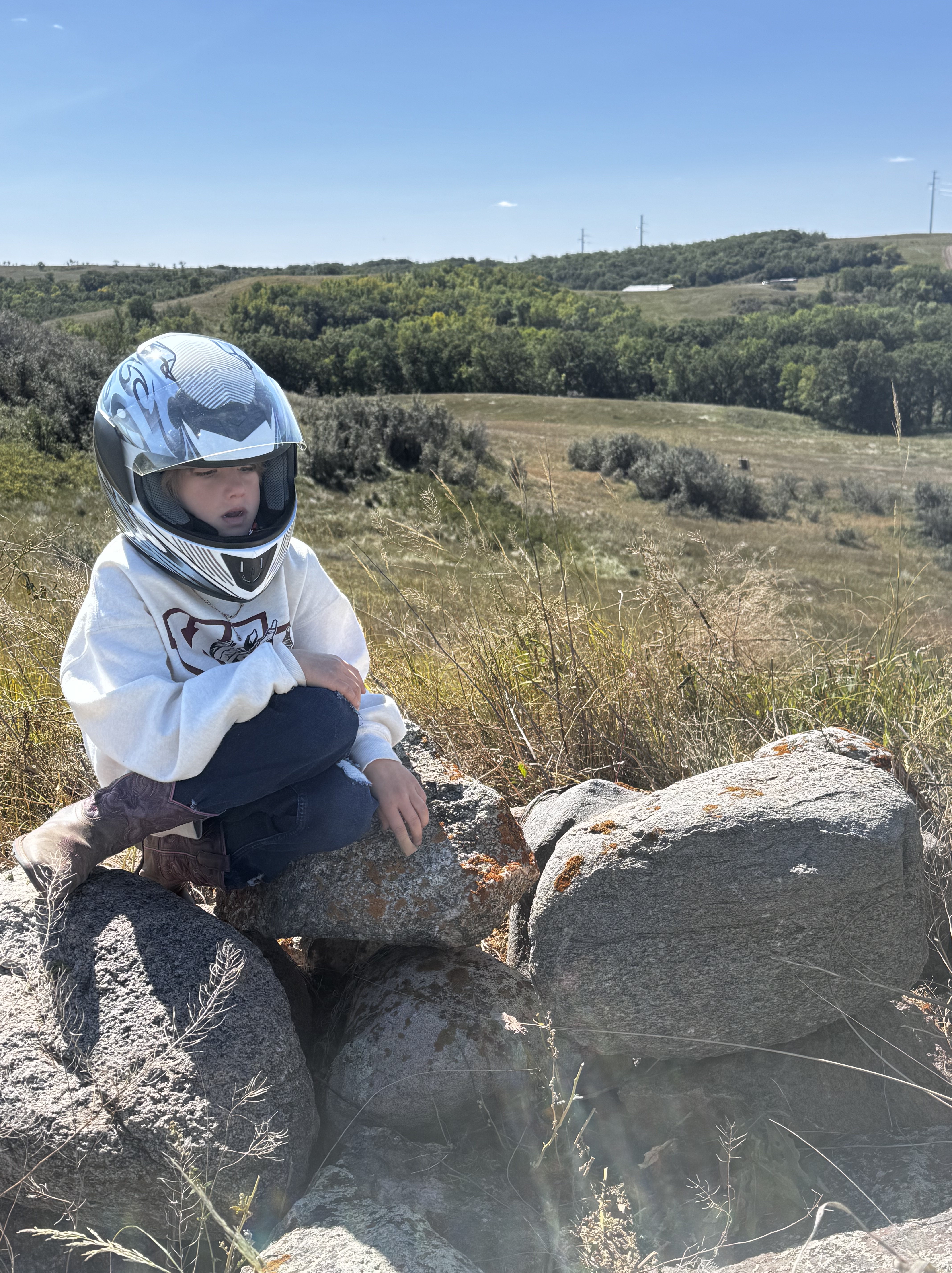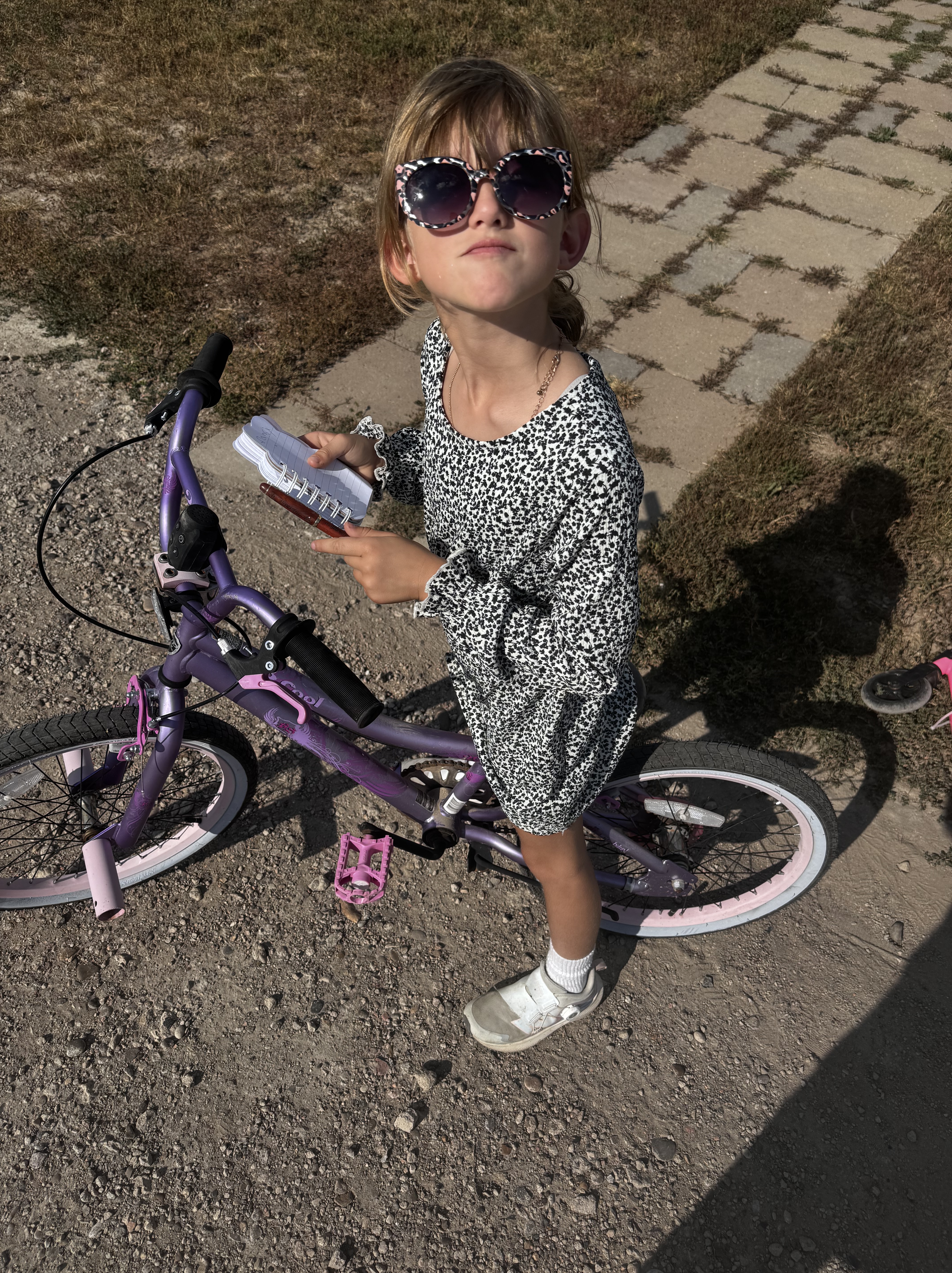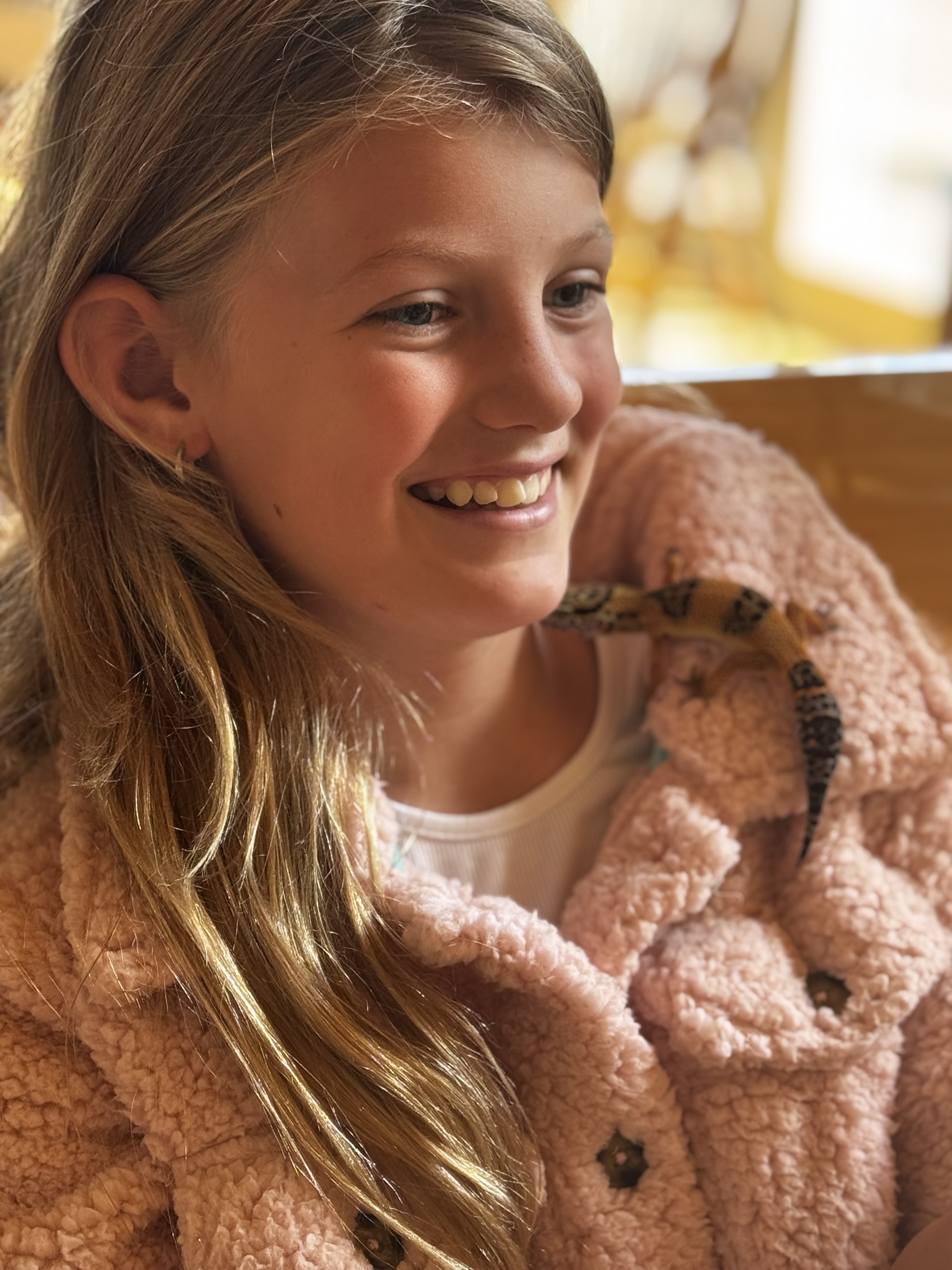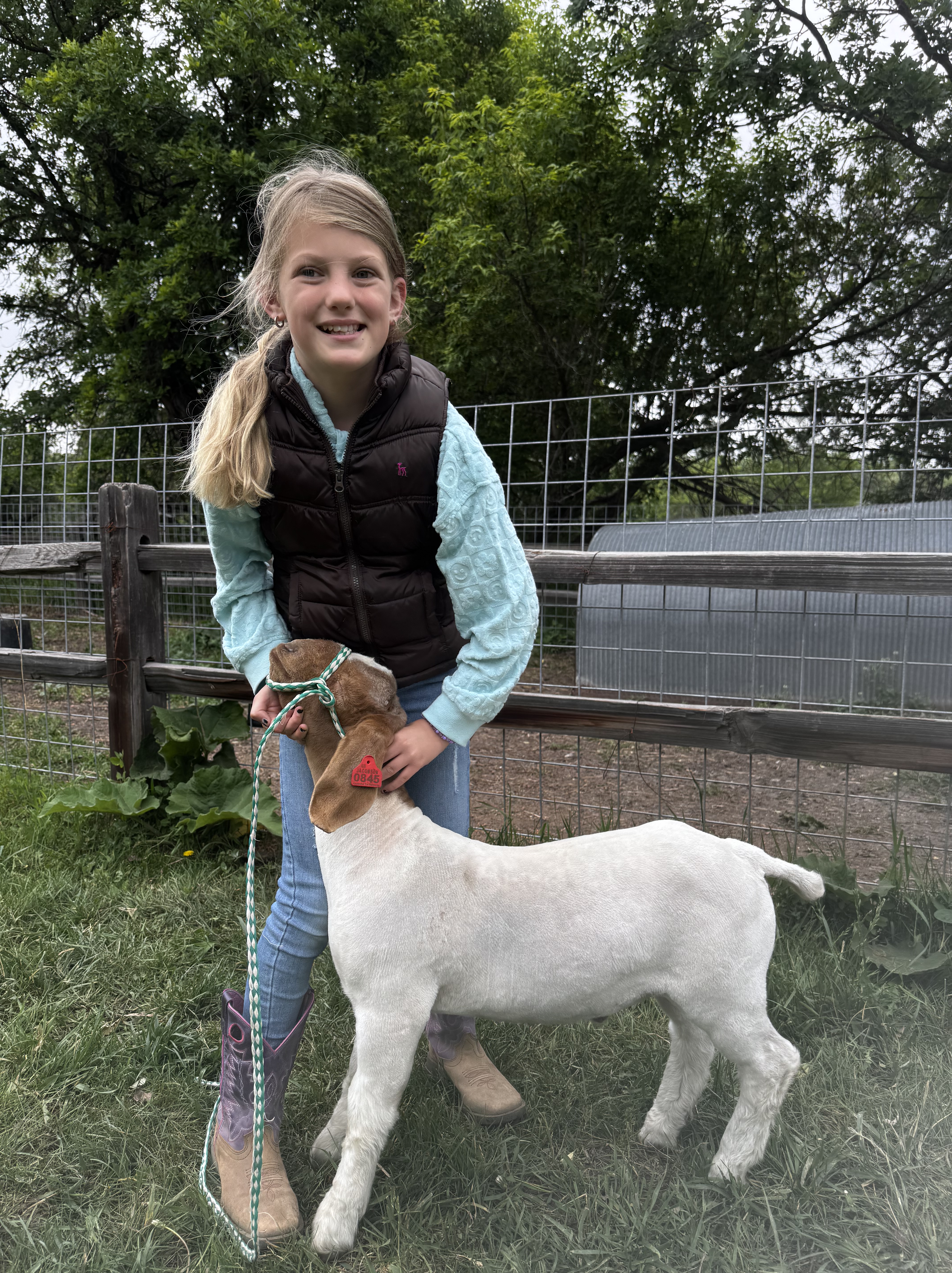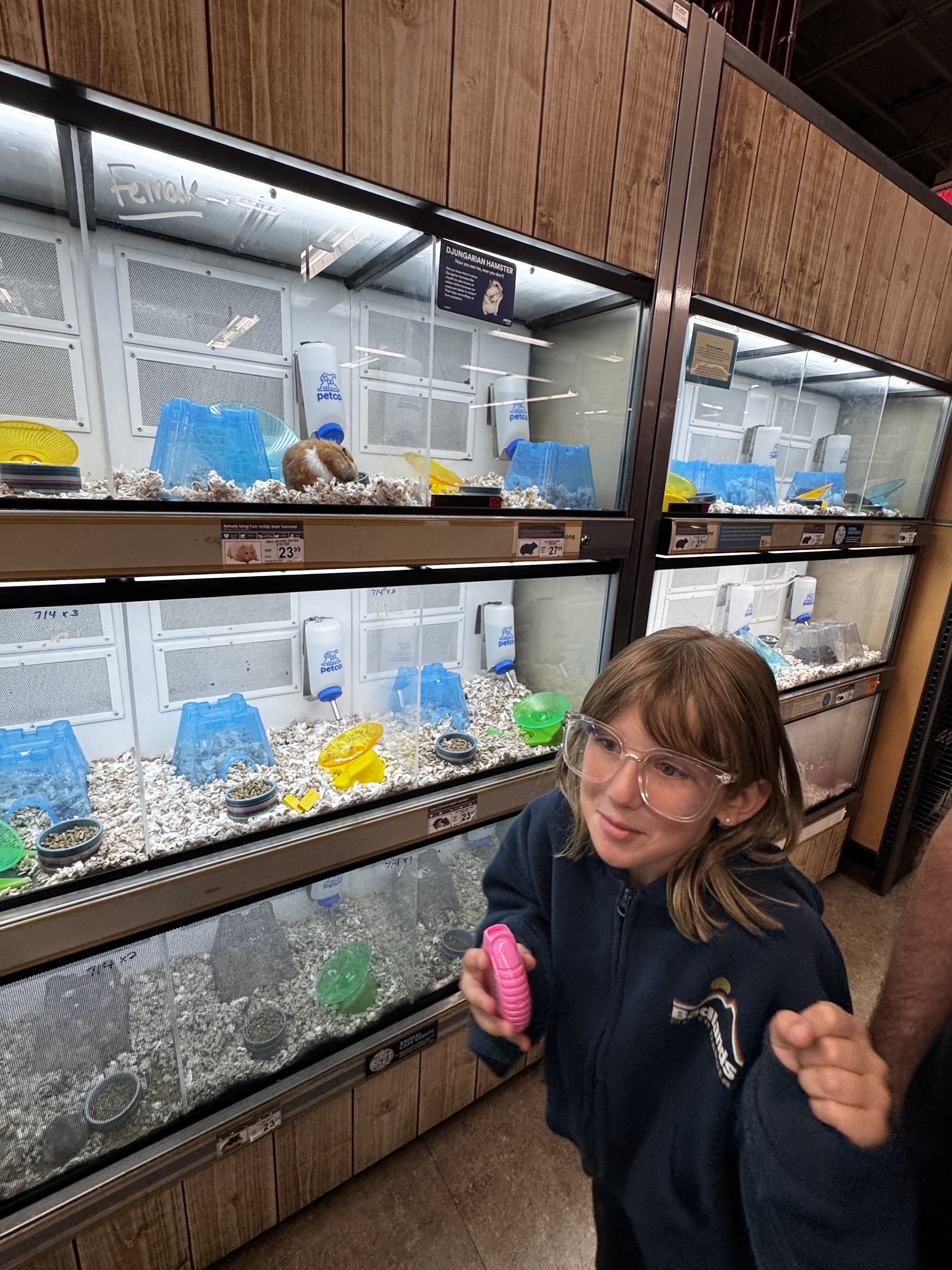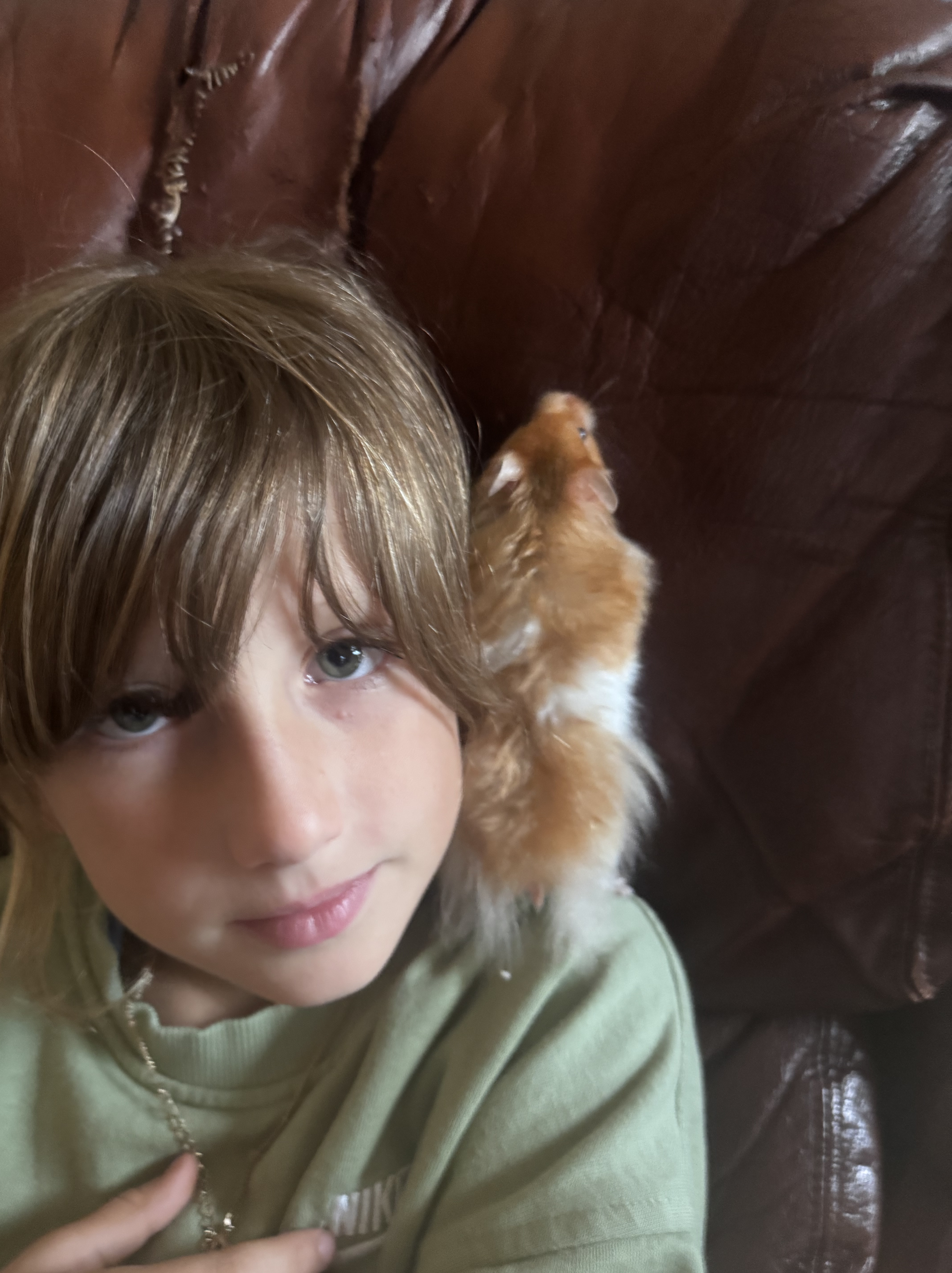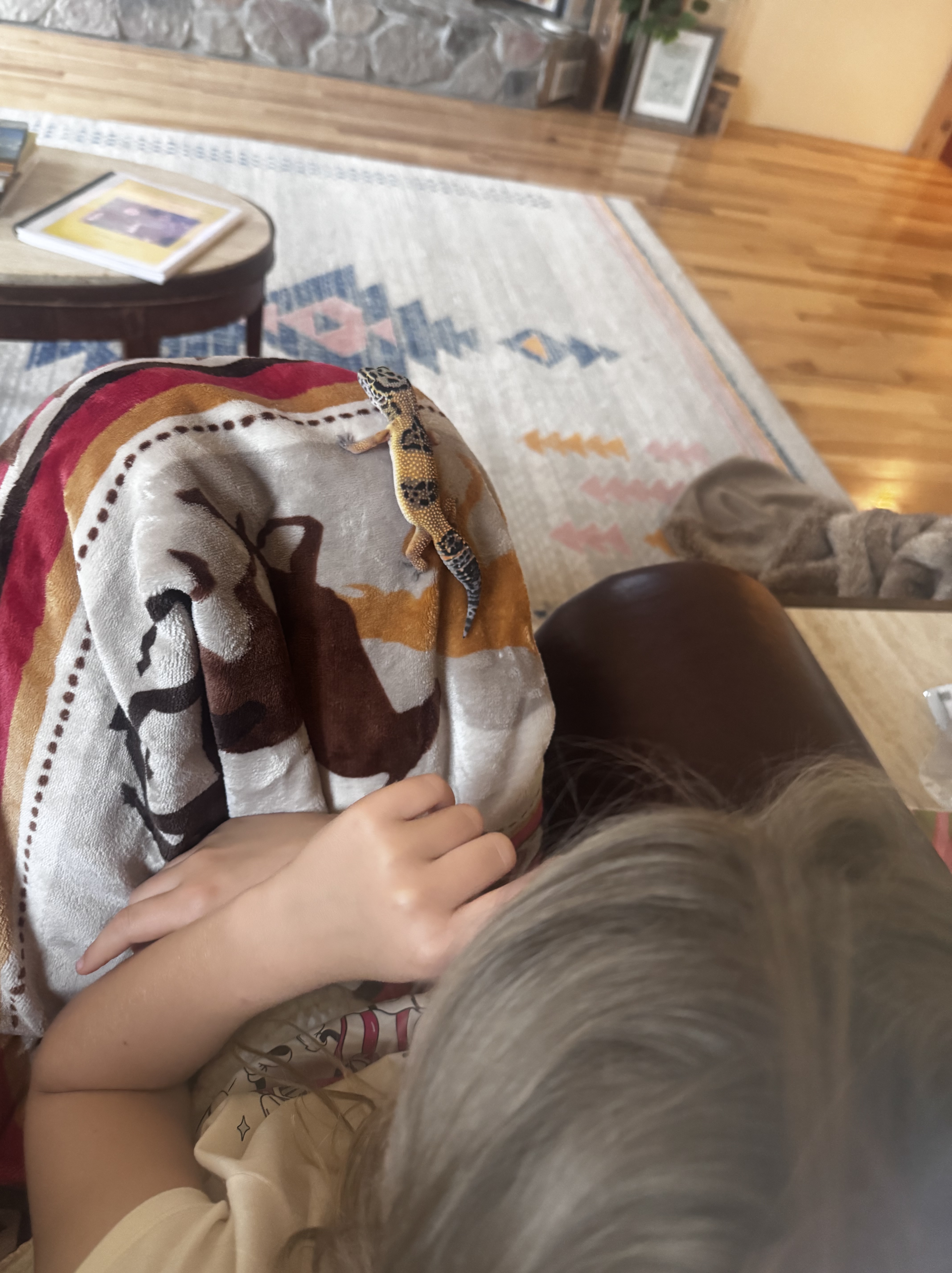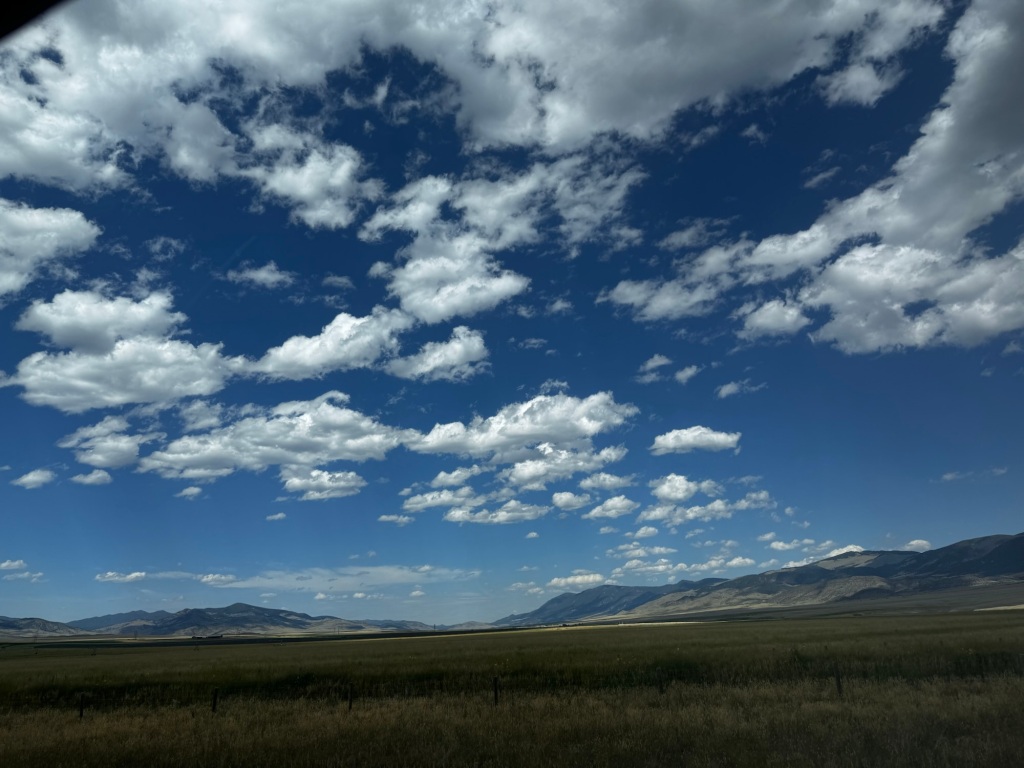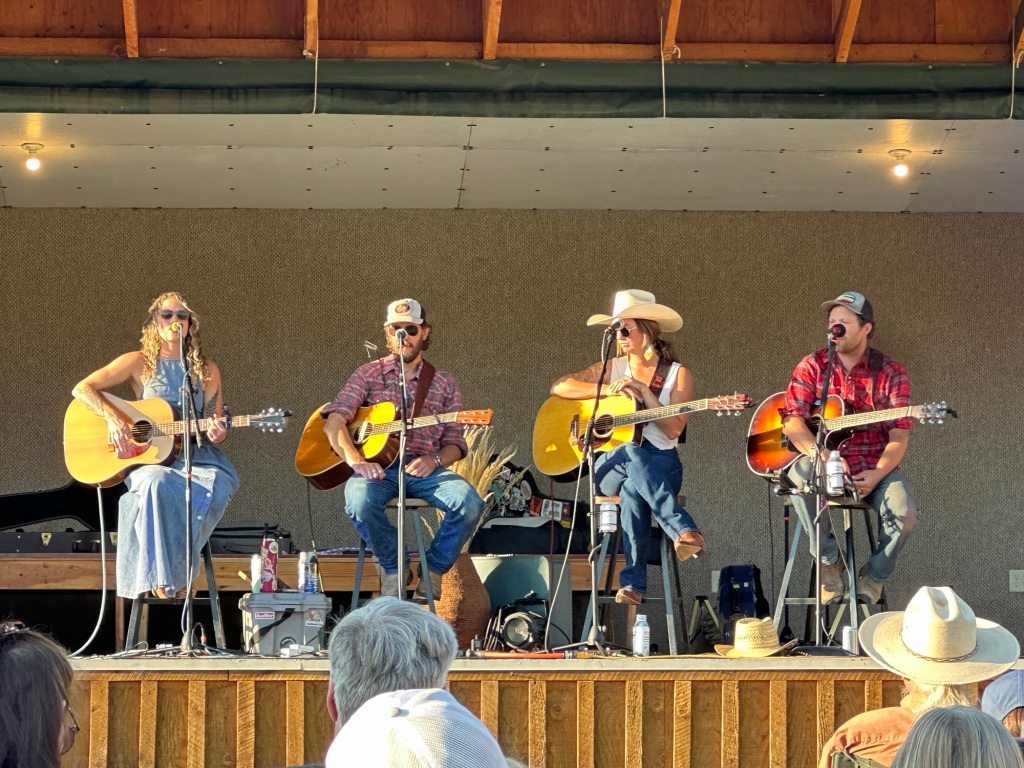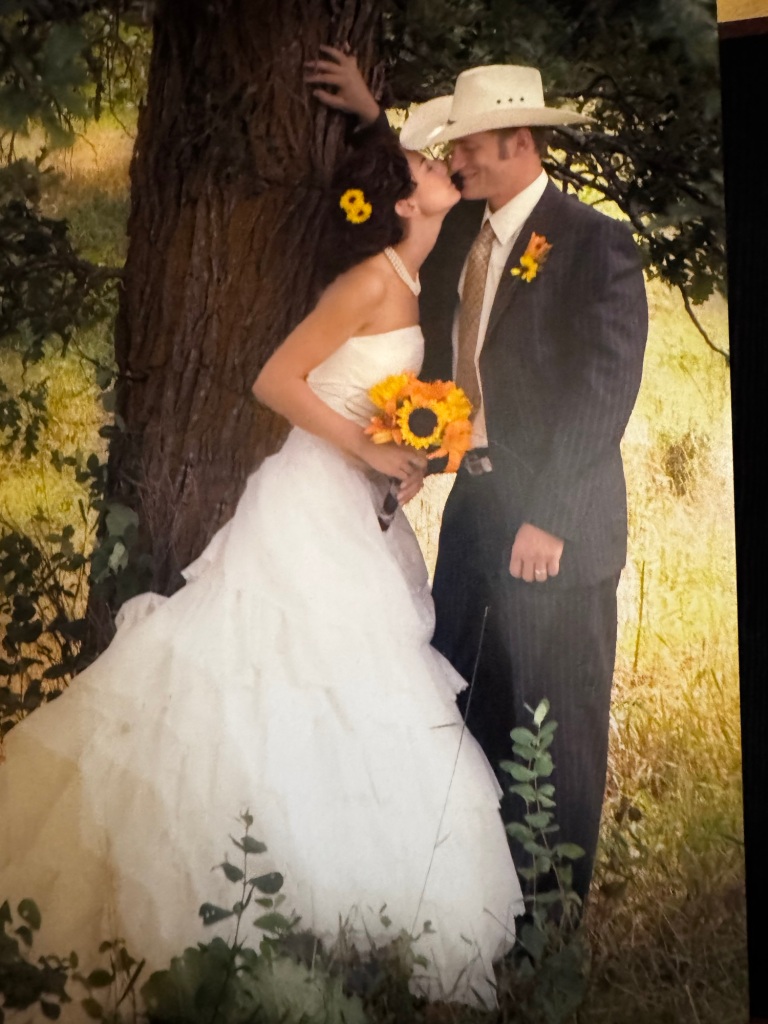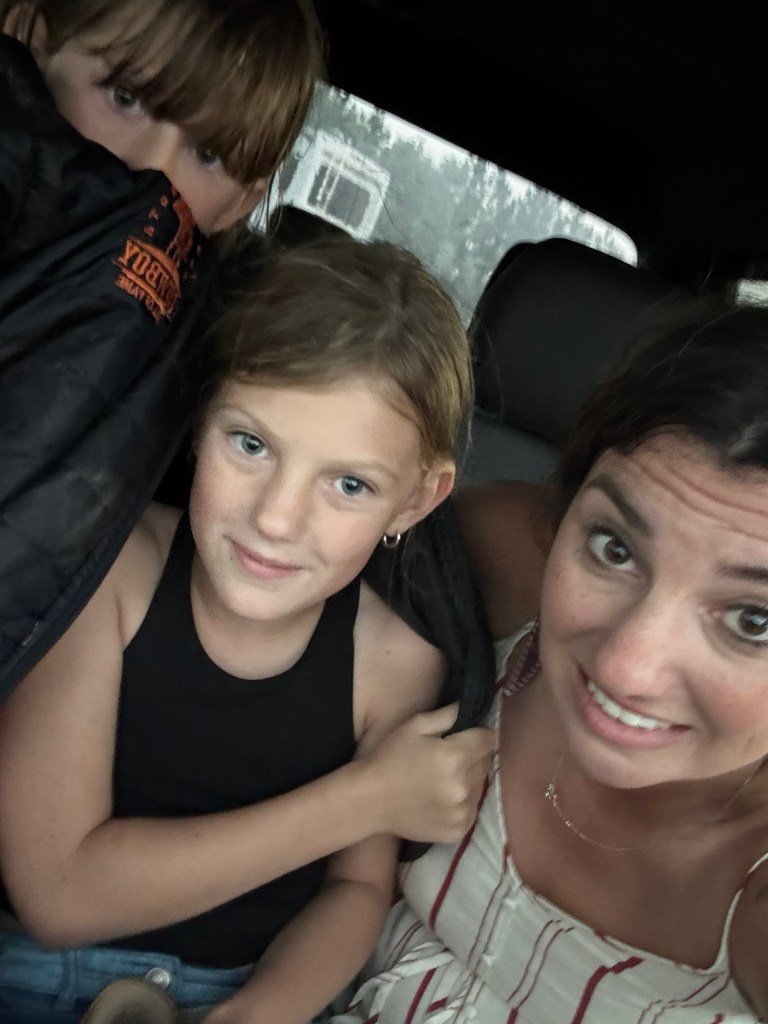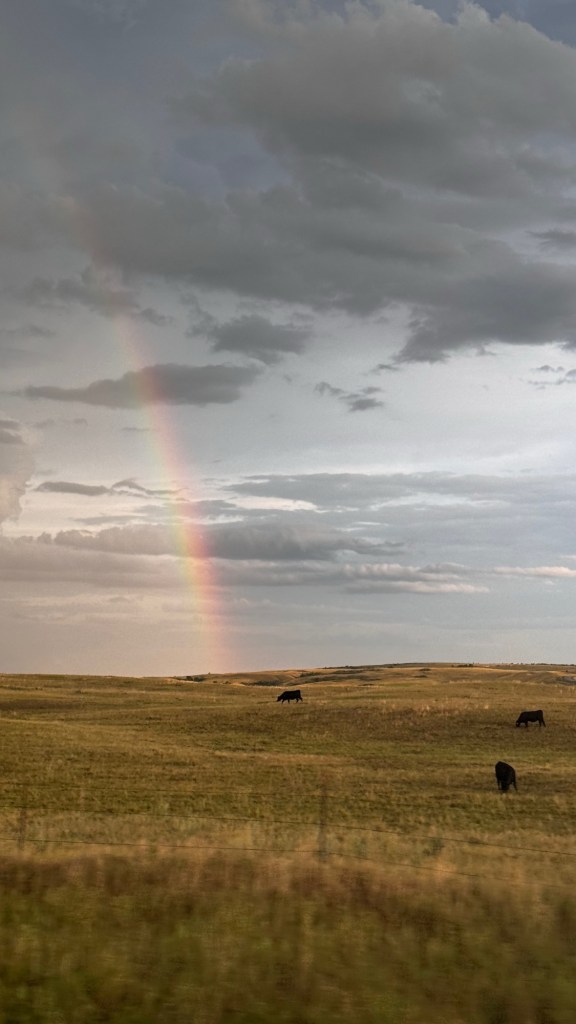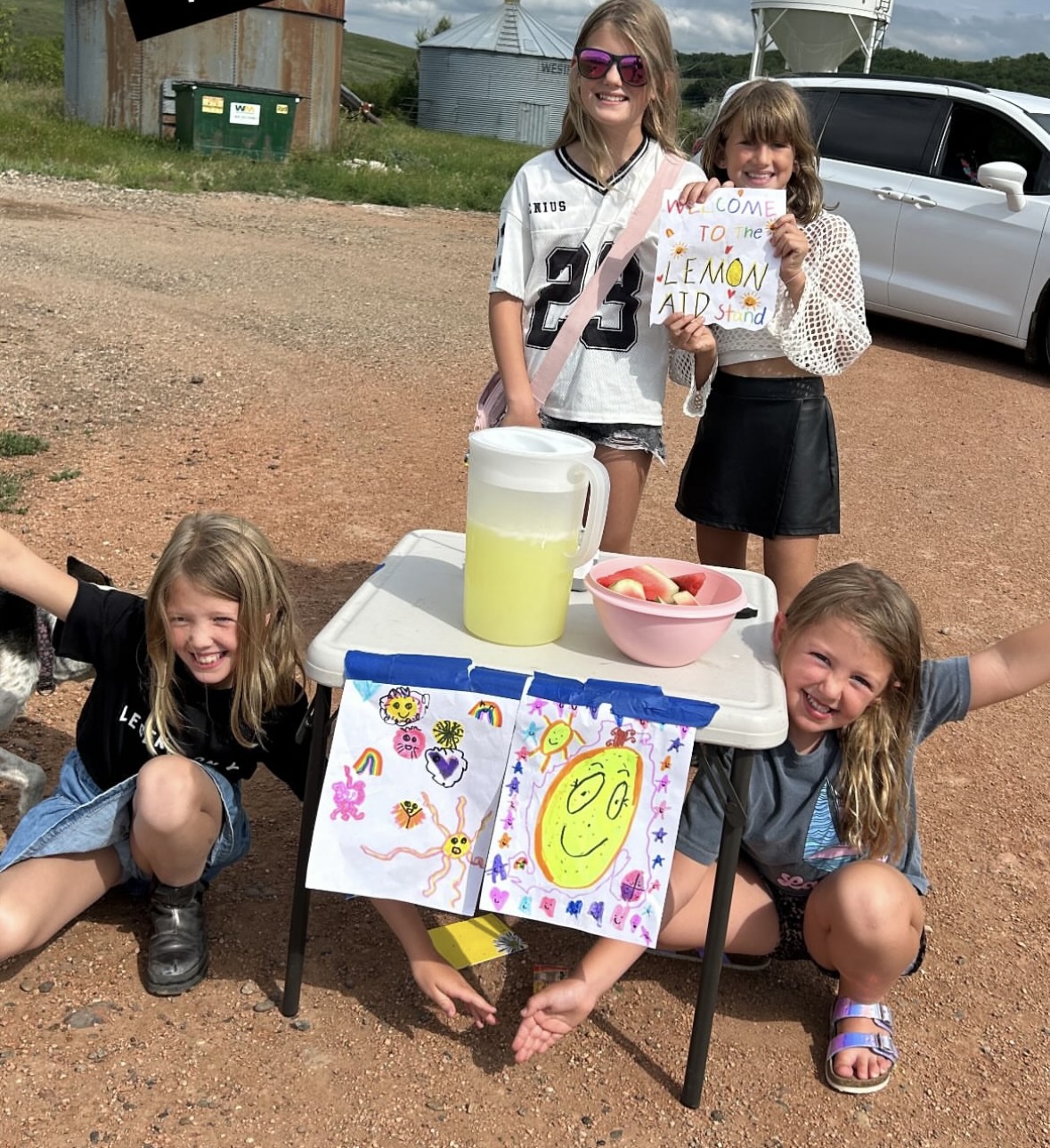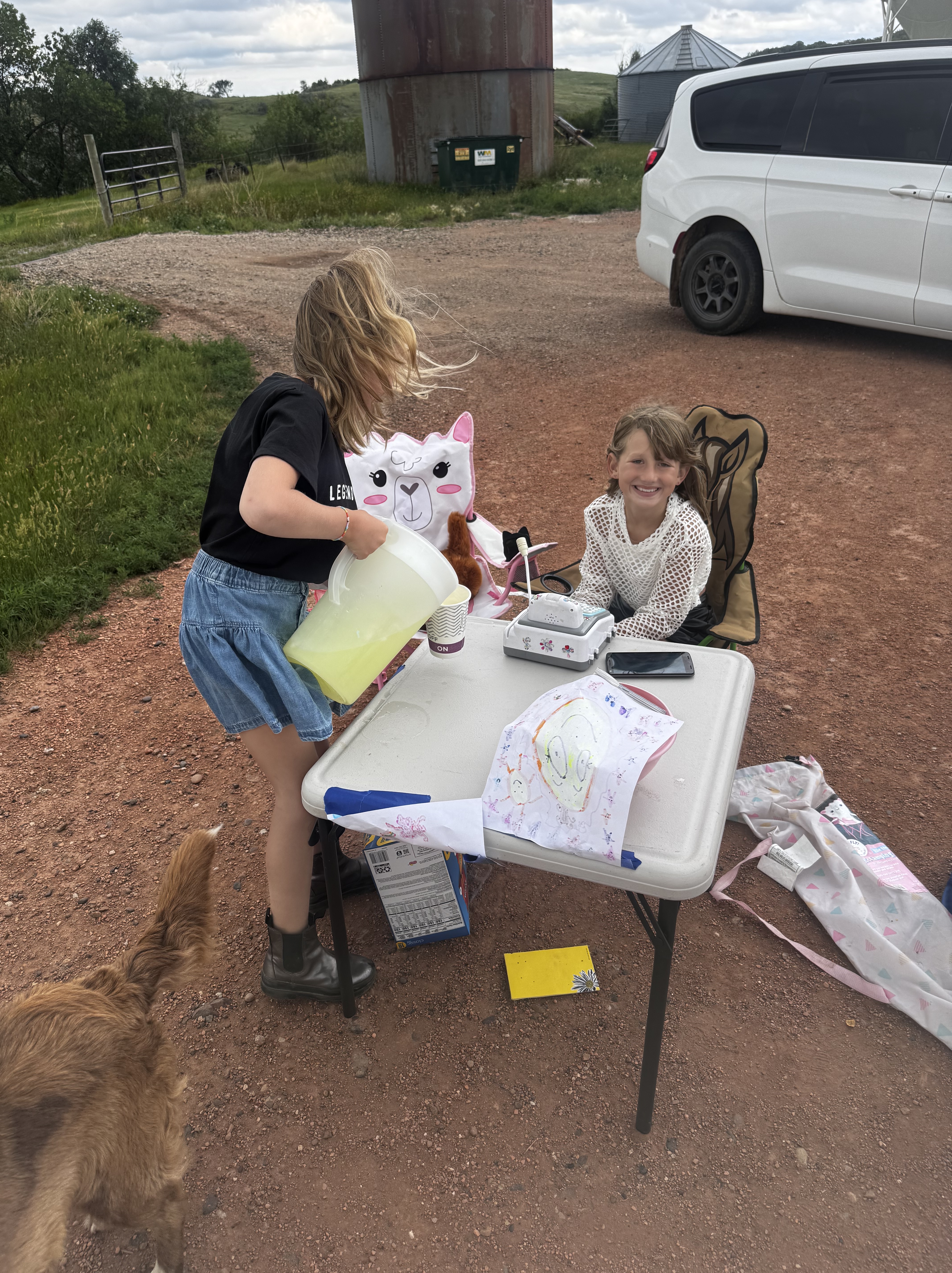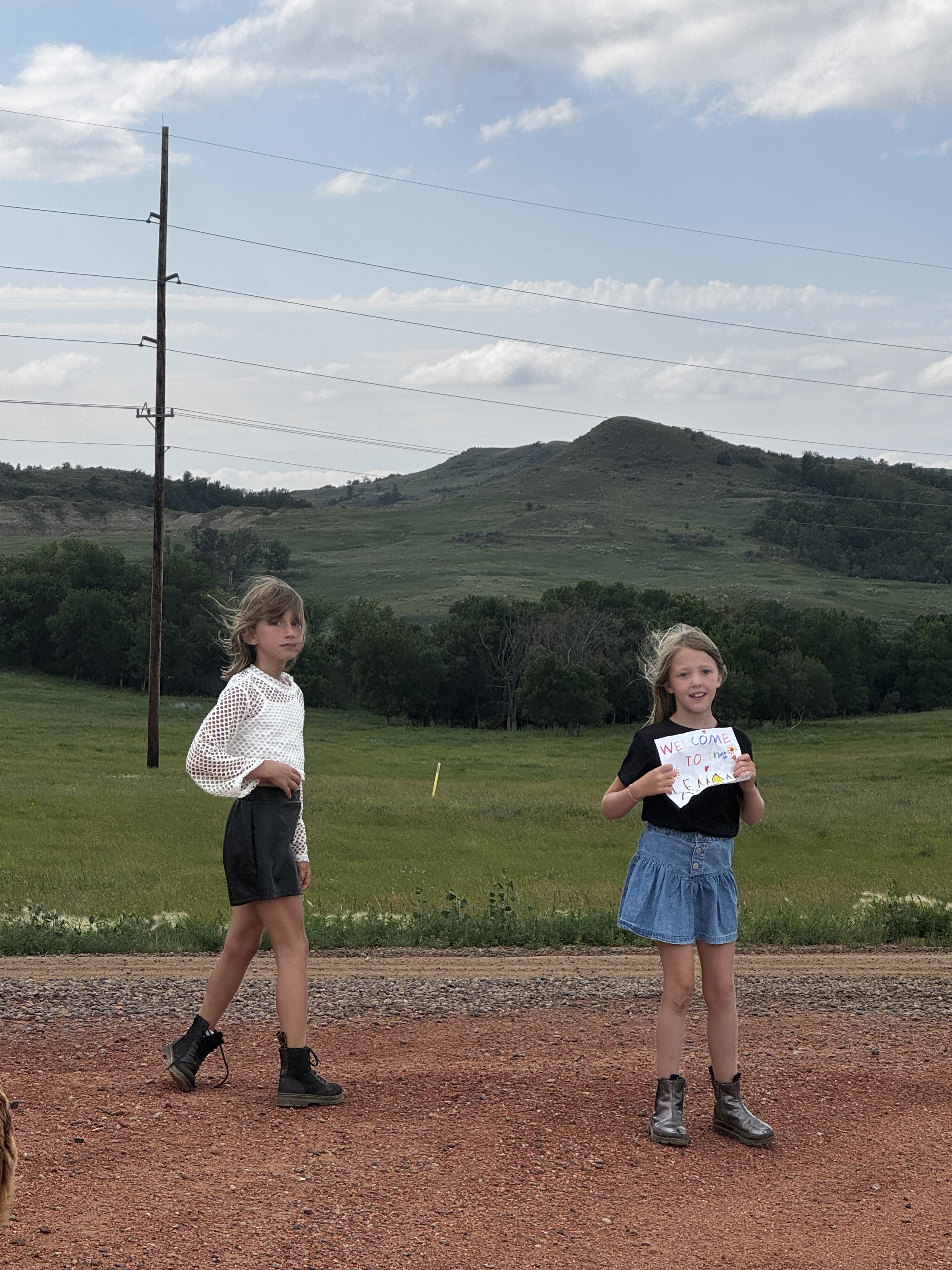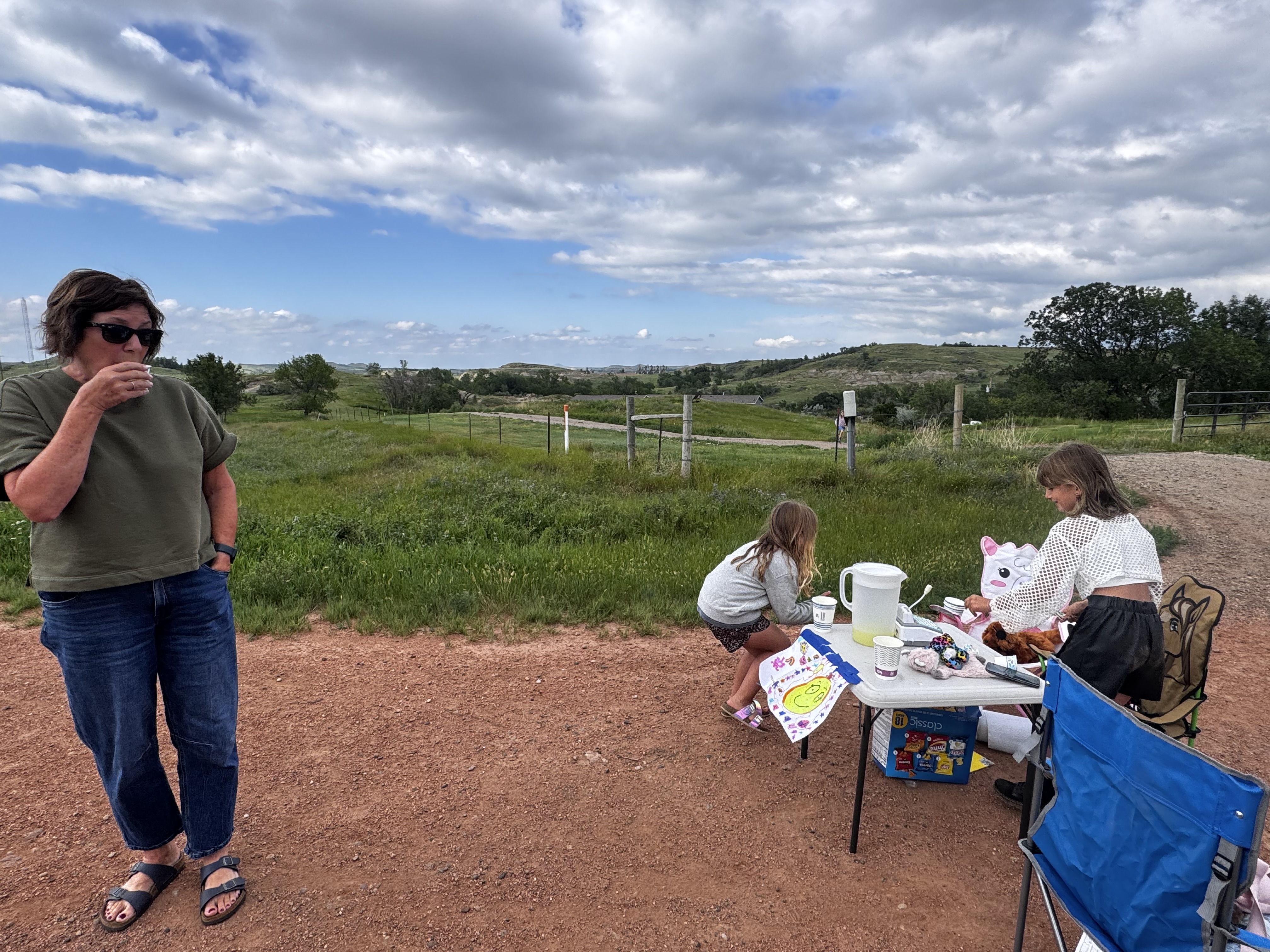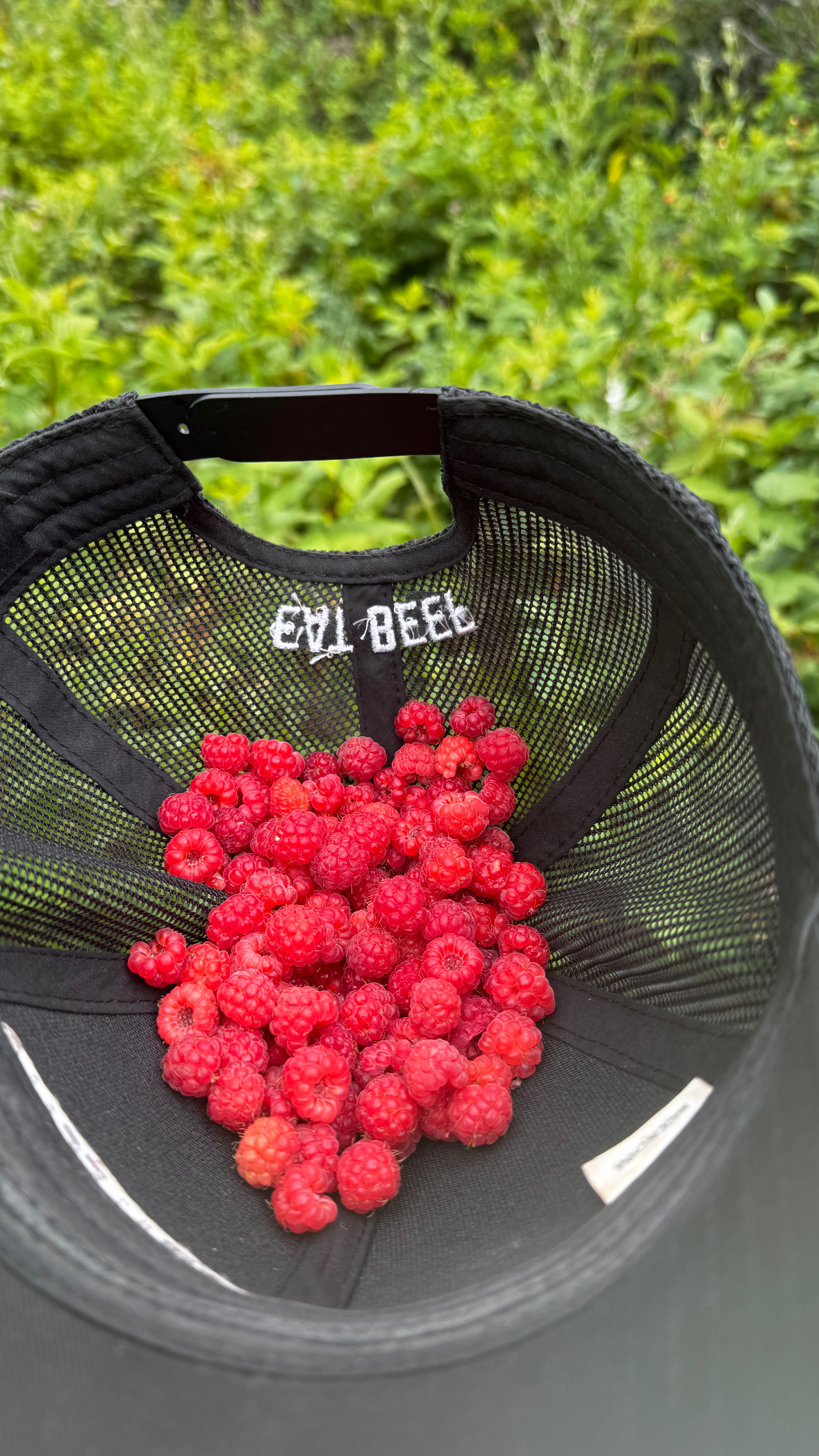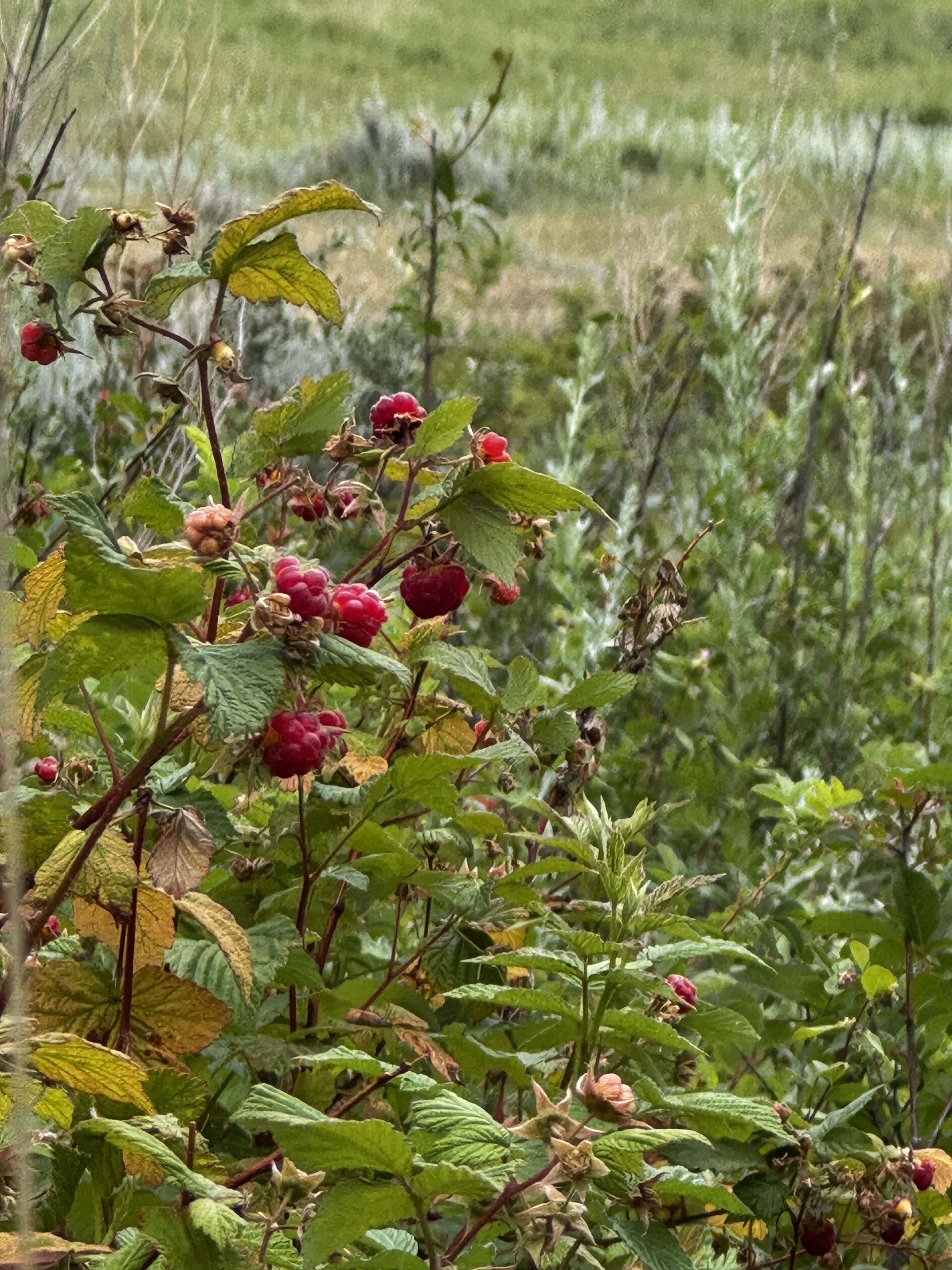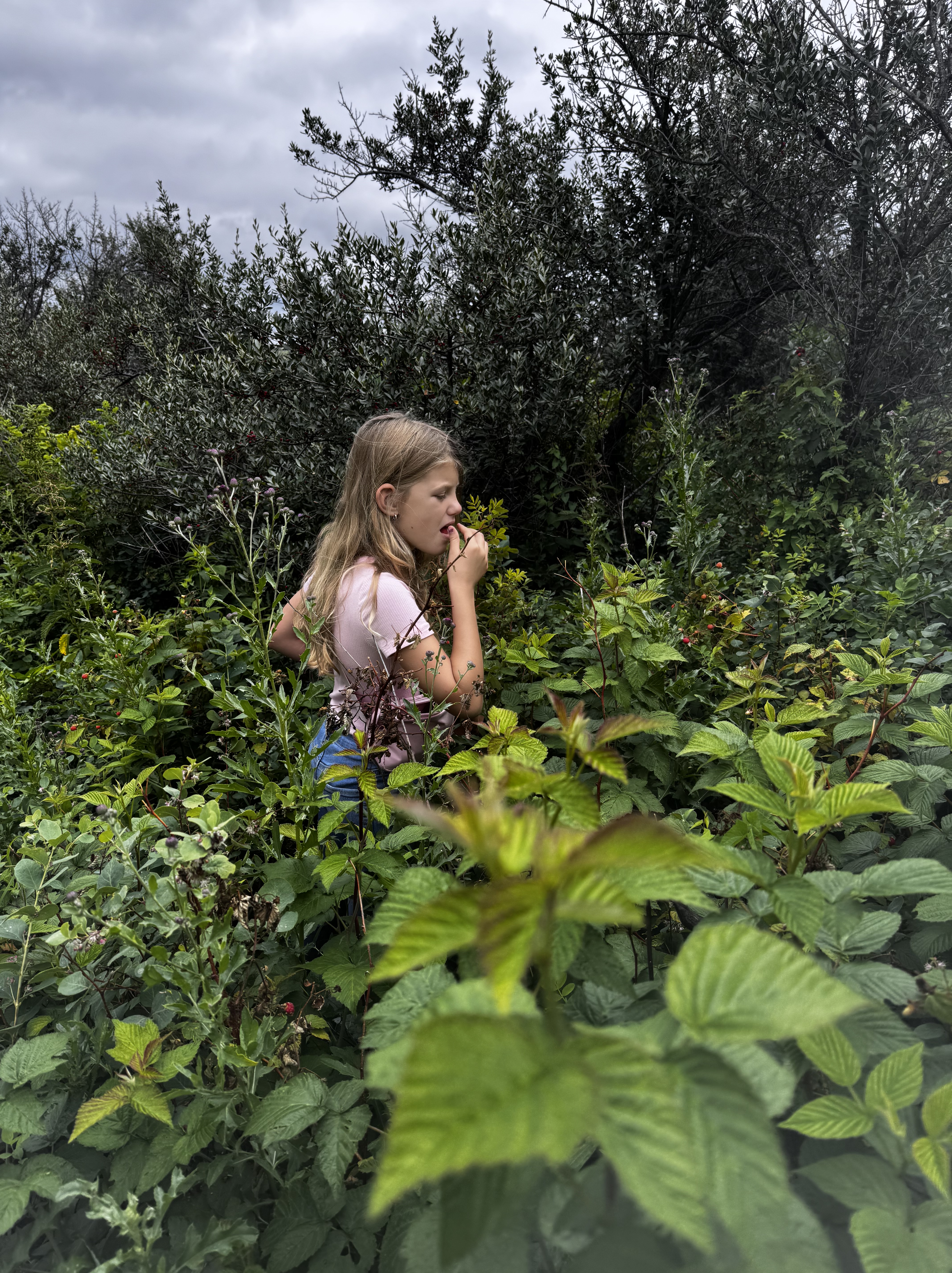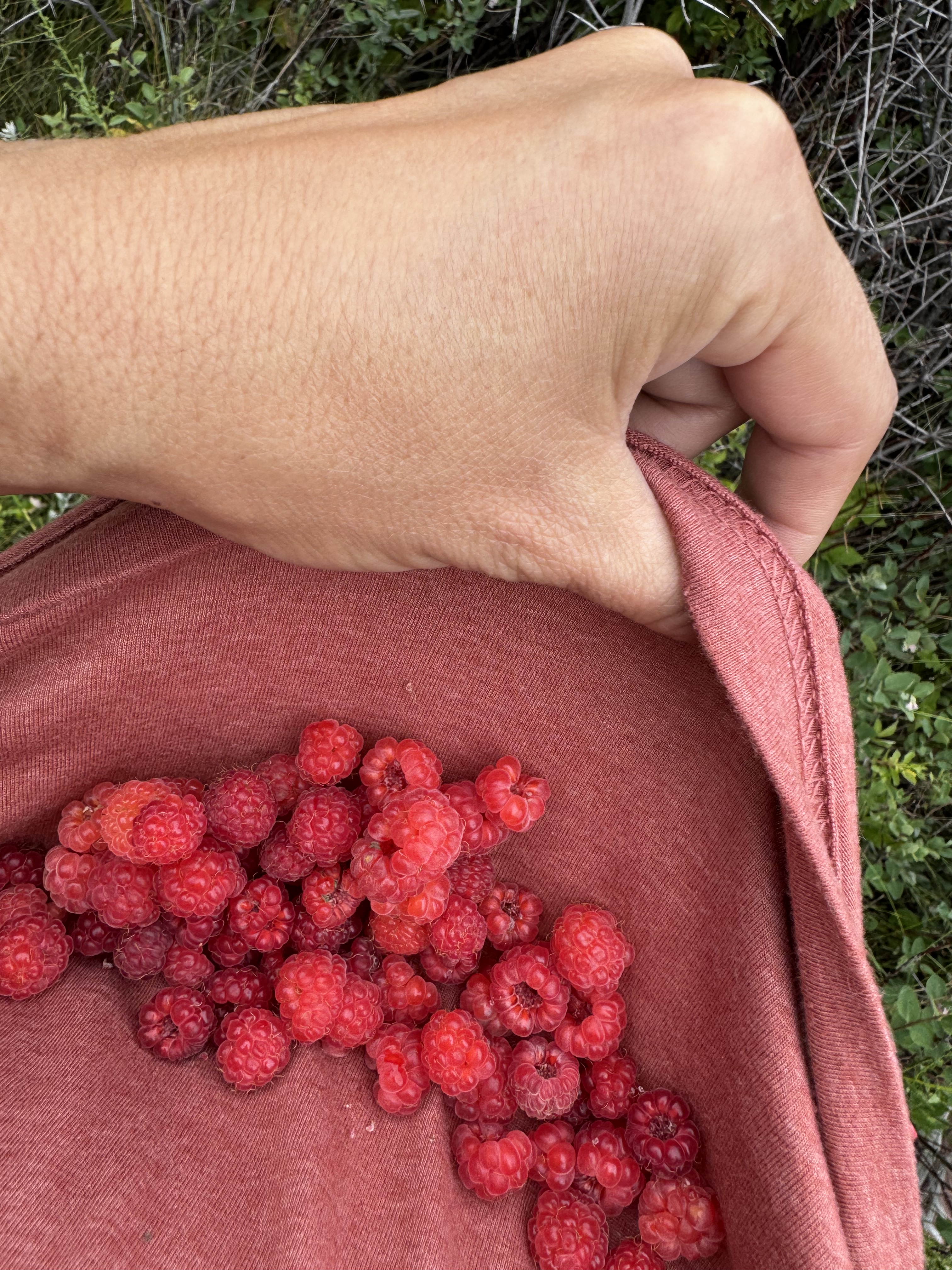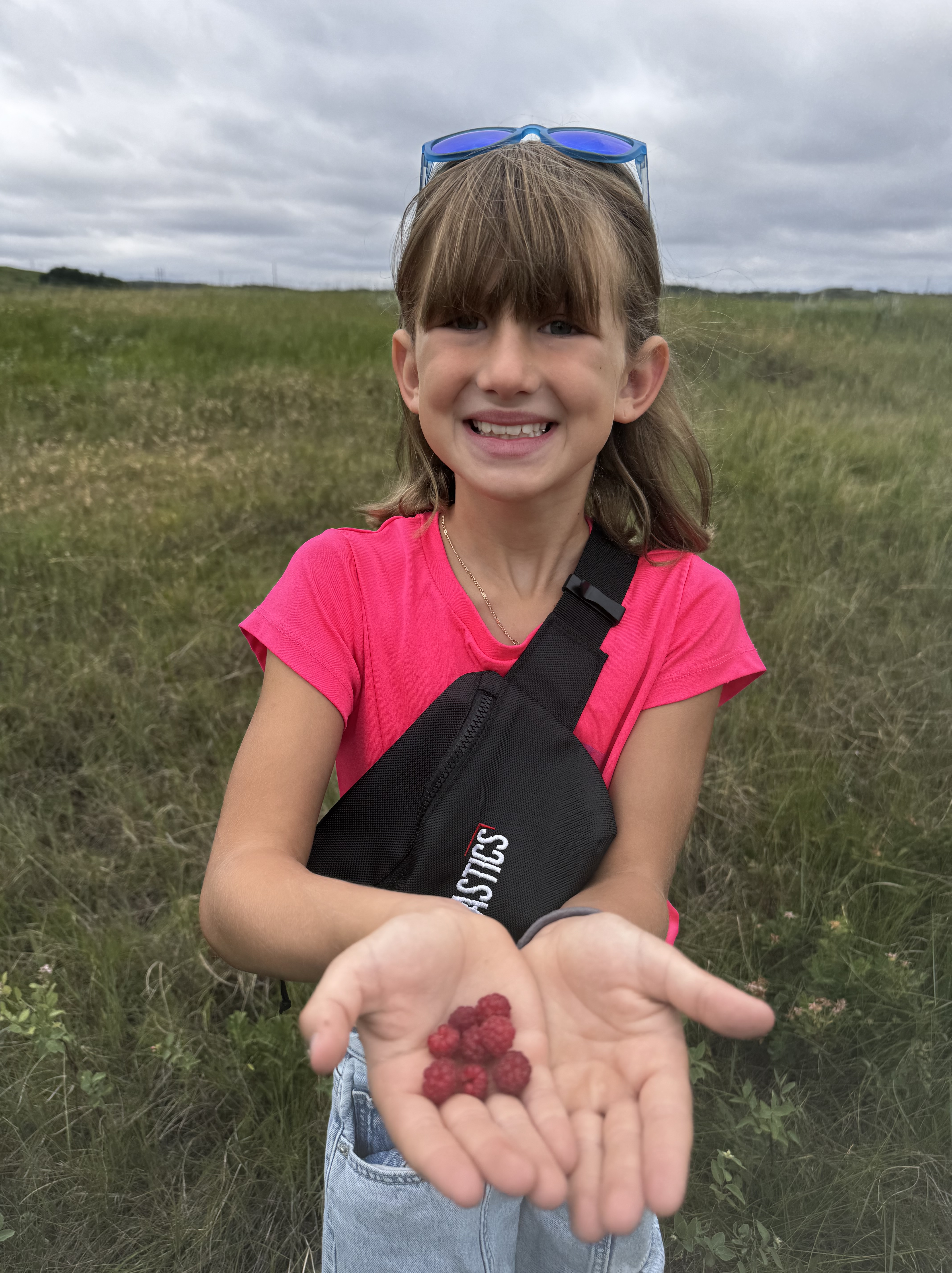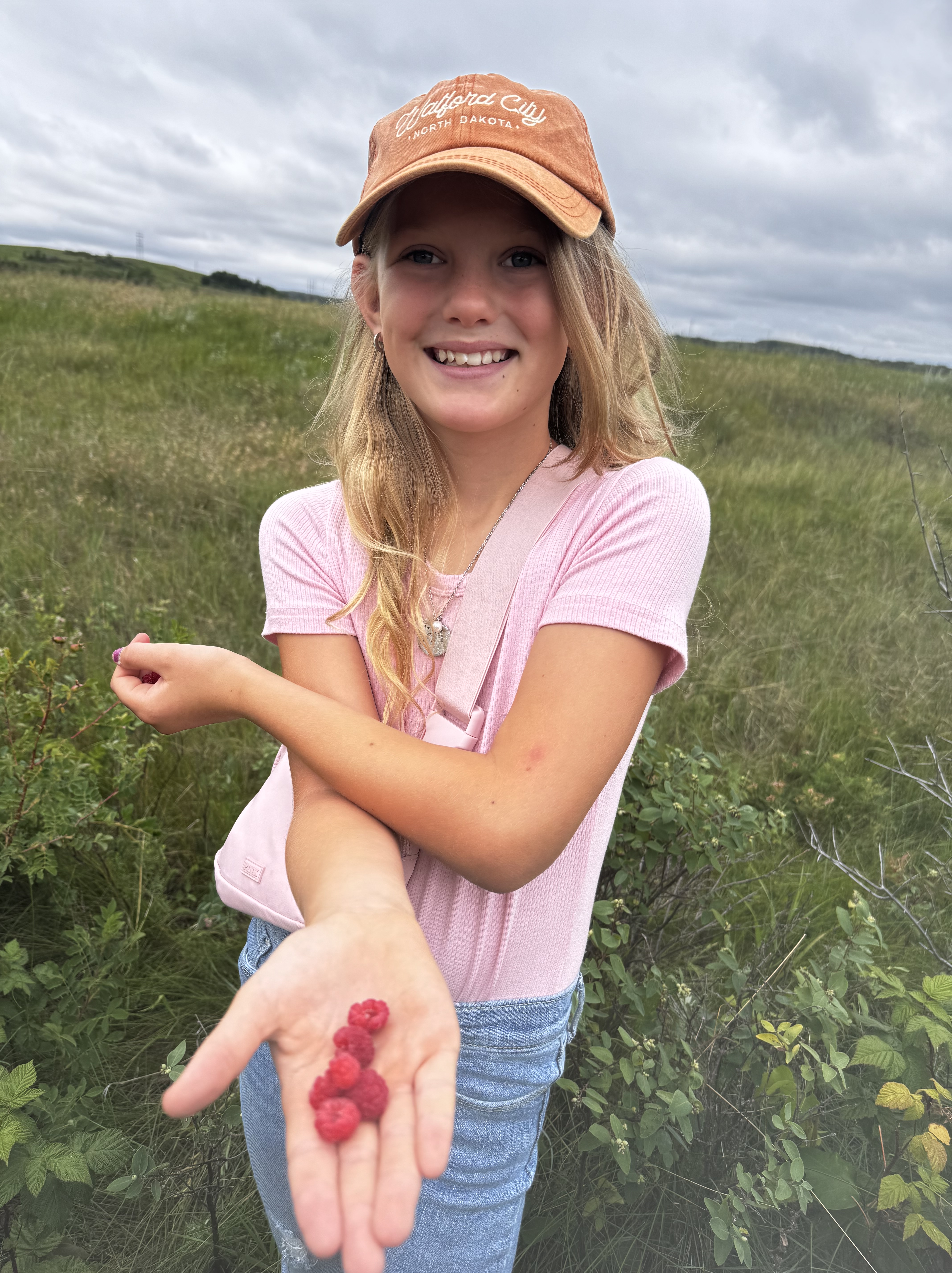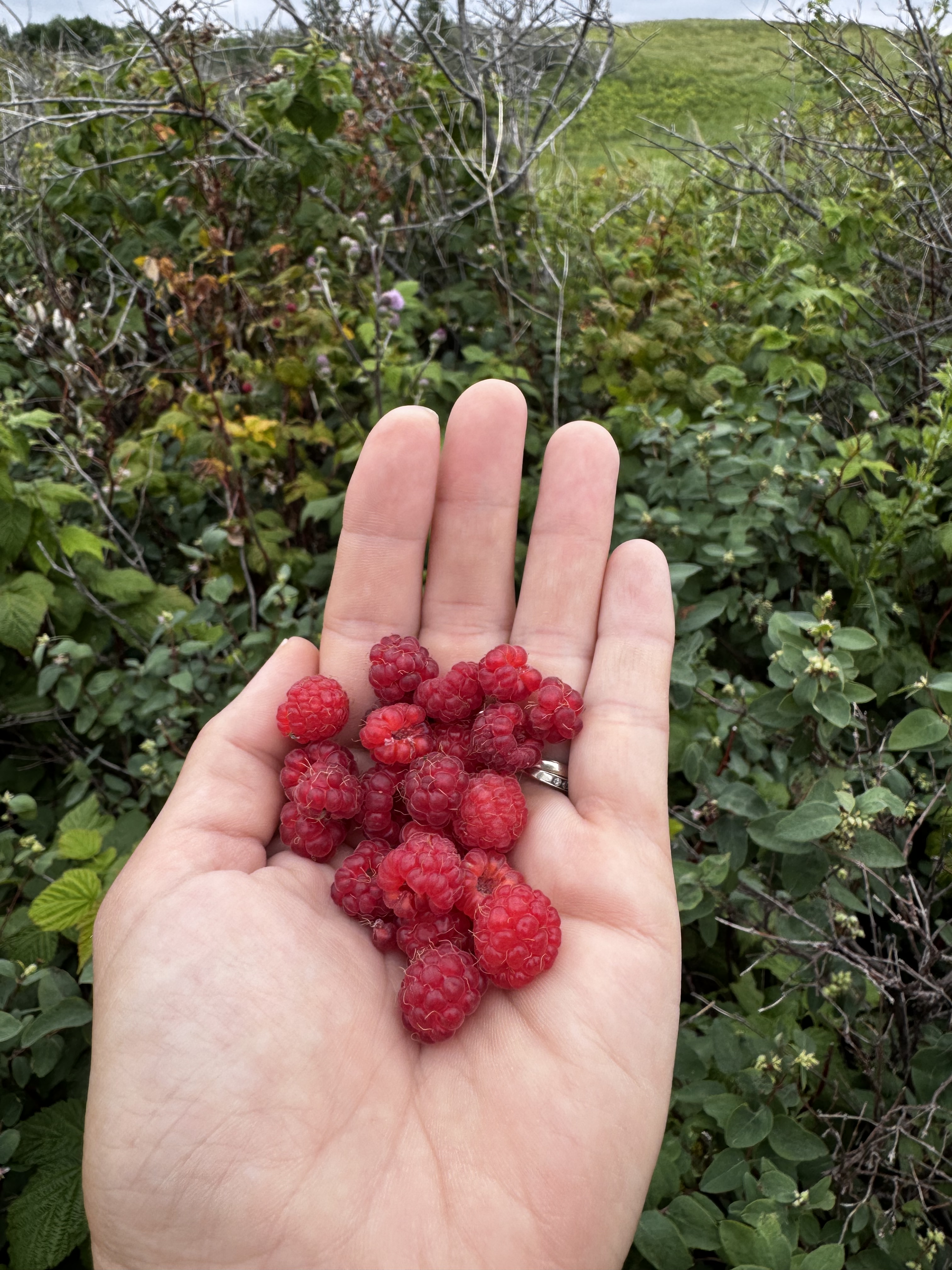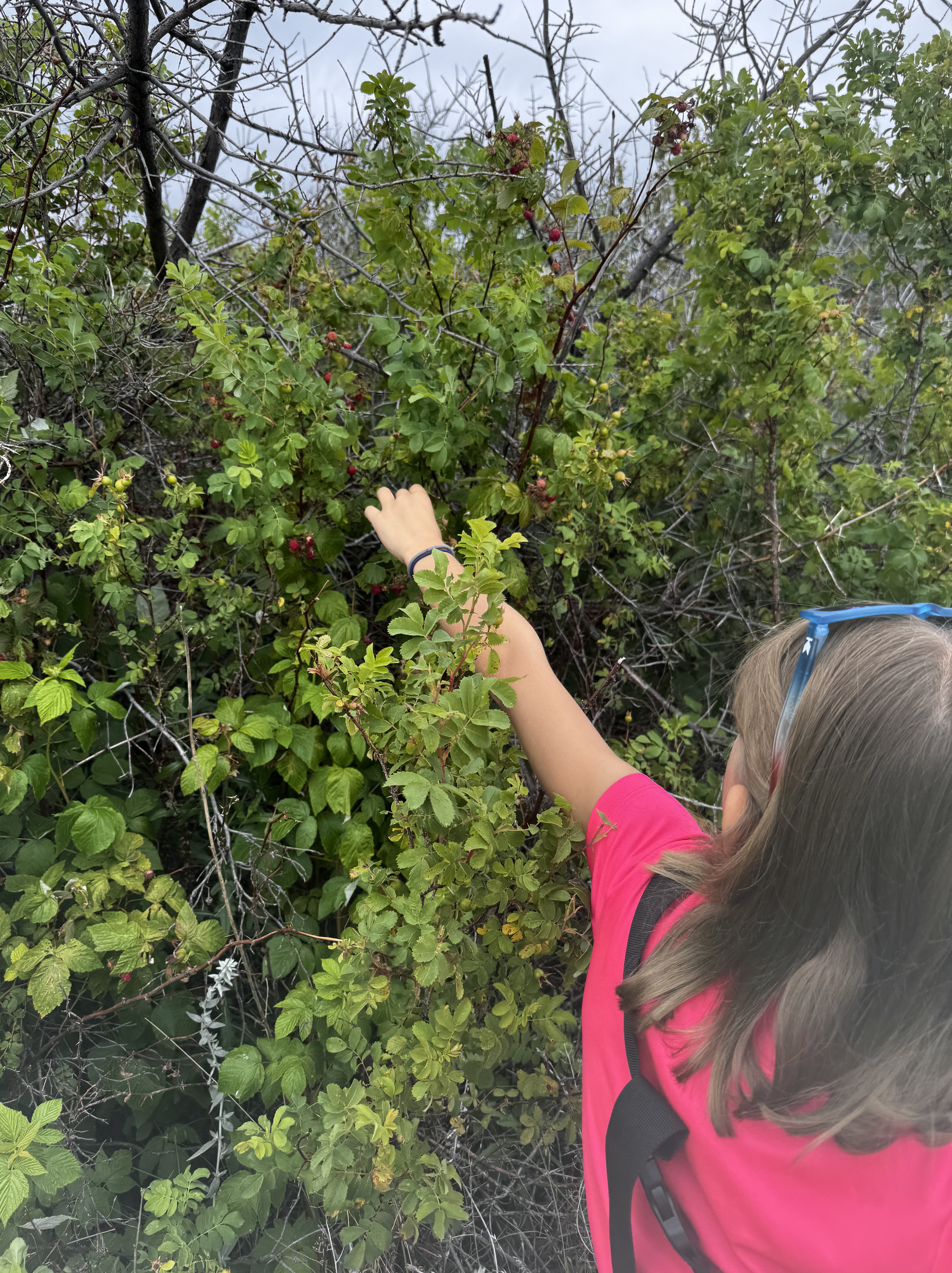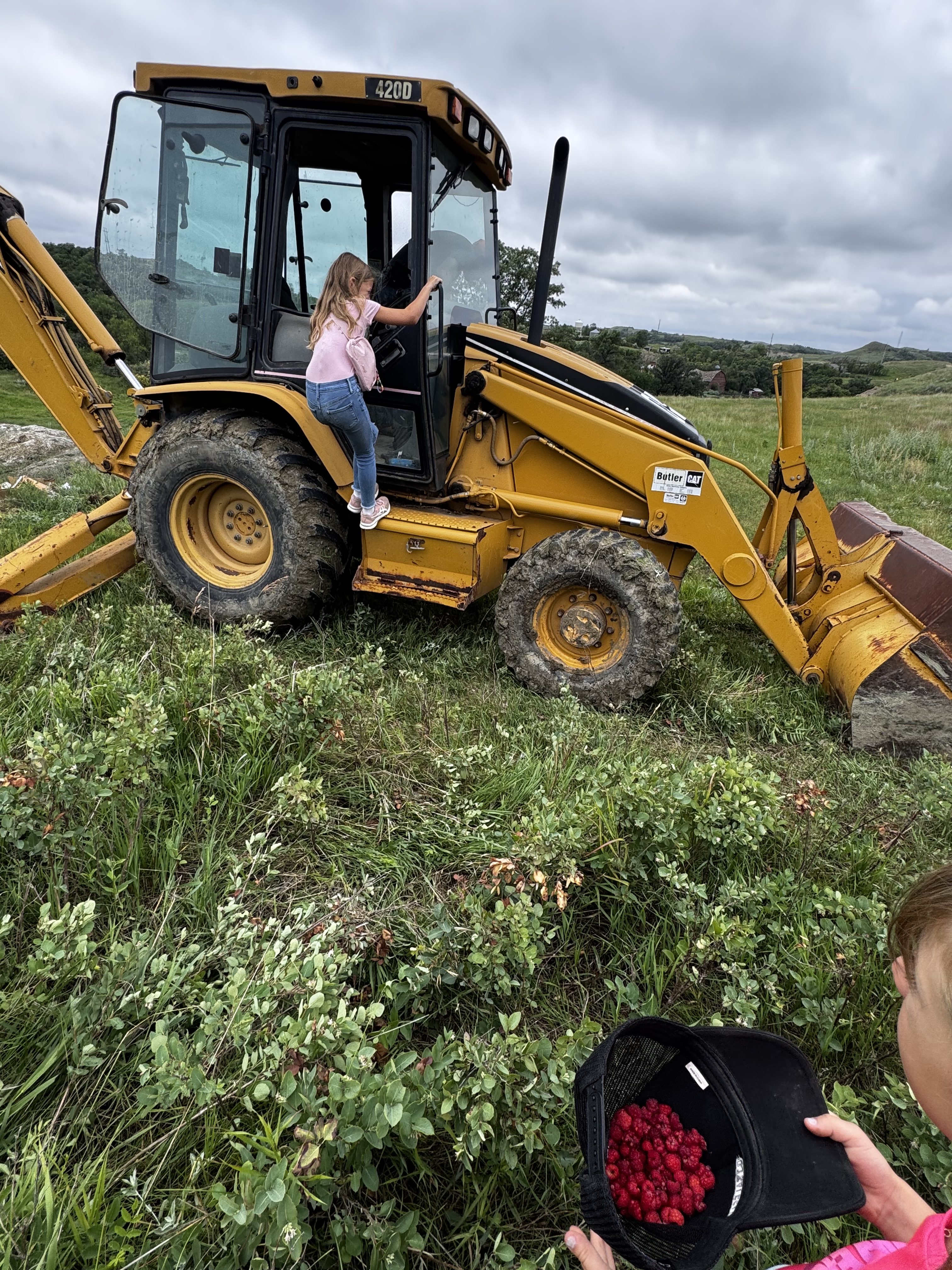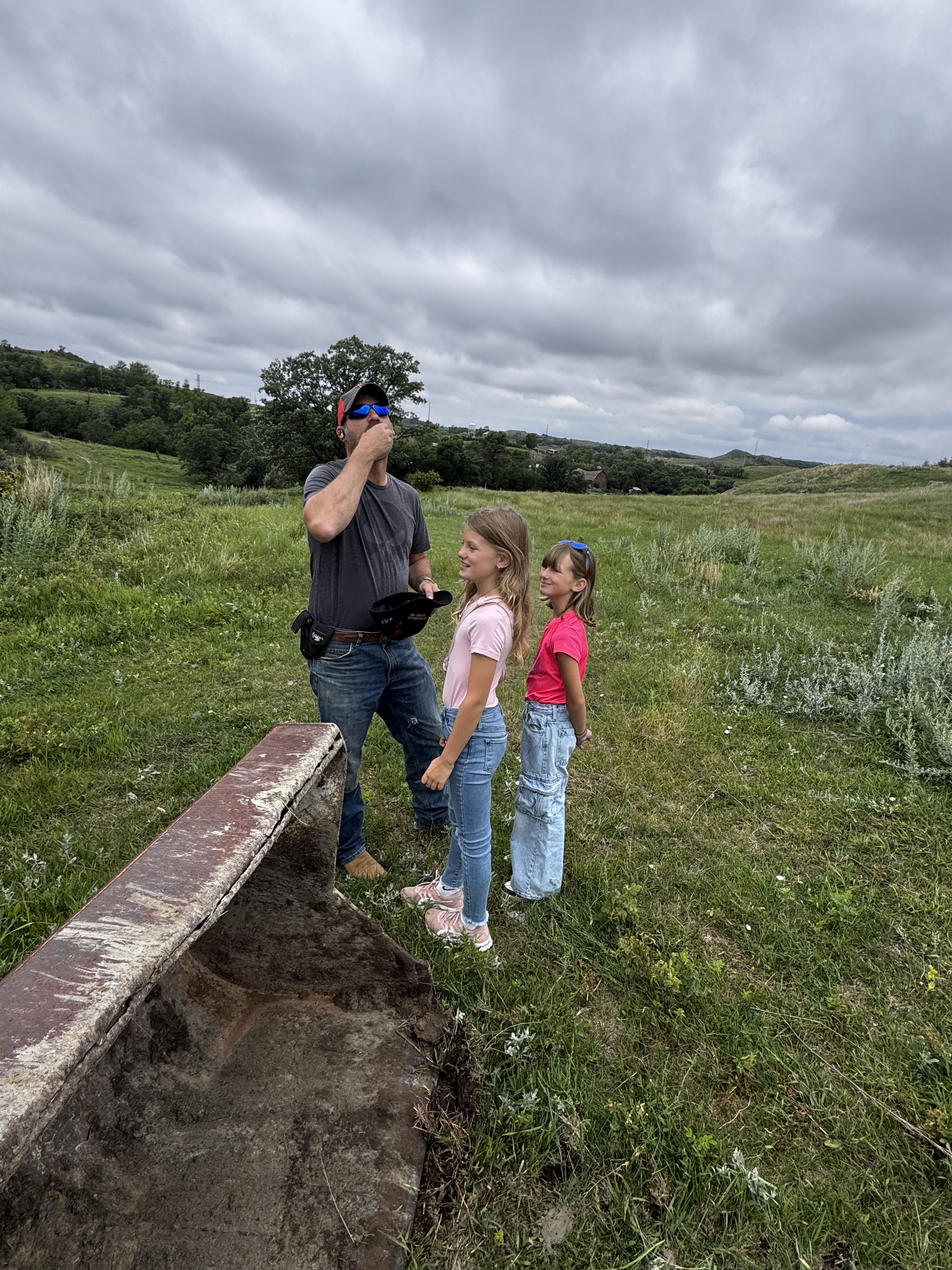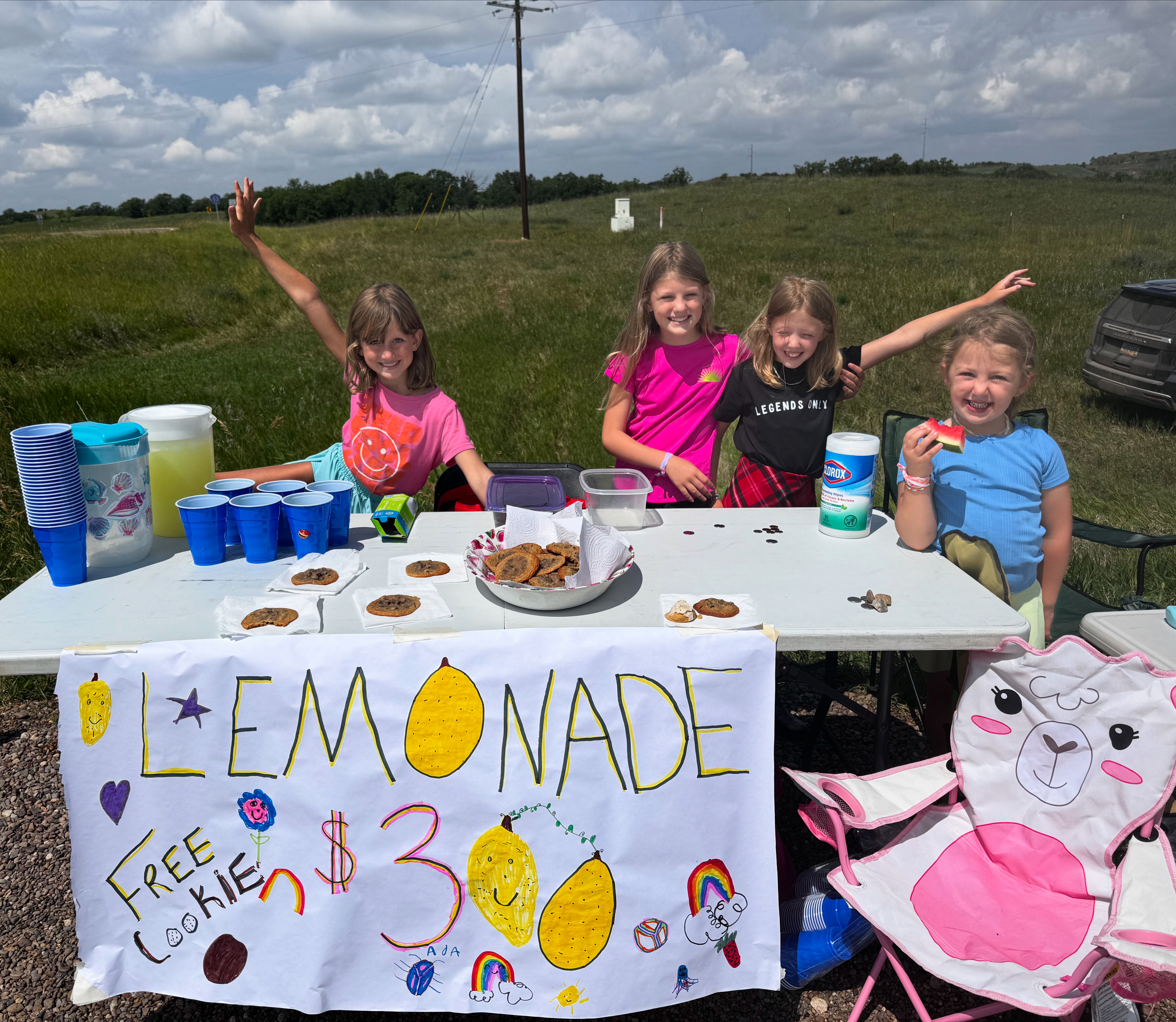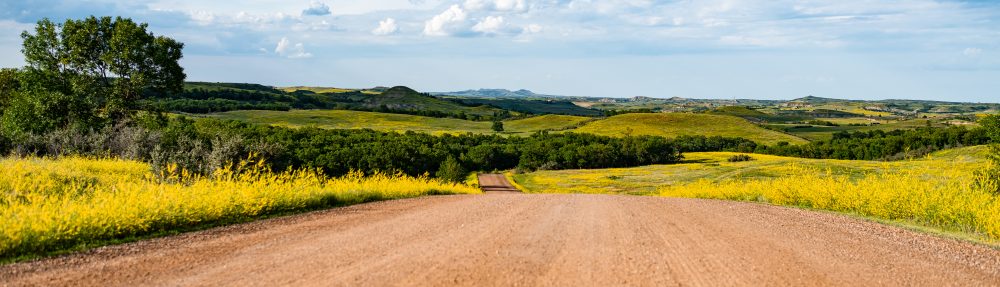
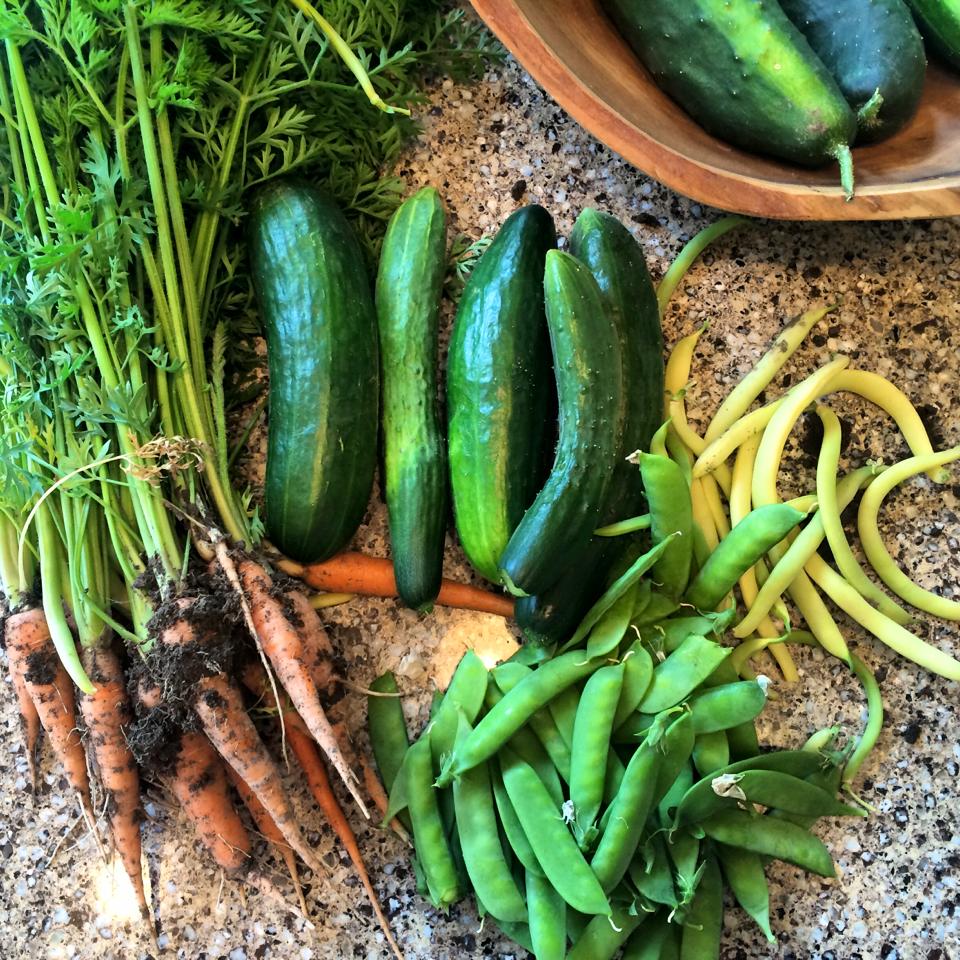
We made it to the other side of County Fair Week, but this column was written on my living room chair while we were gathering all the projects and doing the last minute packing and paperwork.
I didn’t know what to expect our first year in the livestock show ring and Edie’s first year as a regular 4Her, but had a great fair, full of lessons and fun.
I’ll tell you more about it next week, but for now here’s this week’s column!
County Fair Week
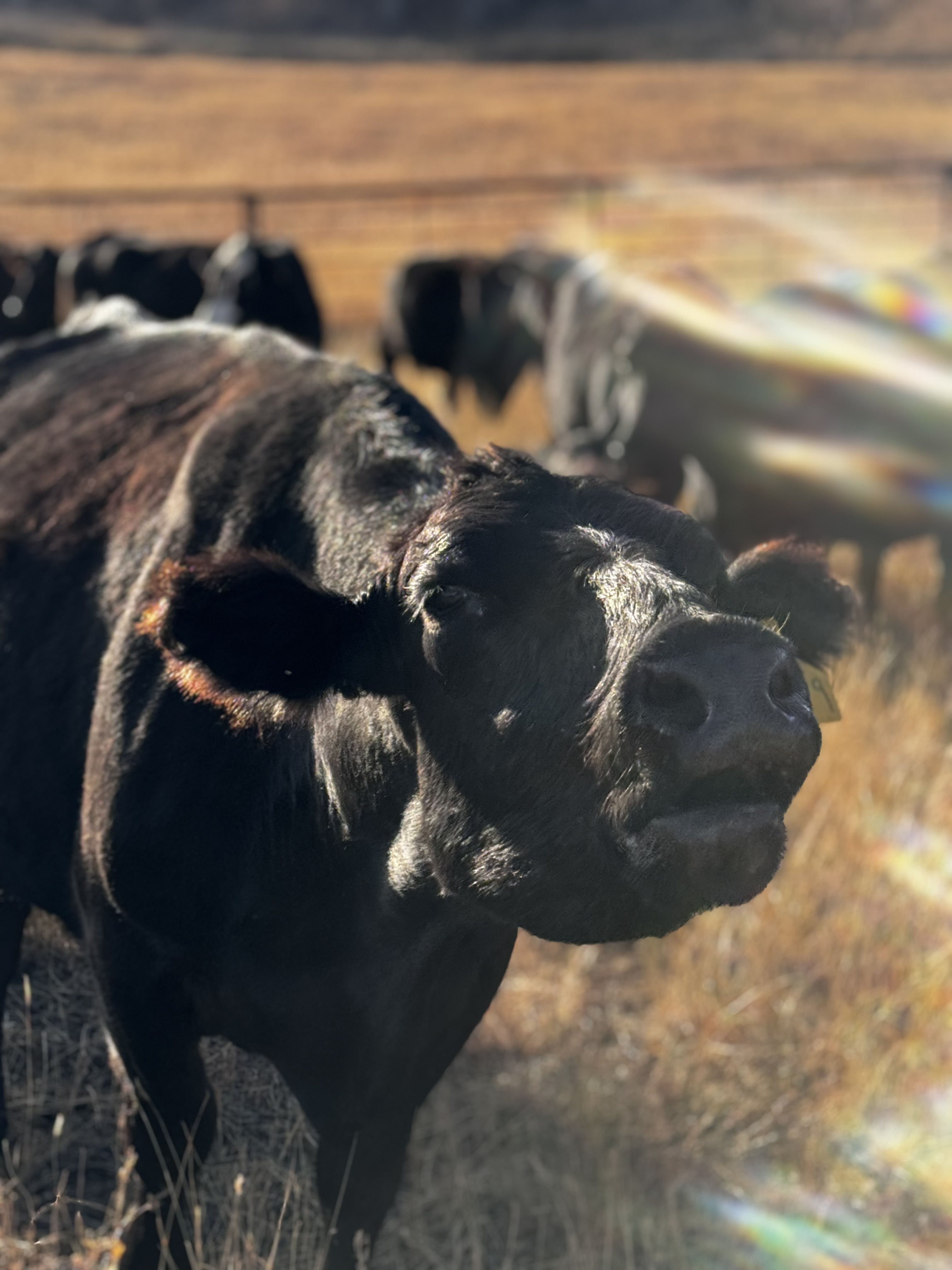
It’s County Fair week and I’m writing this at 6 am between my first two sips of coffee and before I wake the girls up to get dressed and gather their supplies and their two goats to head to town for four days of trying to convince the judges that we’ve actually practiced leading these animals around every night despite the doe’s tendency to brace up, stick her tongue out and scream. And I know that was a long sentence to start us off here, but this is the vibe right now. Screaming goat.
After spending two hours filling out the animal record books with only ten minutes to spare yesterday, I asked my daughters if they could just erase those past few hours from their memories because, turns out record books make us all want to scream like that goat. It’s our county fair spirit animal.
On Tuesday we brought my daughters’ projects to town. My nine-year-old, Edie, is big enough to be a real 4-Her this year, which means it’s no more rainbow participation ribbons for her, but the chance to earn a blue, or, if the buttercream frosting lands right, a pink or purple. We spent the day before decorating cupcakes and making fudge and putting tags on jewelry and drawing and pottery and photography projects. I helped Rosie put together a cute little fairy garden complete with a duck pond, a bridge and as many tiny animals as she could fit and still include a geranium and then we left it under the eaves of the house that night during a thunderstorm that drowned those little ducks and whipped the pedals right off that geranium. And so, we did that project twice. (Cue goat-like sigh). Rosie made sure to tell the judge, all about it.
And that judge (who’s our neighbor down the road) told Rosie that her fudge was better than Gramma’s and that might have made my daughter’s life, and she’ll certainly never let my mom forget it. “Gramma, maybe you should stick to Rice Crispy Bars from now on,” she joked to her over the phone.
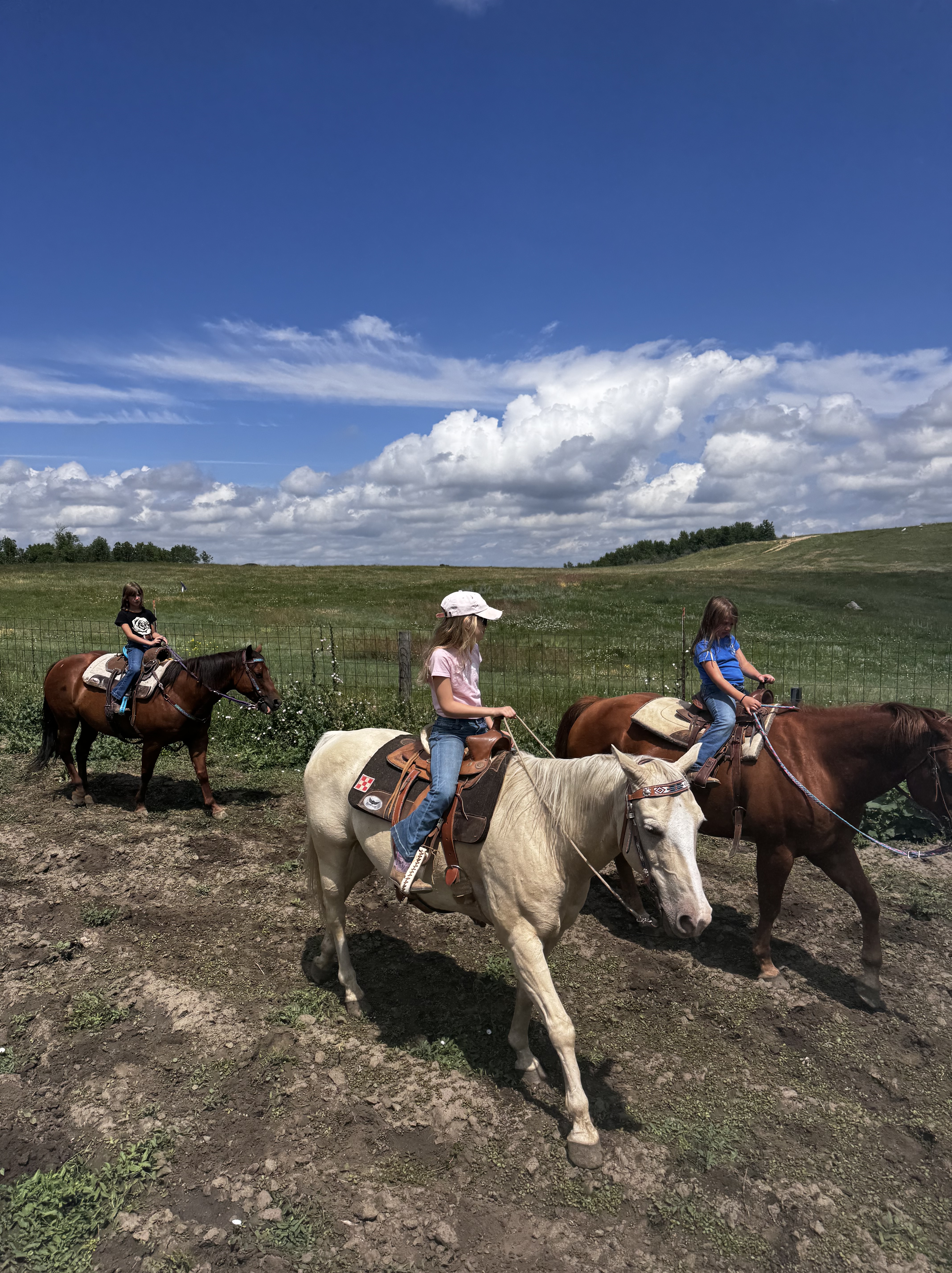
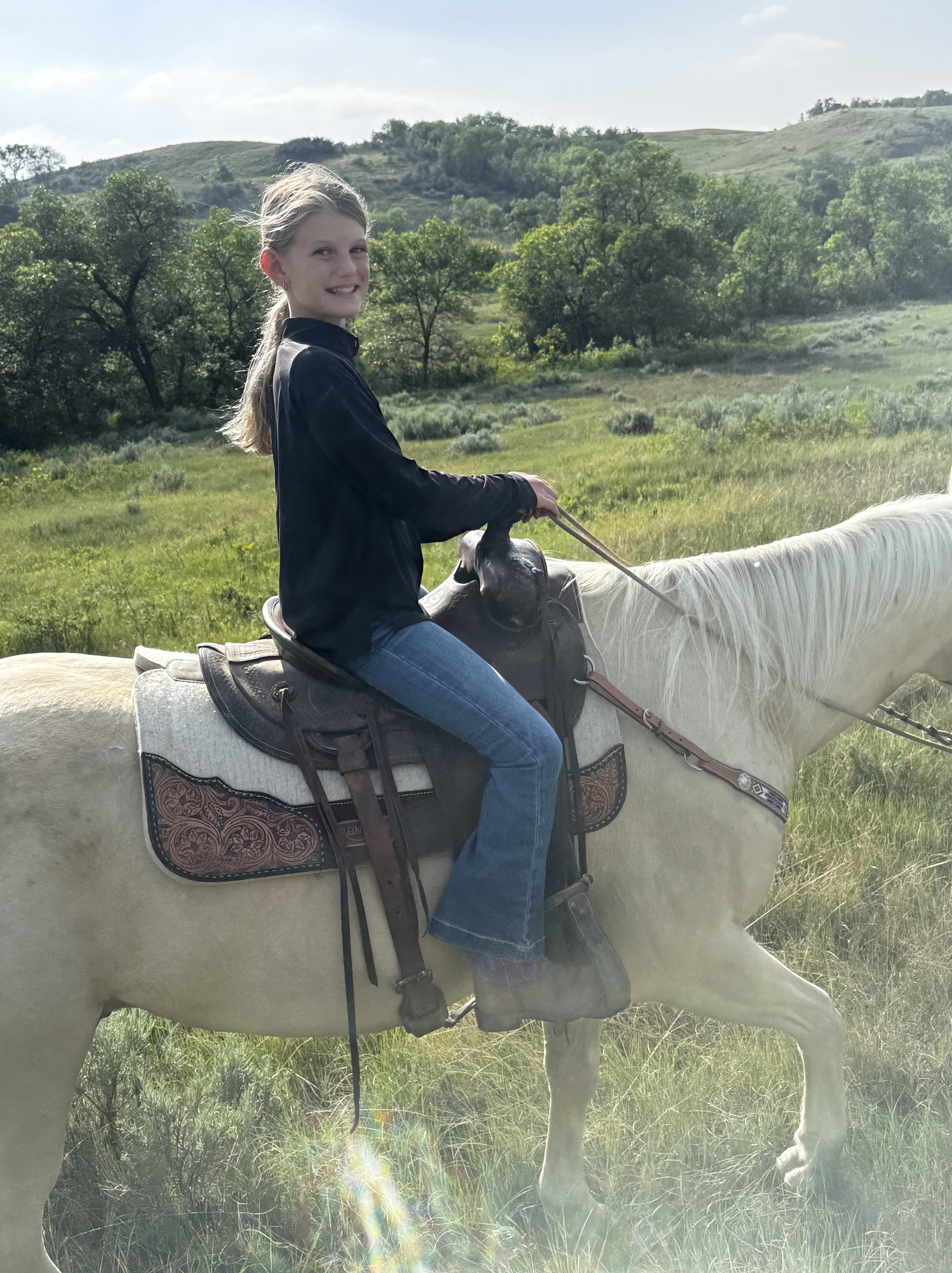
It’s County Fair Week and I think our community has more kids participating than ever. More goats, more pigs, more steers and more horses in the show since I was entered in the olden days, hoping that after her only shampooing of the year, my horse wouldn’t roll in the dirt before the halter showmanship . Which she did. Every time. And yet, that event remained my favorite. The girls are going to try their hand at showing these ranch horses for the first time this year. We’ve been practicing and brushing and loving on the animals in preparation, which is the most fun part. Taking them to town is the most nerve wracking. Because there’s nothing that tests your patience more than an uncooperative animal, because sometimes, even with all the practice you could fit in, things just don’t go right. But sometimes they do, and there’s nothing better.
Yes, sometimes your caramel rolls win grand champion, but then sometimes they land face down in the parking lot on your way to the interview. Sometimes your steer is so tame he just lays down in the ring and you’re too little to get him up. Sometimes the chicken escapes your grip, and you have to scramble to catch it, but then you’re standing next to your best friend and the two of you get a kick out of telling the story for the rest of the week, and maybe years to come.
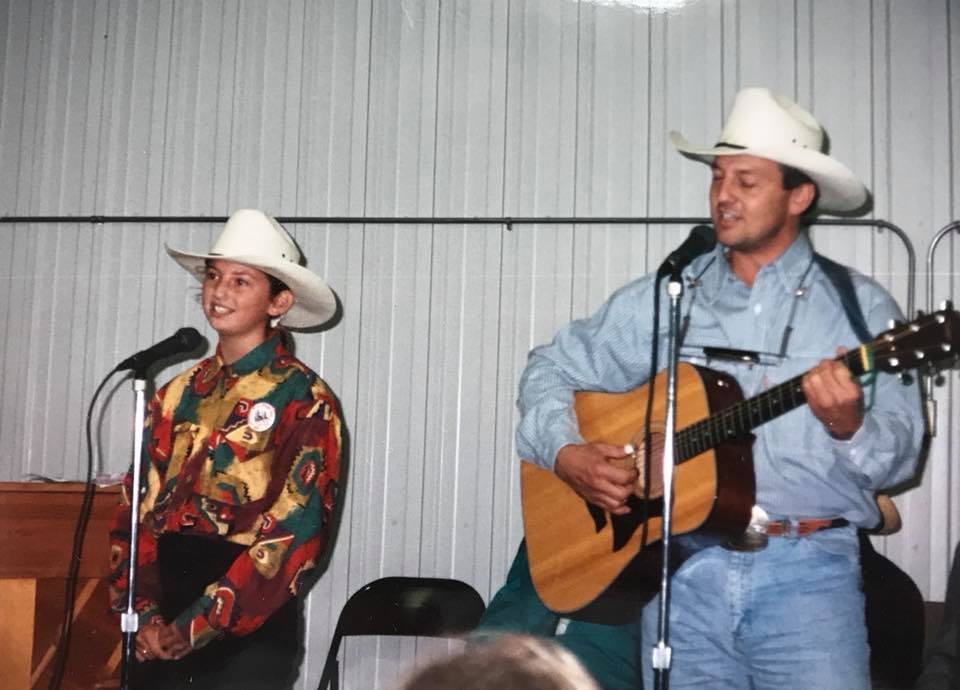
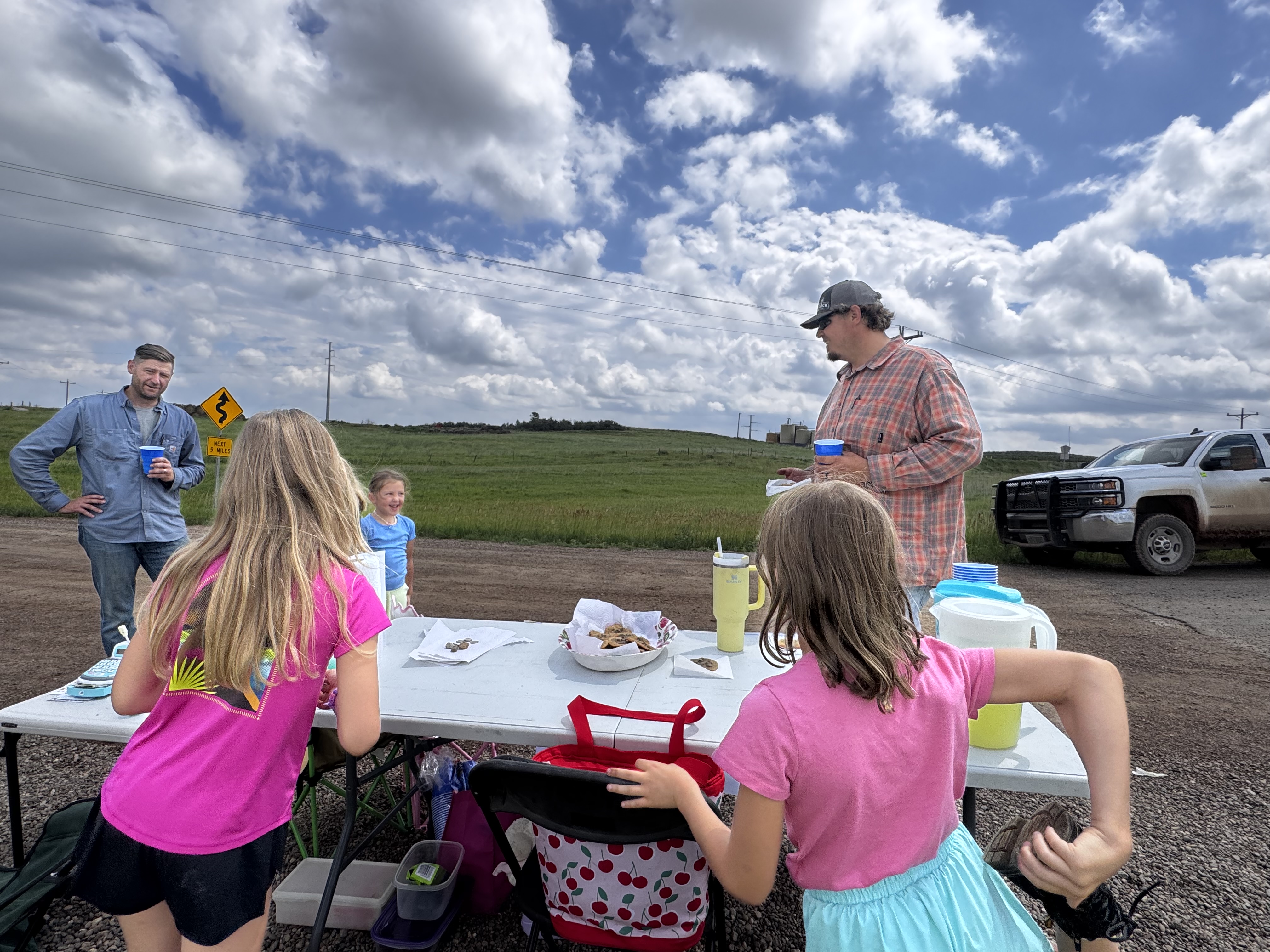
Photo by Judy Jacobson
And sometimes the two hours you spent in the kitchen with your mom trying to pipe perfect rosettes on your cupcakes creates such a sweet memory for both of you that your daughter says even if she gets a red she’s proud of herself and that makes you tear up a little for some reason, probably because it’s county fair week and the kids are growing up and now it’s 7 am and I have only had four sips of coffee and we are officially running late, per usual.
Good luck to all the 4Hers this summer! May your bread rise perfectly, and your goats (and your mothers) remain calm.
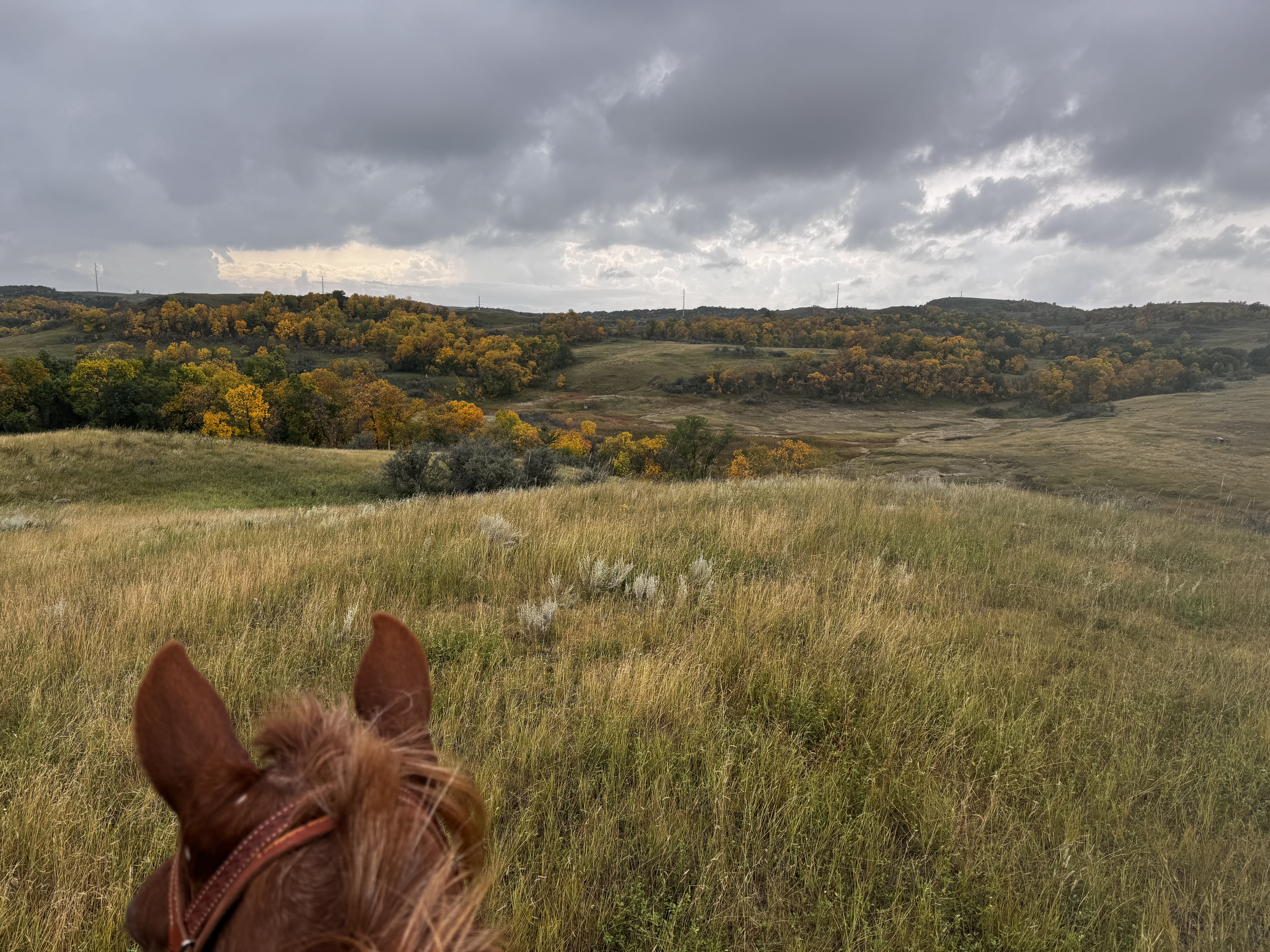
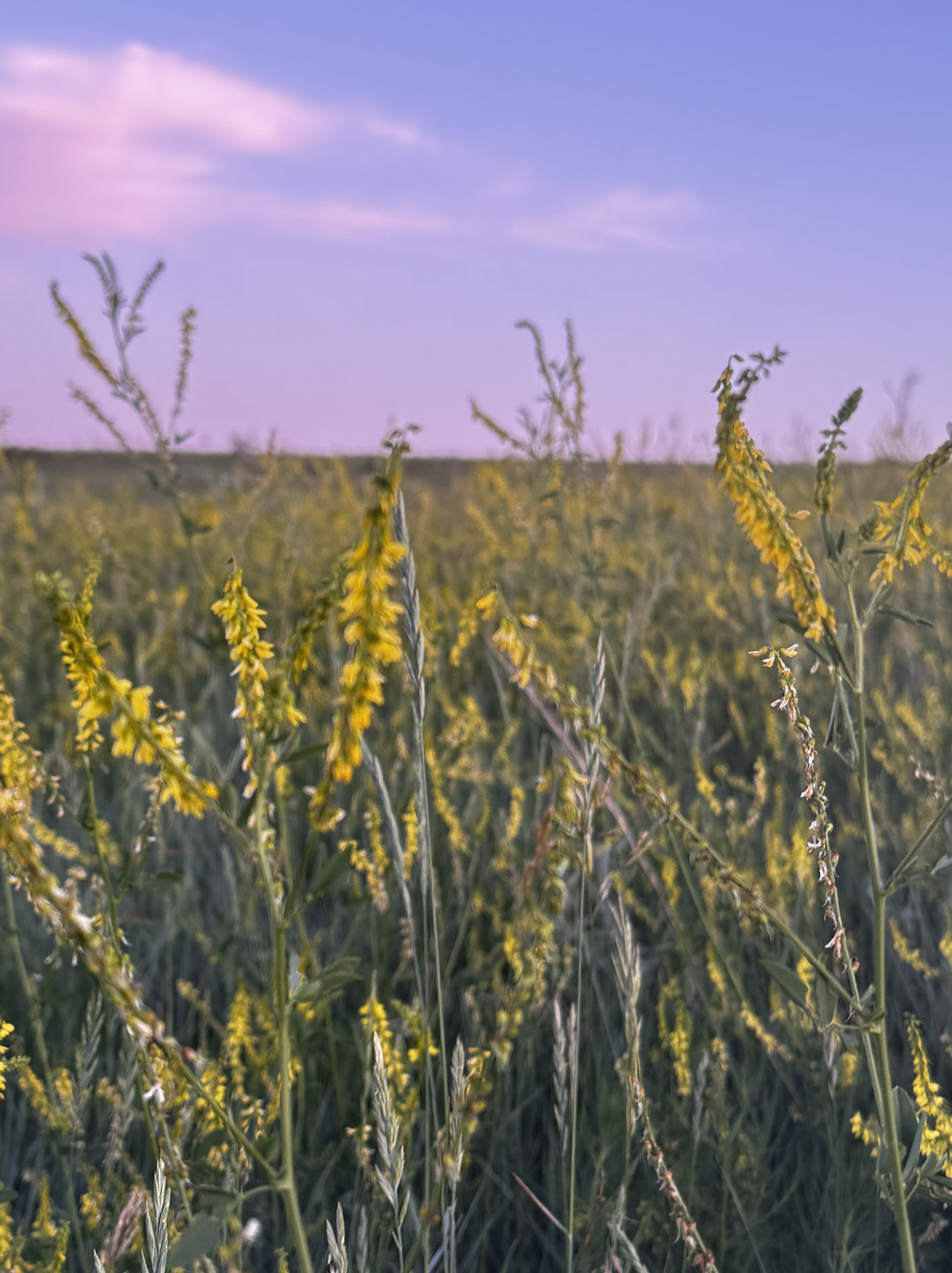
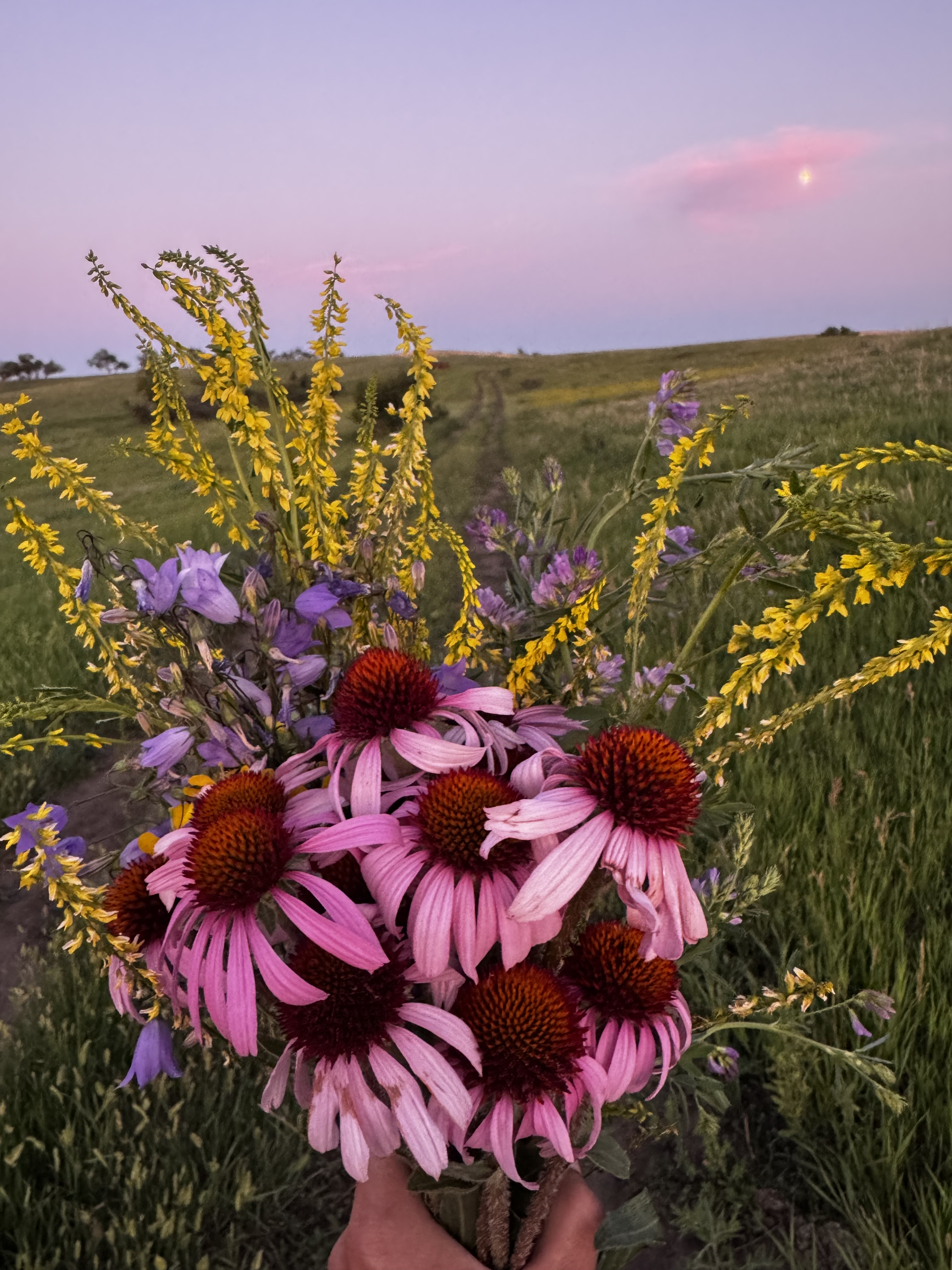
I used to take photographs. Not just with my phone, but with a big camera I would tote around almost nightly on my walks through the hills or on rides through the pastures. I would sling it across my body as a constant reminder to stay on the lookout for the way the evening sunset makes the tops of the trees glow or creates a halo around the wild sunflowers if you get down low enough in the grass. There was something about having that camera in my hand that automatically transformed me back into the little girl I used to be out here. To have the task on hand to capture it reminded me to look out for the wonder.
I’m not sure exactly when I put my camera back in the bag and then up on a shelf to collect dust, but I’m pretty sure it was around the time the babies came. I documented my first-born’s every move with that big camera up until her ninth month or so. I know because I have a hundred-page hardcover book to prove it. But then technology turned my phone into a more convenient and quality option and then Rosie arrived and then the wandering changed to carrying one baby in a pack and pulling the other in a wagon down the gravel road.
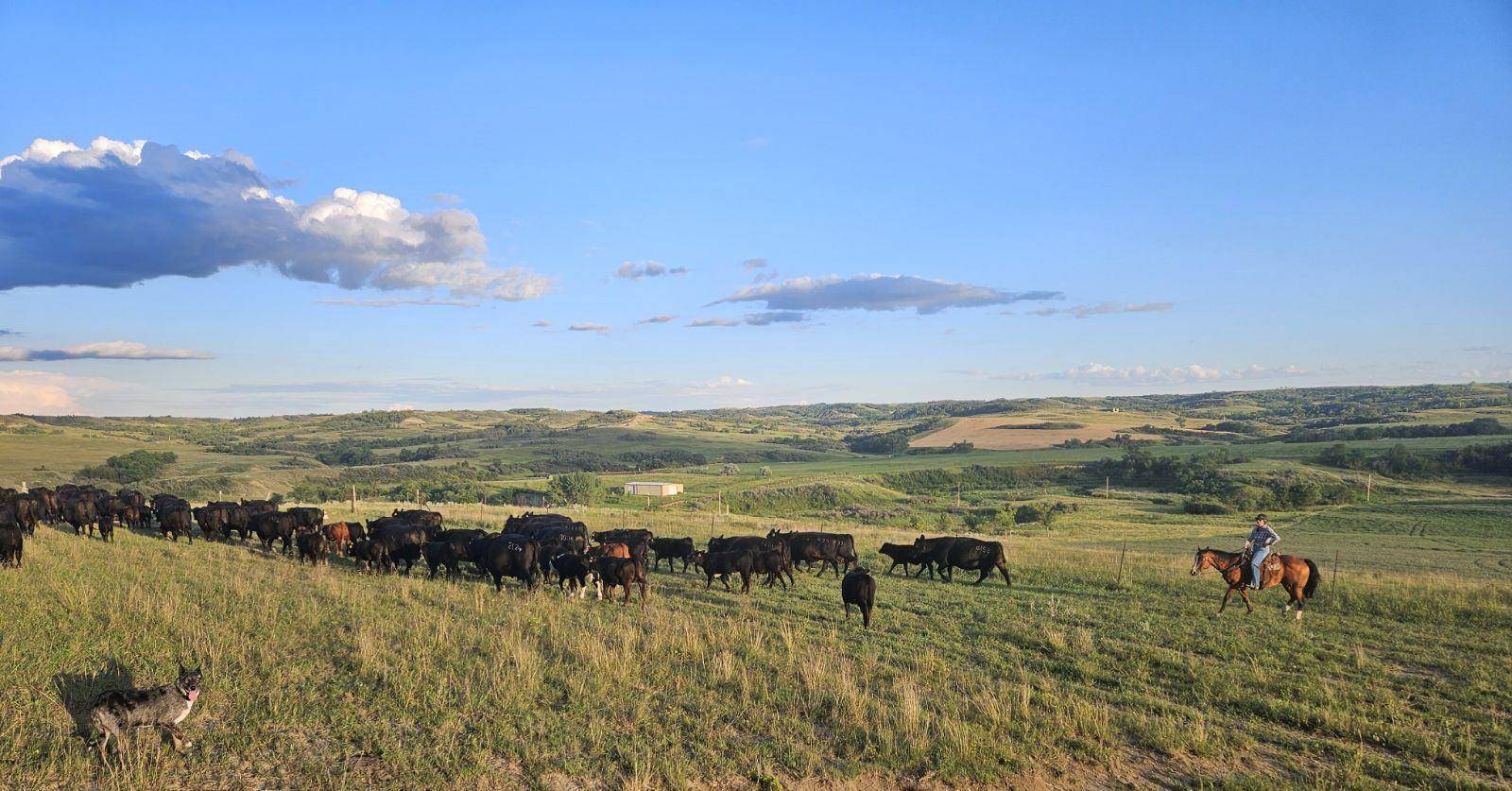
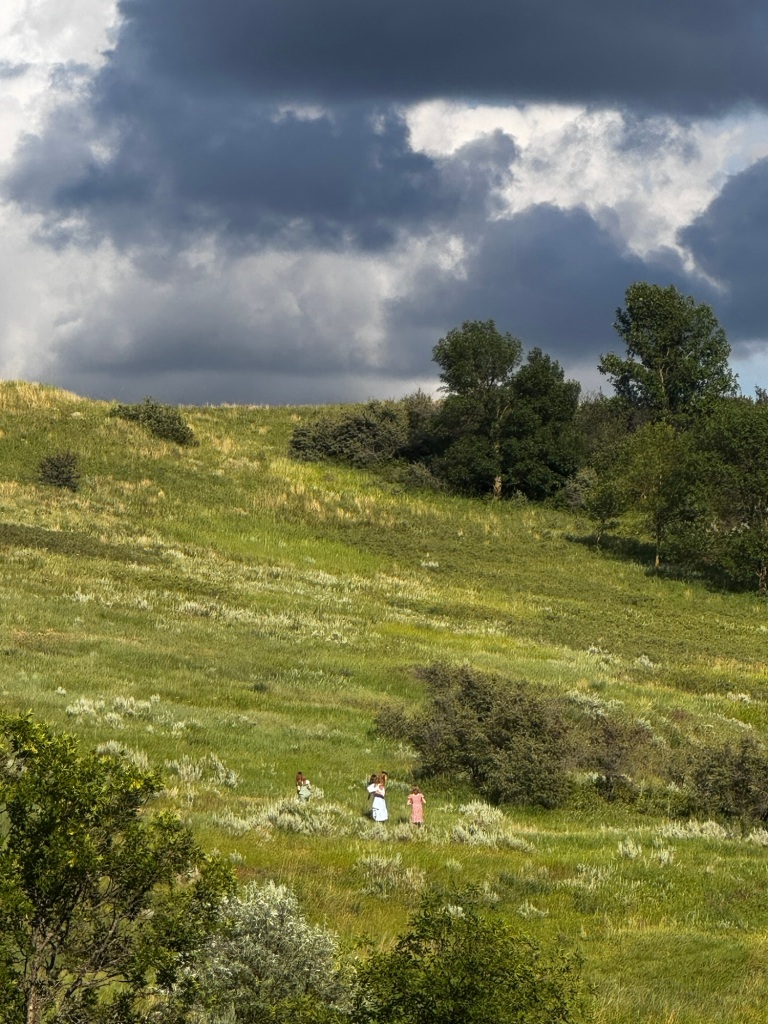
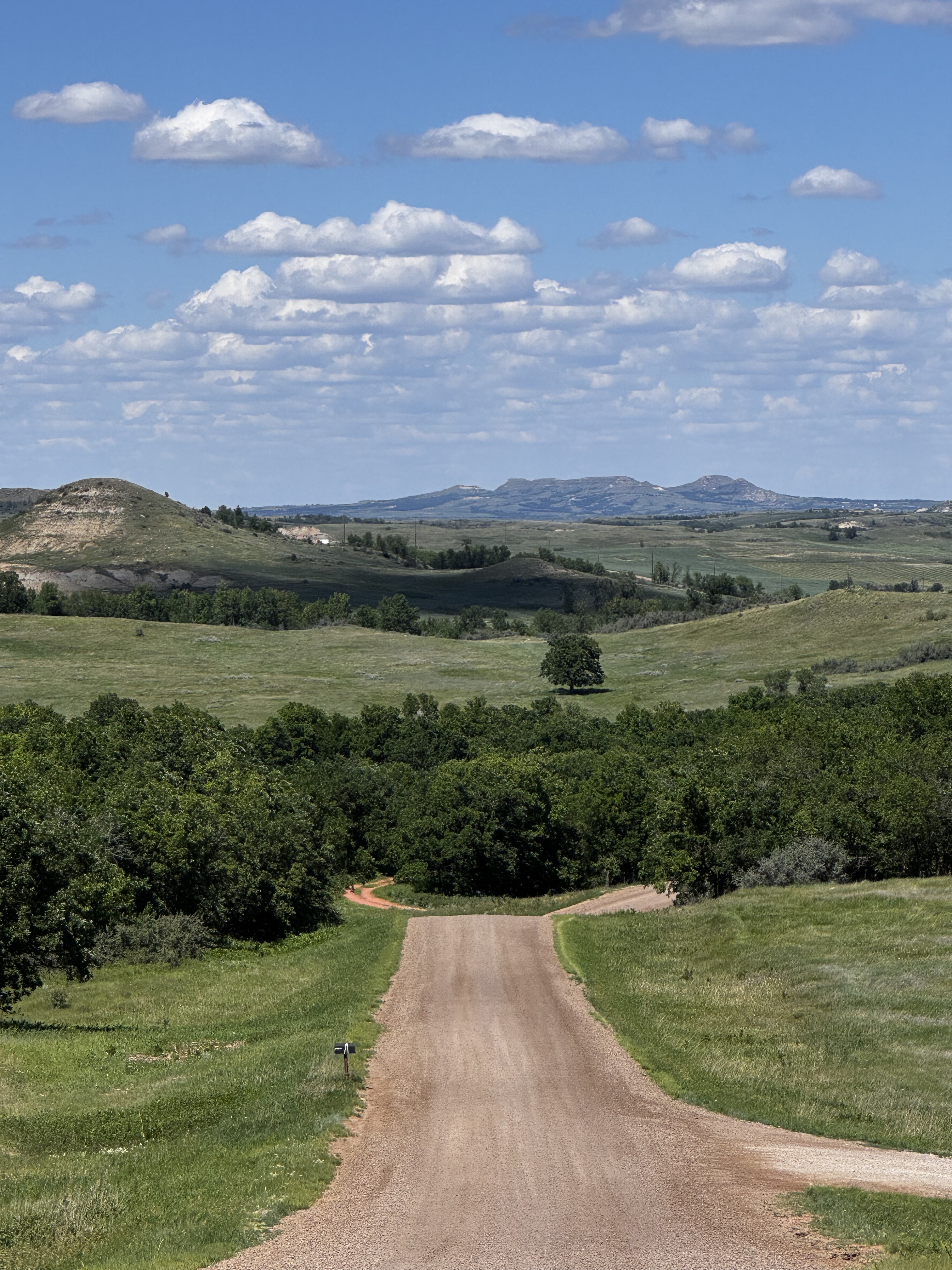
How fast this sight has changed
Lately I’ve been feeling farther and farther away from myself. Usually, this sort of ache is reserved for long winter nights, but for some reason, it’s creeping up on me in the change into summer, which has been notorious for snapping me back to myself. I haven’t planted a single tomato plant. The garden isn’t tilled. The horses need about a hundred more rides. My calendar is dinging with deadlines that feel impossible to meet and I find I’m feeling a bit frantic about making sure this summer teaches my daughters some things about responsibility with as much room for play as possible.
Responsibility and play. I think that might be the never-ending battle we’re all up against. Can they possibly exist together in balance? If you have any sort of roots in ranching or agriculture, I can see you nodding your head along when I say there is never a time where you can relax without thinking you should be doing something more productive.
Because there is always something to be done here. The barn needs to be torn down and rebuilt this summer and so does the shed. The siding needs to be put on the house and the deck needs to be rebuilt. The old equipment needs to be moved off the hill and we need to resurface the road to the barnyard. We need to rebuild the corrals and spray the burdock plants and ride fences and move cows, and also, we have that day job and softball practice for the kids and the county fair next week. We’re getting none of it done in the process of trying to do all of it. The feeling of being fragmented and frazzled and underprepared for everything is one I can’t shake. A walk to the hilltop to document the wildflowers is the least productive thing on the list. But maybe the thing we need most.
Last week in our efforts to get the kids ready for the county fair, I took that old camera off the shelf and out of its bag. My sister and I signed our oldest daughters up to enter a photography project and it was time we got it done. We walked out into the yard and bent over the little patch of prairie roses in the front yard. I did a little speech about focus and timing and patience and light and looking around for things worth photographing. My niece pointed out how it would be best to crop out the cowpie under the wildflower photo and I said she was right. There is beauty growing right alongside the poop. We just try to focus on the beauty when we’re behind the camera.
After the wildflower lesson we set our new kittens up in a little basket out on the lawn for a little photoshoot. Those four little fuzz balls were the star of the show for a good fifteen minutes while we worked on catching their best angles and fawned over how sweet they were.
The lawn was long and needed to be mowed. The tomato patch needed to be tilled. My office work was waiting, but I was too busy saying “oh how cute!” and “get a little lower, focus on their eyes,” and “oh my goodness the sweetness,” to think about anything else. I liked the way the world felt to me in the yard that day.
I think I’ll leave that camera out and within reach this summer…
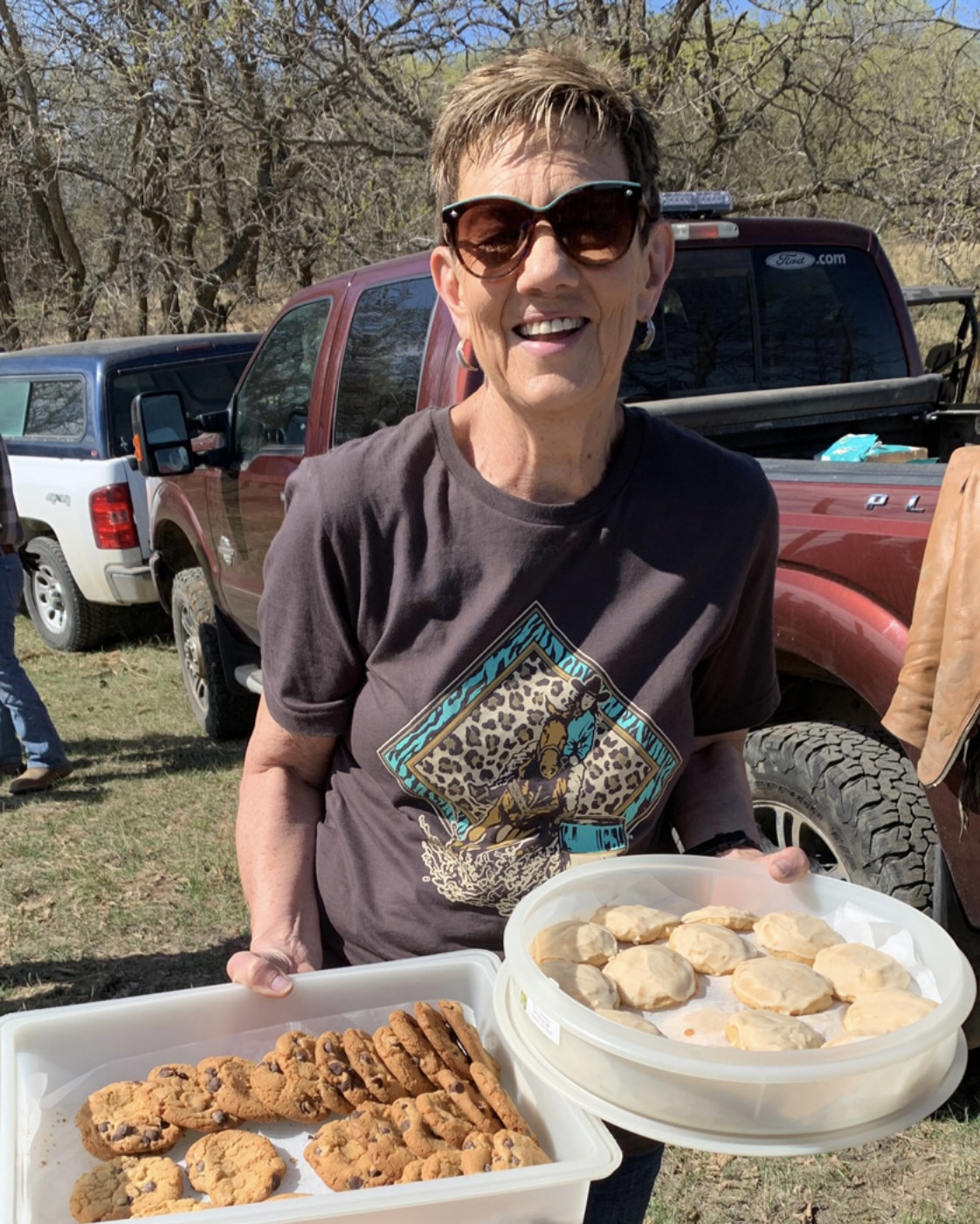
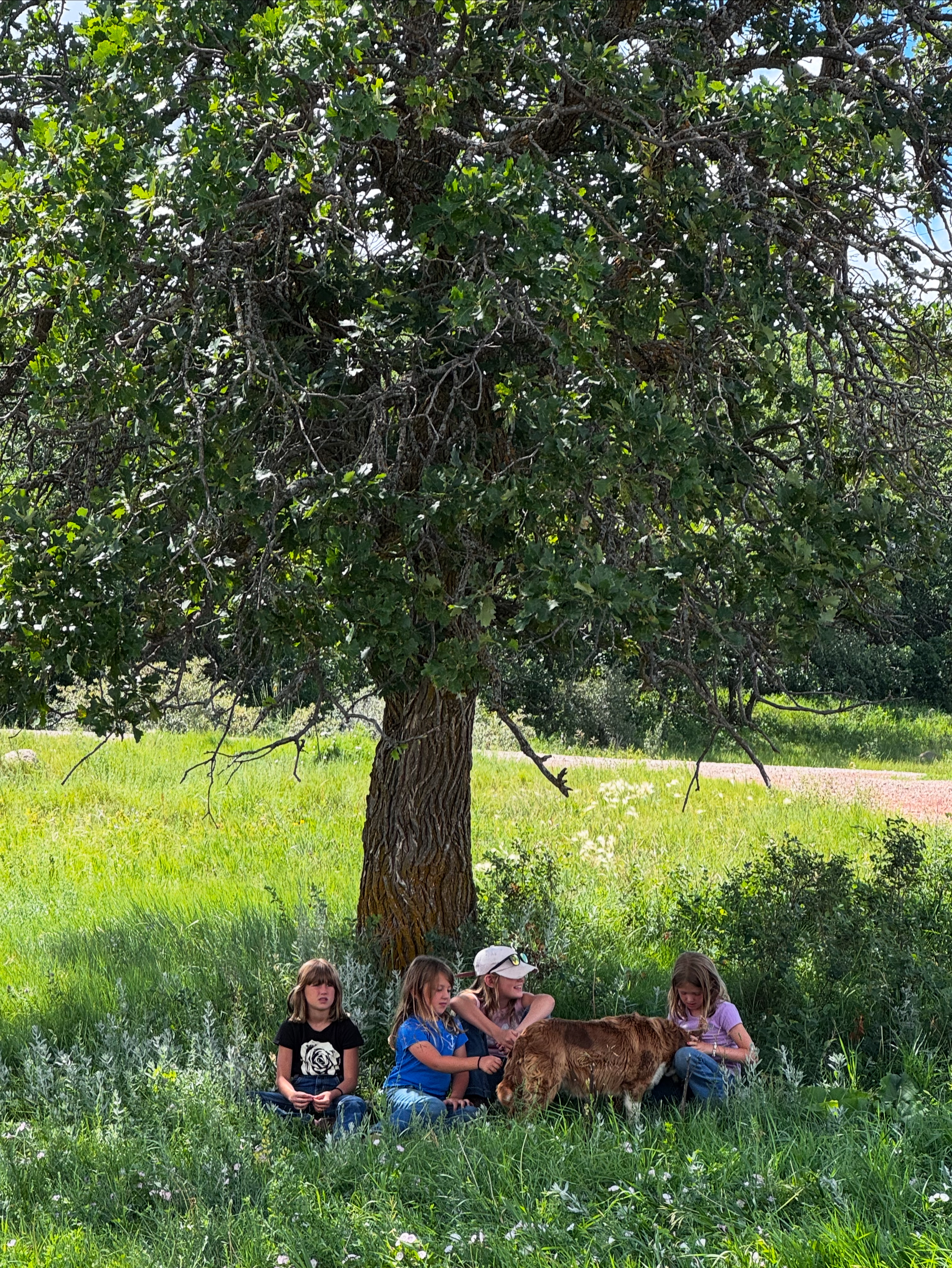
Every year at the beginning of June a group of our friends from Bismarck and Dickinson load up and come to the ranch to help us brand our calves. It’s become a tradition for them to help in the pens as a way to say thank you for allowing them to hunt turkey and deer on the place throughout the years. The gesture and the help are thoughtful and appreciated, but it’s not an expected exchange. We would gladly have them out anytime for whatever reason. But every year for nearly ten years or so, they have been making it work, no matter how much or how little notice we give them. They wake up early, load up their kids and make the drive to sort, wrestle, ear tag and stand ready for whatever other task we might throw at them. And then, when the work is done, all ten or more of the kids run wild on the dirt piles and in the trees collecting ticks and dirt on their jeans, I serve up cookies and a couple big roasters of beef and then we take the kids for their favorite part: a ride on our horses.
This year was no different. We called last minute, and our friends were there standing by the pens waiting for us at 8 am when we finally got the cattle gathered. Which means that a pickup-load from Bismarck had to leave their houses at 5 am and our friends from Dickinson cut their weekend fishing at the lake short and then, before they left that afternoon, they handed over a big bag of walleye that we fried up and devoured on Tuesday.
I was standing in the pen next to my friend who was running the ear tagger while her eight-year-old daughter, Olivia, was charged with marking the calves who received a vaccination. Her two sons were in the pens too, one spraying antiseptic on the castrated calves and the other now big enough to wrestle. My own daughters had abandoned their post of sorting ear tags and counting calves for some sort of game of pretend in the hills with the other kids and I had just looked up long enough to realize it. I told my friend that her daughter should join them. “She can go play, she’s helped plenty already,” I said, now embarrassed that our friends’ kids were busting their butts while ours ran wild.
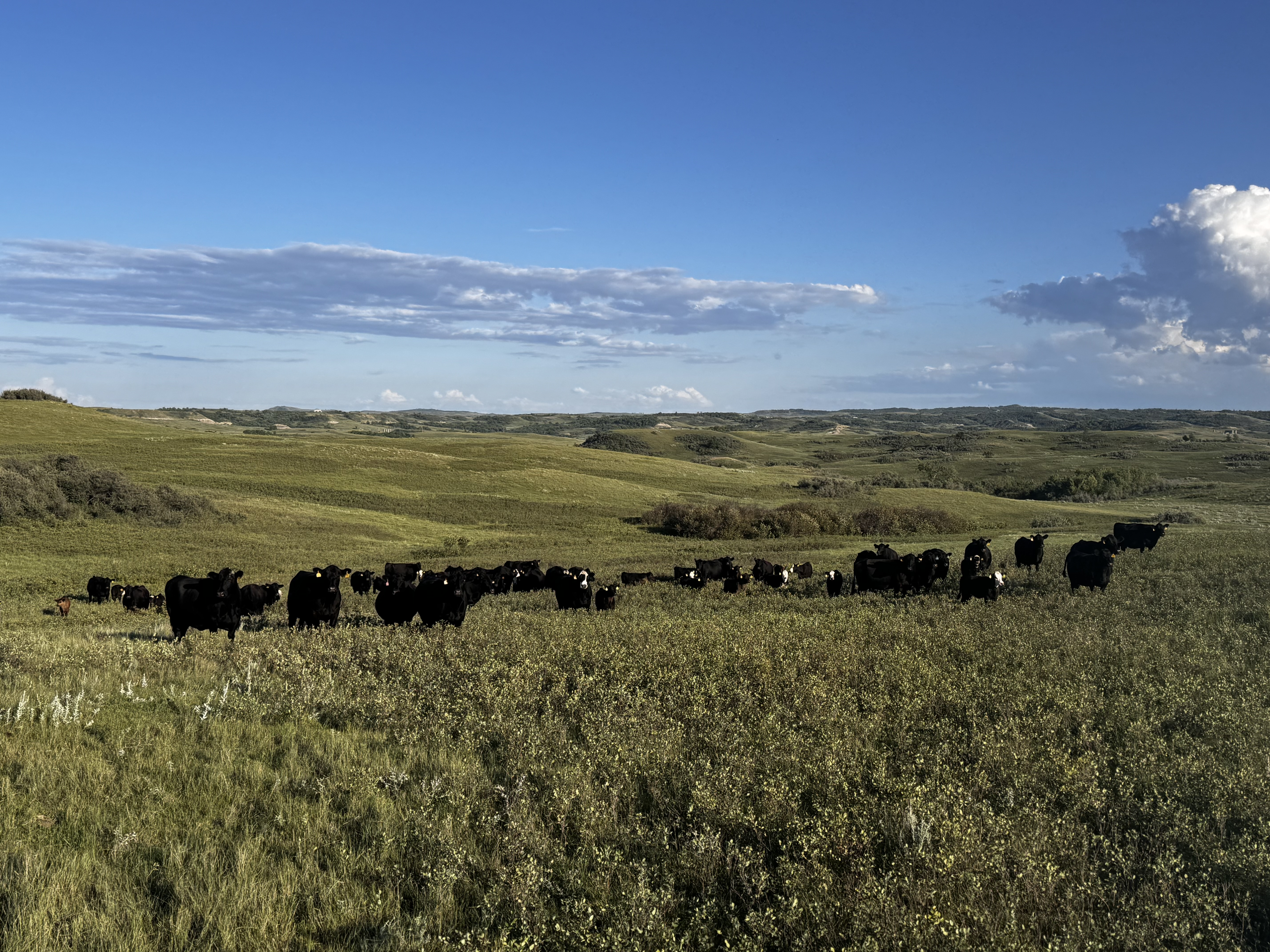
“I told the kids that this is our church this morning,” my friend replied. “Helping our neighbors, acts of service, this is what it’s about.”
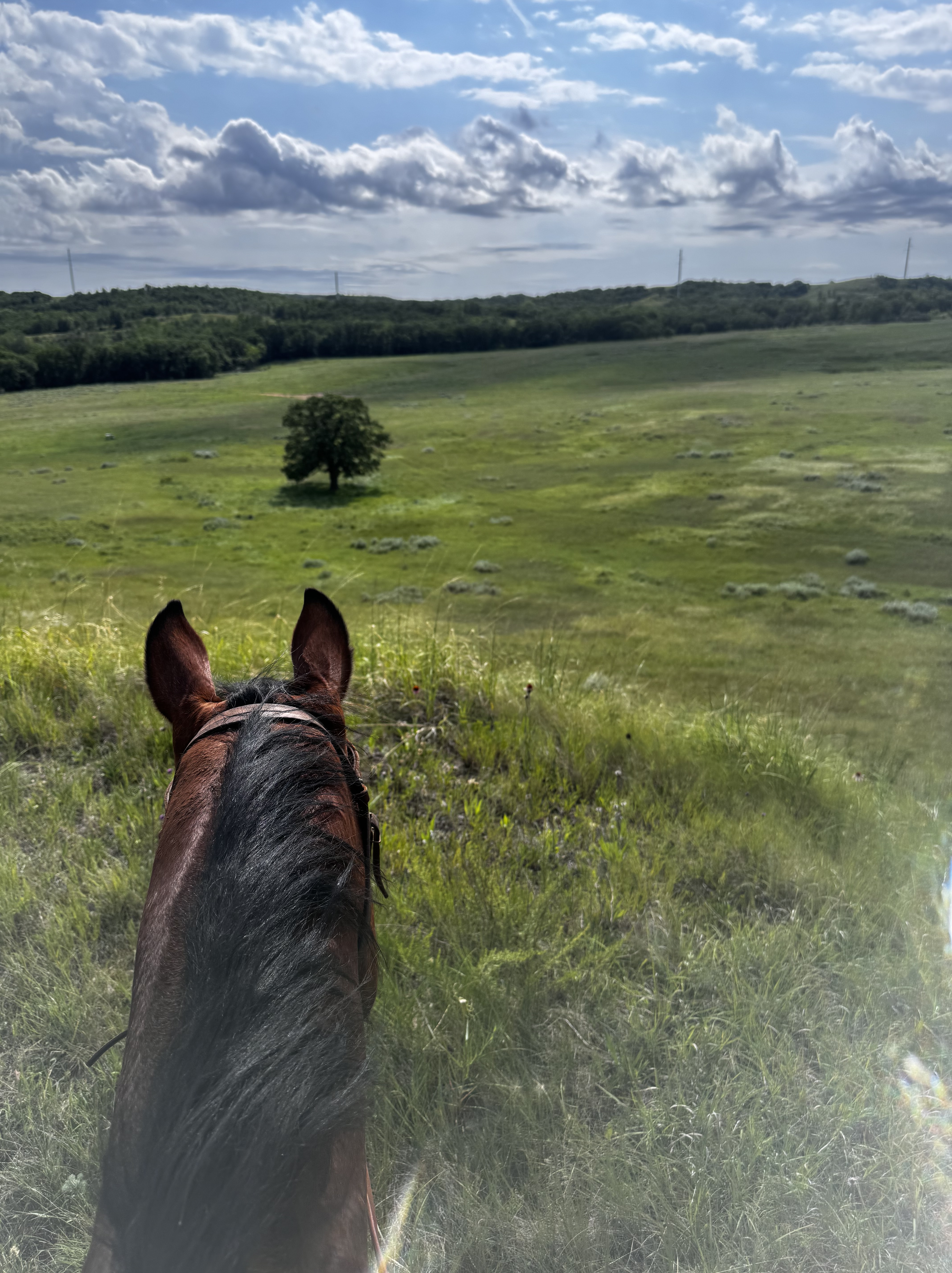
Her kids have been coming to the ranch for years, to help or to hunt or to play, since before her sweet eight-year-old daughter could walk and her boys were toddling around, fascinated by the trees and the wildlife, reminding us every time how special this place is and how lucky we are. At almost every visit our kids have wandered together to places on this ranch that my own kids barely frequent—the thick trees on the banks to the north of the house, the muddy patch of cattails in front of the dam, the old equipment on the top of the hill. When the boys were younger, after every visit we were left with a big pile of old bones and cool sticks and rocks as a collection on our front drive, little treasures they couldn’t keep their hands off. And when it comes to the animals, the horses and the baby kittens, and now, the goats, Olivia has never been able to get enough. She would outlast my daughters’ capacity for sitting horseback by hours, her smile stretched from ear to ear, falling in love with every horse on the place. This year it was no different, even in the heat of the day as we watched these growing kids navigate themselves in the saddle more independently than ever. I looked at Olivia and wondered how we could fit one of these horses in her backyard in town. And if they would finally agree to take a kitten home.
It might be the kids getting older, changing so much since the last time I saw them, that got me thinking how grateful I am for the reminder they provide us to not take this for granted. Eventually I got my own kids back in the branding pens for a bit to help, but the magic of the work doesn’t hit them the same way it does for these kids coming in from town once or twice a year. My hope is that I can raise them to appreciate it, to know how rare and important it is to care for a place like this, to stand side-by-side and share in the work, to bring out the big roaster of beef to feed our friends after they’ve put in the sweat alongside us at the end of the day, even if my youngest daughter eventually does run away to New York like she’s been threatening since she could talk and my oldest heads to the ocean.
In the chaos of the branding pen I don’t know if my kids got the lessons they needed from us this year, but I hope they learned something from our friends about what it means to be there, to be reliable and to be good neighbors, happy to help.
Have you ever had to pressure-wash the gumbo mud off the clothes and boots your children were wearing when they decided to go splash and roll in the giant mud puddle that had formed from a week of rain behind the dumpster in your yard?
As long as I’m living and they’re not dressed for town, I will never deny my daughters full access to a mud puddle. I stood under the awning of our entryway to protect myself from the rain and in a matter of three minutes those girls had ditched their muck boots and socks on the wet gravel and had covered themselves from head to toe in gray mud and rain water. I felt an urge in myself bubble up to go join them, remembering for a moment what it was like to be that carefree, but remembered the laundry and the supper on the stove and turned back to the house. When does it happen? When do we wake up and become the person who denies themselves a mud puddle?
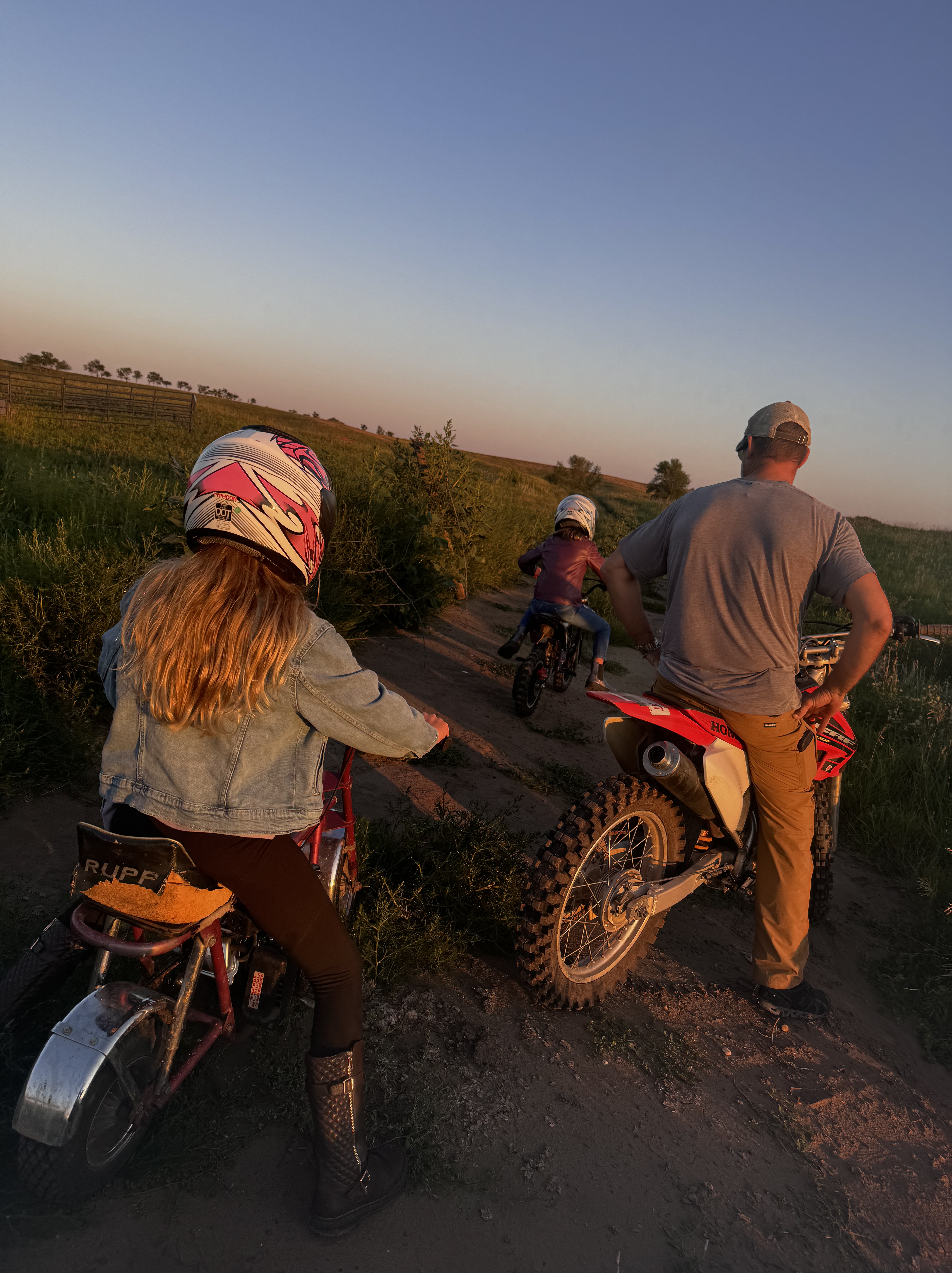
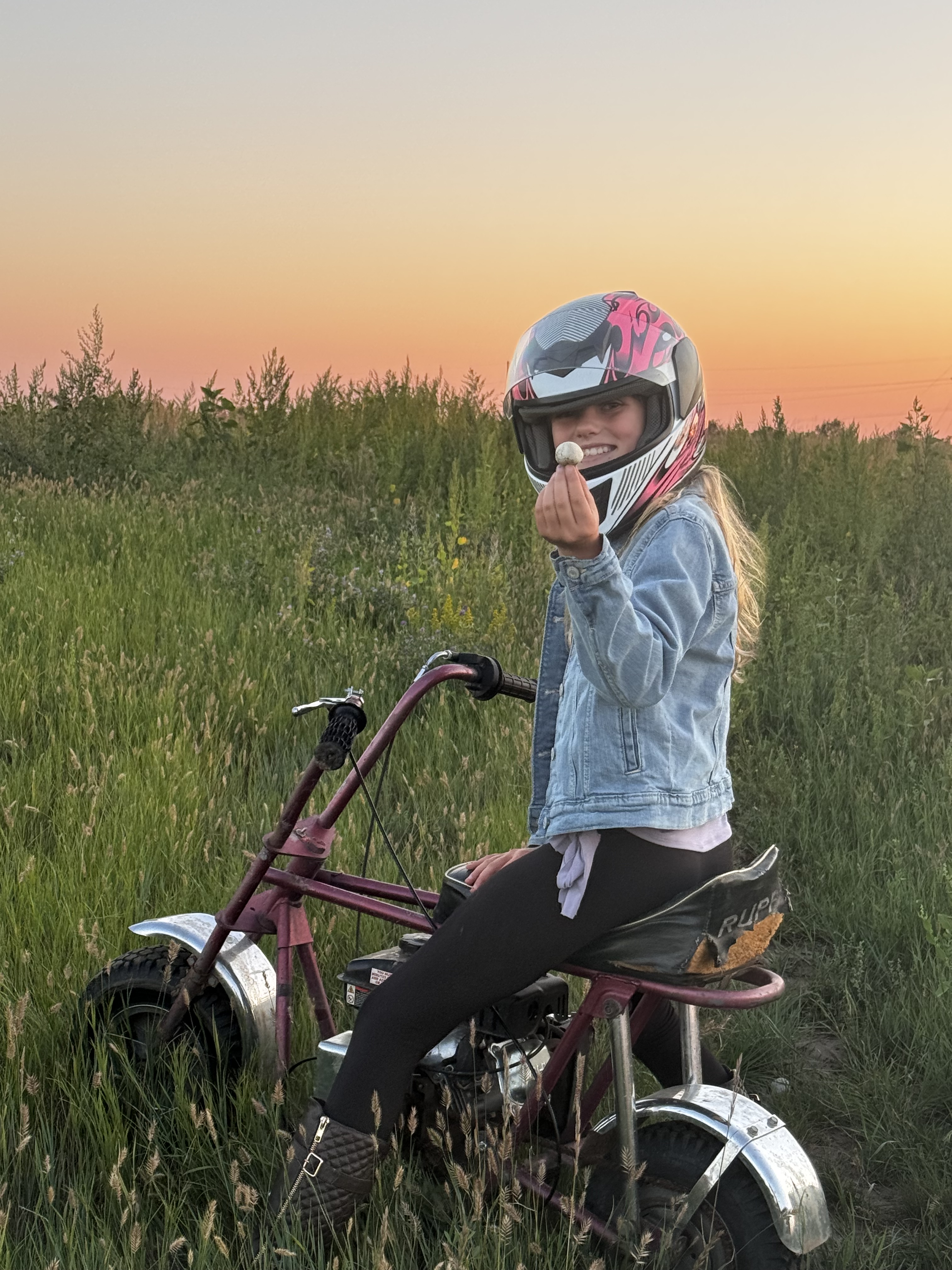
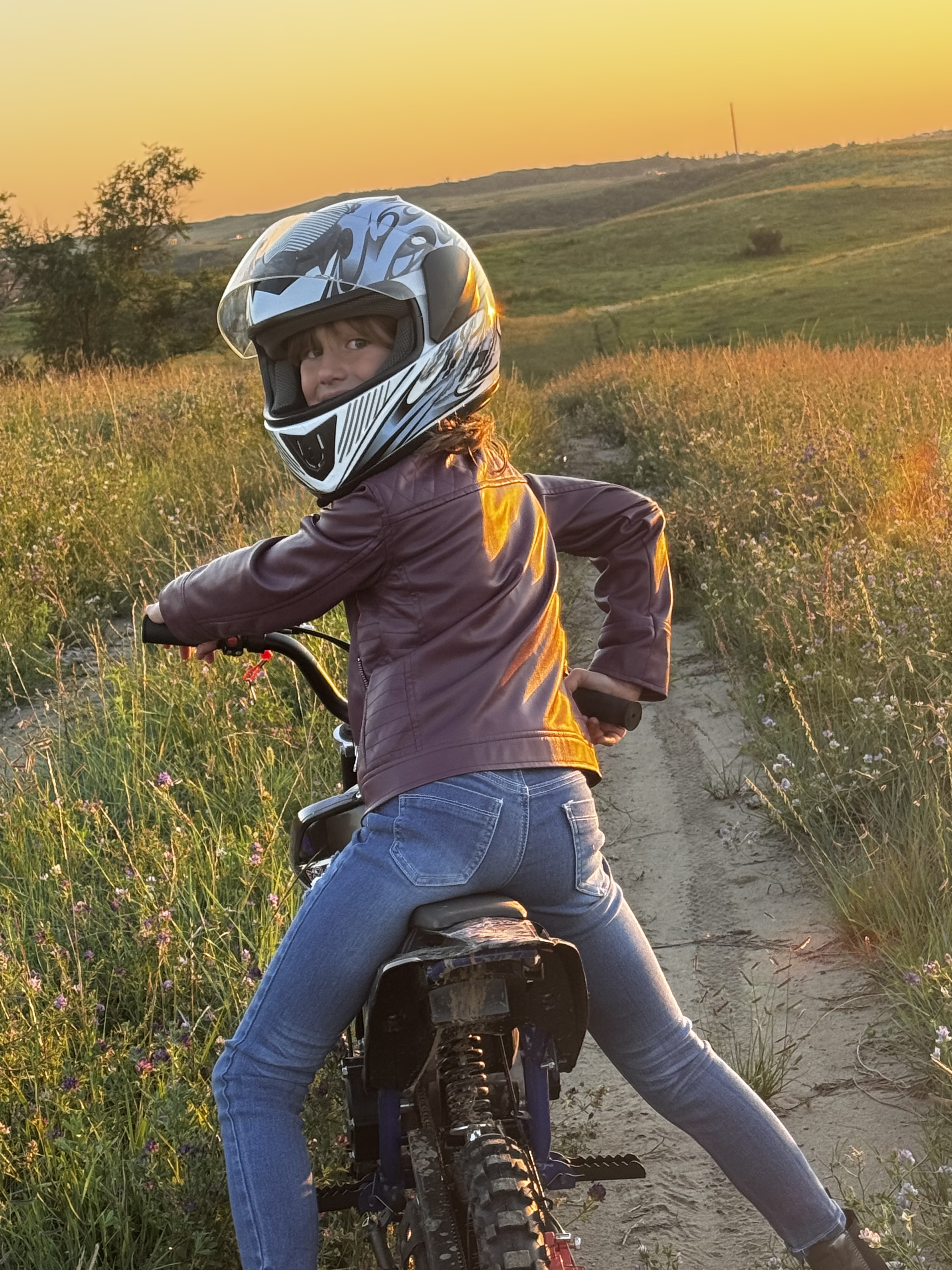
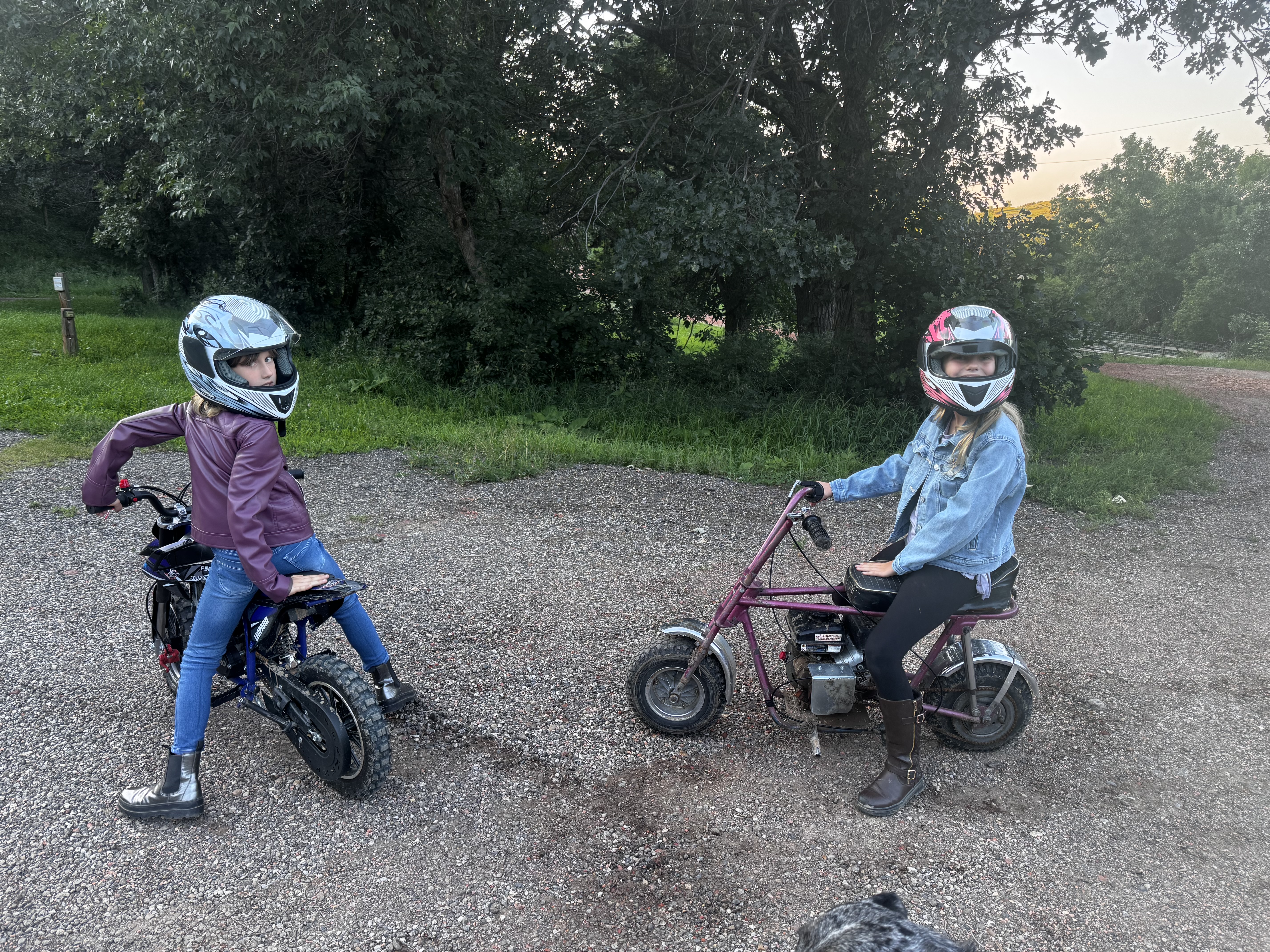
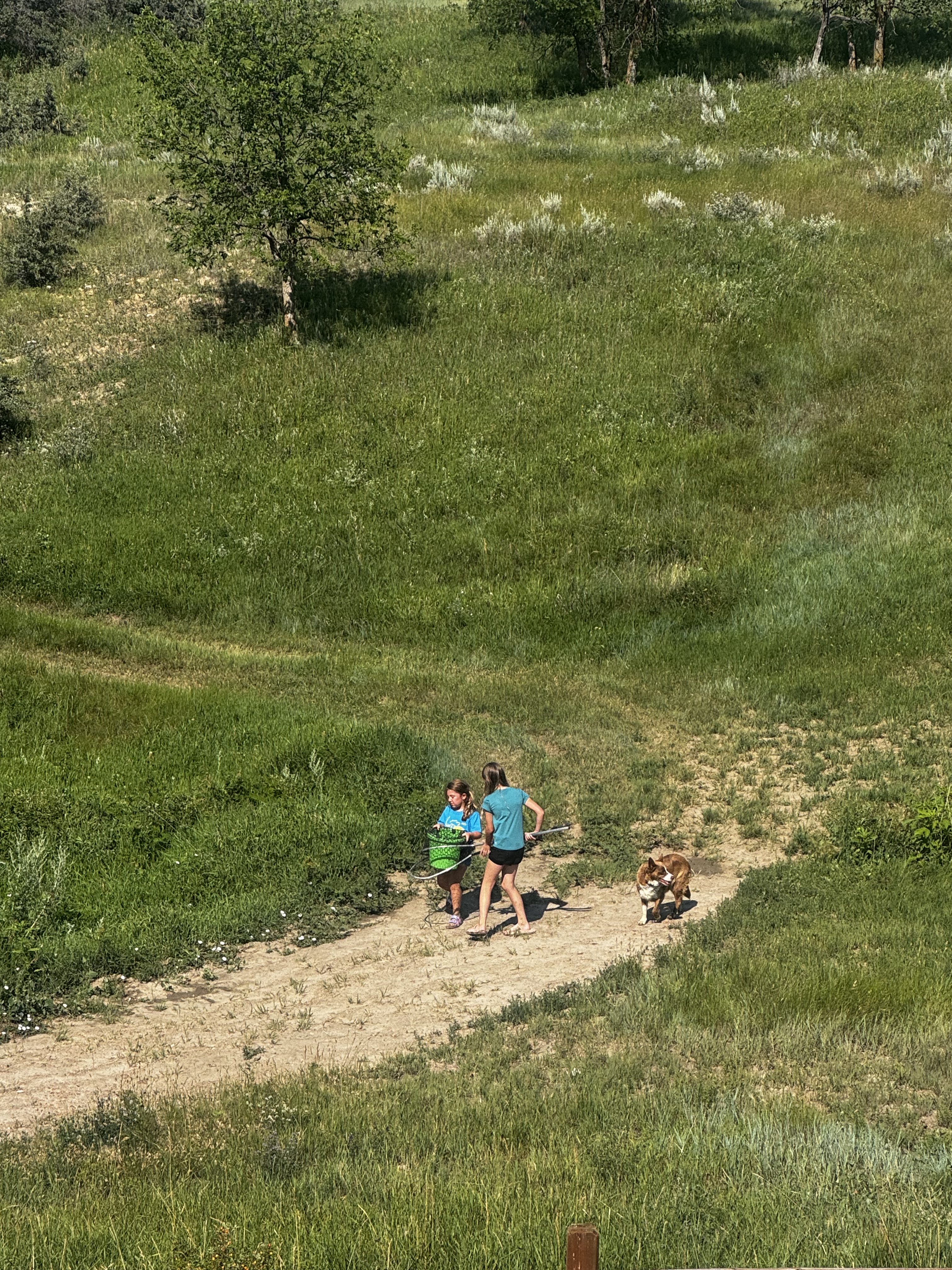
As I write this my daughters are sleeping under a giant pillow and blanket fort in the living room of their cousin’s house over the hill. Summer break has come to find them at nine and seven years old, right in the very fleeting sweetspot of girlhood where you have as much freedom as your bike and feet will give you. Or, in Rosie’s case, her little dirt bike which she used to recently to retrieve a doll at her cousin’s house so they could keep the game of school going. The rest of the girls suggested that they time her on the task, so it was imperative that she use her motorcycle. And let me tell you, the sight of her in her pink helmet with the American Girl Doll poking her head out of Rosie’s backpack, her hair blowing in wind on the way down the hill was an image of my growing daughter I hope I never forget. If I let her, Rosie would take that little dirt bike all over the countryside. As soon as she’s strong enough to pull that starting cord to start the motor herself, she’ll no doubt be off. Whether I’m ready or not, Rosie always has been.
Last week my husband and I taught our daughters the Jitterbug moves we learned in gym class when we were their age. In the kitchen after chicken dinner, we danced and twirled and never successfully got the spider down. When the weekend came, we brought them to the rodeo in town. We ate popcorn and laughed at the rodeo clown and cheered on the barrel racers and bronc riders and when it was over we headed inside to listen to the band.
My daughters and their cousins have always been the first to hit the dance floor, moving their bodies with the kind of abandon they use when approaching a mud puddle, jumping and spinning and laughing and singing. I stood next to my husband, and we watched as our oldest daughter, at the brave age of nine, take the hands of a boy from her class and show him what she learned in the kitchen a few days before.
I looked over at my husband and wondered if I was ever that confident. So many times, in the raising of them, my daughters have made me wish that I could be more like them. I didn’t know that was going to happen.
I grabbed my husband’s hand and I pulled him out on that dance floor. I got a minute or so into the song before he was stolen by a niece or a daughter for a spin or a flip and I happily gave him up to them.
They will never be this young again, but then again, neither will I. But who makes the rules on mud puddles and dancing anyway? We stayed way past their bedtimes to dance a few more dances because the next day they had nowhere or nothing they needed to be but seven and nine under the summer sun that is all too quickly drying up those mud puddles.
“What are you doing?” I asked my husband in the dark of our bedroom. He had his face nearly pressed up against the screen of the open window at the head of our bed. That day in May had reached record-breaking temperatures of over 90-degrees and we soon found out that our air conditioning was on the fritz. We had just switched off the heat a few days earlier, but there we were, laying on top of the covers under the ceiling fan before spring had even officially arrived.
“I’m counting the seconds between thunder and lightning,” he said as another loud clap shook the house, bringing only noise and not a drop of rain.
As a volunteer fireman for a rural department, he’s found himself dropping everything and rushing to the pickup to answer a neighborhood call more than ever these days. With the high winds and dry conditions and the things he’s seen go up in flames, he understands that it could be us at any time.
Down the road my dad still doesn’t have a rain gauge. He spends his mornings checking the calving pasture and worrying about the status of our springs and the levels of our dams and grass. You can have everything out here, but you have nothing if you don’t have the rain. And if dad ever buys himself a rain gauge, he’s certain it will never rain again. I feel the same way about umbrellas.
And it turns out, maybe there is some validity to those silly superstitions. Because what came next has been over a week of soaking rain that has left us with muddy roads, rushing creeks, full dams, green grass and nearly five inches of moisture and counting. And, when I needed to run with my daughter a quarter mile through a busy parking lot in a sideways downpour to get to my niece’s graduation ceremony, of course, I didn’t have an umbrella.
Dad, who usually relies on us for the rain report was likely a bit smug to find that the bottom fell out of our gauge this winter. Maybe that’s all it took to open the skies, the absence of rain gauges and umbrellas on the Veeder Ranch. Could we be that powerful?
“A God send,” Dad sent me a text along with photos of water rushing through the culverts in the Pederson pasture and the creek swollen to the size of the Little Missouri River. My daughter and I sat happily soaked in our seats, our hairdos wrecked, a little shivery but smiling as we waited to watch my niece officially become a teacher that morning.
I texted our neighbor to see how much rain they had down the road, officially turning into my father right then and there.
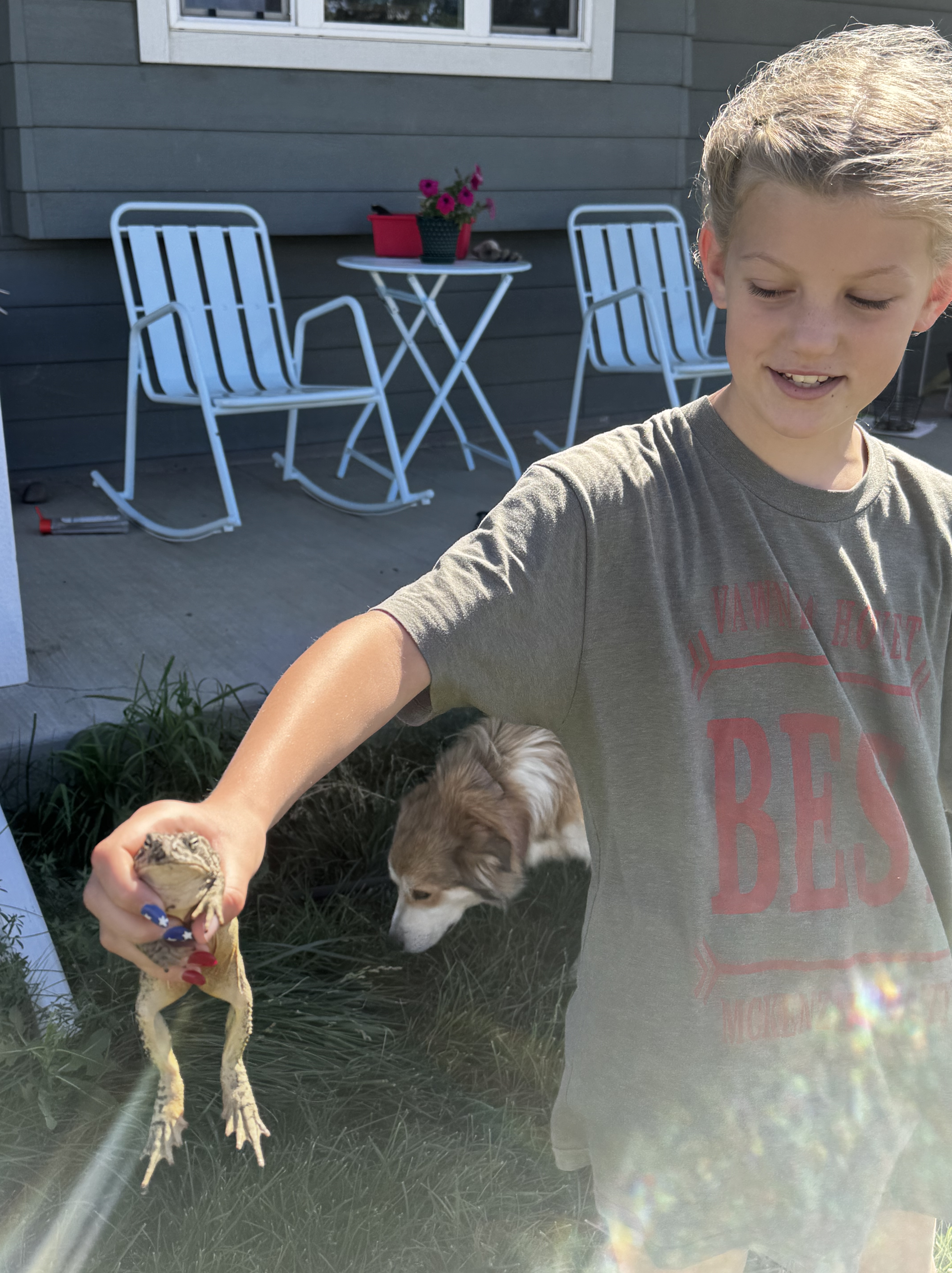
A few weeks ago we brought home two little goats to feed up and get ready for the fair. On the warm days we brushed them and shined them up. On the hot day we hosed them and shampooed them.
Yesterday, after looking at the extended forecast and their soggy little bodies, we decided their shelter wasn’t going to cut it anymore as the rain and chill continues. And so my husband and I arranged a goat transfer to the big barn that sounds simple enough in theory but looks like an hour of locating and moving hog panels, an unsuccessful crash course in halter breaking, two crying goats, one who just three minutes ago, successfully outran and outwitted a mom, a dad and a kid in the pen but is now suddenly unwilling to take another step, one kid standing on the road in the rain crying, one mom yelling “It’s ok! The goats are ok!” one dad yelling “Hurry up. Come here and help us!” to the other girl who, while splashing nonchalantly in a mud puddle got her boot so completely stuck that she had to take her foot out and use both hands to pry it free, which resulted in the sort of timber into the soggy ground that you can imagine before she gathered herself to sit with those two muddy, stinky goats in the side-by-side for their mile-long trip down the road to their new digs where we set up new troughs, a water bucket and a heat lamp that, oops, broke along the way, have to go get a new one, be right back…
And while I’d prefer that this debacle doesn’t make the 4H record-keeping books, I will tell you, even in the muddiest and soggiest of the situation, we never once cursed the rain. And the goats? Well, they perked up right away in that warm and cozy barn and I stand by my assertion that I’ll happily trade fire danger for goat transfer any day.
If you need us, we’ll be standing next to the window saying things like “I wonder how much we’ve got?” and “We needed this,” like the middle-aged, superstitious cattle (and goat?) ranchers we are…
My husband and I spent a brief time living in western Montana when we were first married almost twenty years ago now. It doesn’t seem that long ago when I reach back for a memory there of us and our big brown lab who was just turning from puppy to real dog, maybe sort of like our marriage.
We chose the mountains as a challenge to pick a spot to live and that sounded adventurous before we completely settled down at the ranch. We had been married the year before and my husband needed to finish his college degree after spending as much time as a man needed as a roughneck in the oil fields. I had been touring up and down the Midwest, particularly the interstates and state highways of Nebraska, Kansas, Iowa, Wisconsin, Illinois and Minnesota. I would take my husband with me when his four days off aligned with my time on the road. Our honeymoon, for example, was spent in Redfield South Dakota, a tiny town of 2,000 just south of Aberdeen. I had been hired to perform at a company picnic and so off we went for four hundred miles, nearly running out of gas when we miscalculated the distance between towns.
We could have been in Jamaica like normal newlyweds, but on our way home, we stayed at the Hotel Donaldson in Fargo to be fancy and bought a new refrigerator and microwave at with our wedding money only to discover they were much too big to fit in the tiny ranch house where were living. So, we sold them to his parents.
Living together as husband and wife in my grandma’s tiny house next to the red barn on the ranch where I was raised when we were so young made us feel uneasy, I think, only because we wondered if it might be too good to be true. We couldn’t possibly be here already; with jobs and bills and the brown lab puppy I bought for him for his birthday. If we stayed here for the rest of our lives, would we grow to resent it? Would we blame every mistake and wrong turn and unsettled argument on the fact that we never spread our wings too far together? What if we became unhappy? Would there be a way we dared blame it on the ranch and the small town that raised us and pulled us back?
And so, we narrowed it down to two choices. Wynona, Minnesota because once I sang there and brought my husband along and we visited a cute coffeeshop and walked along the river and climbed to the top of a bluff and we liked how it looked like a movie scene from far away, even in the ugly and brown part of March. And then we went to Wabasha and watched the bald eagles and toured the famous restaurant and places that inspired the 90s movie Grumpy Old Men. We got a kick out of all of it. And Wynona had a college with the right program.
And so did Missoula. We hadn’t been there before, but as prairie kids we romanticized the mountains and so that’s what won. Seems like the mountains always win. Who could argue with a college credit in snowboarding and professors who wore Birkenstocks before every teenage girl in the country wore Birkenstocks. We brought our dog, and I brought my guitar and I doubt we had too much else. Maybe a bed and my mom’s old leather couch. We found a cheap place to live, and I found a job and he went to school and we looked for places to find ourselves in the mountains every night and every weekend and we wanted to love it. And maybe we did a bit. But looking back on it now it seems like we spent most of our time trying to climb out so we could see the horizon and the weather coming. So we could get away from the endless swarm of people looking to be found too.
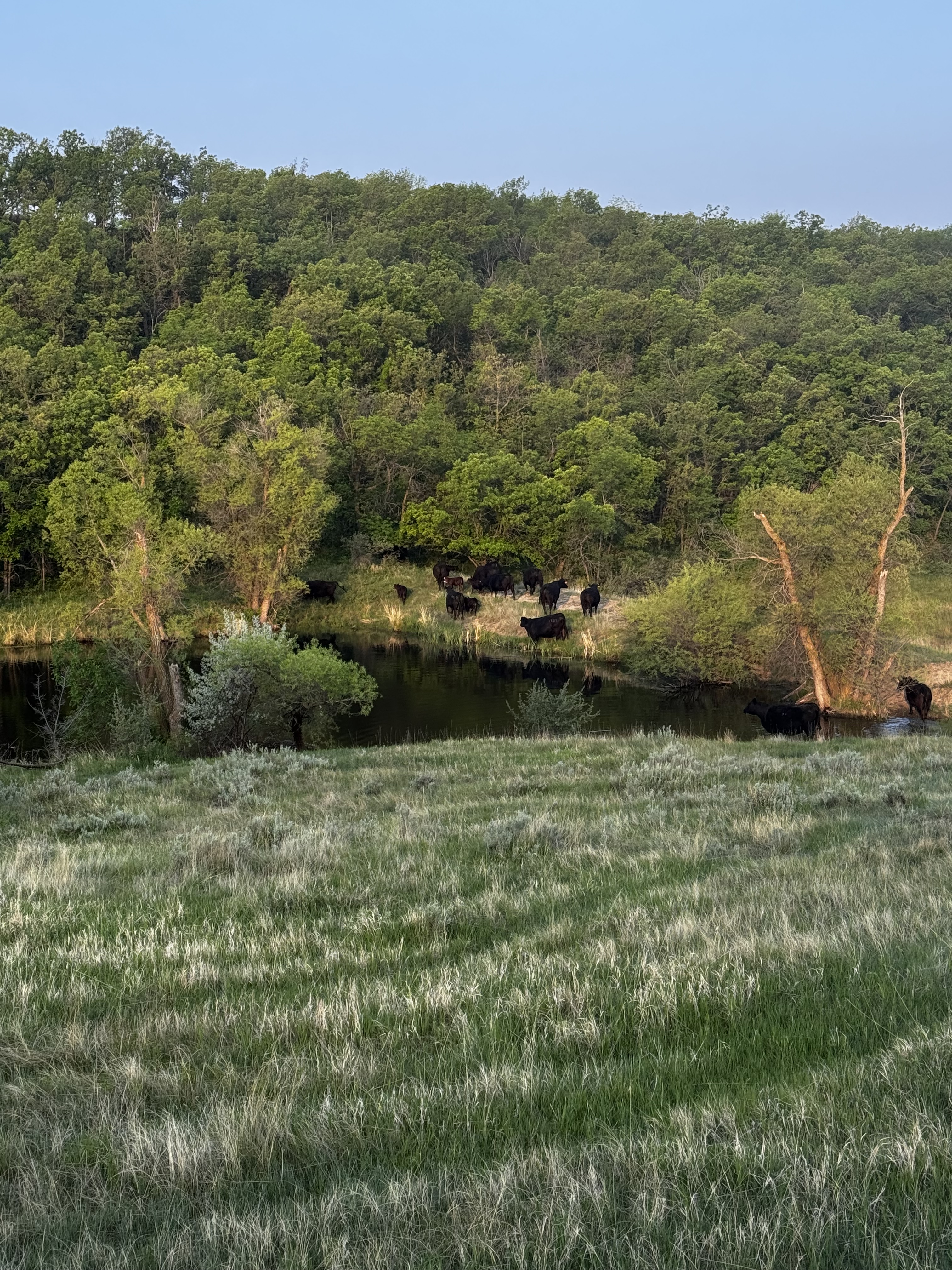
My favorite hiking spot was the bald face of a mountain outside of town where nothing but prairie grass grew and the trail was cut like a switchback the way the cows and deer and elk would do it at home. There were no surprises there. I could see the sky.
I lost my first pregnancy in that little condo in Missoula. My husband had already moved back to North Dakota to take a job offer and I stayed behind with the dog and nothing but an air mattress and a suitcase left in the space. It wasn’t time for us to be parents. We were not ready. But it didn’t feel that way when I was alone and wailing. My dad came to get me, my husband couldn’t leave. I protested. I’m like that lab, when I’m hurt I want to hide out under the deck and be alone.
And that was that. We gave it a year for the mountains to enchant us. But nothing compared to the place that loved us first. After the long trip home, I climbed to the top of my own hill. It wasn’t a mountain, but the view was better. I cried the cry of someone who had lost something. I cried the cry of relief. I cried the cry of uncertainty. I cried the cry of being loved. I cried the cry of being home.
And I’ve cried that cry a thousand times since, but I’ve never wanted to leave again…
I like to imagine my mother before I knew her–before she became a mom for the first time to my big sister and wife to my father. I like to imagine her long straight hair, jeans that hugged her ballerina legs, her high heels clicking along the pavement on her way to a job she was good at, her tan skin on elegant arms that opened out wide to the world.
Because it was those open arms that brought me into my world. A world with gravel roads, cattle grazing in the yard against the backdrop of clay buttes. One I’m certain she never pictured herself in.
I like to imagine her this way, young and in love and willing to sacrifice the life between city streets, the life she was familiar with, for a man in a band with wild, black hair wearing a suit with cowboy boots and looking displaced in that city where they met–ready to bust out at the polyester seams, saddle his horse and ride out on the interstate toward home.
I like to imagine him, my father before he was my father, enamored by a woman with quiet confidence and an aversion to practical shoes. A woman who was fine on her own raising her daughter, but might be convinced, if treated with the kindness and respect that she deserved, to go with him to live in a place that require more practical shoes.
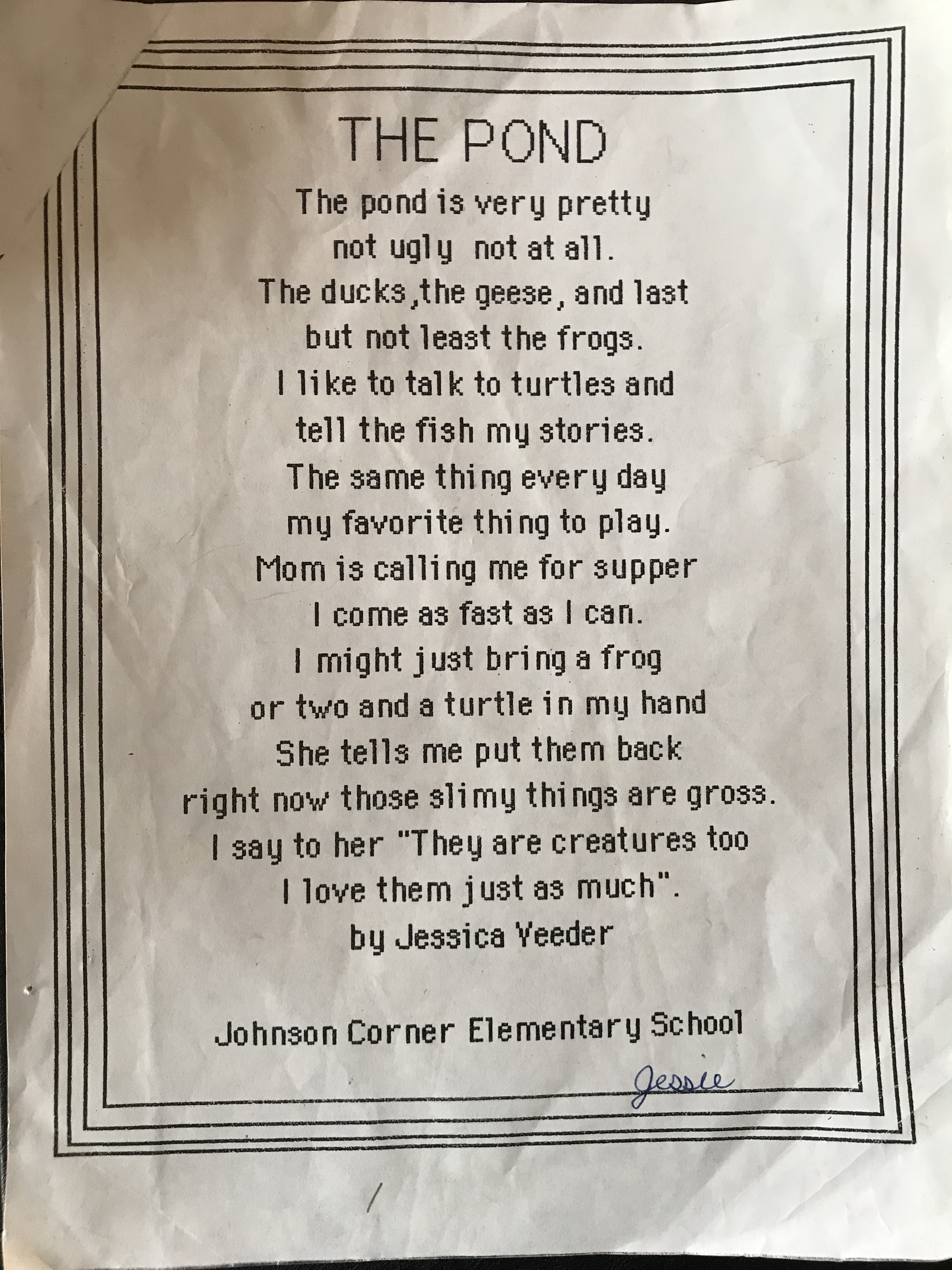
I like to picture that she pulled on her boots and listened to her new husband’s dreams of cattle and horses while she searched for work, taught dance classes in the nearby small town, had two more daughters and watched us grow and get our hands dirty and tangle our fuzzy hair in the wind. She cheered us on at small town rodeos, tended to broken arms, made makeshift habitats for pet turtles in her roasting pan, gave advice on cheerleading moves, helped with 4-H projects and bought us pretty shoes, no matter the dirt and mud we drug into the house on our boots.
And while she drove one daughter with ballerina aspirations to dance lessons 75 miles away, sent one to ride horses and sing her songs on stage and scheduled the other for basketball and volleyball camps around the state, I imagine her grabbing little pieces of her heart and handing them quietly off to her daughters…
Her pointed toes, blue eyes and beauty she slipped to her oldest in her mug filled with hot chocolate on her way out the door.
Her honesty, determination, quick wit, strength and social graces that exist within my mother flew out of her mouth and attached to her youngest daughter during an argument about boyfriends or clothes or parties with friends.
And to me, her middle daughter, the one who has been so convinced that I had nothing in common with her, she gave a gift of encouragement, belief in dreams and understanding of big emotions. But most of all her sacrifice and acceptance of a world she had to grow to understand and appreciate has been her greatest gift to me because it became my home on a landscape I will always belong to.
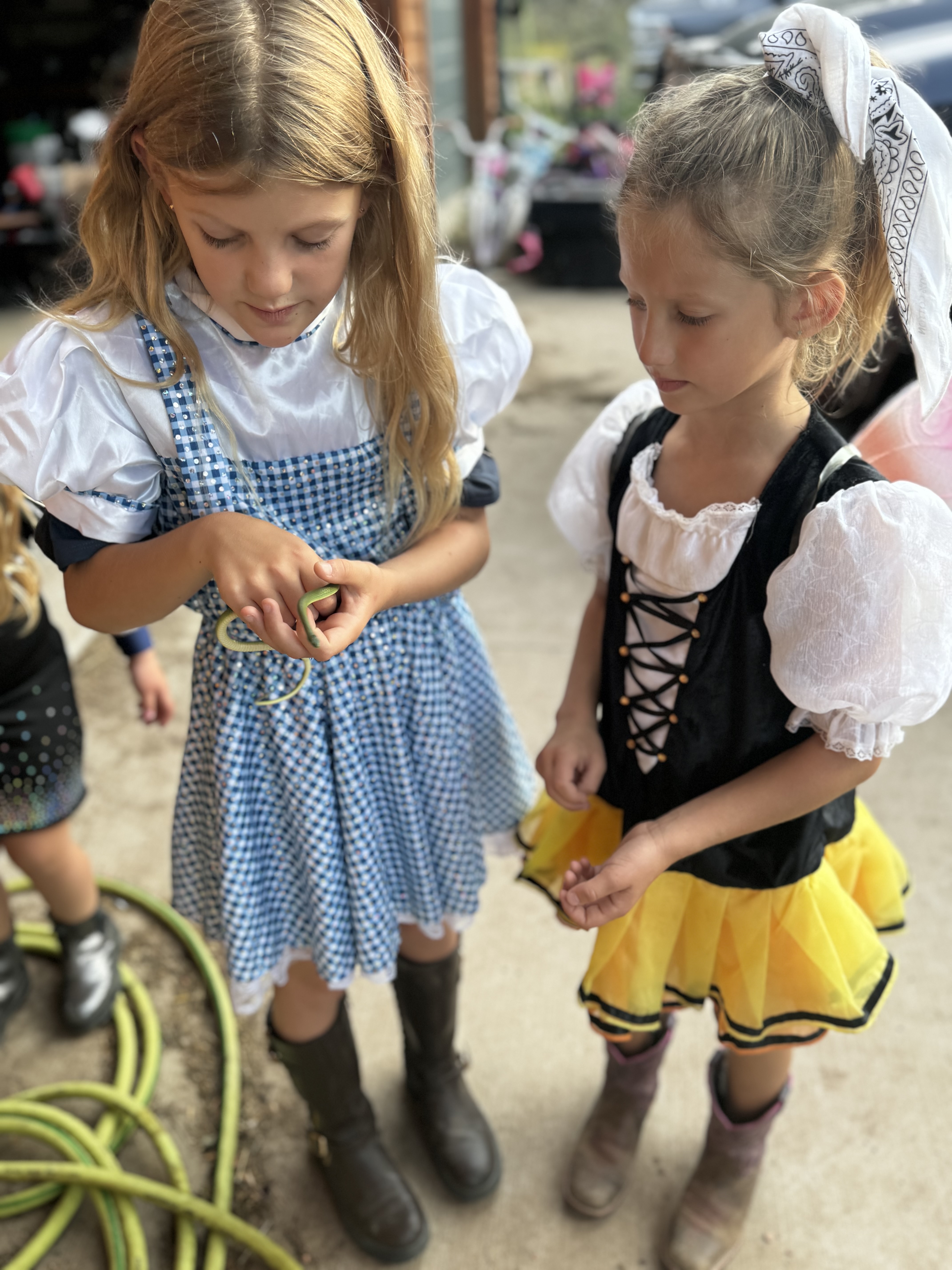
But for all that she’s given, through snakes and skunks making their way into her house, through thankless jobs, burned tuna casseroles, drought and dust storms, drained bank accounts and late nights waiting up and worrying, my mother has held on to the best parts of herself:
The beauty queen parts, the graceful selfless parts. The life of the party, the giver of the most thoughtful gifts. The big sister, the caring daughter, the understanding wife parts. The organized and impeccably clean and always prepared (even when 30 miles away from the nearest grocery store) parts.
The parts of her that have always known what is best for her family.
So, yes, I like to imagine my mother before I knew her, before she was my mother. I like to imagine her with all that love to give, all that joy and all those dreams and talents with the world at her delicate fingertips.
Because of all the things and people she could have belonged to, all of the places she could have laid her heart down, she chose to lay it here.
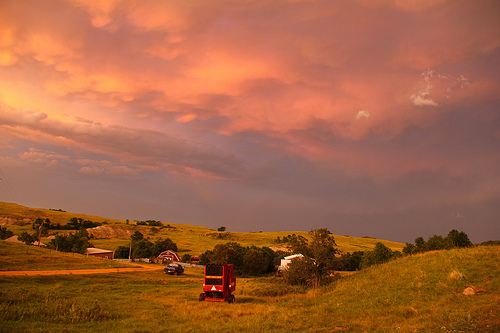
We’re in the thick of calving these days on the ranch. Little black specks on the hillsides and in the draws are arriving like little beacons of hope with the crocuses.
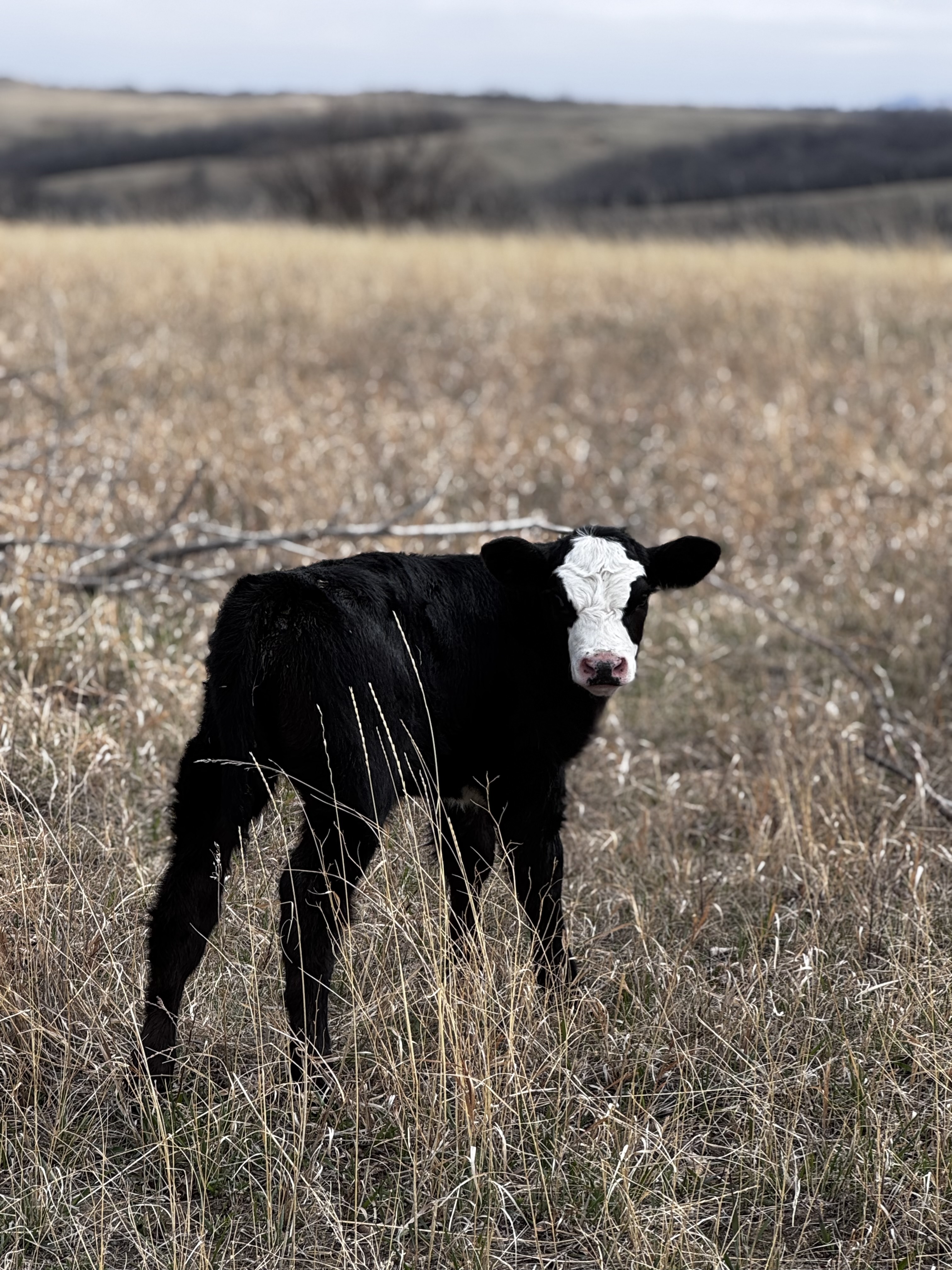
For several years we have calved mostly pure black animals, but with the addition of Herford bulls in the program this year we have more black-white-face babies than we’ve had since I was a kid.
My dad, who is out in the pastures several times of day keeping an eye on things, will occasionally text me photos of the new arrivals proving that he’s as delighted as the children are about the speckled faces and, also that you can be an almost-70-year-old rancher and still be enamored with the process. He took my daughters out for a side-by-side drive through the herd and gave them an in-depth genetic lesson about color patterns and recessive genes. They catch on quickly to those sorts of things, their little minds like sponges ready to memorize. I wish I had retained that skill, mostly to remember all the names they have given the new arrivals. Because when you have black-white-faced calves instead of the standard pure black, you can suddenly tell most of the babies apart! And so, naturally, they all get names.
And so we have “Tippy” because he has a white tipped tail. And “Goggles” because he has two black rings around his eyes. And then “Patch” and “Spot” and so on and so forth.
This weekend we will be building a little pen close to the house, down where my failed garden used to sit under the shade of the oak and ash trees. The girls are getting a couple of goats to show at the county fair, and we know nothing about goats except what we learn when our friend Brett comes over for a beer. We’re entering into real 4-H territory these days as it’s my oldest daughter’s first year being what we call a “real 4-Her.” No more Cloverbud rainbow ribbons. We’re pulling out the big books now and learning the rules.
For her first assignment, before the goats arrive, she and her best friend are doing a demonstration on how to make homemade Play-Dough. They’ve spent a couple days after school making their poster board and rehearsing their lines. And, thanks to her friend’s mom, they will also be dressed the same–in matching t-shirts with the signature 4-H clover. And if you know anything about 8-year-old girls you know that the matching is the most fun part.
Anyway, I saw the run-through last night and it’s the cutest thing, honestly. Key rural kid memory-making right there. We’ll see if they maintain the same level of squirrely-ness and giggles when there’s an audience present.
Spoiler alert, they got a purple ribbon!
After the presentation is complete Edie will then move on to the most uncharted territory of all: The Clothing Review. And if you don’t know what the Clothing Review is, don’t worry, neither do I. But I know it involves sewing. And modeling. Two things I am not built for.
Because I have experience in the horse show, and I have wood-burned and latch-hooked and picked and identified every wildflower on the ranch in the name of a 4-H ribbon. I even completed an entire information board about beaver habitat that won me a trophy and sat in the office of soil conservation for a bit. But I have never touched a needle and thread without it making me want to bang my head against the wall. It’s only natural then that I gave birth to an aspiring fashion designer. So we’re making an outfit. From scratch, like we’re in Project Runway or Little House on the Prairie, depending on how it all turns out. And when I say “we” I mean Edie and her Nana Karen, who I cornered on Easter at the ranch, right before she was walking out the door. I had Edie ask her, “can you help me sew a skirt for 4-H?” And I’m so glad I was there to see the reaction on my mother-in-law’s face because it was clear that sewing a skirt with her granddaughter was absolutely the very thing she wanted to do most in the whole world.
“We could do a top too!” she responded immediately before declaring that she’s bringing over a sewing machine. “I’ve been waiting for the right time to give it to you!”
If you need us, we’ll be at the fabric store. And the feed store. And calling Brett with goat questions. And up in the calving pasture naming new babies. A text just came through from my dad, we had a red one this morning and he is glorious. Wonder what they’ll name him?
I had the pleasure of visiting with Gary and Mary Kaye Holt on the EQUESTRIAN LEGACY RADIO NETWORK about music and songwriting and ranch life. I met Mary Kaye when I shared the stage with her at Art of the Cowgirl and have become a fan. Loved talking shop with her.
When my husband and I take road trips together we have an unspoken rule that has developed over the years that we continue to abide by: when it’s time to eat, and if we have the time, we search for a local diner. Or the local diner, depending on what size of town we’re passing through.
It’s my informed opinion as a road warrior that nearly every small town, if they’re lucky, has one they’ve held on to through the ebbs and flows of economic booms and busts. Not necessarily the tiny towns, but the small ones. If you’ve spent any time on the highways and county roads in America, you’ll know the difference. And then you’ll also know that sometimes they’re attached to truck stops on the edge of town or along the interstate or major highways, but a lot of times you’ll find that diner serving country fried steak and BLTs downtown tucked among two bars and renovated buildings standing shoulder to shoulder that used to be theaters and Five and Dime stores back when they were new.
Throughout my twenty-plus years on the road as a musician, I have made small towns my preferred stop. Because I like the way the storefronts line up. I like those old diners. I like the flower shops and drive-throughs that have been painted and repainted and still have the best burgers. I like the quiet little rivers that run through them or the surprise fishing pond I might find. I liked the almost antique playground equipment and the walking paths and the old men who meet for coffee at the Cenex Station.
Each small town manages to be uniquely its own flavor while simultaneously reminding me of the last one I visited, or the one I grew up in—houses repainted standing behind tall and neatly placed trees, fresh pavement outside the old Tastee-Freeze or, if they’re fancy and the economy’s good, kids riding their bikes to the new Dairy Queen, or swimming pool or school.
If I have time when I’m on my own, I like to drive through the residential streets and admire the freshly cut lawns and imagine what my life would be like if I lived there by a small lake in Minnesota, or the one in the middle of a field in Nebraska or in the heat at the edge of Texas. There’s a weird sort of wistfulness that happens when you find yourself alone in an unfamiliar but familiar town so far from home. You catch yourself thinking for a moment that you could stay there and become a whole new person in a place that will wonder where you came from. I think that feeling is where songs come from sometimes, the wondering what it could be, or who these people are inside those houses with the paint sort of peeling.
But when I’m with my husband we contemplate this together while I navigate him to the Mable’s Café or the truck stop diner that someone recommended on our way through Montana. If it’s breakfast time I will order a caramel roll as big as the plate and the server will bring it out with my coffee. “It’s her appetizer,” my husband will explain as he orders chicken fried steak and I get my eggs over easy with hash browns. I like my coffee out of their heavy brown ceramic cups. I like their paper placemats. I like the caddy of jelly packets and the sugar dispenser and the plastic water cups and the pie menu sketched in a waitress’s handwriting even though I never get the pie. I like how all of this is generally the same as the old Chuck Wagon Café that used to be on the corner of Main Street in my hometown when I was growing up. I like how it’s the same at the Little Missouri Grill today, the busiest restaurant in Boomtown. I went there three times last week because it’s always the right place to go with the girls when we have time to kill between school and soccer practice and they feel like a pancake at 4:30 pm. And it’s also the perfect place to go when your in-laws are in town to watch their granddaughter play soccer on Saturday morning and they feel like a hot cup of coffee and I feel like a burger and fries and the girls get the nuggets because is it lunch yet? And then, it’s the perfect place to go with your husband after a late night dancing and the kids are with those grandparents and we have a moment to just be the two of us in a diner. Well, the two of us and the relatives and neighbors that I inevitably run into because it’s there favorite place too.
“Wait until I tell your girls that you had your caramel roll before your meal,” she stops to poke fun.
“It’s her appetizer!” my husband laughs.
And I may never know who I would be behind those manicured lawns in a small town surrounded by Nebraska corn fields, but I know who I am here, opening tiny cream packets into black coffee sitting across from my husband and his chicken fried steak at the diner. And I like it. I like it here.
When my husband and I take road trips together we have an unspoken rule that has developed over the years that we continue to abide by: when it’s time to eat, and if we have the time, we search for a local diner. Or the local diner, depending on what size of town we’re passing through.
It’s my informed opinion as a road warrior that nearly every small town, if they’re lucky, has one they’ve held on to through the ebbs and flows of economic booms and busts. Not necessarily the tiny towns, but the small ones. If you’ve spent any time on the highways and county roads in America, you’ll know the difference. And then you’ll also know that sometimes they’re attached to truck stops on the edge of town or along the interstate or major highways, but a lot of times you’ll find that diner serving country fried steak and BLTs downtown tucked among two bars and renovated buildings standing shoulder to shoulder that used to be theaters and Five and Dime stores back when they were new.
Throughout my twenty-plus years on the road as a musician, I have made small towns my preferred stop. Because I like the way the storefronts line up. I like those old diners. I like the flower shops and drive-throughs that have been painted and repainted and still have the best burgers. I like the quiet little rivers that run through them or the surprise fishing pond I might find. I liked the almost antique playground equipment and the walking paths and the old men who meet for coffee at the Cenex Station.
Each small town manages to be uniquely its own flavor while simultaneously reminding me of the last one I visited, or the one I grew up in—houses repainted standing behind tall and neatly placed trees, fresh pavement outside the old Tastee-Freeze or, if they’re fancy and the economy’s good, kids riding their bikes to the new Dairy Queen, or swimming pool or school.
If I have time when I’m on my own, I like to drive through the residential streets and admire the freshly cut lawns and imagine what my life would be like if I lived there by a small lake in Minnesota, or the one in the middle of a field in Nebraska or in the heat at the edge of Texas. There’s a weird sort of wistfulness that happens when you find yourself alone in an unfamiliar but familiar town so far from home. You catch yourself thinking for a moment that you could stay there and become a whole new person in a place that will wonder where you came from. I think that feeling is where songs come from sometimes, the wondering what it could be, or who these people are inside those houses with the paint sort of peeling.
“Wait until I tell your girls that you had your caramel roll before your meal,” she stops to poke fun.
But when I’m with my husband we contemplate this together while I navigate him to the Mable’s Café or the truck stop diner that someone recommended on our way through Montana. If it’s breakfast time I will order a caramel roll as big as the plate and the server will bring it out with my coffee. “It’s her appetizer,” my husband will explain as he orders chicken fried steak and I get my eggs over easy with hash browns. I like my coffee out of their heavy brown ceramic cups. I like their paper placemats. I like the caddy of jelly packets and the sugar dispenser and the plastic water cups and the pie menu sketched in a waitress’s handwriting even though I never get the pie. I like how all of this is generally the same as the old Chuck Wagon Café that used to be on the corner of Main Street in my hometown when I was growing up. I like how it’s the same at the Little Missouri Grill today, the busiest restaurant in Boomtown. I went there three times last week because it’s always the right place to go with the girls when we have time to kill between school and soccer practice and they feel like a pancake at 4:30 pm. And it’s also the perfect place to go when your in-laws are in town to watch their granddaughter play soccer on Saturday morning and they feel like a hot cup of coffee and I feel like a burger and fries and the girls get the nuggets because is it lunch yet? And then, it’s the perfect place to go with your husband after a late night dancing and the kids are with those grandparents and we have a moment to just be the two of us in a diner. Well, the two of us and the relatives and neighbors that I inevitably run into because it’s there favorite place too.
“It’s her appetizer!” my husband laughs.
And I may never know who I would be behind those manicured lawns in a small town surrounded by Nebraska corn fields, but I know who I am here, opening tiny cream packets into black coffee sitting across from my husband and his chicken fried steak at the diner. And I like it. I like it here.