This season remember yourself (at 5 years old)

Ok. Newsflash. The holiday season is upon us.
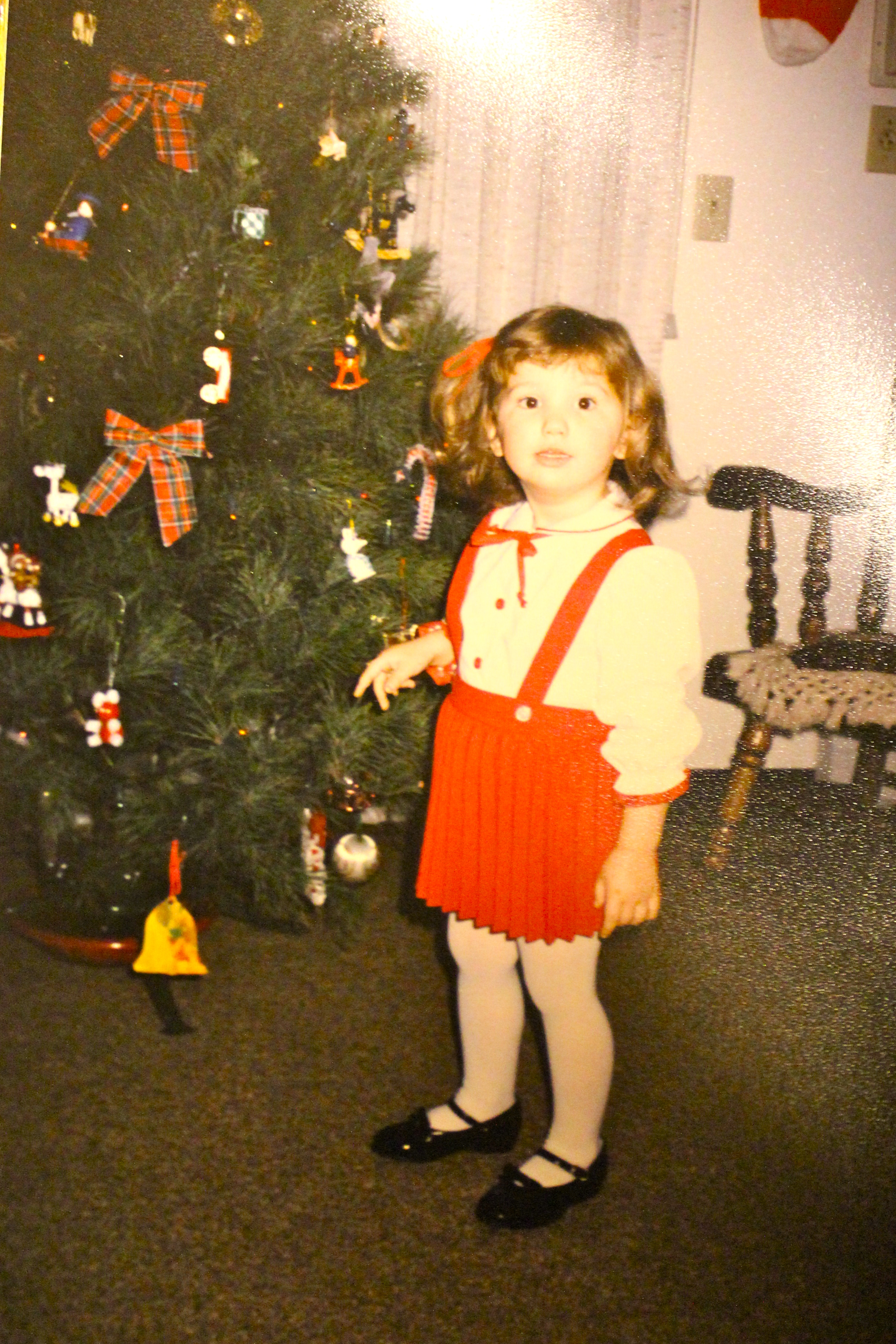
I know this because someone dressed me in suspenders, a bow tie and patent leather shoes and stuck me by this Christmas tree.

Now let me take a guess at what you’re doing in any of the spare time you may be lucky to possess.

You are making lists. Lists in your head about gifts to give. Lists on napkins about food to bake.  Grocery lists stuck to the side of the refrigerator that you forget to grab on your way out into the blizzard to get to the store. Lists on the back of your hand reminding you to add crazy uncle Bob to your Christmas card list.

I’m right aren’t I? But hopefully you’re not feeling the pressure just yet, as we have a good 24 days until Christmas. Oh, and by the way, thanks for taking the time to stop in, you know, between all of that baking and list making.

So while I have you here with me, I want to give you a little gift.

Close your eyes.

Put your head on your desk, or in your hands, or on the shoulder of your sweetie sitting next to you…

…and think about the season. Go ahead. I give you permission. Think about it the way you want to think about it. Love it. Loathe it. Tolerate it.

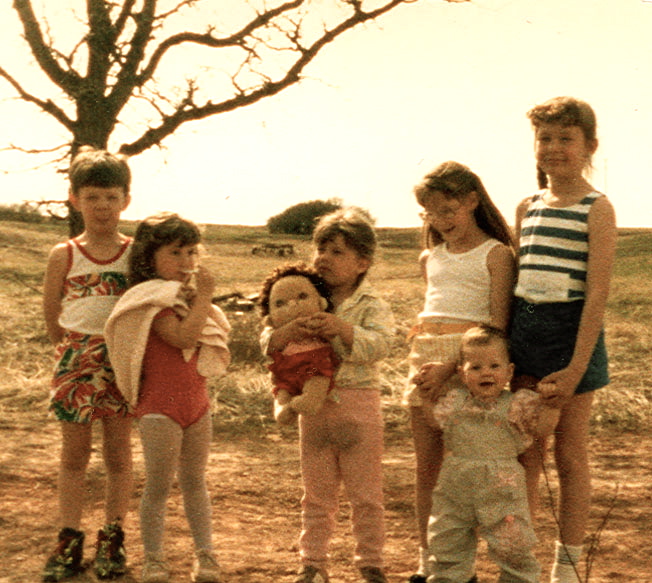
Now picture yourself when you were 5 or 6 or 7.
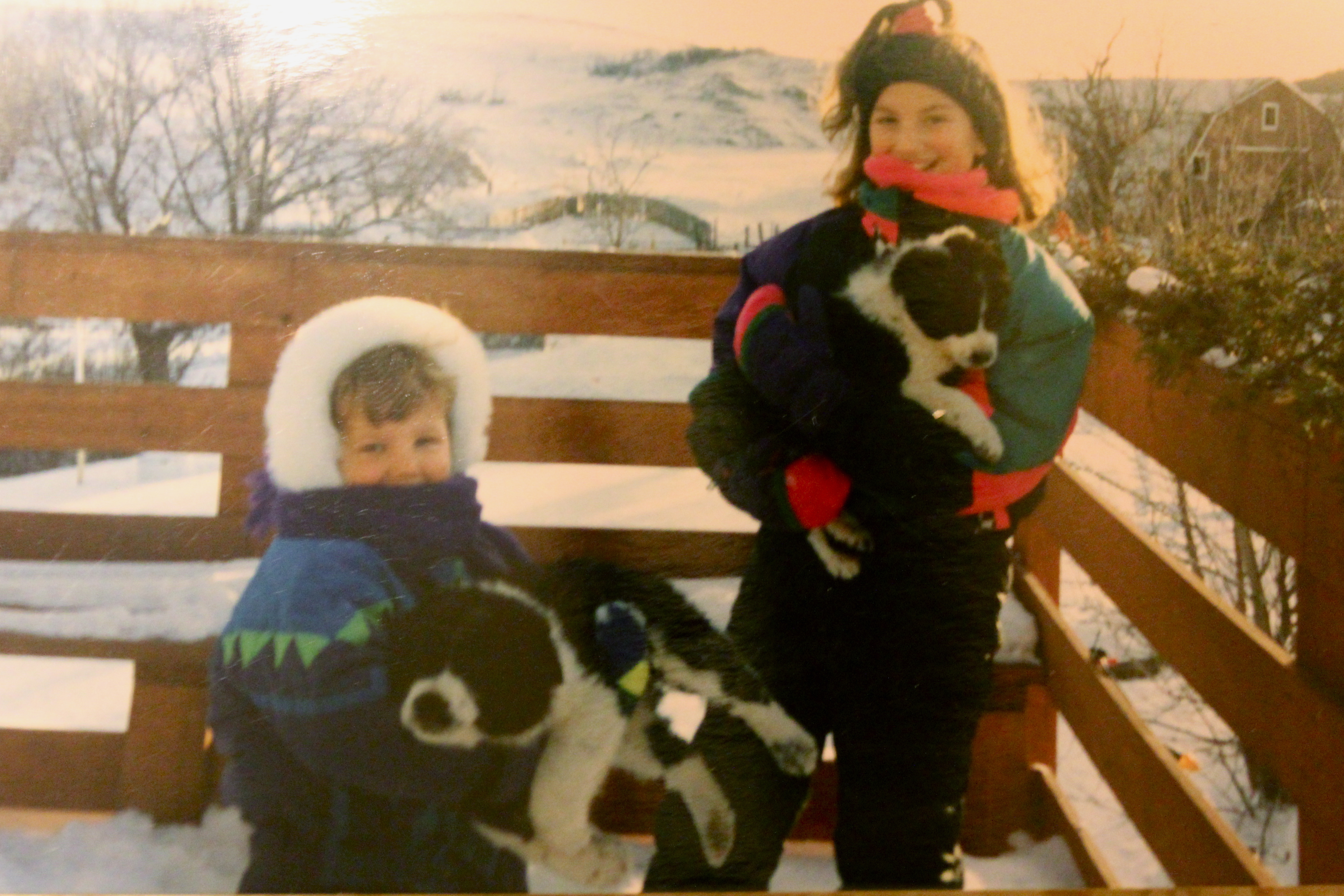
Shut up, neon was in. And so were earmuffs.

In the middle of December.

Picture your snowsuit. Think about the thrill of Santa’s impending visit, the pride you felt wrapping up that macaroni pencil holder for your gramma, the excitement of the first snow fall, the taste of your momma’s fresh cookies and your pops’ caramel corn. The quiet thankfulness you had for Jesus as you decorated the Christmas tree in preparation for his birthday.

Think of yourself, adorable I’m sure with hair wildly flinging out from your favorite beanie, breath heavy as you drug your neon sled, or wood sled, or cardboard box up to the top of the nearest hill and flung yourself down for the first time.

Remember how you couldn’t even feel your frozen cheeks as you closed your eyes tight against the wind whizzing by. You didn’t care about the weather or the windchill or the travel warnings or the buns you left in the oven. Because you didn’t leave buns in the oven. Because you were five or six or seven and no one let you use the oven.

Maybe your little sister was sitting behind you in the sled. Maybe your big brother was giving you a huge push. Remember the sound you used to make when you were thrilled? Remember how hard you laughed as you came to a crashing halt at the bottom–snow in your boots, snow in your hair, snow down your pants.
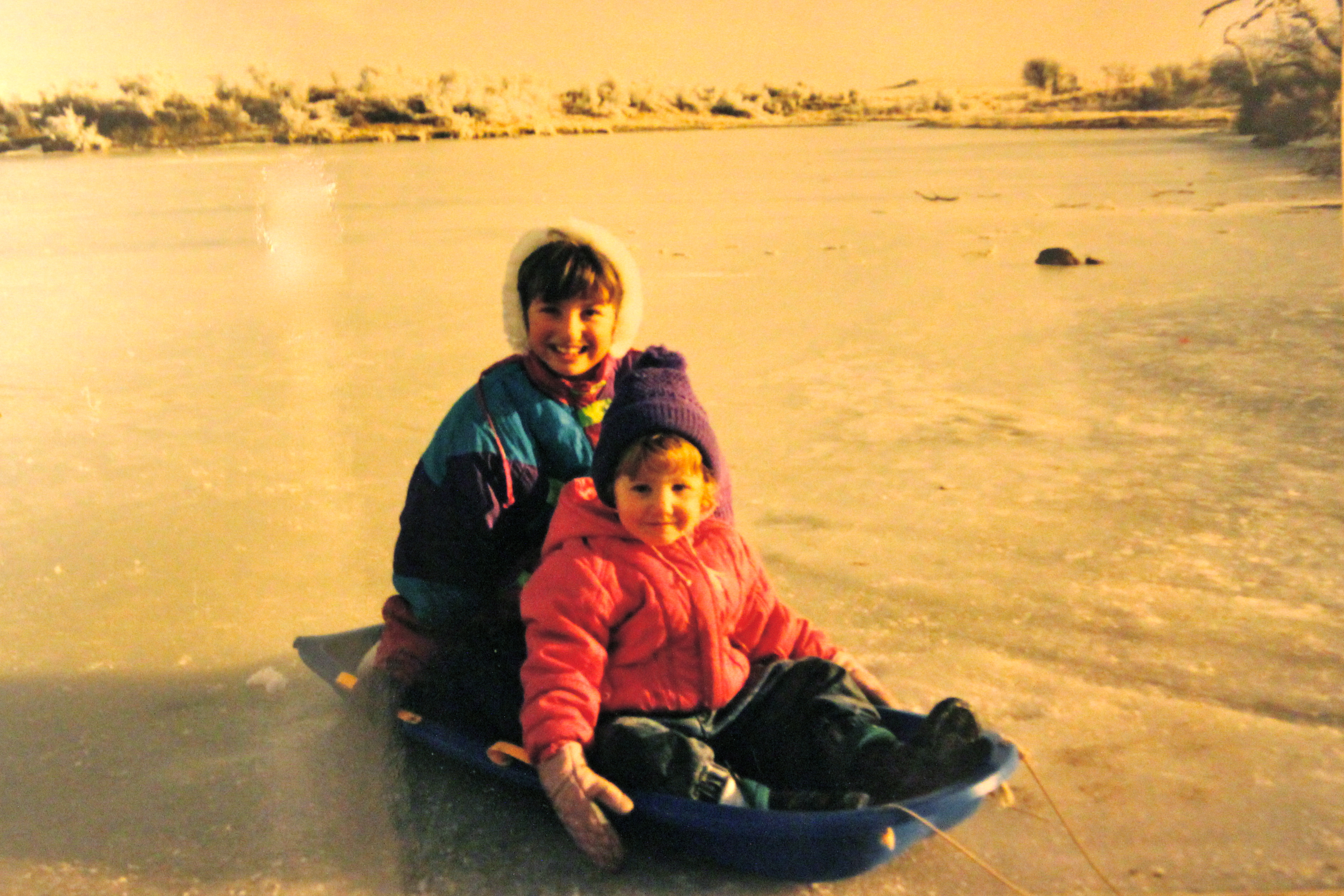
Yup, earmuffs, so fashionable, versatile anyone can pull off the look.

But you jumped up, brushed yourself off and just as soon as you yelled, “let’s do it again!’ your mom and dad came out from the house to call you for dinner and to your surprise, instead of making you come inside, they decided to take a run at the hill themselves.

So they climbed to the top with you, huffing and puffing into thier wool scarves, your dad holding your mother’s hand partly out of affection, but mostly to tug her along.

And just like that they were no longer adults. Just like that they were no longer parents who made you eat your vegetables, stop hitting your sister and clean your room. They were kings and queens of the mountain just like you. Their cheeks were rosy, their eyelashes coated in frost, their hearts pounding in anticipation as your mom wrapped her arms around your father’s waist and squealed– a sound so familiar somehow, although you swore you never heard it from her lips–as he launched the both of them, scarves trailing behind, like white lightning down the mountain.

And you held your breath and hoped your eyes did not deceive you. You clasped your hands together and bent your knees as they approached the little jump you and your brother had constructed. You closed your eyes as they caught air and seperated from the ground…and then from the sled…

You remained silent as they landed, with a puff, in a pile of legs and down and snot and wool and mittens, at the bottom.

You remained silent knowing surely that this accident, this launch, would transform them back into the people you knew only moments before. That a trip home right this instant was inevitable. Oh, the fun was surely over now.

And just as you were about to release your knees, slowly from their bent position, you launched into that jump after all as you heard, echoing off of the buttes and through the trees, laughter.

Laughter like you’ve never heard come out of these people you called parents before.

And you laughed too as you watched them lay there in a pile, their bellies rising and falling underneath the layers of coats and sweaters as they took in the next big breath only to release it again and again as huge chuckles, squeals, gasps. Pure joy.

So as soon as gravity returned you to earth your boots carried you, arms flailing, down the hill and to a sliding halt right into the middle of these new found friends. Then your brother or sister plopped right on the top and another wave of hilarity ensued.

And you were all there. You were all a part of it. A great big pile of happy and love and family.

A great big pile of friends.

Are you smiling?

Good.

Now the only thing I ask in return is this:  if you forget anything this season–the cookie salad, your third cousin’s new last name, what your youngest daughter wants for Christmas, or uncle Bob at the airport–please, please do not forget yourself…

… at 5 or 6 or 7…
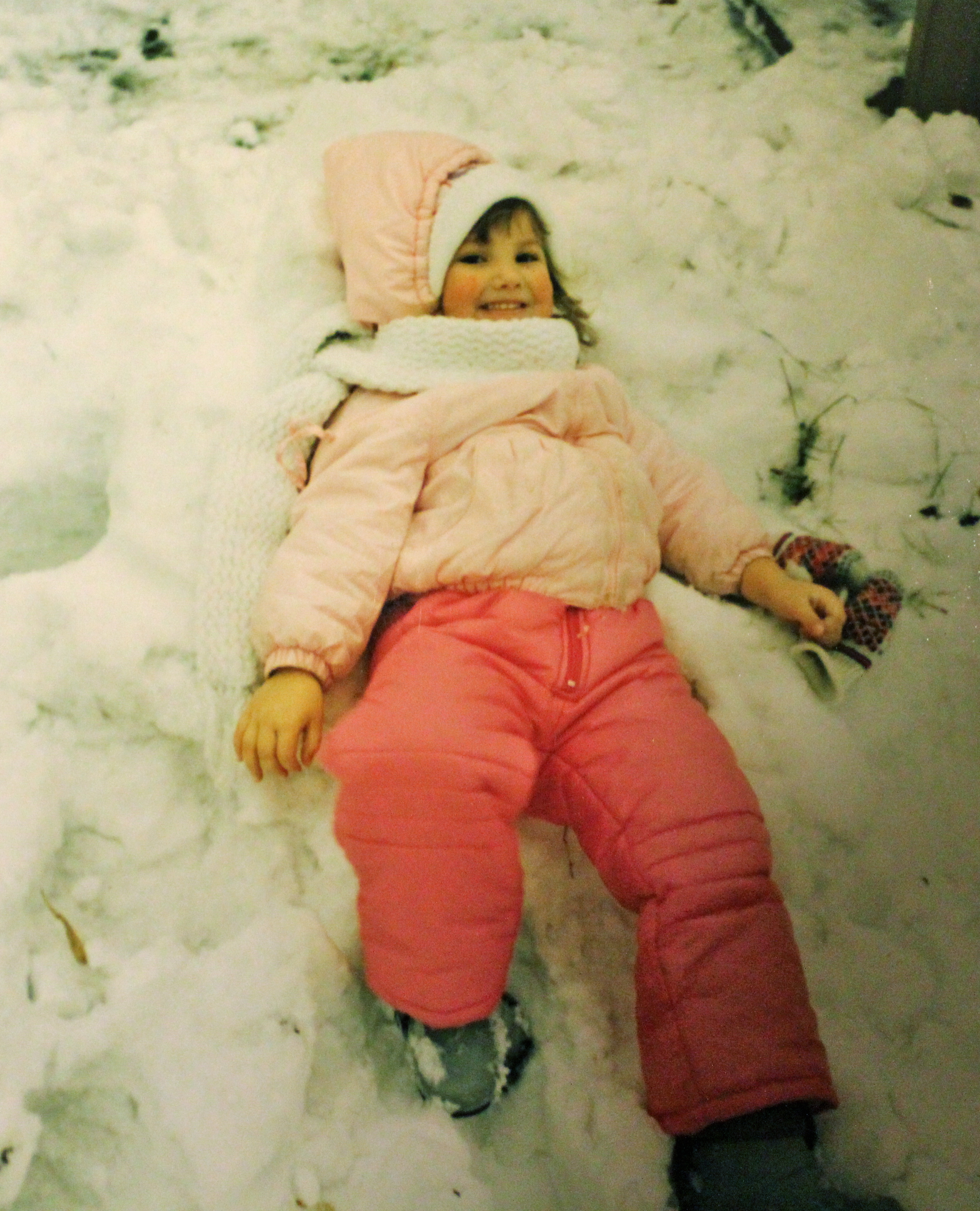
…and then be her again…

Music on video by http://www.danosongs.com

Rust, roots and time passed

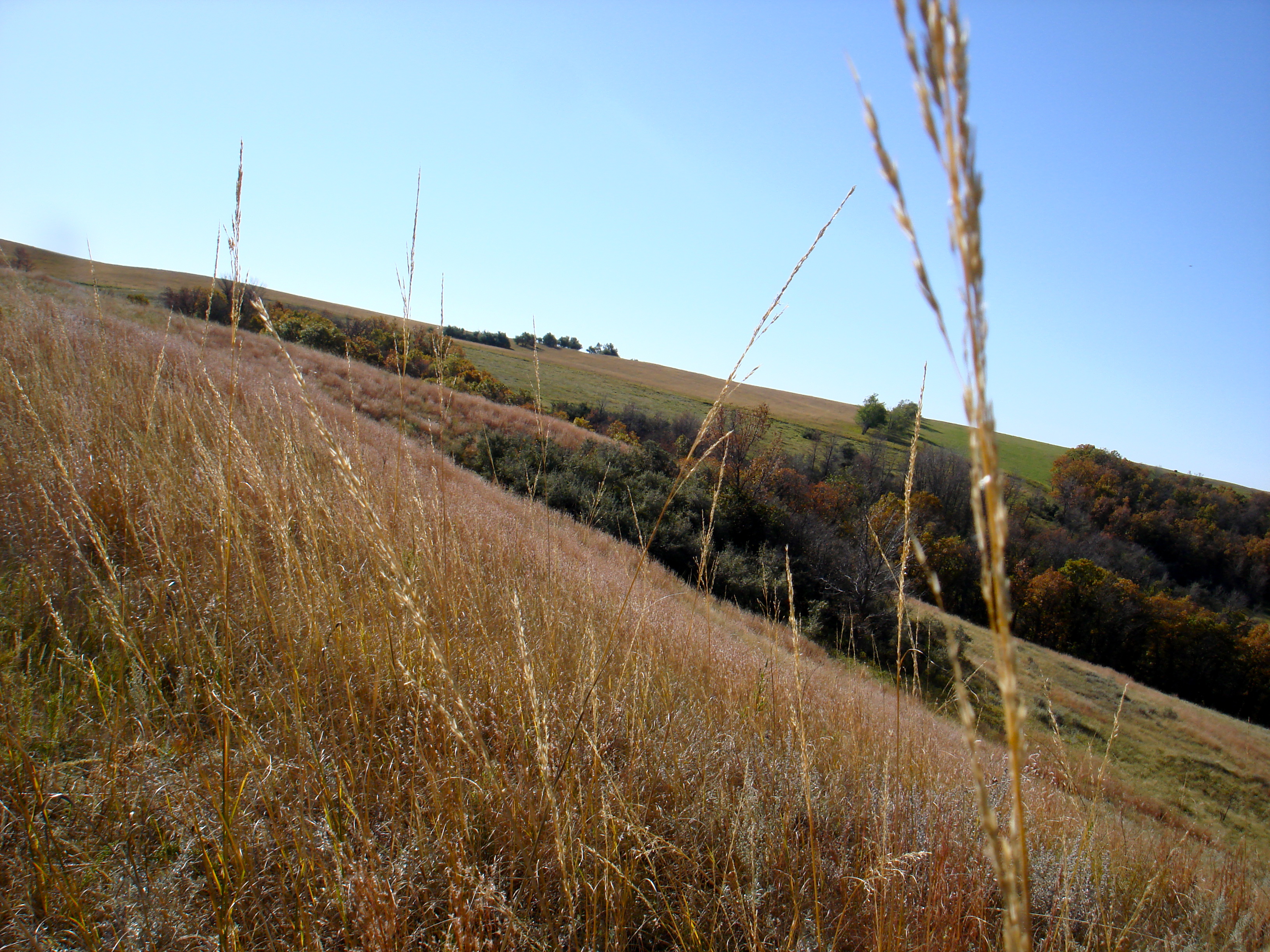
There is a place on the ranch my family affectionately refers to as “Pots and Pans.” It is a big hill south of the little farmhouse that juts out over a stock dam and provides a fantastic view of the entire 3,000-acre ranch.  It is a landmark, much like the special places many ranching and farming folks label with weird names and use to explain to each other where they spotted that stray cow, shot the big buck or where the truck broke down.

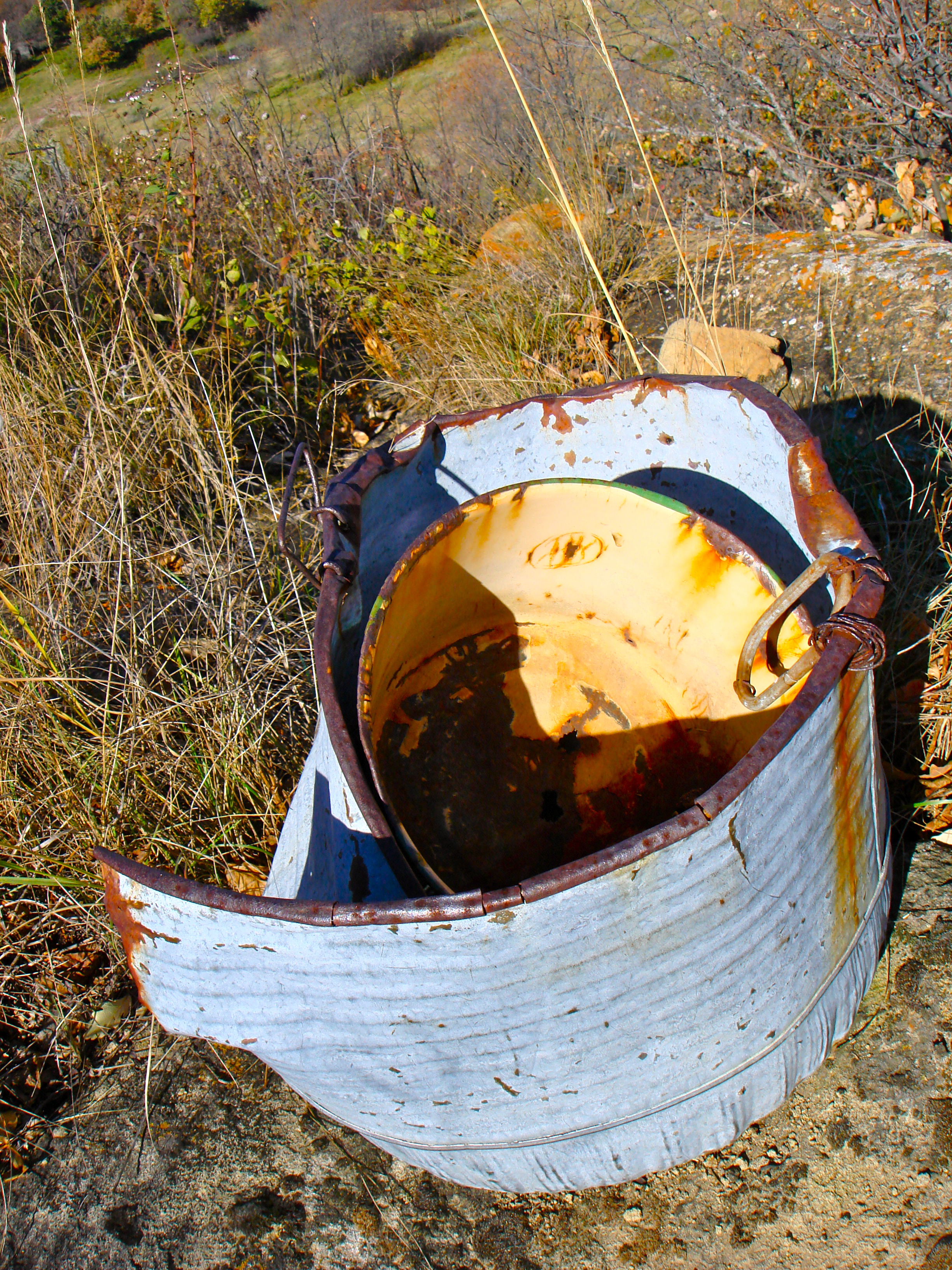
But Pots and Pans is special, if not especially weird. I wish I could tell you the proper origin of where on earth anyone got the idea to drag to the top of this hill old kettles, teapots, cheese graters, pie pans and flour sifters, but I have no idea the reasoning behind it. I always thought it was my grandmother, but maybe not. I suppose someone told me along the way, but I forgot.

Either way, to my cousins and I this place was an oasis of mystery, a far away land where, if you reached the top after gathering all of your little sisters and one little brother, packed the juice boxes and fruit rollups into your Smurf lunchbox and you all made it to the destination without a run-in with a cactus or someone peeing their pants, you could be transported back to a time where these antique contraptions were used to prepare meals and serve twelve children who once lived not too far from this very homestead.

And if we made it there, you know, after the twelve-hundred mile trek to the top, we sucked the fresh air into our small lungs, counted our followers to make sure none were stuck in the mud somewhere, and proceeded to pretend…

…pretend that I was the mom and my only boy cousin at the time finally didn’t have to be dressed as a girl for once and got to be the dad and we were homesteaders who arrived by covered wagon and had staked our claim on this perfect spot after losing oxen and horses and my piano in a raging, roaring river (the flair for the dramatic runs in the family.)

And then it was time for a supper of clover bits and wild mushrooms and mud and rocks mixed together to form a lovely soup and after the meal we would proceed to plow the field and make pots out of the gumbo in the hills to sell in town and become rich.

We would carry on like this until someone would, indeed, pee their pants or find a cactus or fall down the hill and the little ones would need to be lugged home via piggyback.  And when we finally made it home, we would rehash our adventures as the sun dropped down below the horizon and our eyes grew heavy.

See this homestead, this ranch, this vast landscape as you can imagine is home to millions of stories and ghosts of times spent breaking ground, building houses, having babies, losing mothers, purchasing the family’s first car and learning to drive, getting bucked off of new horses, harvesting the fields, and leaving blood, sweat and tears to soak into the ground and onto the backs of the animals that helped keep the place alive and machinery that did nothing but break down.

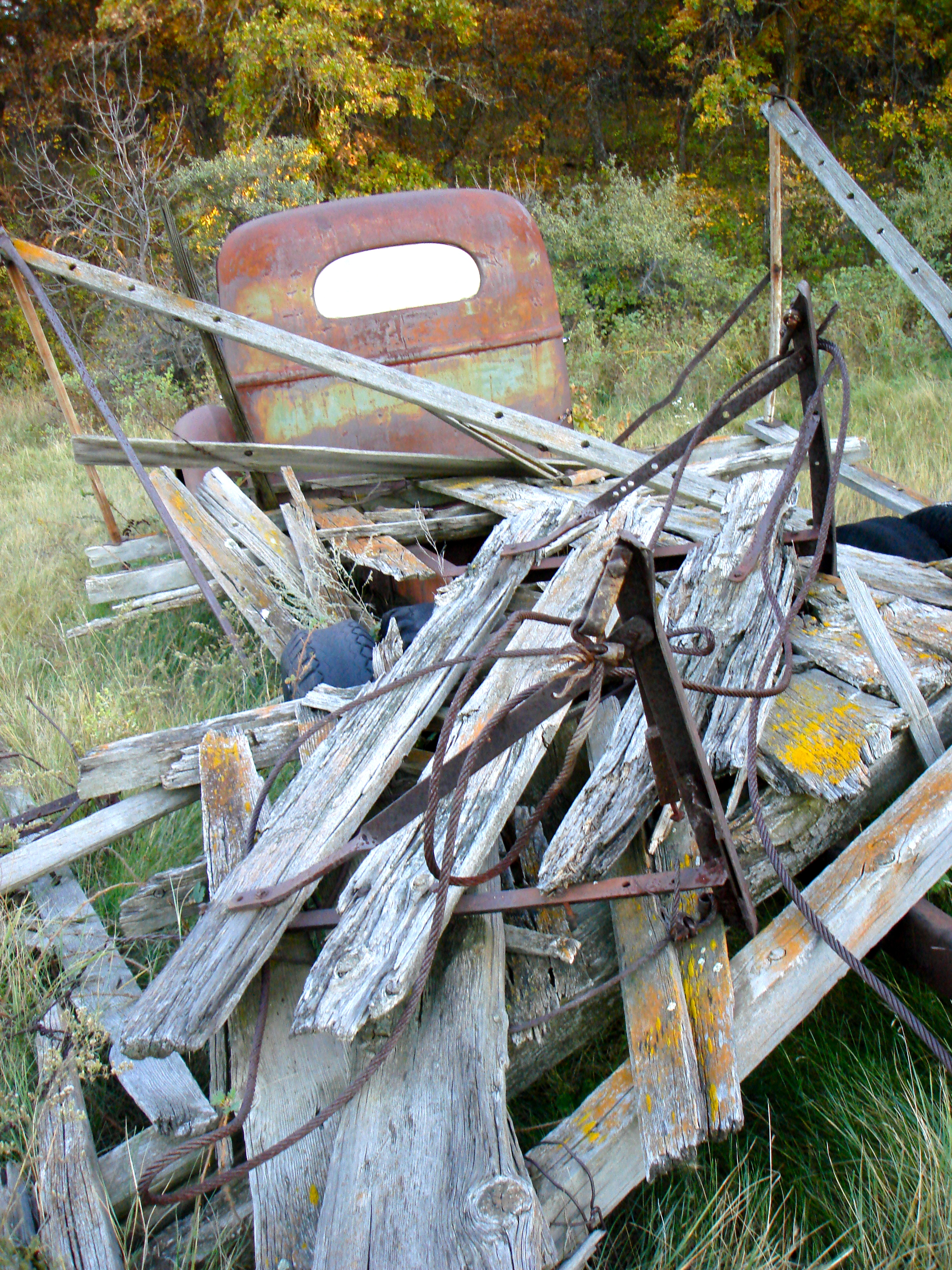
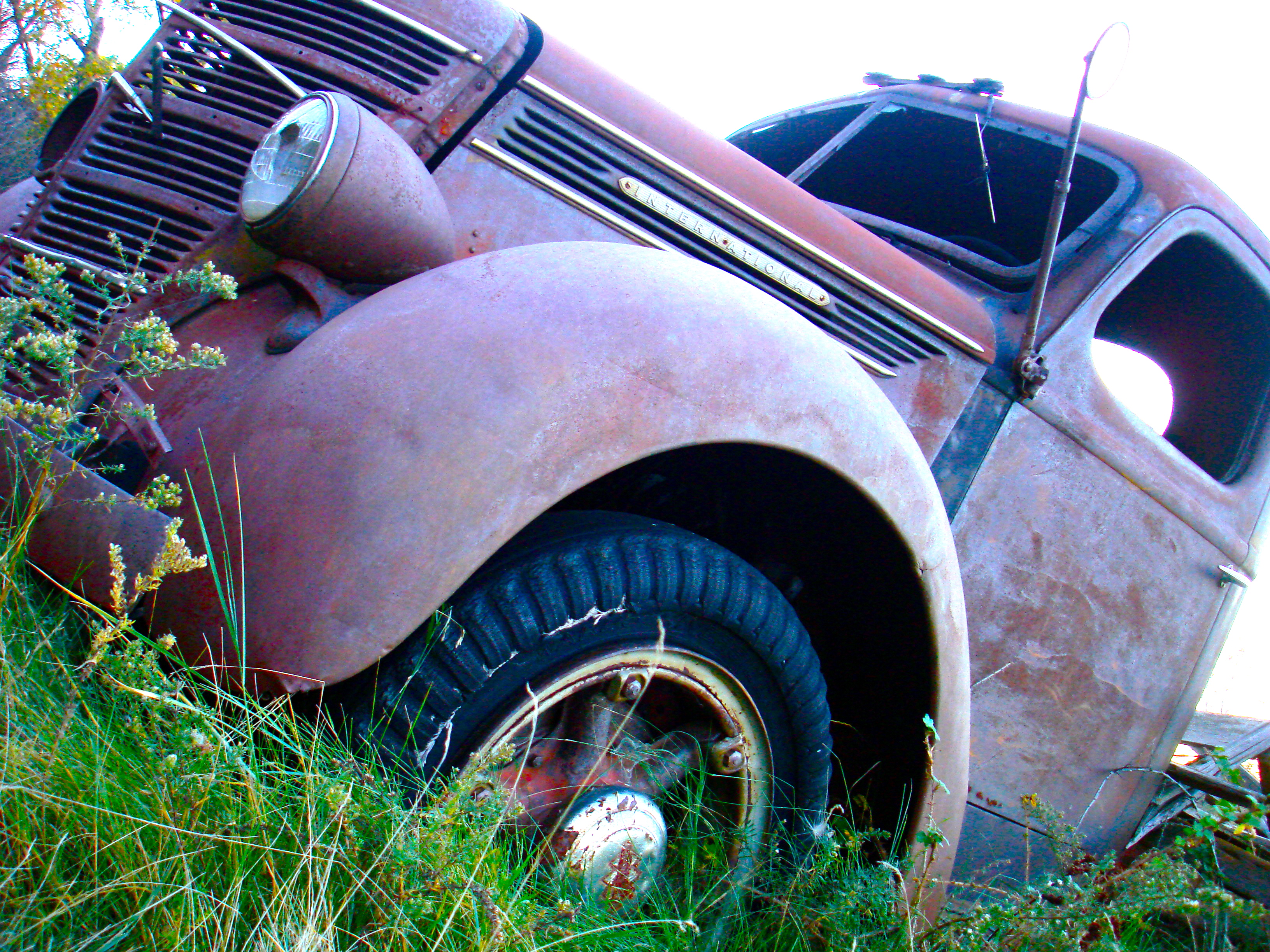
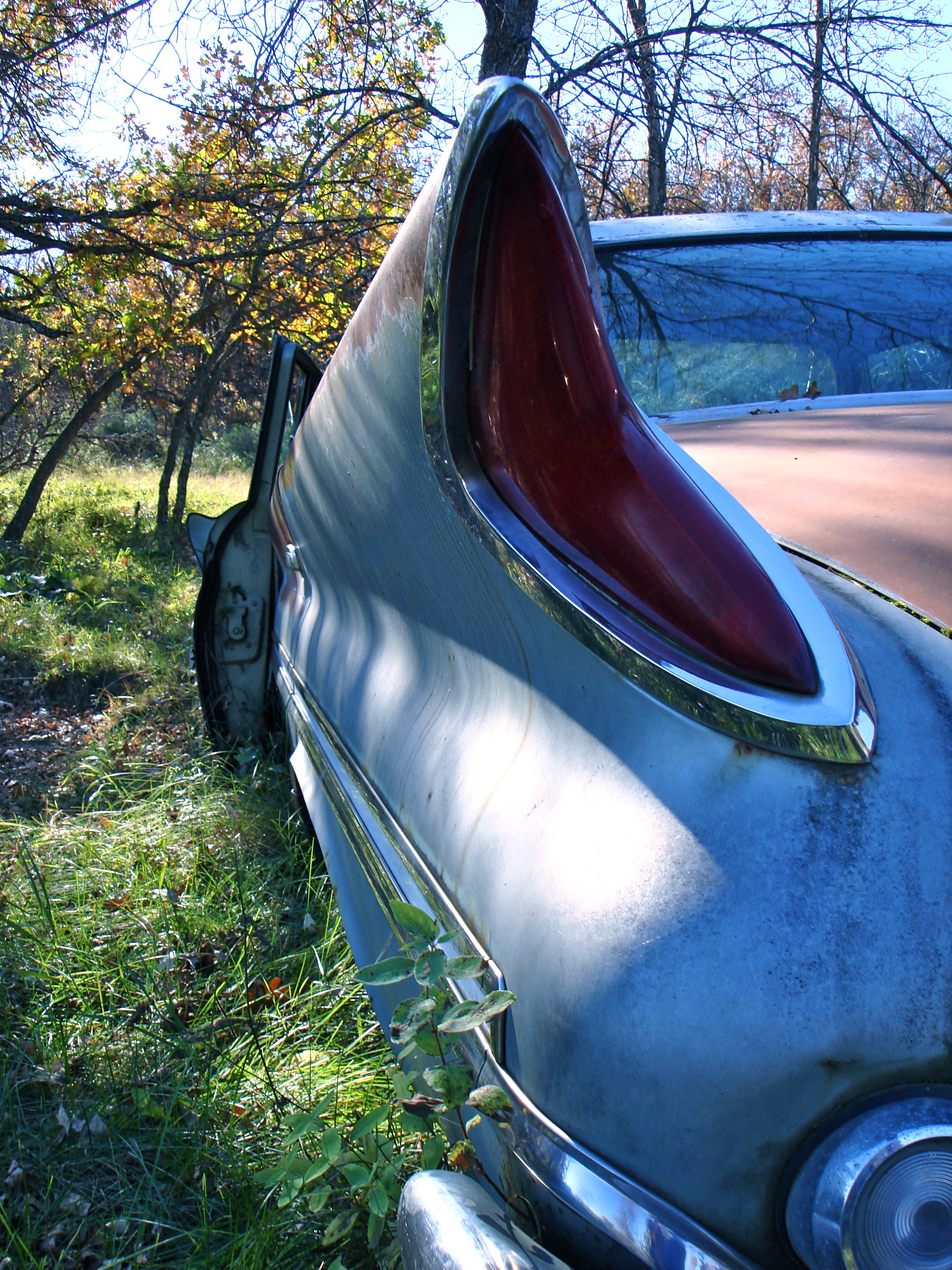
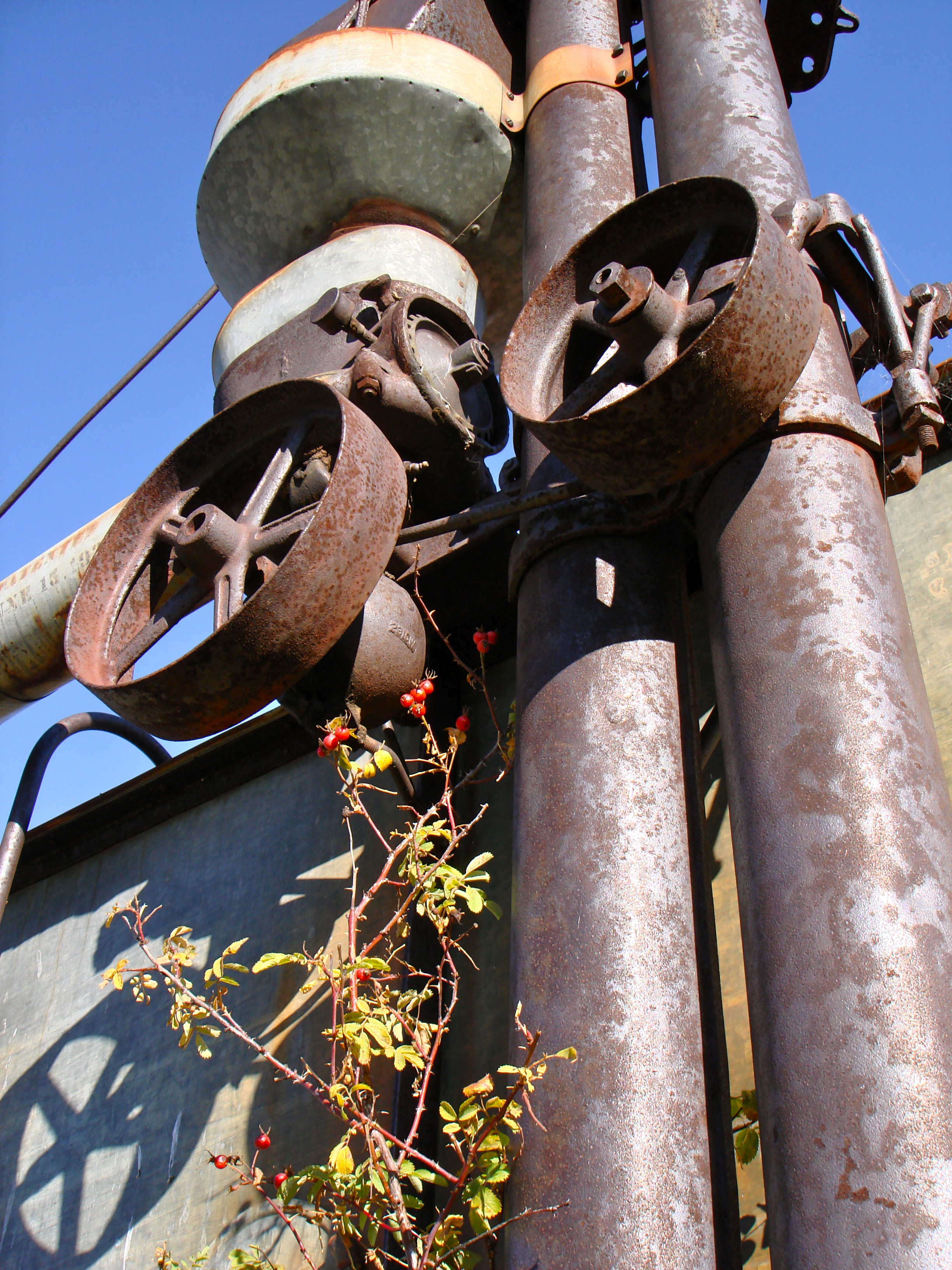
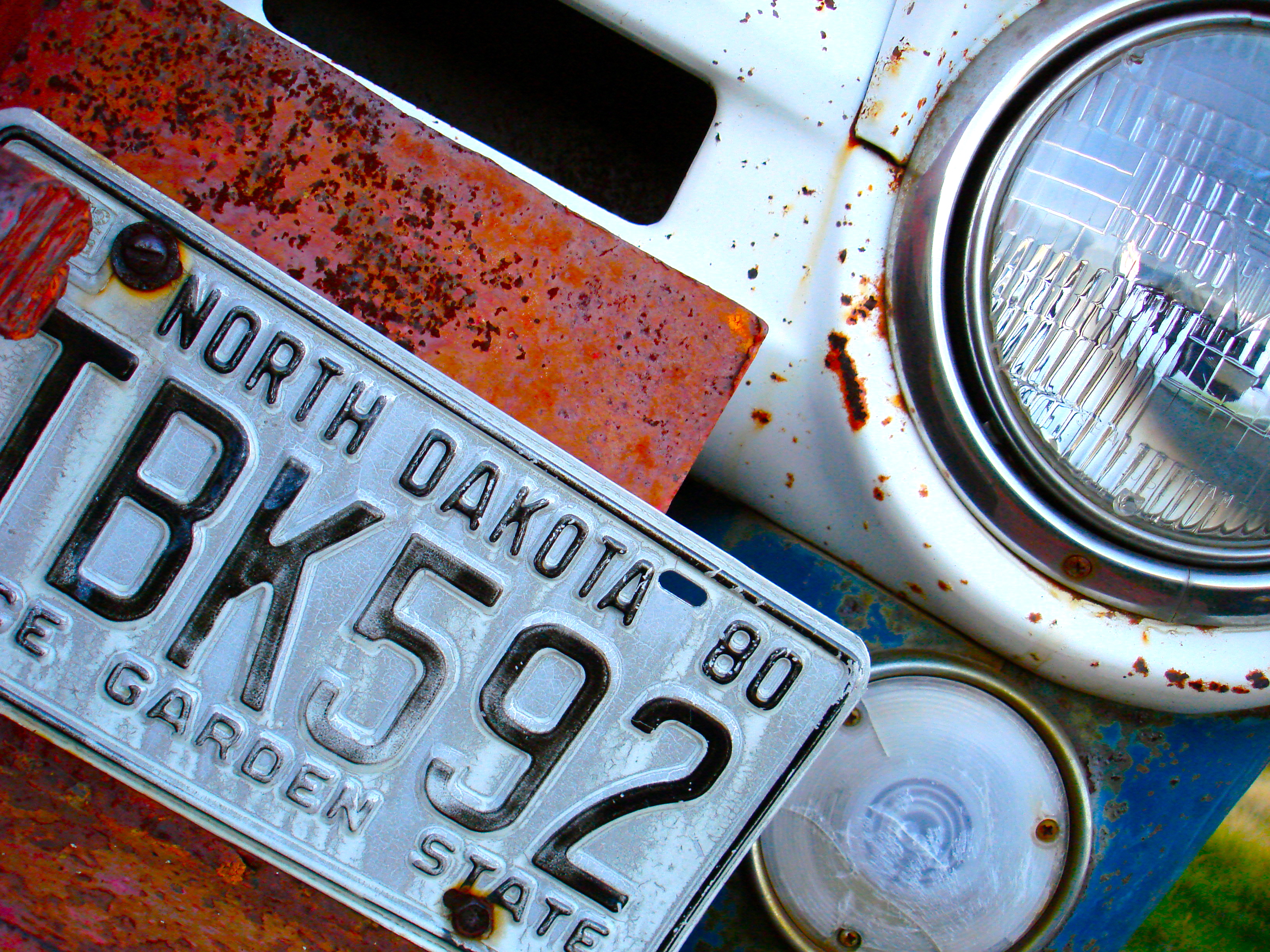
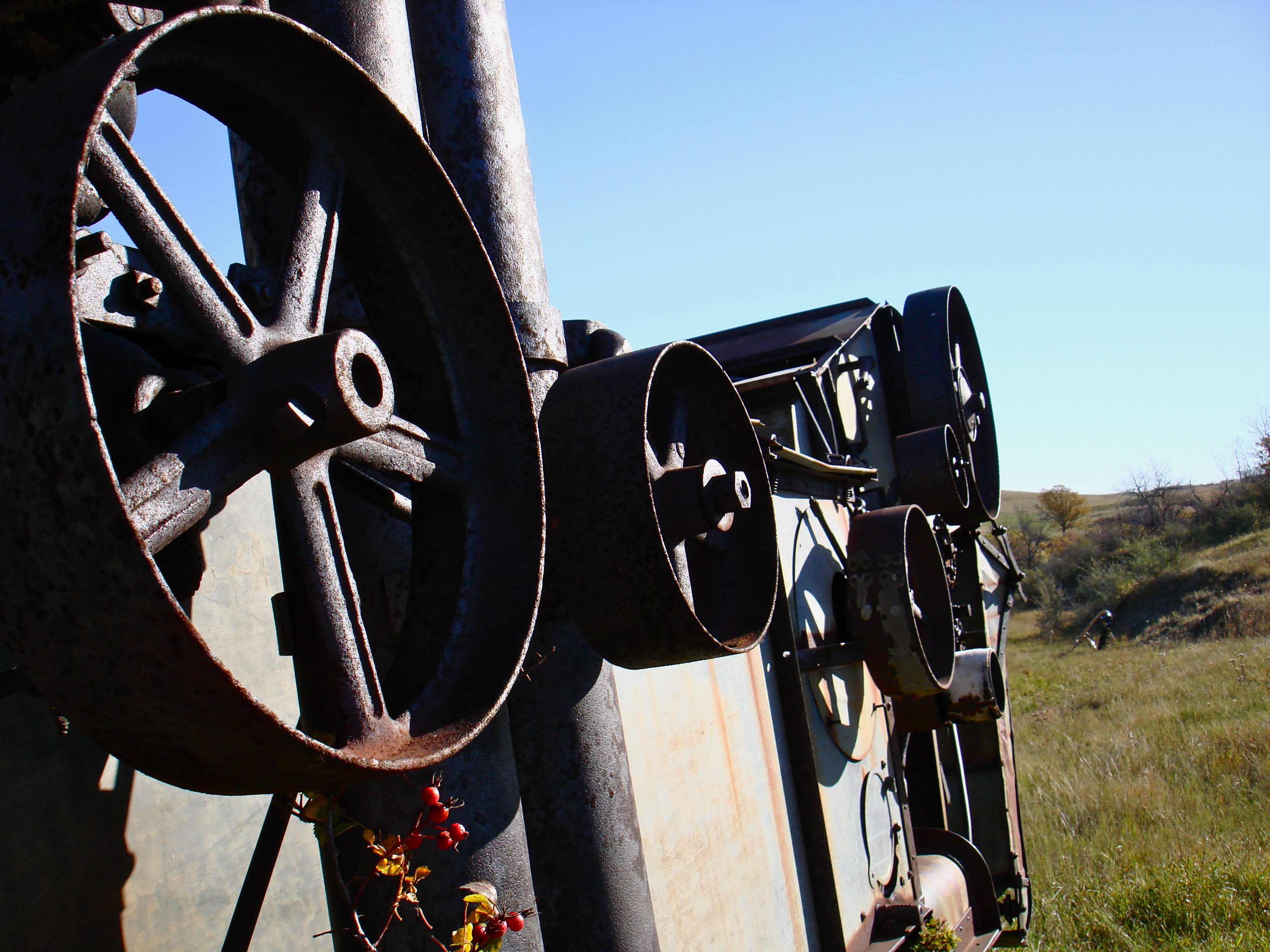
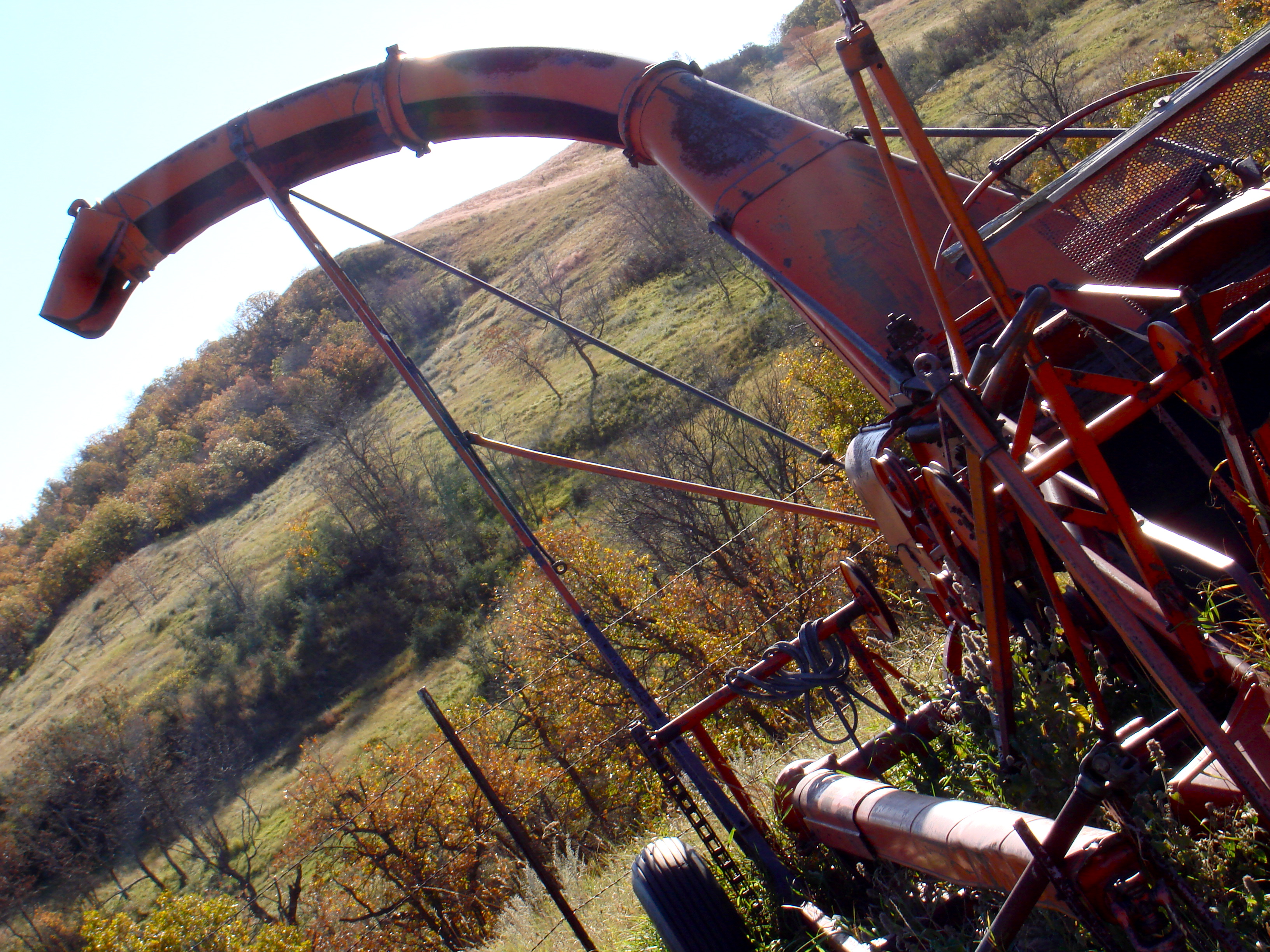
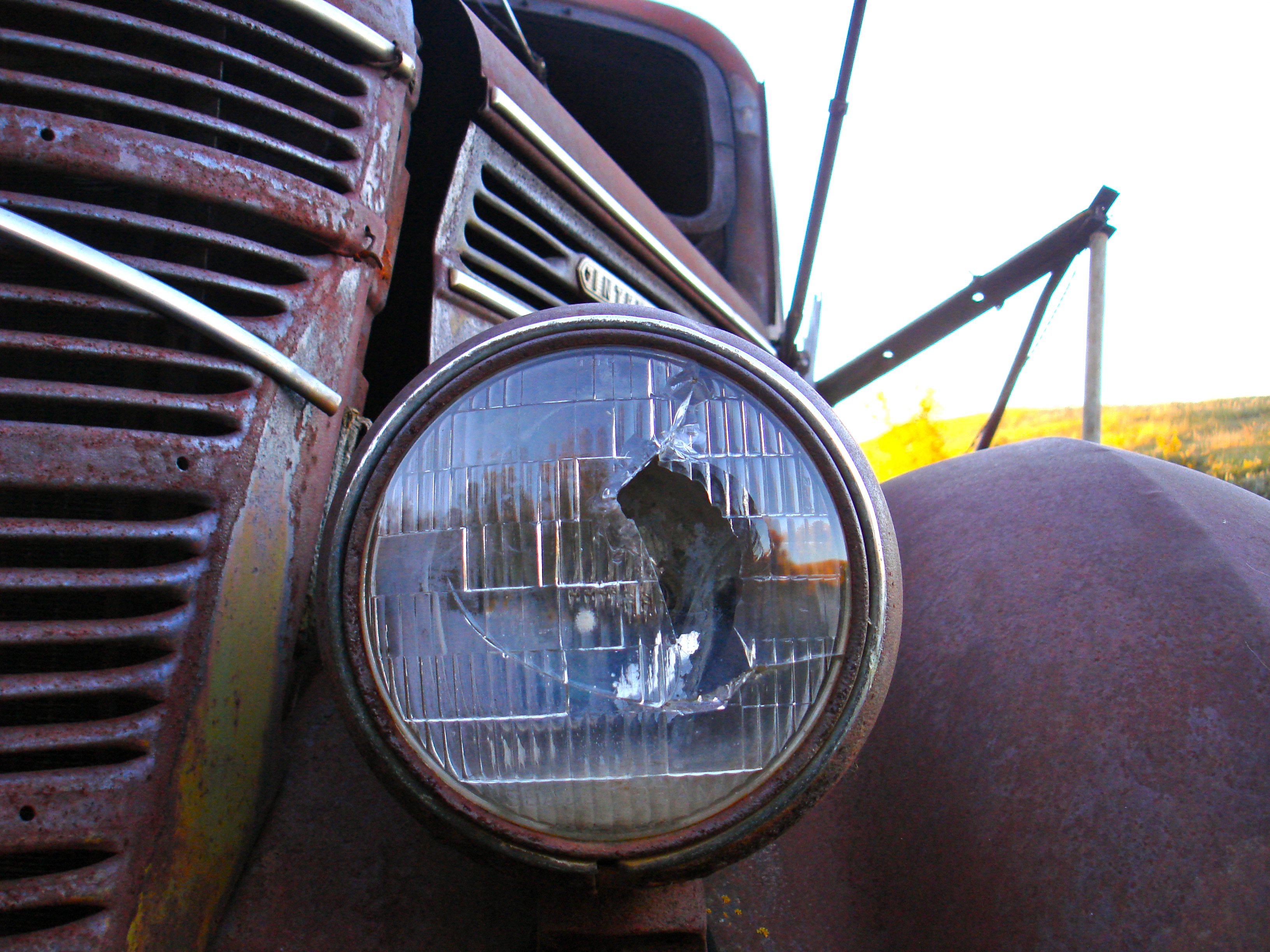
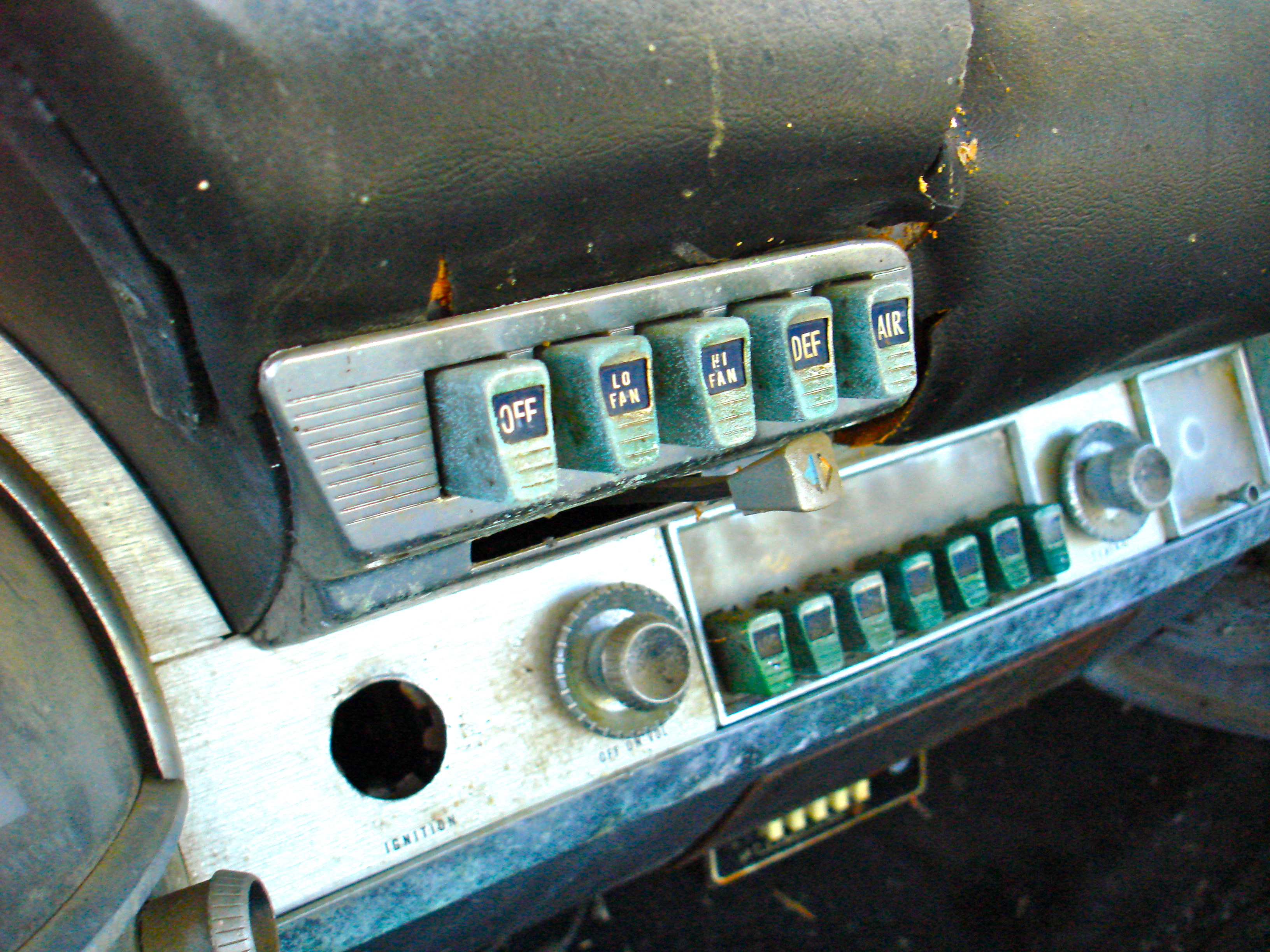
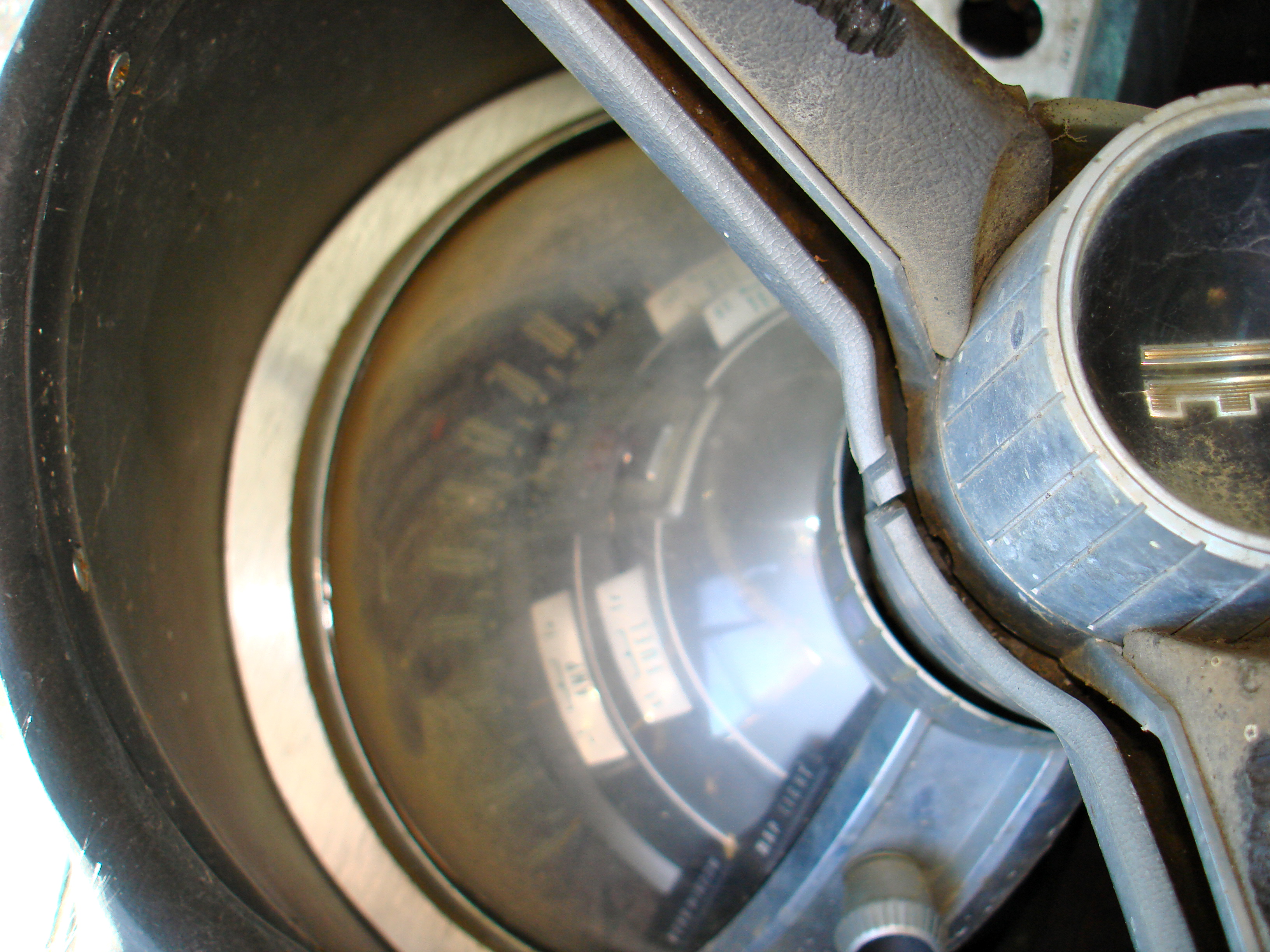
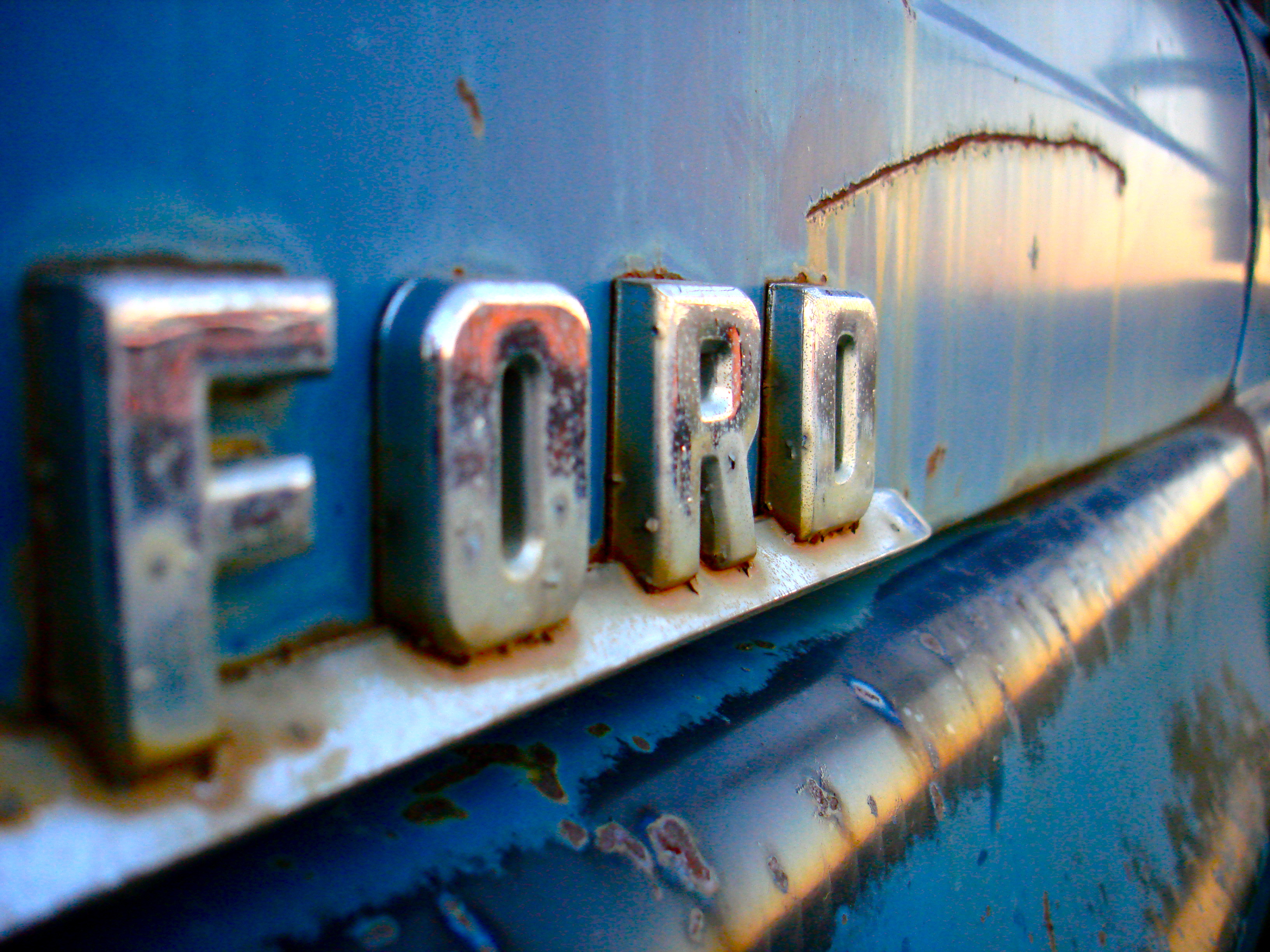
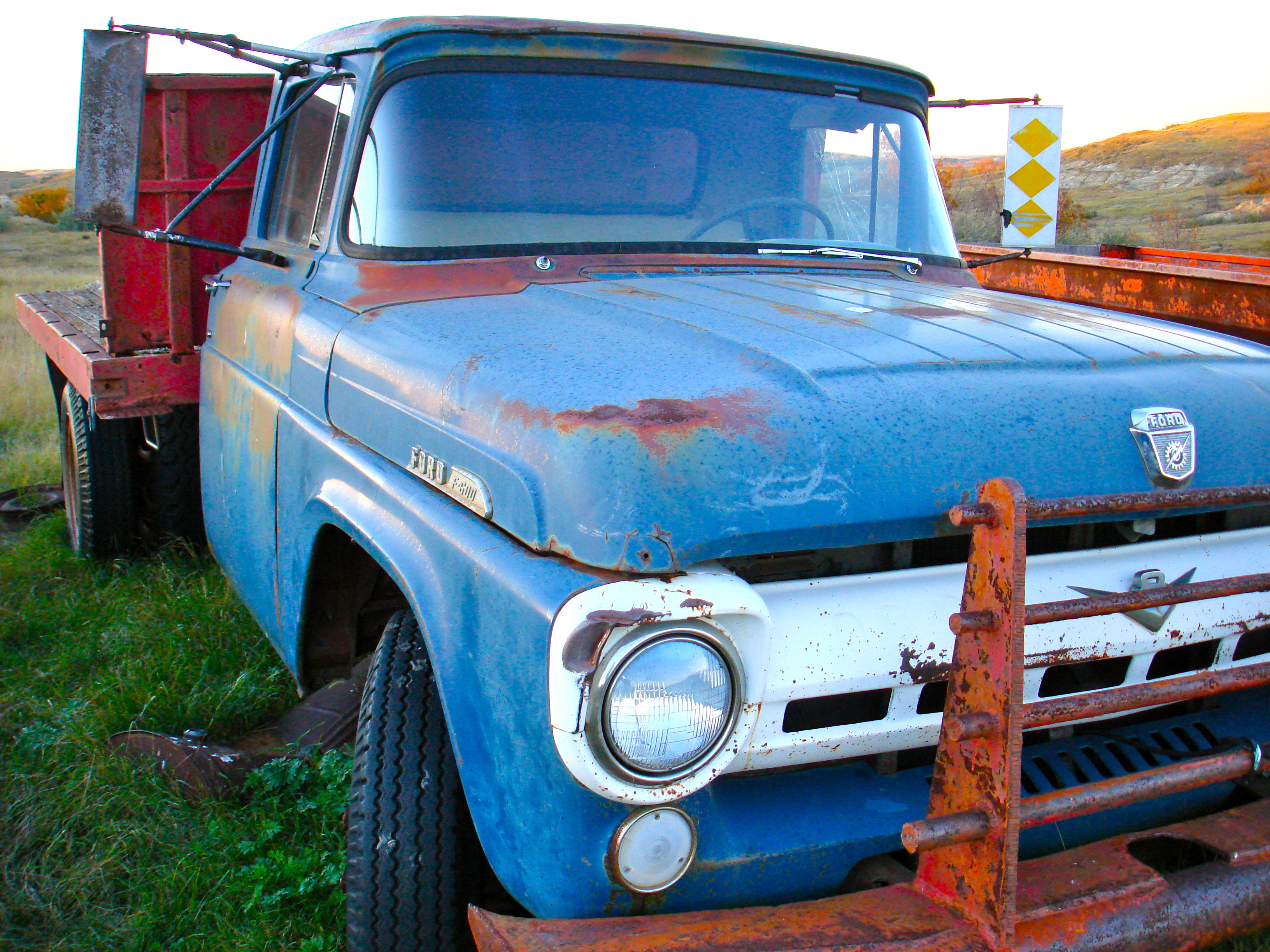
And the remains of these past lives, these generations spent struggling, loving, living and dying on this very landscape remain here not only in spirit, but also in the pieces left behind. The old cars that took their last drive to town have been drug to their designated graveyard to be used for parts on the replacement. The feed pickups that stranded my grandfather on evenings when the air hit thirty below and the sun had left hours ago accompany the cars and the tractors with faded red paint and threshing machines that resemble half sunken ships anchored in the rolling prairie waves.

As children we didn’t see these things as remains of a life lived hanging on to a place that struggled as much as it thrived, but as an infinite playground stretched out before us.

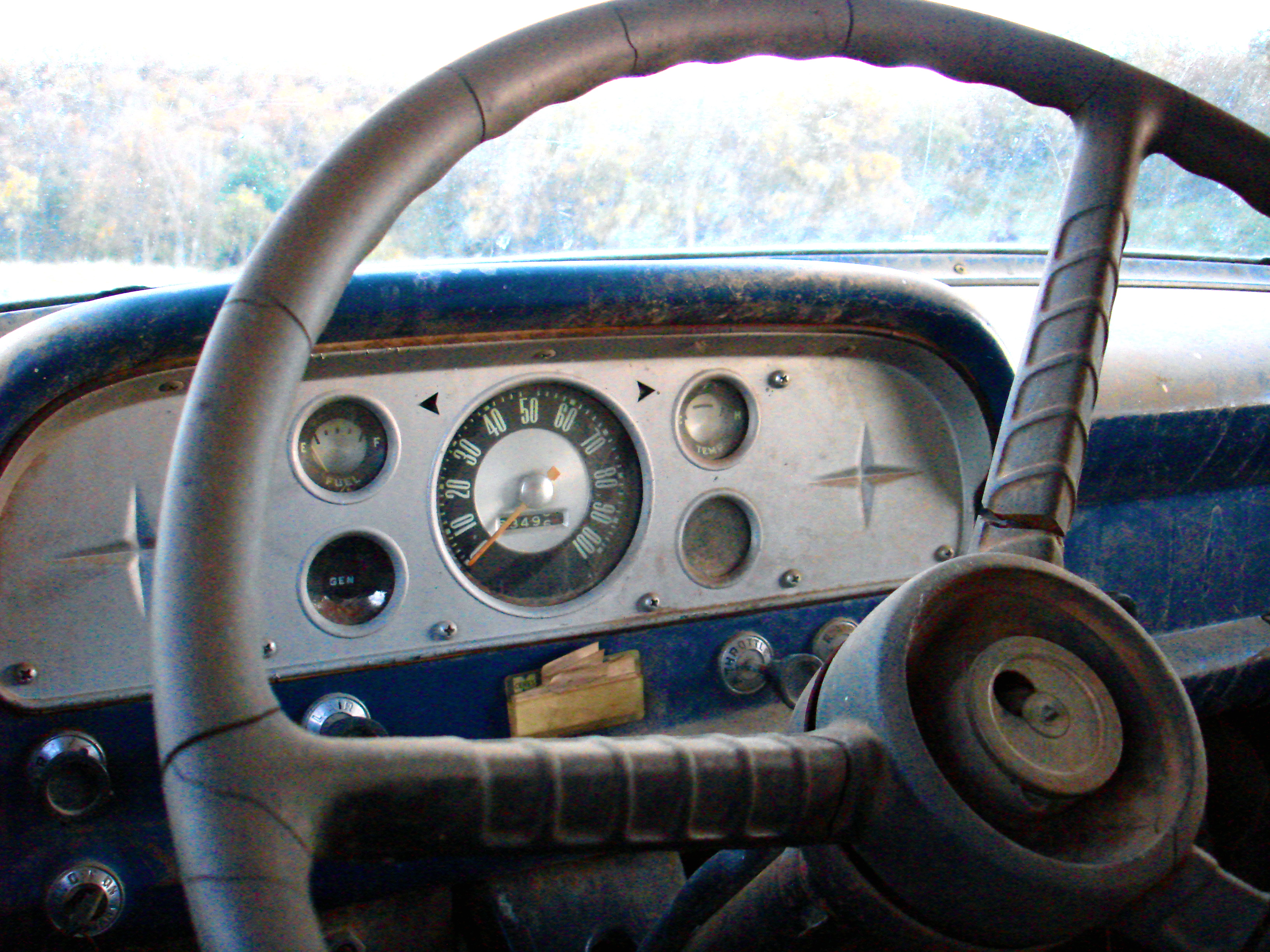
The old cars became ours as we imagined ourselves whizzing past wheat fields on our way to fancy parties in town. Sitting behind the wheel of the rusty feed trucks we were transported twenty years ahead where we ran our own operation and needed to stop for fuel, a cup of coffee and supplies at the local feed store.

The old threshing machine transported us to sea where my oldest cousin was the captain and we fought for first mate status as the wind whipped through our hair and the big storm threatened a capsize.

And when we were on safari, the augers were undiscovered dinosaurs that roamed the horizons of the ranch and were curious about these explorers on two legs.

Yes, this place with its hidden treasures just over the hill, helped transport us into the lives of adventurers, circus performers, escaped convicts, performers and people who sometimes possessed the same characteristics and dreams of our mothers and fathers.

And as I was walking around the homestead last week, looking for the perfect location to build our new house, these memories of childhood adventures on this place came rushing back to me as I passed each piece of worn out machinery and each old car. We have been making plans to remove this “junk” from the place, and to most people who drive by, that is exactly what it is. It’s old junk that has to go.

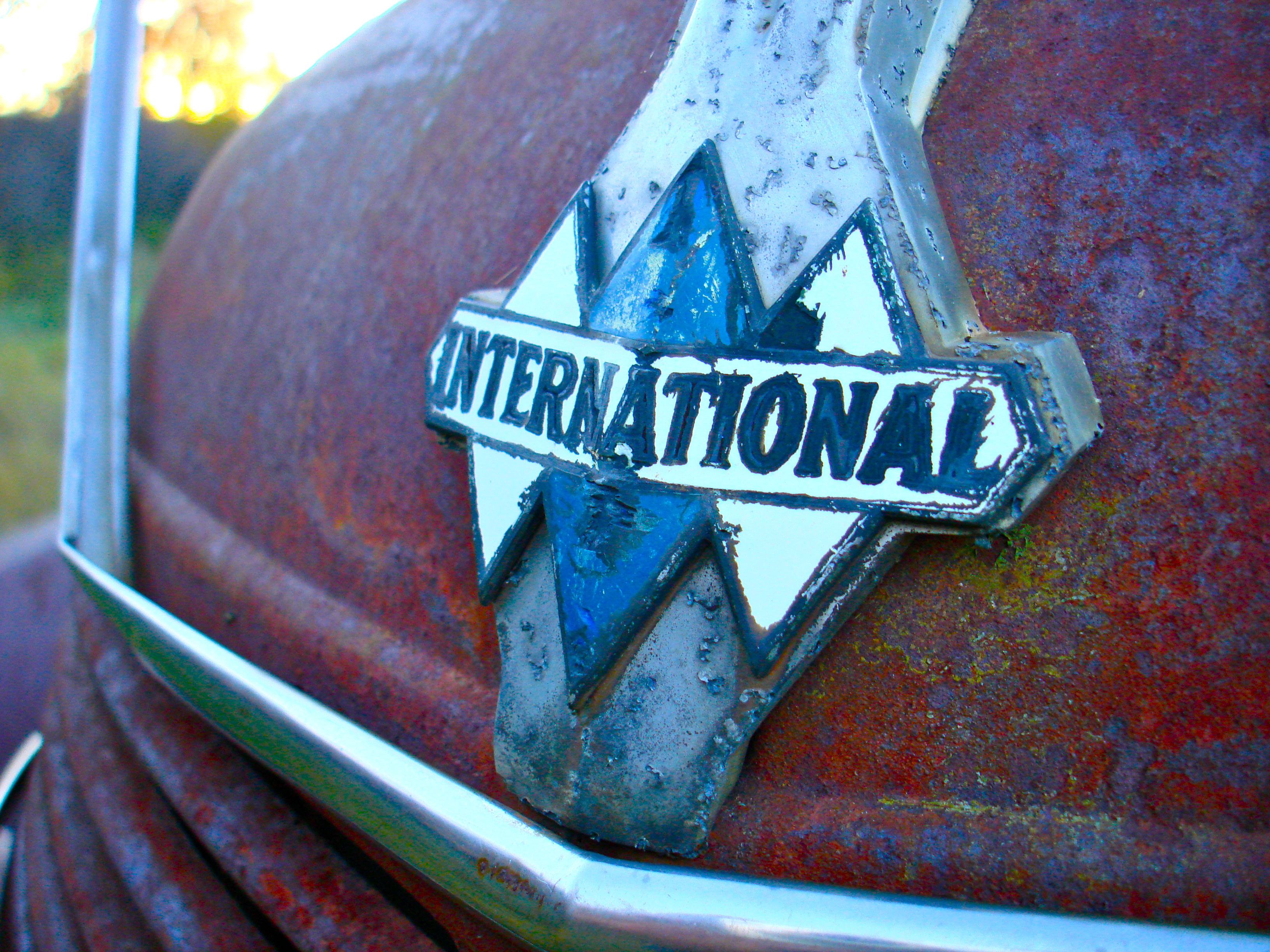
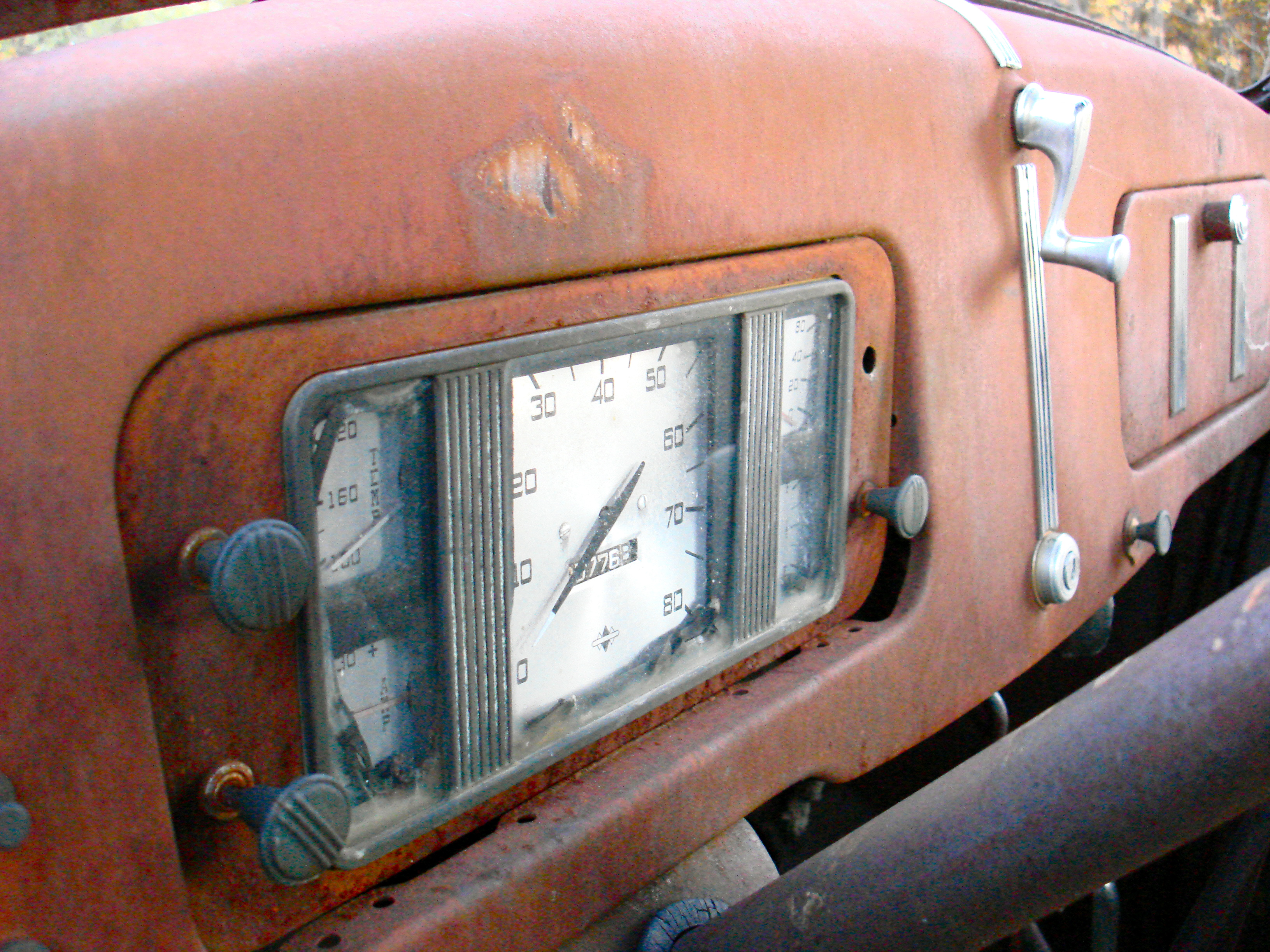
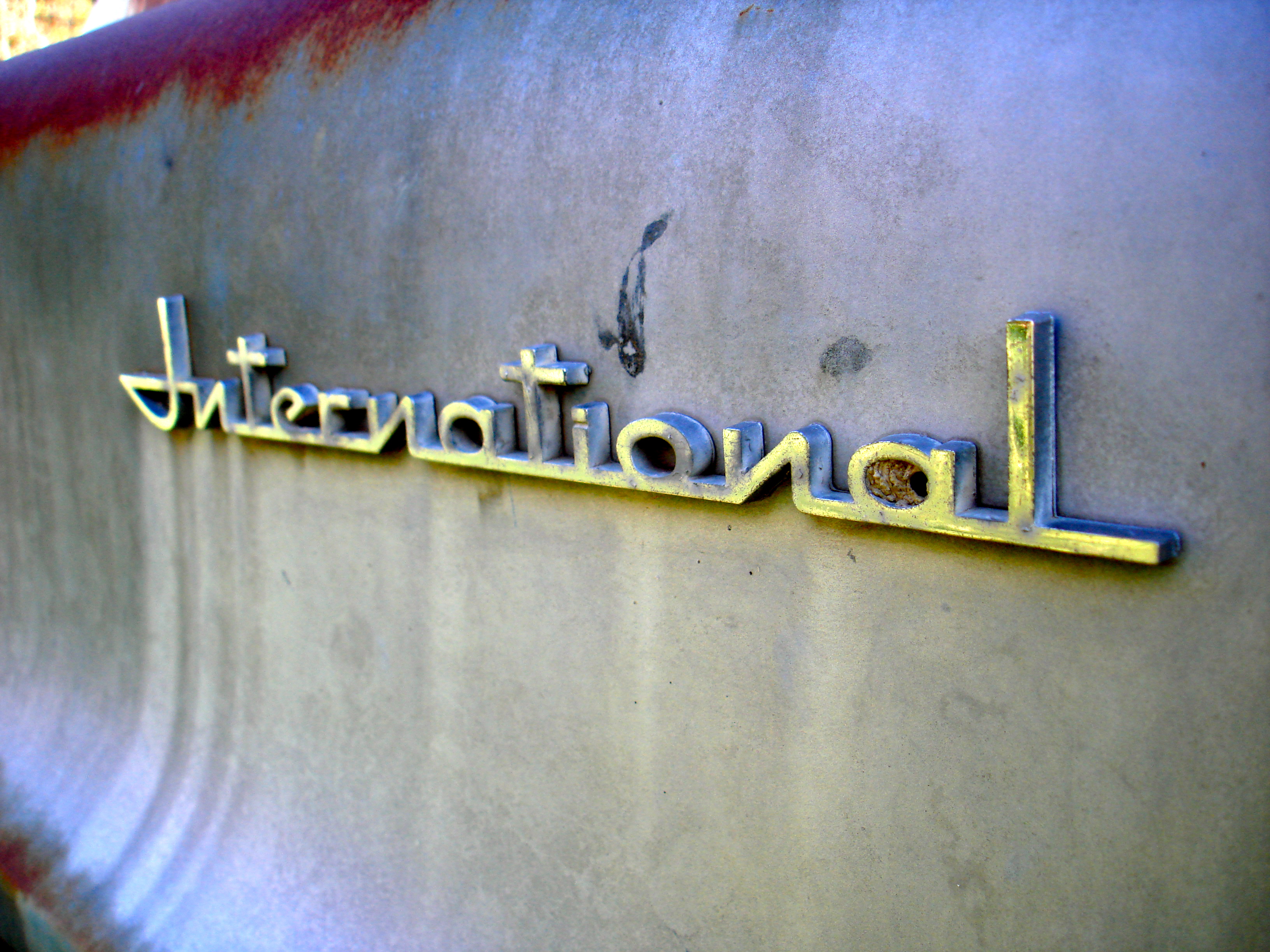
But as I ran my hands over the bodies of my grandmother’s car, overcome by rust and my grandfather’s feed pickup with his work gloves still sitting on the seat and old farm papers stuck in the visor, I tried to imagine what those people I once knew looked like sitting behind the wheel in the prime of their lives while their vehicle glistened under the prairie sun, polished and new. I imagined my grandmother sitting in the middle of the old International next to her young husband,  laughing as they drove down the reservation road to the river for a day of fishing.

I thought of my dad, taking his first drive to town on his own to play with his band while thinking to himself,  “This is the life. This is freedom.”

And I remembered my grandpa, driving his feed pickup through the cattle in the winter, making tracks in the freshly fallen snow, yelling, “Come boss…come boss!” Bouncing along the rough landscape, the chains from the bale loader clinking on body of the vehicle and he would reach up in his visor and, magically, pull down a stick of gum, or some cookies, or a bar of candy to offer to the small grandchild in a purple beanie and matching mittens sitting beside him.

And as I missed him and felt a longing for my childhood, I huffed as I noticed that pieces of my life growing up here had made it to this graveyard as well.

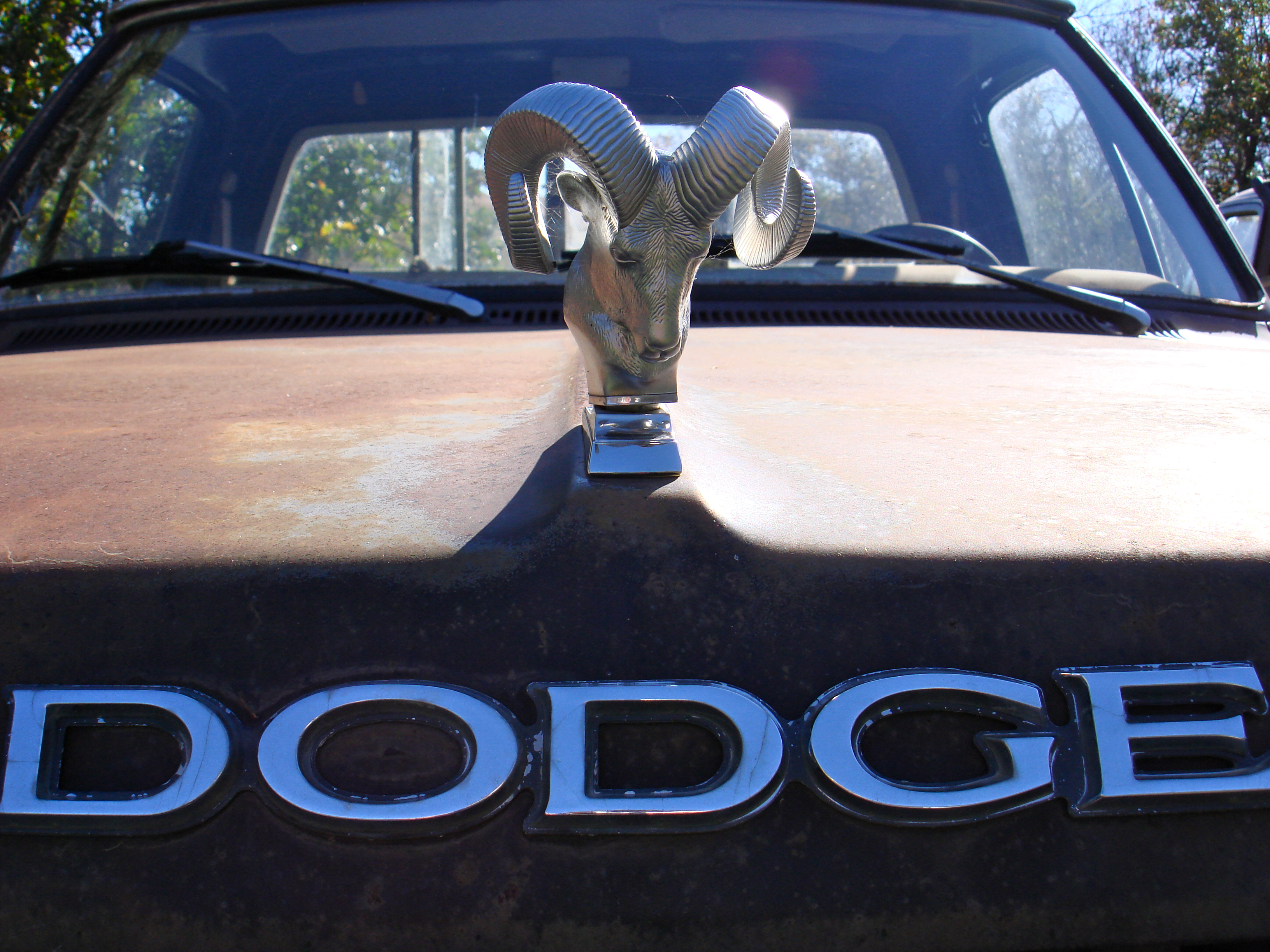
The old Dodge pickup that had taken me to my first high school rodeo sat lonely and sunken in a bed of weeds. I opened its doors and found one of my dad’s old caps and smiled as I thought of learning to drive stick shift in that beast.

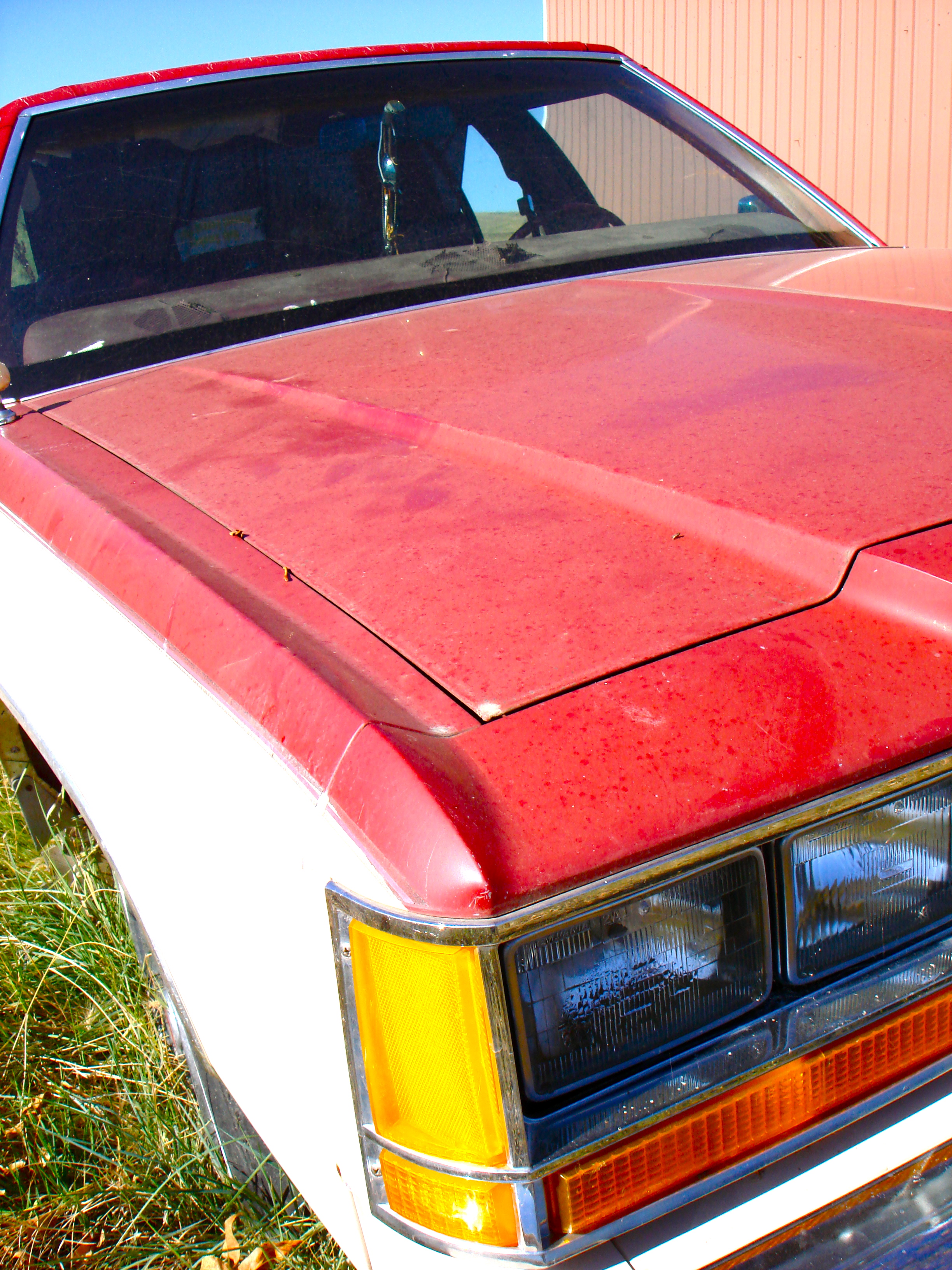
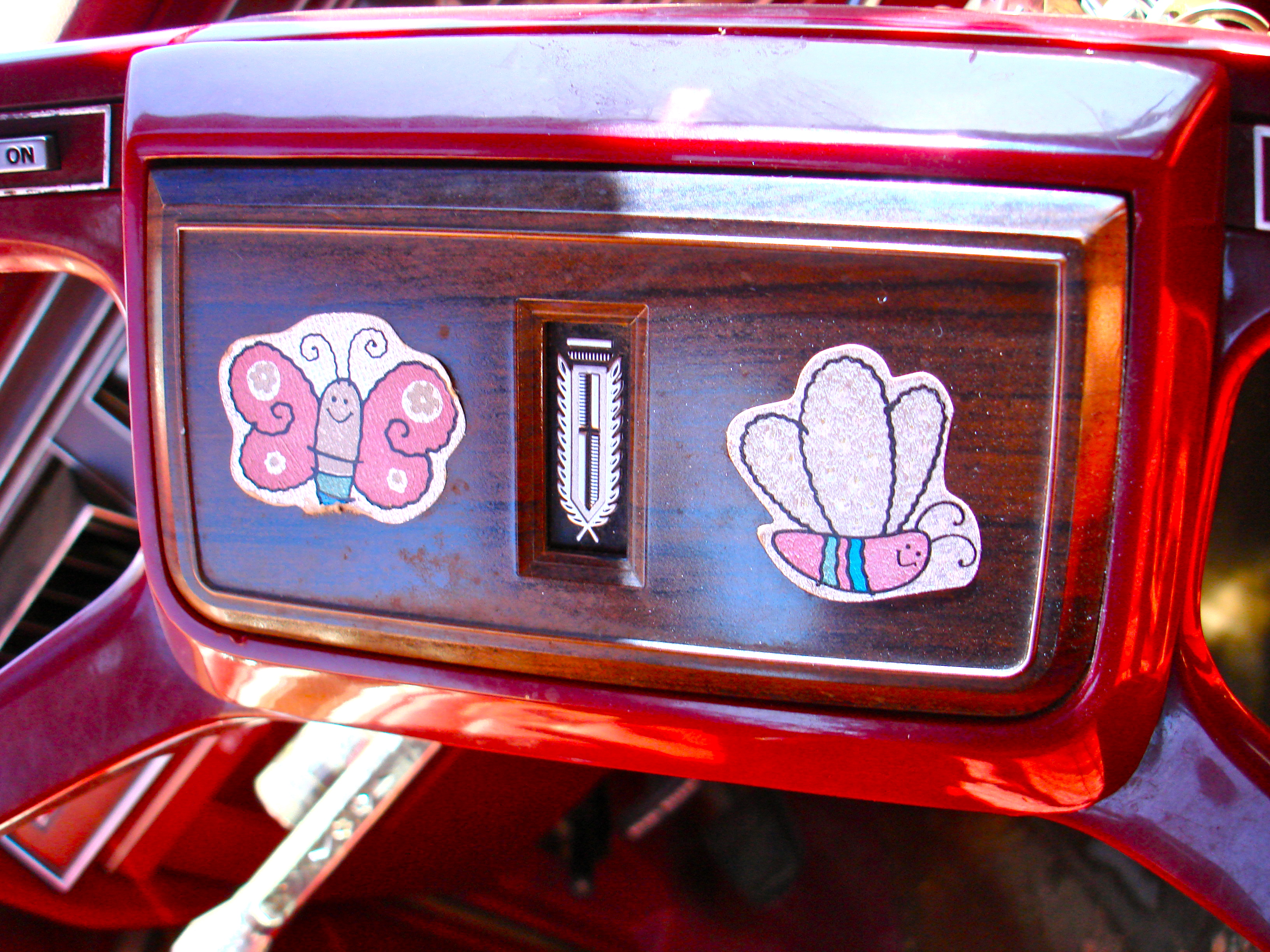
I walked down to the shop to find my very first car, a redish-pinkish Ford LTD purchased from my uncle for $1,000. It sat lonely, still wearing the stickers I placed on the steering wheel, the ridiculous amount of key chains dangling from the ignition, remnants of my high school memories hanging from the rearview mirror—a reflection on the girl I used to be, the girl I was when this ridiculous looking car drove me off of the ranch and into a world filled with heartache and drama and love and loss and change.

Nostalgic now, I looked up to Pots and Pans.

I had to be there. I had to see if some things never change. I wanted to pick up the pieces of my childhood and be transported once again to a time and place where I could be anything and my favorite partners in crime did not live hundreds of miles away from me.

I didn’t take the time to pack my fruit rollups into my lunchbox, because somehow the hill didn’t look as far away, it didn’t look as daunting.

So I ran. I ran past the dinosaurs, the pirate ship and the old cars that had taken me through so many lives.  I disregarded the cactuses as my strong adult legs propelled me to the top. And as I sucked the air into my lungs I frantically searched around to find my favorite pieces. Where was the butter churn? The flour sifter? The old jar we used to catch grasshoppers?

They were gone. Gone. Pushed down the hill into the trees and washouts by the snow and water that drifted in with the wind and weather that comes with time passed.

And as I sat there, holding on tight to the worn out pots that had survived the time, I sucked back tears as I thought of the innocence that existed and laughed and screamed with joy going up and down this hill.

Wiping the tears, I looked out over the landscape that my great-great grandfather declared home, where pieces of him and his family are scattered, and I was overwhelmed. Overwhelmed and restless with the responsibility of keeping this place here and alive for generations to come.

I took the air my ancestors once breathed into my lungs and closed my eyes to imagine my cousins running wildly through the grass…and their childish faces turned into the faces of their children…and their children’s faces turned into the faces of my unborn…

I opened my eyes, let loose the grip from the remains of Pots and Pans and let my feet carry me down from the peak of my childhood.

And when I reached the bottom, I turned around to look up at it—a sort of dramatic way of saying goodbye to the innocent life I once knew.  And the hill looked back at me. It was no mountain, no daunting cliff or magnificent, looming piece of breathtaking landscape, nothing to make a postcard out of.

But in that moment, feet planted firmly in the place where my roots took hold and have refused to let go, I tilted my head back, put my hands on my hips and kicked the dirt in anticipation, because I knew I had found the view I wanted for the rest of my life.

A home under Pots and Pans.

Forever.