From lost to found in the Badlands

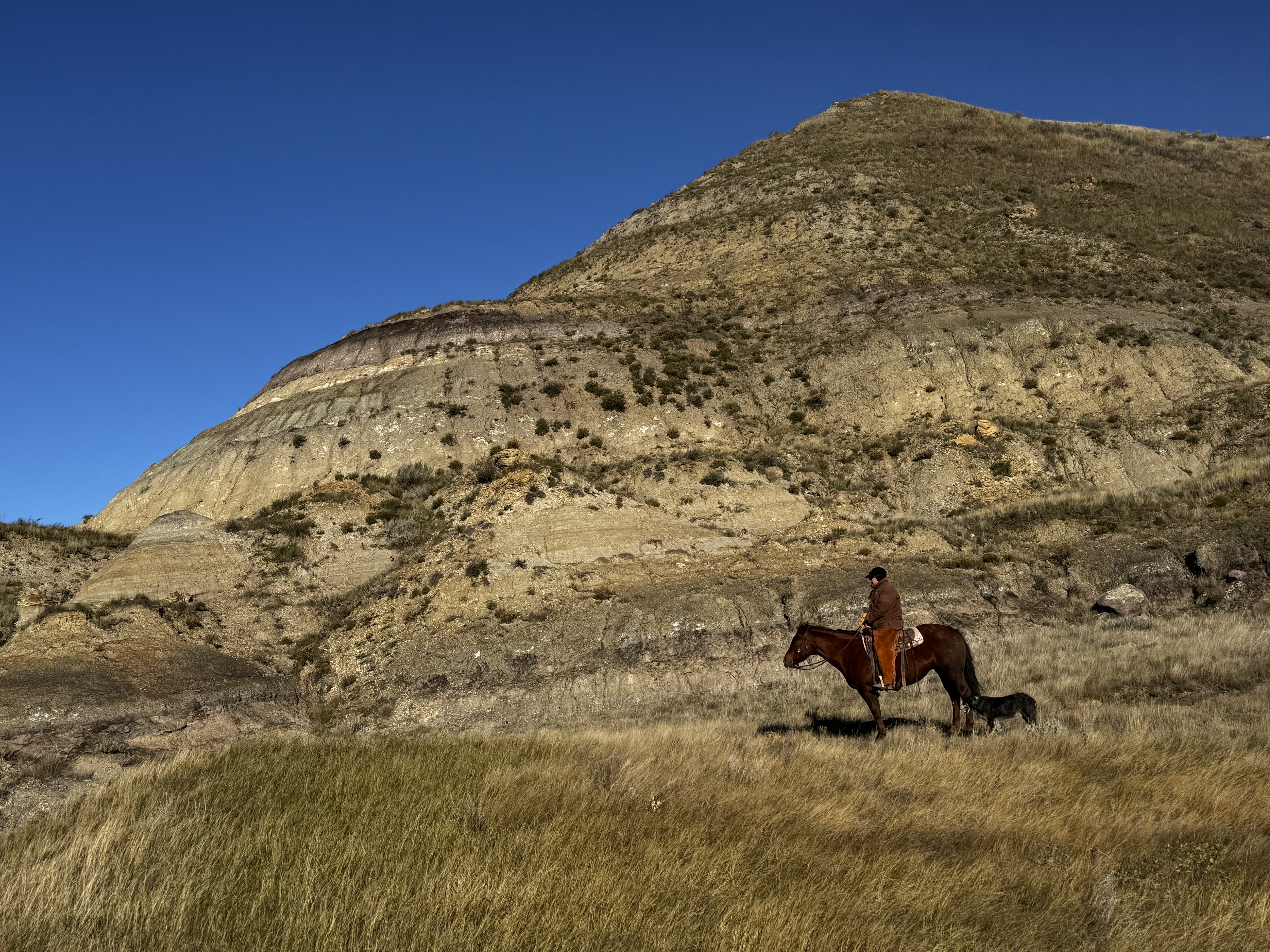
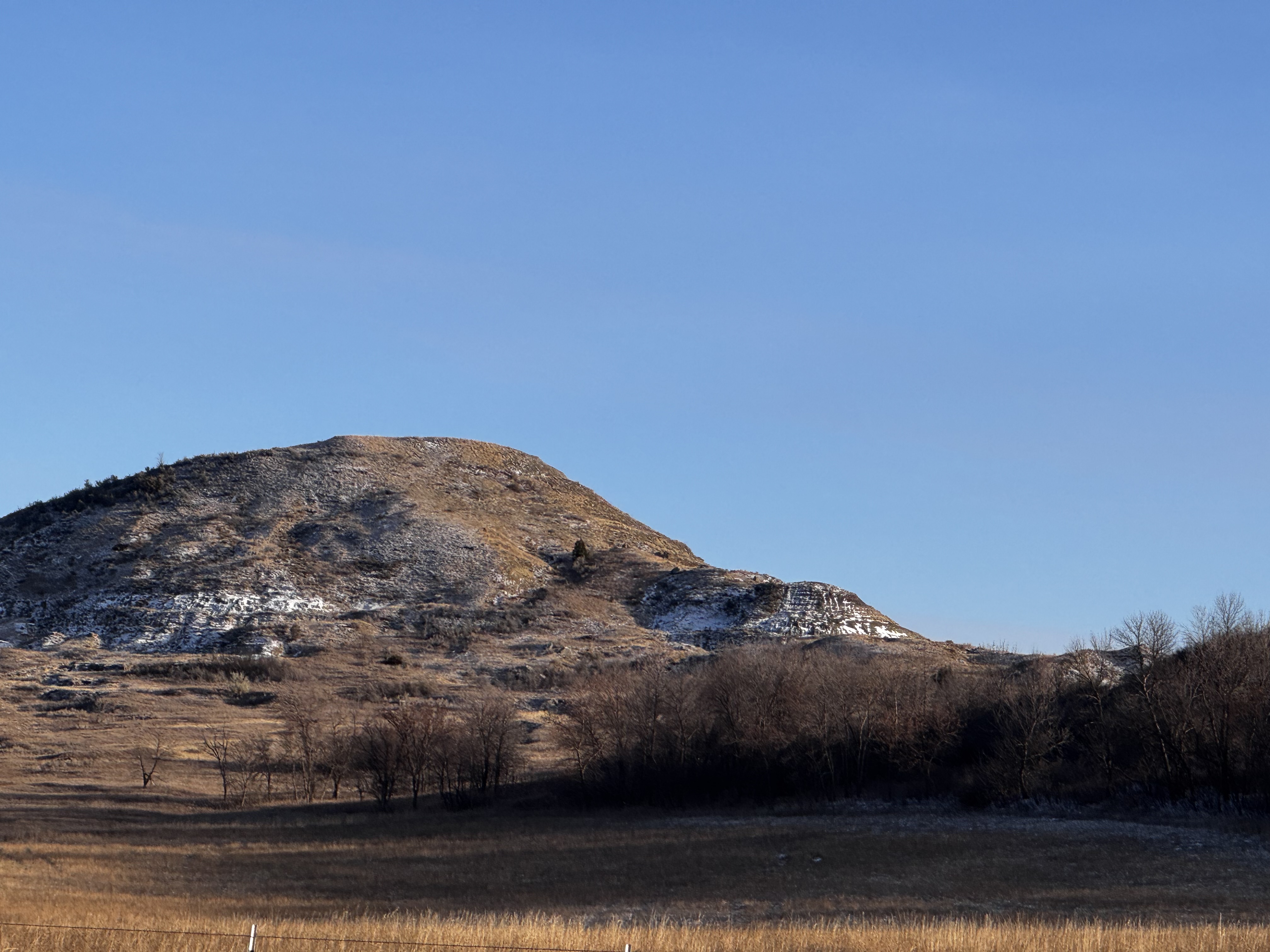
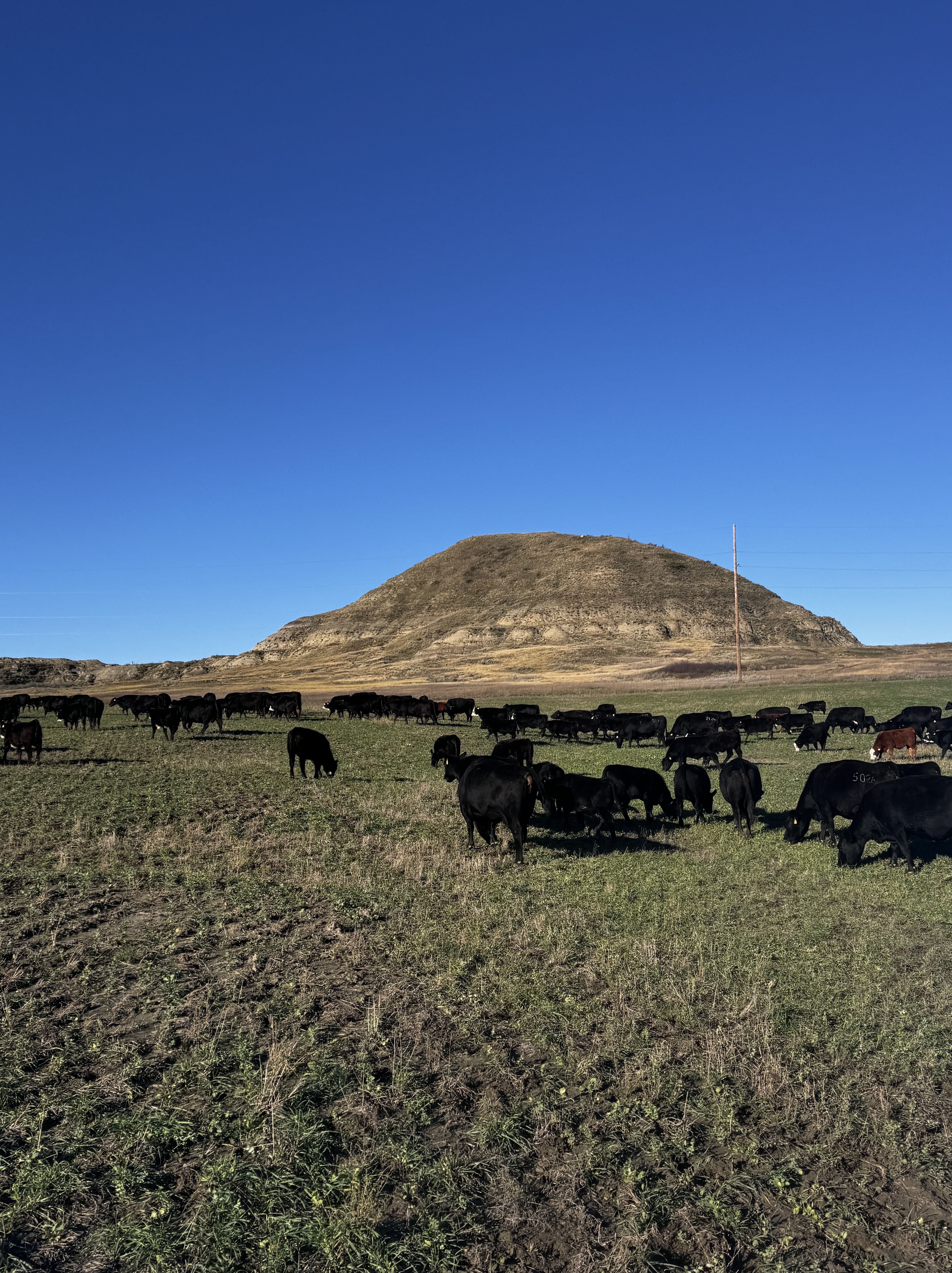
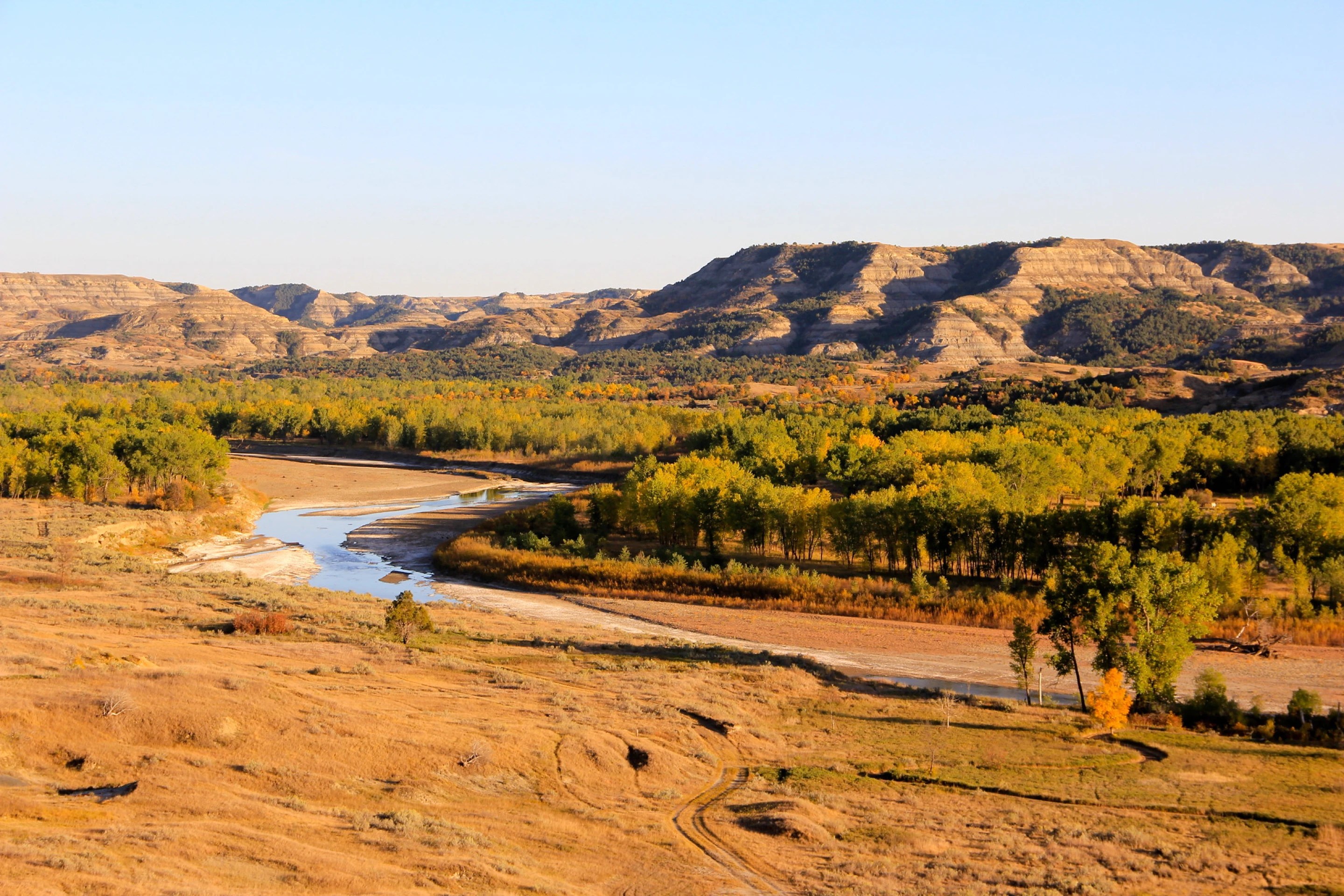
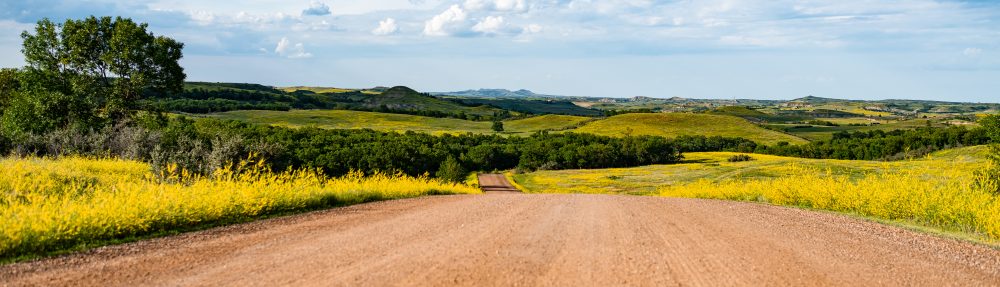
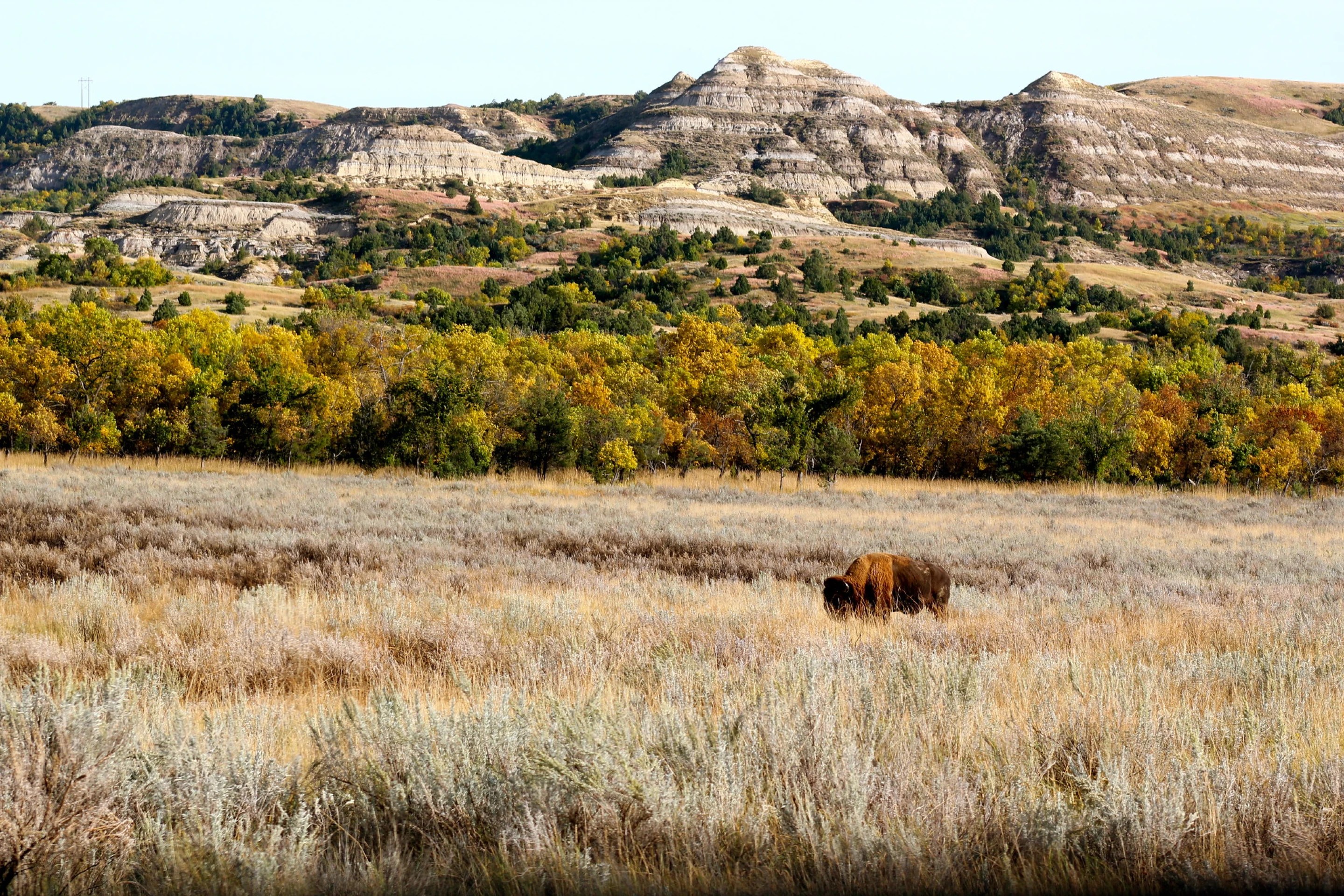
WATFORD CITY, N.D. — If you missed the news, I’m here to tell you that the Theodore Roosevelt National Park, located in western North Dakota, has been named as one of the Best of the World for 2026 by National Geographic.

That’s a big deal for us because we love to sing its praises. It’s a magical place indeed, because of its rugged and unique beauty, but also because somehow, it’s remained a bit of a secret. That means it’s a national park where you may be lucky enough to actually find yourself alone out there, which I consider a pretty special gift.

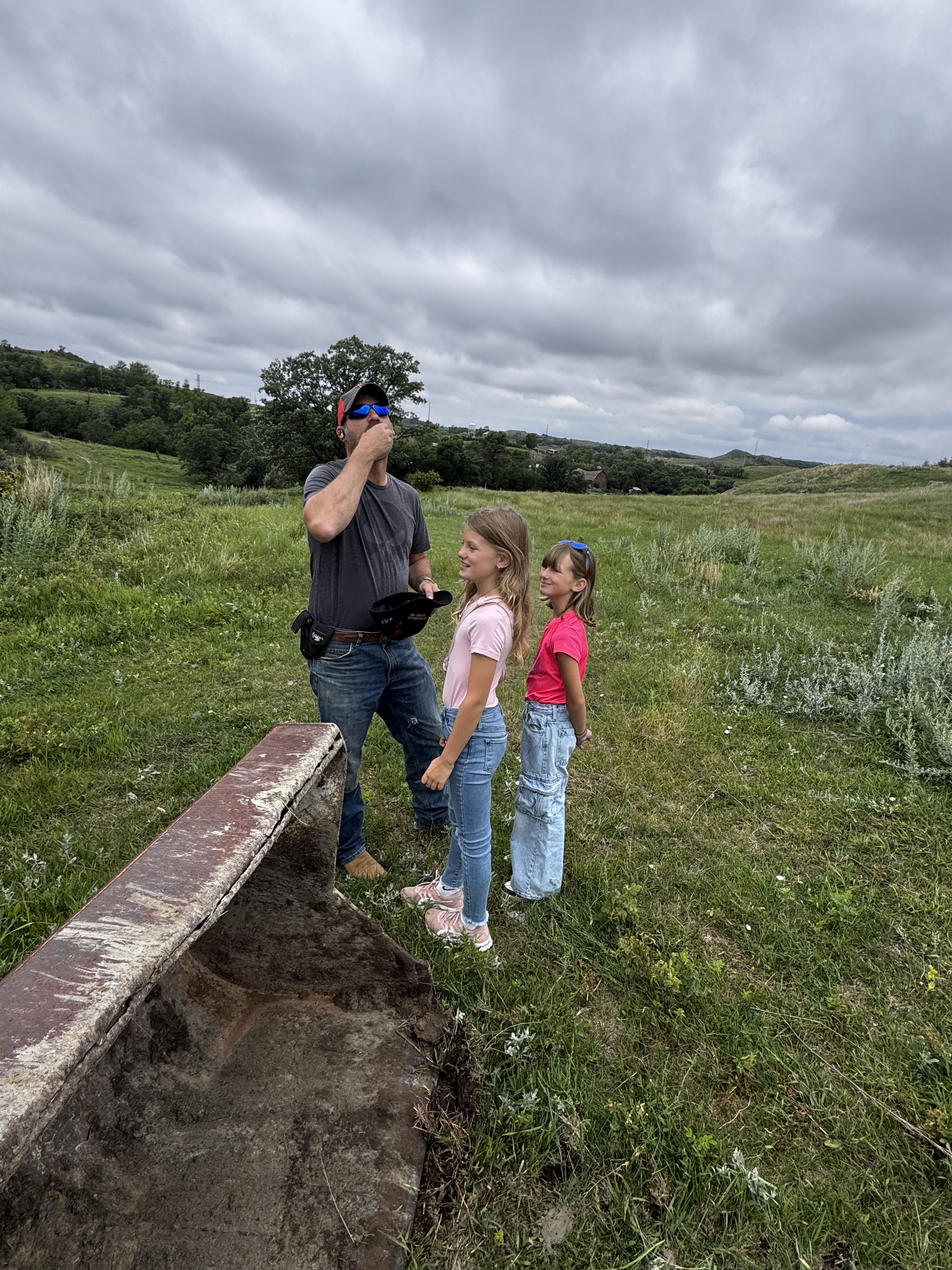
So to honor the honor, I want to share a piece I wrote several years ago when I went searching for a quiet moment in the north unit of the Theodore Roosevelt National Park.

And if you’re looking for a place to be inspired, make it the Badlands. Stop into the Visitor Center in Watford City before you go, we’ll be happy to sell you some treats and give you some tips!

From lost to found in the Badlands

Well, fall came dancing along in all its glory and we sure didn’t need the calendar to tell us so. Just like the uncharacteristically warm weather, the leaves on the trees were not about to take the subtle approach to the season change.

Overnight, the ash leaves turned from green to gold, the vines bright red, the grass and flowers exploded seeds, and even the slow and steady oaks began letting go of their acorns and turning one leaf over to gold at a time.

After a challenging week, I was ready to celebrate autumn the way it deserved to be celebrated. I was ready to let go of my agenda and frolic in it, climb a big hill and feel the warm breeze in my hair.

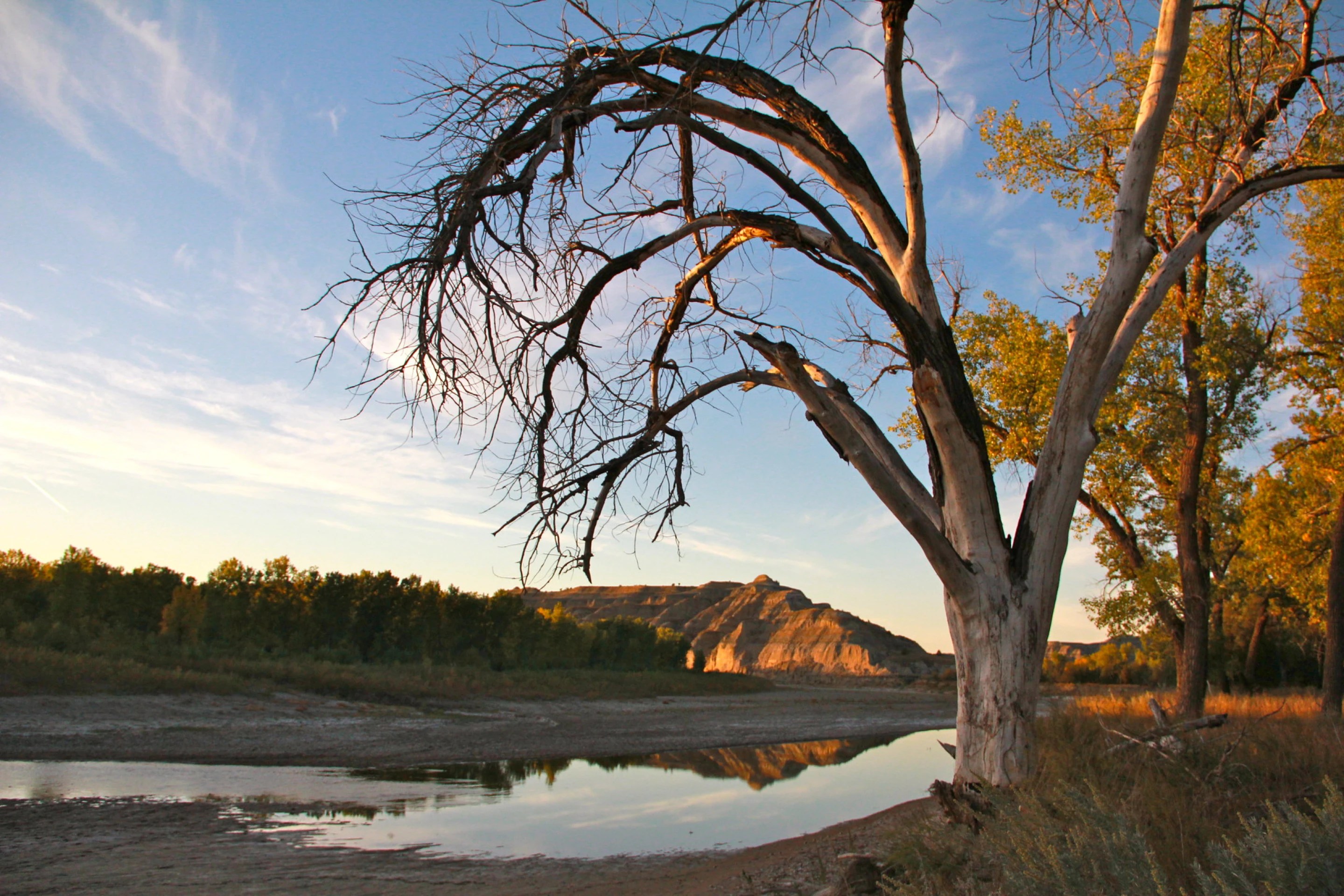
After a trip to the big town for an appointment, I pointed my car down the busy highway filled with lines of trucks, pickups and SUVs that moved humans at full speed along that paved ribbon of road that winds through buttes and half-cut wheat fields, across the Little Missouri River that sparkles and meanders under the big blue sky and slowly sinking sun.

I wanted to meander, too. I wanted to meander among the things out here that are allowed a slow change, a subtle move toward hibernation, a good long preparation for a show like no other, a recital of how to slow down gracefully.

And I couldn’t help but wonder while I tried to keep my eyes on the road despite the neon yellow trees waving at me from the ditches, if these people who were sharing my path were seeing this. Did they notice that the tree was waving to them, too? Were they commenting on how the crows have gathered?

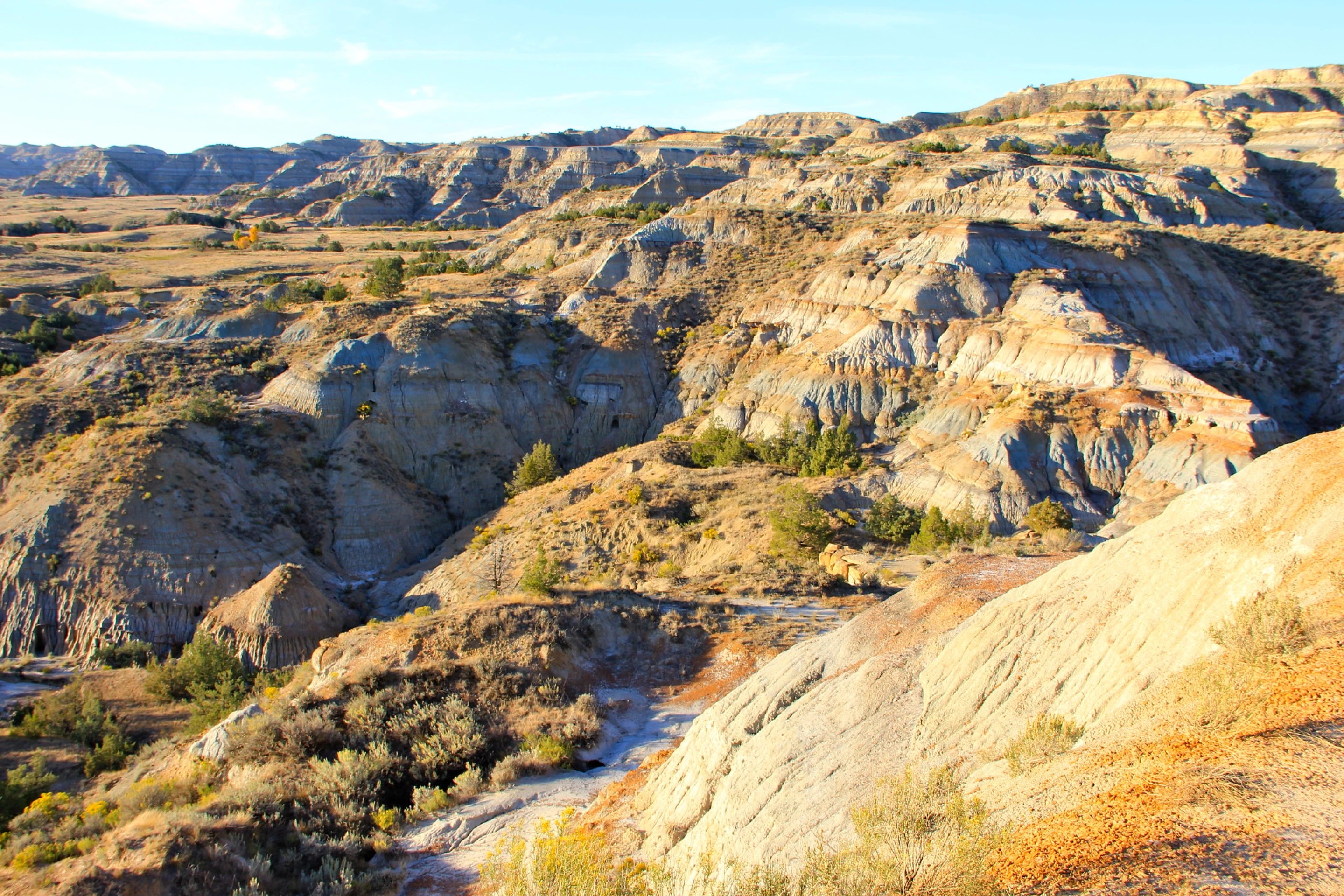
As we came down through the brakes that move us through the Badlands, did they notice how the layers of the buttes — the line of red scoria, the black coal, the clay — did they notice how, in the late afternoon light, the landscape looked like a giant canvas created with wisps of an artist’s brush?

Did they see that river? I mean, really see it when they passed over the bridge? Did they take note of how it has receded a bit? And as they approached the sign that read “Theodore Roosevelt National Park-North Unit,” a sign that indicated they were indeed on the home stretch to their destination perhaps, only 15 miles to the town to stop for gas, to make it home, to take a rest on a long truck route, were they enticed like I was that afternoon to stop for a bit?

Because what could be better than breathing in fall from inside a place that exists raw and pure? A park. A reserve. A spot saved specifically to ensure that nature is allowed to go on doing what it does best while undisturbed by the agenda of the human race, which at that point I was convinced didn’t have a handle on how to live gracefully in a world designed for us, let alone accept and live harmoniously among what we can’t control or may not understand — like the change of weather and the seasons and the sun beating down on the hard earth.

And I was guilty as well of taking this for granted. I was guilty of driving by this spot time and time again as it called to me to take a rest, to visit, to have a walk or a seat or a climb.

But not that day. That day I needed its therapy. I needed to park my car and stretch my limbs and take a look around.

From the top of Battleship Butte. From the trail at the river bottom. From the flat where the bison graze.

So as I pulled my cap down and took to the familiar trail that wound up that big, daunting and famous butte along the road, I took notice of the breeze clattering the drying leaves together, the birds frantically preparing for the chill, the grasshoppers flinging their bodies at the dried grass and rocks …

And then I noticed I was alone.

Alone as I scrambled and pulled my tired body up the steep and rocky trail toward the top of my world as two bison grazed on the flat below the buttes.

Alone as I reached my destination with no other ears around to hear me catch my breath and then sigh in awe at the colors and solitude.

Alone as I watched those bison move and graze, a spectator in a different world, a spy on a giant rock.

Alone to take my time as I noticed how the trees sparkled on the river bottom against the sinking sun. No one to tell me that’s enough, enough photos, enough time, enough gazing.

Alone as I walked toward the river and there was no one there to stop me from following it a little bit farther, to see what it looked like on the other side of the bend.

No one there but me and a head full of thoughts and worries that were being pushed out of the way to make room for the scenery, the quiet, the wildlife tracks and magnificent colors and trails before me.

And because I was alone, I was able to notice that after a few weeks gone missing, I was becoming myself again. The self that understood this was my habitat and my home. The self that knows the seasons will always change, the leaves will dry up, the acorns will fall, the birds will fly away from the cold or prepare for it, the grasshoppers will finish their rituals, the snow will come and coat the hard earth, then melt with the warm sun, changing the landscape, as the water runs through and cuts the cracks in the earth.

And the bison will roam, and the antelope will, too, and the prairie dogs will burrow, the pheasants will roost, and the bugs will hum and buzz and disappear, knowing, or not knowing, that their lives are fragile, just like ours out here where we can find ourselves alone.


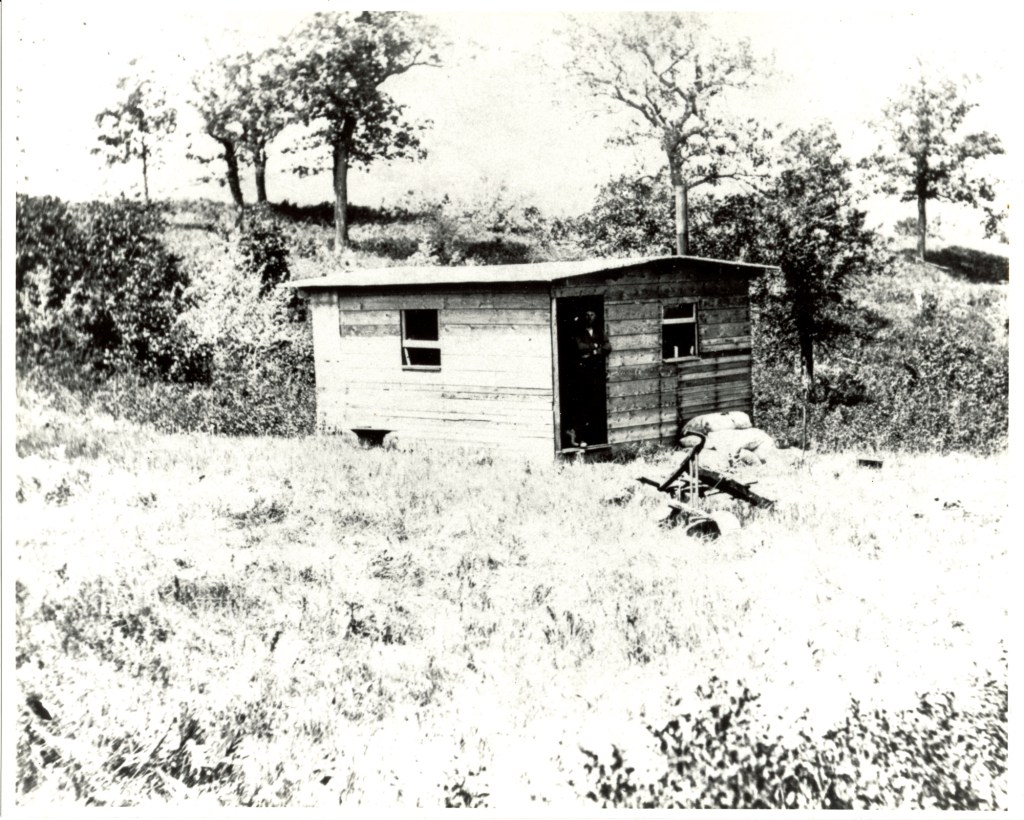
The wheels of the past

Fall has settled in at the ranch and we’ve been spending some time working the cows and moving the cows and contemplating the market and thinking about next year’s goals. With the crisp of its arrival comes the regret of not accomplishing all we set out to accomplish in the warmer, fleeting, summer months. It’s always this way on the ranch, and I would argue, gets worse as we get older and so do the fences and buildings that need to be repaired, rebuilt or torn down.

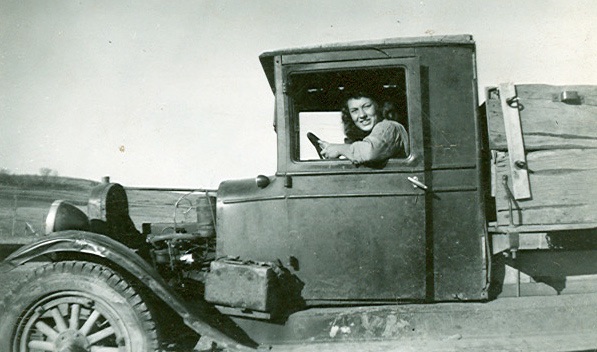
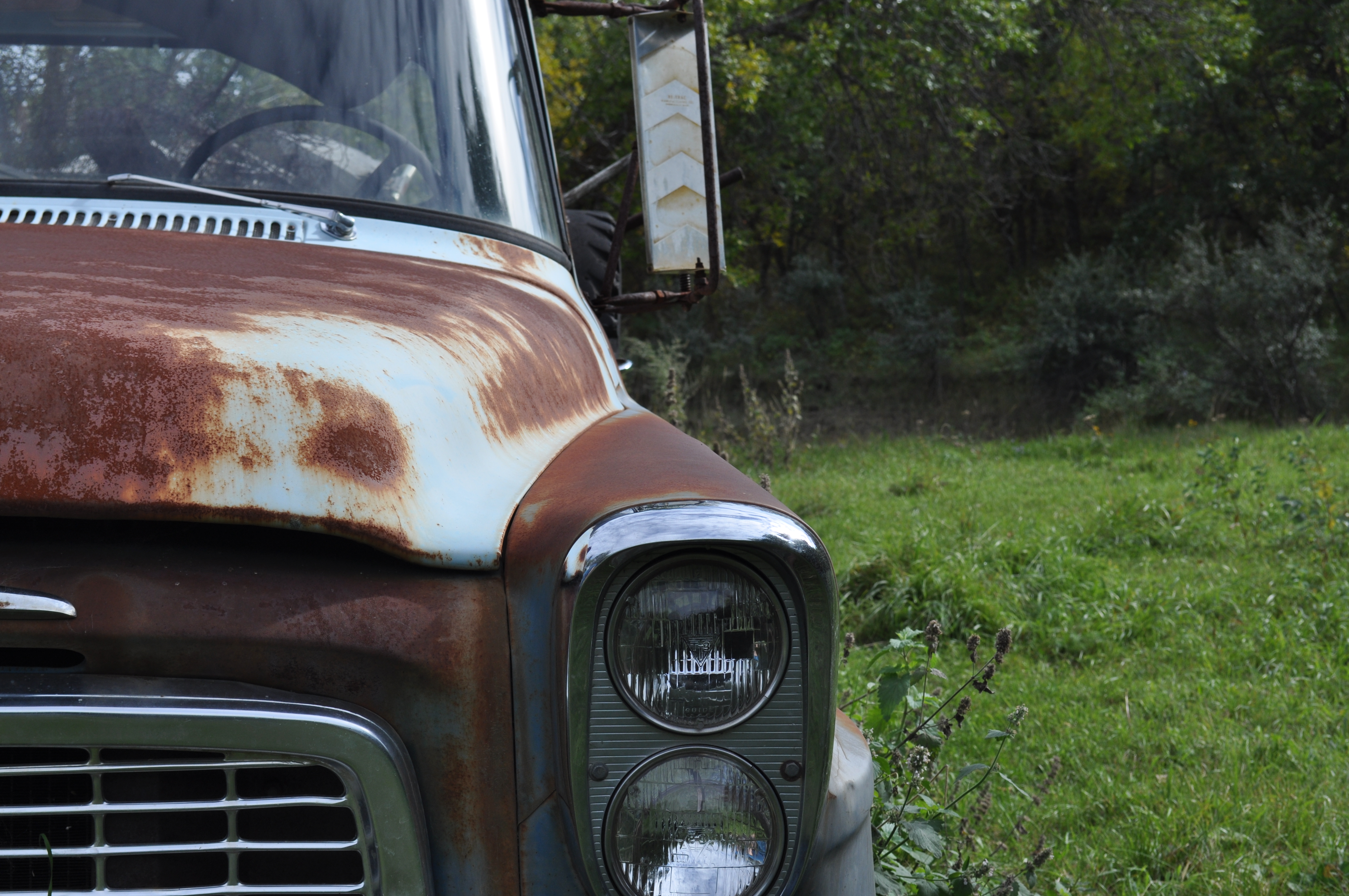
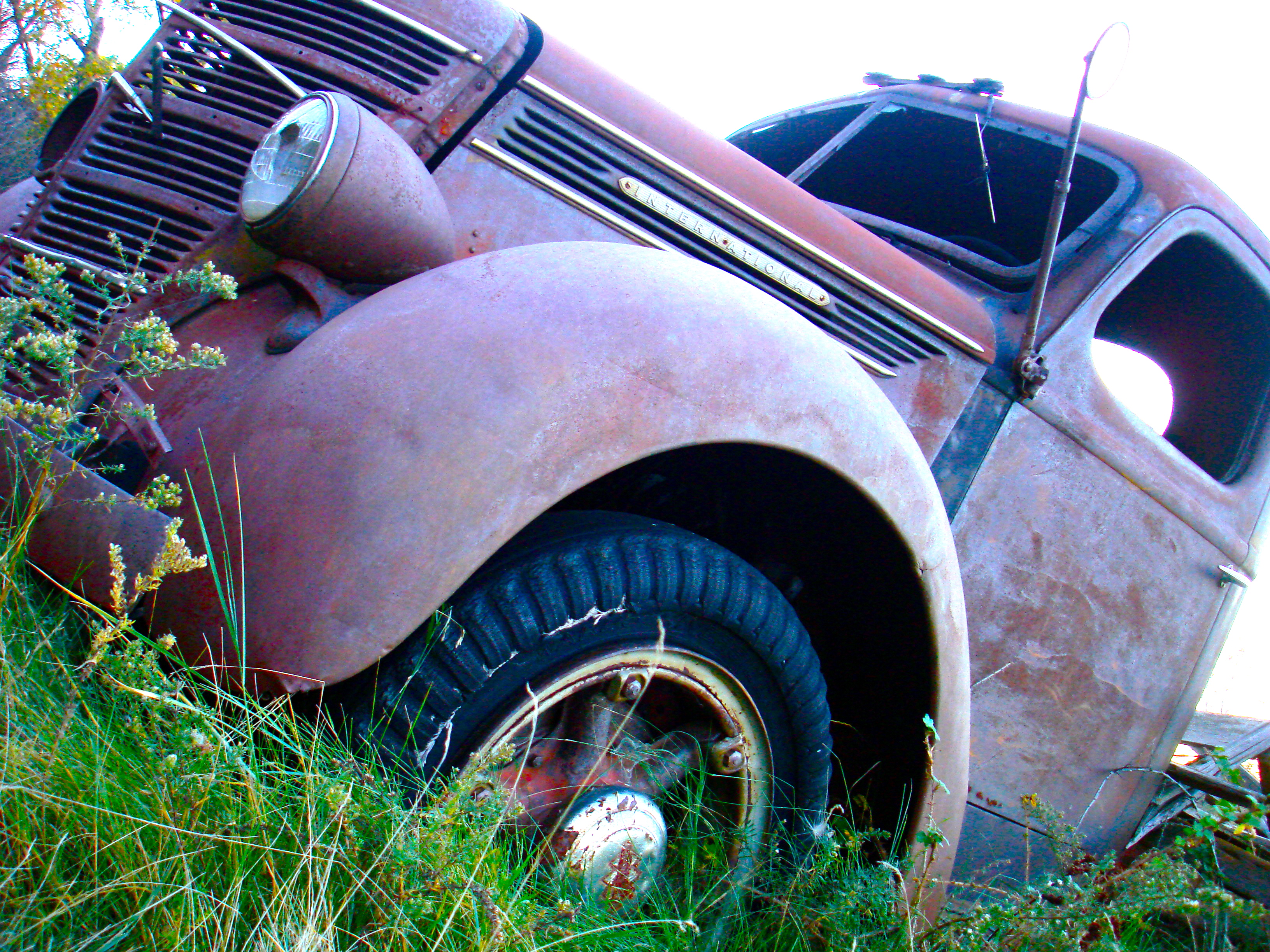
Like most farms and ranches, we have a couple places on our land that have become graveyards for old equipment, cars, campers, boats or mowers. They sit in the draws as a reminder of a part of your life you used to live. When I was a kid, these graveyards were full of my great uncles’ fancy old cars, my great grandpa’s pickup, dad’s snowmobiles and dirt bikes and machinery that at some point was declared beyond repair. Or maybe it wasn’t. Maybe they just couldn’t get to the repair part, or didn’t have the tool or the money and there it sat. The issue of time has always been an issue of time out here, no matter the decade.

As a kid I used to love to snoop around in these places. I would sit in driver’s seats and play with the shifter and the push the pedals and the buttons on the radio and pretend I was speeding down the road, my imagination somehow in the past with a future me at the wheel. I loved the smell of the dust that puffed up from the ripped and cracked seats and the sound the rusty springs made under the weight of my ten-year-old body bundled up against the bite of the wind. And I liked feeling like I was discovering a secret about these things and inventing the characters they might have driven along the backroads.

Old Truck

Most of my memories about visiting these relics take place in autumn when the heat has blown off making way for the frost. The burdock has headed out and the pig weeds and creeping jenny’s growing up and around the running boards and wheel wells is dry and stomped out by the cows. The flies and wasps have gone to their graves and so sitting in old cars doesn’t feel sweltering, but sort of haunted.

October 9, 2010. Rearview

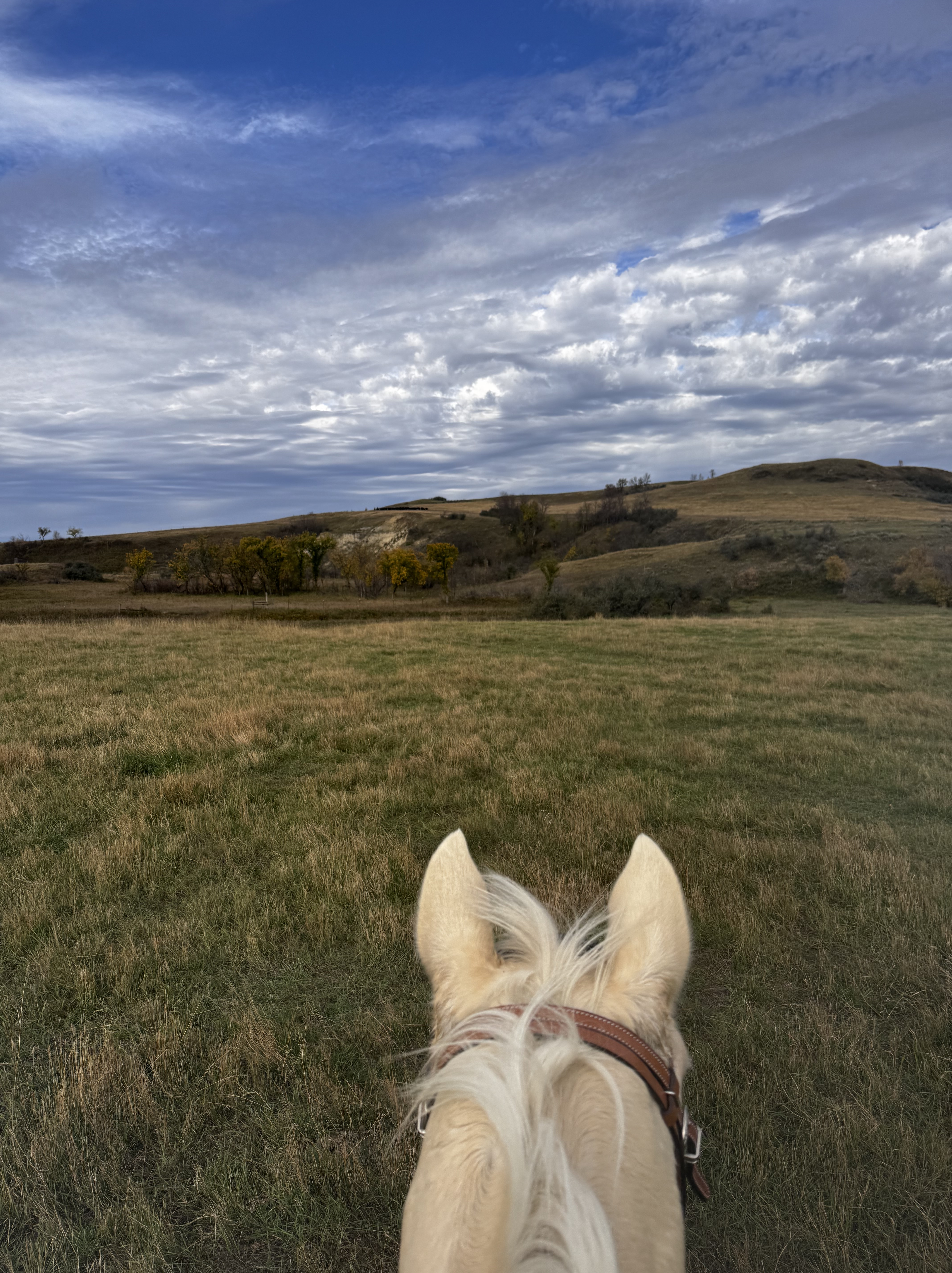
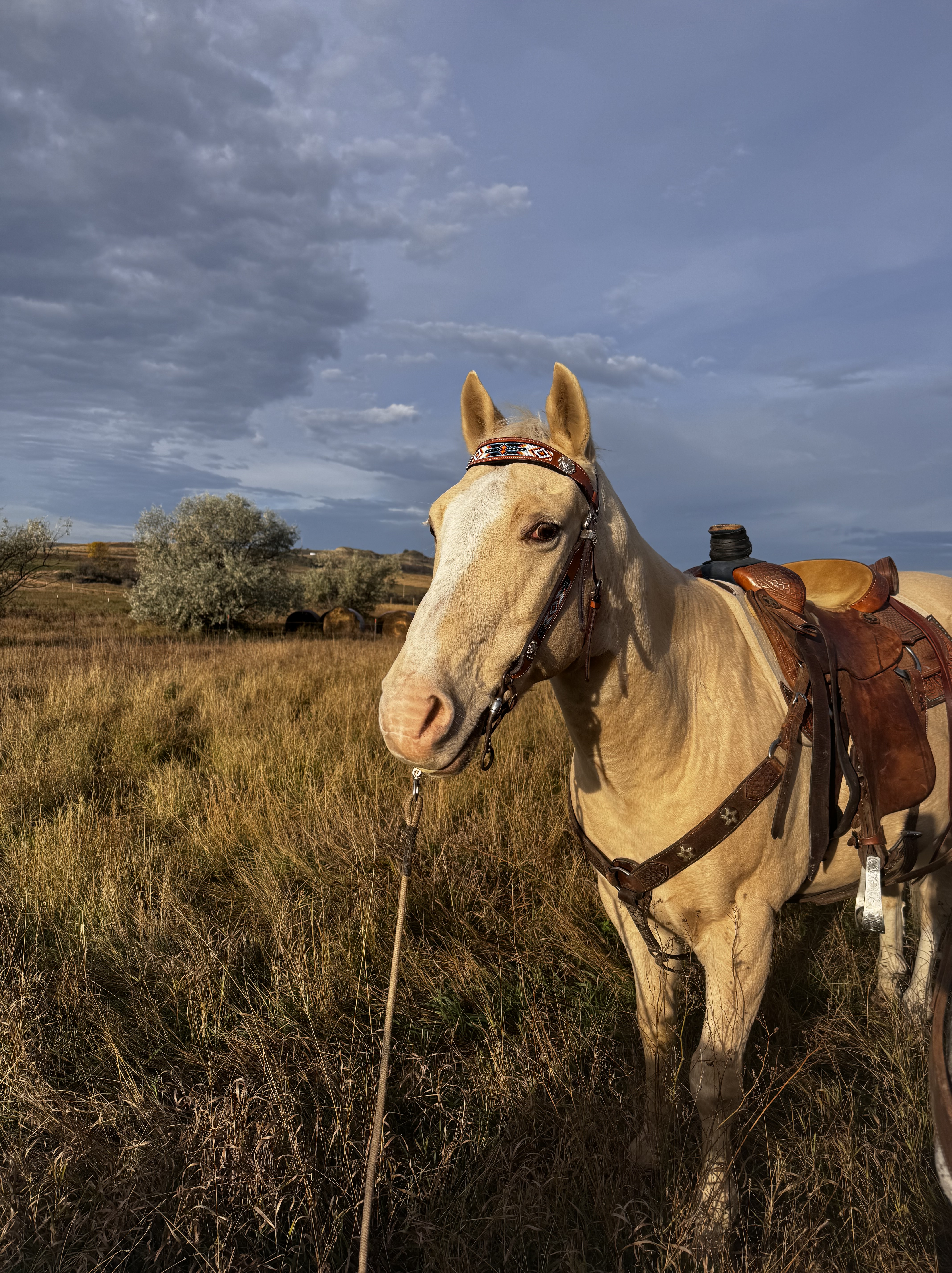
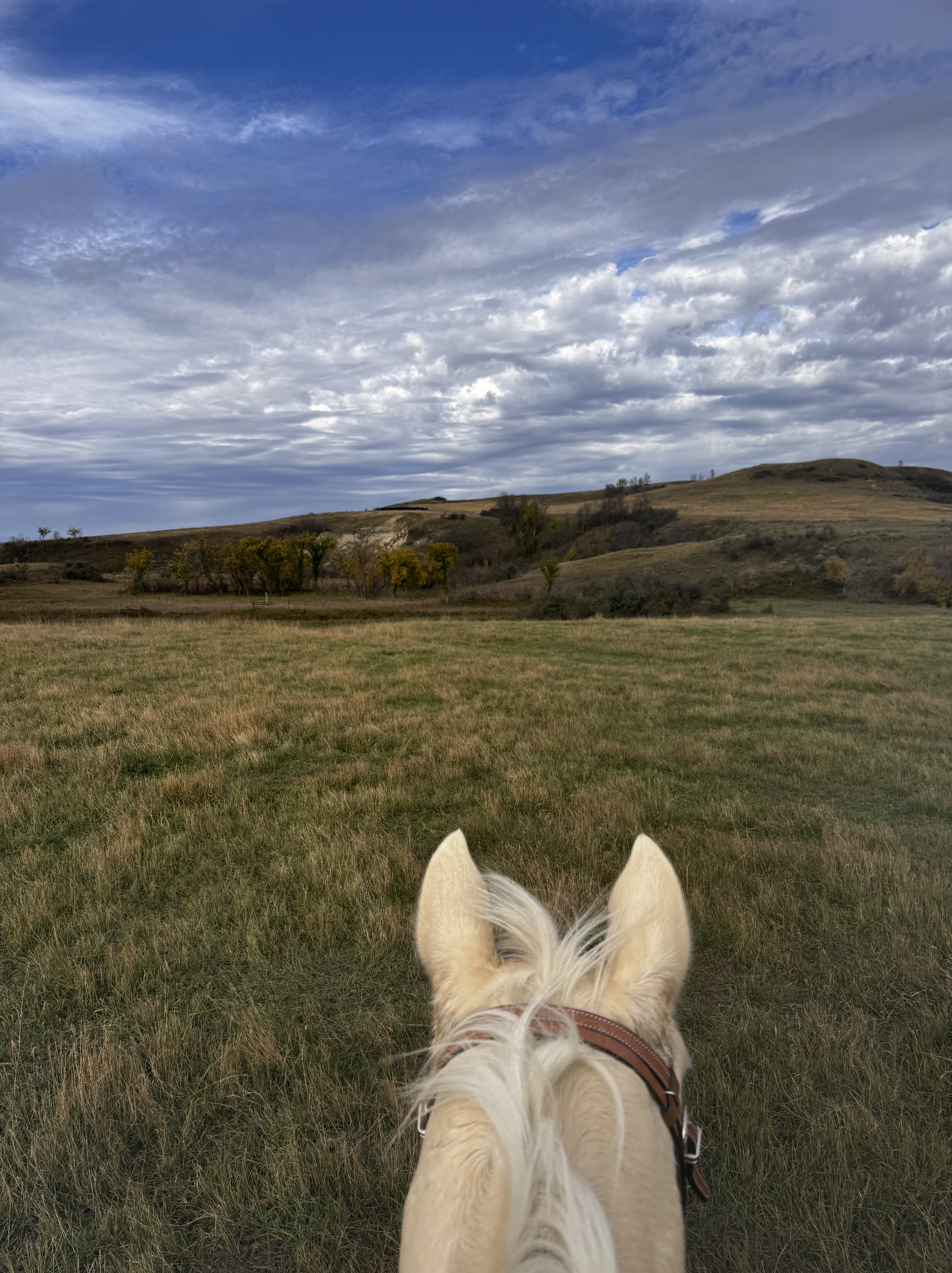
Haunted. This season will do that to a person. Last week after a particularly windy and chilly morning spent moving cows with my dad and my husband, I sat on my palomino in our corrals along the edge of the west pasture while my husband worked on connecting a tired old gate to its latch and my dad tested the fussy water system in the tank. I was the kind of cold that got to my fingers and toes and turned them the same numb they used to get when I was a kid in this very same corral, in this very same wind, waiting on dad.

I looked over at that wooden chute standing weathered and worn connected, just barely now, to old posts and deteriorating rails. These corrals hadn’t been used in years, but the cold stinging my bones brought me back to the time I was a kid in this very same spot, bundled up as much as a kid could be bundled up, waiting on Dad to fix something. Or maybe we were running calves through that chute, vaccinating or doctoring and I wasn’t being useful after dismounting my horse and so I was colder than everyone else. And I remembered then how I disappeared from the bite of the relentless wind by laying my entire body down in the corner of those corrals, low, low, low enough to bury me in the grass. I remember the smell of the dirt and the way the clouds looked moving graceful and alarmingly quick across a sky that was deceivingly blue for such a brutal day. In my memory I was there for hours, cold and bundled and huddled and waiting for the job to be done. But time isn’t the same when you’re young. It moves slow like the water through a creek in the fall. Even slower when you’re cold.

These days feel more like the clouds in the wind.

I’m no longer the little girl I used to be out here. But how could it be when my bones are the same kind of cold? My fingers. My toes. This tall grass. My dad in his scotch cap. These old corrals. The smell of this horse and the dirt.

I looked up then and noticed those clouds flying and I felt the way I used to feel sitting those old cars so long ago.  Haunted.

Only the nostalgia is mine this time, not someone else’s mysterious story. That future is here now and she’s’ holding tight to the wheel of the past…
In October

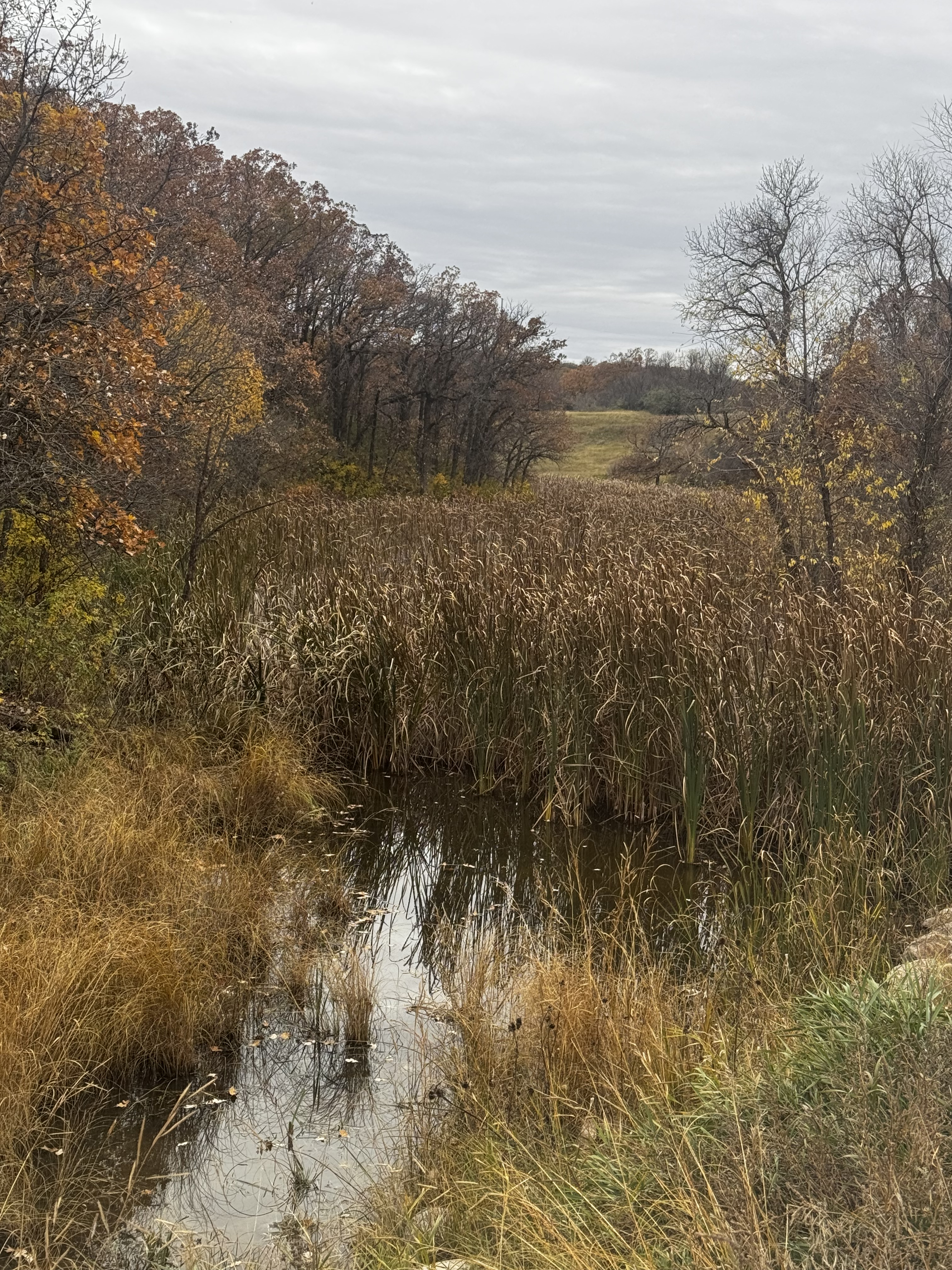
You can see your breath in the morning now. The grass is still green as can be out here, but at 6 am it’s covered in frost. I’m hoping the cold kills the flies soon. One just divebombed into my milk glass right as I was lifting it to take a sip. The fall afternoons warm up nice enough for them to come alive again.

And I feel that I guess.

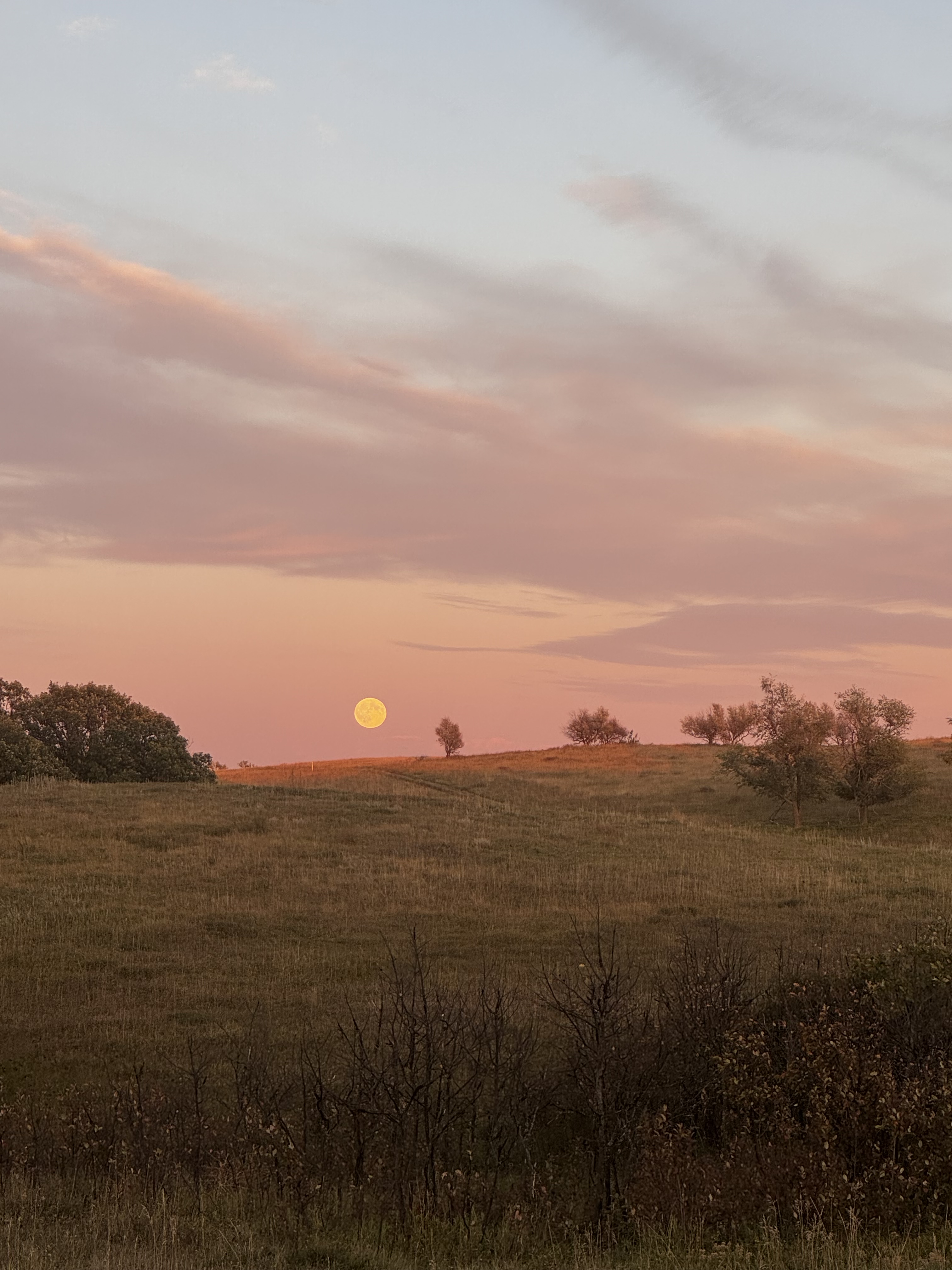
I took my evening walk to the fields last night. The moon was coming up huge and bright over the horizon and against the pink of the setting sun. That lightbulb of a moon woke me up at four that morning, beaming through the window to wash over my face in the dark and make me restless. But, I was happy to have it following me as I made my way home in the dark. My timing of the daylight was off a bit. Supper should have been on the table earlier.

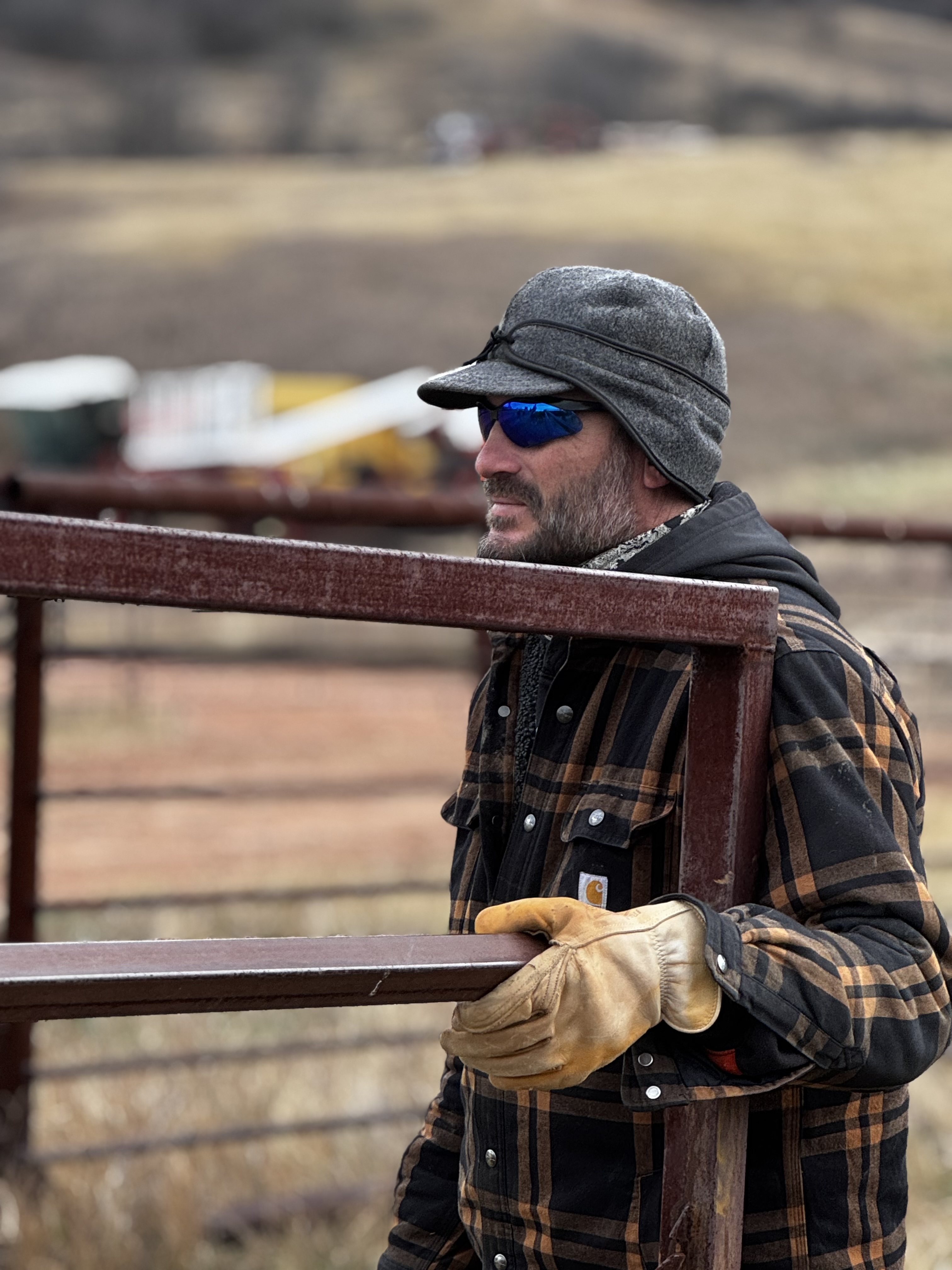
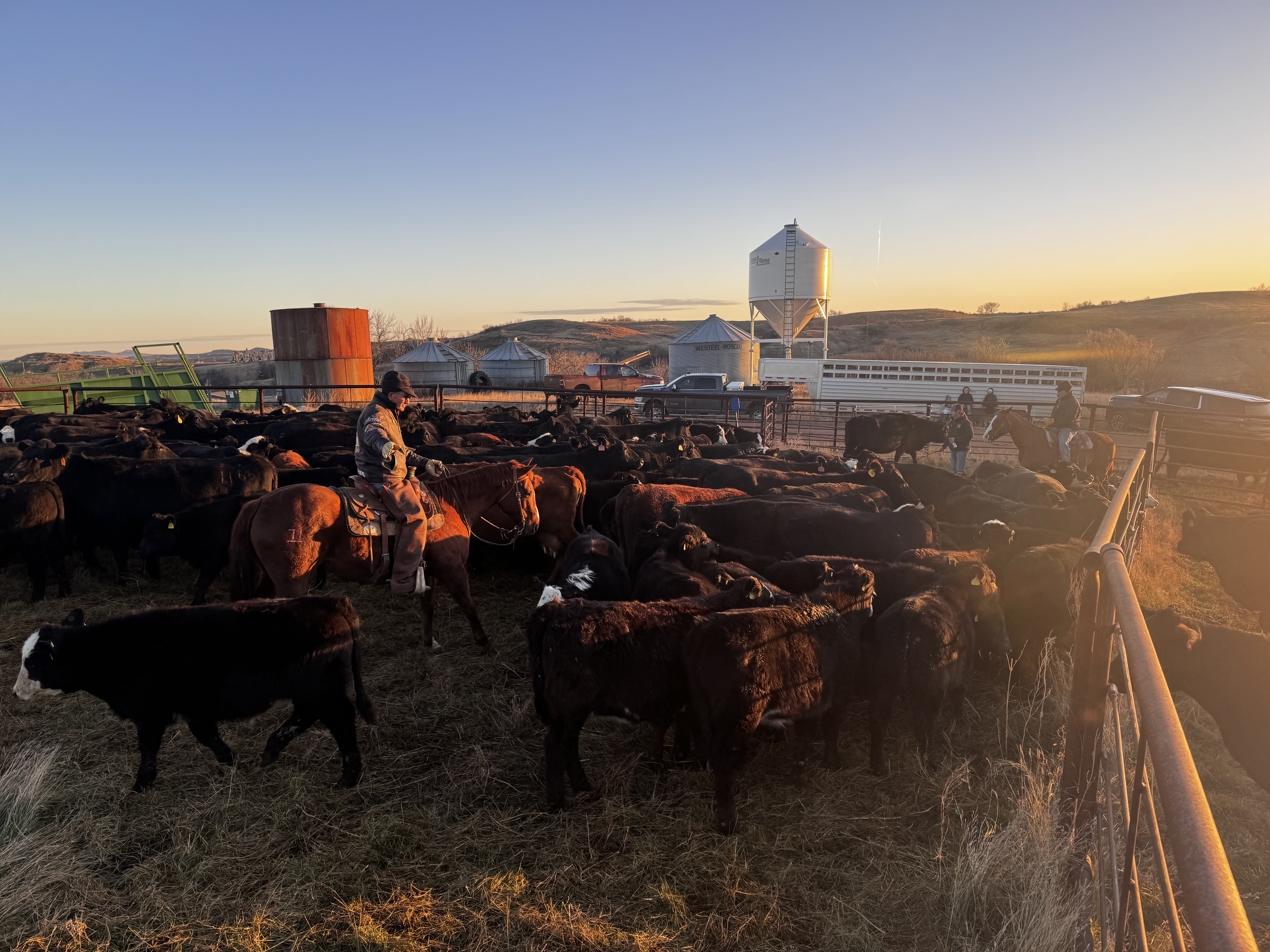
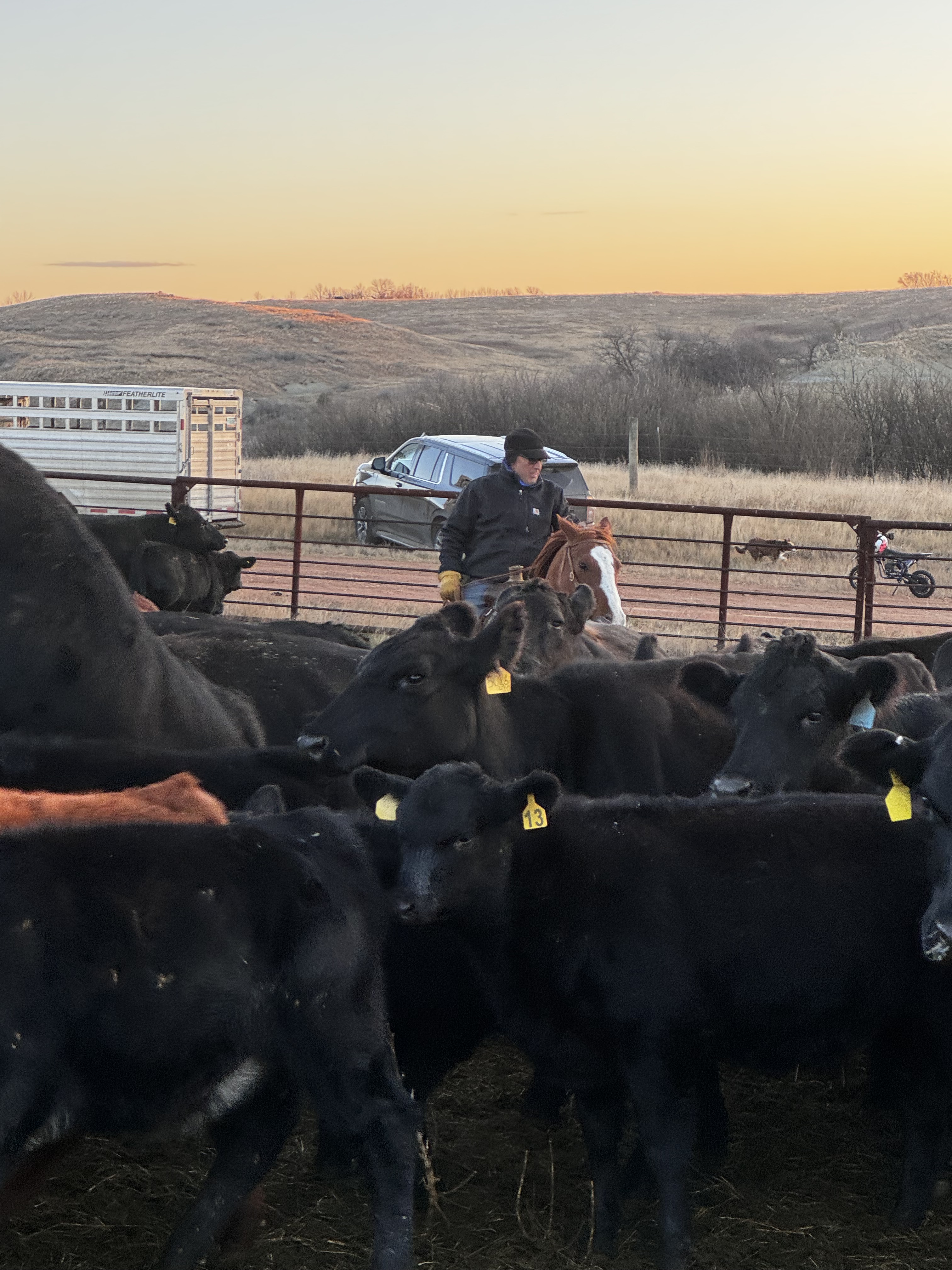
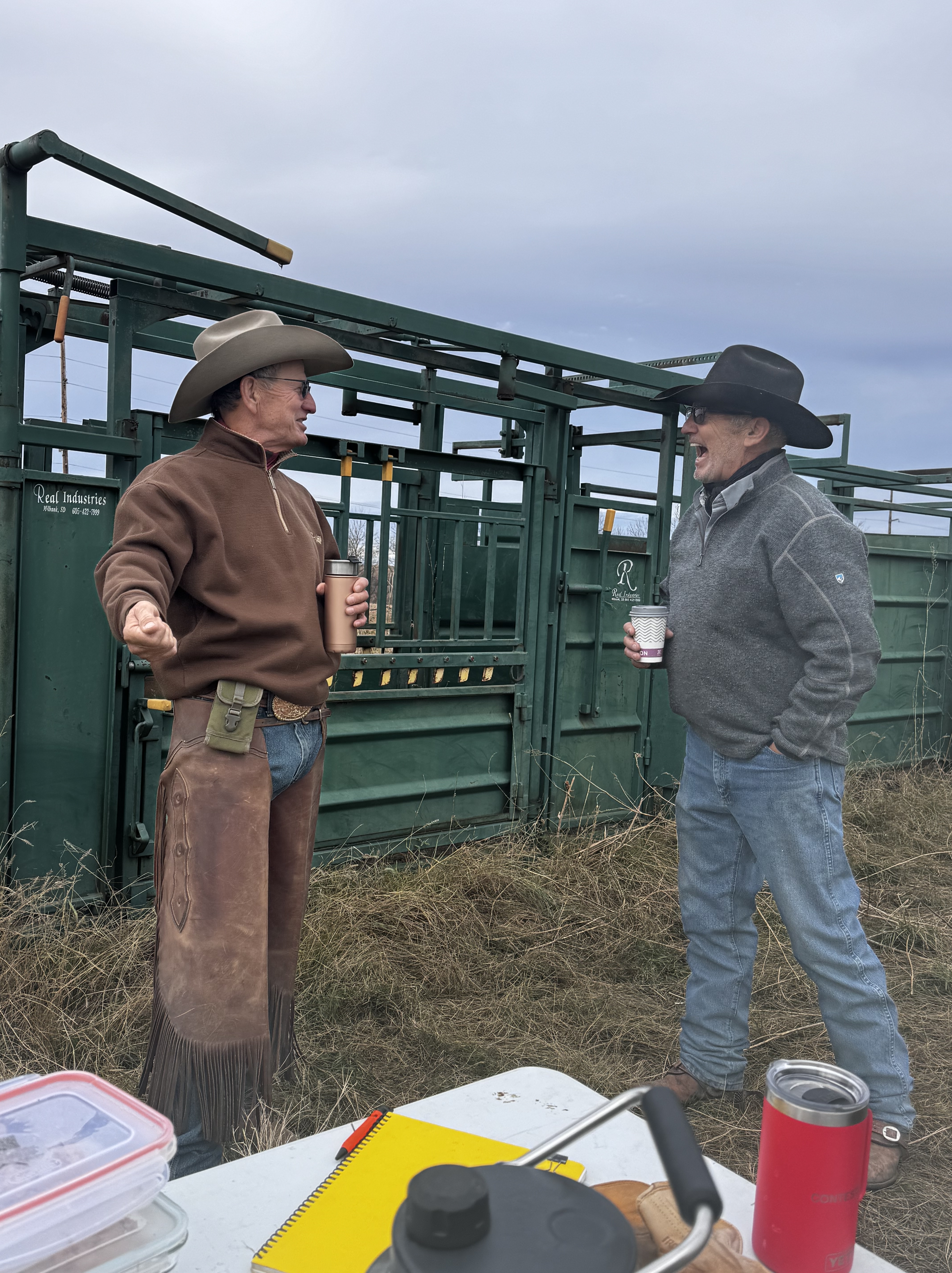
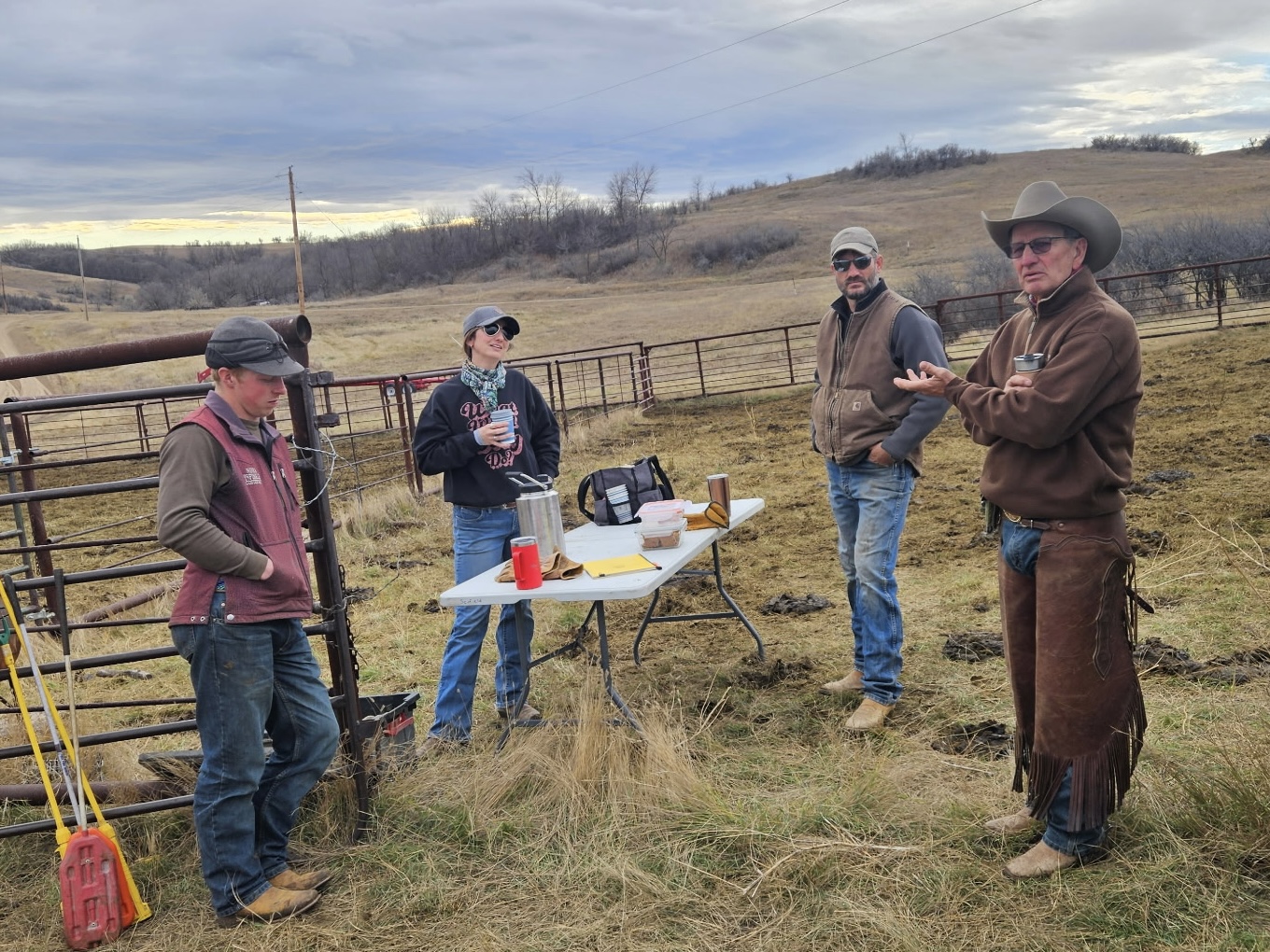
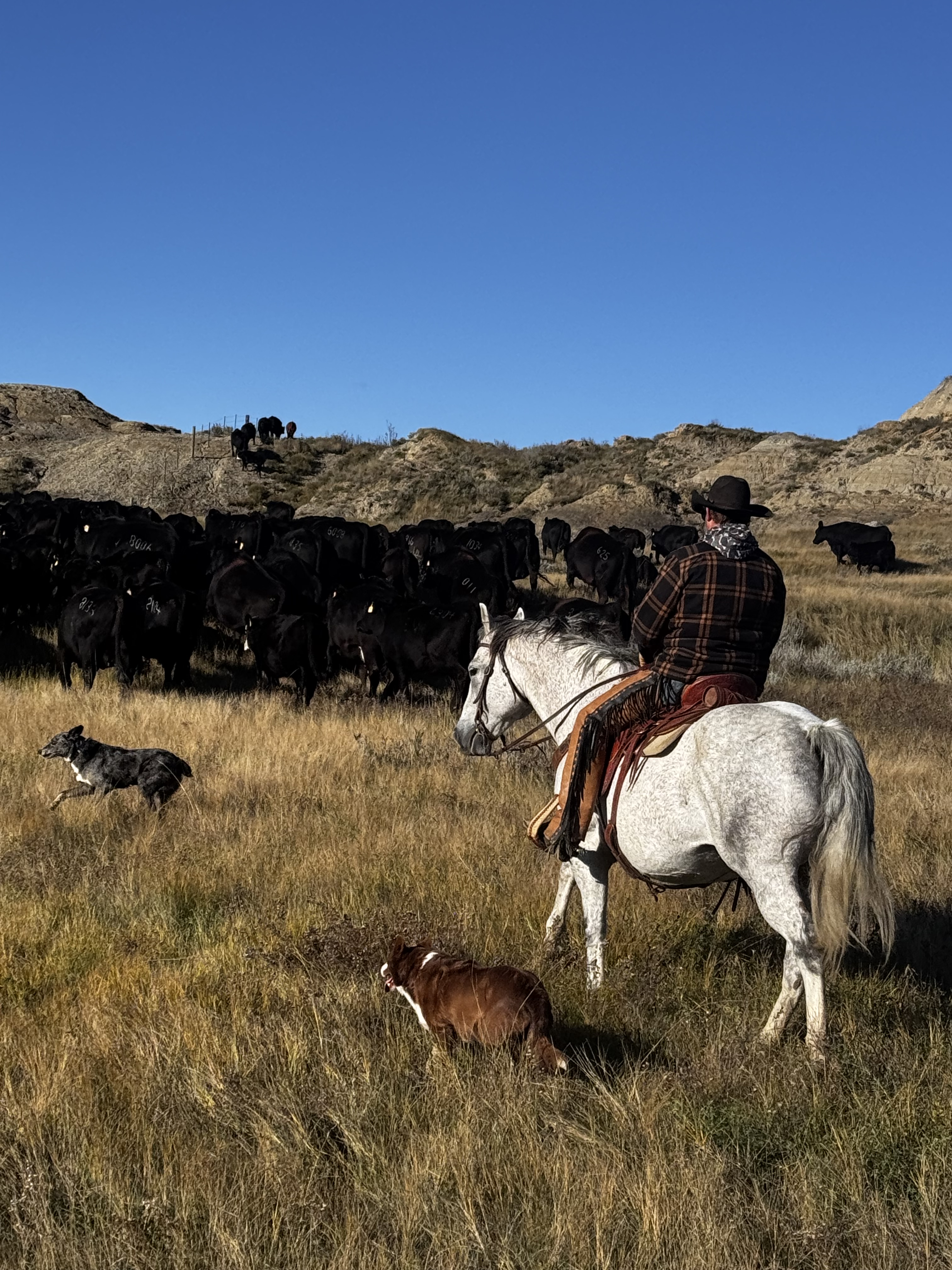
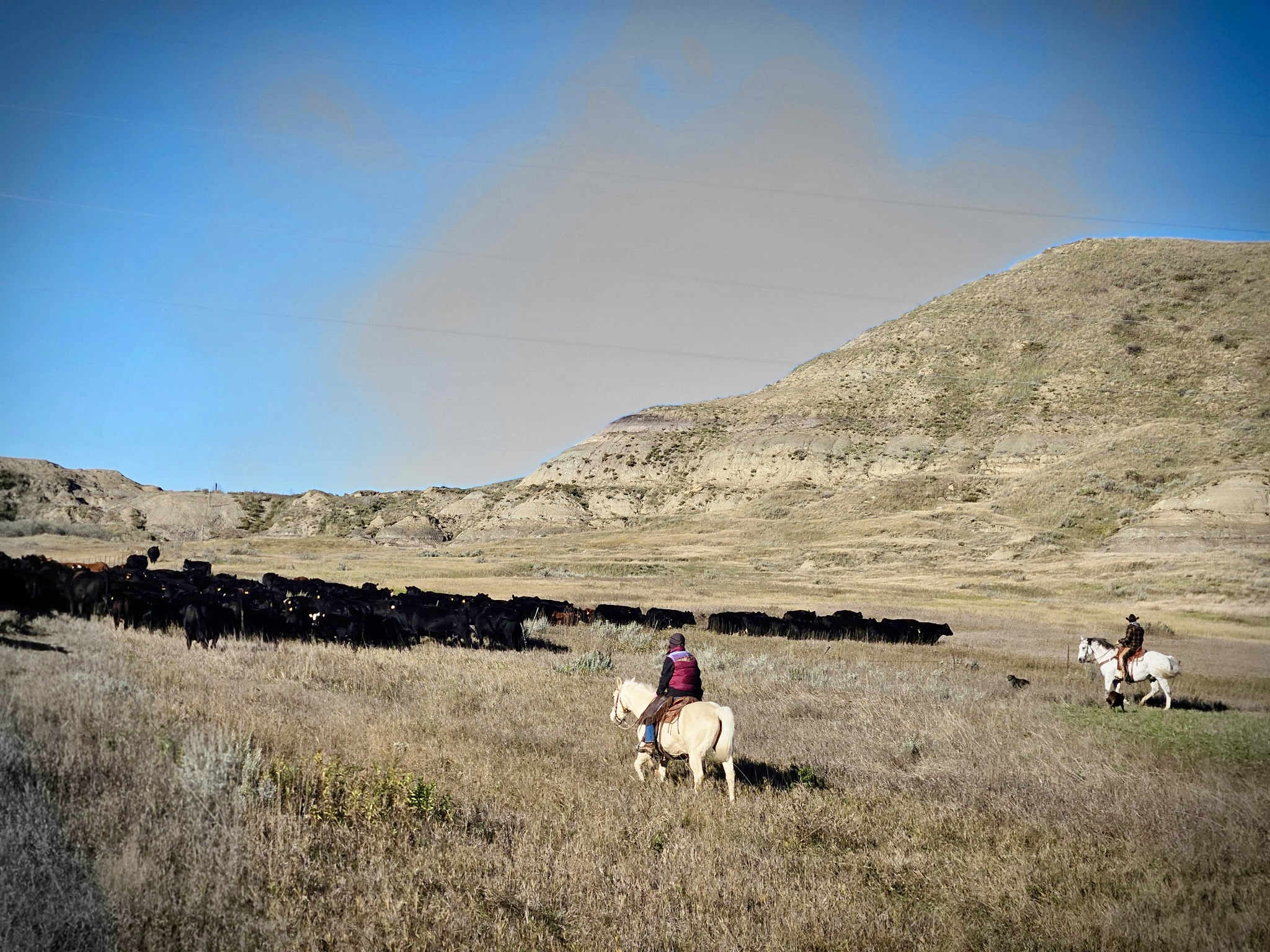
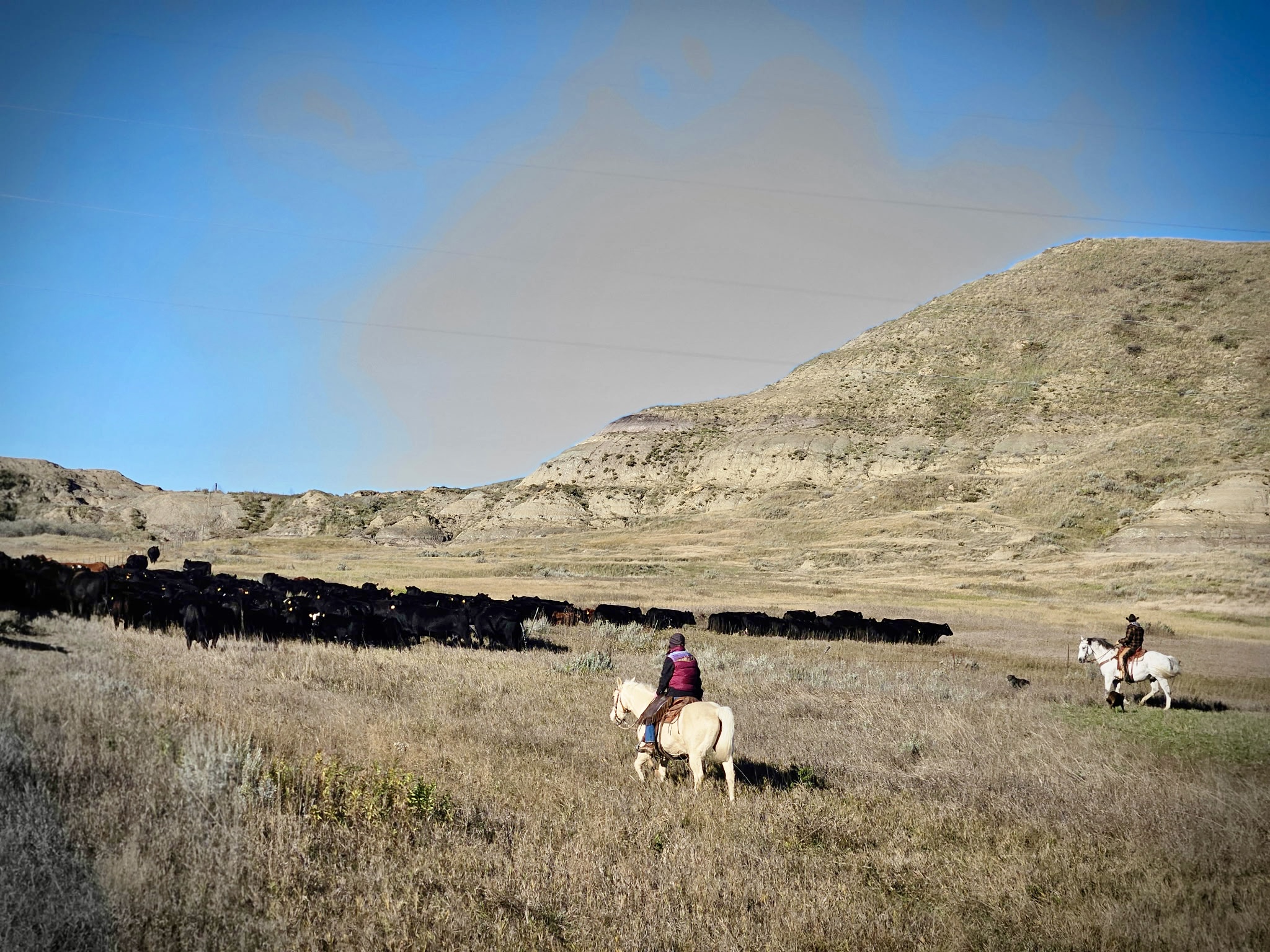
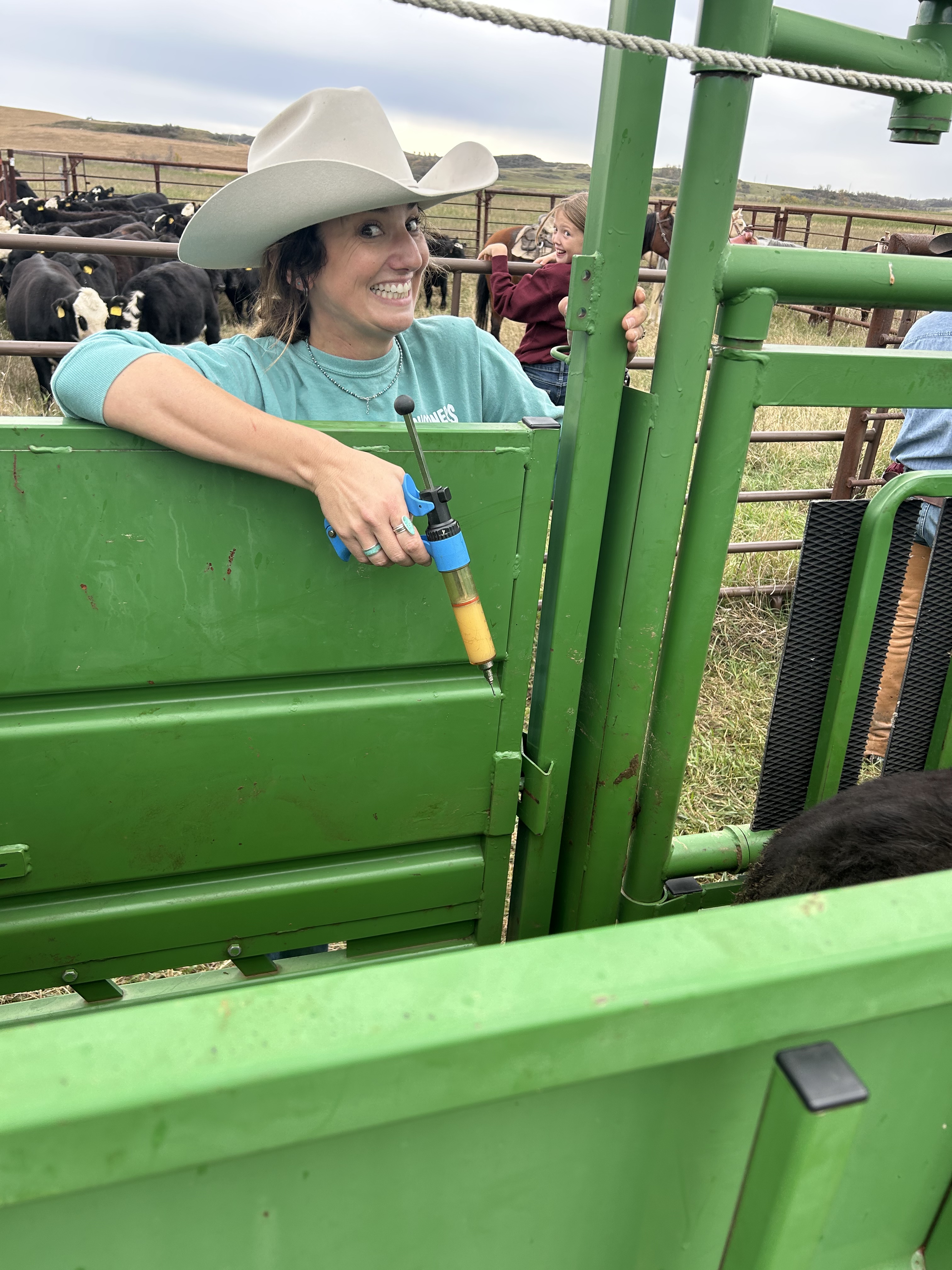
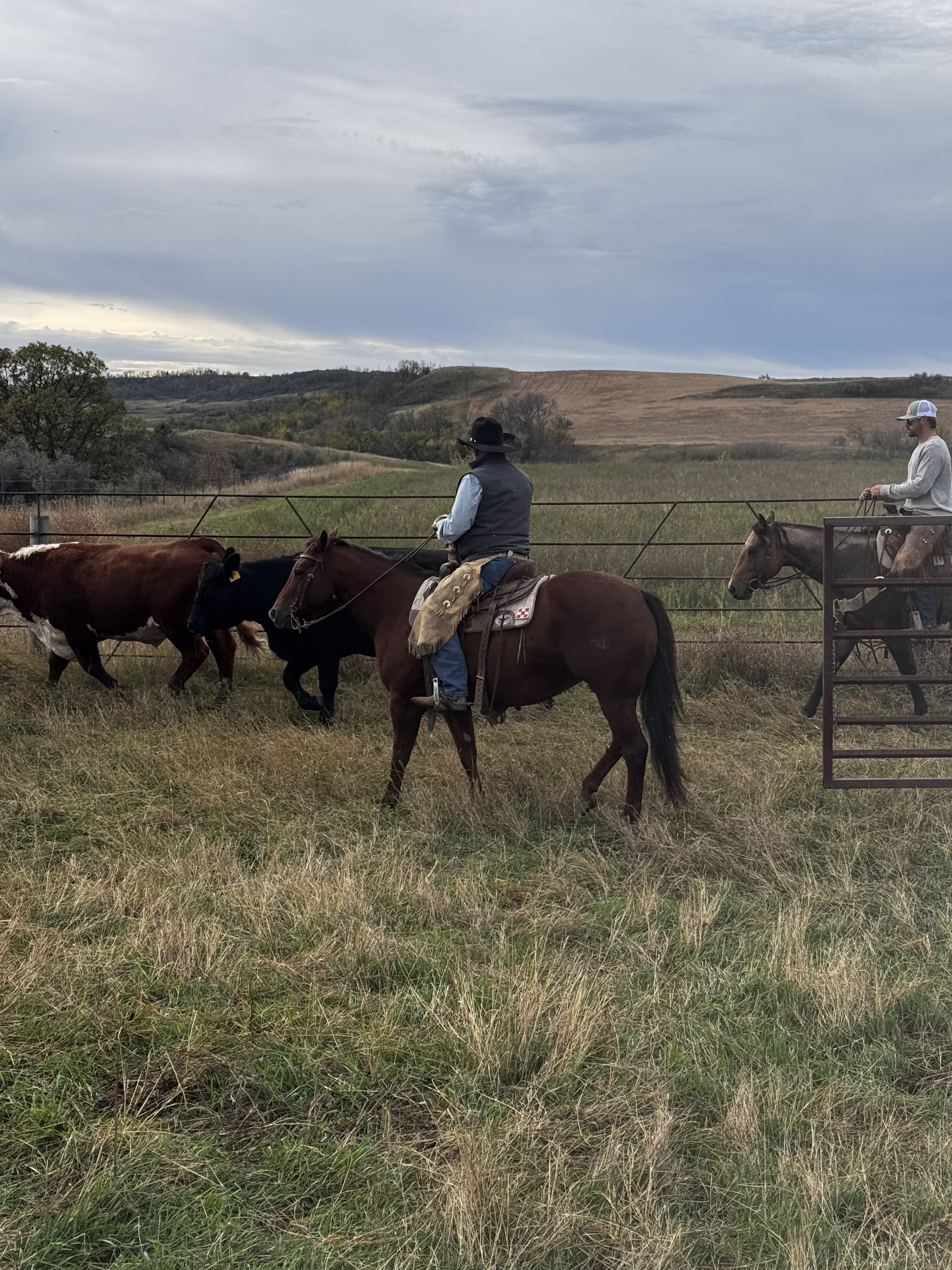
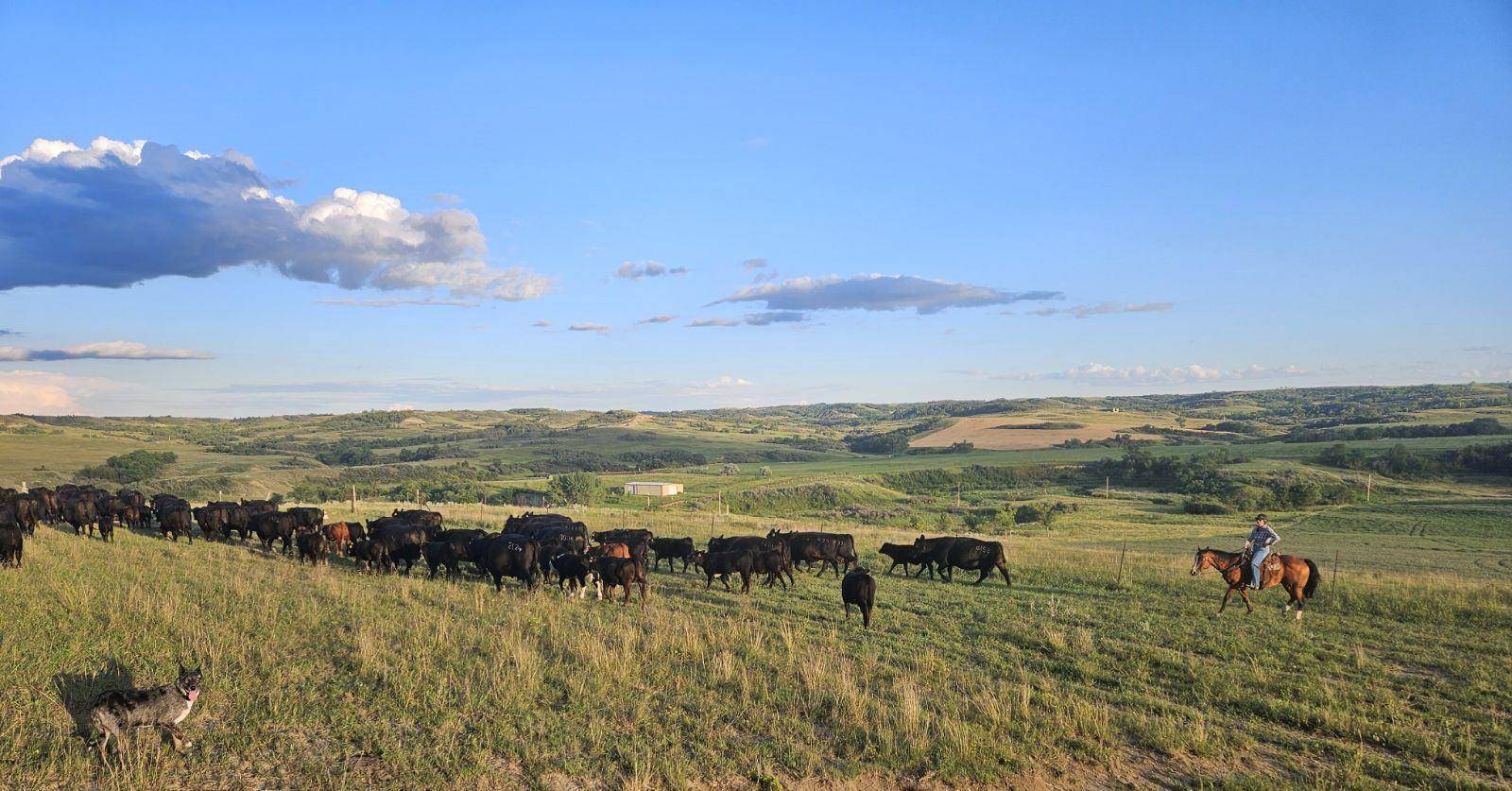
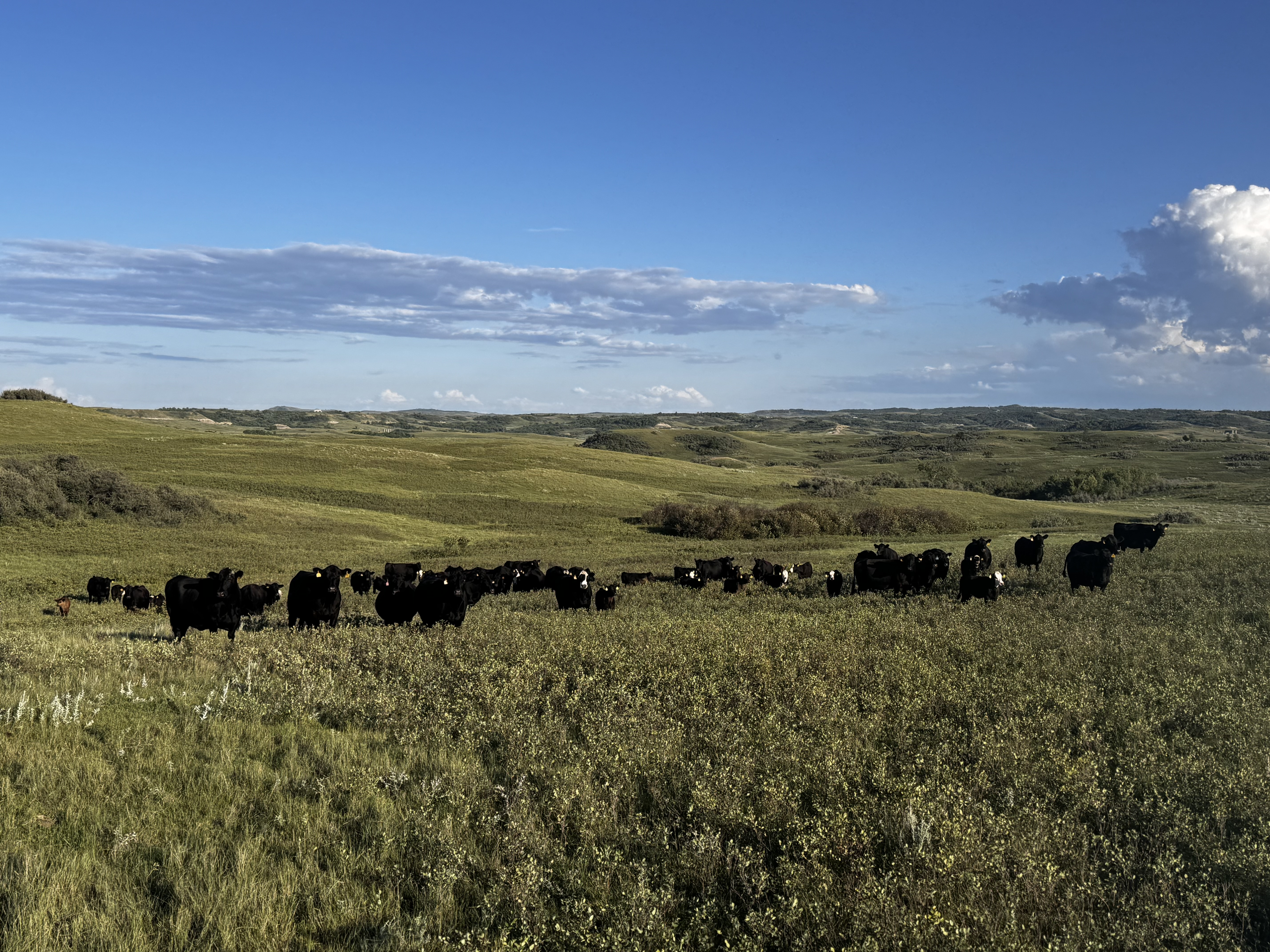
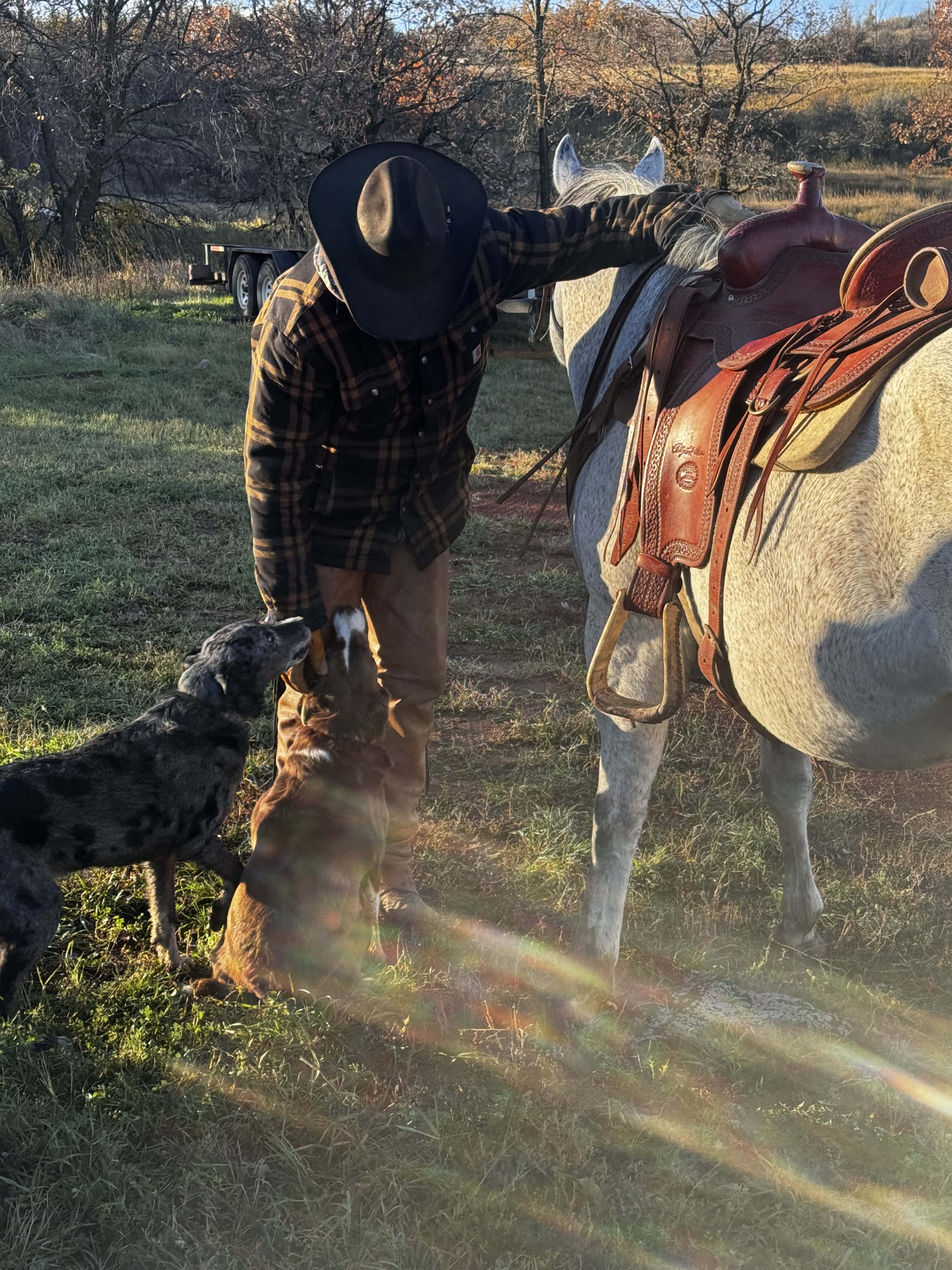
Last week we rounded up our cattle to vaccinate the calves before sale day. They were spread out in all corners of one of our big pastures and so we called in help and saddled up our horses. My yellow horse, Gizmo, was my choice for the day, and, per usual, he wanted to make sure I knew he didn’t agree with the morning’s plans by trying his best not to be caught and bridled. And then, when we were out trying to get through the brush and around the cattle moving in the wrong direction, he decided to test what would happen if he didn’t move at all. Turns out, much like my daughters, Gizmo doesn’t really care how many times I say, “Come on!” and “Hurry up for before I reeettttiiiirrreeee…”  Horses, like kids, sometimes forget who’s supposed to be the boss around here and neither really like to acknowledge it could be me. That horse and I were happy to eventually be the designated gate-watchers, hanging out to ensure nothing gets by that’s not supposed to get by, a job my little sister and I have had at roundups since I was eight years old.

Anway, the calves, they look good. They’re big and healthy and shiny. Three by three we ran them through the chute to check their health and administer shots, then ear tags or medicine when necessary. I’ve always liked the assembly-line type of task that is working cattle.  Everyone has a job that sinks into a rhythm and it generally goes pretty smooth, until it goes awry. And when it goes awry, as any cattleperson can attest, it usually does it’s very best to nail it. Turns out you can never have too much help when it comes to trying to figure out how to get a very stuck 400-pound calf unstuck without having to use a metal cutter on the chute.
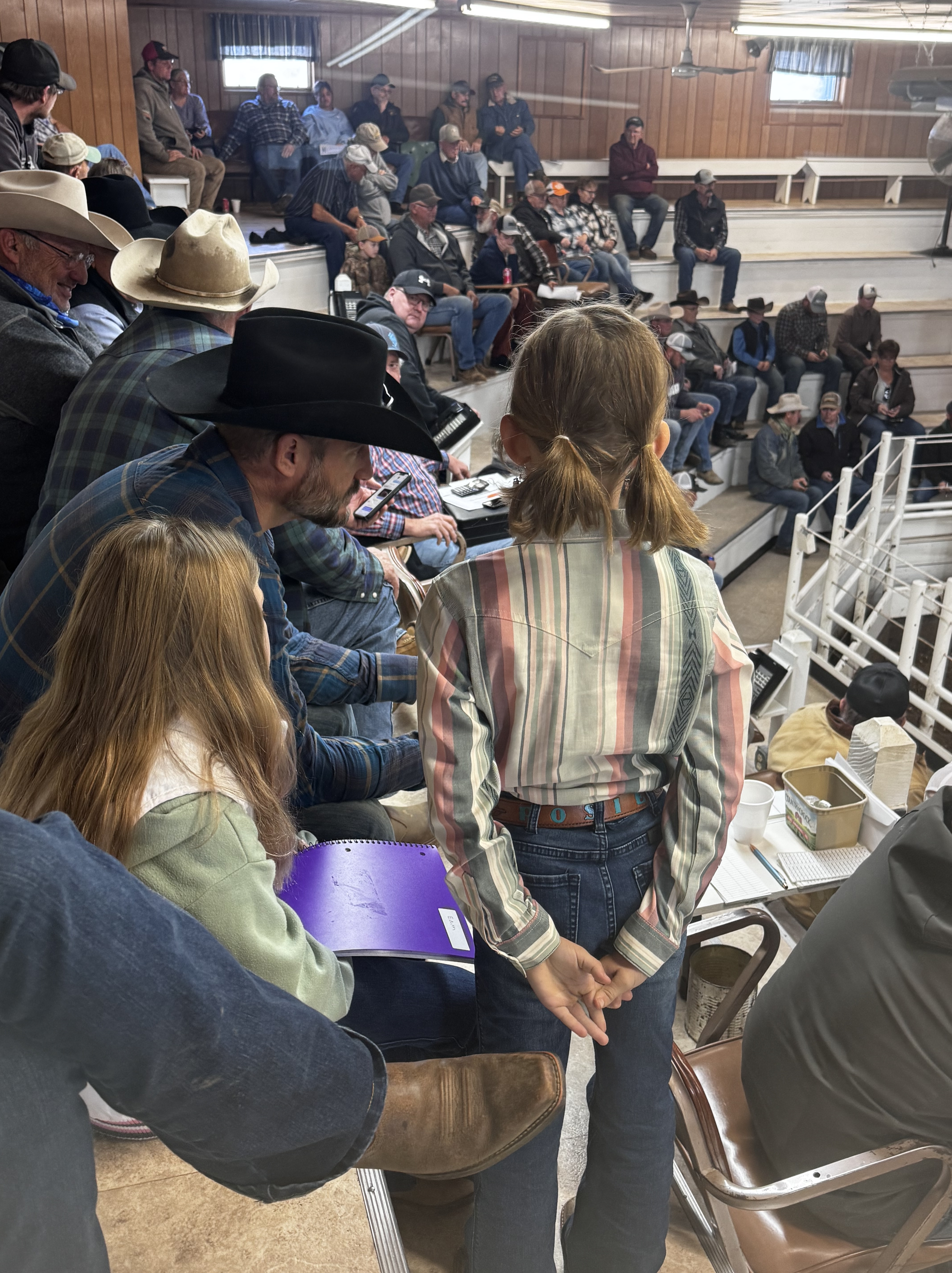
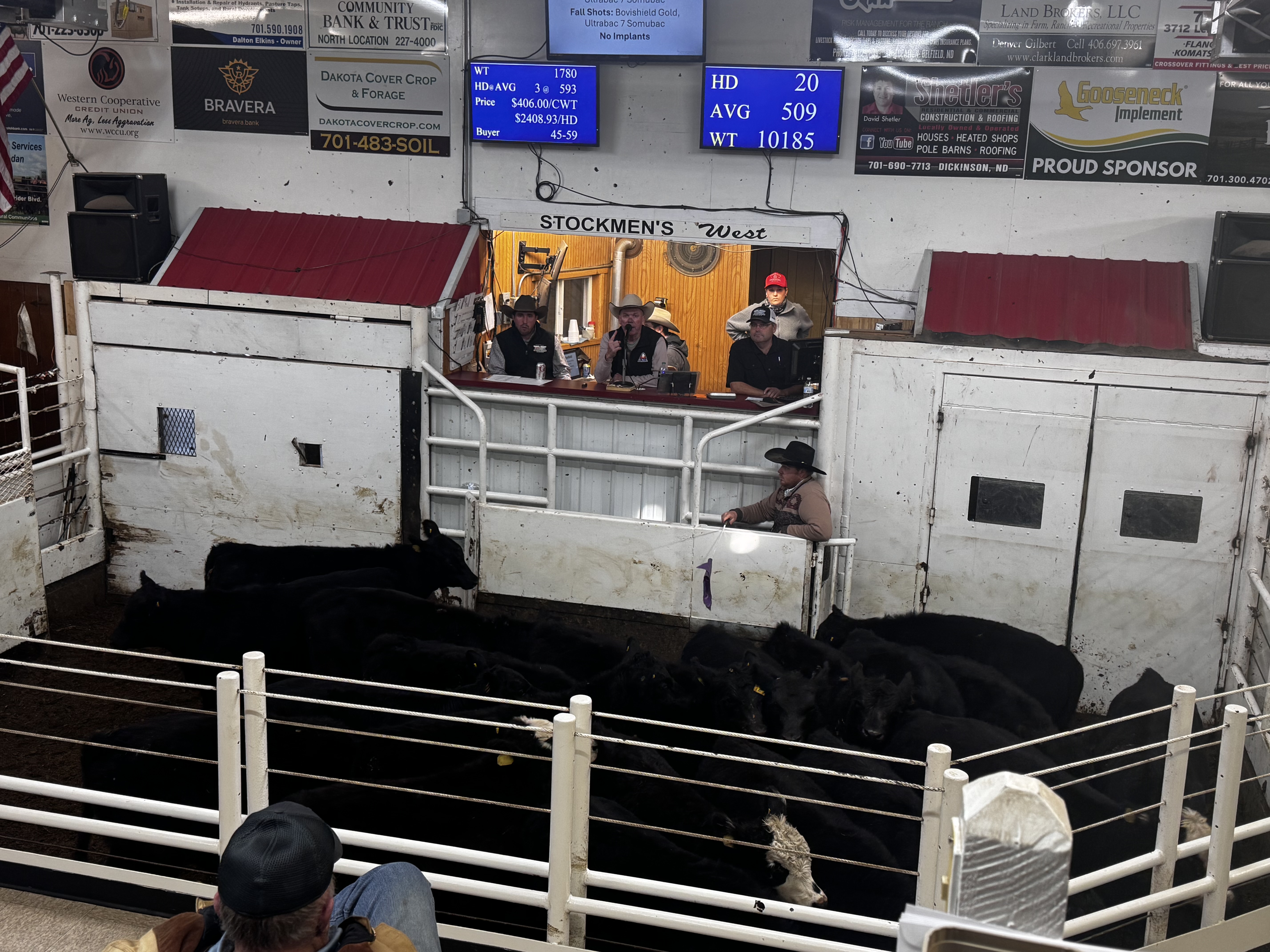
This season, it’s over in a cool breath. In a month we’ll load these calves up to the sale ring and tally what a year’s worth of feeding and caring and gathering will have done for us. But ranching is a heart business as much as anything. I think of this as I watch my dad inspect each calf. He’s spent a lot of time watching and worrying over these growing babies.

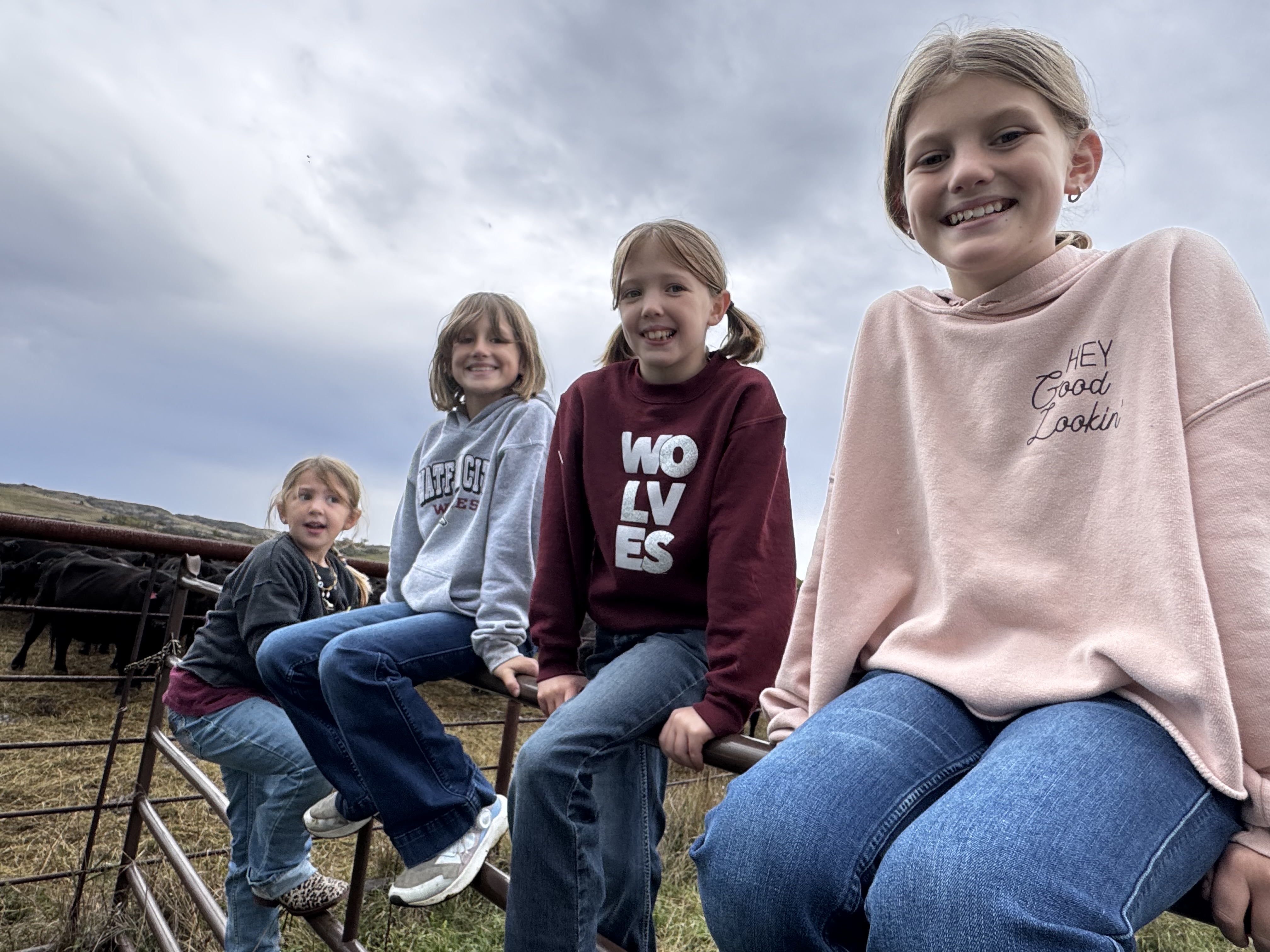
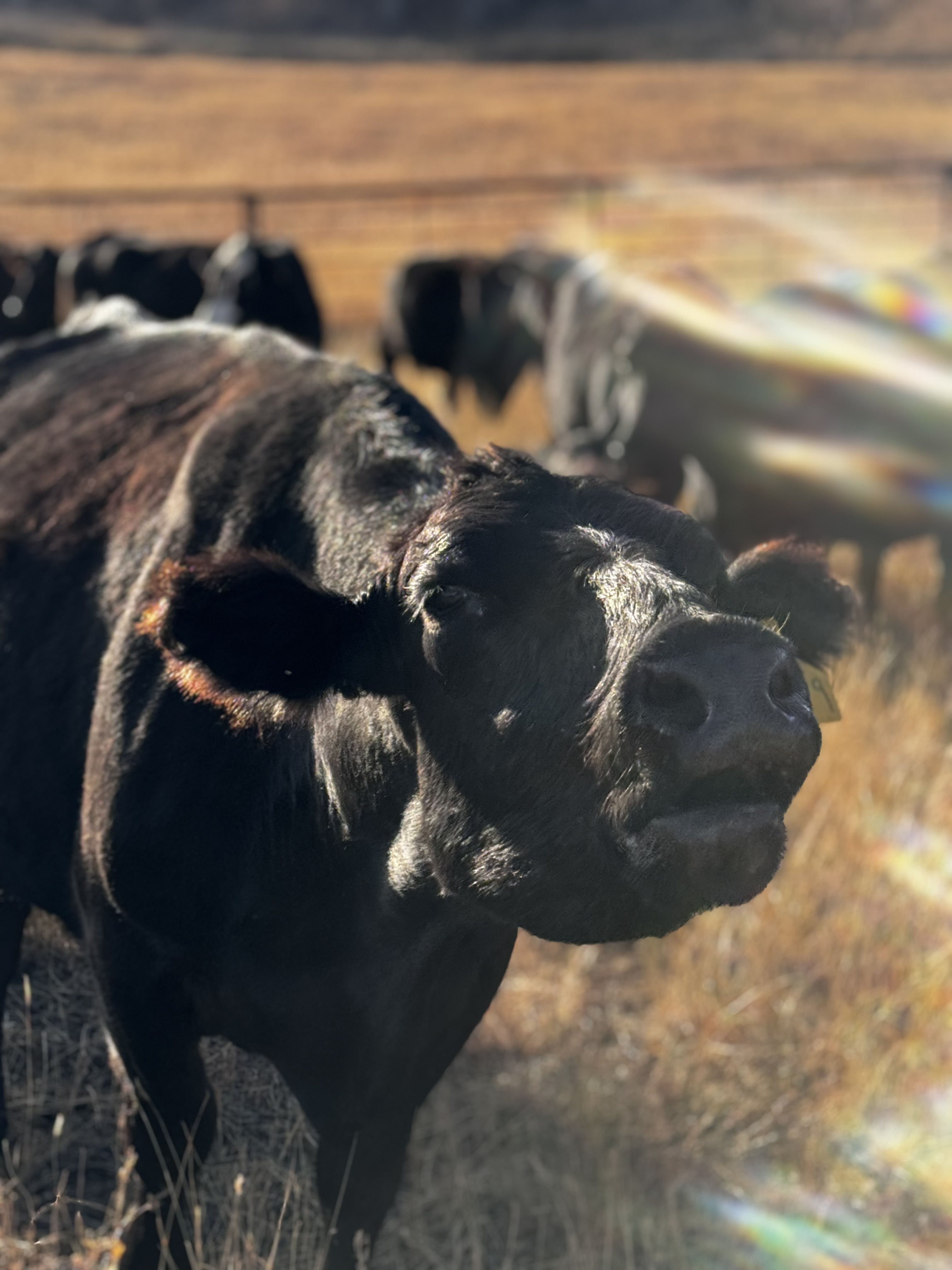
There are two nice heifer calves in the herd with crazy markings, one is red and white and one is black and white. The look of them isn’t ideal when it comes to building a breeding program, but my daughters who sat on the top of the fence behind me that day beg to differ. “Where’s Oreo? Where’s Ginger?” These are the heifers they’ve picked out to keep back. They will become their cows because they think they’re pretty and they remember when they were born. Ok then. What a gift these little calves will be to them someday.

And today. Today the sun will burn the frost off the green grass in our yard and the black flies will pop against our windows, some trying to get in. Some trying to get out.

Next week it could snow. Or it could shine. As with cattle and kids and horses, anything can happen in October.

The bull curse


This spring toward the end of calving season I remarked about how well things seemed to be going after my father himself remarked how well things seemed to be going. And then, even though I knew better, I dared to add, “No bottle calves yet,” and he told me, quite seriously and repeatedly that I had cursed the entire ranch.  

My dad, in case you missed it, is one of those superstitious ranchers.

What was I thinking?

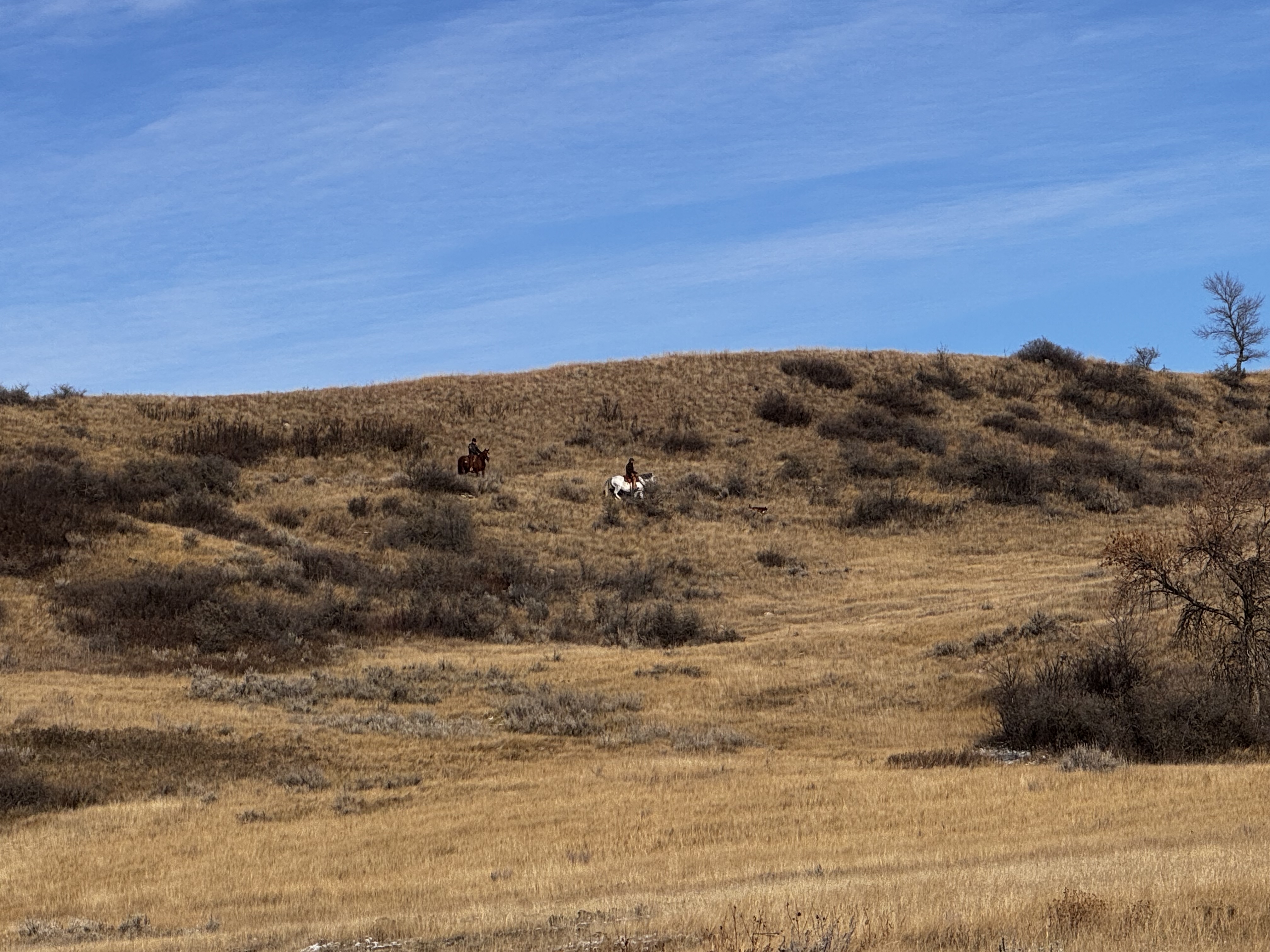
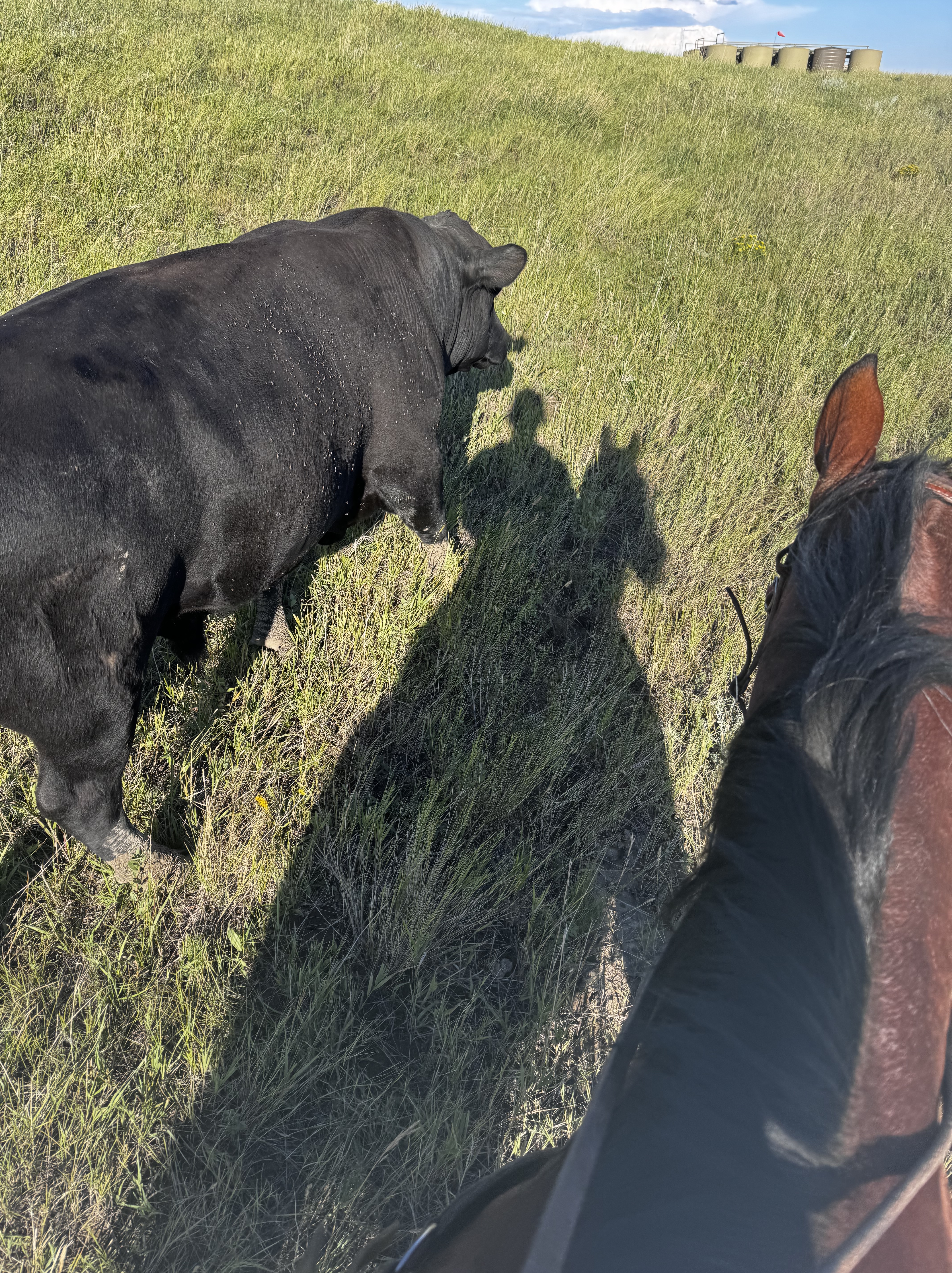
Fast forward a few months and we had a nice young Angus bull go missing, as bulls tend to do. Dad finally caught up with him in our neighbor’s pasture hanging out with his pretty black cows and enlisted the help of my sister to go round him up. Now, if you have any experience in the art of chasing cattle, you know that trying to break one lone male bovine away from a herd of females is not a task for the armature or the faint of heart. It usually never, ever goes well or smoothly or without cussing and sweat, prayers and thorns and then more cussing and in that order. But that evening, my dad and my little sister hit the trail horseback, miraculously found the stray bull and even more miraculously were able to walk the big guy back to the adjacent pasture so he could finish off breeding season with his betrothed cows. The plan in Dad’s head had come to fruition, things went smoothly and from what was reported there was no swearing and no praying and no thorns.

The other miracle? The fact that, after years of being traumatized in her childhood by helping Dad chase bulls, my little sister actually agreed to go along.

It was a brag-worthy experience and we all heard about it that evening. What a great bull. Can’t believe it. He worked so nicely. Went smooth. Easy as could be.

But the rancher’s dream was cut short when Dad went out the next morning to find the bull was gone again.

Vanished.

And so, this time Dad enlisted the help of my husband and me (because my sister had fled to Arizona, probably to avoid this very situation). Off we went with horses, back to the neighbor’s pasture to, sure enough, find that bull hanging out with his preferred herd of ladies. As we approached him, Dad talked through about ten difference scenarios and tactics we could employ to get this bull back into his rightful spot. Again. We could take him with a small group of cows to the pen by the road and then load him into the trailer. We could take him with the herd toward the gate and then break him off. We could go take what we could get with him to the northeast gate or we could just… ope…there he went, walking right at that bull and breaking him from the cows who went running in all directions. And so that’s the plan we landed on, all three of us pushing that bull alone, up over the hill and through a school section alley, slow and steady and easy in one gate and then another and to our pasture, all the while Dad saying, “This is great! What a nice bull. This is how easy he went with Alex. I can’t believe it. Look at how nice he is.”

And me? Well, I didn’t say a dang word. Because I knew better, having cursed the entire ranch and all. And I know from experience that, with bulls, well, it ain’t over ‘til it’s over.

But that experience has shown us that once you get a bull in with all the cows it is over. That’s the task. Uniting/Reuniting is the goal. And so, once we successfully achieved that, we all sort of sat back and carried on with the next mission of pushing those cows and that bull into the next pasture.

But it turns out Dad’s out-loud-positive-affirmations was going to do a number on us as I suspected, because I looked over to right to notice that bull veering from the herd suspiciously. So, I followed him with the plan of turning him back, which should have been easy, but the veering continued. I sent the dog in, which made the veering continue faster toward the kind of thick and thorny brush patch on a cliff that bulls tend to love. Cue my husband and dad flying in from both sides hollering, “We have this Jess, go watch the cows.” And so, I did what I was told but found a perch nearby to see if I could watch how this was going to play out.

It was about fifteen minutes into peering from the hilltop down into the winding, deep creek that cuts through the big brush in the corner of that pasture, the absolute worst place to find an animal or yourself for that matter, when I finally got eyes on them. My husband, off his horse on the edge of a brush patch rubbing his hand and my dad standing next to the fence staring over at the bull on the other side who was standing up to his neck in the water, staring back.

“Well, it’s over now,” I thought to myself as the two men came riding back toward me and the cows.

“I’ve never seen anything like it,” my dad exclaimed. “The thing jumped off a cliff and into the water and then swam under the fence!”

“I thought I heard a splash,” I said.

“He actually went under the water!” my Dad said as we retold the story to my mom and the girls over a 10 pm supper when we finally got home. “I can’t believe it!”

“I didn’t know bulls could hold their breath,” Rosie said.

“I wonder if it was my curse or yours that will keep that bull at the neighbor’s for all eternity?” I asked my dad between bites of casserole.

Anyway, if you need us, well, my husband will be digging the thorn from his hand, Dad will be looking for that bull and I’ll be keeping my mouth shut…

The Lemonade Stand

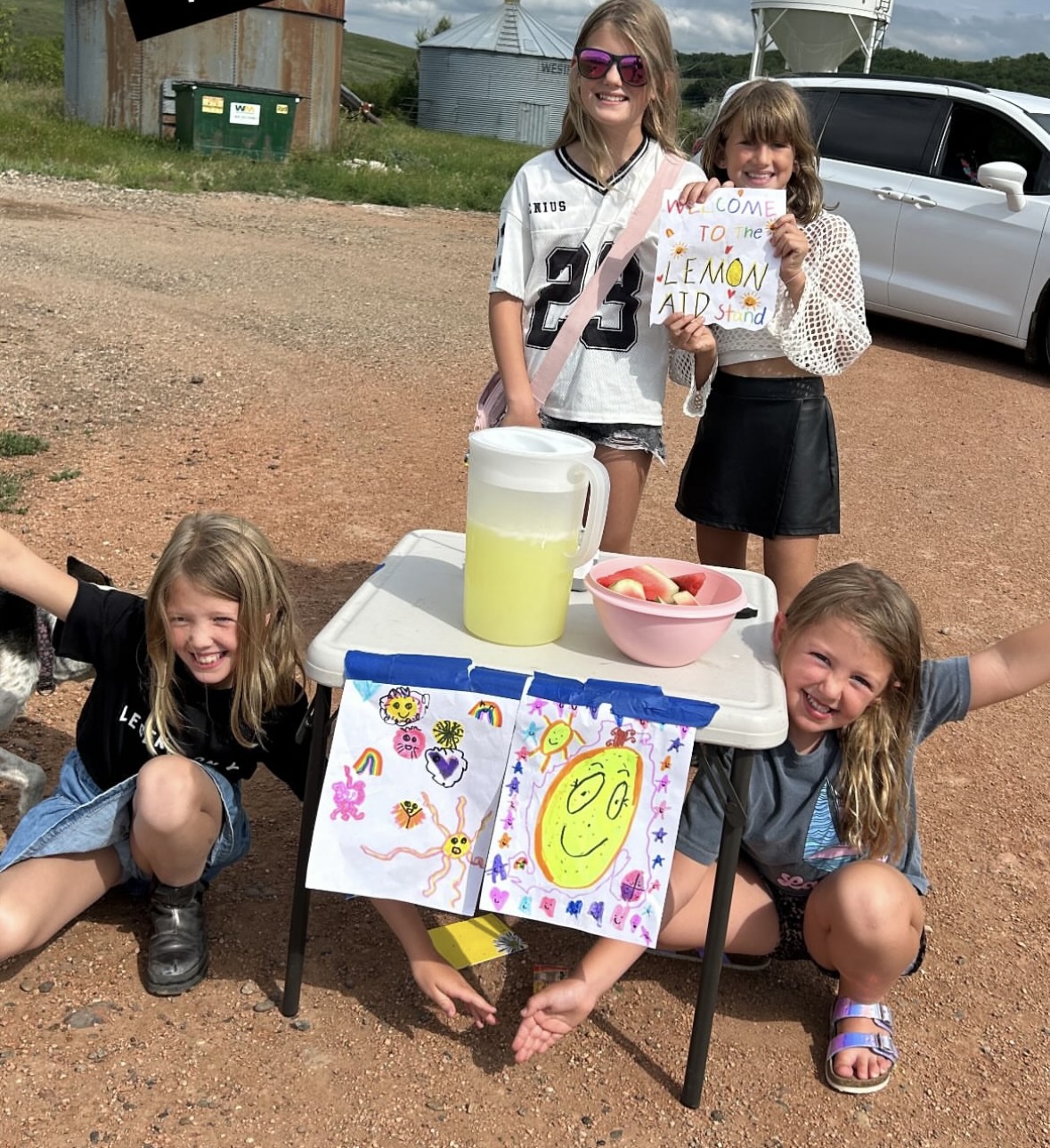
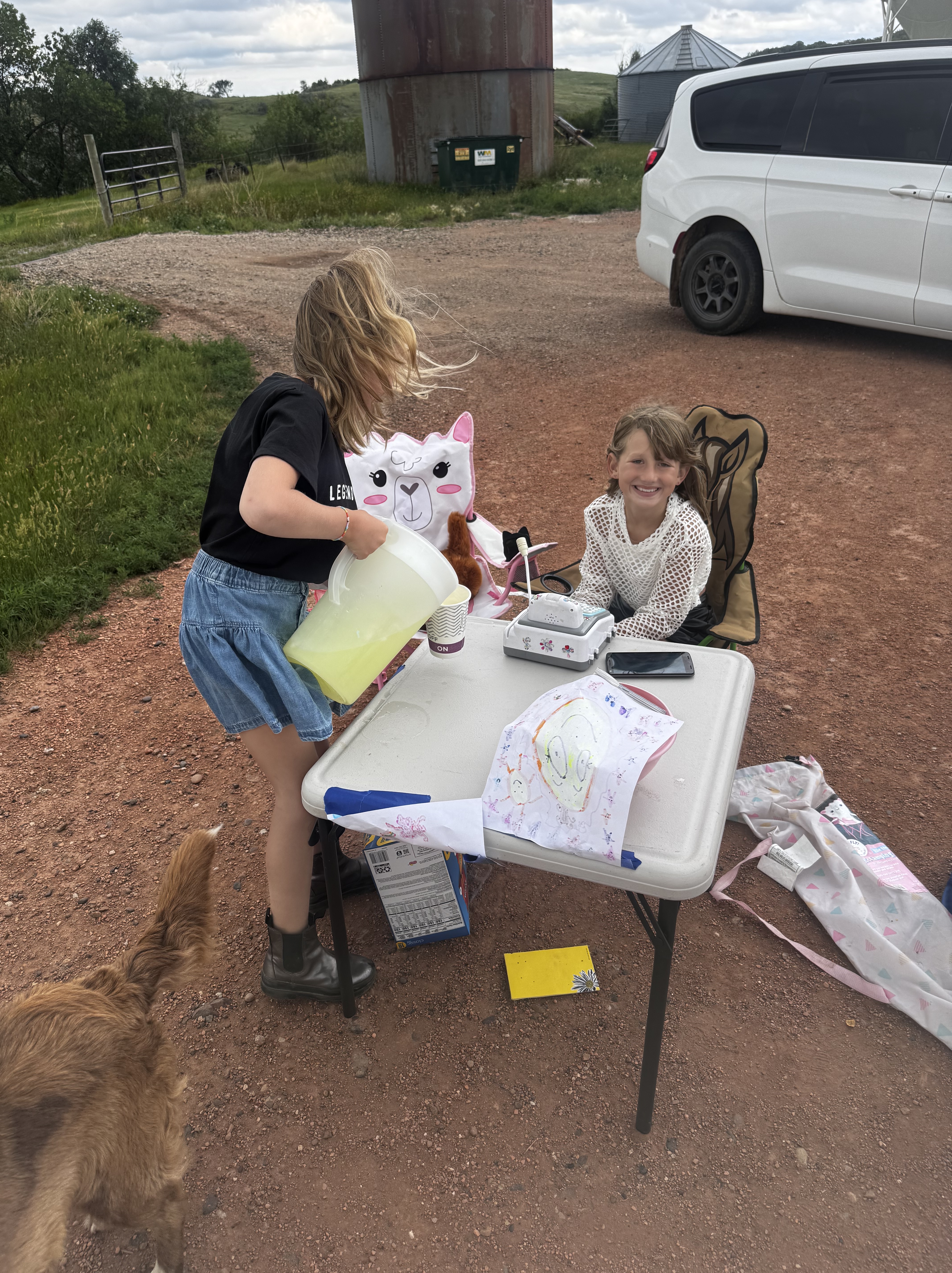
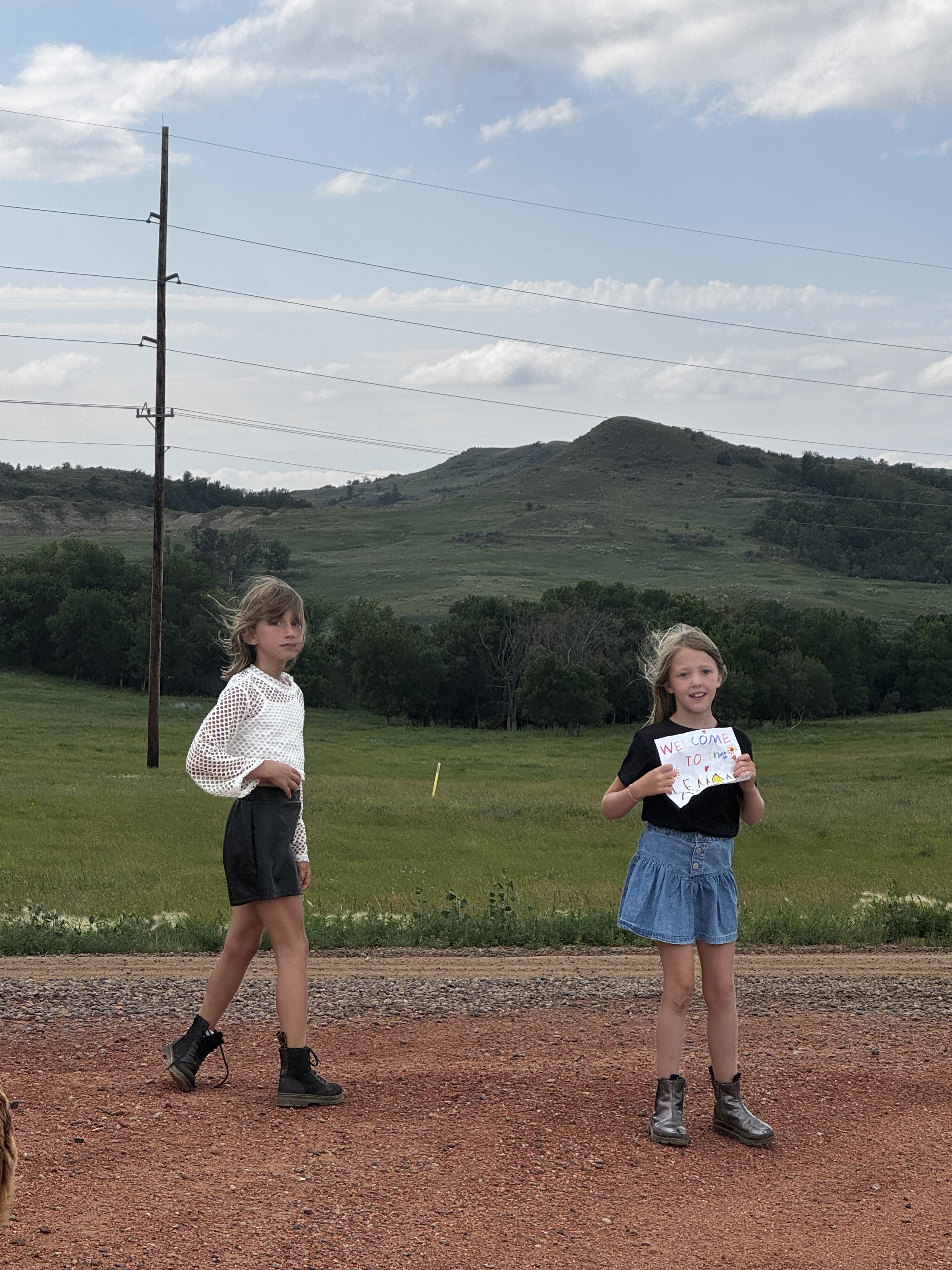
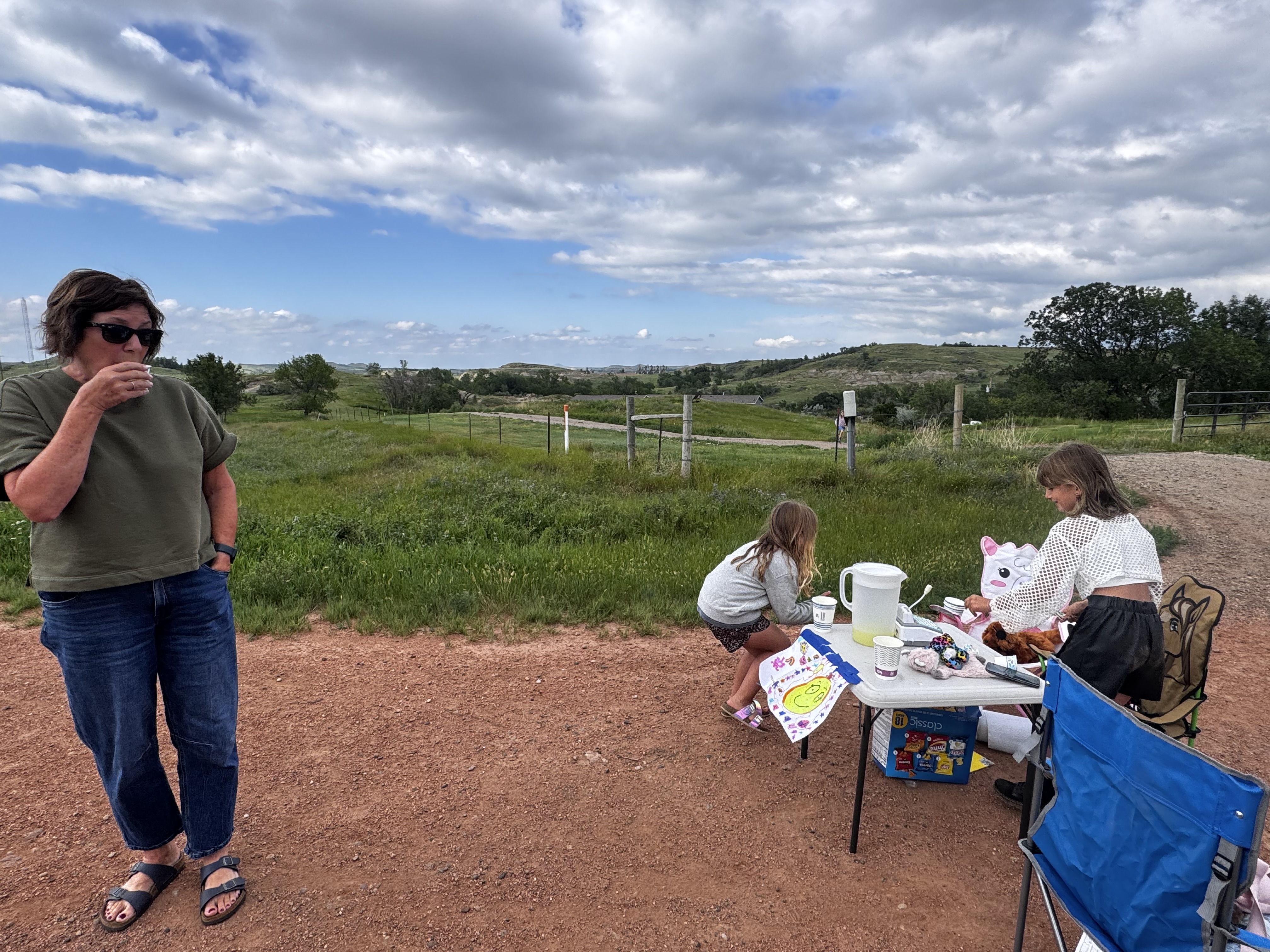
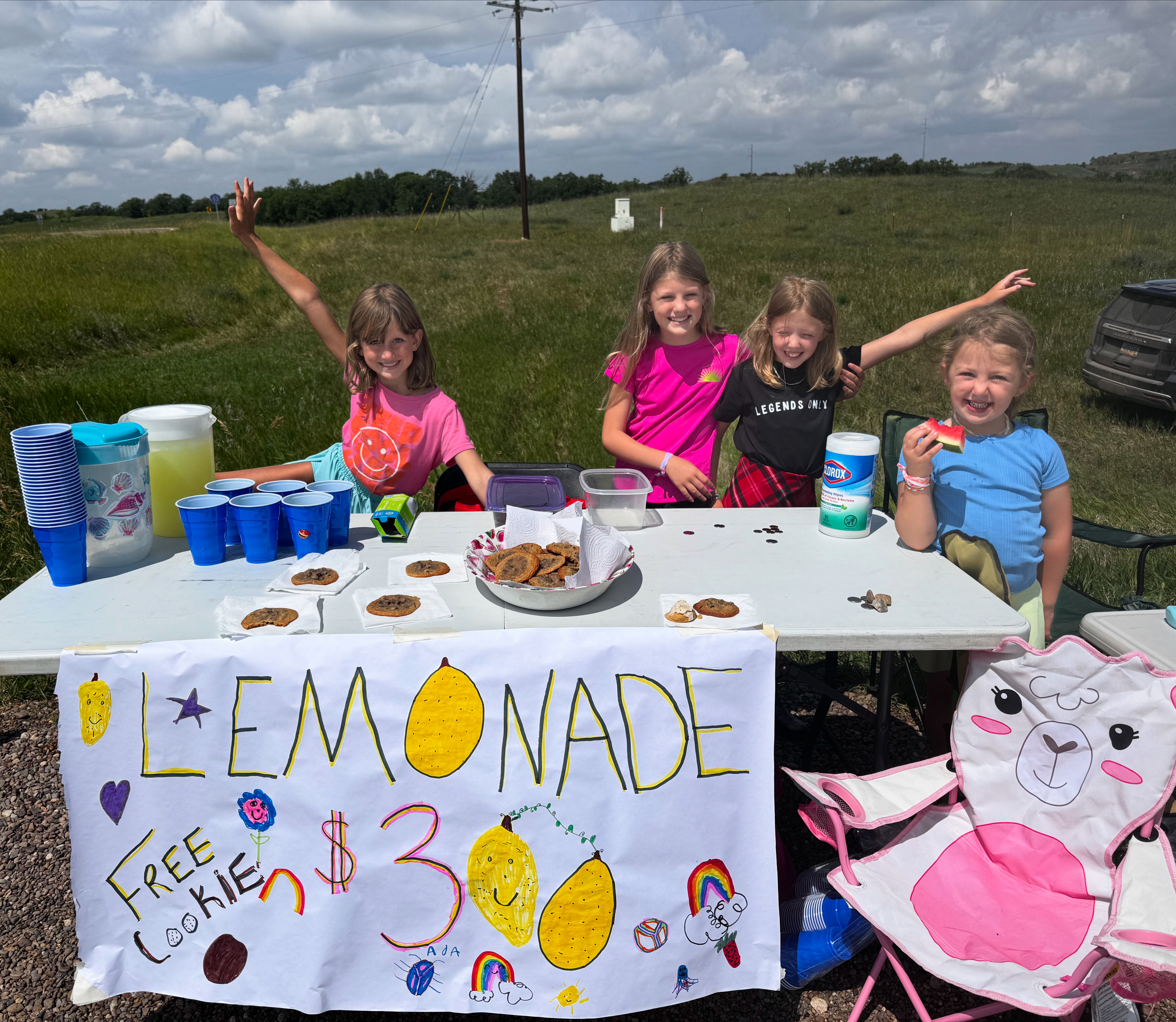
I came home from town yesterday to find that my daughters and their cousins had set up a lemonade stand on the ranch-approach facing the gravel county road. They had been there for an hour or so waving and yelling “Get your lemonade!” to the big blue sky and the wind and the cows munching on sweet clover in the pasture on the other side of the road.

They had big dreams of making enough money for each one of them to get a new pet. As if four dogs, eight cats, two goats and a pasture full of horses between the four of them isn’t enough, we need to add a hamster and a lizard to the mix. We’re dreaming big out here.  They even brought their plastic cash register.

Country kid lemonade stands are the epitome of patience and rural acceptance. There are just some things that aren’t as successful out where the cows outnumber the people by like 3,000 percent. Well-manicured lawns, rollerblading and getting away with sneaking out to a party are some other examples, among others.

Anyway, the lemonade stand, it was impromptu, as most kid-run businesses are. As a result, my sister didn’t have time to rally the neighbors to casually drive by and discover the oasis of slightly chilled refreshments, a variety box of single serve chips and four girls waving handmade signs and spouting unreasonable prices. This is when grandparents and dads on their way home from work come in handy. The girls made $15 off their family.

A text just chimed on my phone. “Ada made chocolate chips cookies. She wanted to make sure you don’t make the same thing.” It’s my little sister. Today the girls are going to head back out there, this time with better treats, bigger signs and a chance for us to call my brother-in-law who works on the oil sites out here, to bring cash and call his people.

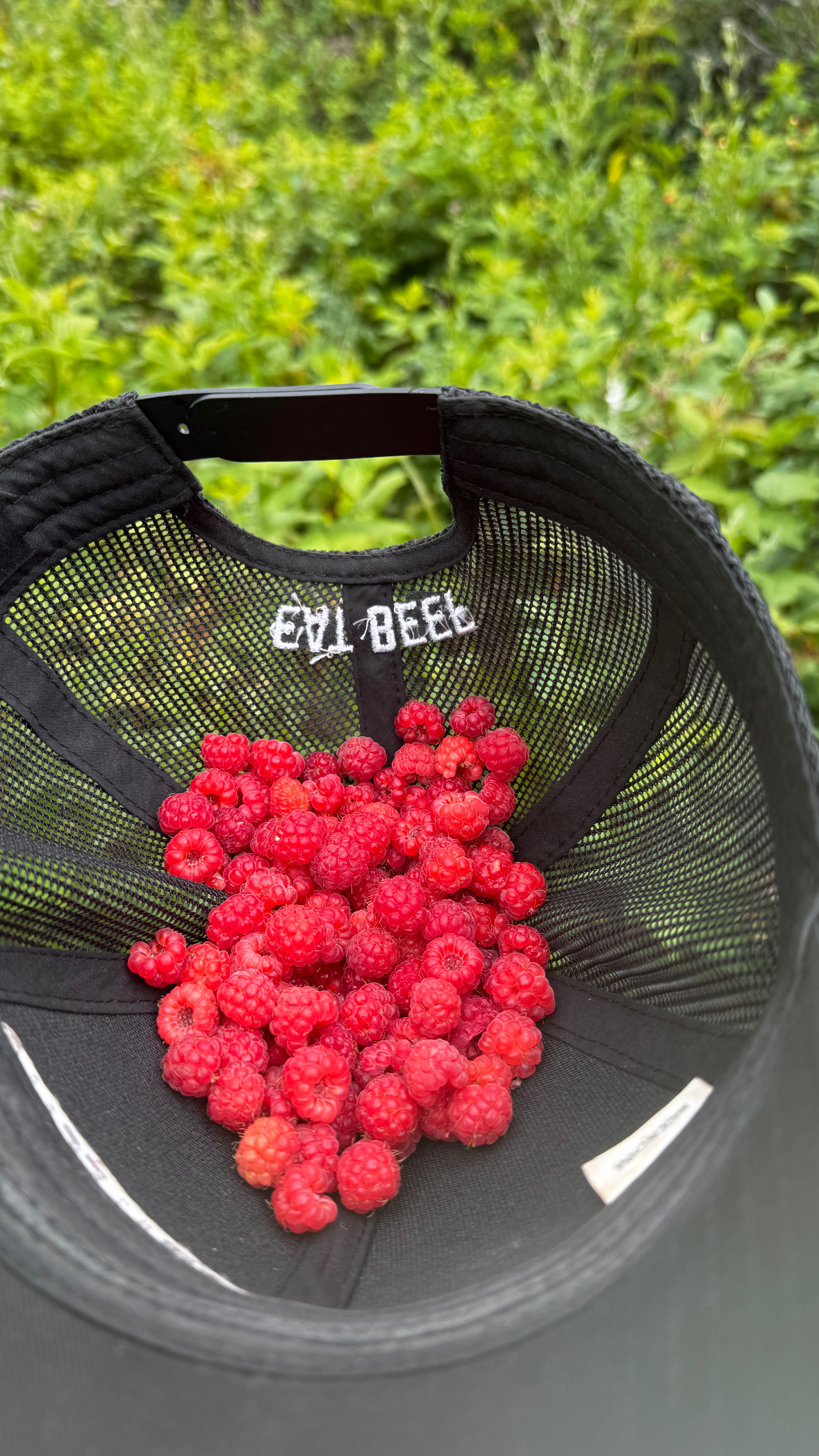
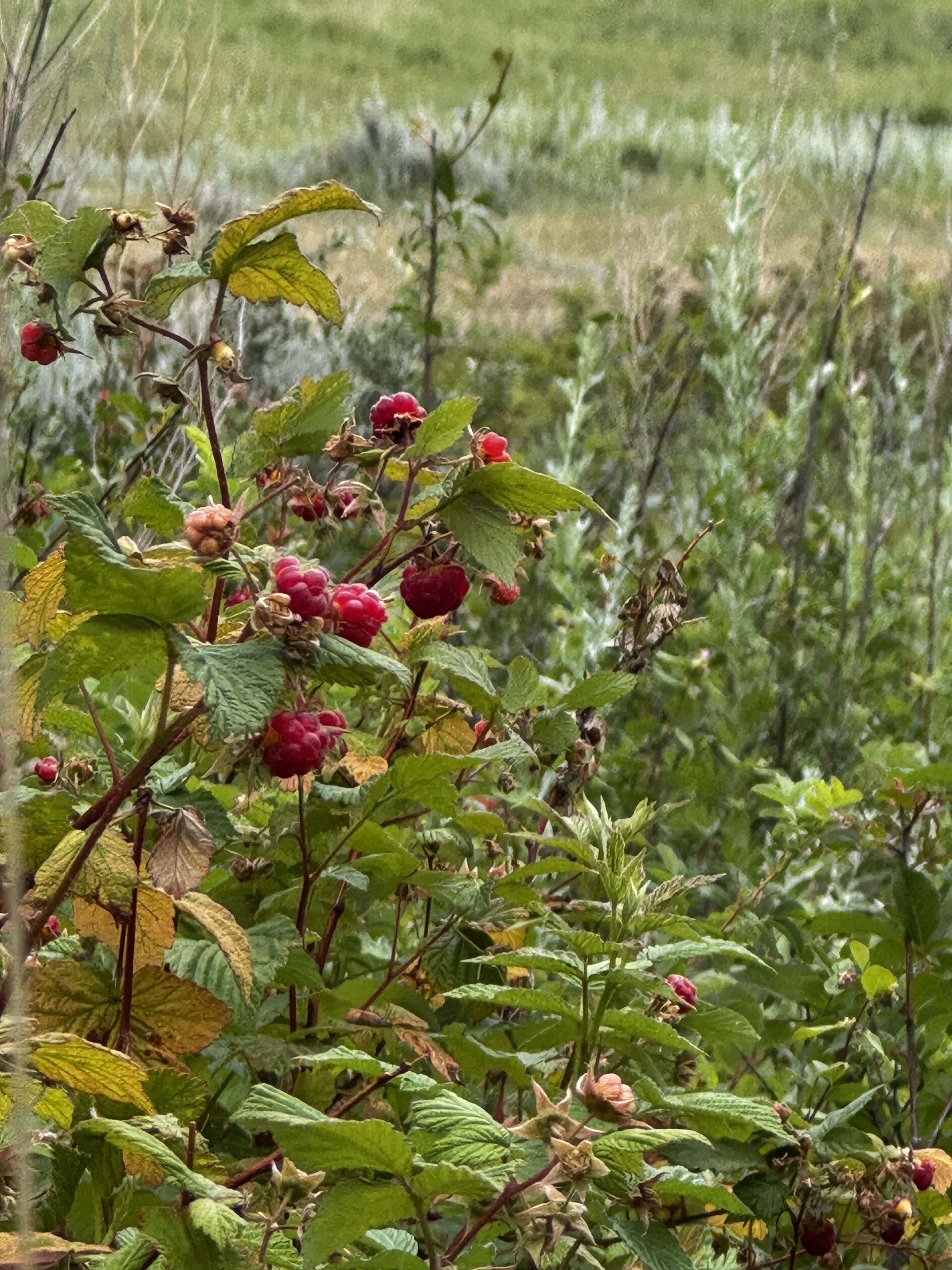
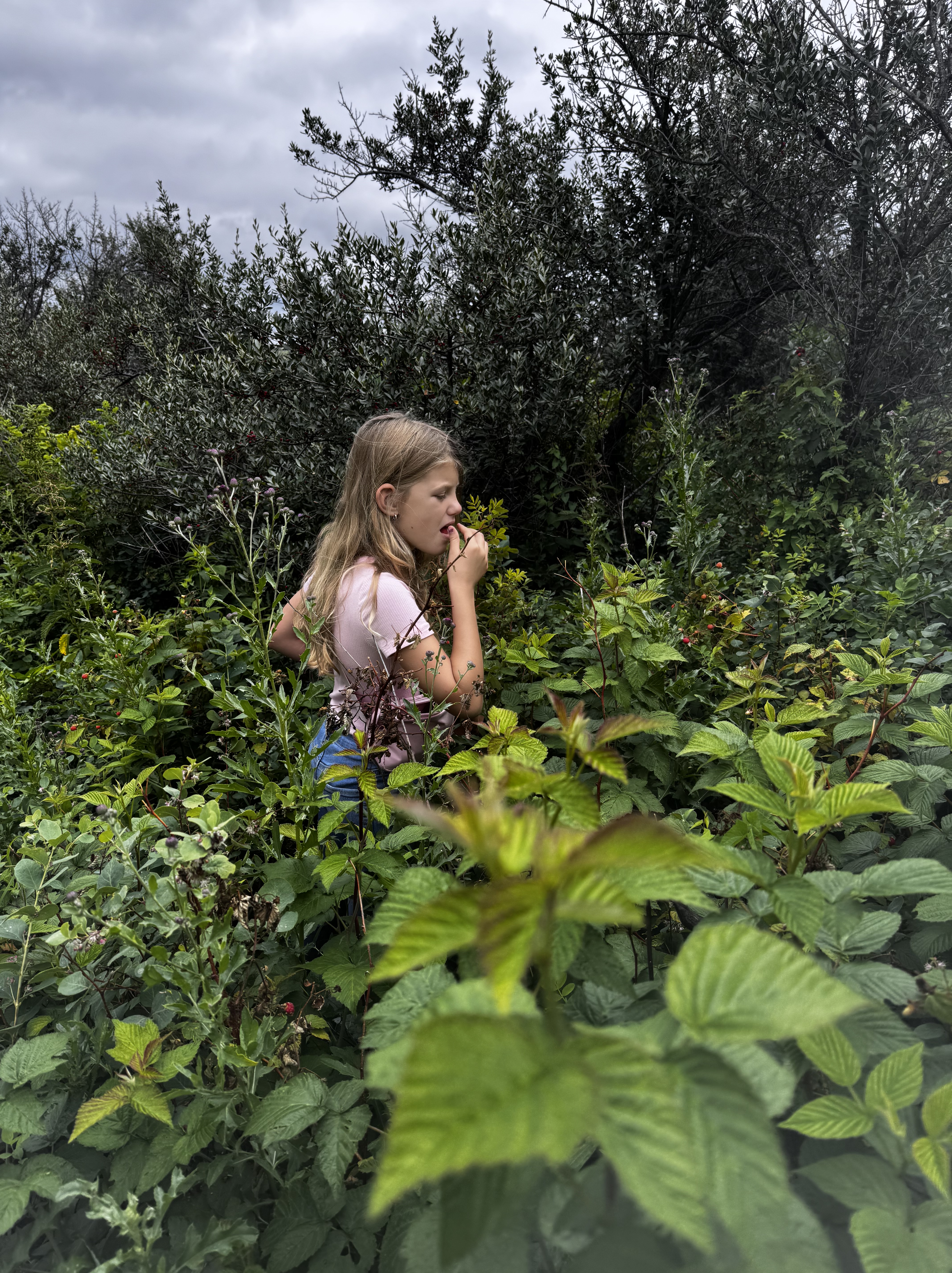
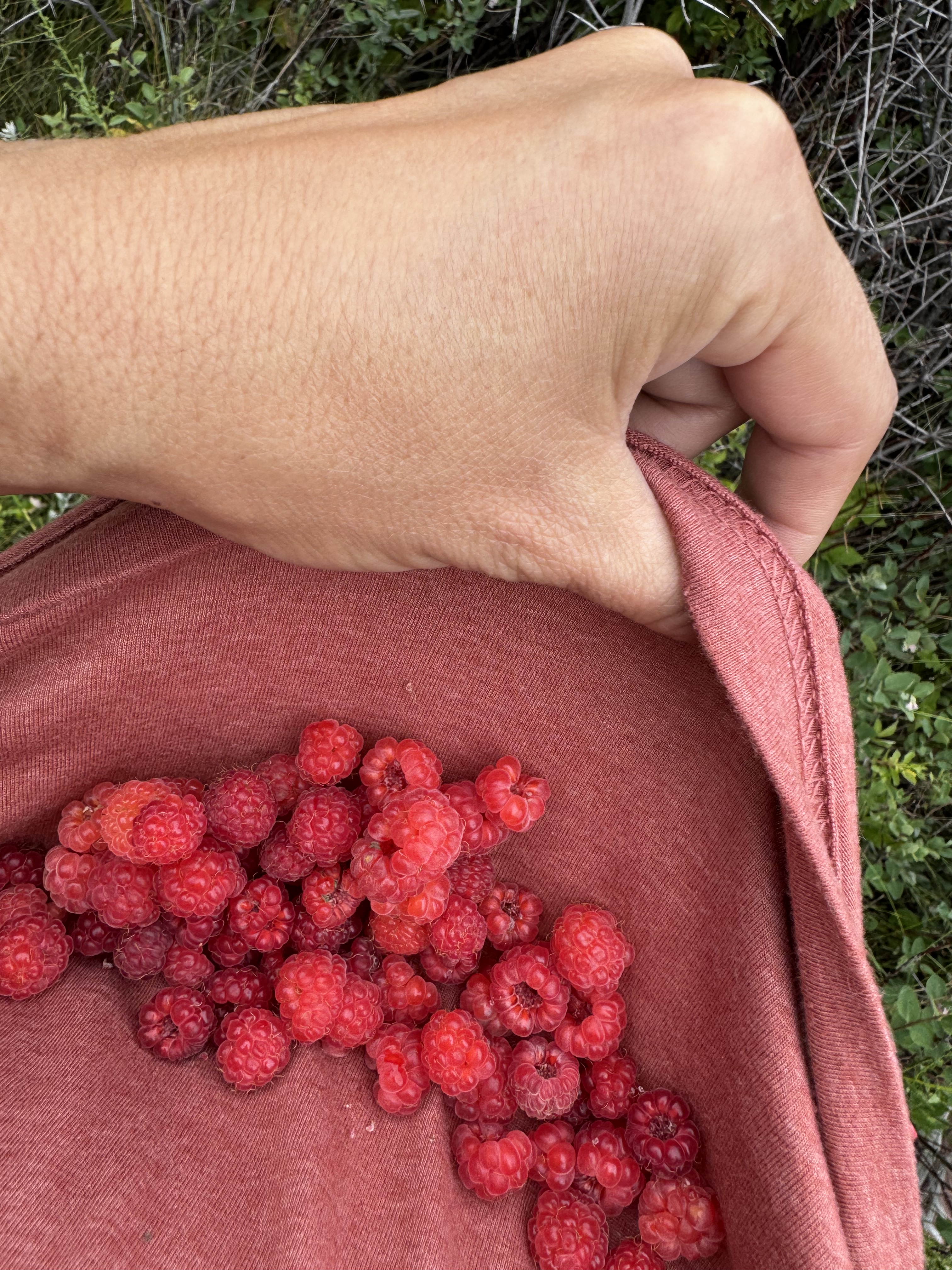
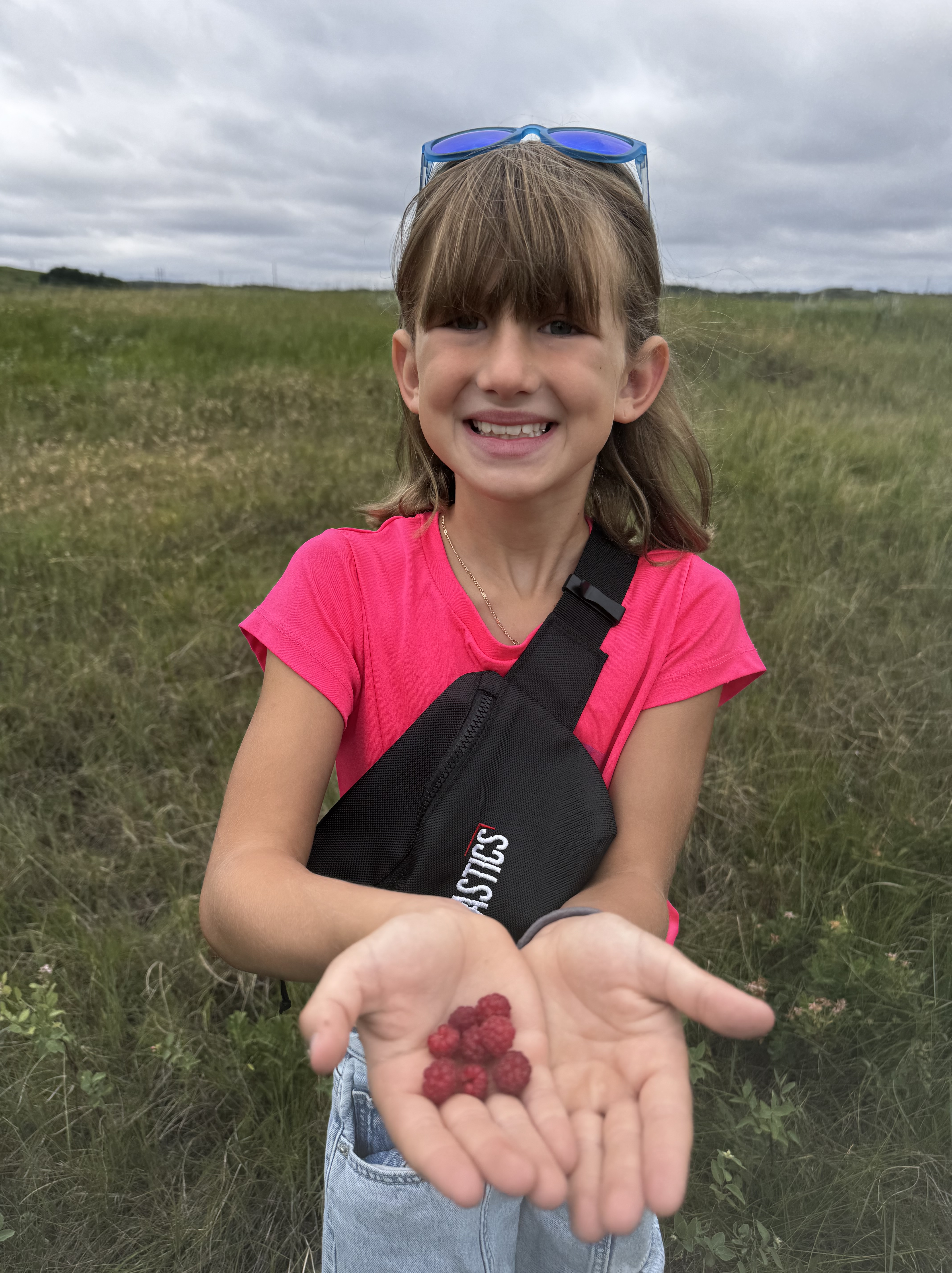
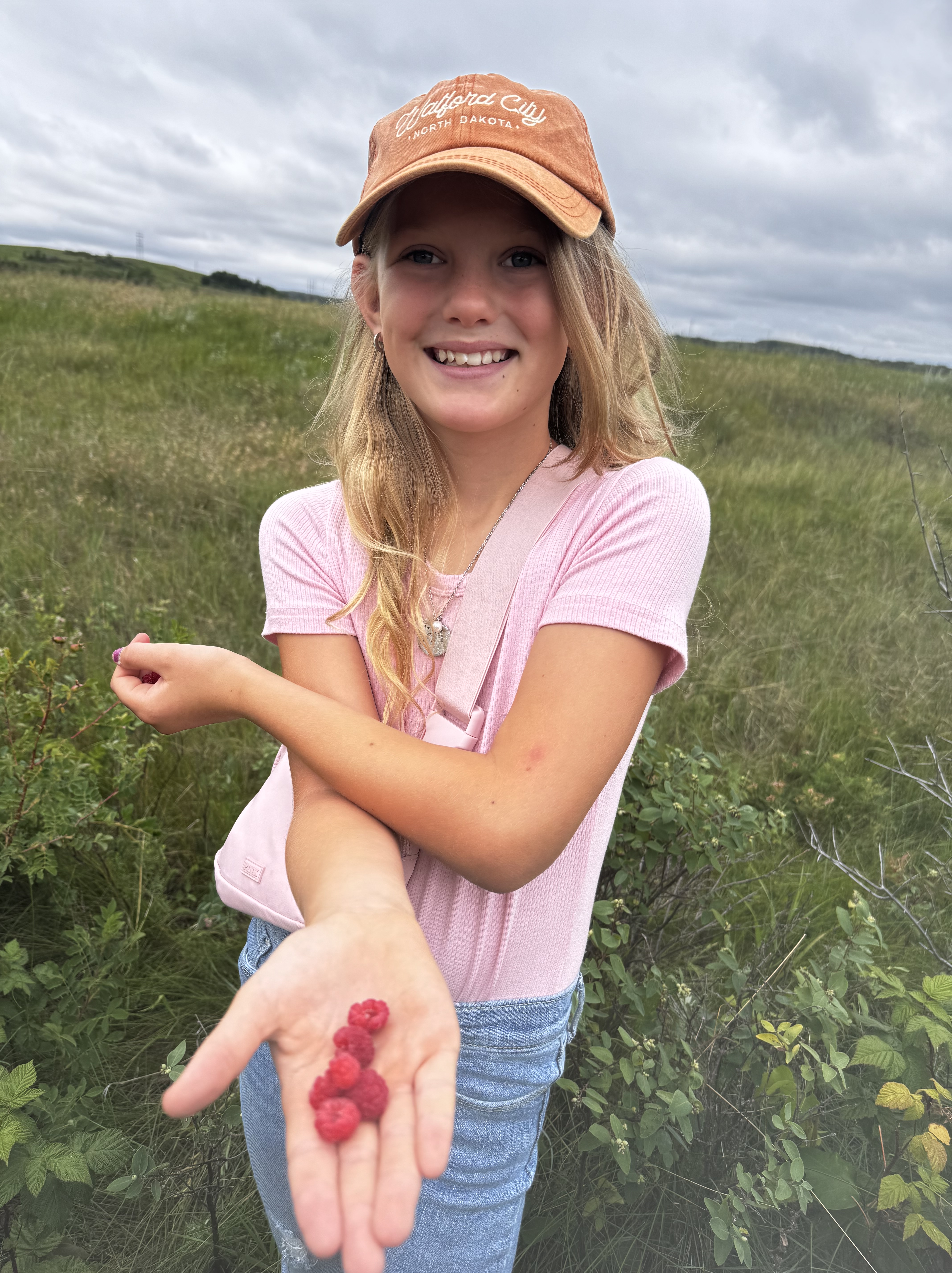
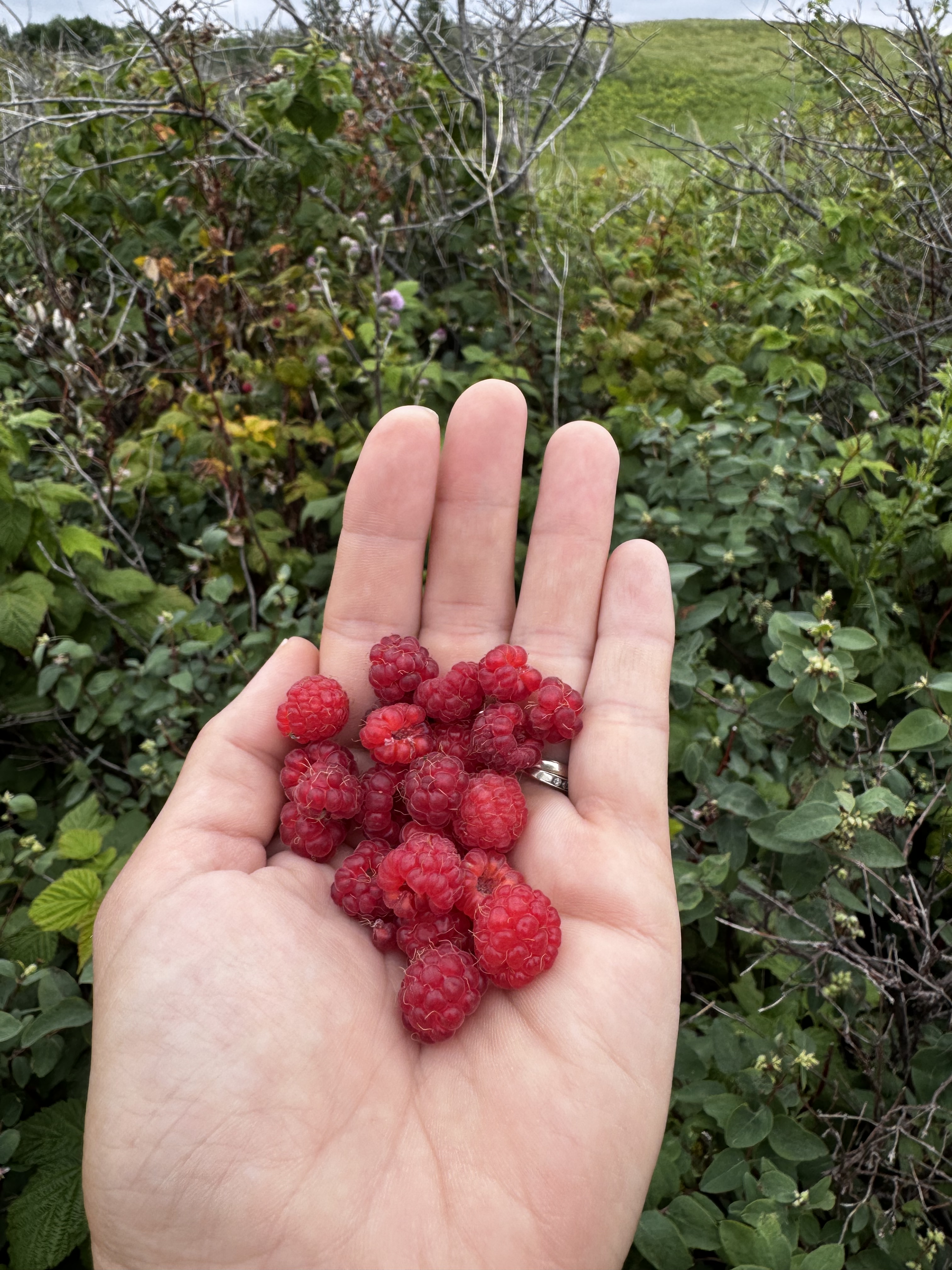
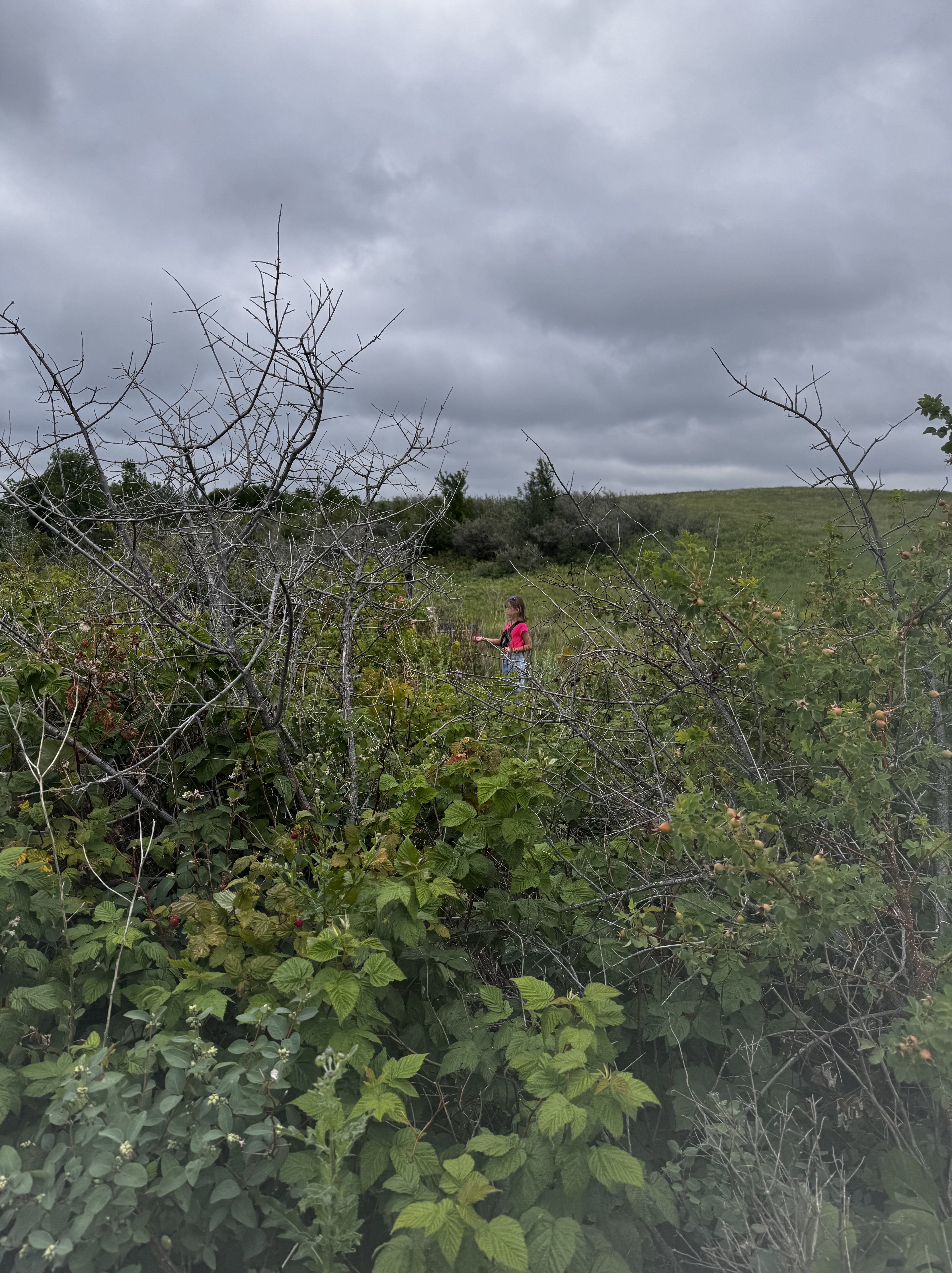
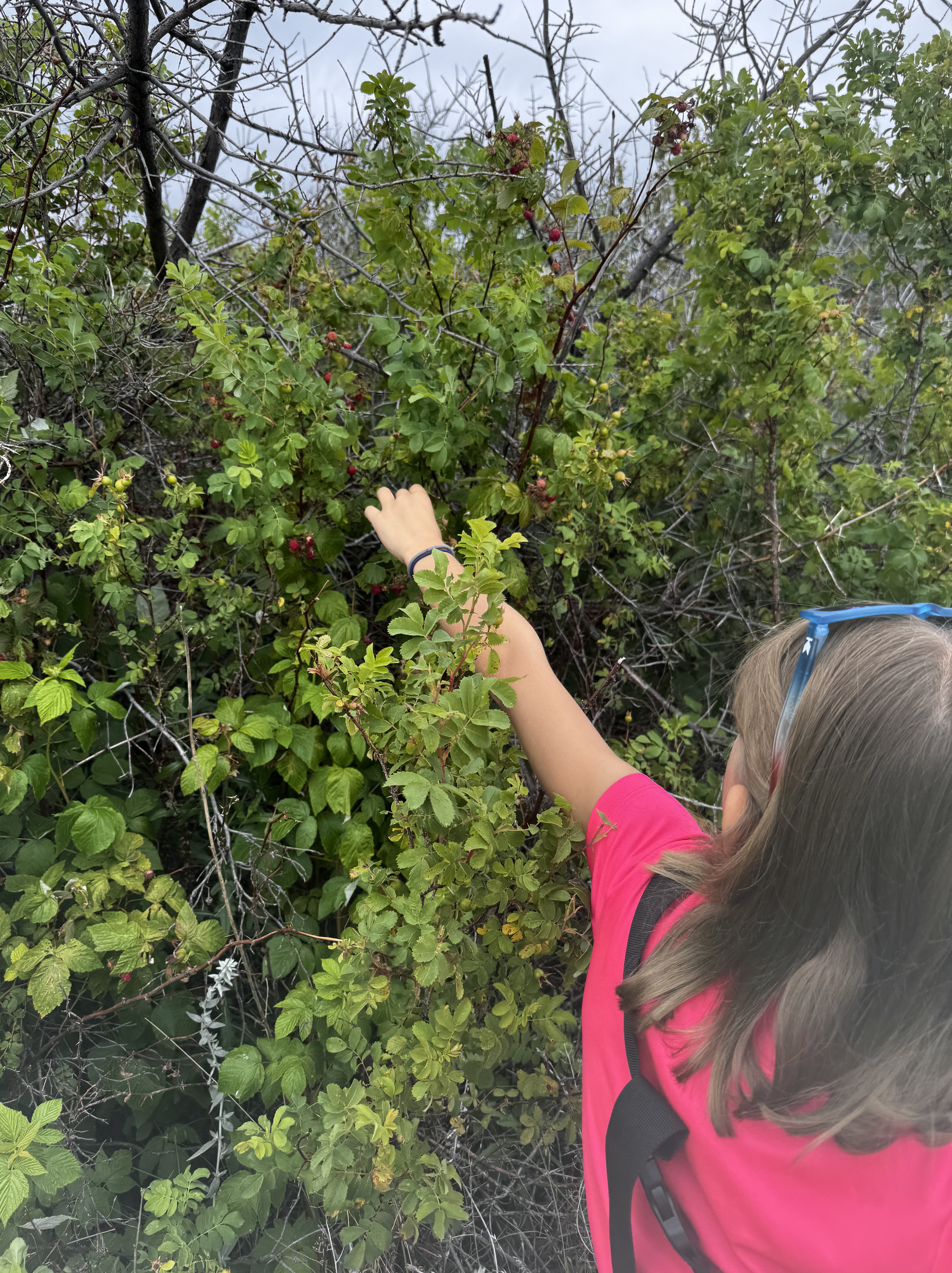
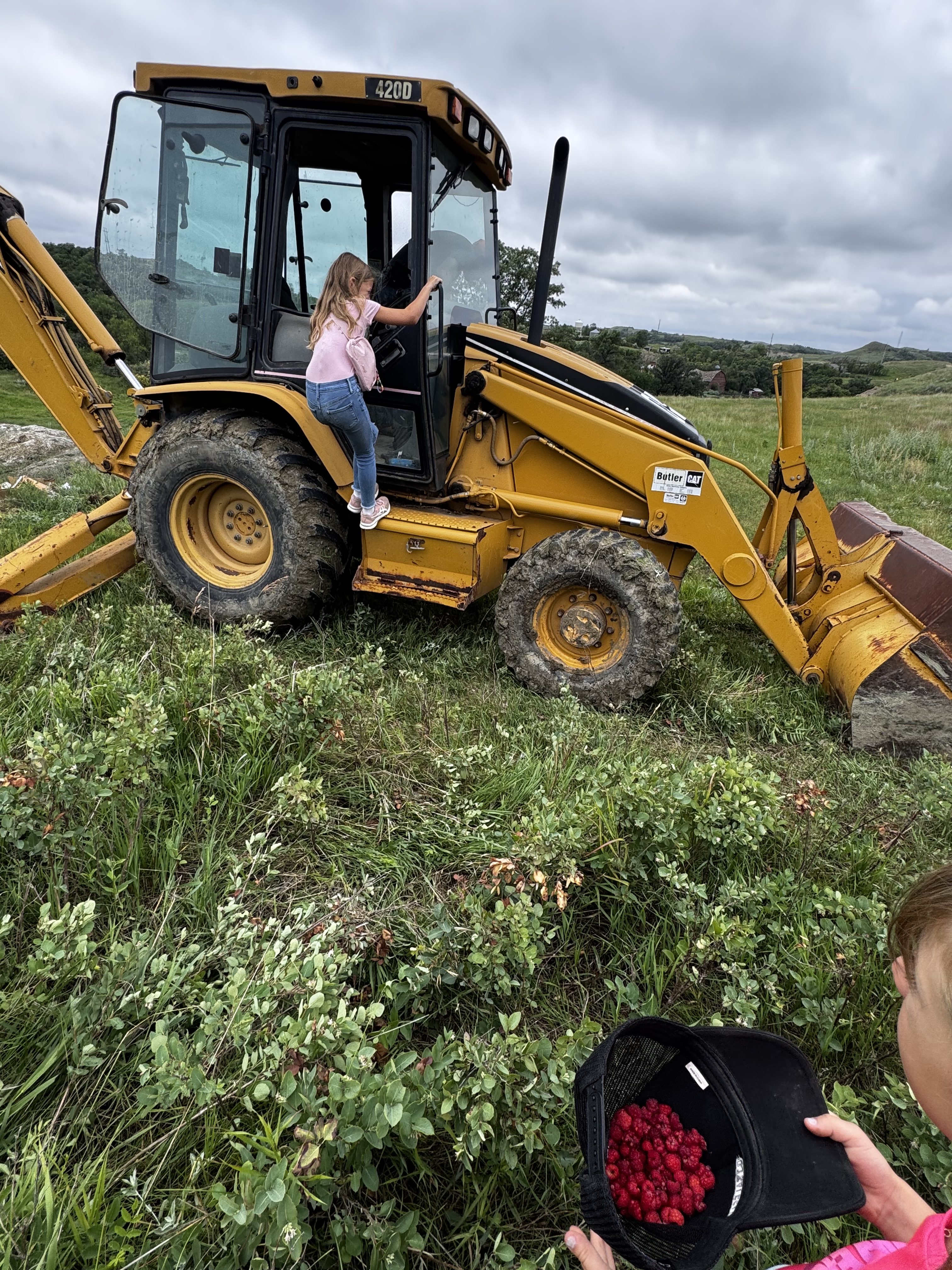
On Sunday I took my daughters to the home pasture to check on the wild raspberry crop, a tradition that can’t be skipped this time of year. But, much like a lemonade stand on a rural road, planning and timing is everything when it comes to raspberry picking. Get there too early and they’re not ripe. Get there too late and the birds beat you to them. My summers of experience and all the rain that’s fallen this July gave me the hunch that we were going to have some success in finding raspberries (and horseflies) that day, and boy, was I right. And boy, there is nothing better than a ripe wild raspberry picked out under a big prairie sky. A tiny, delicious little treasure hunt. I looked over and my oldest was neck deep into the thick brush, putting three berries in her mouth for every one she put in her ball cap to “save for dad.” As you can imagine, that ball cap was empty by the time we moved to the next brush patch and the only one saving any for dad was me, his loving, selfless wife with willpower of steel, which is what you need in order to leave any wild raspberry uneaten.

We caught up with my husband moving dirt with the backhoe on our way back to the yard and surprised him with my cap full of berries. The way the grown man transformed into the ten-year-old version of himself, popping those treats in his mouth five at a time, well, it made my sacrifice worth it.

Anyway, the raspberry-picking was impromptu, like most of the best memories are, and, unlike the lemonade stand, it’s one activity that does work best out in the hills where the cows out number us. After their dad had his fill of raspberries, the girls climbed up in the buttes to sing and throw rocks. Then, coming from another butte about quarter mile away they heard tiny voices yelling, “Hello! Hello!.”  It was their cousins of course, news travels fast out here where the wind carries giggling and chattering voices.

“Hello!” they yelled back, waving their arms, thrilled to have been discovered. “We love you! Can we come oveerrr?!!!”

“YEESSS!!! Come ooovvveeerrrr!!!” replied the tiny voices far away.

And so they did.

This is summer on backroads and I just don’t think you can beat it.

UPDATE

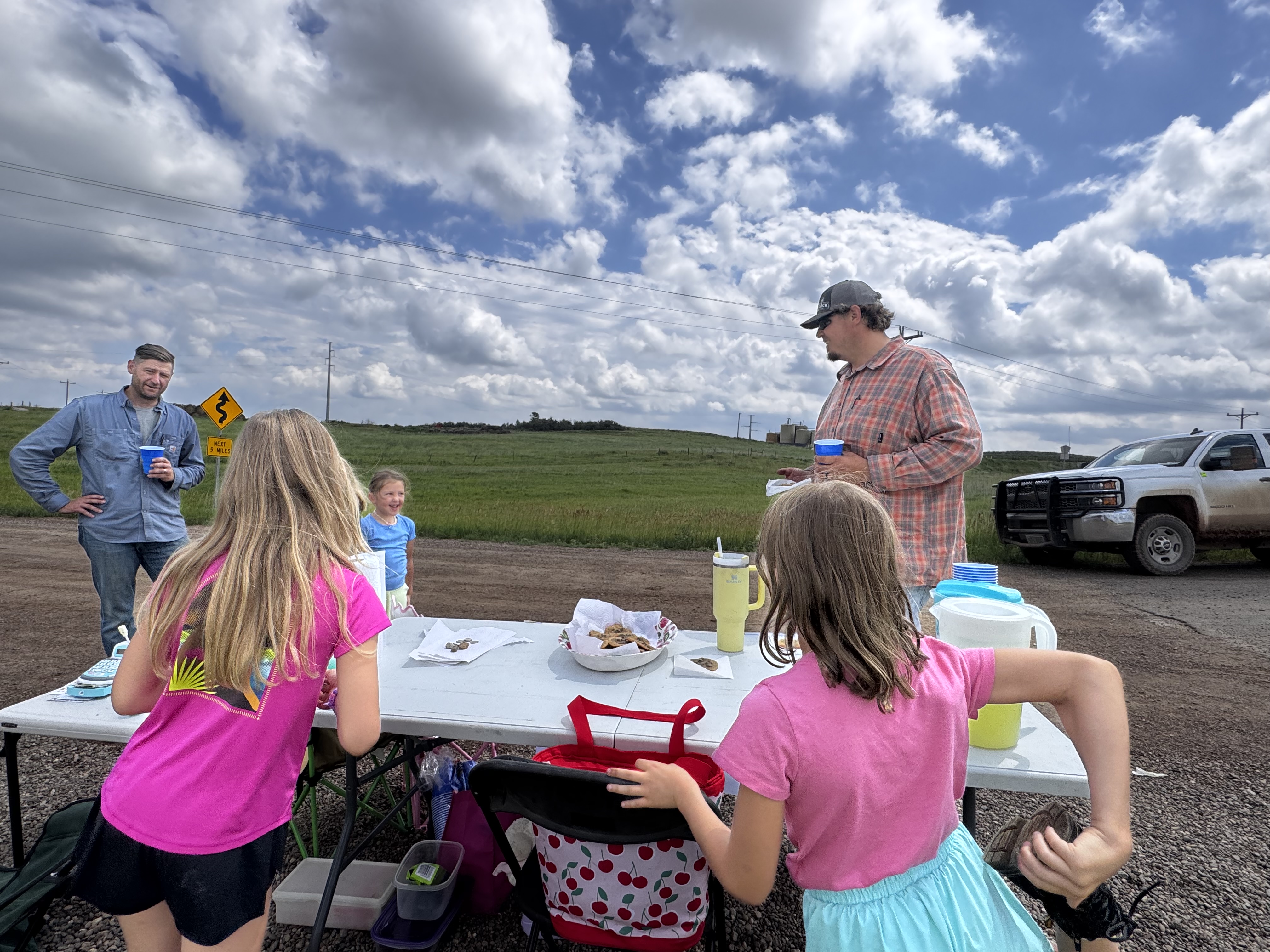
Since this column published the girls did indeed have their lemonade stand, but this time next to the highway for better visibility. As planned, we called in my brother-in-law and he called his staff who work on the well sites near us on Wednesdays and they showed up for these girls in waves. And so did the rest of the community traveling that highway to get to work, or an appointment or to go visiting (and the neighbor girls, who made a special trip, bless them.) They would pass by from every direction, check the center counsel or the glovebox or a wallet or purse to see if they had cash and then hit the next approach to turn themselves around if necessary.

The girls quickly got into their respective roles and routine, one at the cash register, one pedaling free cookies, one scooping ice and one organizing and putting stickers on the cups. Between my sister and I we had to go back to the house twice to refill lemonade, ice and the cookie stash!

When I tell you there’s nothing more wholesome than a lemonade stand on a hot summer afternoon, well, this experience proved it.

“What are you raising money for?” one man asked the girls lined up by the window of his pickup.

“A hamster,” said Rosie

“A lizard,” said Edie

“A puppy,” said Ada

“A big Lego set,” said Emma.

“Here’s my wallet!,” replied the man, shifting his cookie to his lemonade-holding hand. “Take all the cash out of it. It’s yours!”

And that was the sentiment for a good three hours that afternoon, before it started to sprinkle and just as they ran out of cookies.

So anyway, if you need us, we’ll be shopping for tiny pets, which may or may not be the worst idea we’ve had yet.

Thank you brother-in-law and crew and to everyone who stopped for the girls that day. You truly made a sweet memory for all of us.

Sweet Clover Season

I wish you could smell the sweet clover out here this time of year. I step outside and I’m flooded with a wave of memories of all that I used to be, summer after summer growing up out here. It smells like work and evenings spent sliding down hills on cardboard boxes with my cousins. It smells like ingredients for mud pie and playing house in the lilac bushes by the red barn. It smells like bringing lunch to dad in the field above our house, horseflies and heat biting our skin.

It smells like my first car and the windows rolled down, taking back roads with my best friends as passengers, kicking up dust as we tested the limits of teenage-dom.

It smells like my leaving, bittersweet. My last summer as a kid here before it was time to go and grow up already. Be on my own.

And it smells like coming home, take a right on the pink road, stop at the top of the hill and look at it all before heading down and turning into mom and dad’s for a glass of wine and a steak on the deck that looks out toward the garden and up the crick bed where I used to play everyday.

This summer my daughters and their cousins have lived on this landscape, on this ranch, the way kids should. Spinning on the tire swing, hiking up to the top of Pot and Pans, trying to catch fish in the fishless stock dam, zooming on dirt bikes, pushing baby doll strollers in the tall grass and skinning knees on the scoria roads. There was a time when it was quiet out on this homestead place, back when my sisters and I left for the big towns and didn’t dare turn to look back over our shoulders, leaving my parents here to wonder what happens next to the place that has raised us when there is no one left for it to raise.

Fast forward twenty years and the ranch, well, now it’s buzzing, laughing, full of life like I remembered it when I was growing up and our grandparents were alive and serving us push-up pops from the small front porch of their small brown house. Weren’t we all just five years old running through the clover, itching our mosquito bites, begging for popsicles and just one more hour to play outside?

Now we are the ones on the other side of the supper bell. As I type this my daughters are over the hill at their aunt and uncles’ lighting leftover 4th of July smoke bombs on the gravel because it rained. I needed a few minutes to collect my thoughts and it is mid-summer and the smell of that clover makes me lonesome somehow for a life that I am currently living. Do you understand what I mean? That feeling of knowing that it’s fleeting? The clover reminds us and so do the limbs of my daughters stretching up and reaching closer to the sky every minute now. The chubby gone from their rosy cheeks. How many more summers will that clover feel magic? 

All of the summers I hope.

Because I know being here like this, reflecting at my kitchen counter while our children stay up past any reasonable bedtime because it’s summer on the prairie and the light lingers, I know it didn’t come without a cost for our family, keeping it here for us…

I know that we did nothing but be born to people who know the value of the land, not in dollars, but in something that is hard for me to find words for right now.

Pride?

Work?

Home?

A place to belong?

My uncle Wade stops in on his way back to Texas and I live to hear the two brothers remember what it was like to be young out here. Young Wade always found hanging back on a roundup, eating on a Juneberry bush. Dad as a kid getting bucked off on the road when his little brother popped over the hill on his tricycle. Milking cows and riding broncs and chasing girls and growing up together out in these same hills…

How many gloves and hats and scarves have been left dangling in these trees, scooped off heads and hands of little cowboys and cowgirls rushing on the backs of horses running through the trees?

How many wild plum pits have been spit at one another?

How many mud pies have been made in this barnyard, topped off with little pieces of sweet clover.

I’ll take that clover. I’ll breathe it in, and I will remember when it itched our bare little legs in the summer while we searched for kittens in the nooks of the red barn. And I’ll be thankful it itches my legs still… because they’ll grow up too fast you know. Just like we did, out here among the clover.

Kids in the Branding Pen

Every year at the beginning of June a group of our friends from Bismarck and Dickinson load up and come to the ranch to help us brand our calves. It’s become a tradition for them to help in the pens as a way to say thank you for allowing them to hunt turkey and deer on the place throughout the years. The gesture and the help are thoughtful and appreciated, but it’s not an expected exchange. We would gladly have them out anytime for whatever reason. But every year for nearly ten years or so, they have been making it work, no matter how much or how little notice we give them. They wake up early, load up their kids and make the drive to sort, wrestle, ear tag and stand ready for whatever other task we might throw at them. And then, when the work is done, all ten or more of the kids run wild on the dirt piles and in the trees collecting ticks and dirt on their jeans, I serve up cookies and a couple big roasters of beef and then we take the kids for their favorite part: a ride on our horses. 

This year was no different. We called last minute, and our friends were there standing by the pens waiting for us at 8 am when we finally got the cattle gathered. Which means that a pickup-load from Bismarck had to leave their houses at 5 am and our friends from Dickinson cut their weekend fishing at the lake short and then, before they left that afternoon, they handed over a big bag of walleye that we fried up and devoured on Tuesday.

I was standing in the pen next to my friend who was running the ear tagger while her eight-year-old daughter, Olivia, was charged with marking the calves who received a vaccination. Her two sons were in the pens too, one spraying antiseptic on the castrated calves and the other now big enough to wrestle. My own daughters had abandoned their post of sorting ear tags and counting calves for some sort of game of pretend in the hills with the other kids and I had just looked up long enough to realize it. I told my friend that her daughter should join them. “She can go play, she’s helped plenty already,” I said, now embarrassed that our friends’ kids were busting their butts while ours ran wild.  

“I told the kids that this is our church this morning,” my friend replied. “Helping our neighbors, acts of service, this is what it’s about.”  

Her kids have been coming to the ranch for years, to help or to hunt or to play, since before her sweet eight-year-old daughter could walk and her boys were toddling around, fascinated by the trees and the wildlife, reminding us every time how special this place is and how lucky we are. At almost every visit our kids have wandered together to places on this ranch that my own kids barely frequent—the thick trees on the banks to the north of the house, the muddy patch of cattails in front of the dam, the old equipment on the top of the hill. When the boys were younger, after every visit we were left with a big pile of old bones and cool sticks and rocks as a collection on our front drive, little treasures they couldn’t keep their hands off. And when it comes to the animals, the horses and the baby kittens, and now, the goats, Olivia has never been able to get enough. She would outlast my daughters’ capacity for sitting horseback by hours, her smile stretched from ear to ear, falling in love with every horse on the place. This year it was no different, even in the heat of the day as we watched these growing kids navigate themselves in the saddle more independently than ever.  I looked at Olivia and wondered how we could fit one of these horses in her backyard in town. And if they would finally agree to take a kitten home. 

It might be the kids getting older, changing so much since the last time I saw them, that got me thinking how grateful I am for the reminder they provide us to not take this for granted. Eventually I got my own kids back in the branding pens for a bit to help, but the magic of the work doesn’t hit them the same way it does for these kids coming in from town once or twice a year. My hope is that I can raise them to appreciate it, to know how rare and important it is to care for a place like this, to stand side-by-side and share in the work, to bring out the big roaster of beef to feed our friends after they’ve put in the sweat alongside us at the end of the day, even if my youngest daughter eventually does run away to New York like she’s been threatening since she could talk and my oldest heads to the ocean. 

In the chaos of the branding pen I don’t know if my kids got the lessons they needed from us this year, but I hope they learned something from our friends about what it means to be there, to be reliable and to be good neighbors, happy to help.  

Mud puddles

Have you ever had to pressure-wash the gumbo mud off the clothes and boots your children were wearing when they decided to go splash and roll in the giant mud puddle that had formed from a week of rain behind the dumpster in your yard? 

As long as I’m living and they’re not dressed for town, I will never deny my daughters full access to a mud puddle. I stood under the awning of our entryway to protect myself from the rain and in a matter of three minutes those girls had ditched their muck boots and socks on the wet gravel and had covered themselves from head to toe in gray mud and rain water. I felt an urge in myself bubble up to go join them, remembering for a moment what it was like to be that carefree, but remembered the laundry and the supper on the stove and turned back to the house. When does it happen? When do we wake up and become the person who denies themselves a mud puddle?

As I write this my daughters are sleeping under a giant pillow and blanket fort in the living room of their cousin’s house over the hill. Summer break has come to find them at nine and seven years old, right in the very fleeting sweetspot of girlhood where you have as much freedom as your bike and feet will give you. Or, in Rosie’s case, her little dirt bike which she used to recently to retrieve a doll at her cousin’s house so they could keep the game of school going. The rest of the girls suggested that they time her on the task, so it was imperative that she use her motorcycle. And let me tell you, the sight of her in her pink helmet with the American Girl Doll poking her head out of Rosie’s backpack, her hair blowing in wind on the way down the hill was an image of my growing daughter I hope I never forget. If I let her, Rosie would take that little dirt bike all over the countryside. As soon as she’s strong enough to pull that starting cord to start the motor herself, she’ll no doubt be off. Whether I’m ready or not, Rosie always has been.

Last week my husband and I taught our daughters the Jitterbug moves we learned in gym class when we were their age. In the kitchen after chicken dinner, we danced and twirled and never successfully got the spider down. When the weekend came, we brought them to the rodeo in town. We ate popcorn and laughed at the rodeo clown and cheered on the barrel racers and bronc riders and when it was over we headed inside to listen to the band.

My daughters and their cousins have always been the first to hit the dance floor, moving their bodies with the kind of abandon they use when approaching a mud puddle, jumping and spinning and laughing and singing. I stood next to my husband, and we watched as our oldest daughter, at the brave age of nine, take the hands of a boy from her class and show him what she learned in the kitchen a few days before.  

I looked over at my husband and wondered if I was ever that confident. So many times, in the raising of them, my daughters have made me wish that I could be more like them. I didn’t know that was going to happen. 

I grabbed my husband’s hand and I pulled him out on that dance floor. I got a minute or so into the song before he was stolen by a niece or a daughter for a spin or a flip and I happily gave him up to them.

They will never be this young again, but then again, neither will I. But who makes the rules on mud puddles and dancing anyway? We stayed way past their bedtimes to dance a few more dances because the next day they had nowhere or nothing they needed to be but seven and nine under the summer sun that is all too quickly drying up those mud puddles.

Spring things

We’re in the thick of calving these days on the ranch. Little black specks on the hillsides and in the draws are arriving like little beacons of hope with the crocuses. 

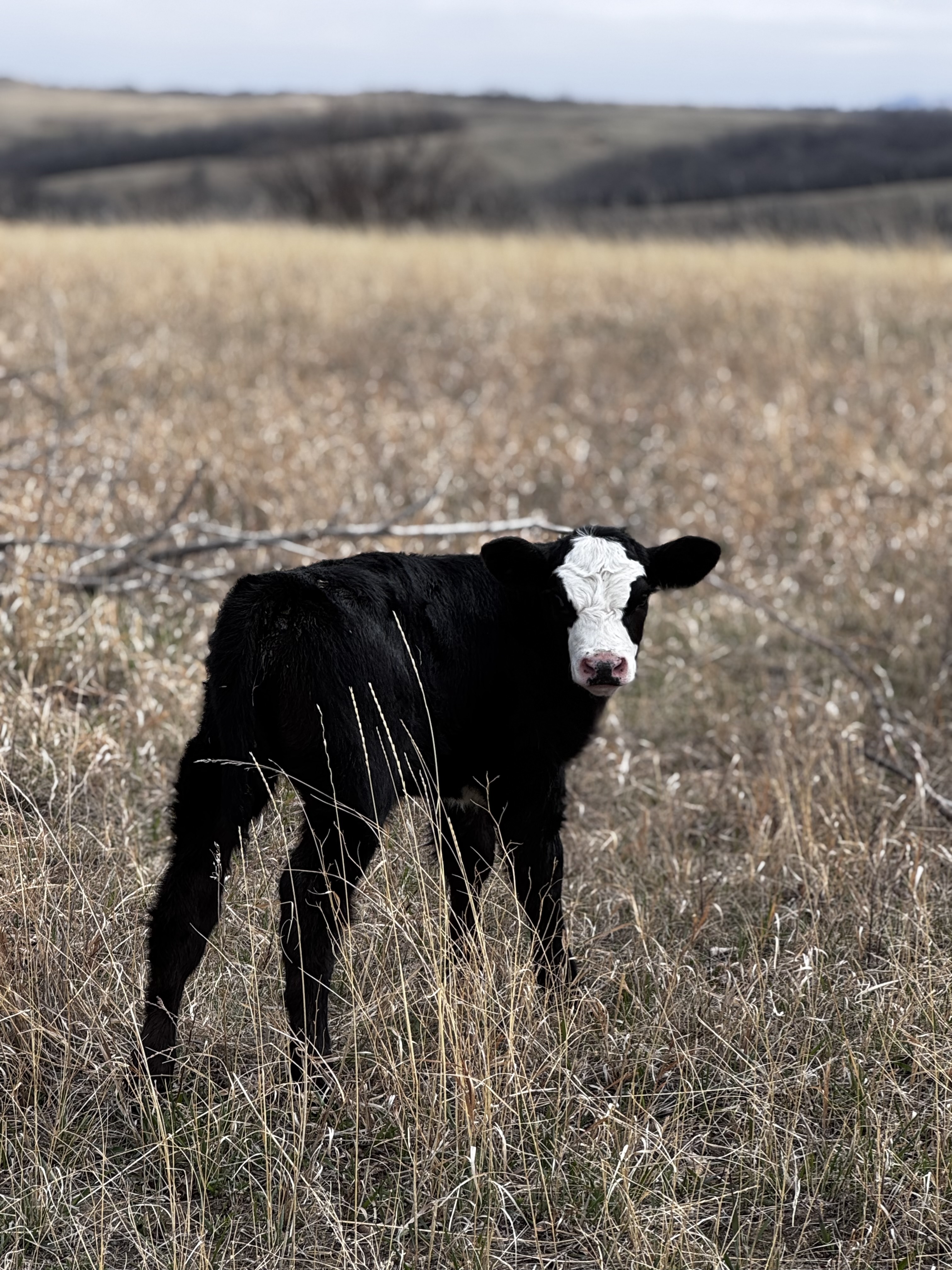
For several years we have calved mostly pure black animals, but with the addition of Herford bulls in the program this year we have more black-white-face babies than we’ve had since I was a kid.

My dad, who is out in the pastures several times of day keeping an eye on things, will occasionally text me photos of the new arrivals proving that he’s as delighted as the children are about the speckled faces and, also that you can be an almost-70-year-old rancher and still be enamored with the process. He took my daughters out for a side-by-side drive through the herd and gave them an in-depth genetic lesson about color patterns and recessive genes. They catch on quickly to those sorts of things, their little minds like sponges ready to memorize. I wish I had retained that skill, mostly to remember all the names they have given the new arrivals. Because when you have black-white-faced calves instead of the standard pure black, you can suddenly tell most of the babies apart! And so, naturally, they all get names. 

And so we have “Tippy” because he has a white tipped tail. And “Goggles” because he has two black rings around his eyes. And then “Patch” and “Spot” and so on and so forth. 

This weekend we will be building a little pen close to the house, down where my failed garden used to sit under the shade of the oak and ash trees. The girls are getting a couple of goats to show at the county fair, and we know nothing about goats except what we learn when our friend Brett comes over for a beer. We’re entering into real 4-H territory these days as it’s my oldest daughter’s first year being what we call a “real 4-Her.” No more Cloverbud rainbow ribbons. We’re pulling out the big books now and learning the rules. 

For her first assignment, before the goats arrive, she and her best friend are doing a demonstration on how to make homemade Play-Dough. They’ve spent a couple days after school making their poster board and rehearsing their lines. And, thanks to her friend’s mom, they will also be dressed the same–in matching t-shirts with the signature 4-H clover. And if you know anything about 8-year-old girls you know that the matching is the most fun part.   

Anyway, I saw the run-through last night and it’s the cutest thing, honestly. Key rural kid memory-making right there. We’ll see if they maintain the same level of squirrely-ness and giggles when there’s an audience present. 

Spoiler alert, they got a purple ribbon!

After the presentation is complete Edie will then move on to the most uncharted territory of all: The Clothing Review.  And if you don’t know what the Clothing Review is, don’t worry, neither do I. But I know it involves sewing. And modeling. Two things I am not built for. 

Because I have experience in the horse show, and I have wood-burned and latch-hooked and picked and identified every wildflower on the ranch in the name of a 4-H ribbon. I even completed an entire information board about beaver habitat that won me a trophy and sat in the office of soil conservation for a bit. But I have never touched a needle and thread without it making me want to bang my head against the wall. It’s only natural then that I gave birth to an aspiring fashion designer. So we’re making an outfit. From scratch, like we’re in Project Runway or Little House on the Prairie, depending on how it all turns out. And when I say “we” I mean Edie and her Nana Karen, who I cornered on Easter at the ranch, right before she was walking out the door. I had Edie ask her, “can you help me sew a skirt for 4-H?” And I’m so glad I was there to see the reaction on my mother-in-law’s face because it was clear that sewing a skirt with her granddaughter was absolutely the very thing she wanted to do most in the whole world.

“We could do a top too!” she responded immediately before declaring that she’s bringing over a sewing machine. “I’ve been waiting for the right time to give it to you!” 

If you need us, we’ll be at the fabric store. And the feed store. And calling Brett with goat questions. And up in the calving pasture naming new babies. A text just came through from my dad, we had a red one this morning and he is glorious. Wonder what they’ll name him? 

To be wild with us…

When I was a little girl, my favorite book of all time was “My Side of the Mountain.” It’s a classic, about a boy who finds himself living away from home in the wilderness of the mountains inside of a giant hollowed out tree. I can’t remember the exact story now or why he was alone out there, funny how those details escape me no matter how many times I went over the pages and marked my favorite parts. The parts where there were diagrams of how to build a fire with no supplies and something about a windmill and making a spear for fishing.

I still have the book buried somewhere deep in the rubble of the basement. It was one I could not give up to charity or to my younger sister. It’s sitting there among the books about horses and misfit dogs, prairie children and my other favorite, “Misty from Chincateague,” about two siblings who save money to save a rescued wild horse from an island.

I wanted to be these kids. I wanted to be the free-spirited girl who broke the free-spirited horse. I wanted to break the rules. I wanted to tame a wolf puppy, train a wild falcon to hunt, catch fish with a spear I sharpened out of a tree branch and exist in a faraway time where those things were necessary for survival.

Forget microwave popcorn and video games, I wanted adventure!

I’m sure I wasn’t unlike most kids at 9 or 10 or 11 years old. At that age most of us were lost in some sort of fantasy with little more confidence than we had experience at the real world. So I’d like to think that it wasn’t that unusual that as a kid who already lived about as far out in the middle of nowhere as anyone could live, I had convinced myself that I could survive out in the wilderness alone. Without a house. Or a toilet. Or my mom’s cheeseburger chowder.

In the evenings I would step off the bus from a day at country school, grab a snack, and head out up the creek behind our house. For months I would work on building what I called “secret forts” all along the creek that winds through our ranch. Looking back on it now, these forts weren’t that secret at all, in fact, you could probably see one from the kitchen window, but I was deep in my own imagination as much as I was in the oaks and brush that grew along the bank. I would identify just the right tree and use it as a frame to create a sort of tent-like structure out of fallen logs. And then I would begin the tedious process of locating and dragging fallen branches out of their place under overgrown vegetation and fallen leaves back to my tree to hoist them up to rest next to the last one I had managed to maneuver. And when it was complete I would lay down inside of it. And under the flawed “shelter” of fifty logs leaning on a tree and plan my next move. I would need a door. Yes. I could make it the way I imagined Huck Finn made his raft. I would need some rope. And a knife. I wonder if dad had an extra knife in his dresser drawer. I need some sort of blanket. Oh, and a fire. Of course!

I would be scouring the creek bottom for granite rocks to arrange in a fire circle when the sun sink down below the banks and I would decide I wasn’t quite ready to spend the night. Besides, I forgot to bring a snack and the wild raspberries weren’t quite ripe yet. Taking one last look at my creation and deciding to reevaluate the next afternoon, I would turn my back to it and follow the cow trail back toward the house where my little sister was likely lurking in the shadows, having found my path again, begging me to let her help next time. Begging me to let her in the fort as the sun gave off its last light and we argued and grappled until we could smell dad’s steaks on the grill or mom’s soup on the stove.

This was my daily ritual for months and one of my signature childhood memories. Eventually I gave in and helped my little sister build her own fort. A much smaller fort. Across the creek. Out of site. I thought I wanted to be alone out there, left to my own survival skills, but it turned out that having company was a nice addition, no matter how stubborn and annoyingly curious that company might be. So we built a tin-can telephone that stretched from my fort to hers and brought down old chair cushions from the shed, searched for wild berries, tried to catch frogs and minnows in the beaver dam and spent our evenings planning our next move: spending the night.

But we never did it. We never spent the night. Summer gave way to fall, and the leaves fell and covered the floor of our paradise. We would pull on our beanies, mittens and boots and trudge down the freezing creek to clear out the fire ring we weren’t yet brave enough to use. And then the cold set in and the snow came, and the neighbor girls called us to go sledding and our dream of being wilderness women collected snow and waited on a warmer season.

I can’t help but think about those girls on days like these when the warmer weather finally gives in and releases the snow to flow as wild water in the draws and you can smell the dirt again at long last. I get a call from my little sister. She’s driving our daughters home from town. “Can I steal your girls and bring them to the crick? The water is running, I want to take them to follow it.”

Ten-year-old me would be happy to know it, our little sister still just over the hill, a tin-can telephone call away, still following that crick and begging to be wild with us…