Lucky Unlucky Us

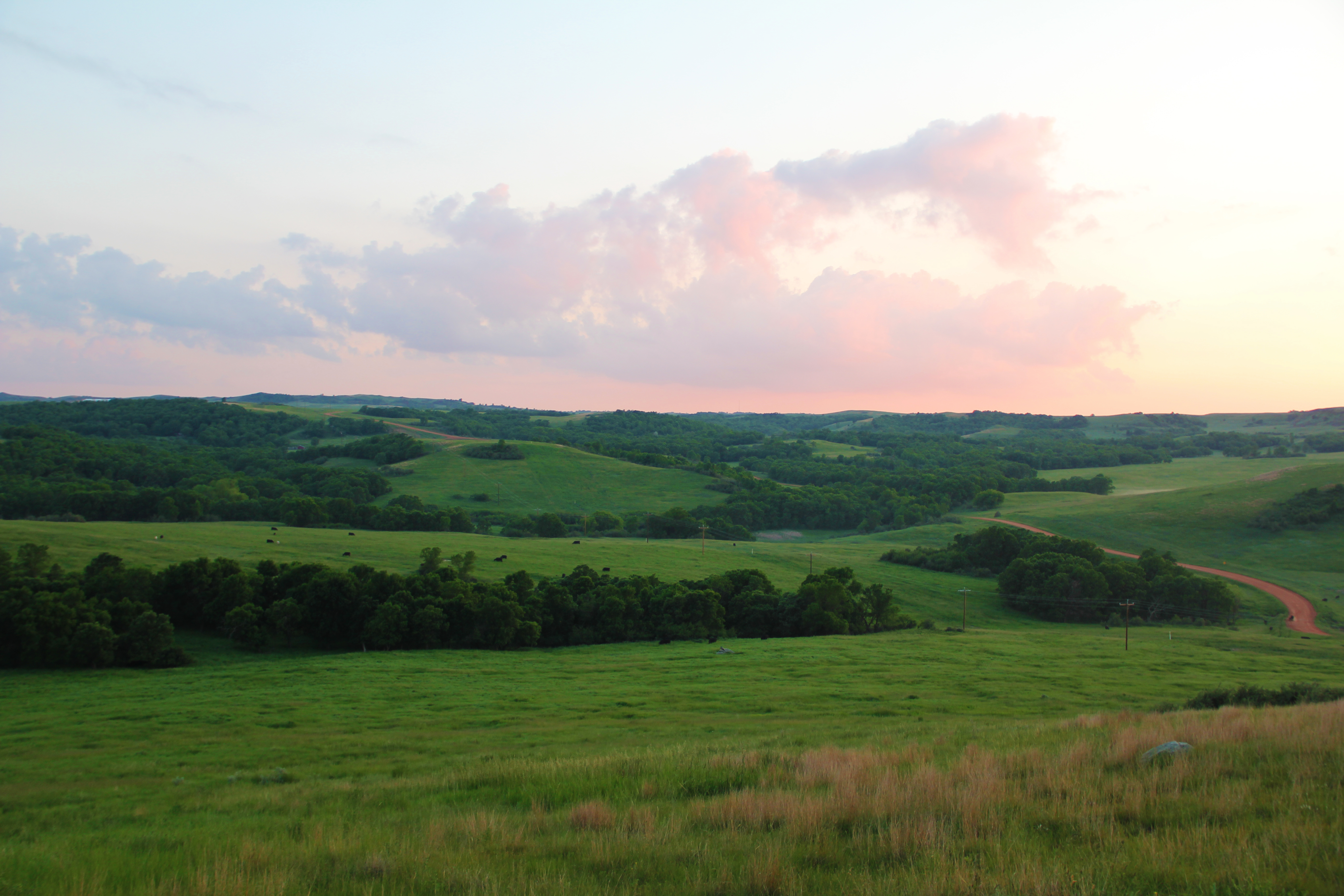
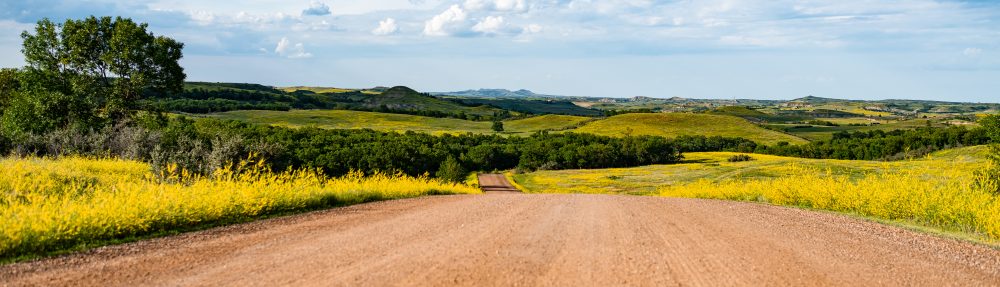
I’m not sure if I’ve seen a July like this in Western North Dakota. It feels like we’re living in an entirely different climate, waking up every morning to new puddles on the gravel road and a bit of a mist in the air. Most days in July have been greeted with or ended with a thunderstorm or shower, it simply won’t stop raining.  And this is just fine news for us. The stock dams are full, the alfalfa is lush, and the grass is as green as can be. It makes timing getting the hay crops off the fields a little tricky, but I think any rancher up here will take the rain with the inconvenience.

The consistent threat of a storm has also made our North Dakota outdoor engagements a bit harrowing, although we persist of course because we only get like four full seconds of outdoor picnic weather up here. And so, we just swat the mosquitos and hold tight to our potato chips and paper plates so they don’t blow away and catch on the neighbor’s barbed wire fences. 

Last week, after a trip to the dentist to find out I might need a root canal, and a visit to the mechanics where I found out my car needs a few new $800 parts, I brought my dad and my daughters to play music on the shores of Lake Sakakawea at this cute little campground along a sandy beach called Little Egypt. Along the way I learned that Dad had also just found out about a few hefty bills for repair on misbehaving equipment that day and so we agreed that playing some music was going to soothe our broke and toothachey souls that night. 

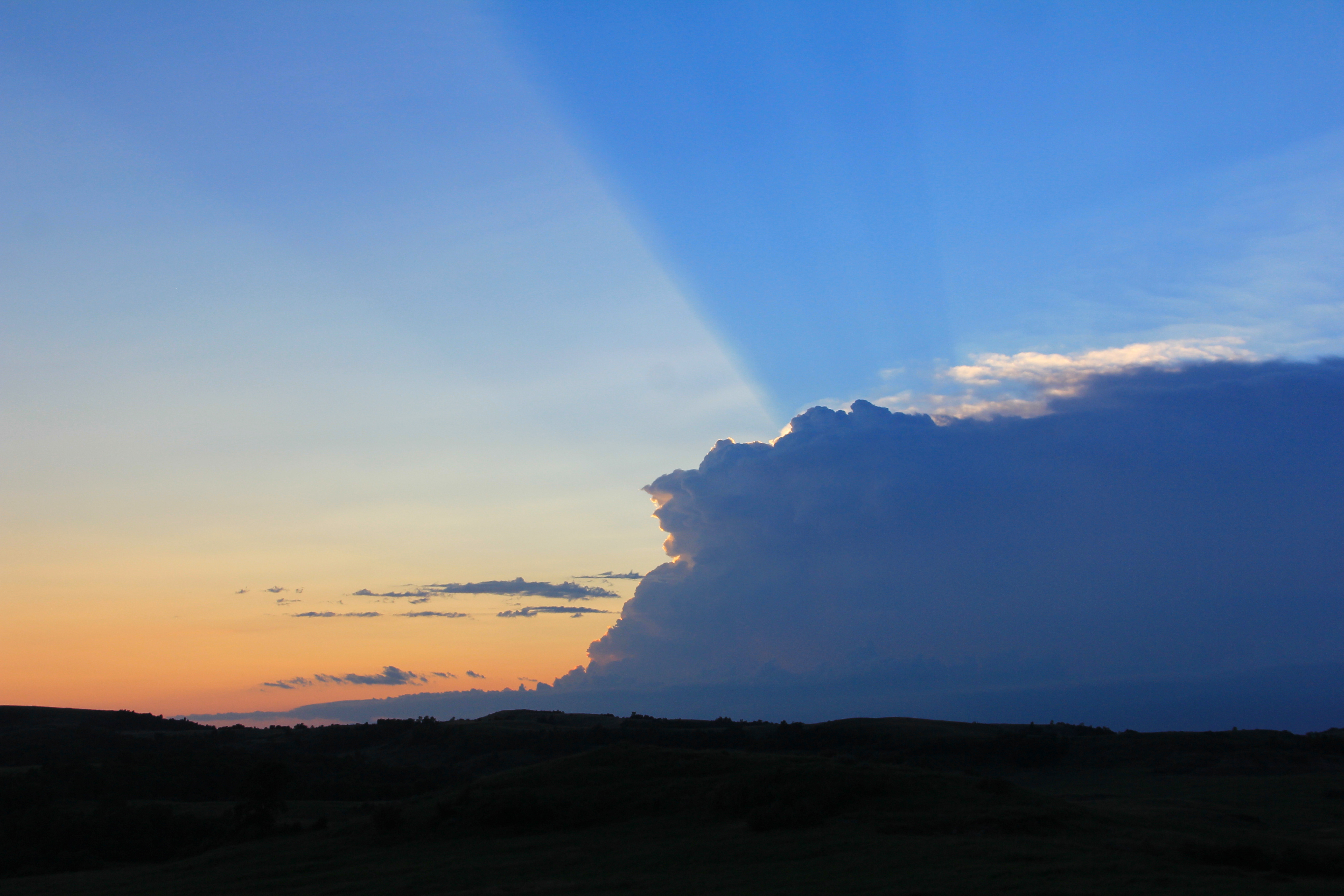
It was a perfectly hot and muggy 80 degrees when we pulled in with our guitars, picnic supper and girls in the back seat of dad’s pickup. And while there were no chances of rain on our weather apps that day, the blackening sky told another story. “Looks like it’s going to head north,” we said to each other while we plugged into the system and sat down to perform to a crowd slowly gathering with lawn chairs and coolers in front of the stage. 

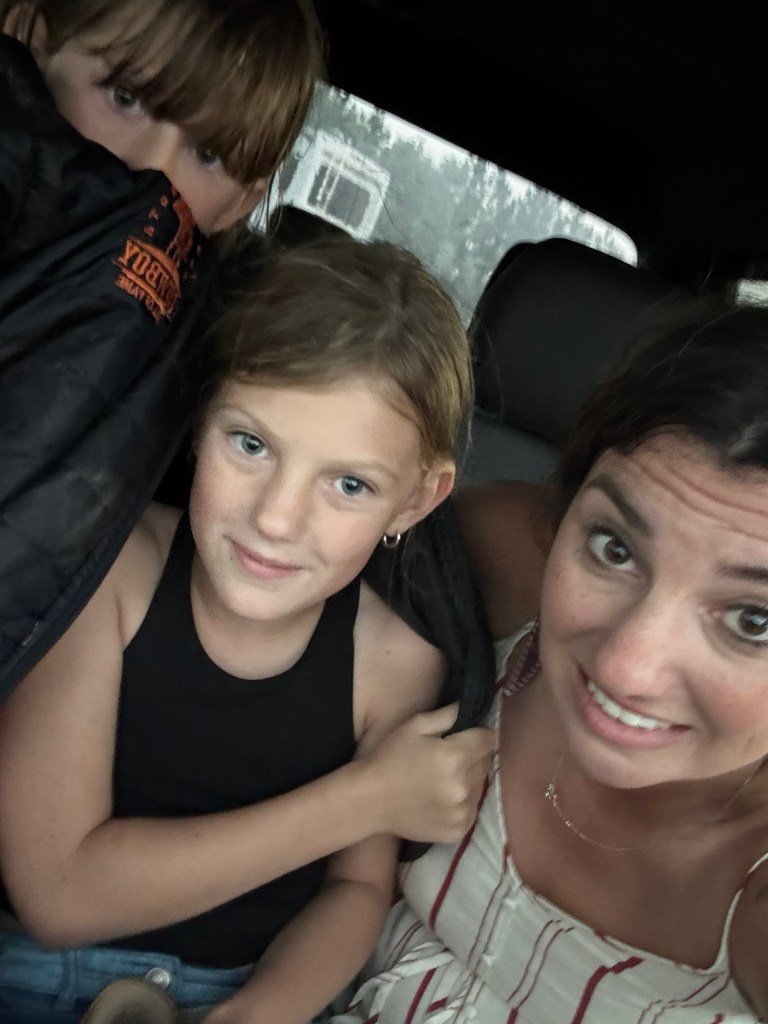
My daughters had taken off to check out the sand on the beach and we sang “Love at the Five and Dime” and a couple ranching songs and watched those clouds get darker and darker behind the growing gathering of people. I looked over at the beach to get an eye on my daughters and then back behind the crowd and clocked a flash of lightning. Still hoping for the “heading north of us” theory to materialize, I informed the crowd that we may have to take a break for the weather to pass and just as that statement left my lips, the stillness of the afternoon turned into a huge 60 MPH gust that swept across the campground and across our stage, blowing my set list, merch, hat and dust across that campground. “Ok then! That’s it!” I think I said into the mic, or maybe just in my head as I grabbed my guitar and headed to get my kids who suddenly found themselves in a furious sandstorm. I clocked the boom of a speaker blowing over, set my guitar in the backseat of the pickup and joined my dad and my soaking, sandy daughters in the front seat while dad moved the pickup away from the stage, you know, just in case it blew over. 

I had played an entire 20 minutes of my two-hour set. 

The sirens wailed. 

Rosie sniffled.  

The rain dumped harder and blew sideways. 

Then came the hail stones. 

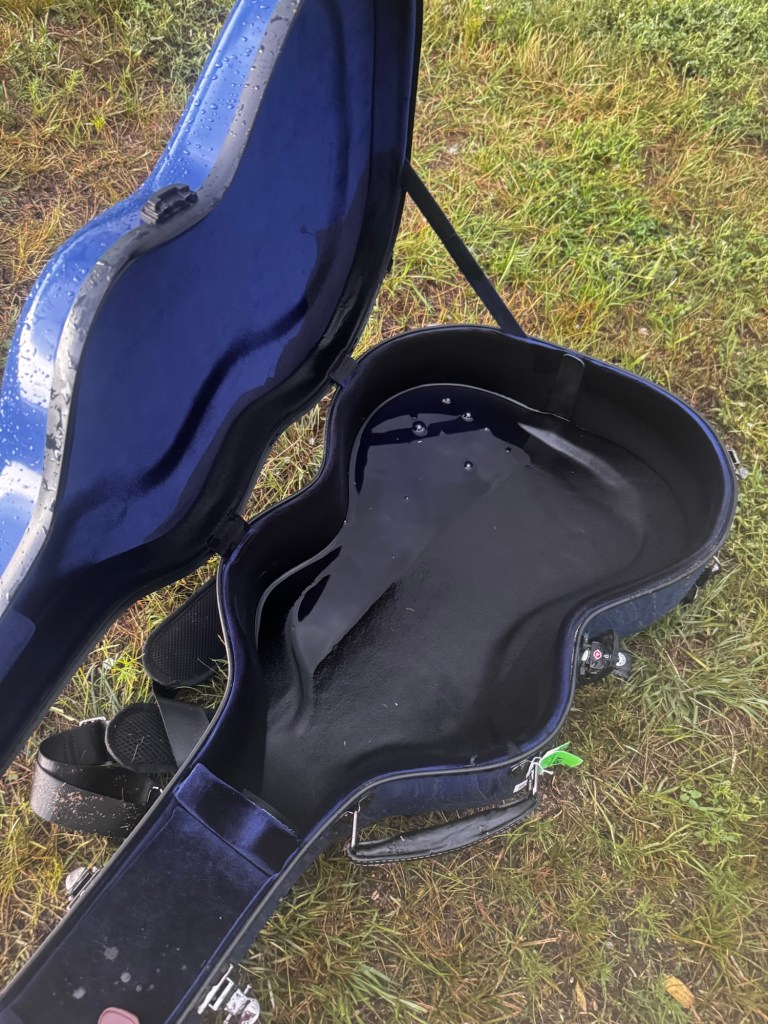
“This should pass soon,” we said to one another as only true Midwesterners do. And it was logical, we could see the edge of the clouds opening to a clear sky, but we were still on the inside of it. And so, it hung on for another half-hour or so, just long enough to fill the guitar case I left under the stage with a half inch of water and soak the stage as well as anyone’s desire to carry on with the whole idea of outdoor entertainment that evening. We may be persistent, but our nerves can only handle so much. 

 When the storm finally dissipated, we helped clean up the stage and pick up the things that went flying. Luckily, I brought an extra set of clothes for the girls, and so they got dried off and as de-sanded as we could get them. 

“That was scary!” Rosie declared. “Yeah, we’ve sort of had a rough day,” I replied, “With the storm and the broken tooth and the broken cars and equipment. Glad it’s over!”

 “I shouldn’t have opened that umbrella in Alex’s house this morning,” Rosie chirped from the back seat.

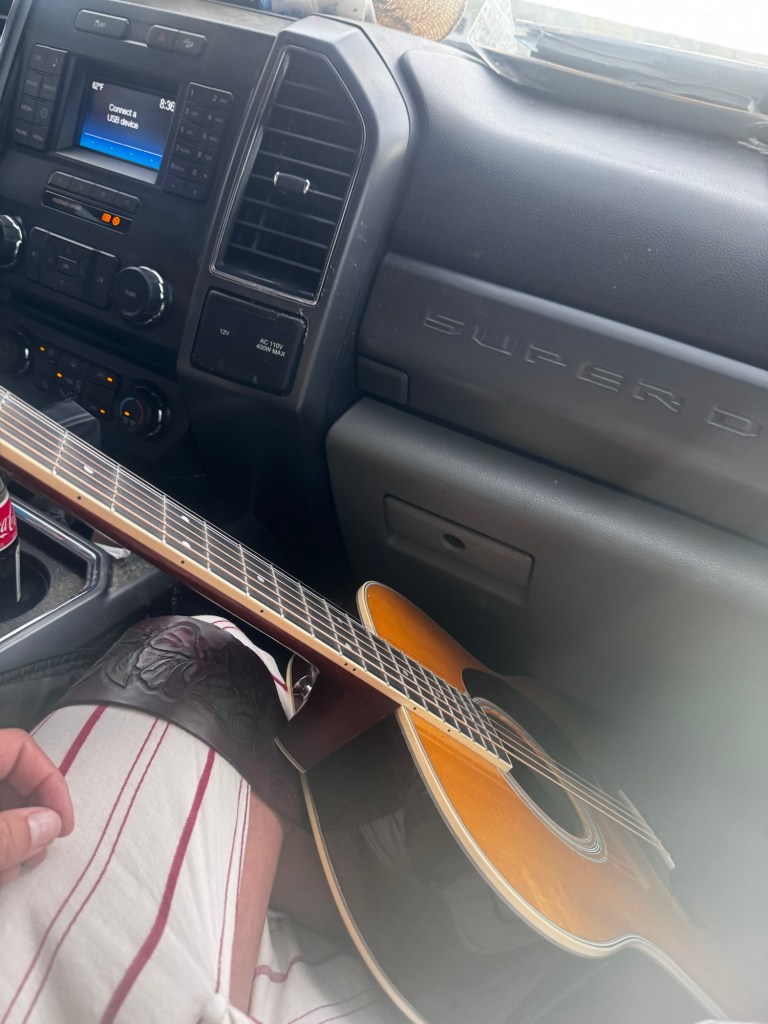
“I guess superstition is hereditary,” my dad laughed as we headed toward home with my caseless guitar sitting on my lap in the front seat, chasing the rainstorm headed east to wreak a little more havoc on Friday night picnics and campfires, outdoor music and hay moving operations.

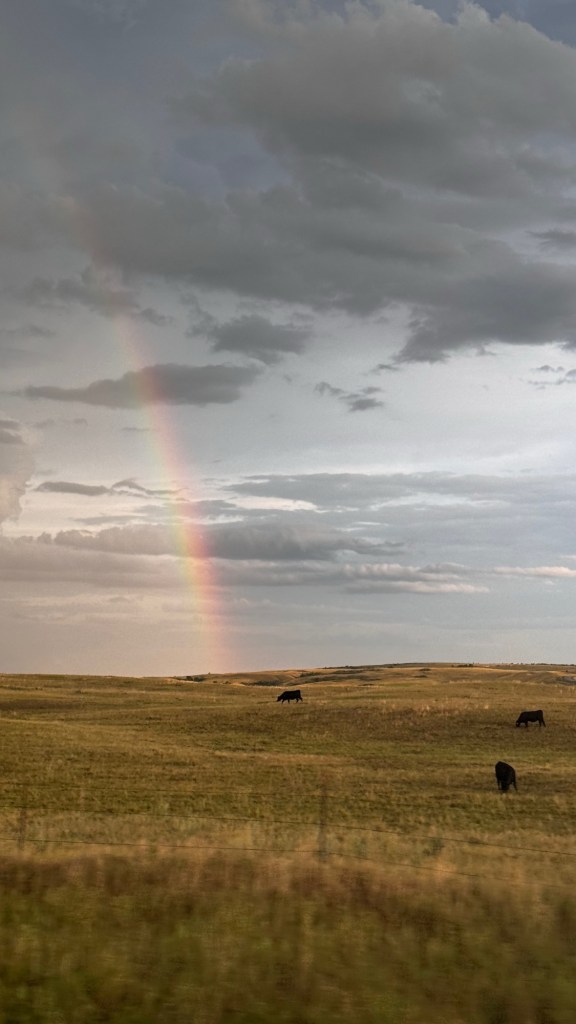
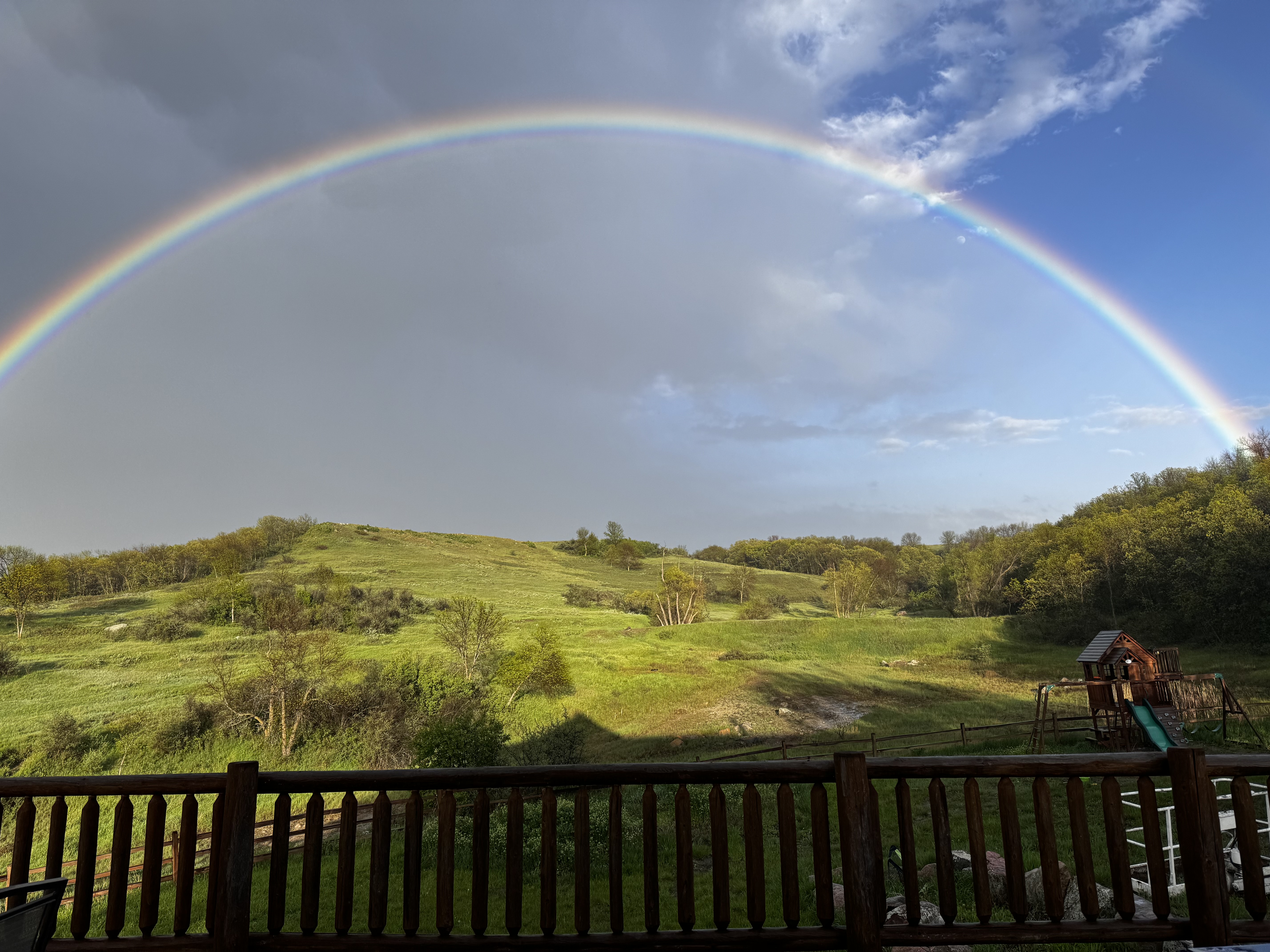
A rainbow appeared in front of us as the girls recounted their harrowing story so they could get it right for daddy when we got home. We stopped in New Town to gas up and take the girls for a bathroom break. As we were walking out the door, Dad stopped. “Ice Cream Drumstick?” he asked, a tradition we have kept on our way home from almost every outdoor summer concert we’ve done throughout my life. “Of course!” I replied. “Lucky us.”

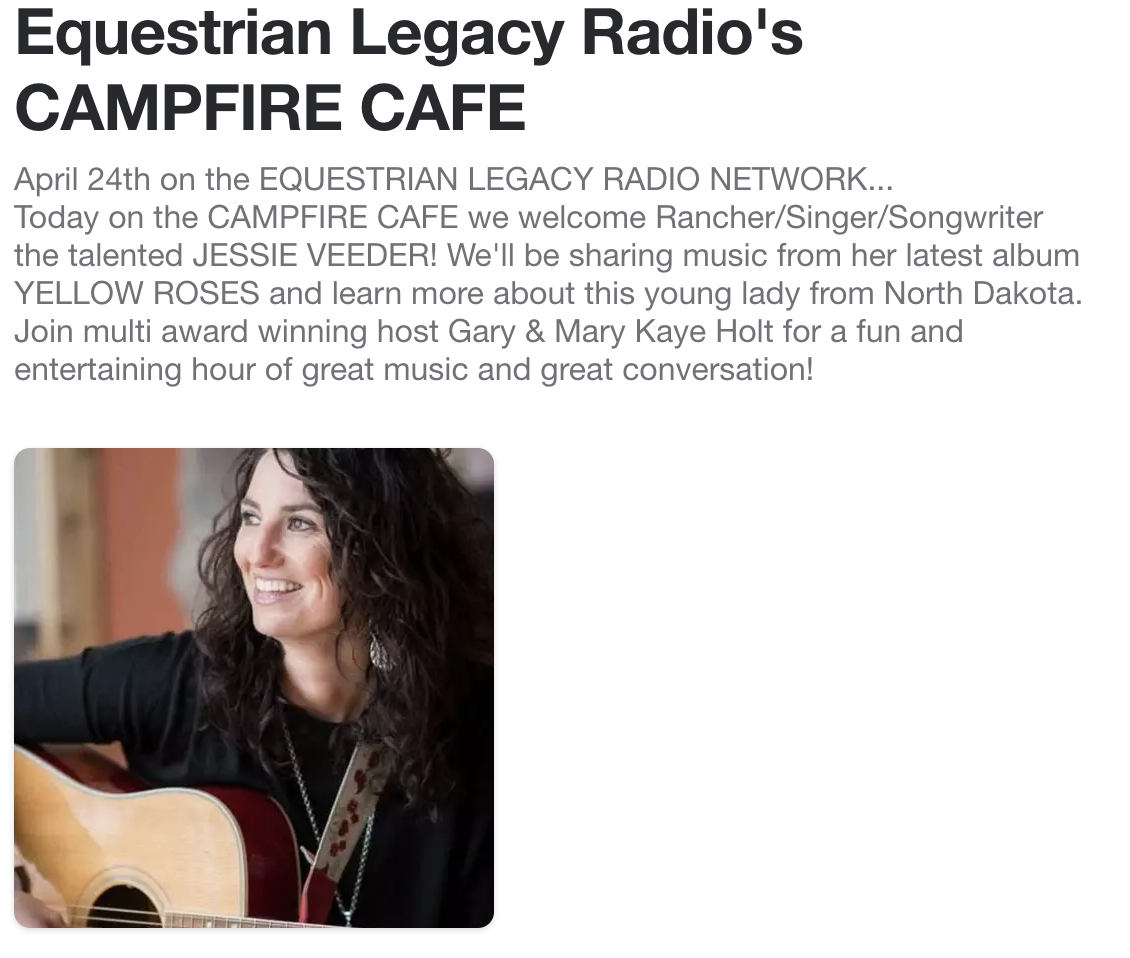
Interview on Equestrian Legacy Radio’s Campfire Cafe

I had the pleasure of visiting with Gary and Mary Kaye Holt on the EQUESTRIAN LEGACY RADIO NETWORK about music and songwriting and ranch life. I met Mary Kaye when I shared the stage with her at Art of the Cowgirl and have become a fan. Loved talking shop with her.

Very grateful for the visit.

Listen here:

When you look

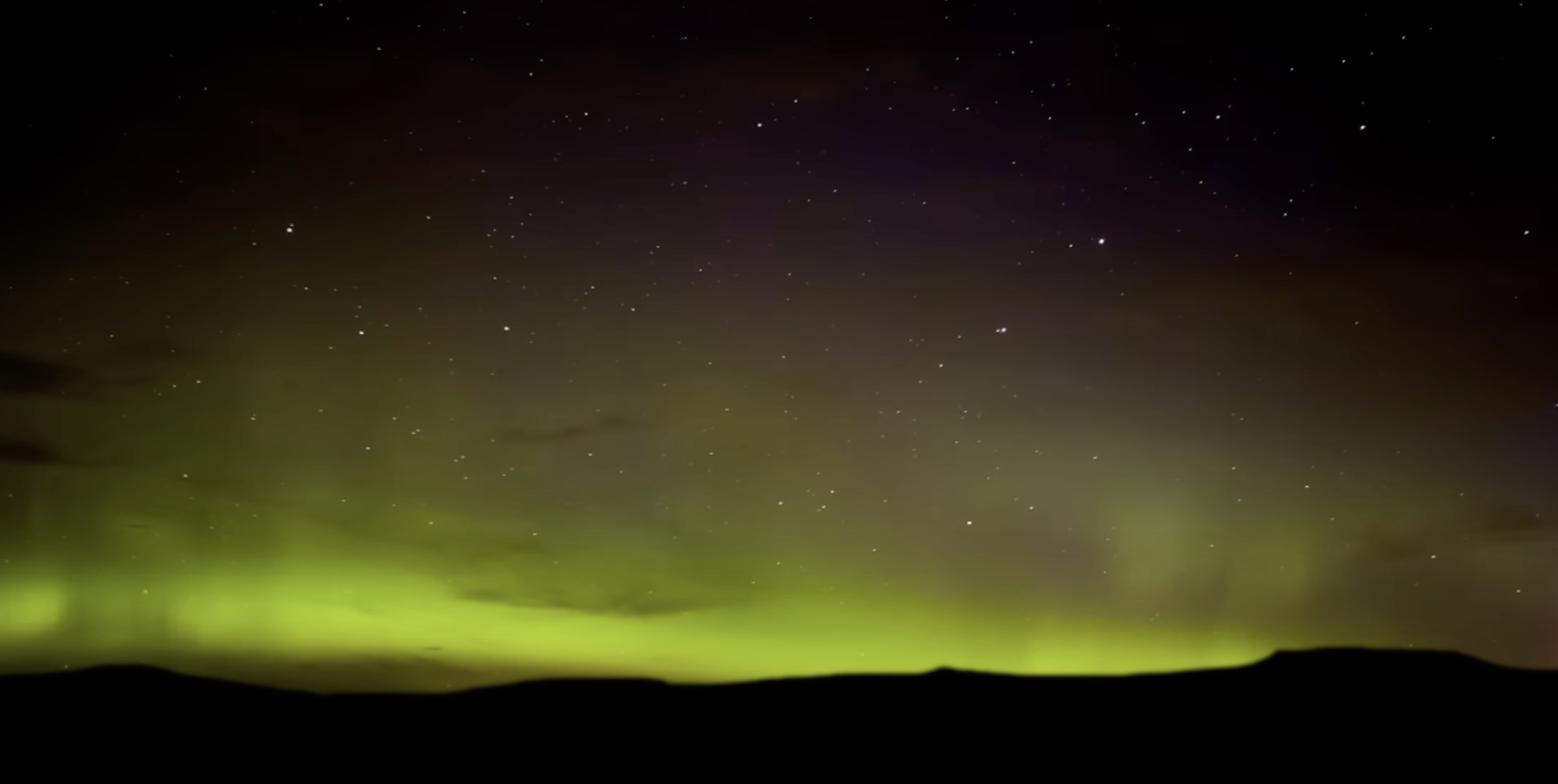
From my music video for “Northern Lights” produced by Ken Howie

I remember the first time I witnessed the northern lights. As memories so often go, I don’t remember the exact date, but I remember stepping out of my parent’s car in the driveway at the ranch and my dad telling me to look up. I was 9 or 10 or 11 or 12, one of those ages that blend into one another in childhood, and it was spontaneous, the way things like the northern lights used to be before we could predict them in the way we do now, announcing their arrival on an app or a website or a social media post to help others experience it. Which is a lovely perk of the modern age…

But maybe not the same as stumbling upon them in the way that we did that night, a little piece of magic we witnessed as mere humans who just happened to look up at the right time.

I found them again years later in the dead cold of January when my dad was recovering from a very close brush with death in a hospital bed in the big town. I think my husband was driving me home from a visit with him and I caught a glimpse of them out the passenger window, green and white and gold light dancing on the dark horizon reminding me how small we are here in the scheme of things. Reminding me that even the coldest night can be beautiful if we look up.

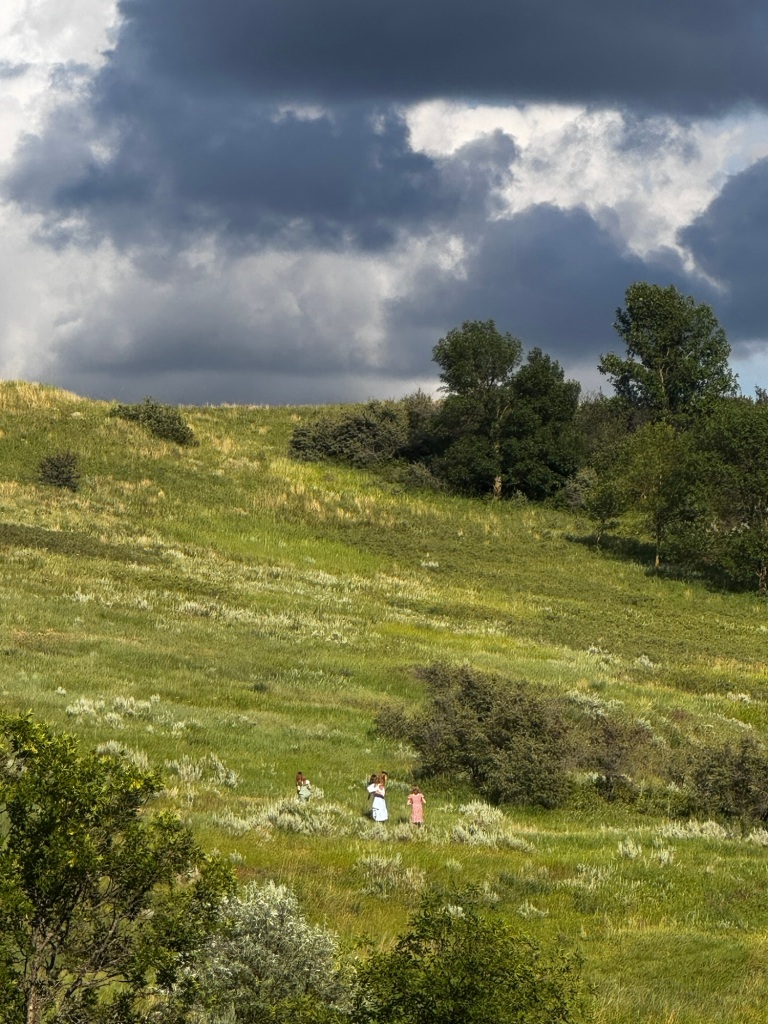
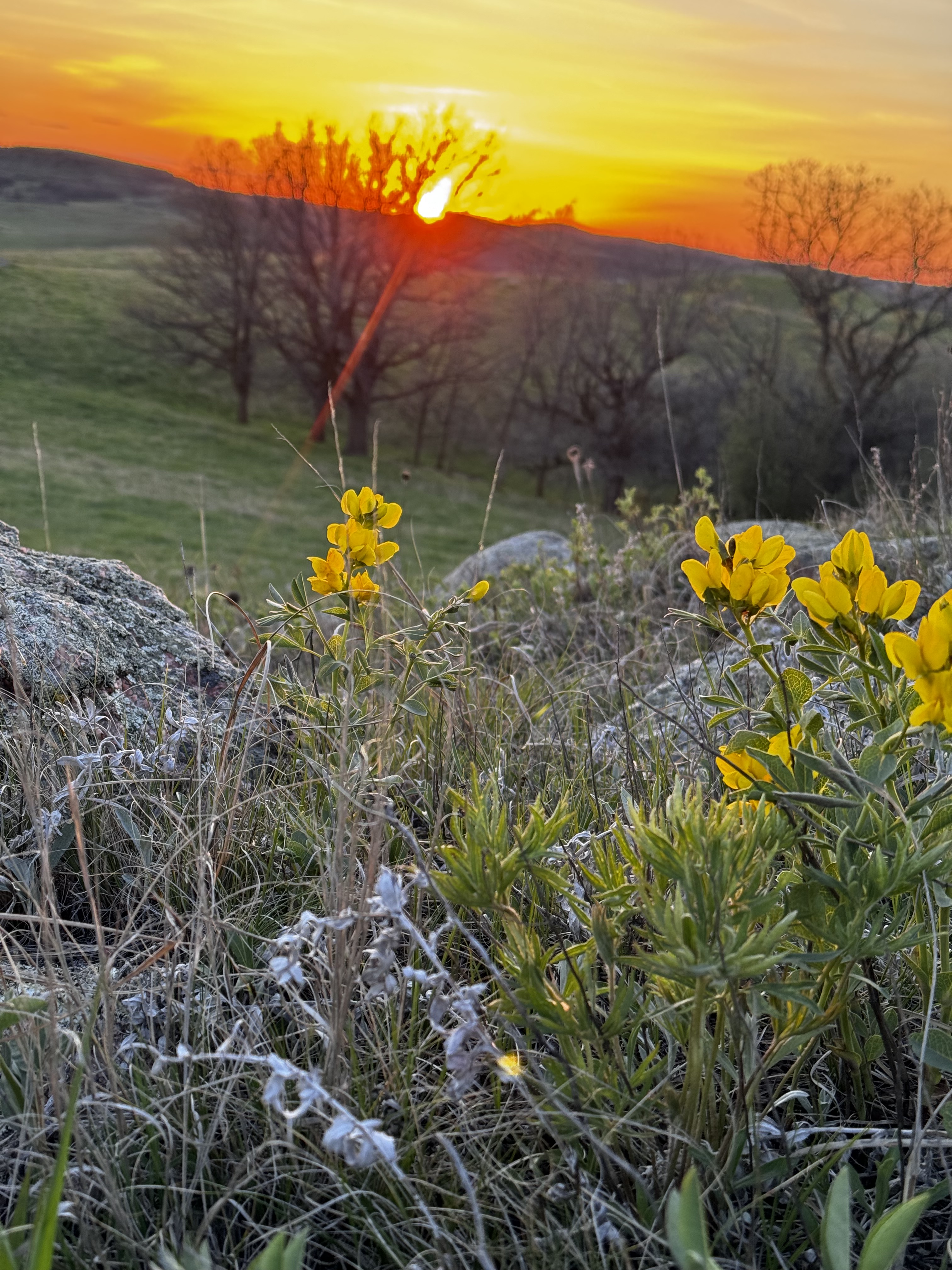
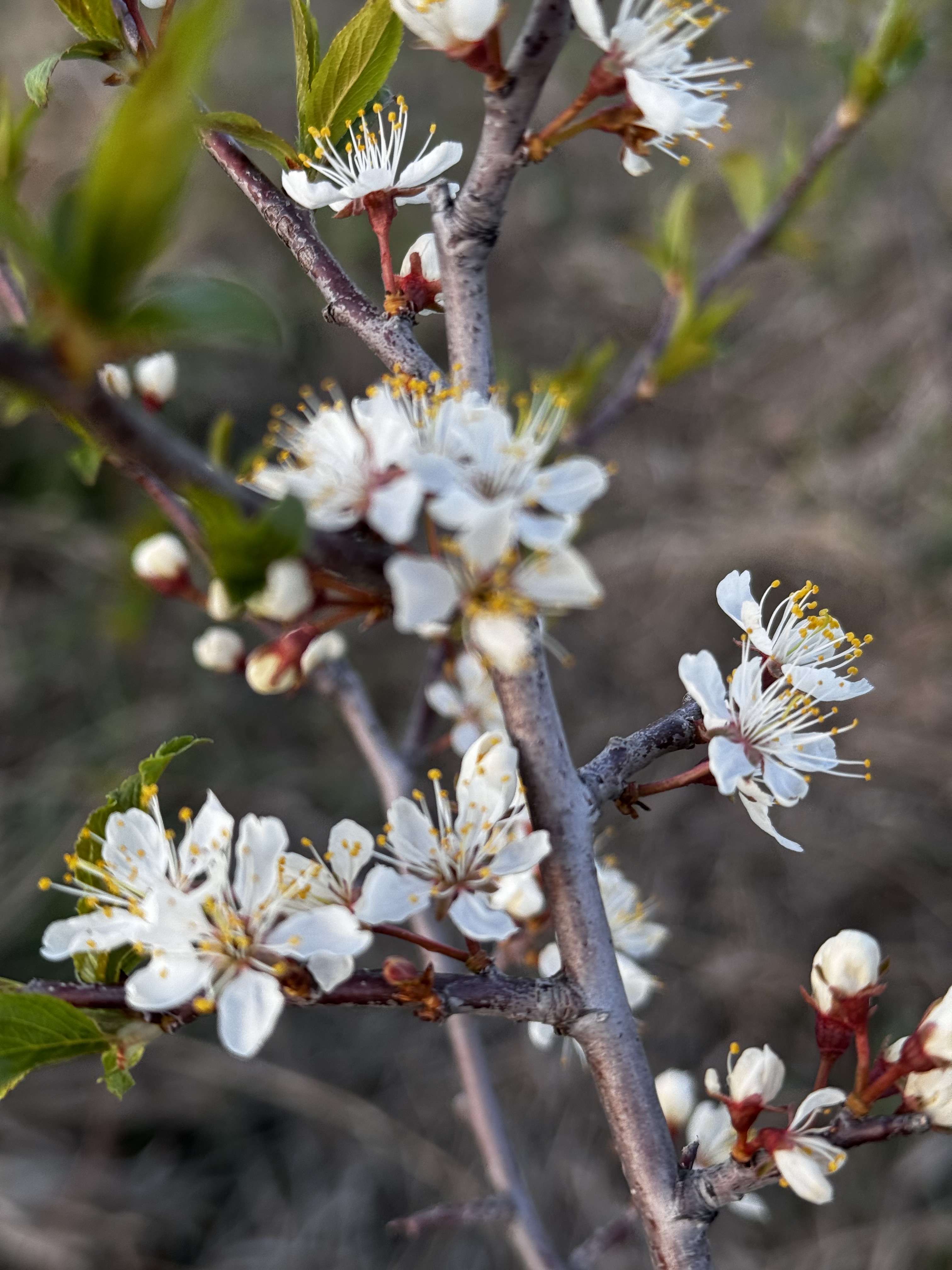
Last weekend I walked to the top of a big hill overlooking the ranch with my mom and both of my sisters. It was Mother’s Day and it was just the four of us. We stopped along the way to pick handfuls of wild sweet peas to lay on the spot where we placed my grandmother’s ashes just about a year earlier. We caught our breath when we reached the top, laughing at my big sister who always wears the most impractical outfits and footwear for the ranch. We put our hands on our hips and quieted, looking out across the neon green landscape, catching the scent of the plum blossoms on one of the most perfectly beautiful spring days. It occurred to me then that the four of us—our mom, and the daughters she raised spread across the decades—have likely never been alone like this together, out in the wilds of the ranch. No dads, no kids, just the women here, looking out. Looking up. We placed those sweet peas on the little stacks of rocks and remembered my mother’s mother and noticed a little yellow butterfly make its way through our gathering before heading back down that hill to share a meal and watch the kids play in the lawn.

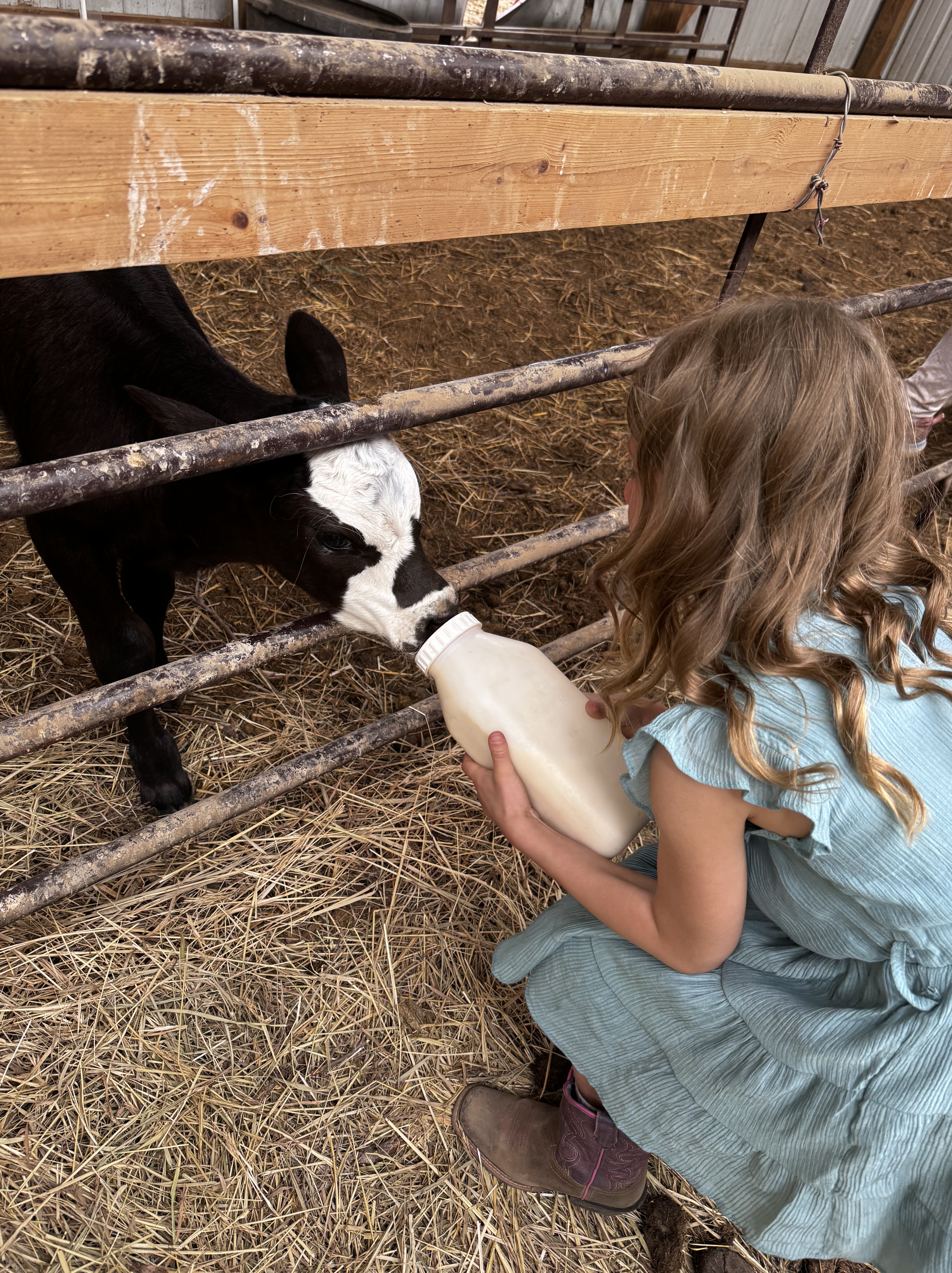
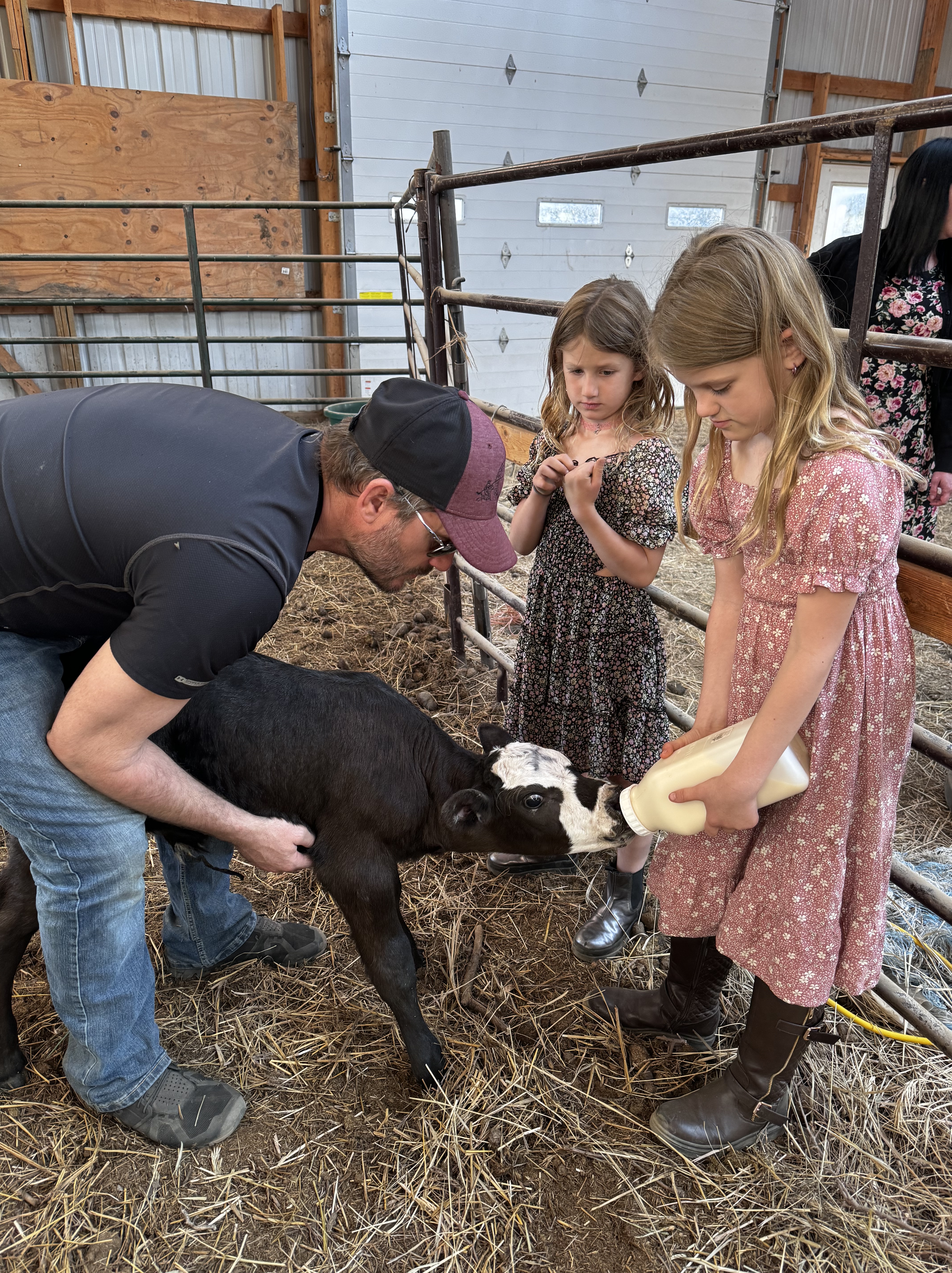
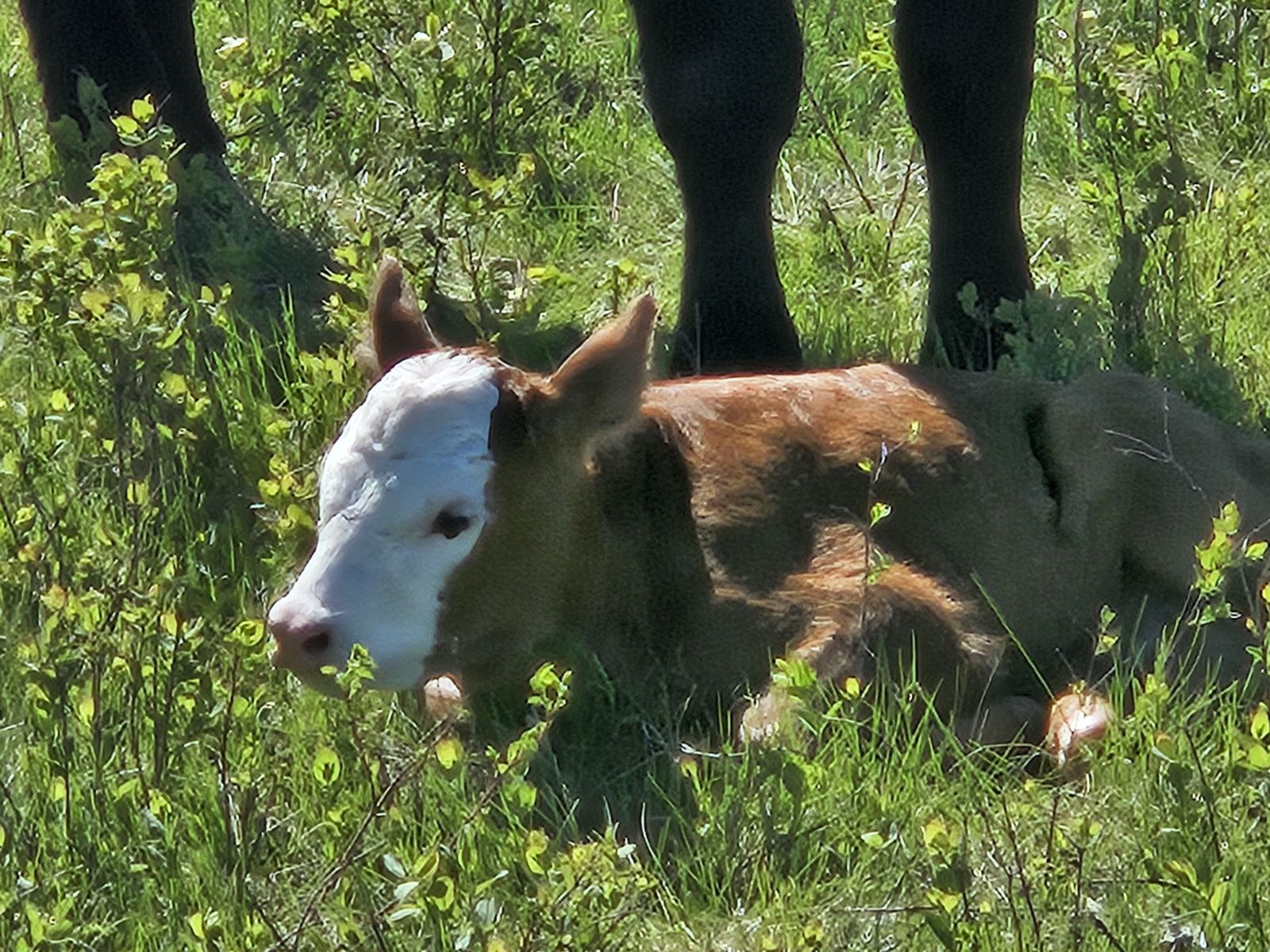
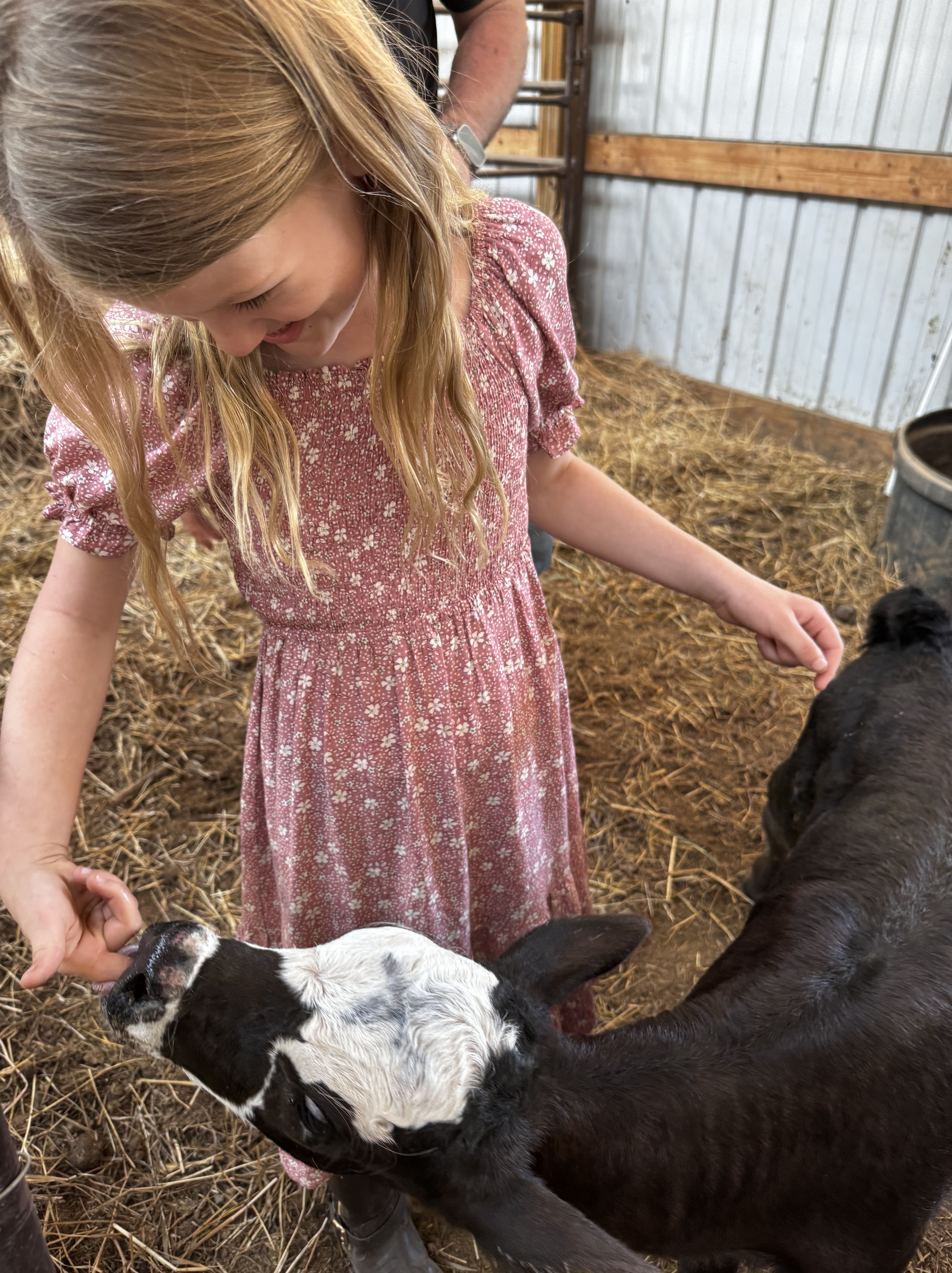
Recently, my dad brought home a little black-white-face calf to the barn. He had been out checking cows and noticed it wet and left behind, potentially a twin to another brand-new calf nearby who was up and sucking. He placed a little “x-marks-the-spot” on his head to distinguish it from the other calves so he could come back and check on him to be sure he wasn’t claimed before taking him back to the barn to try him on a bottle. We rounded up our daughters to give the calf a proper welcome, glad he was found, and a little worried if he would ever figure out the bottle.

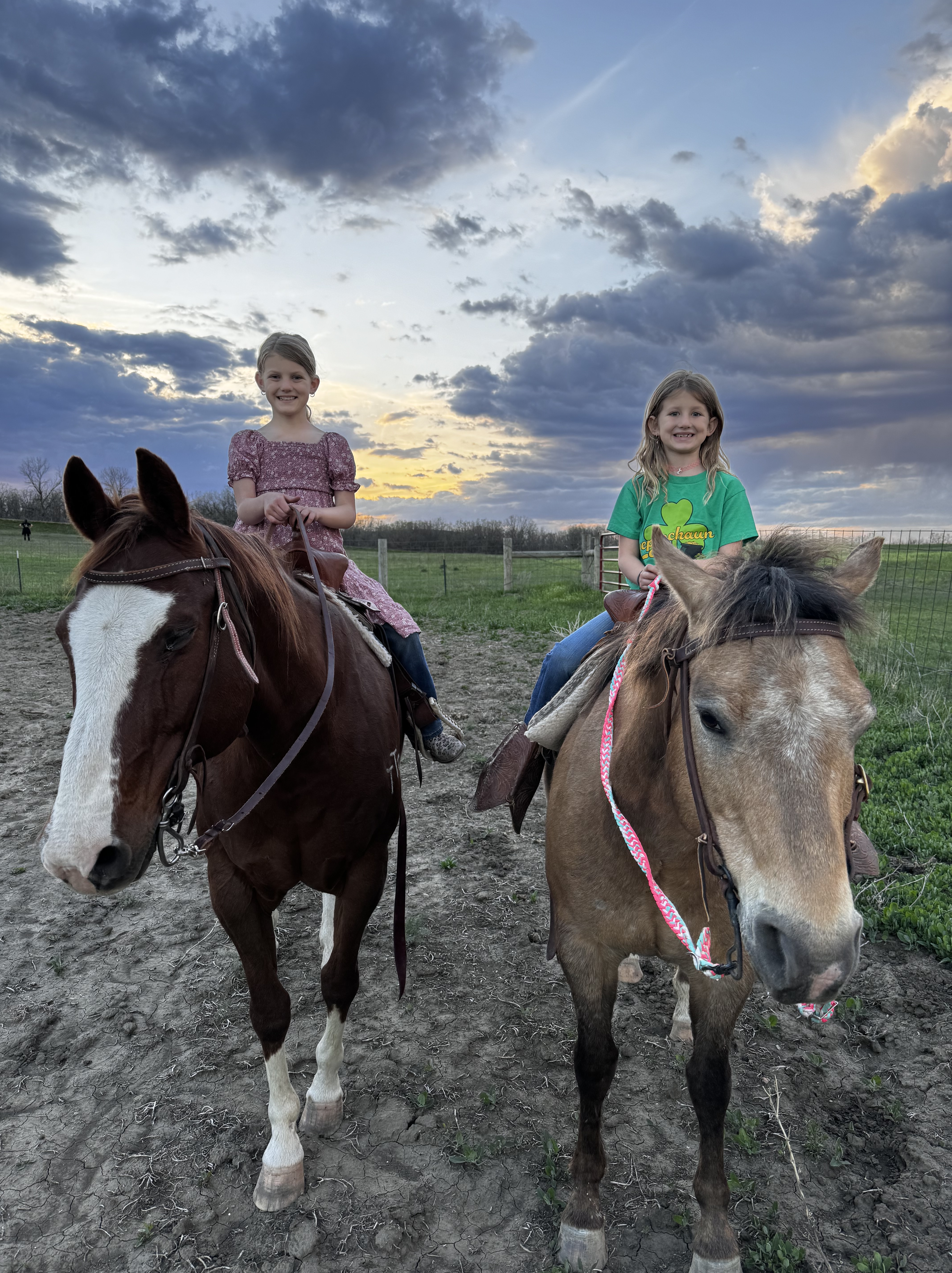
That night my oldest daughter fell off a pony we’ve been working on. She was fine but my husband and I, we felt terrible. “If only if only if only,” are the things we say when little accidents and close calls happen. We always think we should know better. She got back on and shook the scared off before we returned home right before dark to eat a cereal supper.

I missed the northern lights that night despite all the places and ways it was forecast so we could make plans to witness it. We laid our kids down safe in their beds, I said a quiet prayer of gratitude and fell asleep as the last bit of light fell under the horizon. While we dreamed, the lights danced around us and our friends and neighbors took to porches and lawns and parking lots to stand in awe. Turns out, magic happens, even when you’re not looking…

Photo by We 3 Bs Photography

But oh, when you do! Oh, when you do!

My music video for “Northern Lights”

Yellow Roses

Listen to the podcast where we discuss our connection to heritage and changing times.

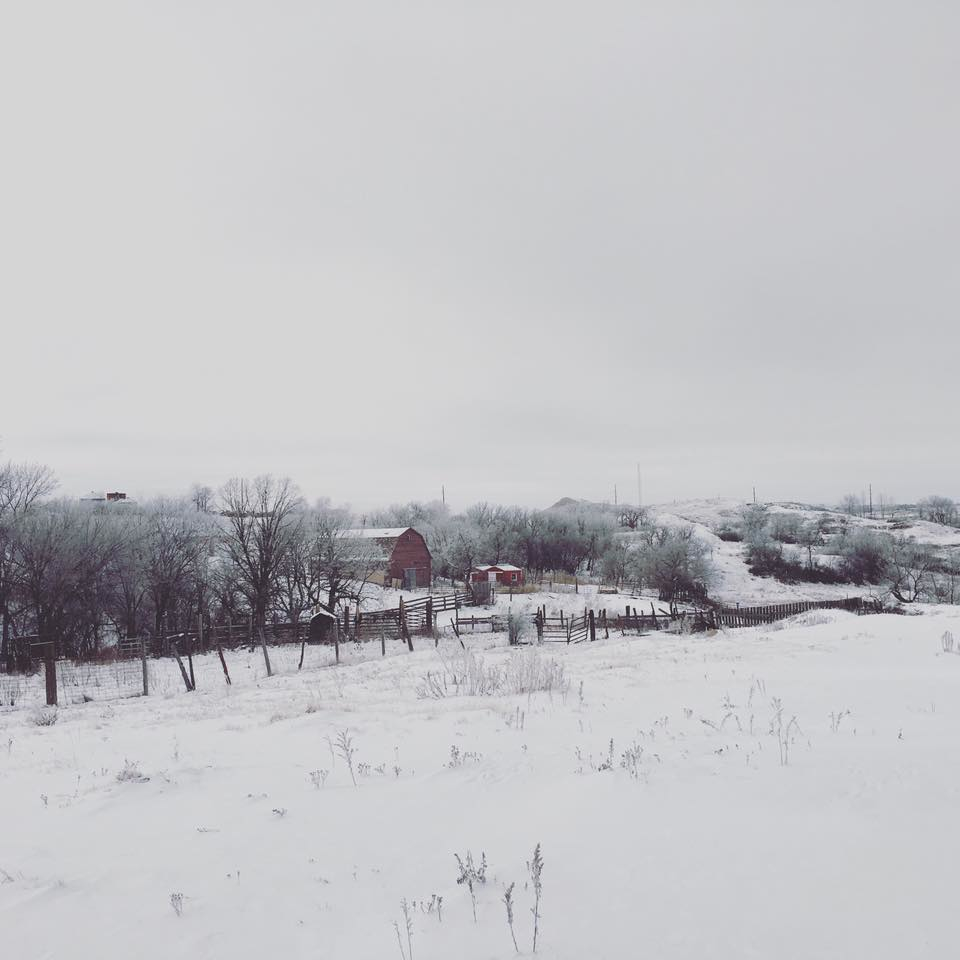
In 1915 my great grandpa Eddie staked his claim on this ranch where we’re now living. He got married and headed off to war. When he arrived back in Bear Den Township he proved up his claim, planting some trees, flax and wheat, building a barn and putting up fences.

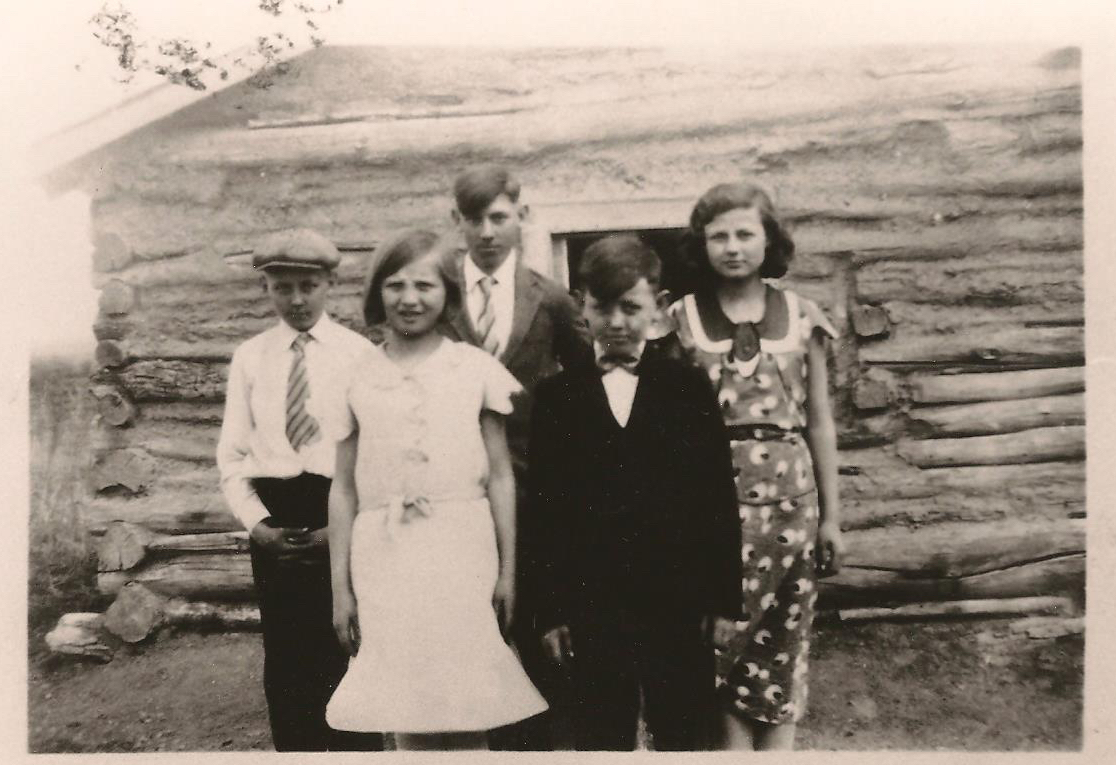
Cornelia and Eddie’s Children

Over the course of his lifetime he would watch his crops grow, his wife die too young and his children make their own mark on the land he laid claim to. He would meet a couple grandchildren and serve them his famous buns, tell them jokes and scruff their hair before leaving them all behind in death to do what they would with the place he worked so hard to keep. The red barn, his old threshing machine and dozens of other little relics of his existence are scattered sparsely about the place now to remind us that 110 years ago is not long enough to rust the old equipment to dust, but it might as well be forever.

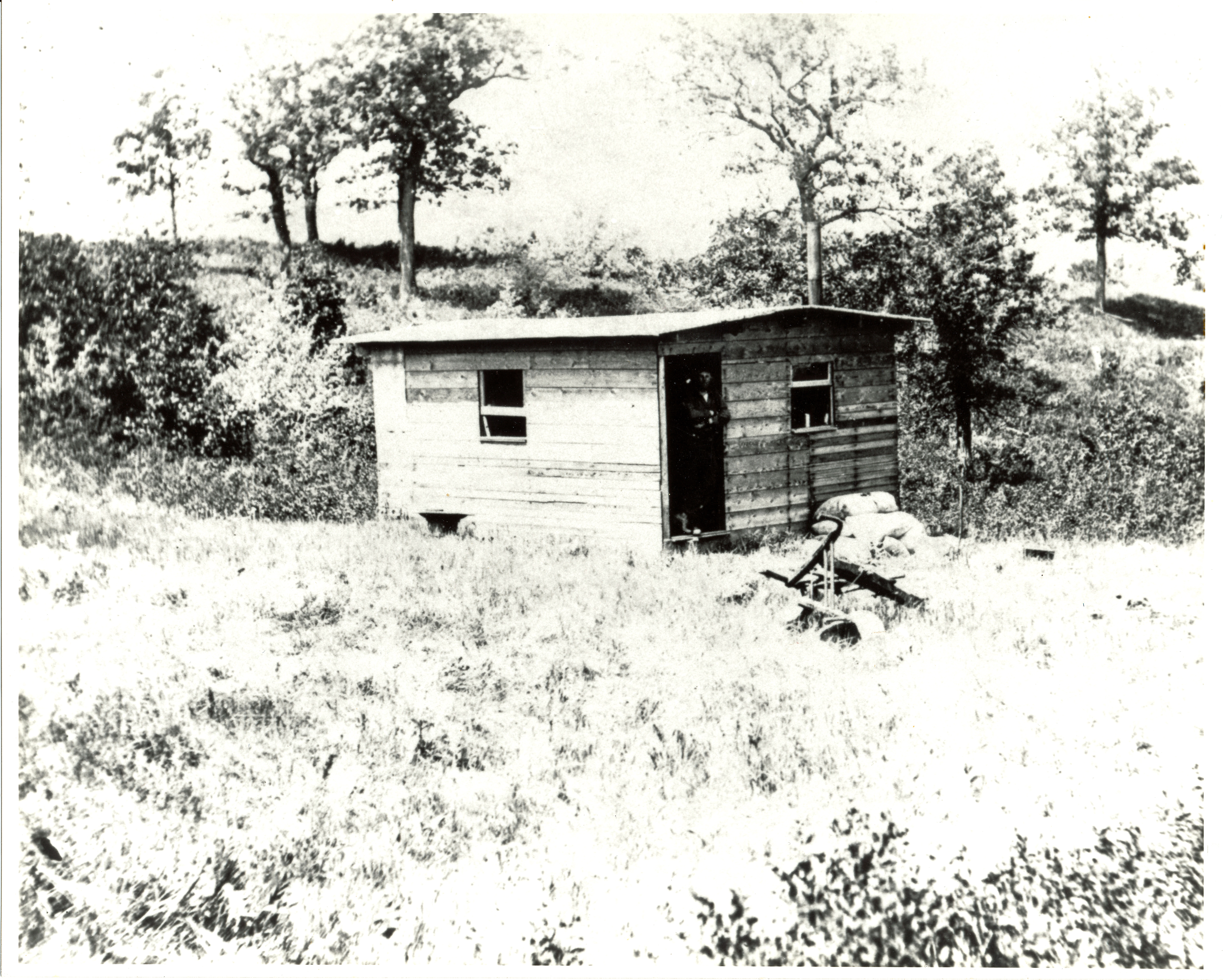
Great Grandpa Eddie standing in the doorway of his homestead shack

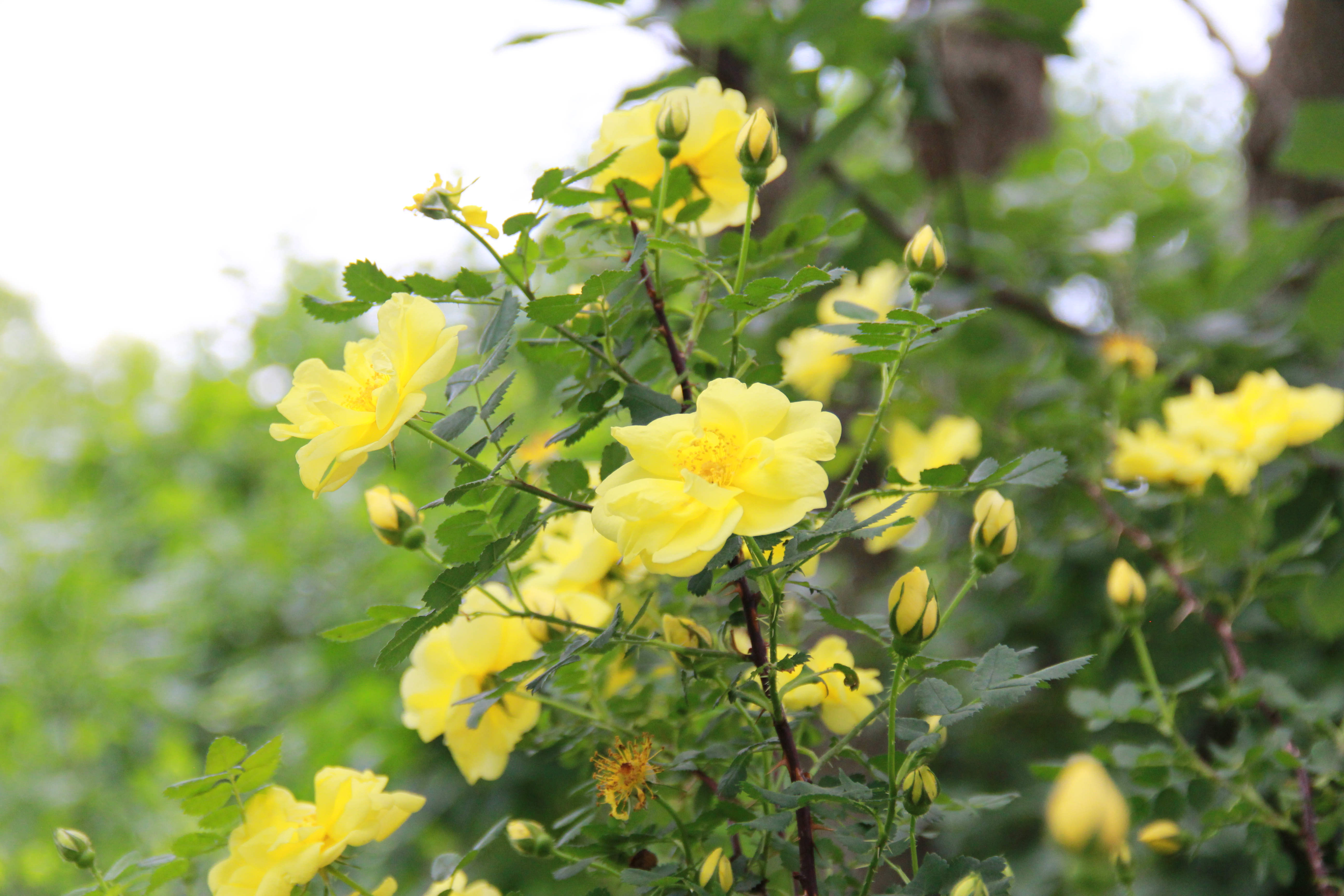
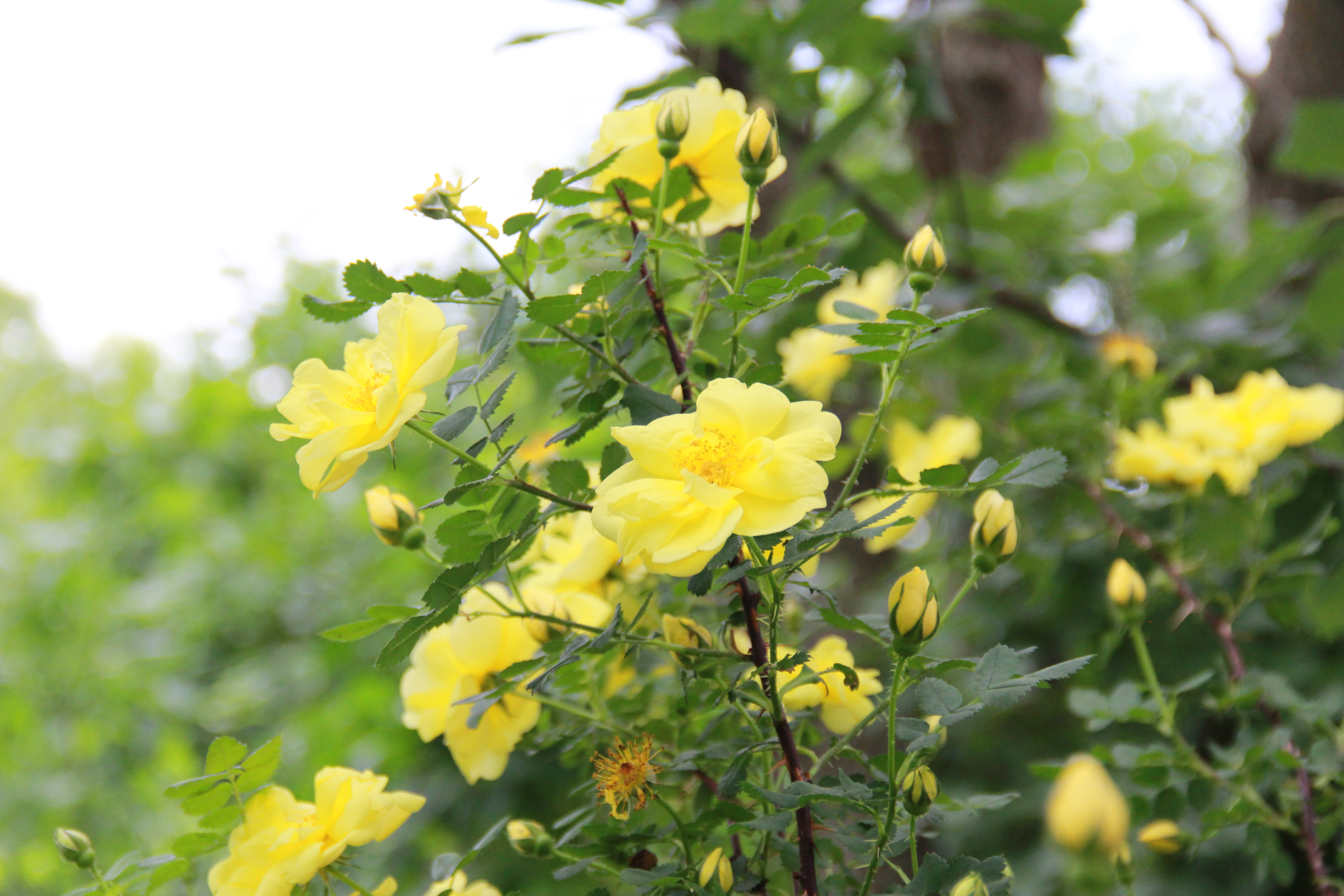
I didn’t know my Great Grandpa Eddie, but I think of him often and wonder what parts of his blood flow through mine. I think it might be the holding on part, just like those yellow roses his wife planted in her garden all those years ago before she died suddenly and only 36 years old, leaving her children, her husband and those roses behind to bloom without her. 

One day I want to write his story with the parts I know and then the way I imagined it could have been. But today I thought I’d share his story in the lyrics of the song I wrote about him. I’m honed in that sort of storytelling, so I started there…

Hear it wherever you get your music or head to www.jessieveedermusic.com to order the album. 

Yellow Roses

14 and 80 acres
A couple horses and two hands
Grind the gears and swing the hammer
Turn a boy into a man
His daddy was near blind then
His brother just 13
His mom, she swept the floors though dirt like that just don’t come clean

Only North Dakota
Would make promises like this

Bring with you all your hope here
See what she can do with it

He built corrals and fences
And the family’s homestead up in time
Rode the river in the big draws
With the cowboys for a dime
But there’s something bout the work here
Made him want something of his own
Signed papers on a tar paper shack and called the land his home

Only North Dakota
Would make promises like this
Bring with you all your hope here
See what she can do with it

Only North Dakota
Where the ground turns white to green
The rain, the snow the storms they blow in
like you’ve never seen

Right there we could have left it
His dreams sprouting from the ground
But if man can make a fortress
Only man can knock it down

But when the war was over
He found himself a bride
Yellow roses in the garden
And their children were her pride
Lost money on the cattle
Lost some on the grains
Lost her when she went to sleep and did not wake again

Only North Dakota
Would make promises like this
Bring with you all your hope here
See what she can do with it

Only North Dakota
Where the ground turns white to green
The rain, the snow the storms they blow in
like you’ve never seen

Now a man cannot give up there
This man didn’t have the mind
He made biscuits in the morning
Taught all the babes to ride

When the neighbors fell on hard times
He lent a hand or bought them out
And watered yellow roses in the heat of summer droughts

Only North Dakota
Would make promises like this
Bring with you all your hope here
See what she can do with it

Only North Dakota
Where the ground turns white to green
The rain, the snow the storms they blow in
like you’ve never seen

Now I stand here with my children
One on my hip, one holds my hands
Another generation breathing life into this land
We count pennies and our blessings
And to the memories we cling
And down in the barnyard yellow roses bloom here every spring.

Thank you for listening

Happy New Year from the ranch. And happy longest month of the year in North Dakota. Or is that February? I can’t remember. Winter up here sometimes is like childbirth, you forget the horrors when you’re in the middle of those beautiful June days.

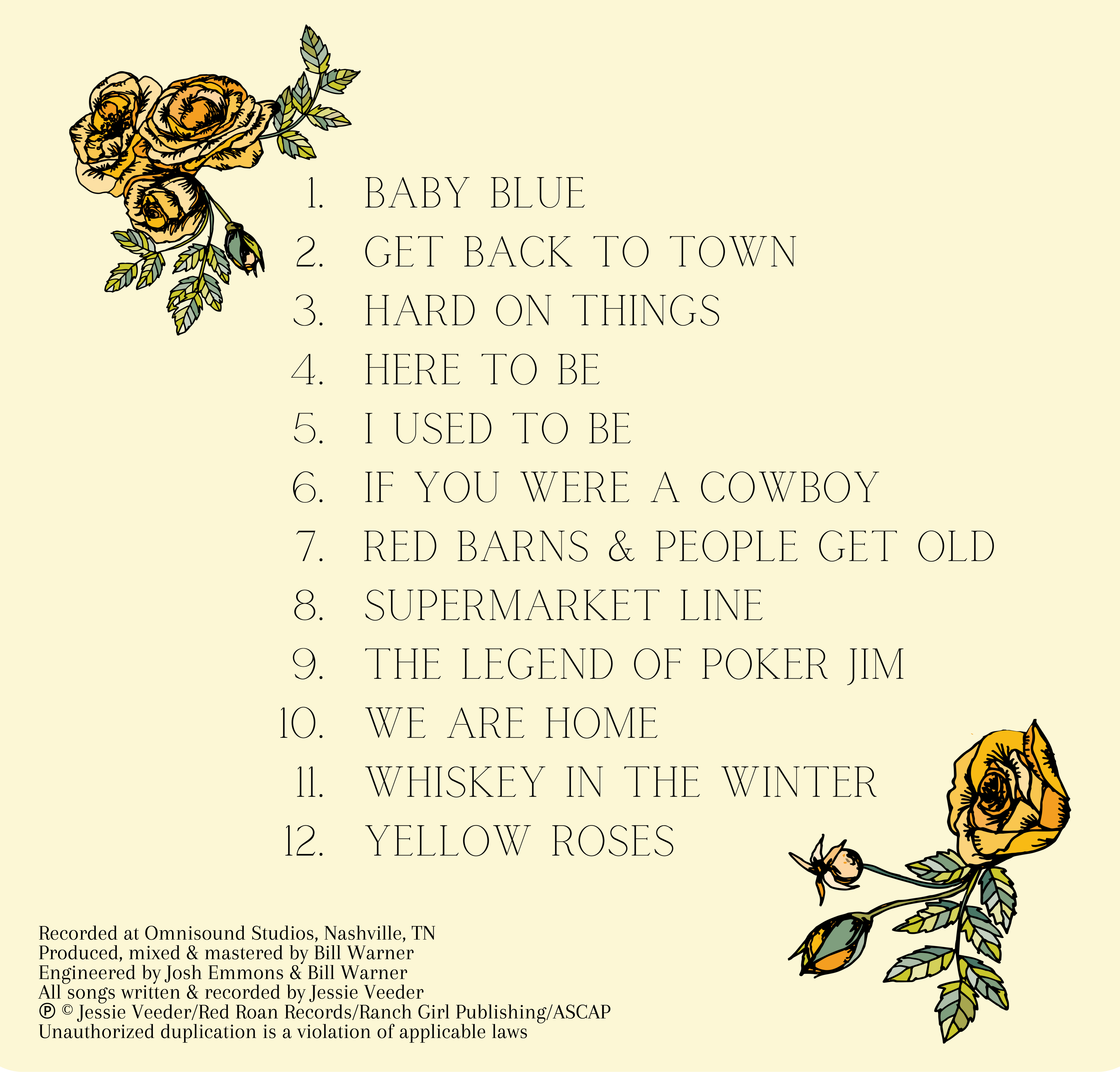
I sent my daughters off to school for the first time after their break and now I’m alone with my thoughts for the first time in weeks. And so it seems like a good time to announce that my new album “Yellow Roses” is set to release everywhere on January 11th. I think it’s a proper way to ring in a new year, with new music.

The truth is, I didn’t think I had another album of original music in me. I’ve been at this since I was sixteen years old, writing songs about the people and landscape of a place and life pretty obscure to most of the world. My last original release was over eight years ago, songs written before motherhood and performed and released when I was pregnant with my first daughter.

It was a time in my life that held so much hope and promise, tangled up with no guarantees in that complicated way that hope and promise always seem to be.

And it feels like all our real life has been lived in that space between that last album and now. Between working on raising babies and cattle, we’ve faced the near loss of my dad, a job layoff, a new business endeavor, keeping a non-profit afloat and my cancer diagnosis during a pandemic and my slow recovery figuring out how to live a life with pain that just won’t let up. And we’ve put that all up against the promise to love each other forever and make sure our young kids don’t figure out too soon that life can be scary.

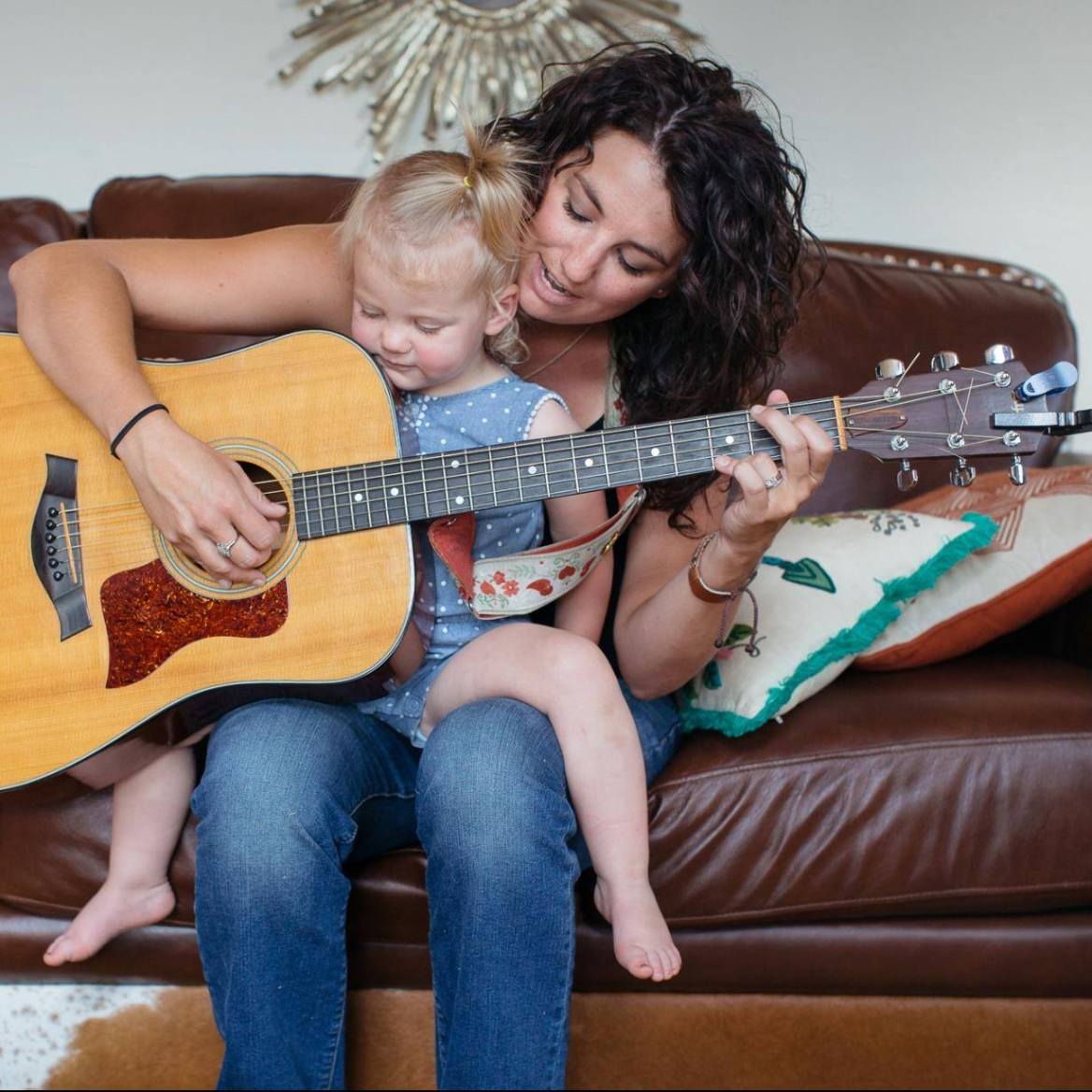
Pregnant with Rosie, playing “Sunshine” with Edie

I’m looking back at that list right now and am fighting the urge to delete it all. I don’t want to be the person that lists the struggles, mostly because I can’t carry on there. I prefer and thrive in the spaces in between: the slow walks to my sister’s with the kids stopping every few feet to pick up a rock or dig in the dirt, the quiet times at night laying next to my husband and telling him the funny things Rosie said, my favorite horse and teaching the girls to ride, wildflowers on the kitchen table, new calves trying their legs in the fresh green grass, watering my tomato plants, walking a cattle trail, the way the evening light hits the Blue Buttes, watching Edie catch and love all the frogs, a small stage in a small town, making you a cup of coffee while you tell me about the old days, sitting in the passenger seat of the pickup while he drives…

These spaces in between, that’s where the songs are for me. And that’s what this album is. It is a finishing up of the ideas that have been sitting in pages on the shelves for years and it’s the songs the tall grass knows that I can finally hear. It’s the retelling of old stories to a new melody. It’s the sound of kids growing up and the generations before us and the weight of the holding on. It’s the hum of April blizzards and frustration and potential of changing times. It’s the sound of Nashville players behind the words of a ranch kid all grown up now.

And so on January 11th, I hope you’ll take a listen. I hope you’ll find these songs wherever you are and I hope you find yourself in them somehow, even if it’s just in the rhythm of your toes tapping. People like me, for whatever reason, live our truest lives by telling about it. Thank you for listening.

Watch for tour dates coming in early spring, where I’ll take the songs to you.

Buy a signed “Yellow Roses” CD at www.jessieveedermusic.com today, pre-save it on Apple Music and get three of the twelve tracks right now or get the full album on January 11th wherever you get your music.

Thank you for listening.

Baby Blue

Fun news! The kids are feeling better, most of the presents are wrapped, the Christmas fudge is made and the opening track, “Baby Blue,” off the new album is all yours if you pre-add “Yellow Roses” on iTunes TODAY!
PLUS preview all 12 tracks.

Enjoy this acoustic version of “Baby Blue” and a little about the blizzard that inspired the song.
Thanks for the support!

If You Were A Cowboy (Official Music Video Release)

Breaking News! The official music video for “If You Were a Cowboy” is up on my YouTube Channel!

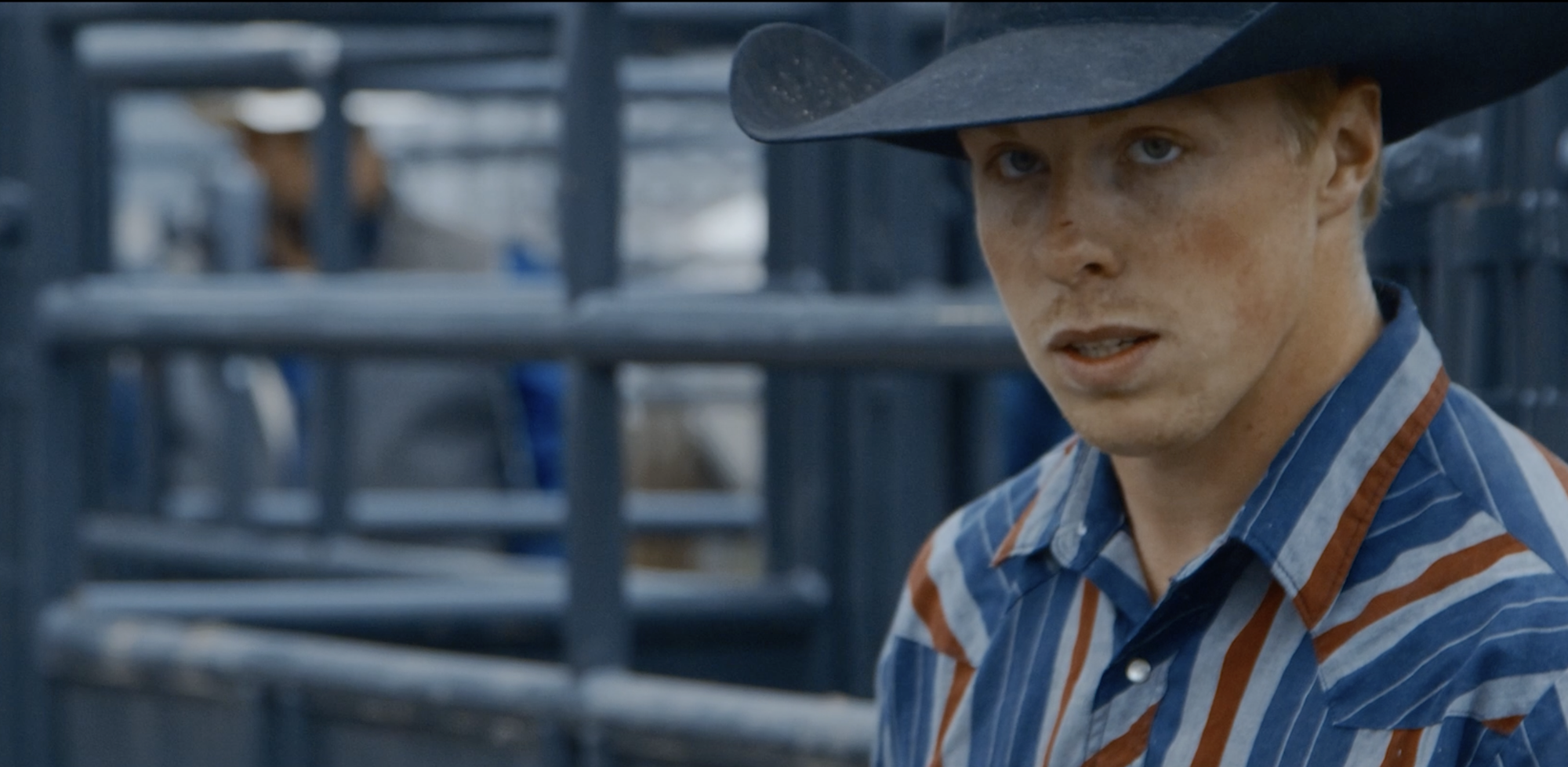
Featuring real North Dakota working and rodeo cowboys and families, this song is a shout out to the men who show up, cheer you on and hold your purse.

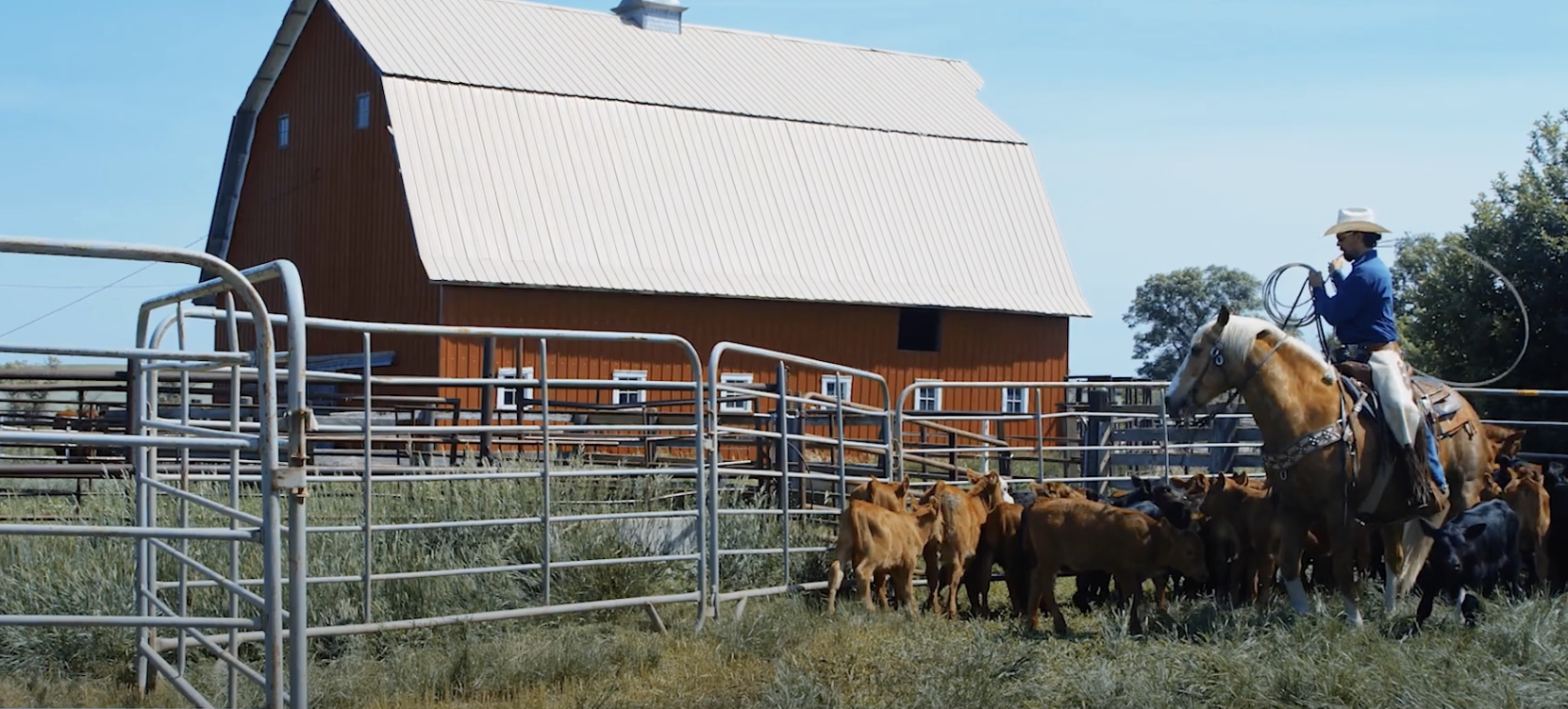
Filmed at the beautiful Triangle M, Missouri River Angus, the Veeder Ranch, Burnt Creek Farms and the Mandan 4th of July Rodeo, there’s plenty of cowboy footage to get you through your weekend.

PLEASE SHARE! The world needs more cowboys…
Special thanks to our favorite rodeo cowboy Clay Jorgenson, Quantum Digital, Breaking Eight, Burnt Creek Farm Triangle M Ranch & Feedlot, Missouri River Red Angus and WarnerWorks, Brian Bell, Brady Paulson Beni Paulson and Mya Myer and Travel North Dakota

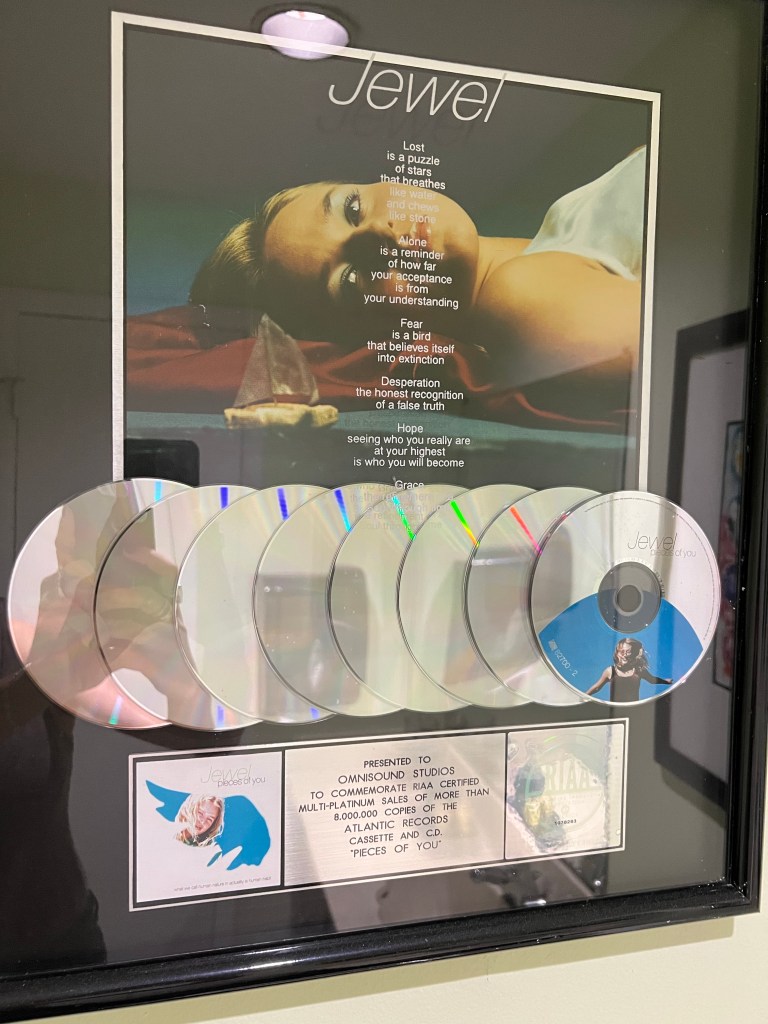
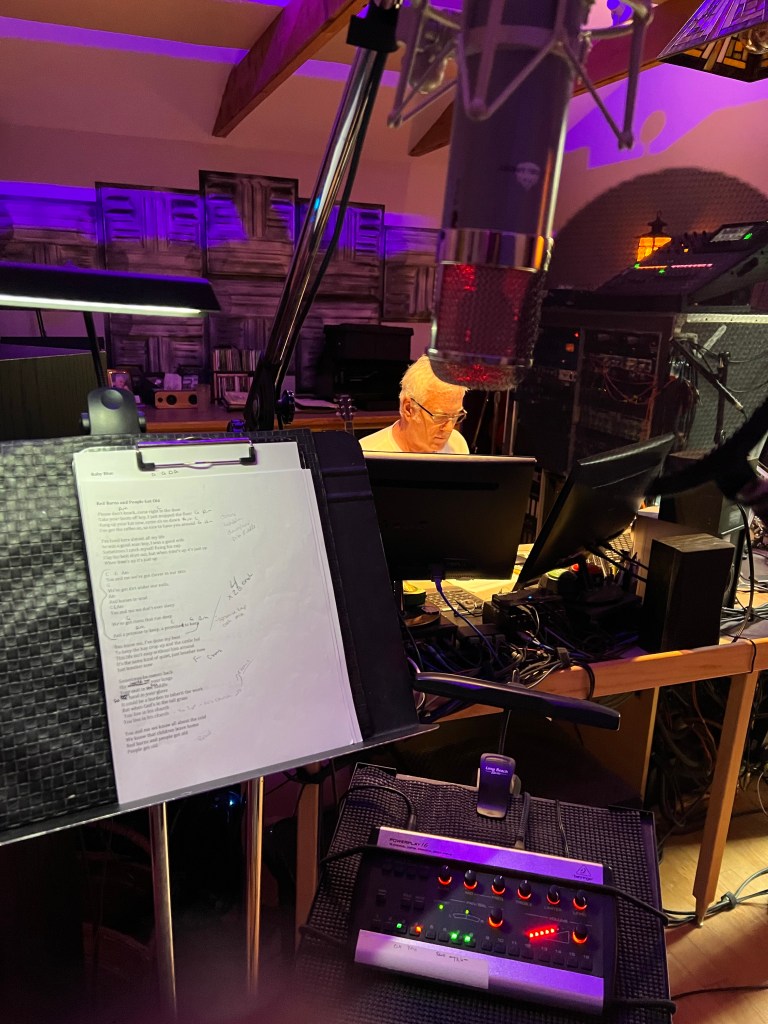
Song recorded at OMNIsound Studios in Nashville.

On Nashville

This week on the podcast I catch Chad up on the Nashville trip and the recoding process. Listen here or wherever you get your podcasts

“Live in THIS moment.”

That’s what my fortune cookie said as I finished my takeout dinner in a hotel near downtown Nashville.

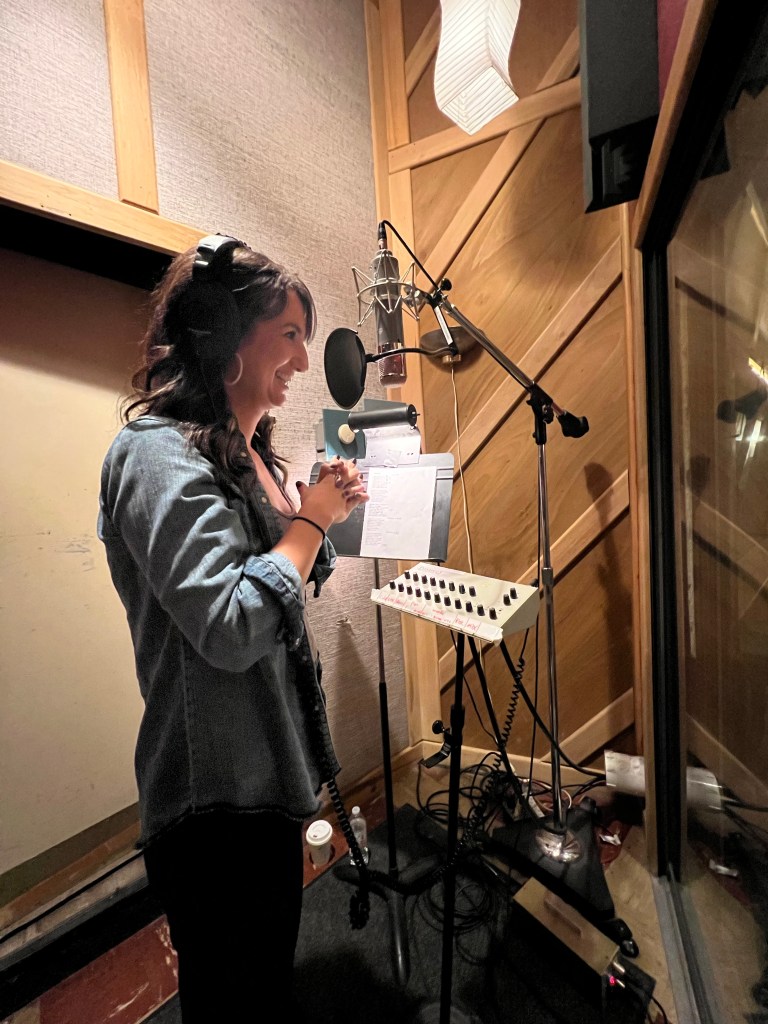
“Ok, cookie,” I said out loud to myself as I laid it on the desk next to my planner and pages of typed up lyrics scribbled with notes. These songs I’ve been writing and re-writing for the past eight years were all just stacked up there waiting for the next morning to go into the studio and come to life in the hands of some of the best players in the neighborhood.

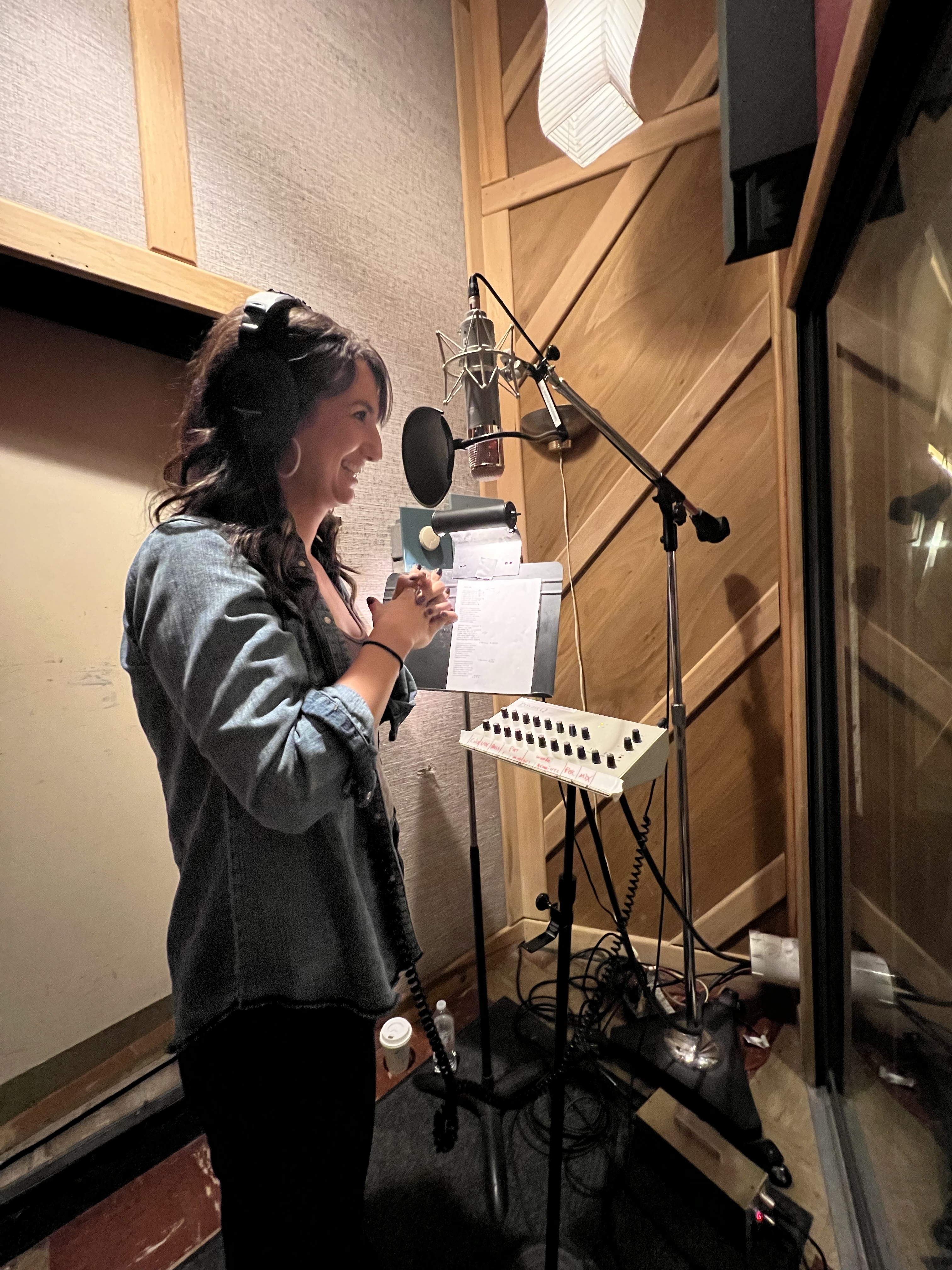
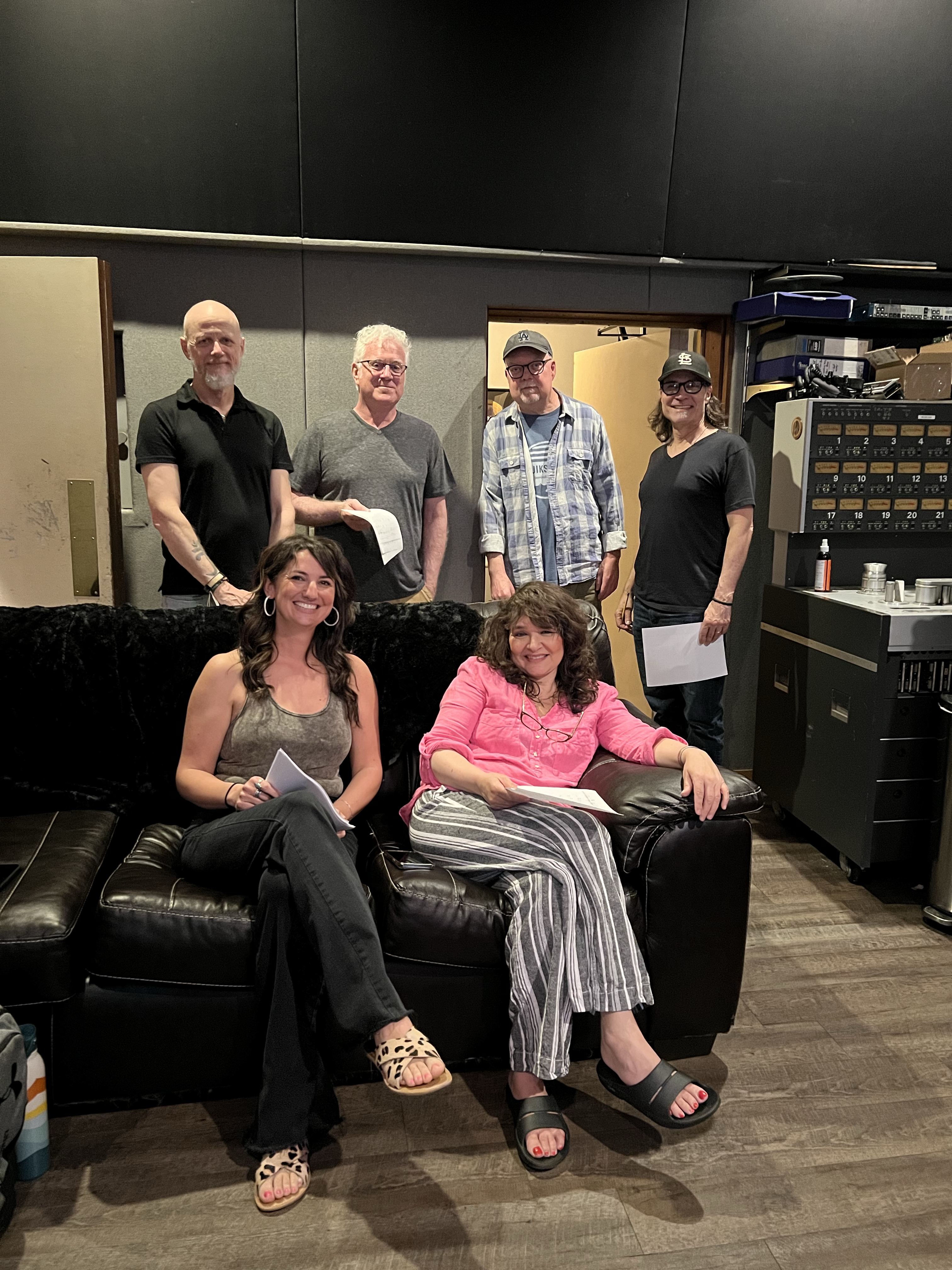
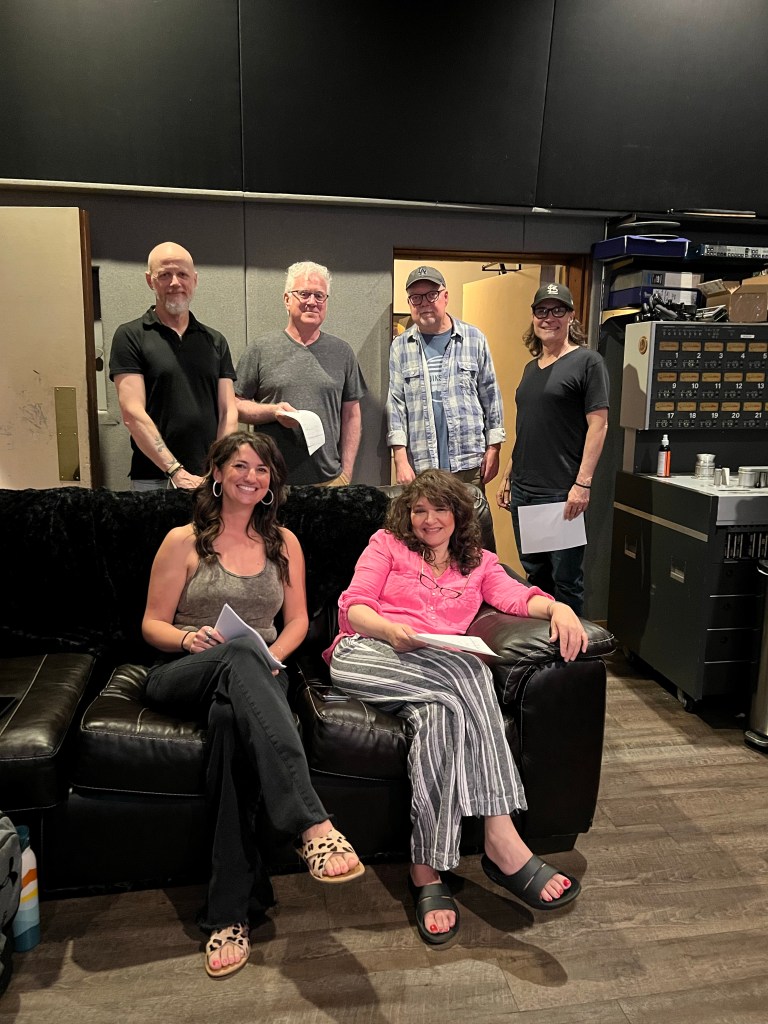
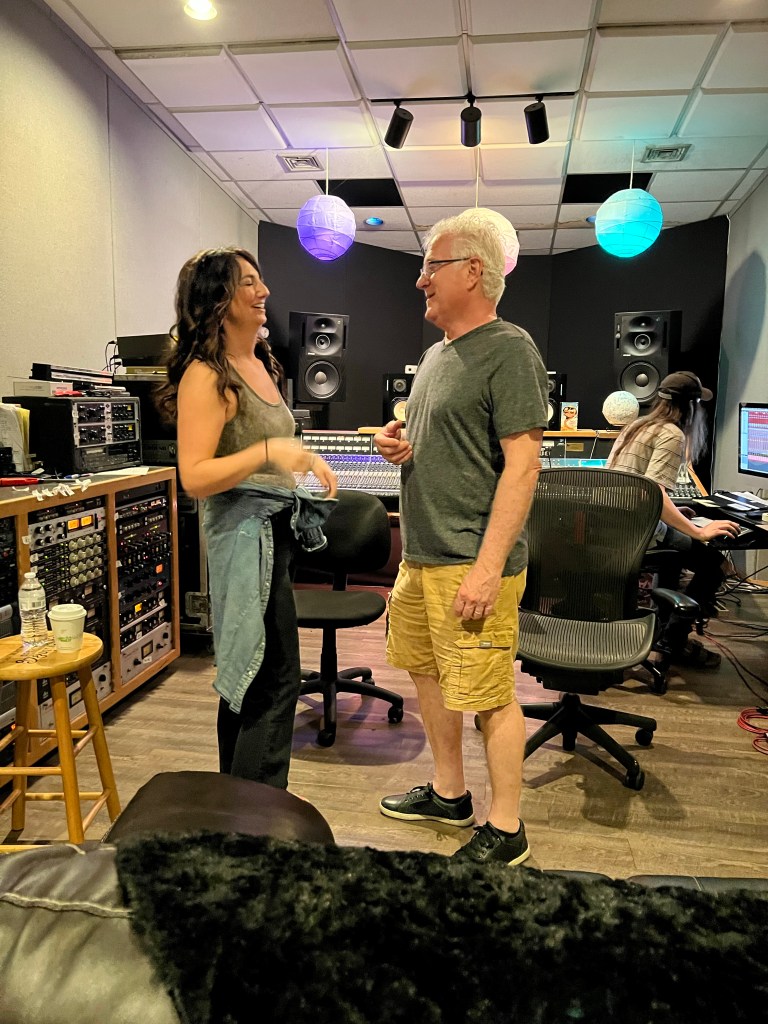
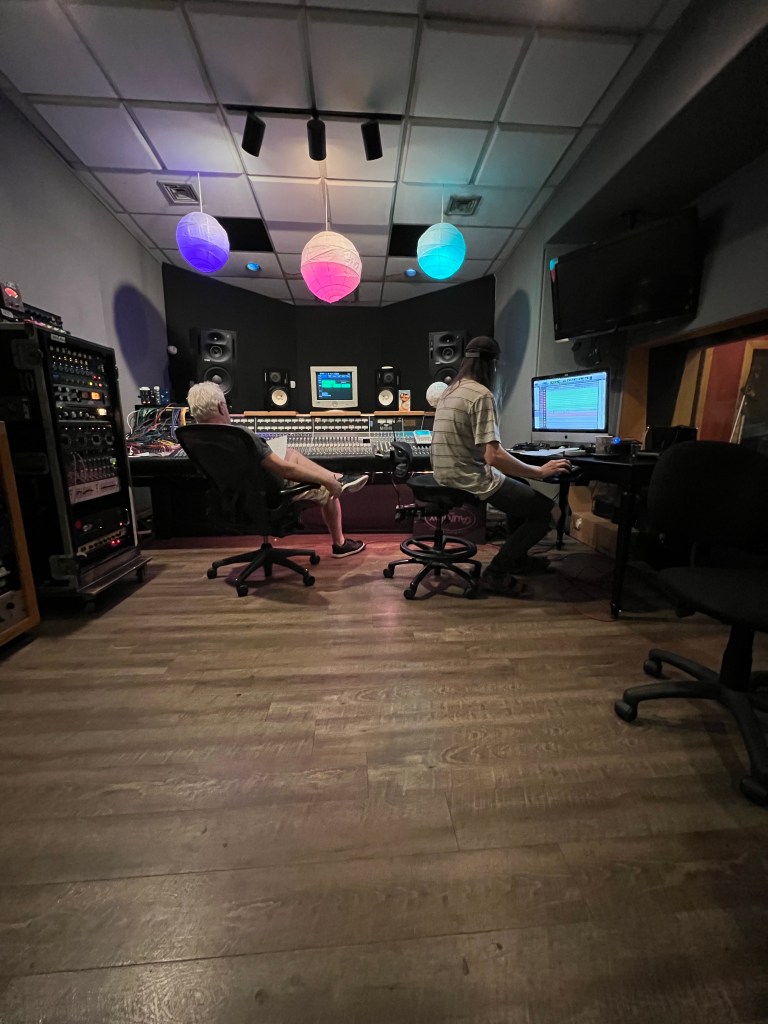
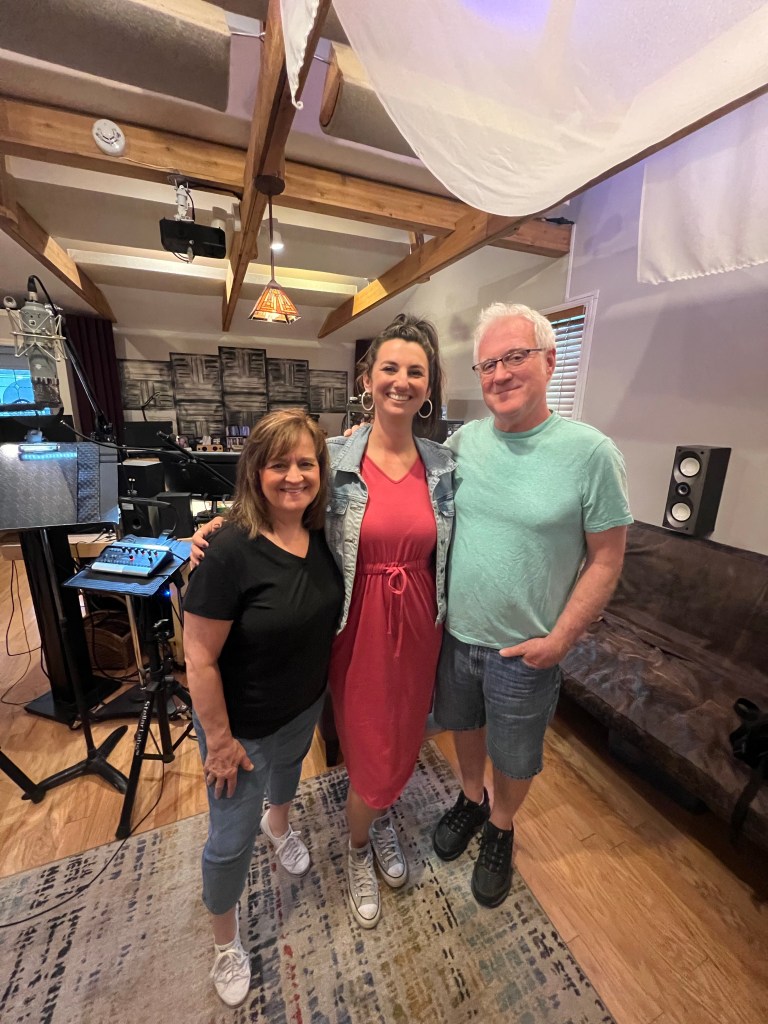
The amazing session players and producer in OmniSound Studios downtown Nashville

If you would have asked the sixteen-year-old version of me what most intimidated me as a young woman pursuing some sort of music career, I would have told you it was this. This exact situation. Bringing songs I wrote on the floor of my bedroom in the middle of nowhere to sit before musicians who are truly professional and have seen it all. Surly my songs about the hard clay of home and hard people who live there wouldn’t resonate. Surly they would laugh me right on back to where I came from.

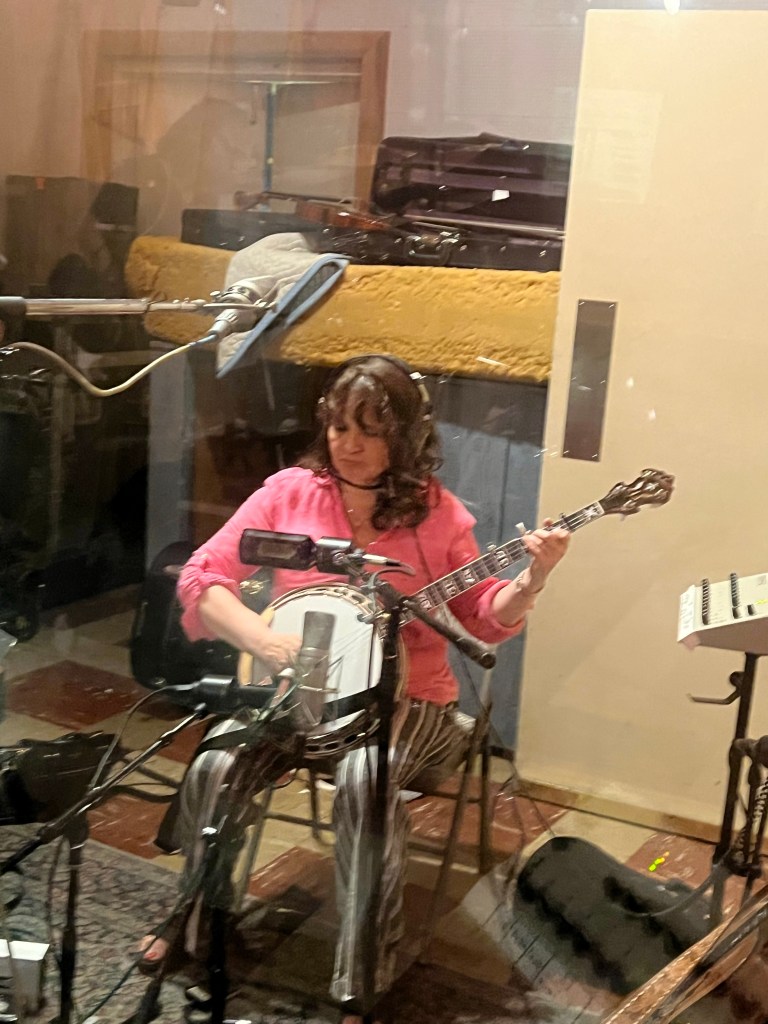
Me and Wanda, master of the dobro, fiddle, banjo, guitar and more!

I faced my fear of Nashville with my last original album in 2015. I was a grown woman by then and had done plenty of things that scared me, so I hopped a plane, figuring all I had to lose was the money. And though I had no real idea of what to expect, I was greeted by an experience in the studio that was so open and encouraging that it successfully rearranged my view of what it can mean to make music.

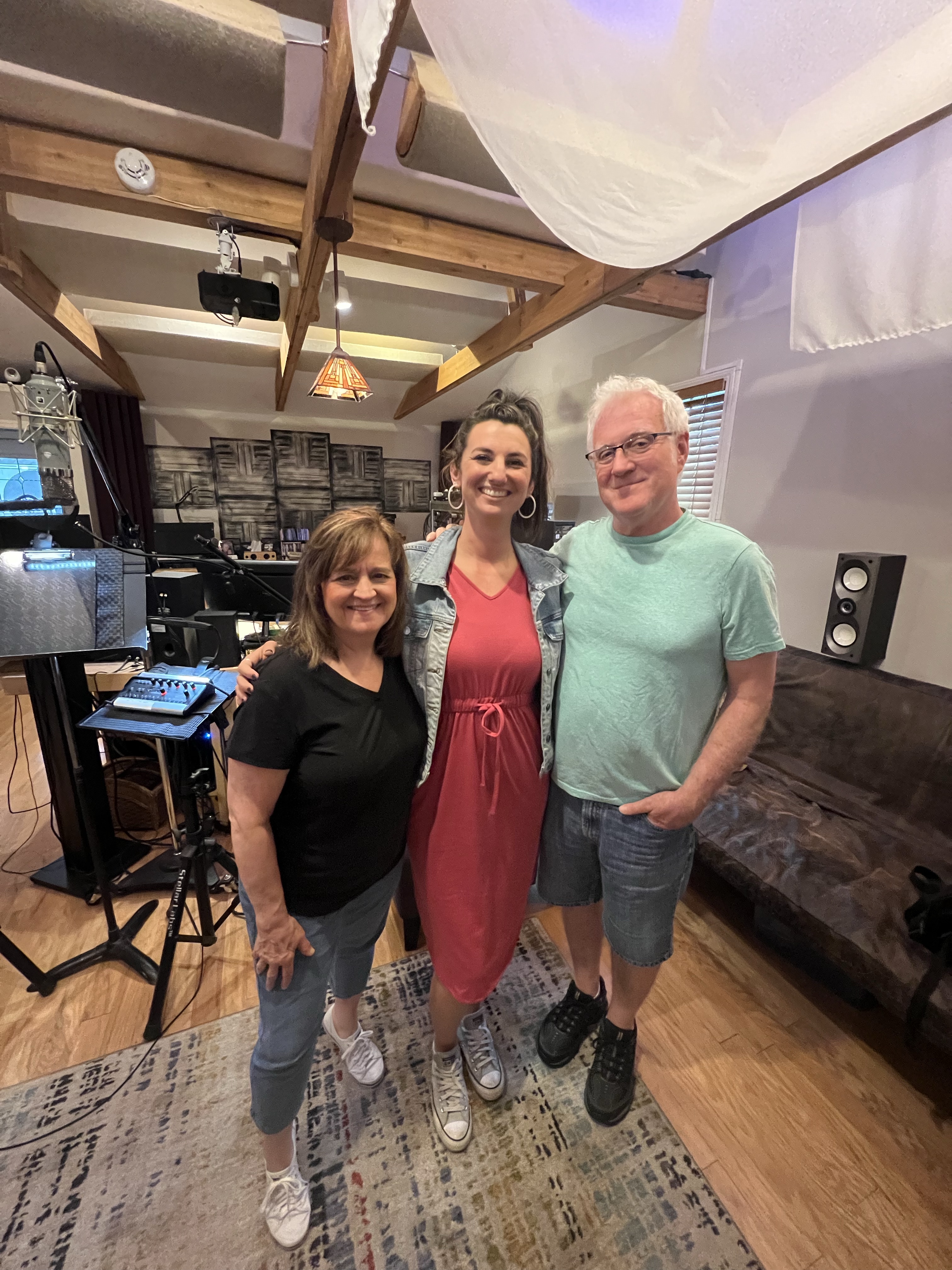
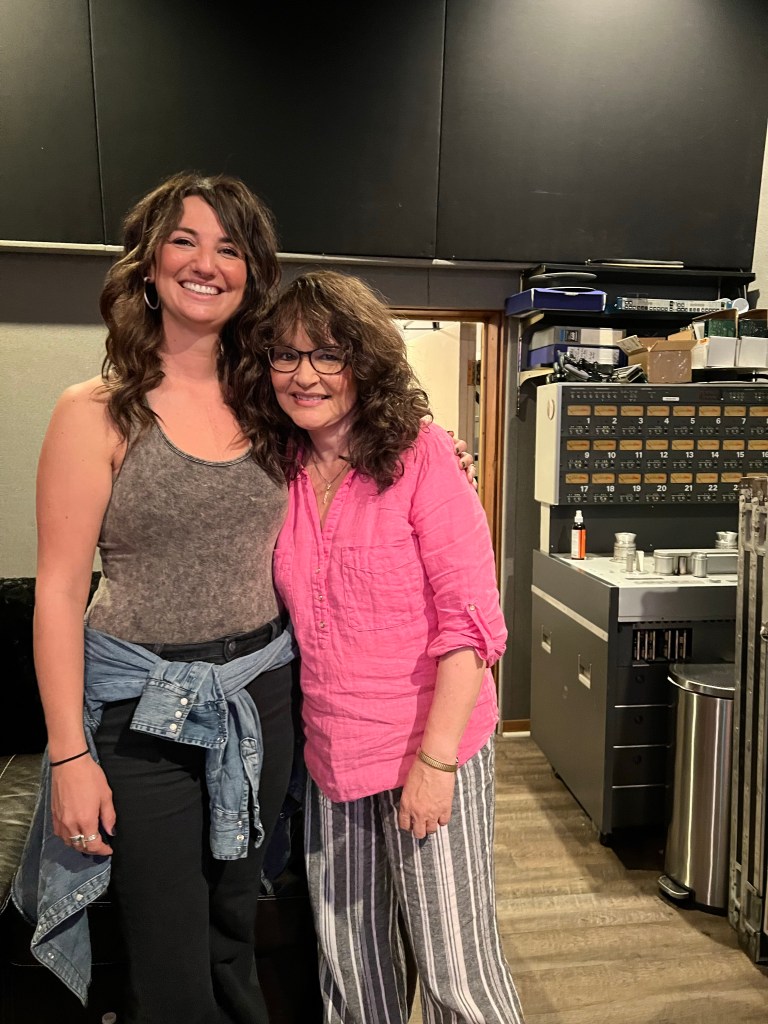
Nashville Songwriter Kirsti Manna and producer Bill Warner. Kirsti wrote Blake Shelton’s hit song “Austin” among others.

I’m sure you wont be surprised to hear it’s about the people. And in this business there is plenty of competitive drive and ambition that can make things ugly, but I had long stripped away any ideas of fame and fortune by the time I stepped into a Nashville studio for the first time. I just wanted to make the best songs I could possibly make and so did every person in that room with me. And that’s it. That’s all it’s about.

Listening to my rough tracks

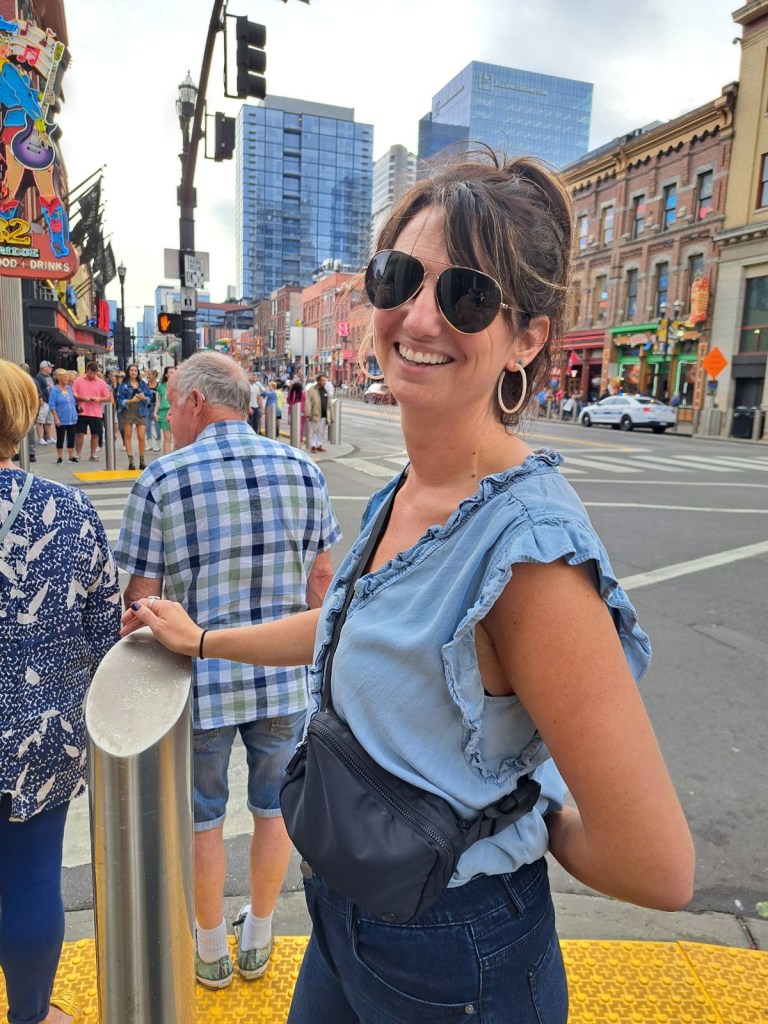
This time I flew into Nasvhille on the tail end of a storm that was lighting and thunder and rain and the migration of Taylor Swift fans to music city for her concerts. As the rain and the superstar and the fans left music city, I made my way to a studio on music row and stood under the same roof she once had, and so did Janis Ian and Alison Krauss and Faith Hill and Miranda Lambert and on and on and on the famous names lined the walls and it wasn’t fancy but it was friendly and for the record I’m the only one name-dropping here

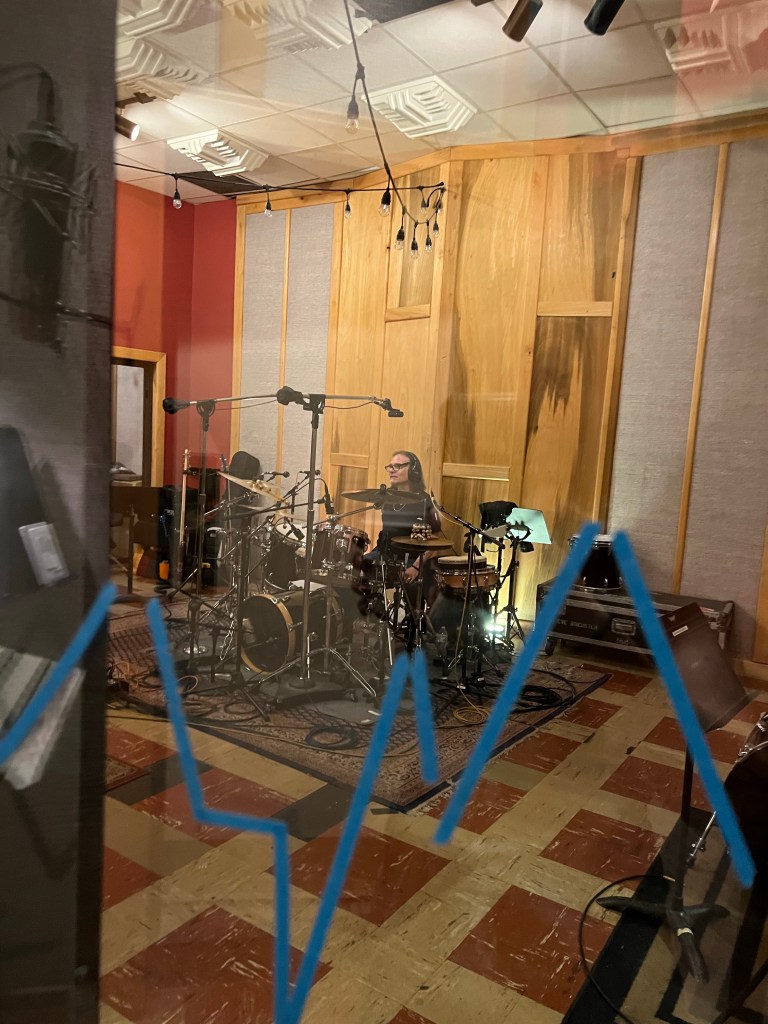
And in came the bass player and his big upright and the drummer who sits perfect in the pockets of songs and the sweetest guitar player and a woman named Wanda who can play every stringed instrument you can name and so began our day together, working through the notes of the twelve songs I brought from North Dakota prairie.

If you’re curious about the process, in short I hire a producer, who rents out a studio and hires session players. That producer charts the arrangements for the songs and gathers us all up for a day (or more) of laying the groundwork for each track. In both my experiences, we tracked the entire album, twelve songs in one ten-hour day. That means these musicians often only heard the rough-cut demo of each song once, which is typically five minutes before recording, and then they get to work. My role is to listen, sing my parts and make sure it all goes in the direction I had in my head. But every time, it goes above and beyond. The next day all those musicians were likely scheduled to work on entirely separate projects in different studios with different producers across town and I’ll stay for the rest of the week to work on tracking vocals.

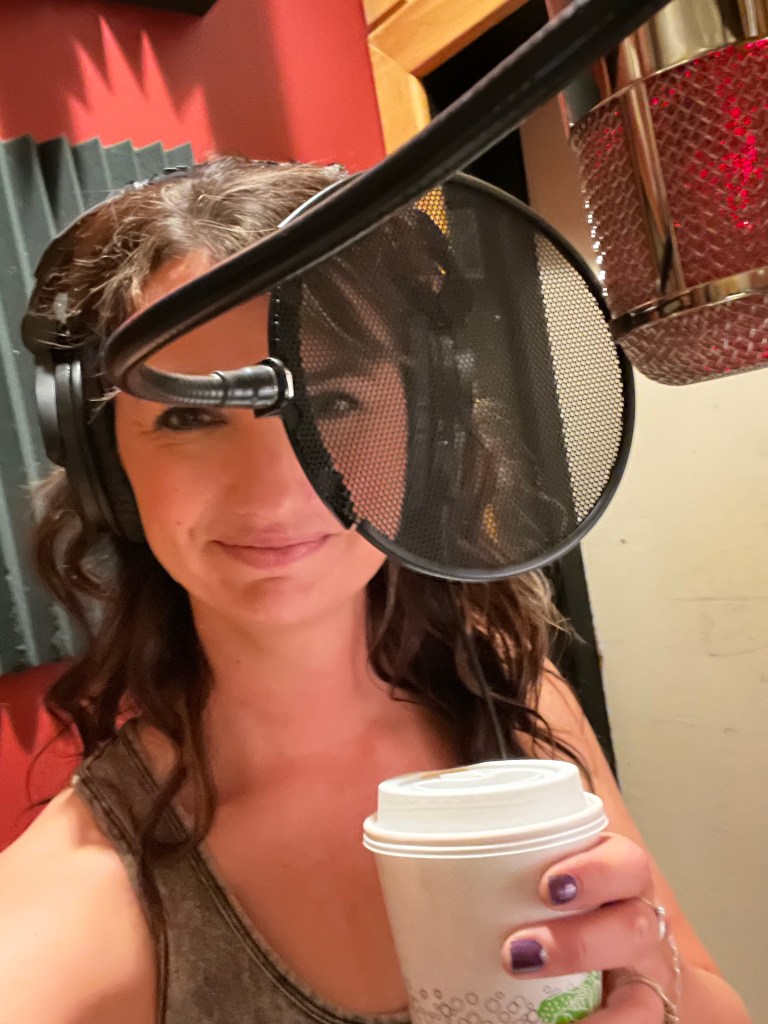
And that’s the just the beginning. Over the course of the year I’ll schedule release dates and concerts and find my favorites and your favorites and make videos and tell stories like I always do, and see where it all goes. But for now as I write this, sipping coffee from a paper hotel cup, I’m just here facing those teenage fears and living in THIS moment.

Notes from the road and the top of the hill

Well, I made it home for Elko on Sunday after a 17 hour straight drive. Turns out it takes a couple days to recover your sleep equilibrium after a trip like that. It also takes a few days to come back around to the real world after an experience like the National Cowboy Poetry Gathering. It was such an honor to be a part of it.

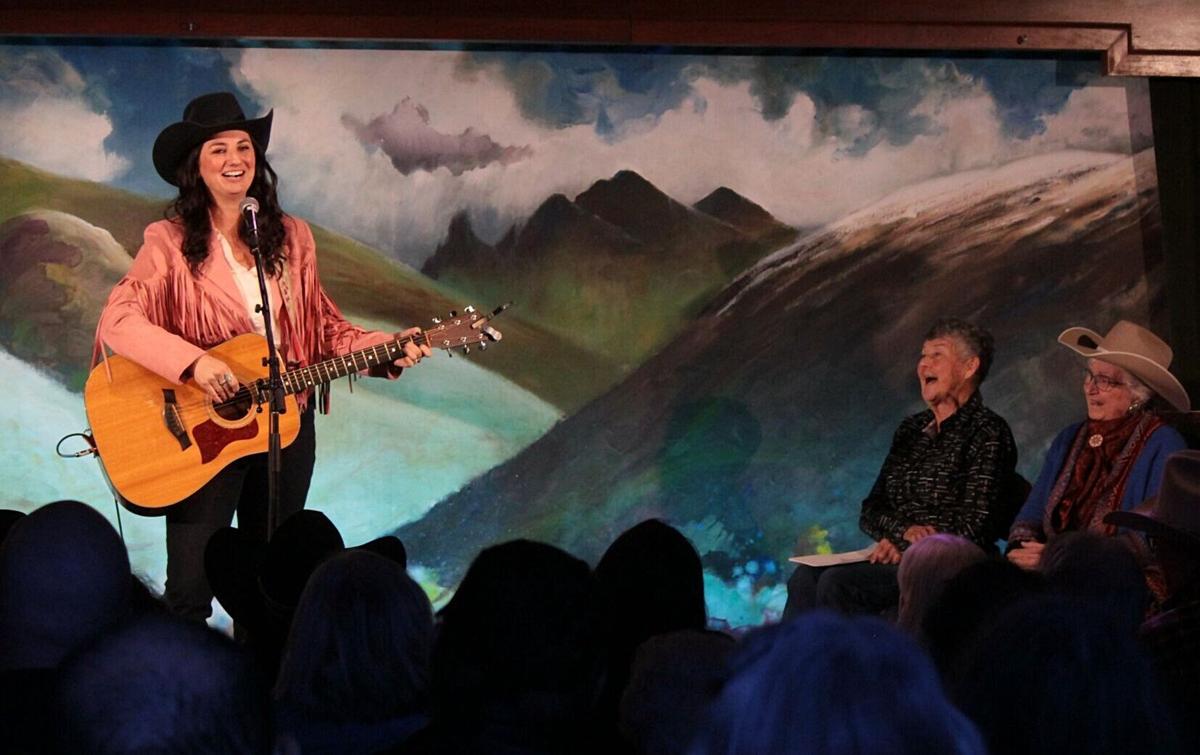
Click here to read an interview with myself and poets Yvonne Hollenbeck and Patricia Frolander about opening up the festival with our “Welcome to Elko Town” Show in the Elko Daily News.

This week’s podcast I sit down with my husband and rehash all the highlights of the trip while he patiently listens, covered in sheet rock dust from holding down the home construction project and keeping the kids alive while I was away. I am lucky to be able to be gone, and even more lucky to have place like this, and people like him, to come home to.

So that’s what the column is about. Finding refuge and grounding in my walks through the hills, where I’m most inspired. Most lonesome. Most nostalgic. Most myself.

Photo by Sweet Light Photography, Charlie Ekburg

From the top of the hill
Forum Communications

Listen to this week’s column here or on Spotify, Google or Apple Podcasts

Sometimes, when the day is coming to a slow close and my head is spinning — with worry and lists, schedules and as the dishes sit waiting on the table, the kids playing in the yard, desperately needing a bath — I slip on my boots and head out the door.

I’m usually not gone long, and my husband has grown accustomed to this behavior, understanding it’s not a storm out, or a give up, or a frustrated stomp, but a ritual that I need to put a flush in my cheeks and make sure I’m still alive out here where the trucks kick up dust on the pink road and the barn cats quietly wait in the rafters of the old buildings for a mouse to scatter by.

I tell him I need to go walking and he knows which trail I’ll take, down through the barnyard, past the water tank and up the face of the gumbo hill, the one that lets you look back at the corrals where the yard light glows, the one that gives you the perfect view of the barn’s silhouette, tall and dark against a sky that is putting on its last show of the night as it runs out of light.

It’s a ritual that needs timing, because that sun, once it decides, goes quickly to the other side of the world.

Sometimes if I get out early enough, I head a little further east to check out how the light hits the buttes in my favorite pasture, making the hills look gold, purple and so far away. Sometimes I just keep walking until dark. Sometimes the evening finds me sitting on a rock or pacing in the middle of the ancient teepee rings that still leave their mark on the flat spot on the hill. I like to stand there and imagine a world with no buildings and no lights on the horizon. I examine the fire ring, close my eyes and think about sleeping under the leather of a teepee, covered in the skins of the animals, under a sky that promised rain and wind and snow and a sunrise every morning.

The same sky that promises me these things, but cannot promise anything else.

I think of these people, the ones who arranged these rocks, hunted these coulees, and watched the horizons and I am humbled by the mystery of the ticking thing we call time.

And I wonder what they called it.

Because I take to those hills and look back at my home — the sections of our fences that have been washed away by the melting snow, the old barn that needs to be torn down, the threshing machine looking ancient and ominous in the shade of the hill — I’m reminded that time takes its toll on this land the same way it puts lines around the corners of my eyes, and there is not one thing man can make to stop it.

This understanding is neither comforting nor nostalgic. It just is. Time builds roads and oil wells, new houses and fences and bigger power lines stretching across a landscape. Time grows the trees, erodes the creek banks, crumbles the hills with the weight of the snow, puts blooms on the flowers and withers them away just the same.

I climb that hill, look back at that farmstead and remember those kids we used to be, running through the haystacks and searching the barn for lost kittens. I climb to that hill and I remember my grandmother in her shorts and tank top, exposing her brown skin while she worked in the garden. I remember my first ride on a horse by myself, getting bucked off near the old shop, hunting for Easter eggs with the neighbor girls in the gumbo hills behind my grandmother’s house, branding cattle in the round pen.

From the top of the hill, I could still be ten years old and my grandmother could be digging up potatoes. From the top of the hill, my cousins could be hiding in the hay bales and my dad could be waiting on the side of the barn to jump out and scare them, sending them running and laughing and screaming. From the top of the hill, the neighbor girls could be pulling up in their dad’s pickup, dressed in pastels and rain boots, ready to hunt for eggs. From the top of the hill, you don’t notice all the work that needs to be done on the fences, the water tanks, roof of the shop and the crumbling barn.

From the top of the hill, that yard light is still glowing the same color it was when I would come in from an evening chasing cattle with my dad or catching frogs with my cousins to a yard filled with the smell of my grandmother’s cooking.

From the top of the hill, the only thing certain to change is the sky and everything else is forever.

The music continues…

This week my mind is on the music as I work on a new album and pack for the National Cowboy Poetry Gathering. I sits down with my husband to talk about what it means to still be recording and creating music at 39 and I answer a listener’s question about the songwriting process. Chad’s been busy building the addition, so he gives a little sheetrock-covered update too. 
PLUS, I shares a rough cut of the song I wrote about my Great Grandpa Eddie at the end of the podcast, so stay to have an exclusive listen. 

When I was a young teenager, like 13 or 14, every spare minute I had at home was spent trying to teach myself to play guitar on the pink carpet of my room. Leaned up against the frame of my waterbed (hey, it was the 90s) I pressed stop and play and stop and play on my CD player trying to figure out the chords to Fleetwood Mac’s “Landslide” or Joni Mitchell’s “Both Sides Now.” I found these songs in my parent’s album collections and there was something about them that spoke to me more than anything I was hearing on the two FM radio stations that came in at the ranch.

Maybe it was the fact that the first songs I ever heard were coming from my dad playing and singing around the house. I knew the lyrics to Emmylou Harris and John Prine songs before I even heard their original versions. And when I began to discover my own musical tastes, when I could buy my own albums and play them on repeat, I was surprised to find there was something lonesome about it. Because I couldn’t imagine a world beyond my nook of rural America where real people like this existed, playing guitars in coffee shops and clubs and forming and breaking up bands and writing and recording music.  Somehow, it made me feel even more isolated, more landlocked, more obscure in my community and so very far away from a world where people create music for a living. I suppose I felt that my only access to it was to learn to play it myself and to attempt to write my own.

MEDORA — AUG 5: Tour of Teddy Roosevelt National Park. (Photo by David Hume Kennerly/Center for Creative Photography/University of Arizona).

I was only fourteen or fifteen when I wrote some of the music for the first album I released my senior year of high school. If I knew then what I know now, I wonder if would I have put myself out there that way. That’s the thing about adolescence—the naiveté keeps you brave.

I’m thinking about this today because for the past month or so I’ve been knee deep in working on music for another album. There was a time I would have told the 39-year-old version of me that I’m too old for this now, that to be creative, to have something to say, you must be relevant, and 39 didn’t seem relevant to me when I was in my early 20s driving up and down the middle of the country trying to write songs about places and things I knew nothing about. There was also a time when I thought that in order to be successful you had to remove yourself from all the familiar things and build yourself back up again somewhere more important. Go to Nashville. Go to California. Go to New York City. Then you’ll be something. Then you’ll have something worth saying.

I grew out of that phase somewhere between South Dakota and Oklahoma in my Chevy Lumina with a caved-in trunk I couldn’t open because of a fender-bender I still hadn’t dealt with. The man I loved and the place I loved was hundreds of miles away, I just cracked the front of my tooth off on a granola bar and I was supposed to be playing in a Nebraska college town in two hours. Was it this I loved? Or was there something else to it?

Last weekend I spent countless hours on the carpet in my grown up room working and re-working songs that could only be written by the woman I am now, hollering down to my daughters to “shush for a minute” and “play walkie-talkie in the basement please!”

I pulled out my harmonicas and immediately I saw two sets of bare feet under my bedroom door. Soon my daughters were playing harmonica too, dancing, singing and requesting for assistance writing their own songs.

I couldn’t help but think about the smoky smell of my dad’s guitar case on the 1980s shag carpet and me sitting cross-legged on the floor, listening. And then another thing hit me: this is how it can start, yes, but this can also just be how it is. There doesn’t have to be more to any of it except that it brings you some sort of peace or some sort of release or some sort of joy. If my daughters ask, that’s what I’ll tell them. Not everything we do with passion has to come to a famous, star-studded, glamorous end. Sometimes the best part is in the learning, or the listening or the creating or the dancing along.

As it turns out, the teenage version of me was right. To write it continues to set me free. And so that’s what I’m doing here, leaned up against my bed frame on the carpet in my room.