
Notes from the road and the top of the hill

Well, I made it home for Elko on Sunday after a 17 hour straight drive. Turns out it takes a couple days to recover your sleep equilibrium after a trip like that. It also takes a few days to come back around to the real world after an experience like the National Cowboy Poetry Gathering. It was such an honor to be a part of it.

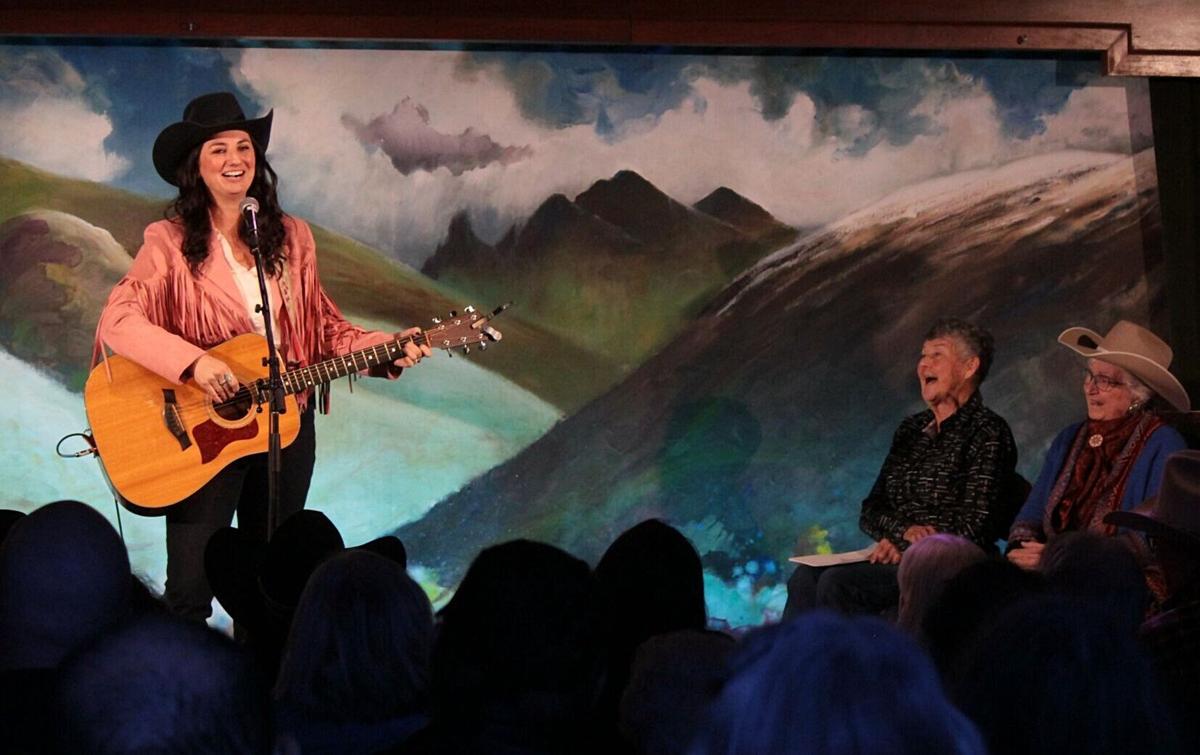
Click here to read an interview with myself and poets Yvonne Hollenbeck and Patricia Frolander about opening up the festival with our “Welcome to Elko Town” Show in the Elko Daily News.

This week’s podcast I sit down with my husband and rehash all the highlights of the trip while he patiently listens, covered in sheet rock dust from holding down the home construction project and keeping the kids alive while I was away. I am lucky to be able to be gone, and even more lucky to have place like this, and people like him, to come home to.

So that’s what the column is about. Finding refuge and grounding in my walks through the hills, where I’m most inspired. Most lonesome. Most nostalgic. Most myself.

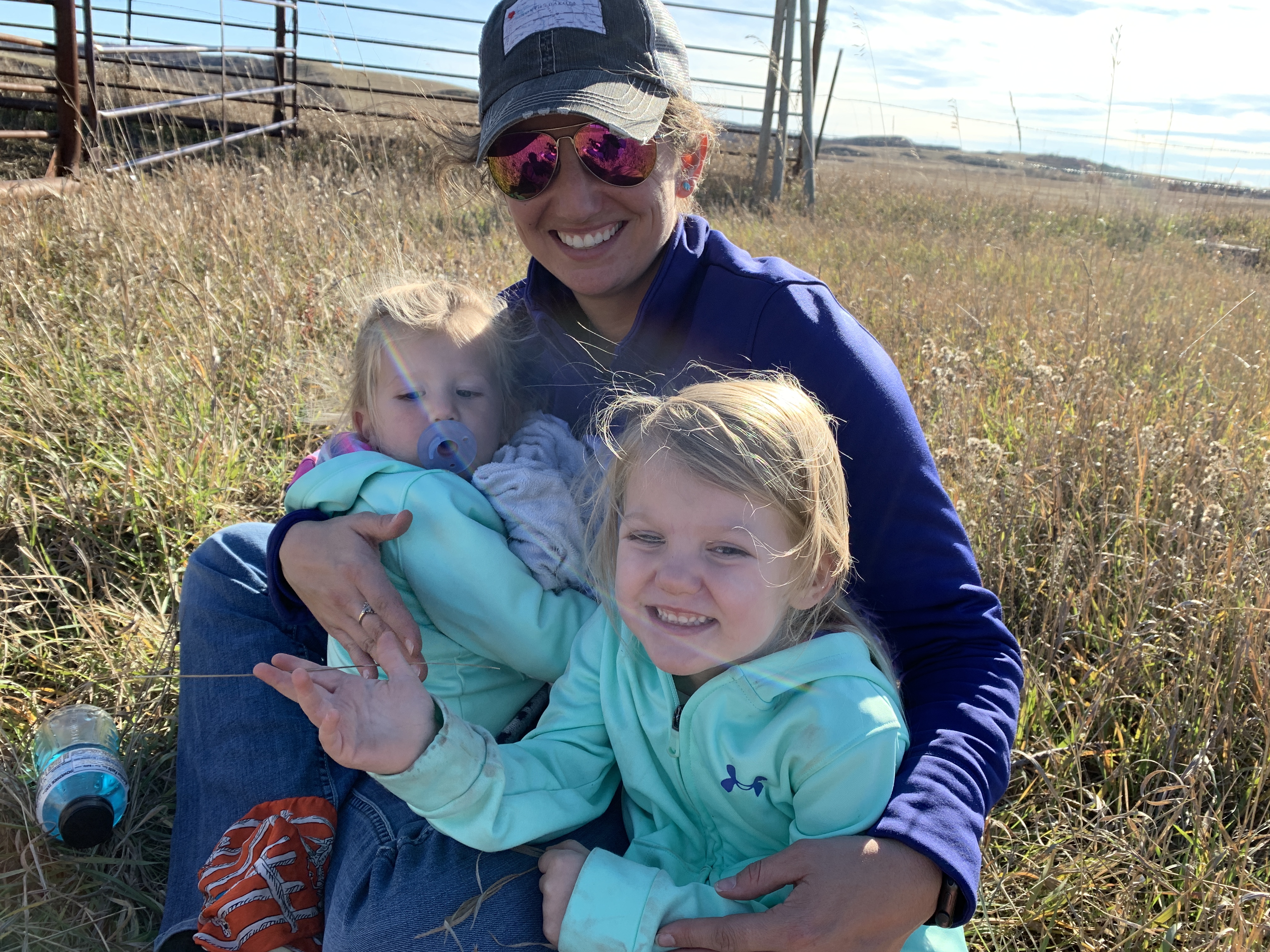
Photo by Sweet Light Photography, Charlie Ekburg

From the top of the hill
Forum Communications

Listen to this week’s column here or on Spotify, Google or Apple Podcasts

Sometimes, when the day is coming to a slow close and my head is spinning — with worry and lists, schedules and as the dishes sit waiting on the table, the kids playing in the yard, desperately needing a bath — I slip on my boots and head out the door.

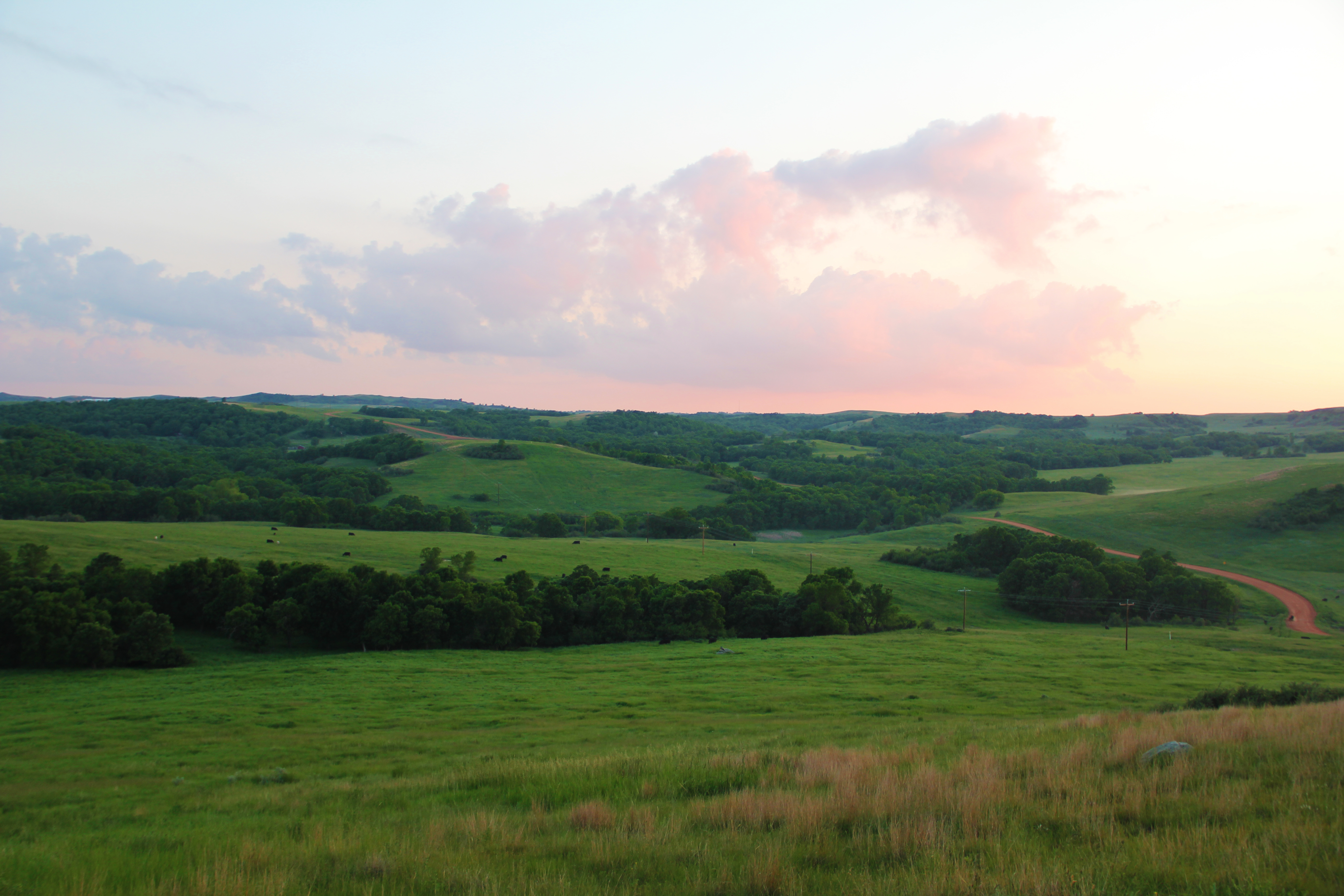
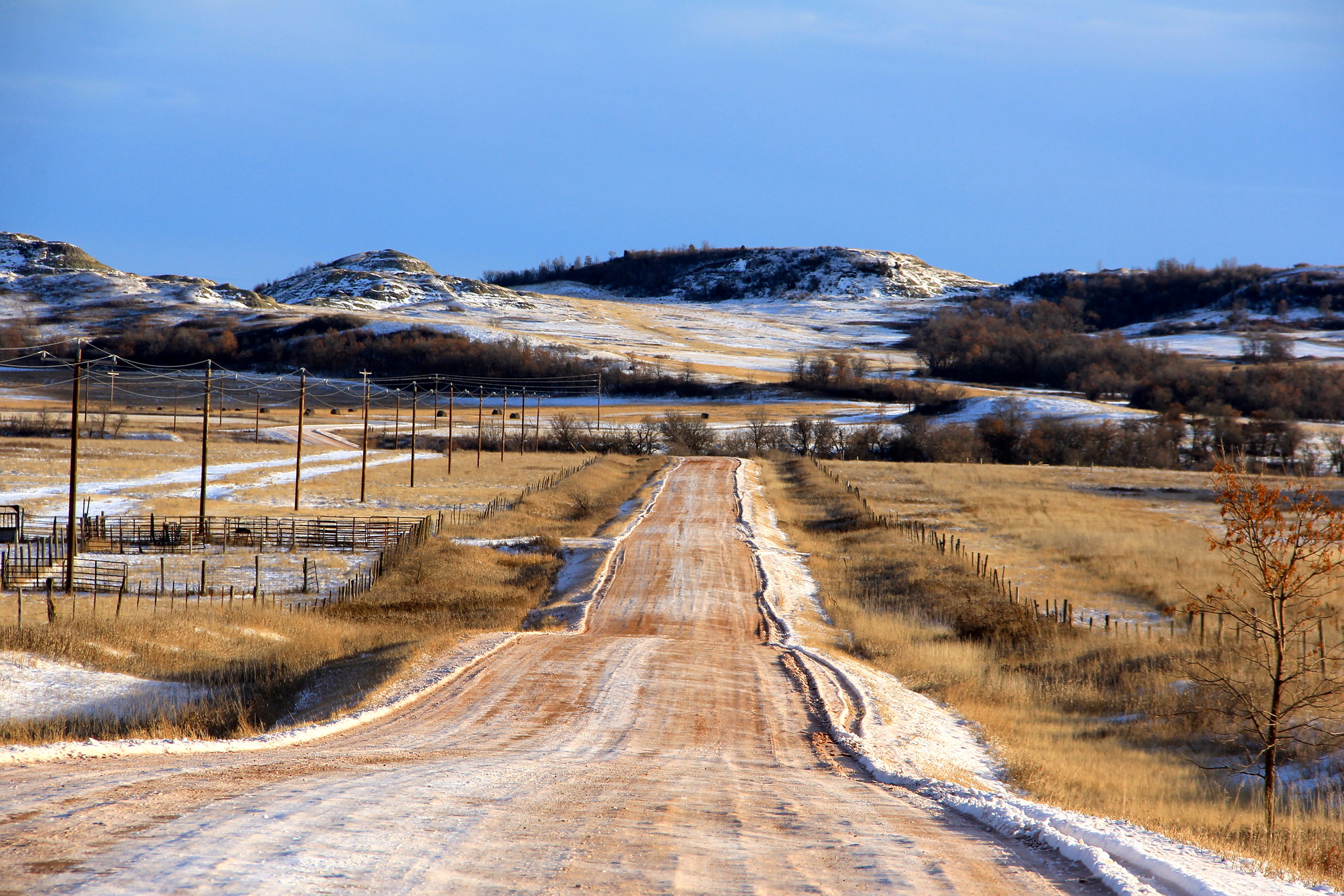
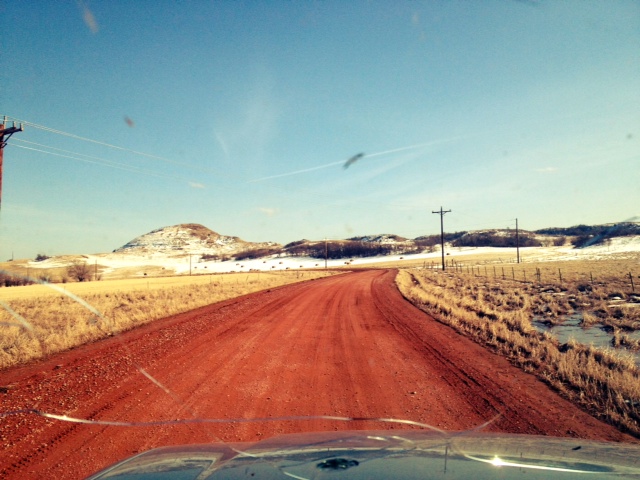
I’m usually not gone long, and my husband has grown accustomed to this behavior, understanding it’s not a storm out, or a give up, or a frustrated stomp, but a ritual that I need to put a flush in my cheeks and make sure I’m still alive out here where the trucks kick up dust on the pink road and the barn cats quietly wait in the rafters of the old buildings for a mouse to scatter by.

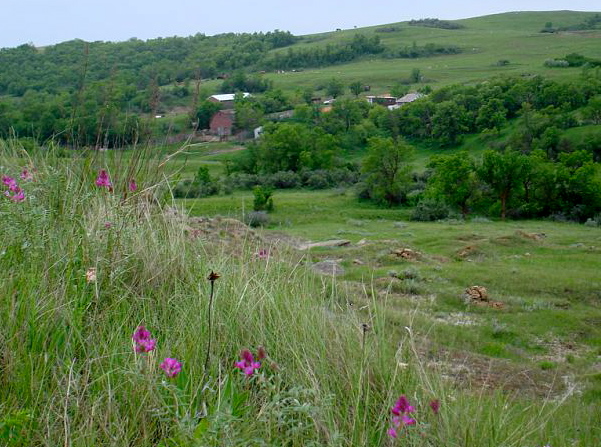
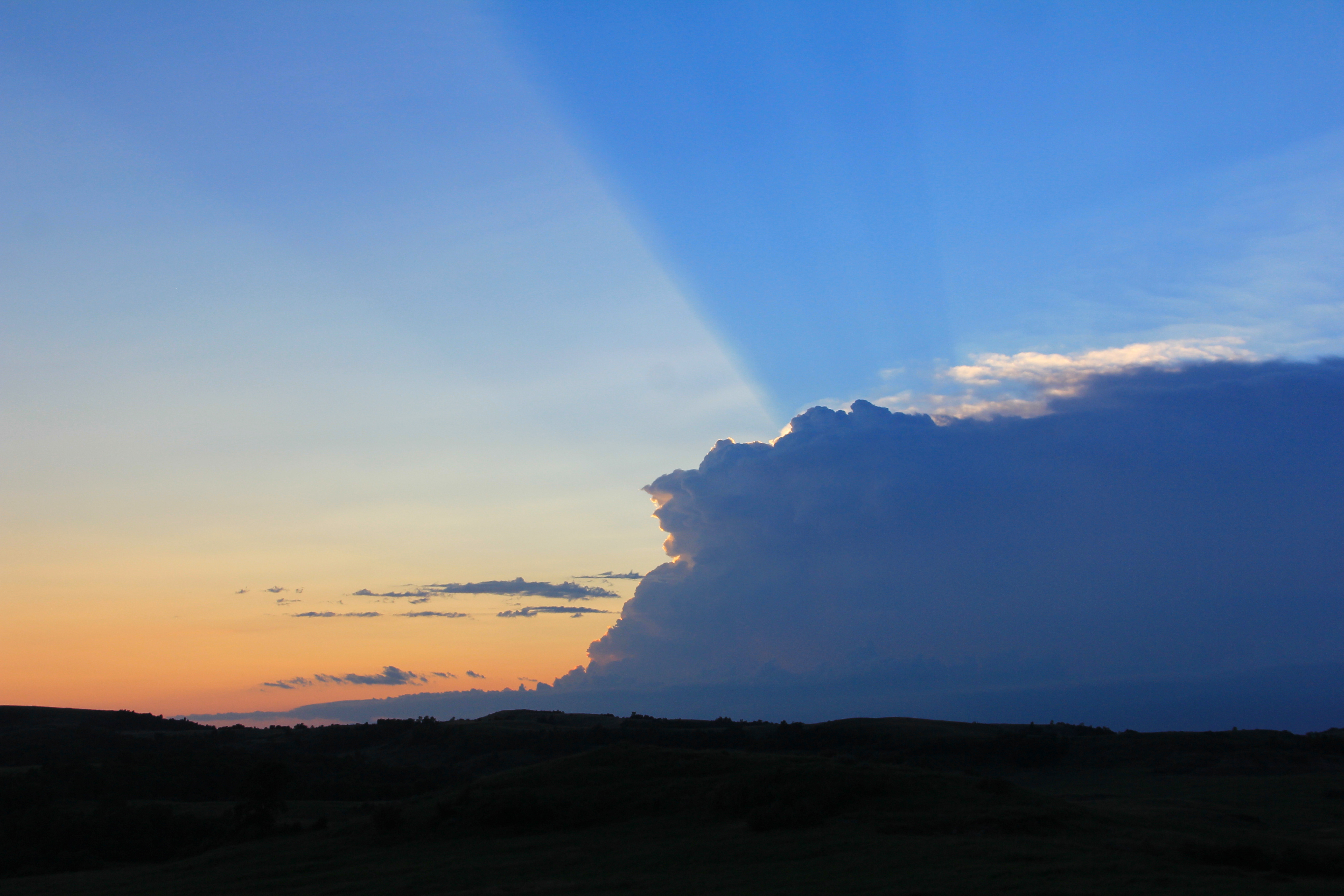
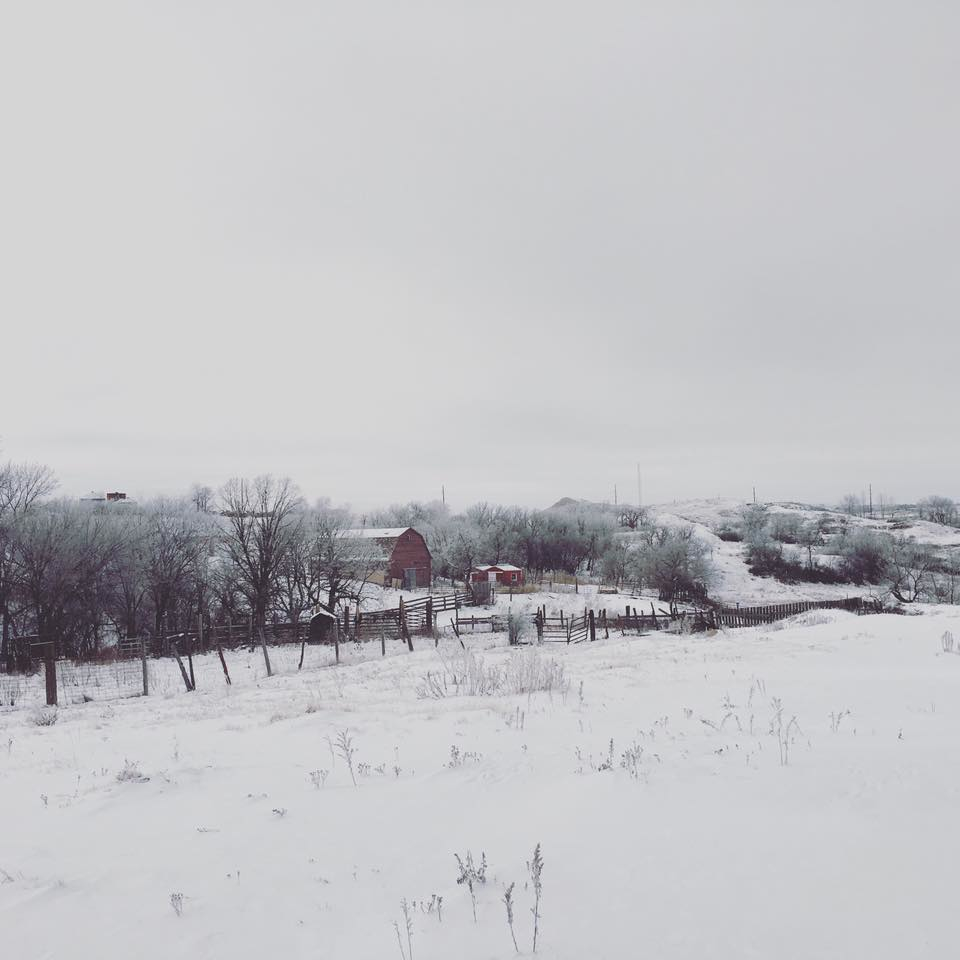
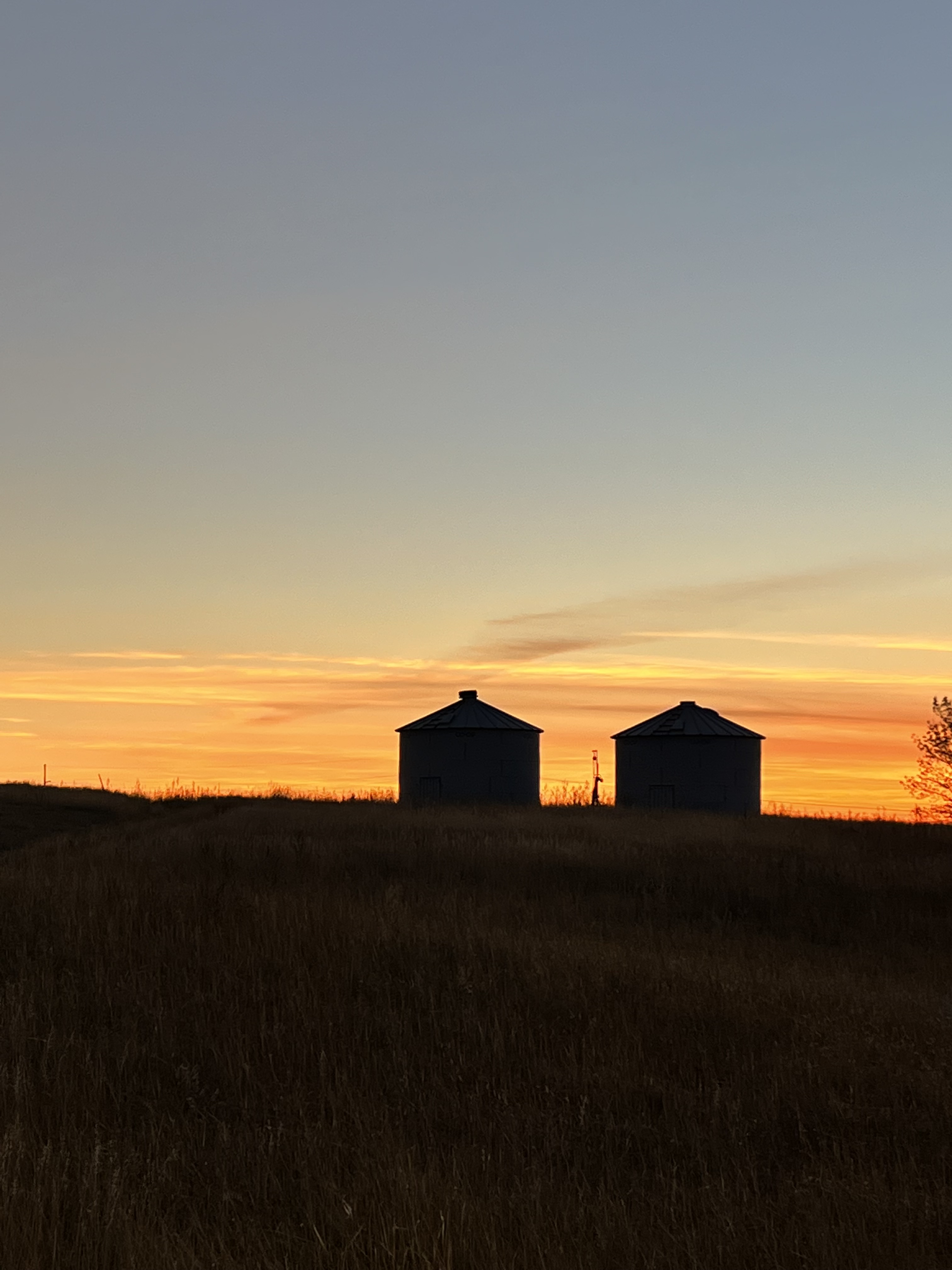
I tell him I need to go walking and he knows which trail I’ll take, down through the barnyard, past the water tank and up the face of the gumbo hill, the one that lets you look back at the corrals where the yard light glows, the one that gives you the perfect view of the barn’s silhouette, tall and dark against a sky that is putting on its last show of the night as it runs out of light.

It’s a ritual that needs timing, because that sun, once it decides, goes quickly to the other side of the world.

Sometimes if I get out early enough, I head a little further east to check out how the light hits the buttes in my favorite pasture, making the hills look gold, purple and so far away. Sometimes I just keep walking until dark. Sometimes the evening finds me sitting on a rock or pacing in the middle of the ancient teepee rings that still leave their mark on the flat spot on the hill. I like to stand there and imagine a world with no buildings and no lights on the horizon. I examine the fire ring, close my eyes and think about sleeping under the leather of a teepee, covered in the skins of the animals, under a sky that promised rain and wind and snow and a sunrise every morning.

The same sky that promises me these things, but cannot promise anything else.

I think of these people, the ones who arranged these rocks, hunted these coulees, and watched the horizons and I am humbled by the mystery of the ticking thing we call time.

And I wonder what they called it.

Because I take to those hills and look back at my home — the sections of our fences that have been washed away by the melting snow, the old barn that needs to be torn down, the threshing machine looking ancient and ominous in the shade of the hill — I’m reminded that time takes its toll on this land the same way it puts lines around the corners of my eyes, and there is not one thing man can make to stop it.

This understanding is neither comforting nor nostalgic. It just is. Time builds roads and oil wells, new houses and fences and bigger power lines stretching across a landscape. Time grows the trees, erodes the creek banks, crumbles the hills with the weight of the snow, puts blooms on the flowers and withers them away just the same.

I climb that hill, look back at that farmstead and remember those kids we used to be, running through the haystacks and searching the barn for lost kittens. I climb to that hill and I remember my grandmother in her shorts and tank top, exposing her brown skin while she worked in the garden. I remember my first ride on a horse by myself, getting bucked off near the old shop, hunting for Easter eggs with the neighbor girls in the gumbo hills behind my grandmother’s house, branding cattle in the round pen.

From the top of the hill, I could still be ten years old and my grandmother could be digging up potatoes. From the top of the hill, my cousins could be hiding in the hay bales and my dad could be waiting on the side of the barn to jump out and scare them, sending them running and laughing and screaming. From the top of the hill, the neighbor girls could be pulling up in their dad’s pickup, dressed in pastels and rain boots, ready to hunt for eggs. From the top of the hill, you don’t notice all the work that needs to be done on the fences, the water tanks, roof of the shop and the crumbling barn.

From the top of the hill, that yard light is still glowing the same color it was when I would come in from an evening chasing cattle with my dad or catching frogs with my cousins to a yard filled with the smell of my grandmother’s cooking.

From the top of the hill, the only thing certain to change is the sky and everything else is forever.

The Layers of Fall

We don’t give this time of the year much recognition because we’re all scrambling to get work done before winter comes, so on the podcast I sit down to recognize it and talk it out with my husband. The conversation turns to fall work and food, naturally, because we’re up north and we’re getting cold and we’re starving for carbs and cream. Hear why I thinks Chad would be a good contestant on reality game shows and learn why my all time favorite meal was after I jumped out of a plane over the beach

There’s a moment between summer and late fall at the ranch that’s so good at being glorious that it actually makes us all believe we could last forever under a sky that’s bright blue and crisp and warm and just the right amount of breezy all at the same time.

Up here we’re easily swayed to forget about the drama that is our seasons. I imagine it’s a coping mechanism we develop that gets us crazy stoic people through -20 degree temperature snaps.

It’s forgetting that gets us through, but it’s remembering too. The combination is an art form.

Because at -20 degrees we remember that one-day it will be sunny and 75.

And when it’s sunny, 100 degrees and 100% humidity and there’s not a lake in sight, we remember the -20 degrees and somehow find a way to be grateful for it all.

Yes we keep taking off layers and putting them on again until we make ourselves the perfect temperature.

Funny then how we’re not really good at giving the in-between moments the credit they’re due around here. We usually grab them up and soak them in just enough to get some work done on a horse, paint the house, wash the car or get the yard cleaned up for winter.

Because we’re taught up here to use those perfect moments to prepare us for the not so perfect ones that are coming.

That’s why fall, though a romantic season for some, gives me a little lump in my throat that tastes a lot like mild panic.

Because while the pumpkins are nice and the apple cider tastes good enough, I can’t help but think that autumn is like the nice friend who slowly walks over to your lunch table with the news that your boyfriend doesn’t want to go out with you anymore.

And my boyfriend is summer. And when he’s gone, I’m stuck with the long and drawn out void that is winter promising Christmas, a hint of a sledding party and a couple shots of schnapps to get me through the break-up.

Hear what I’m saying?

But the change is beautiful. I can’t help but marvel at it no matter its underlying plot to dry up the leaves and strip them from their branches and jump start my craving for carbohydrates and heavy whipping cream in everything.

So I always decide to give it the credit it’s due when it starts to show off in full form, taking a break for the office and house work to marvel at the leaves, collect some acorns and walk the trails the cattle and deer cut through the trees during the heat of summer.

I will never call this moment a season, it’s too fleeting and foreboding for that, but I will reach out and touch those golden leaves and call it a sort of magic.

The kind that only nature can perform, not only on those leaves, but also on the hair on a horse’s back, the fat on the calf, the trickling creek bed, the tall dry grasses, used up flowers and a woman like me.

Yes, I’m turning too. My skin is lightening. My hunger unsuppressed. My eyelids heavy when the sun sinks below the hill much earlier than my bedtime.

My pants a little tighter with the promise of colder weather.

Ok. I’ve been reminded. Summer–a month of electric thunderstorms and endless days, sunshine that heats up my skin and makes me feel young and in love with a world that can be so colorful– is over.

And so I’m thankful for the moment in these trees to be reminded that I have a little time yet, but I best be gathering those acorns.

And pulling on my layers.

The Promise of a Greener Summer

This week’s column on the rain and the rain and the rain. It rained almost five inches over the course of a couple days out here last week, filling the dams, pushing the river over its banks, sending creek beds rushing and greening up the grass. There are places that were flooded in the state and it got a little scary, but out here we opened up our arms, lifted our faces up to the sky and said a prayer of gratitude.

The Promise of a Greener Summer
Forum Communications

Click to listen to commentary and this column on the Meanwhile Podcast

It’s been raining at the ranch for the last few days.

Raining, and thundering, and pouring and making puddles and filling the creek beds. It’s been a while, a couple years maybe, since we’ve seen a long, soaking rain take up the entire day, followed by another and then another, so I didn’t believe the thunder when it was threatening my walk in the hills the other night. I thought it was bluffing the way it did all last spring when the sky refused to open up and the wind howled and the prairie was burning. So I carried on like the superstitious kid I am, the kid raised by a rancher whose never owned a rain gauge for fear that if he ever put one out, it would never rain again.

My dad, he judges the amount of rain by what’s sitting in the dog dish or the buckets outside the barn or the puddle that always forms in his driveway. And then he calls me, just a mile down the road, to take a look at my gauge. Because up until a few months ago, I didn’t know the reason my dad never had gauge himself was so specifically calculated. I just thought he never got around to it or something…so maybe it’s been our fault, this drought?

Anyway, it seems the sky has had enough of its silent treatment and just as I got to the gate a half a mile from home, it opened up and started to really pour and so I pulled up my hood and hoofed it toward home, turning my stroll into a jog into a full-on run when the thunder clapped again and the rain turned to little pieces of hail.

My kids were standing in the doorframe watching the drowned rat that was their mother struggle and puff her way back to the front door, laughing and thinking, well, maybe I was right to ignore it, to have low expectations so I wasn’t disappointed.

That evening a double rainbow appeared right outside our house looking to have sprung up right at our kids’ playground set. I called the girls out of the bath and they left little footprint puddles on their way to patio doors where we all stood with our noses touching the screen, breathing in the scent of the rain and counting the colors.

Now girls, this is what spring is supposed to do. Bring it on. Let the heavens pour down and wash that winter away. Wash it clean and squeaky. We’ve been dusty then frozen then thirsty and our hair needs washing…the worms need air…the lilacs need watering…The horses need waking up.

Rain sky. Cry it out. Turn the brown to neon green and make the flowers hunch over under the weight of your drops.

I don’t mind. Really. I will stand in it, I will run in it all day if it means it will fill the dams and grow the grass.

I’ll splash in your puddles, let it soak in my skin, slide down the clay buttes, jump over the rushing streams. Because I forgot what this feels like, being soaked to the core and warm in spite of it.

I forgot what it looks like when the lighting breaks apart the sky. I forgot how the thunder shakes the foundation of this house, how it startles me from sleep and fills my heart with a rush of loneliness, a reminder that the night carries on while I’m sleeping.

I forgot how clean it smells, how green the grass can be, how many colors are in that rainbow.

So go on. Rain. Rain all you want.

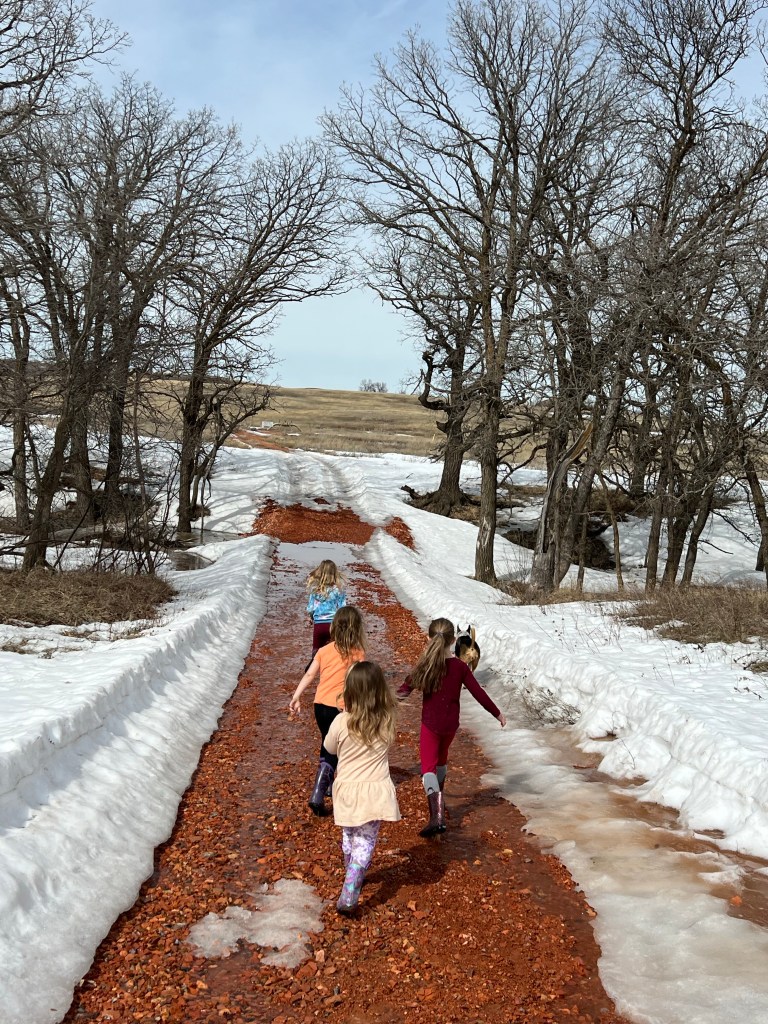
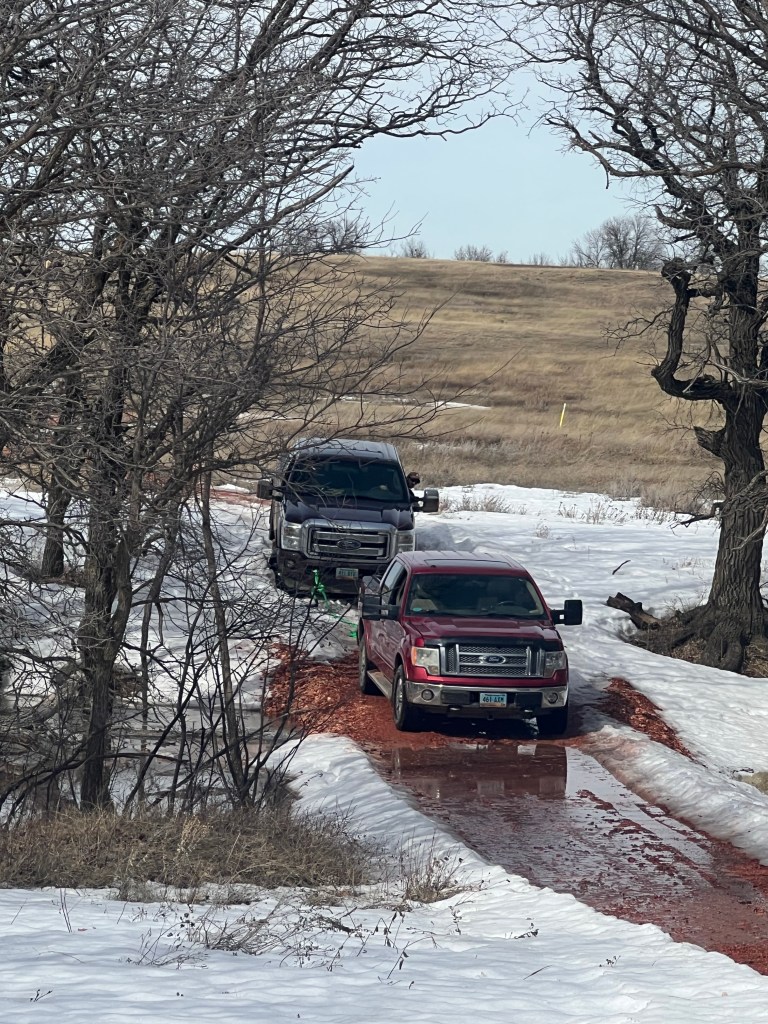
Rain forever on this hard ground and turn this pink scoria road bright red, his brown ground green. Let your drops encourage the fragile stuff, the quiet beauty that has been sleeping for so long to wake up and show her face now. It’s time.

I’ll be there waiting to gasp over it, to gush and smile and stick my face up to catch the drops on my tongue, and return home flushed and soaked and tracking mud into my house where the soup is on.

Rain. Rain. Rain. You fill up the buckets and gauges and puddles and tap at my windows… and promise me a greener summer.

Spring cleaning gives time to reflect

My sister’s husband is working on building a chicken coop today and so my niece, Ada, spent our ride to town telling me how many chickens she’s going to get.

Sounds like hundreds. And I’m thrilled for them. Because it means that I don’t have to get chickens ever in my life. It’s kinda like the boat thing, you know, the only thing better than having a boat is having a best friend with a boat. That’s what I think about chickens. Eggs for days and no poop to scoop. I’ll save us all the cartons.

Building something like a chicken coop is a typical spring task at the ranch. The sun warms the ground and we’re ready to head outside to thaw out all of those ideas we conjured up while eating carbs and pulling our beanies down over our ears. But it also means cleaning. Oh, the cleaning. I’m always amazed by the amount of mud, random screws, mismatched gloves, beanies, boots, neckerchiefs, and, because my husband’s a carpenter, random electrical wires, plumbing parts, tools and hardware store receipts that accumulate in our entryway over the winter. I spent all morning Sunday trying to arrange it all so I could mop. And by the time I got to the mopping part, the kids had come in and out of that door 37 times, dragging more mud and dolls and winter clothes and random twigs with them.

My daughters were busy driving their kids to Hawaii in the little hand-me-down electric car that always gets stuck in the scoria halfway up the driveway. And the disagreement about who’s turn it is to push and whose turn it is to drive derails the game for a spell, although it does make it a bit more realistic. Adulting comes with all sorts of obstacles and predicaments. Like making the choice between spring cleaning and pouring a Sunday margarita….

Most of the time, I chose both. I’ve always been good at multitasking.

Anyway, the mess here is endless, between the ranch and the garage and the house and the yard, I’m fully committed to the idea that I’ll never catch up. And I know I’m not alone in it overwhelming me sometimes. If I dedicated every minute of my waking life to trying to control it, I still don’t believe I’d fully dig us out. Because, we just go on living, don’t we? Do the dishes and your husband comes in to make a sandwich. Clear the kitchen table of Play Dough to turn around to the kids making Barbie Doll phones out of tin foil and puffy paint. Get to the bottom of the laundry hamper and you’re still wearing clothes, aren’t you? Fix the fence and watch a bull jump right through it. Living’s messy. It requires lots of chores…

Last weekend my husband was also committed to clearing some clutter, so we were, as we usually are on the weekends, busy bopping around the place to see what tasks we can get checked off the list. This leaves the kids within earshot, but to their own devices, with a few tattle tale moments, skinned knees or request to help push the blue car out of the ditch sprinkled in. I stood in the driveway procrastinating sorting 1,000 gloves and watched as my daughters pretended to be mothers riding their bikes and changing diapers and, as I said, making plans to head to Hawaii.

And then I had a flashback of when they were smaller, just a few short years ago, at age 1 and 3, then 2 and 4, when my children required so much more out of me in the entertainment department—to peek-a-boo, to pour the paint, to rattle the rattle or build the blocks.

Now look at them, they’re in the sweet spot of sisterhood and childhood and play, immersed together in a world of their own creation. Rosie stopped her bike/car and her eyes caught mine, “Mooommmmaaa, you can go now! You don’t need to watch…”

And so this is the phase we’re in. Maybe I’ll get a duck or something and add it to my sister’s coop. It seems, with my kids in Hawaii, I might need something new to fuss over this summer, because I’m already sick of cleaning…

We are the water

We are the water
Forum Communications

It’s the time between winter and the full-on sprouting of spring. The time where the snow still peeks through the trees, the wind still puts a flush in your cheeks, birds are still planning their flights back home and the crocuses haven’t quite popped through the dirt.

It’s my favorite time of year.

When I was a little girl, I lived for the big meltdown. My parent’s home is located in a coulee surrounded by cliffs of bur oak and brush where a creek winds and bubbles and cuts through the banks. And that creek absolutely mystified me. It changed all the time, depending on rainfall, sunshine and the presence of beaver or cattle.

In the summer it was lively enough, home to bugs that rowed and darted on the surface of the water and rocks worn smooth by the constant movement of the stream flowing up to the big beaver dam I loved to hike to. In a typical North Dakota fall, it became a ribbon carrying on and pushing through oak leaves and acorns that had fallen in its path. In winter, it slowed down and slept while I shoveled its surface to make room for twists and turns on my ice skates.

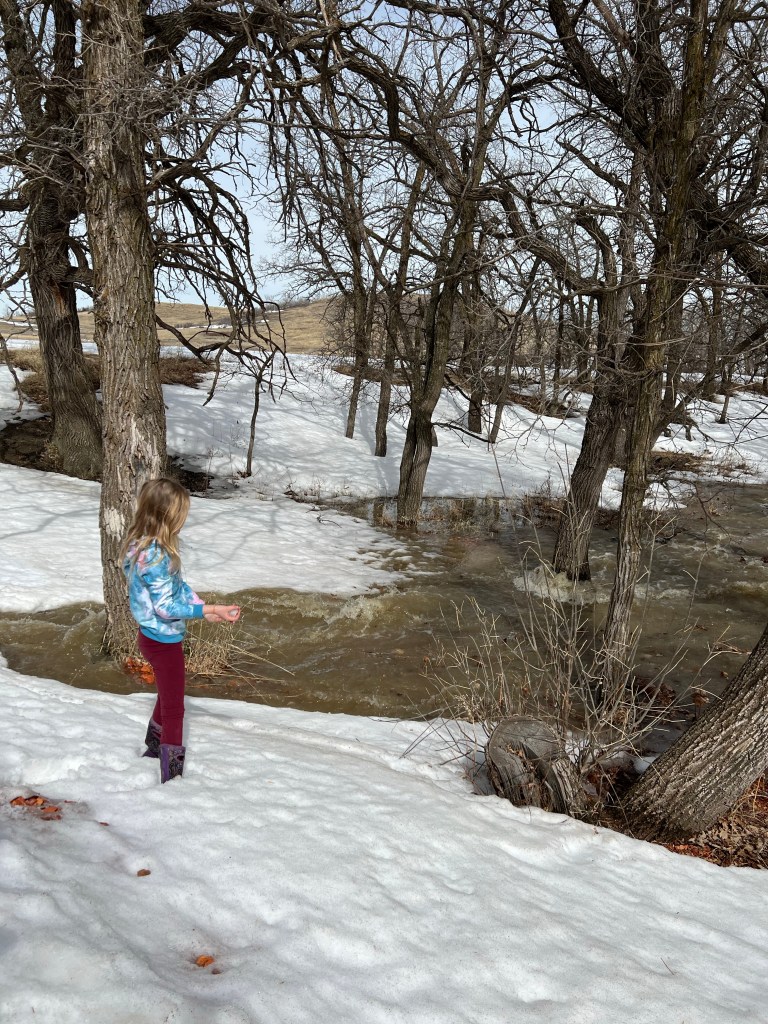
But in the meltdown it was magical. It rushed. It raged. It widened in the flat spaces and cut deep ravines where it was forced to squeeze on through. It showed no mercy. It had to get somewhere. It had to open up. It had to move and jump and soak up the sun and wave to the animals waking up.

I would step out on the back deck, and at the first sound of water moving in the silence I would pull on my boots and get out there to meet it, to walk with it, to search for the biggest waterfalls, gawk at how it would scream out of its banks and marvel at how it had changed.

Around every bend was something a little more amazing — a fallen log to cross, a narrow cut to jump over, a place to test the waterproof capacity of my green boots. The creek runs through multiple pastures on the place and as long as the daylight would allow I would move right along with it, and then return home soaked and flushed.

And I would do the same thing the next day. Because even as a kid I knew this magical time was fleeting and that there are places along that creek that very few people have ever been. I took great joy in the fact that I was one of them.
And it was performing only for me.

I still remember a dream I had about the creek when I was about 10 or 11. I dreamed it was huge, like a river you would find in the mountains — a river I had yet to discover at that time. The landscape was the same — the oaks and the raspberries existed there — but the water was warmer and crystal-clear and it pooled up at the bottom of gentle waterfalls that rolled over miles of smooth rocks and fluffy grass.

And I was out in it with friends I had never met before as an adult woman with long legs and arms and we were swimming in its water and letting the current push us over the waterfalls and along the bottom of the creek bed until we landed in the deep water. And we were laughing and screaming with anticipation, but weren’t afraid — we were never cold or worrying about getting home for dinner or what our bodies looked like in our bathing suits.

We were free. I was free. And the water was rushing.

And we may never know if there’s a heaven, but we know that there are snowbanks that fly in with the burning chill of winter’s wind. Those banks reach up over my head and stay for months on end only to disappear with the quiet strength of a sun that turns it to water rushing around the trees, settling in hoofprints and dams to be lapped up by coyotes and splashed in by geese, sinking in the earth and changing it forever.

And that’s something that makes me believe in something.

Like perhaps we are like that drop that fell from the sky, afraid of the mystery that was waiting for us as we hurtled through the atmosphere only to find when we finally hit the earth that we are not one drop alone in this world.

No.

We are the water.

Drive Careful, Watch for Deer and other things we say here…

Drive carefully. Watch for deer. How was the drive? Is it icy? Blowing snow?

Leave early. Drive slowly. Check the weather. Call me when you get there. Call me when you leave. I’ll wait up for you. I’ll leave the light on.

In rural North Dakota, especially in the icy and volatile tundra that is the 17 months of winter, I grew up hearing these statements as a sort of language of love. Because to get to most anywhere we need to go, we have to consider the roads.

A 30-mile drive to school, work, groceries and the nearest gas station. A 90-mile drive to a big-box store or an airport. A 140-mile drive to a specialty doctor or to have a baby near a NICU, to get your wisdom teeth removed, a treatment for your cancer or, sometimes, before Amazon delivered the world to your door, just to find the right size of envelope or diapers.

How are the roads?

My little sister just texted me that question as I arrived in town and she’s making plans to bring her girls to gymnastics later this afternoon. It rained all day yesterday, right on top of the ice and snow, and then, just to be dramatic, the wind blew all night at 40 mph.

The fact that the roads between the ranch and town were just fine was some sort of weather phenomenon, ruining any excuse I might have been able to scrounge up for why I barely got Edie to kindergarten in time. And why I forgot my workbag with my computer in it and basically everything I needed for a long day in town. It wasn’t the roads. It’s just me. It’s just me in the middle of winter — frazzled, pale and distracted, trying to get two tired little children up out of their beds when it’s still dark outside.

Because what I think we’re really meant to be doing this time of year is eating a bottomless serving of straight-up carbs and hibernating. My word, it’s hard to fight nature these days. (I yawn for the 50th time in 10 minutes).

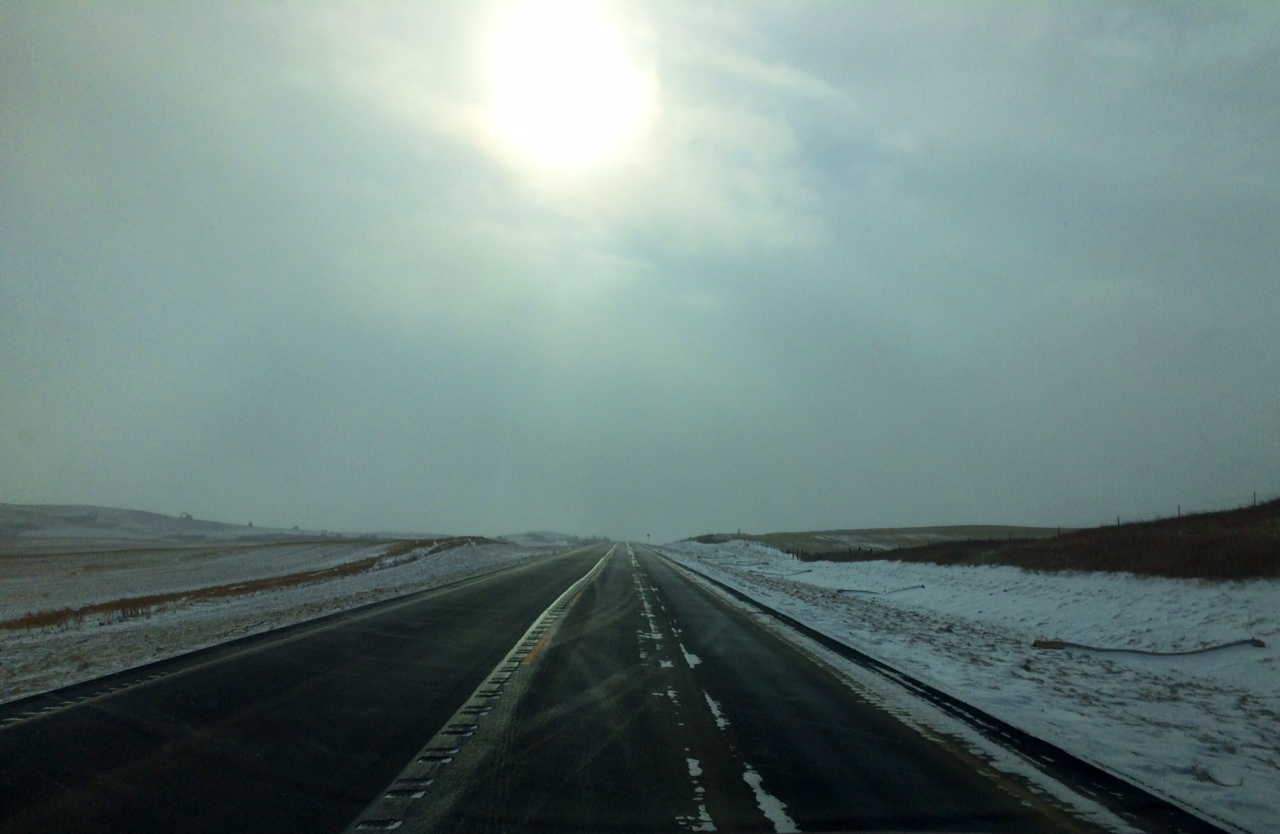
For the last three weeks, I’ve been back and forth from the ranch and across the state on these January roads, bringing my children’s book to libraries, schools and stores along the way. I’ve driven in blinding snow and clear skies, in the dark of the early morning and the quiet of late nights, on patchy ice, highways wet with cold rain, by snowdrifts and through snowdrifts, into the sun and away from it, past big trucks stuck in ditches and moms like me pulled over in SUVs, and snowplows, and semis hauling cattle and giant wind turbine blades and crosses along highways and interstates, lit up with solar lights or decorated with flags and flowers or a high school jersey reminding us that, when we’re moving this fast — blur-shaped people on wheels at 80 mph, trying to keep a schedule, to get there on time, to get home for supper or homework or bedtime — it only takes a split second for the whole plan to change.

And that’s why we ask. That’s why we wait up. That’s why we tell you to watch for the deer or the moose or the ice or the snow or the wind or the rain. That’s why we tell you to drive safe. Please. Drive safe. Because it’s the only way to feel we have a semblance of control of these miles we need to trek on stretches of highways, interstates and back roads that are equal parts freedom and fear.

The moving, it’s always been hazardous for humans. It’s not new to these times we’re living in, the walking or riding across uncharted landscapes or well-worn trails. Handcarved boats with handsewn sails taking us out to a sea that angers easily or a river that goes from calm to raging just around the bend. If only all these years of evolution could protect us now from those unexpected waves. Sometimes we start to believe it can. So just in case, we say:

Drive safely.

Travel safe.

From the top of it all

I have a good life. Not much to complain about when it comes down to it really, except for the weird cat that keeps pooping on the rug right outside the door, my daughters’ occasional meltdowns about waffles not tasting waffle-y enough, impending deadlines, unending laundry, unfinished projects and cold toes.

Nothing out of the usual. Nothing unrelatable. So I’m sitting pretty lucky these days.

But some days, during a break in the morning news, I cry at the Walgreens commercial. And the commercial for a web browser that tells the story about a dad sending his daughter off to college. And then they video chat. And anything with a cute baby or a puppy or a grandpa or a soldier coming home. And lately, I cry at the weather report.

Now, don’t get all worried about me, I’ve got the serious stuff addressed. This is just me being hyper-emotional, the way I’ve always been. And I spend quite a bit of my life laughing, so I figure I’m balanced.

But some days are worse than others, and like so many things, it goes in waves and I find myself running for the hills. Because I’ve learned over the course of my pushing-40 years (gasp!) in this breathtaking and heartbreaking place it’s the only thing to do to recover my senses and gain my balance and center myself once more.

I remove my body from the television screen, the radio, the podcasts, the music, the computer and all of those heartbreaking, heartwarming and heart-wrenching stories and just try to live in my own for a moment.

It hasn’t been easy to do this lately, between the life-threatening cold temperatures, traveling each week to promote the book, darkness that falls too early in the winter, school drop-off and pickup and gymnastics and piano lessons and getting everyone to bed on time, I’ve had to make a special space in my day for clarity.

It’s why I keep an extra pair of snow boots and a furry hat in my car. Just in case. You never know when you might have a chance to escape.

I found my chance one recent afternoon. I had a few of those teary moments over coffee and the news while I moved through my morning trying to pull it together, get to the computer, make it to the meeting, keep up on emails, plan for an event, meet a deadline and keep my head above water in pretty work sweaters between four walls.

4:30 came around and I had a meeting at 6. I figured an hour and a half would do it.

So I got in my car and pointed it toward a favorite refuge, the only other place in the world besides the ranch where I can look winter in the face and call it truly beautiful.

Theodore Roosevelt National Park.

I’ve written about it here before, on similar weepy days in the fall when I’m overwhelmed and worried, on summer days when I’m tan and moving to the next adventure, and winter. I really love it in the winter. And it never lets me down.

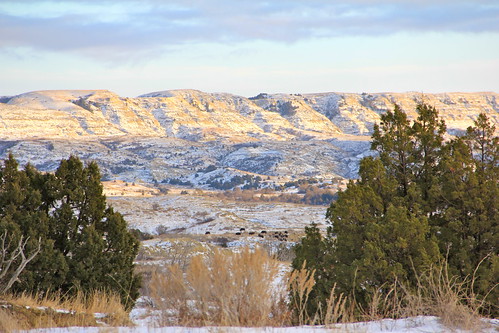
So in 15 minutes I was there, turning off the highway and following the snow-coated road toward the river and the buttes, stopping to capture how the sun looks above the frozen water and if I might catch the bison grazing somewhere in the snow.

I drove slowly to admire the lighting. I rolled down my window a bit to feel the fresh, 20-degree air and pulled over where the road ends, next to a trail that can take you to the top of it all.

I checked my watch. I had 20 minutes before I needed to turn my car around and head back to my other world. I was in my town coat and dangly earrings.

I switched out my fancy boots for snow boots, covered my hair with a beanie and trudged on up there, slipping and sliding and panting because, well, I just felt like it.

I felt like climbing. Because winter looks like peace from the top of it all. All 360 degrees of it, surrounding me and telling me it’s OK to cry.

Especially for the beautiful things.

Blue Buttes and the backdrop of childhood

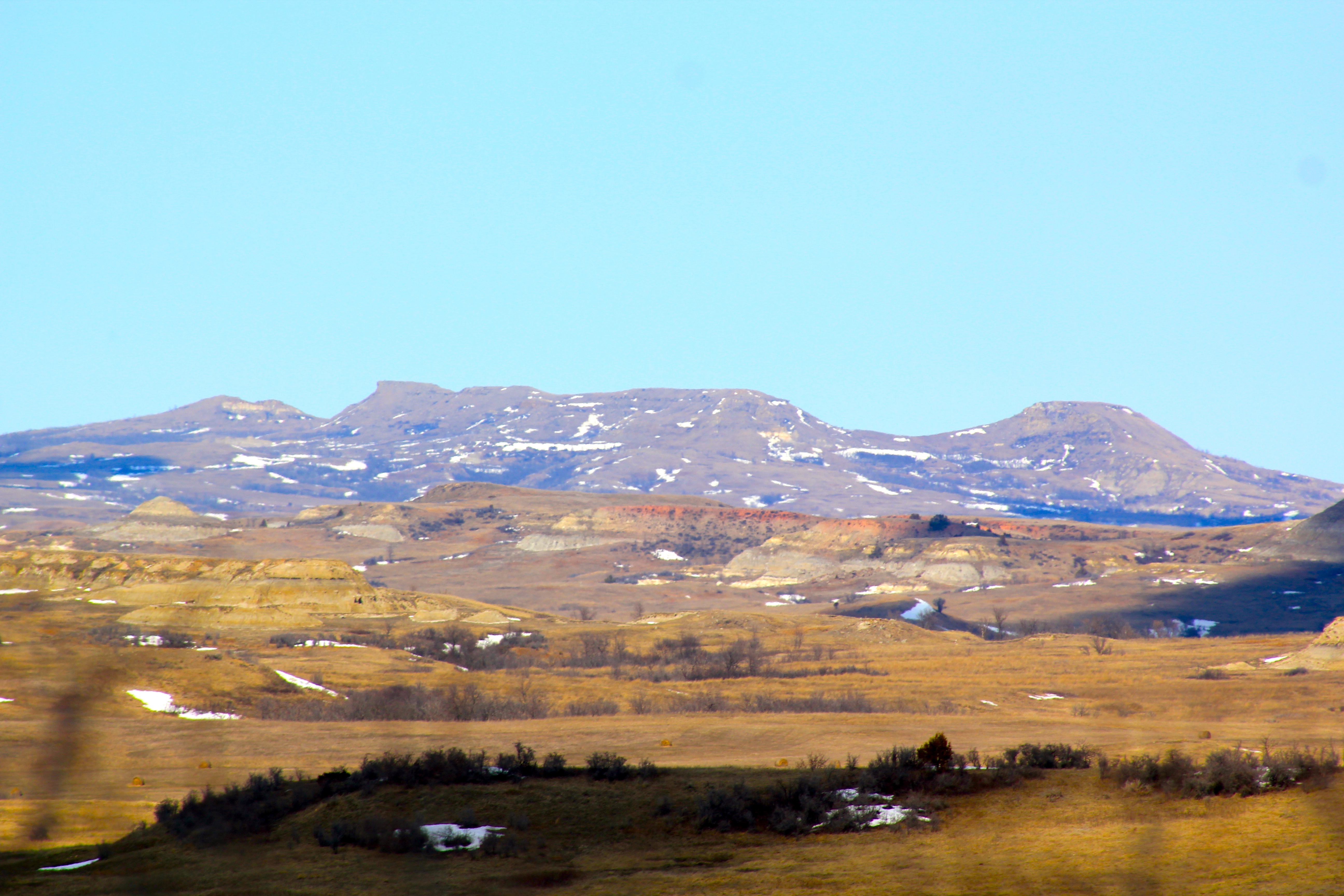
There are sets of buttes that frame the landscape of our ranch. When you’re turning off the highway and coming down toward home, or when you find yourself on the top of a hill, searching for cows, or the dogs, or the other riders who are supposed to be with you, if you look north, as far as the eye can see, there they stand — the Blue Buttes — the backdrop to this little painting we live in here at the Veeder Ranch.

Every time I look at them, I’m reminded of a story that my dad told me about a drawing he colored of a cowboy on a mountain during a project in elementary school. He used his crayons to make the man’s hat brown, his shirt yellow, the sky blue and the mountain he was riding along purple.

When the teacher asked, “Why did you paint the mountain purple? Mountains aren’t purple!” my young dad said he felt embarrassed and confused. He didn’t think he was wrong. The only encounter he had up to that point with anything resembling a mountain was the Blue Buttes that waved to him from about 7 miles north. And they sure looked purple to him.

Oh my heart.

This week my oldest daughter, Edie, will start her first day of kindergarten. It’s a milestone she’s more than ready for, but I can’t stop kissing her cheeks and looking at her wondering how this happened. Wasn’t I just measuring her milestones in weeks and months? And now here we are staring down an entirely new chapter and all I can do is reminisce with her about how I used to rock her to sleep every night by pacing the floor.

Oh, I’m not ready. Like, in denial, putting off school shopping, not ready.

Recently we took Edie to the big hospital to get her tonsils taken out and while they were in there, they took her wiggly front tooth, too. (A fun surprise for all of us when she came off of anesthesia.) So if she didn’t look like a kindergartener before, she certainly does now.

So very soon, off she’ll go into a world that, day after day, will teach her things, so many things, she didn’t know before. Like, maybe, that the Blue Buttes aren’t actually blue or purple. And that 5+5 is 10 and 10X10 is 100 and then maybe the lines in a Shakespeare play and the periodic table and, too soon, that the Tooth Fairy is actually her mother, scrounging up cash, writing notes and sneaking into her room at night.

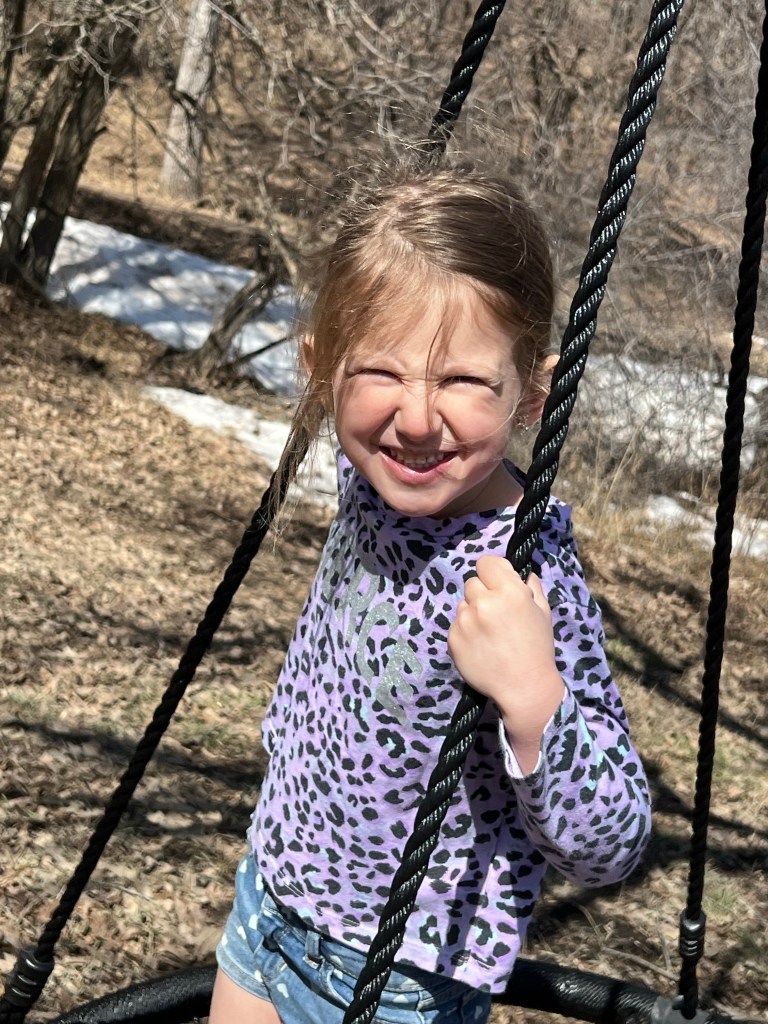
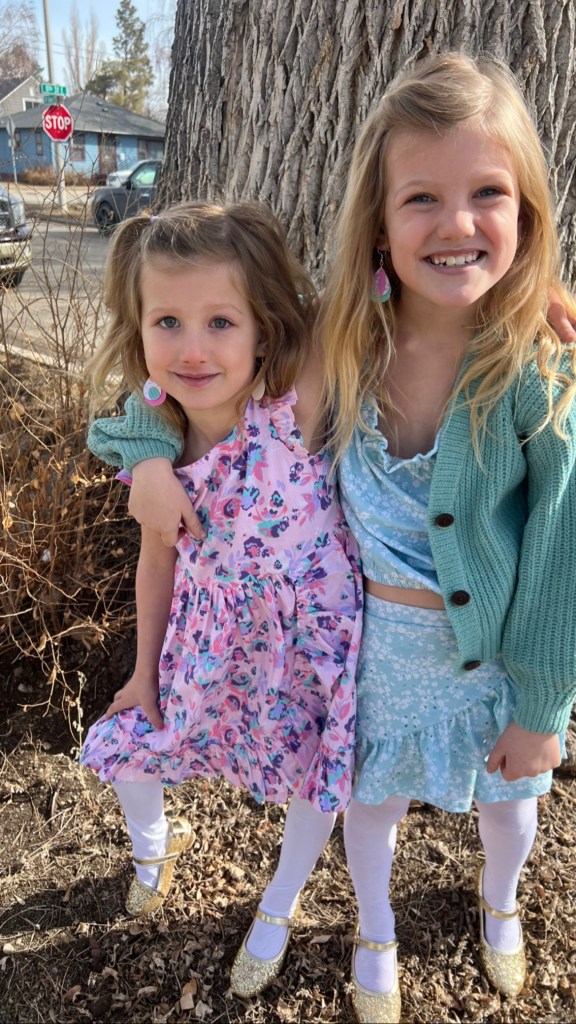
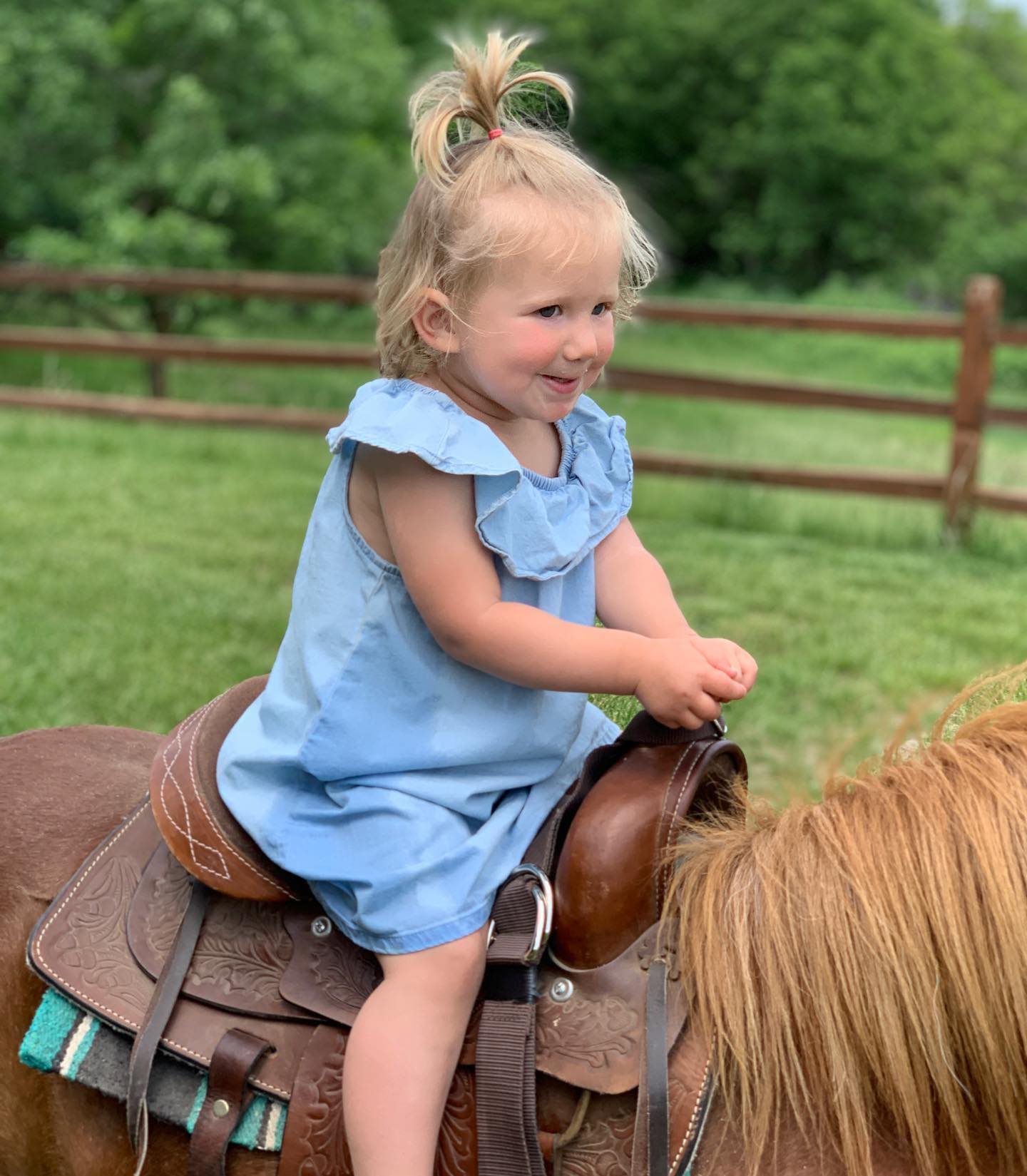
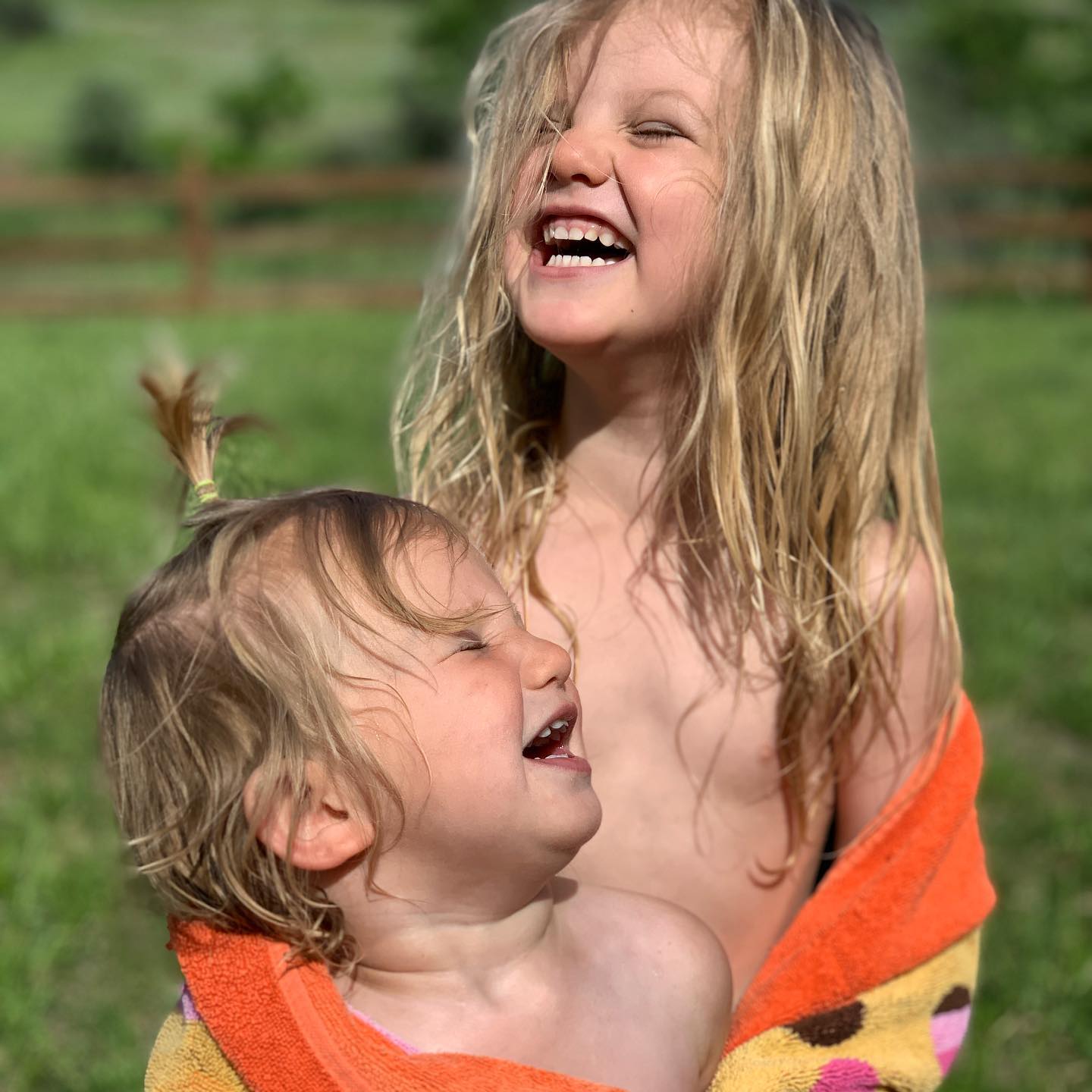
Right now my daughter is full of magic and innocence, collecting toads with her little sister in her ballet costume, drawing flowers with faces, playing dolls, hoarding special rocks, pumping her legs on the swing and believing that maybe unicorns exist somewhere. She’s also arguing with me about brushing her hair, choosing outfits that don’t match but make her “feel like herself,” and reminding me that every day of parenthood, if you’re doing it right, is a day closer to letting them go where they need to go.

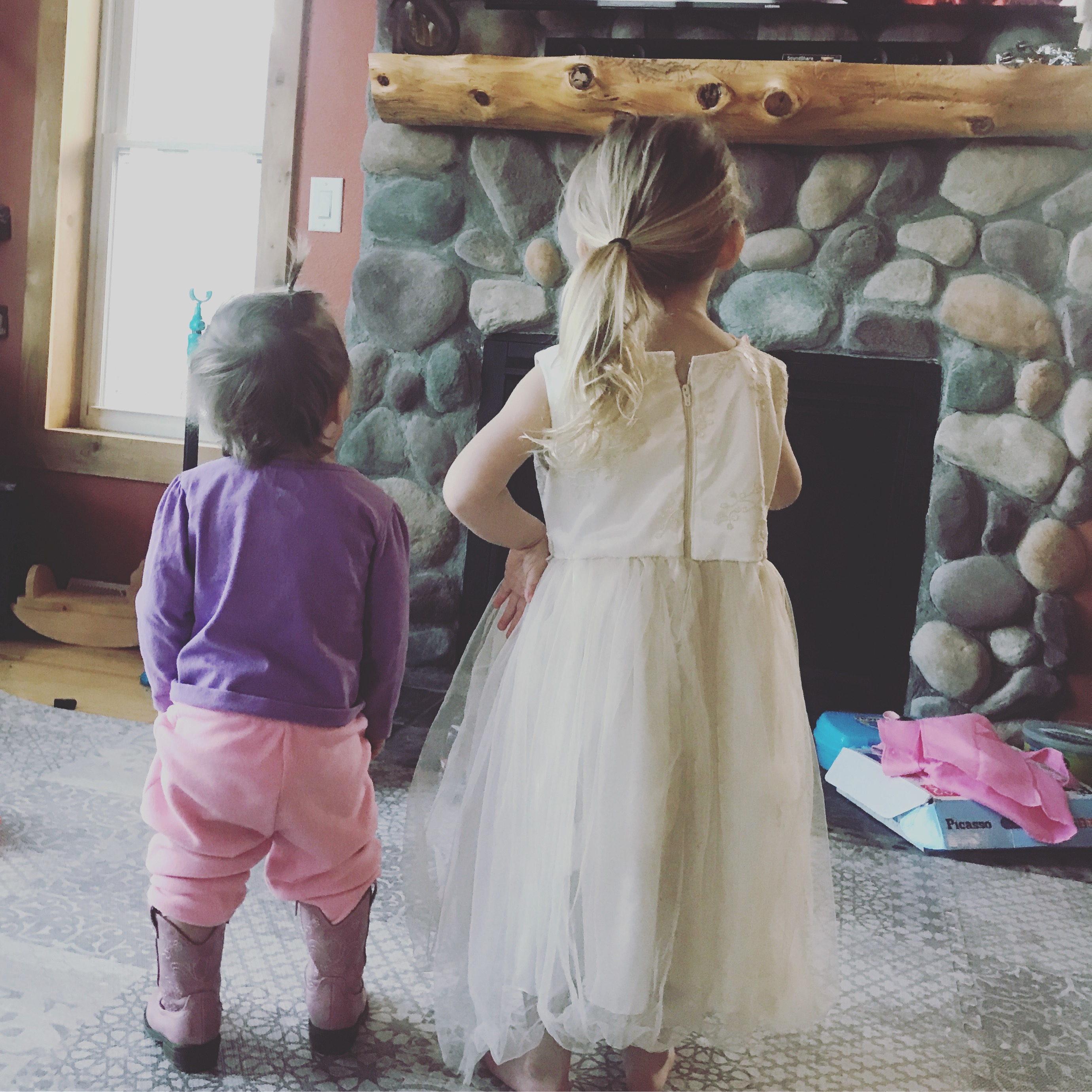
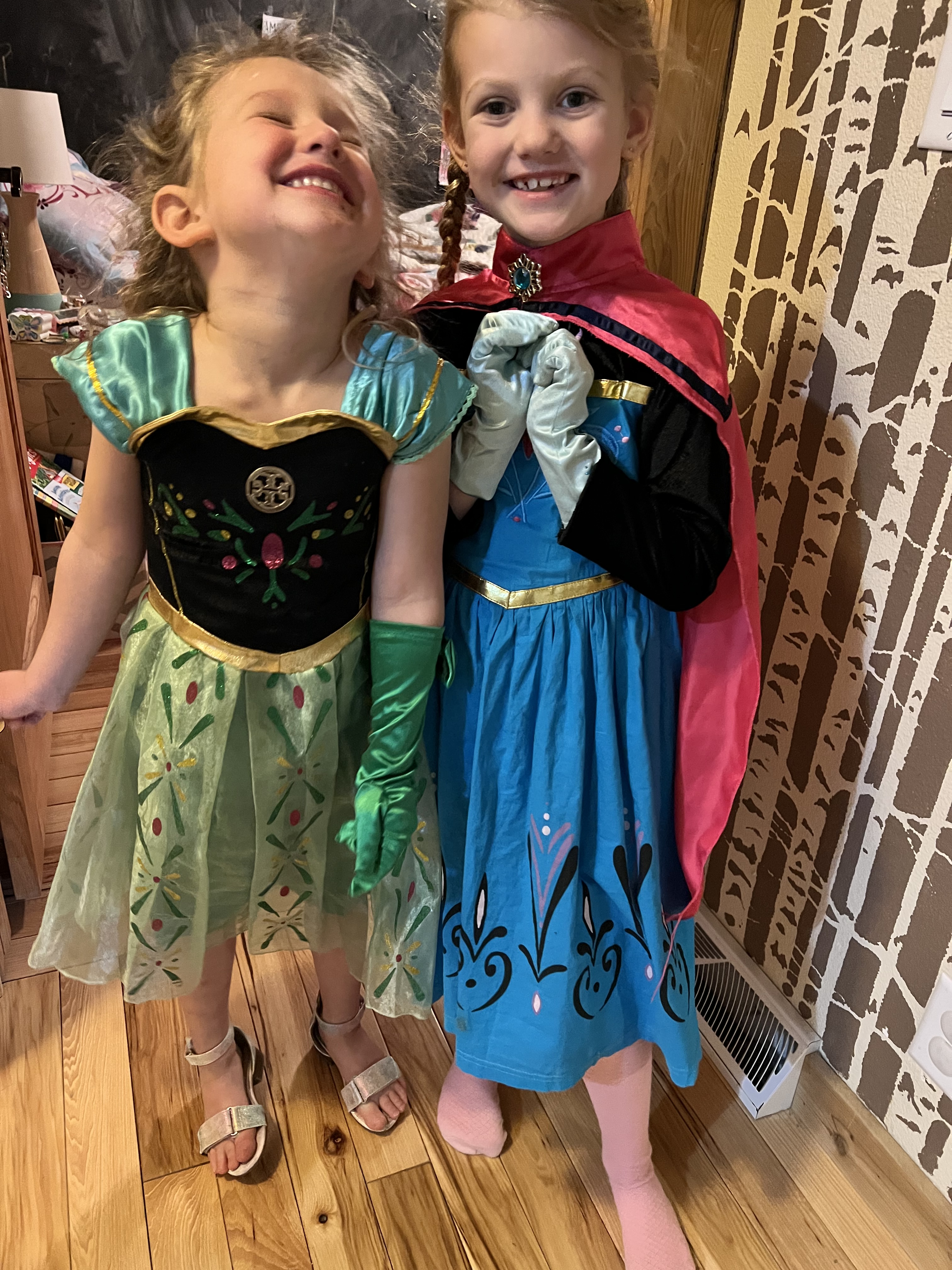
But for now I’m soaking in the fact that, for now, where my girls need to go is outside to see if we can find some more toads. And can they please wear their princess dresses and bring their dolls in their strollers?

And then after that they might find themselves in the trees, following the secret path up to the top of the hill to check on the sunflowers, the wind tangling up their already messy hair. And if they look north, as far as the eye can see, they will find those buttes, purple and blue as can be, the backdrop of their childhood that I hope will never lose its magic, even in memory…

Happiness is a wild plum patch

Happiness is a wild plum patch
Forum Communications

Western North Dakota grows wild plums. In the patches of brush where the poison ivy sneaks and the cows go to get away from the flies. They start as blossoms on the thorny branches and, under the hot sun, turn from green in early July to red to a dark purple bite-sized berry just waiting to be picked in the beginning of autumn.

Wild plums mean summer is almost over. They mean roundup is on its way. They mean sucking on pits and spitting them at your little sister. They mean scratches from branches on a detour for a snack on the way to get the bull out of the trees. They mean Dad’s stories of Grampa sitting at the table in the winter dipping into a jar of canned wild plums, drenching them in cream and stacking the pits neatly on the table.

They mean memories of Grandma’s jelly on peanut butter toast.

They mean reassurance that sweet things can grow in brutal conditions, a reminder we all need from time to time. Wild plums mean a passing surprise on our way through a pasture and coming back later with the farm pickup to fill up a bucket, me squished in the middle seat between my husband and my dad, the Twins playing on the radio as we bump along on prairie trails that haven’t been under a tire in months looking for that magical patch of fruit, wondering out loud if we could of dreamed it.

A wild plum patch means listening to the two men banter as they pick and reach and gather like little boys, making plans for the best way to fill our bucket.

“Shake the tree, we can get the ones on top.”

“Keep ’em out of the cow poop!”

“Are you eating them, Jess? Hey, no eating!

“I’ve never seen a patch like this. Jessie, you can make so much jelly!”

Yes. I could. With the 6 gallons of plums we picked standing in the bed of the pickup, ducked down in the clearing where the cows lay, scaling along the edges of the trees. I could make jars of jelly, pies, pastries and syrups to last until next plum picking. I could. Maybe I will.

But even if I didn’t, even if we did nothing more than feed those wild plums to the birds, it wouldn’t matter. The magic of wild and pure things is in their discovery and the sweet reminder that happiness can be as simple as a wild plum patch.

Tiny, perfect things

There is a hill on the ranch that is completely covered in tiger lilies. My little sister went on a ride with Dad and they discovered them, a scattering of bright orange petals opening up to the bright blue sky.

It has been a dry year here, with our spring rain coming to us late, and so our wildflower crop is just now appearing. And this news about the tiger lilies may not seem so thrilling to some, but it’s exciting for us.

Because the flower is so perfect, and so exotic looking, and they don’t always come up every year. So when they do, we feel like we have access to our own personal florist, Mother Nature.

I don’t know if everyone has a favorite flower, but the tiger lily is mine. I carried them at my wedding, a bouquet of orange walking with me down a grassy, makeshift aisle in a cow pasture. We had to mow and build benches and move cow pies to make it presentable for guests, but we didn’t get rid of all of the cactus. My little sister found this out as she was making her trek down the aisle in front of me. I didn’t know if she was crying because of the cactus in her leg, or if she was so happy for us. I think a little of both.

Anyway, that’s what happens when you live in a wild place. No matter how you try to tame it, the flies and the thorns, the barn swallows and the raccoons, they don’t care about your fancy new deck furniture that you got for the family reunion — they will show up to eat the cat food and then poop on it.

And so then you sort of become wild, too. I know because I caught myself standing outside in my underwear one morning yelling at the birds to find a new place to make their messy clay nests. Not here, swallows. Not on the side of my house! And my husband? Well, he likes to scare raccoons at midnight… also in his underwear.

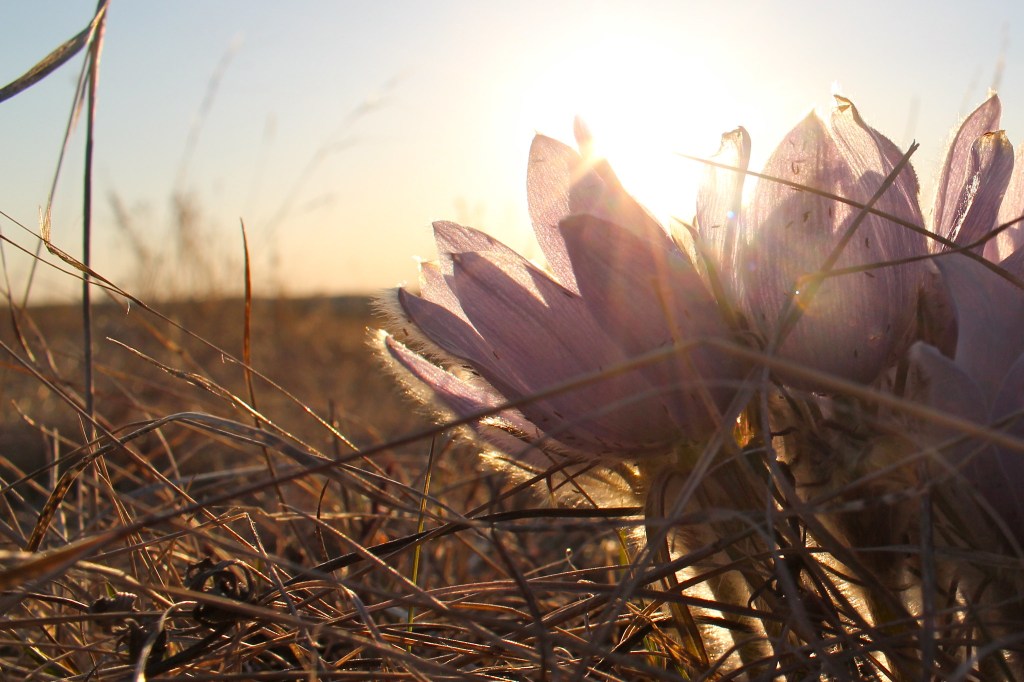
Anyway, I guess that’s why the wildflowers seem so special out here. For so much of the year we’re battling the elements, praying for rain, shoveling snow, bundling up, tracking mud in the house, pulling burs out of horses’ manes, cutting down weeds and clearing and cleaning and building and doctoring. The wildflowers, especially the tiger lily, seem like a reminder that there is perfection in this world, in the smallest things. Tiny, pretty miracles surviving despite and because of the hot sun and clay dirt.

I took my girls to that tiger lily hill the other day to check out this year’s crop. On the way they were singing Bible school songs they just learned, doing the actions and repeating the lines over and not quite right the way little kids do in the cutest way.

They had never seen a tiger lily before, and so it was a fun and easy Easter egg hunt, each girl grabbing up more than a handful of the flowers and thrilled with it all. With the familiar songs they were humming, and their sun-flushed cheeks and mosquito-bit arms, I couldn’t help but think: Now isn’t this the quintessential ranch summer?

I wonder what they will remember about being a little kid out in these hills. Do they feel as wild and free as I used to feel out here, enamored with the mystery of this place and how it can change so magically by the hour, the sun sinking down, turning the tips of the trees and grass and my daughters’ hair golden?

I hope so. I hope they feel as wild and beautiful and as loved as those lilies, because they are to me. My own little tiger lilies on the hilltop, growing before my eyes.

My favorite little flowers reminding us that there are perfect things in this world.