Cold Weather

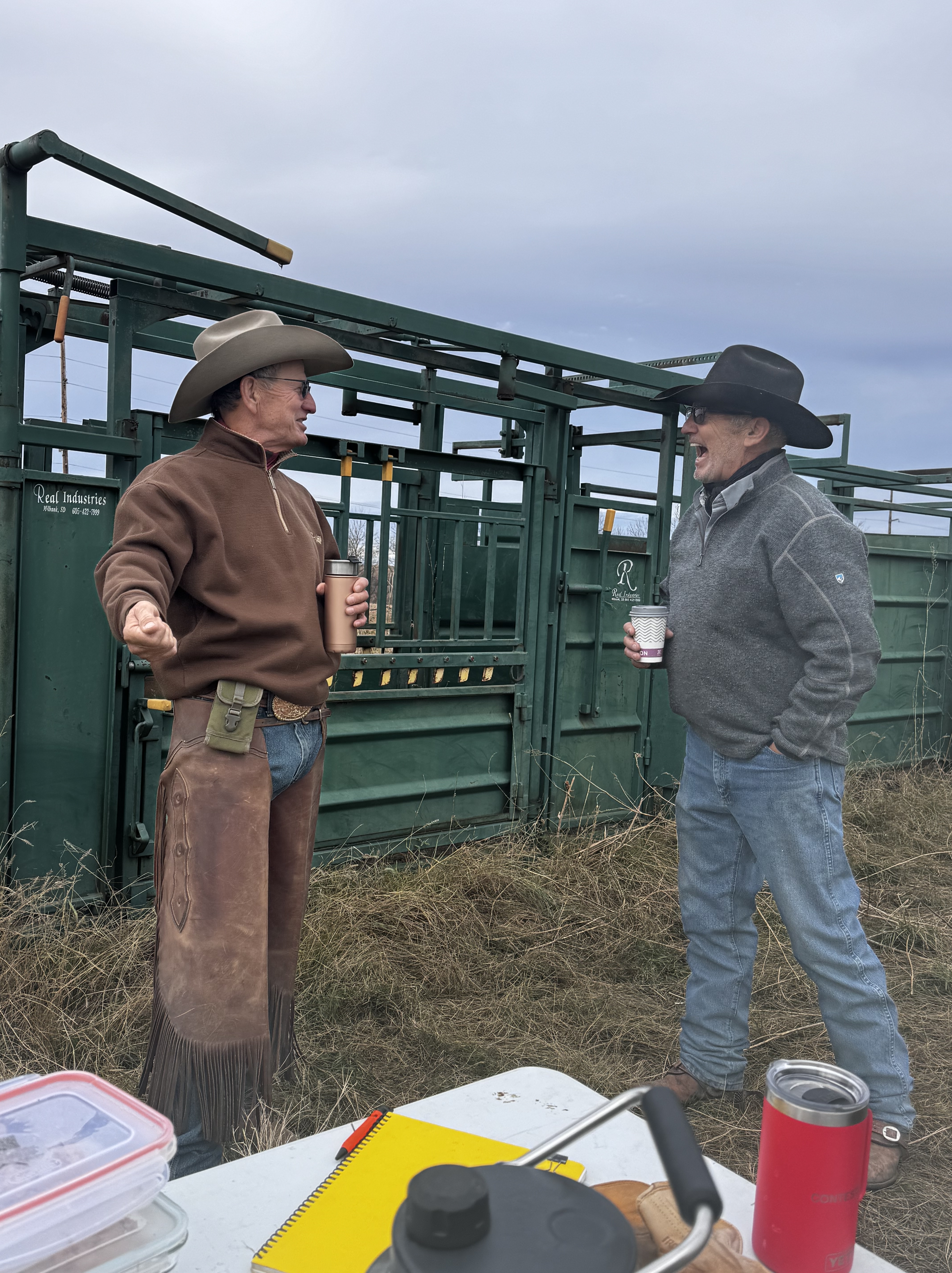
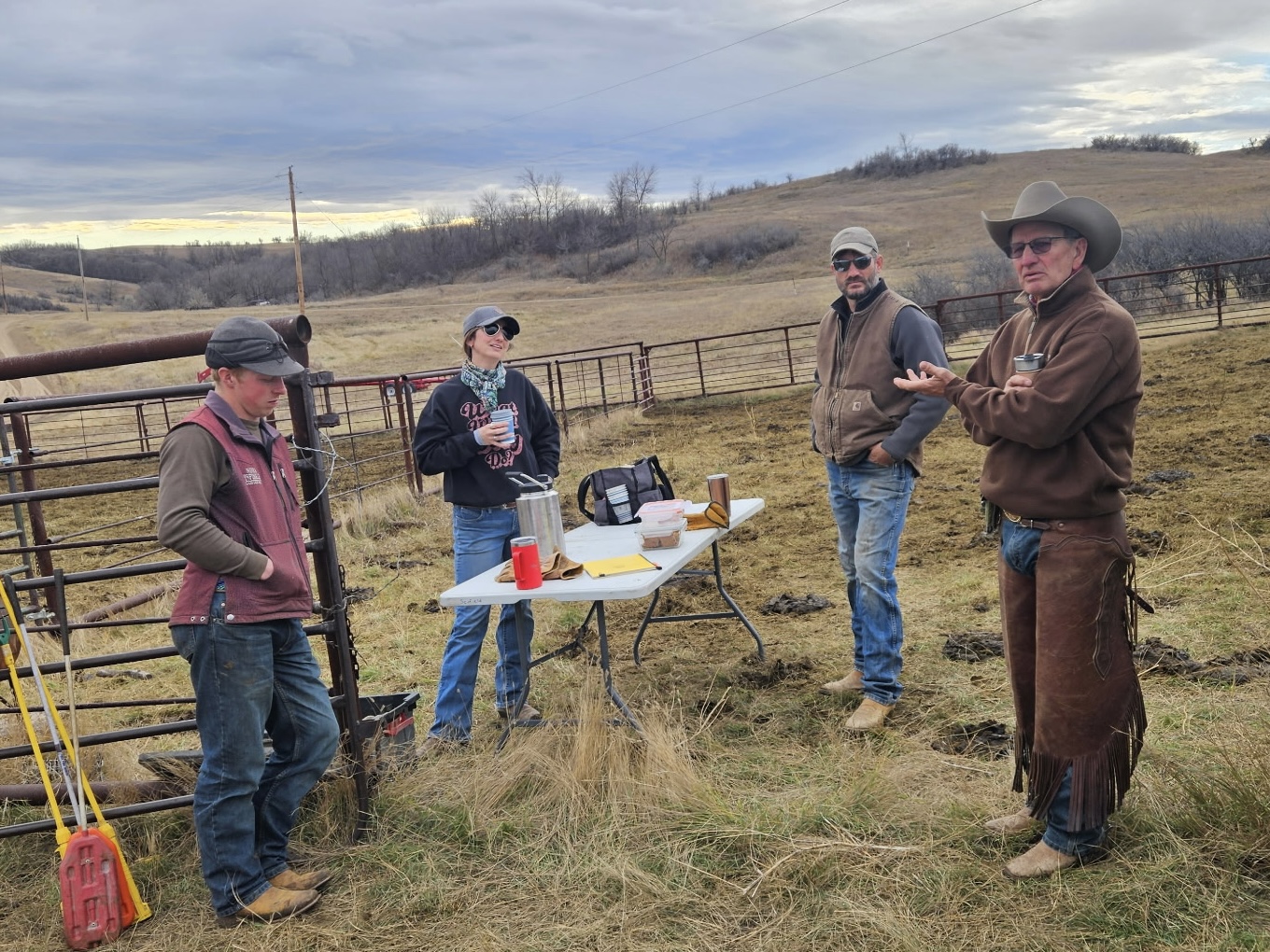
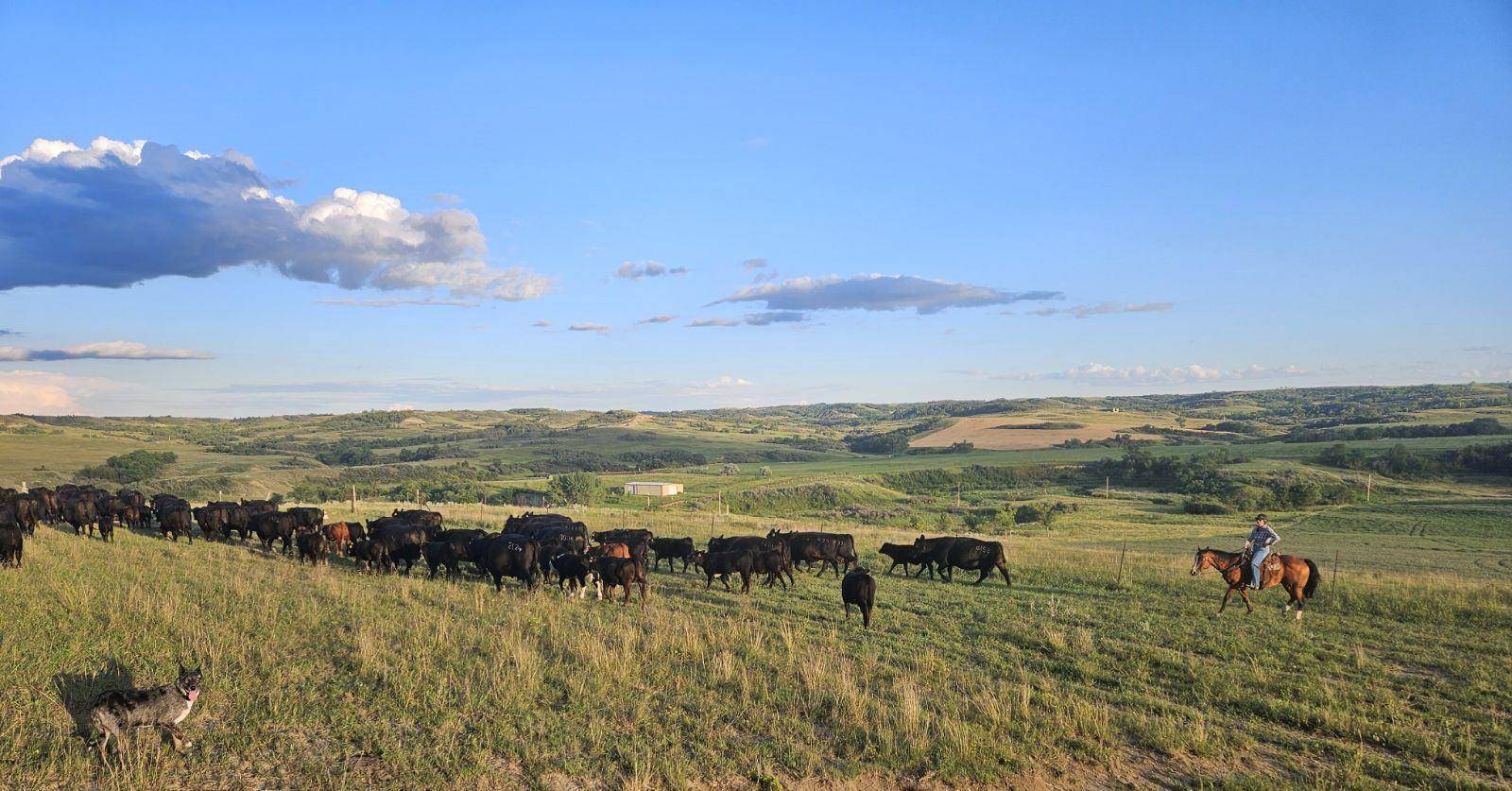
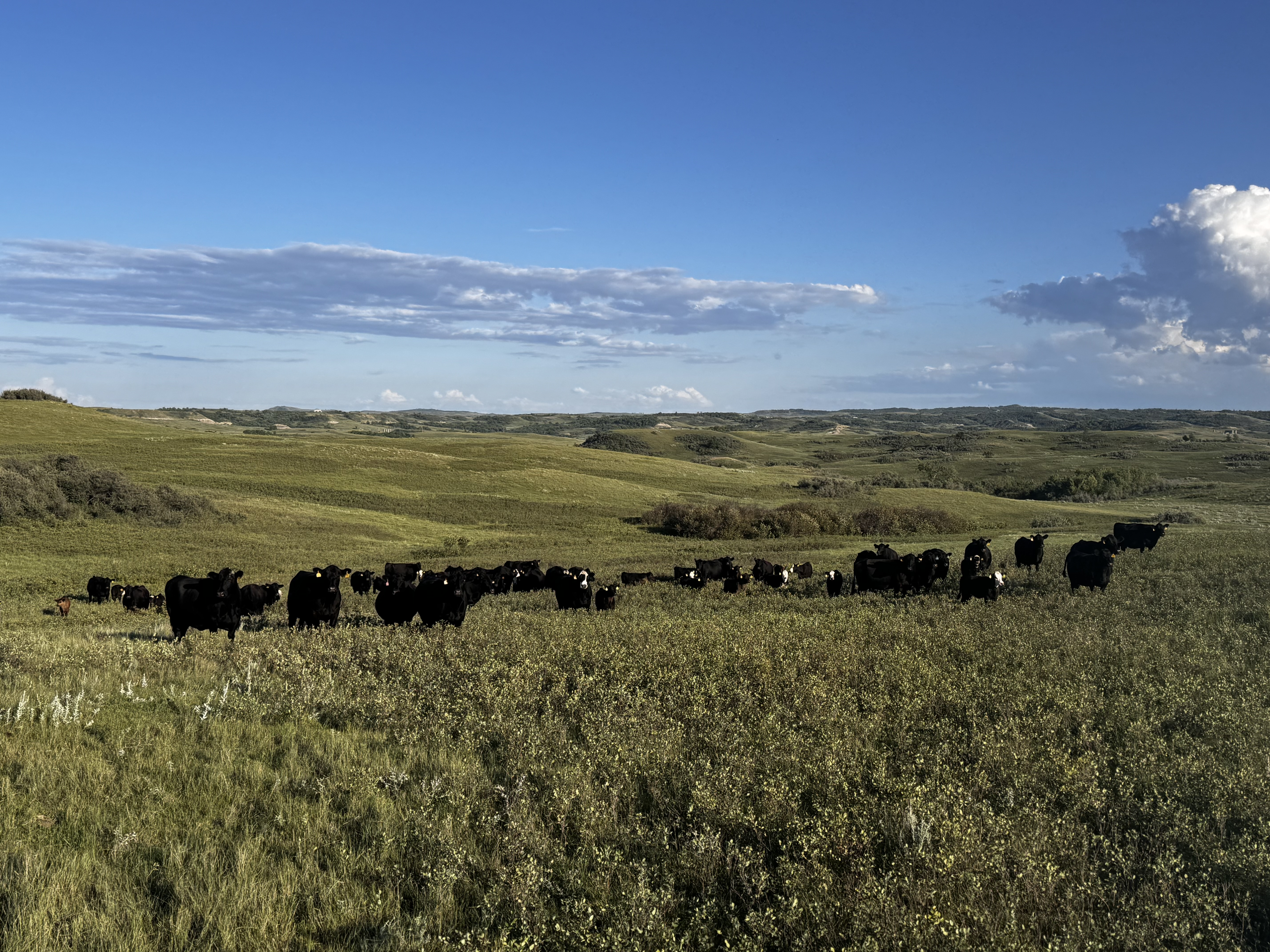
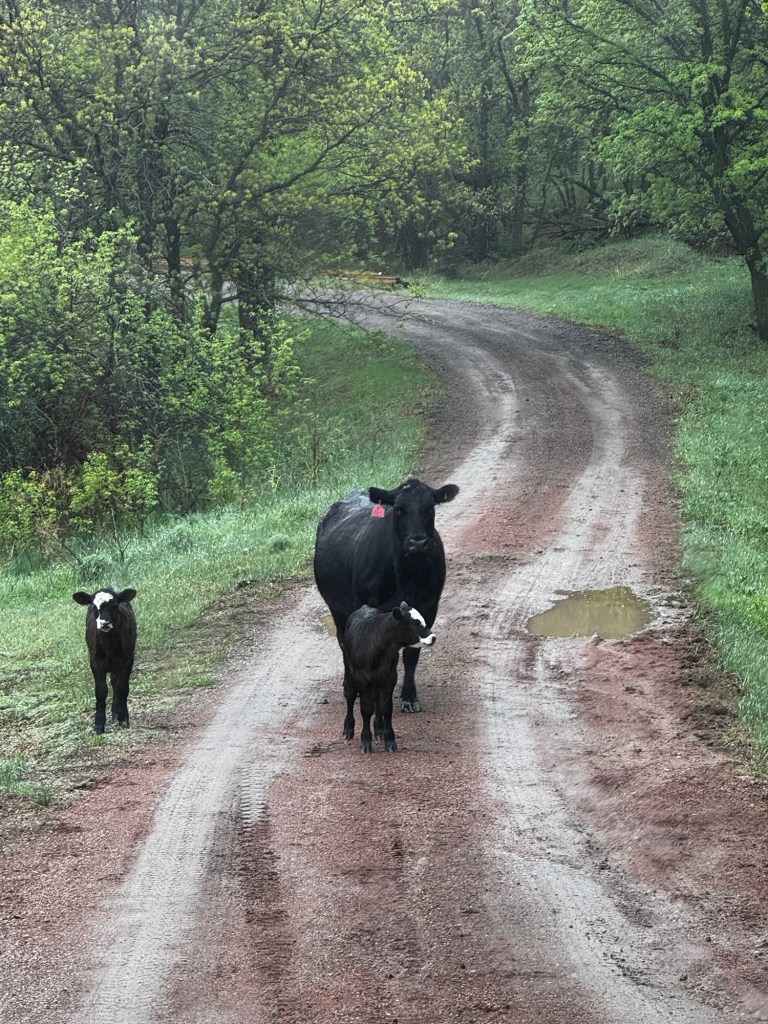
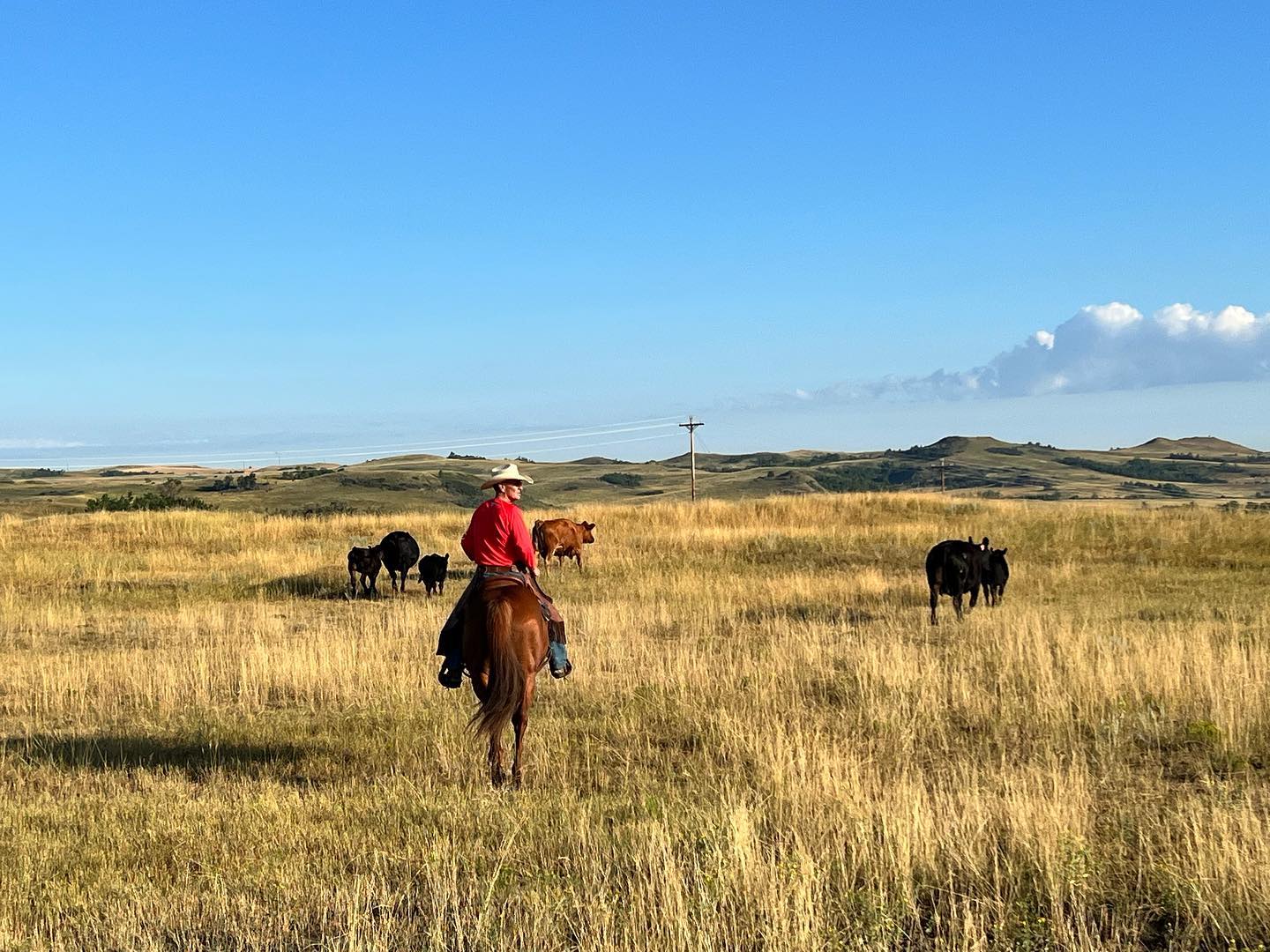
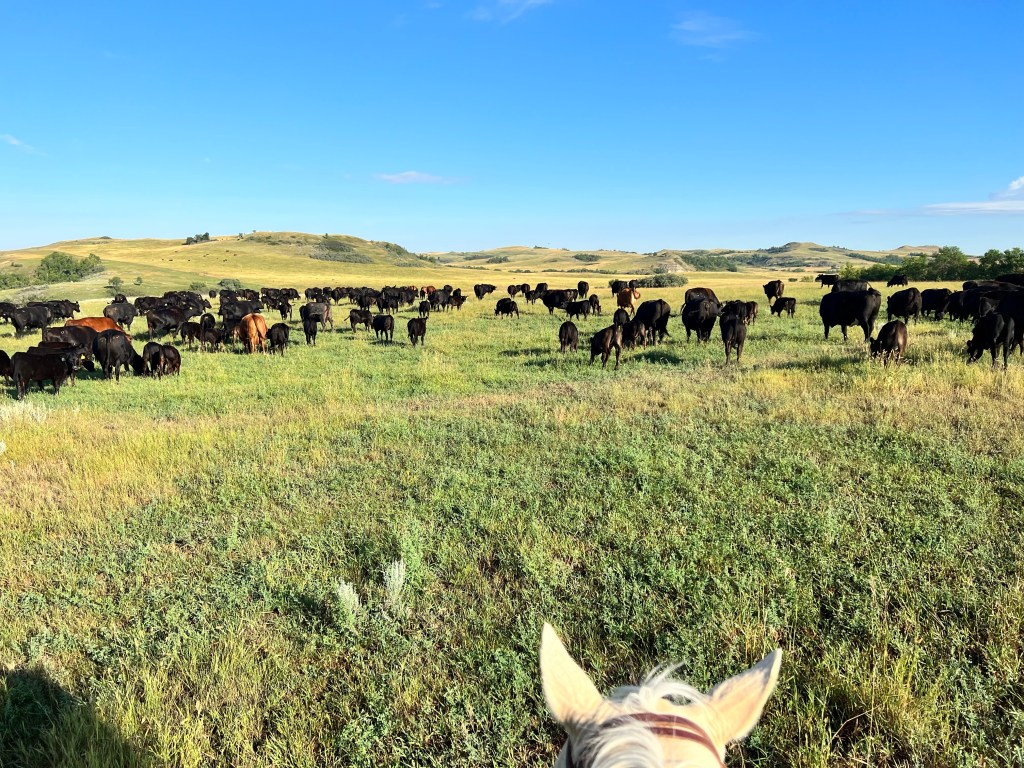
It’s officially the end of a season now. We often mark time out here based on our cattle
business, and last week we sold calves. Shipping Day. Weaning. These are the other
ways to say that our year of work spent caring for the cattle and their calves has come
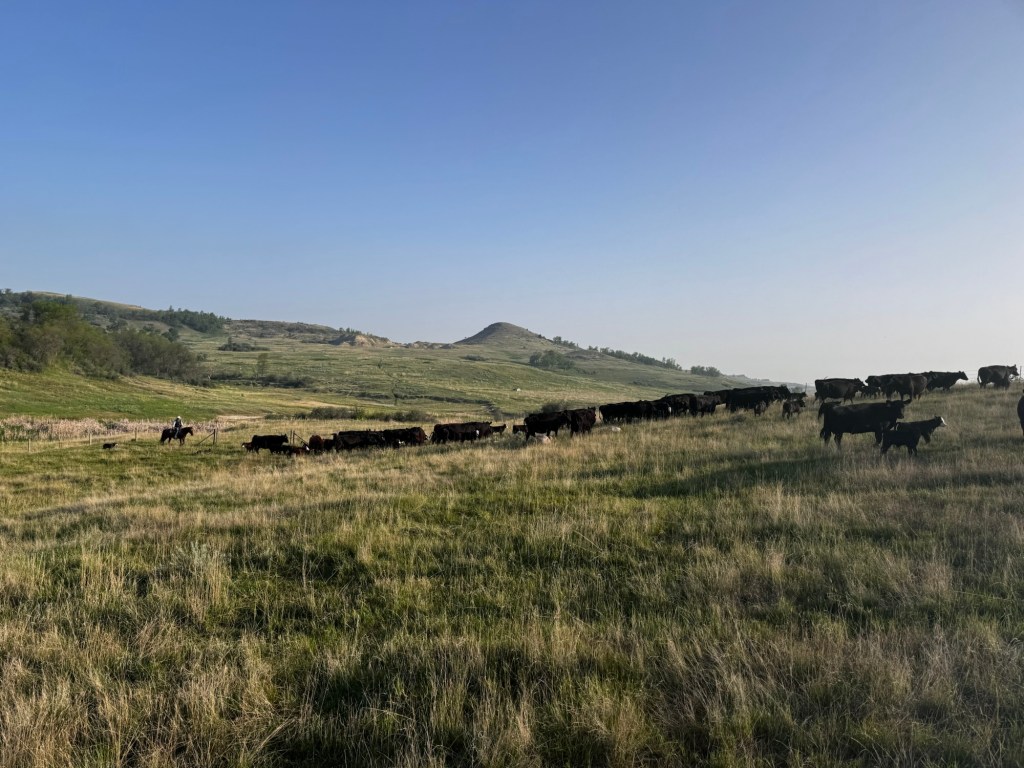
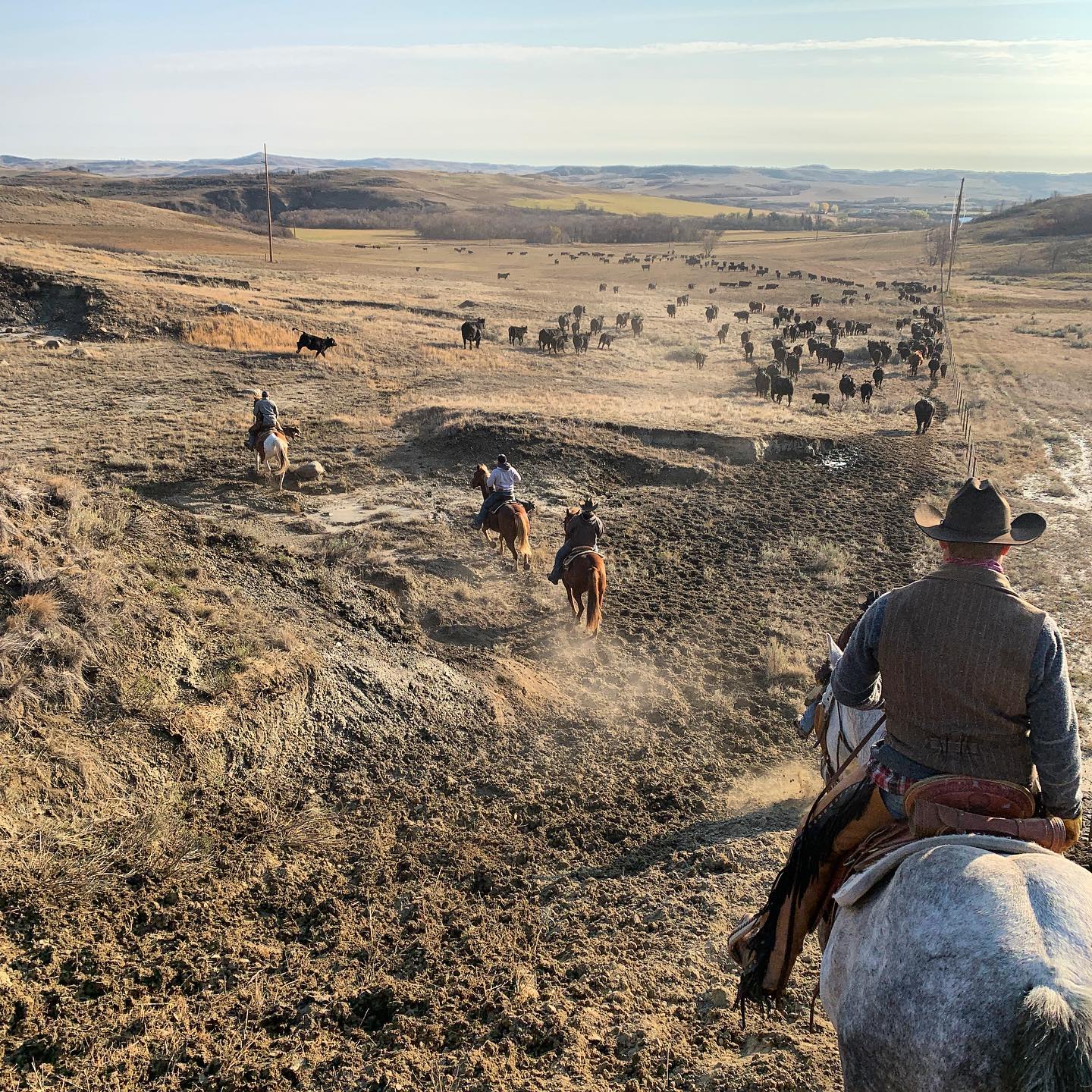
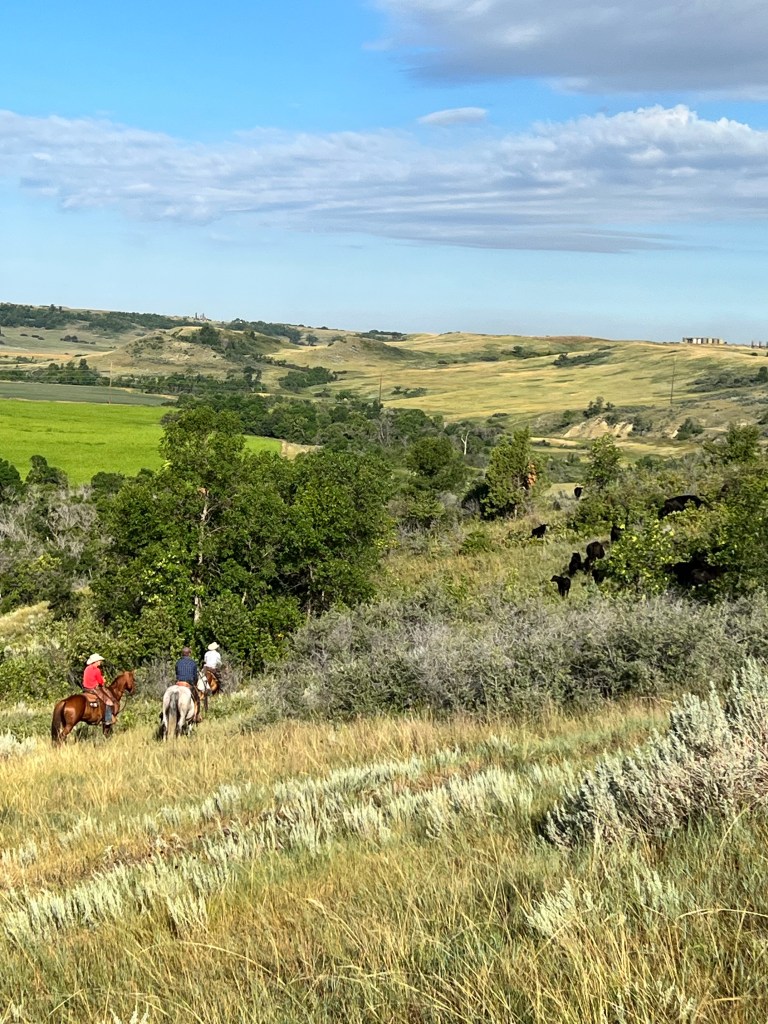
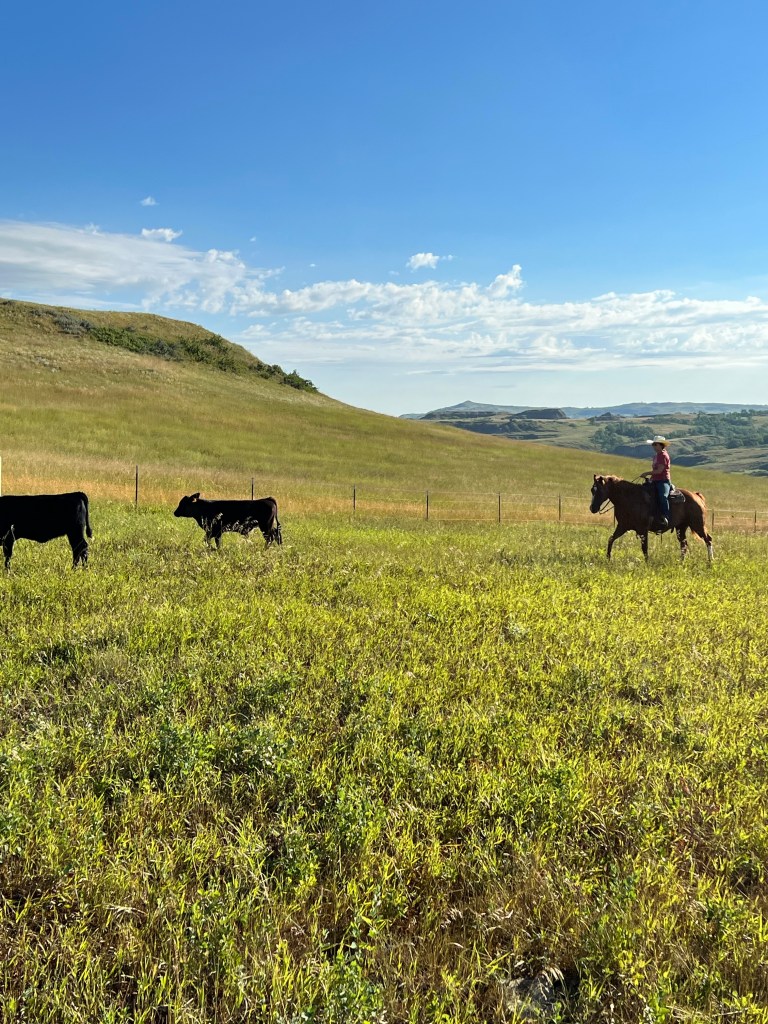
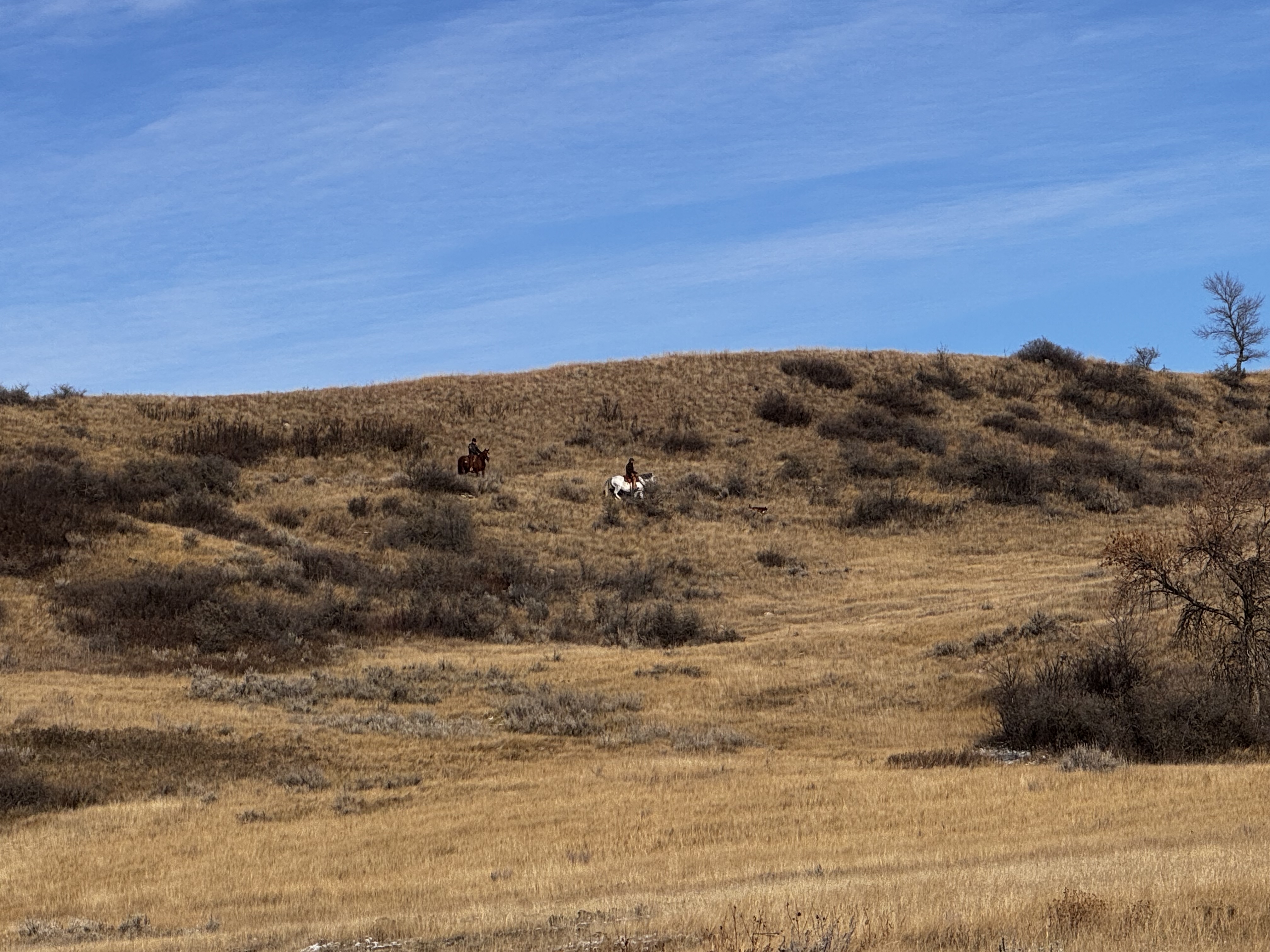
to fruition. We spent the past few days riding every pasture to make sure every animal
was home safe. We rode through the first dusting of snow and a bitter wind, and then a
couple of really beautiful, perfectly chilly late autumn days kicking up some stray cattle
and mule deer from the draws, knowing in our bones winter is set to fully kick in any
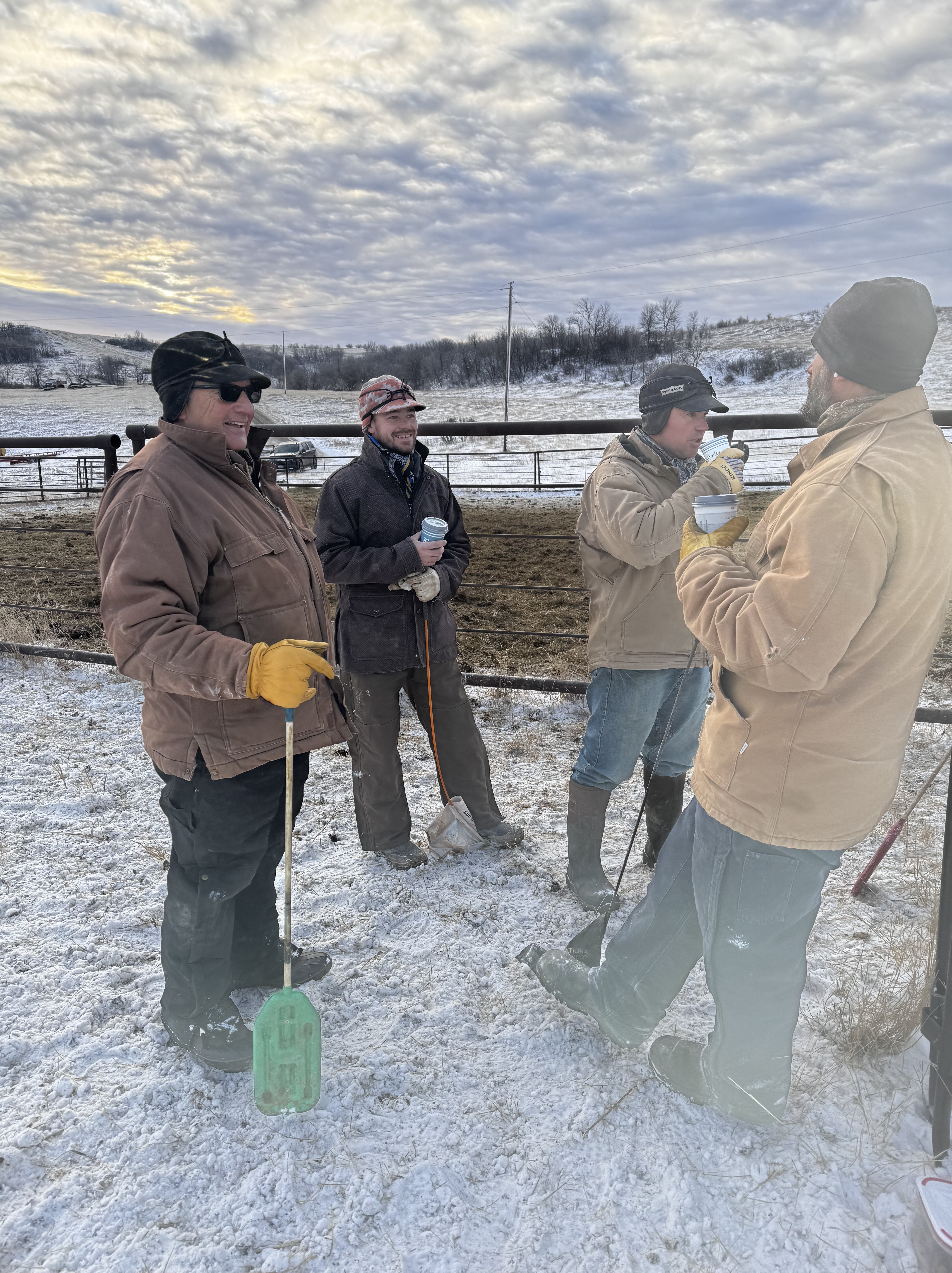
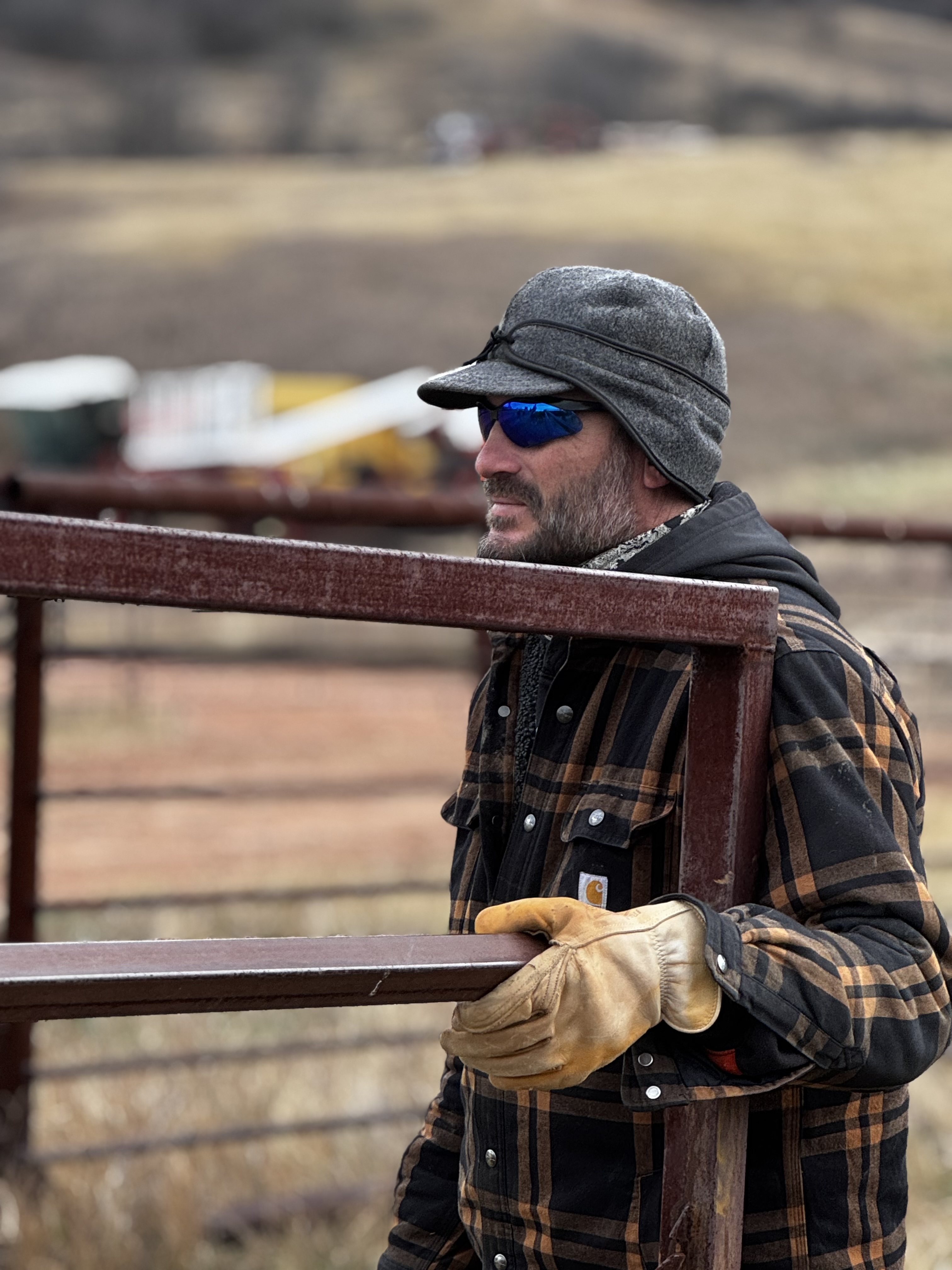
moment now and send us for cover under our wool caps, coveralls and big coats.
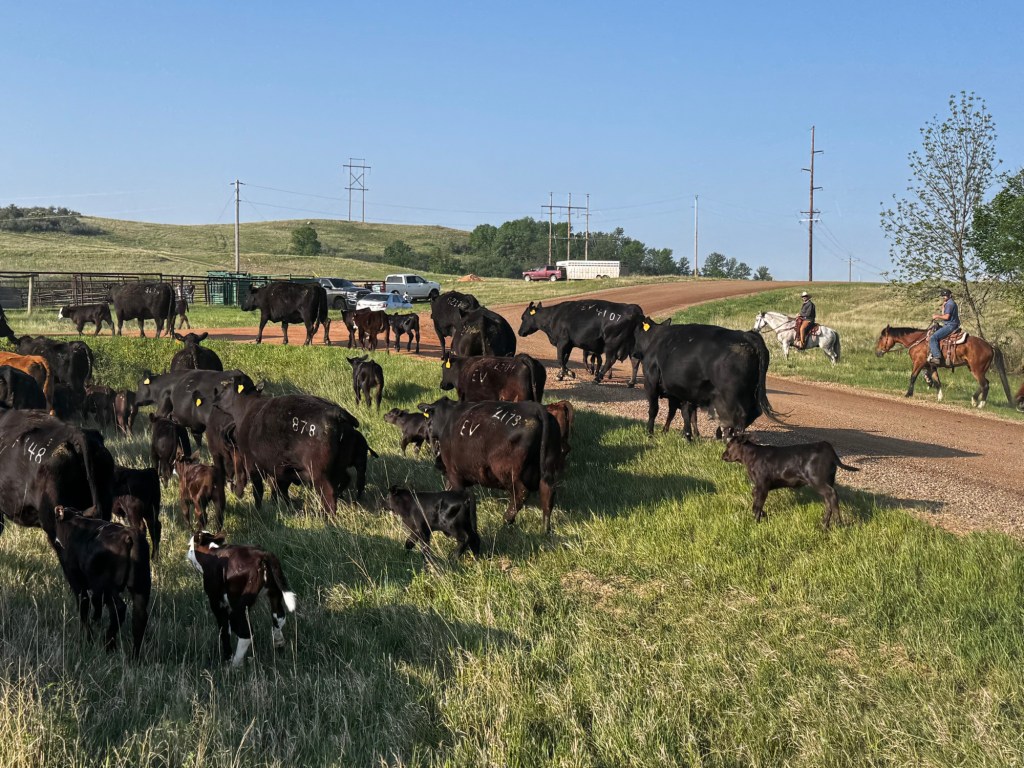
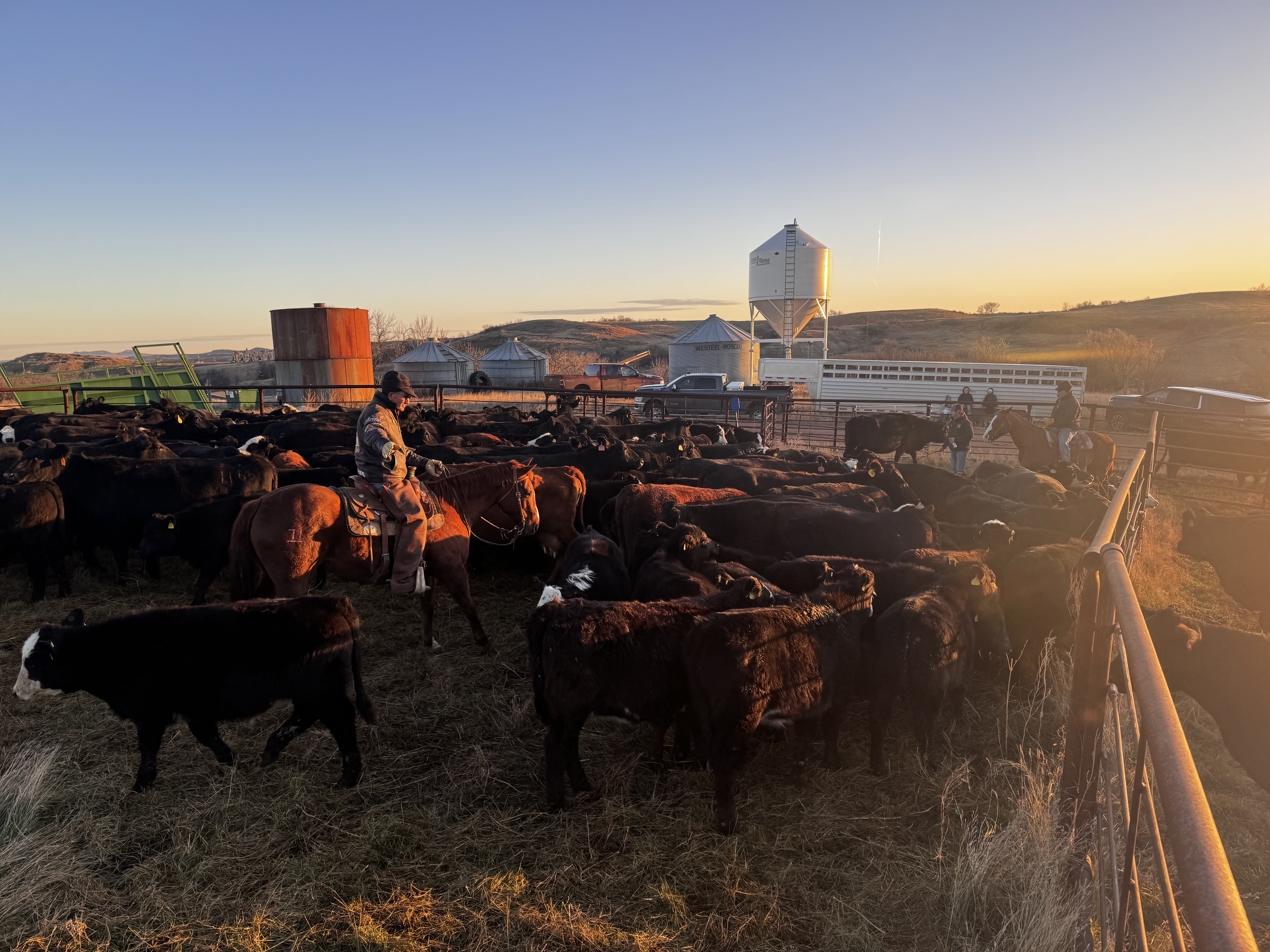
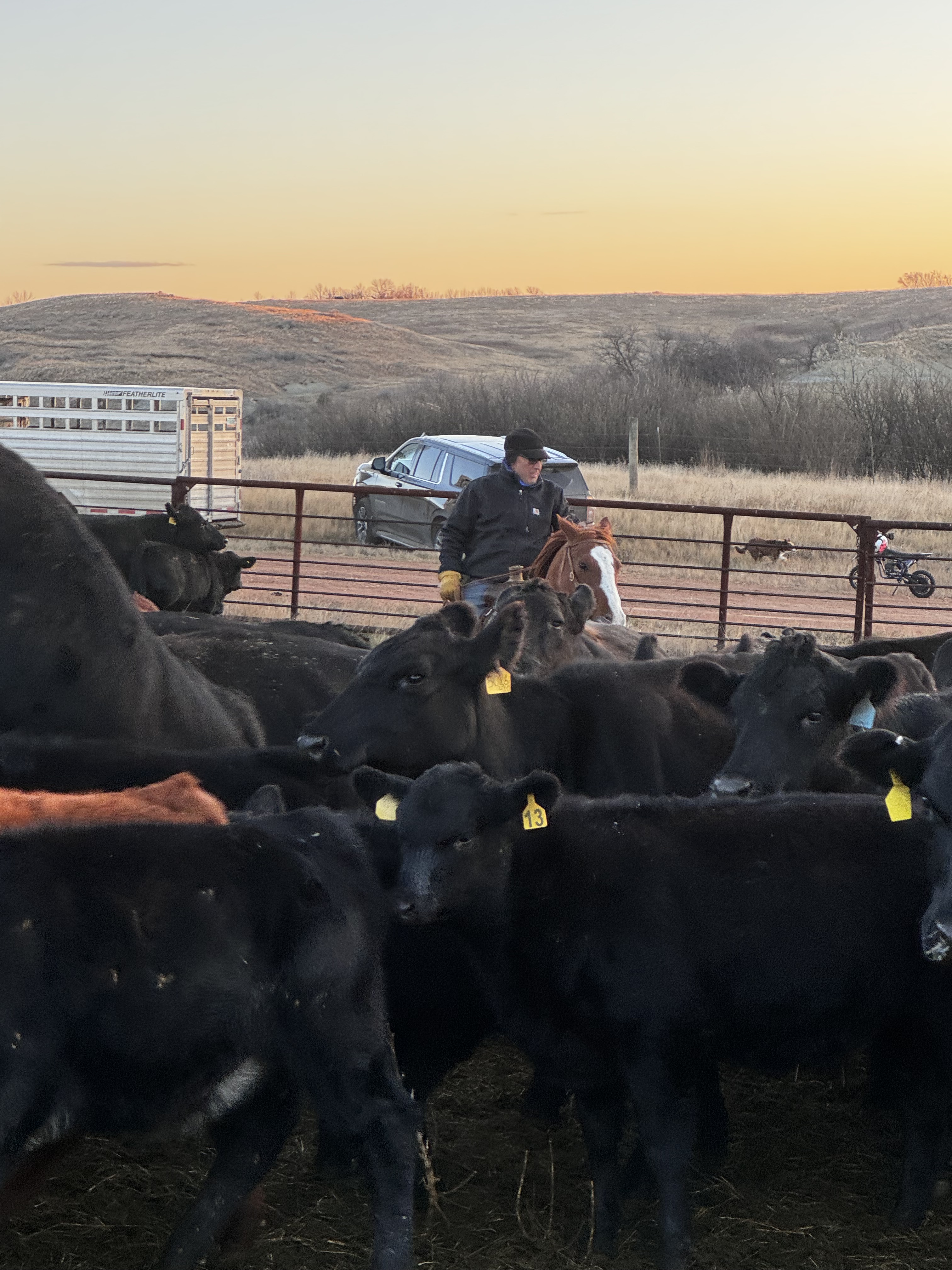
When the truck came to load the calves on Tuesday we had picked out a little pen full of
heifers to keep on the place. We had done this sorting the night before to make things
go more smoothly on shipping morning only to wake up to find that of course they had
broken through the panel to get themselves mixed back up with the herd again. And so,
we did it again, sorting the calves from their mothers, and the steers from the heifers
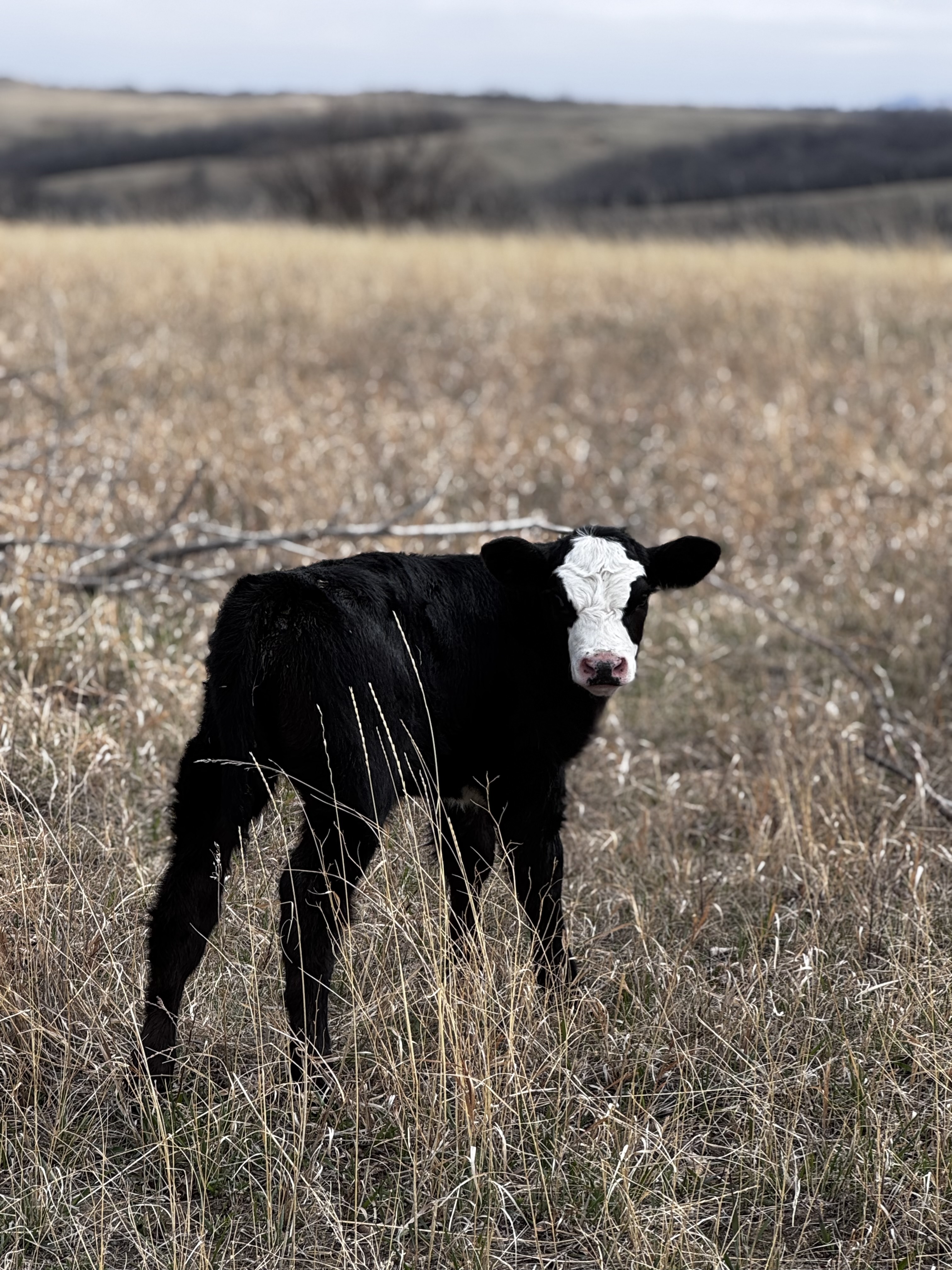
and the best heifers from the bunch to keep. Both Edie and Rosie had picked the most
colorful from the lot as theirs to keep, a big black baldie with four white legs named
Socks and a red brockleface name Ginger who seems to be growing some horns. The
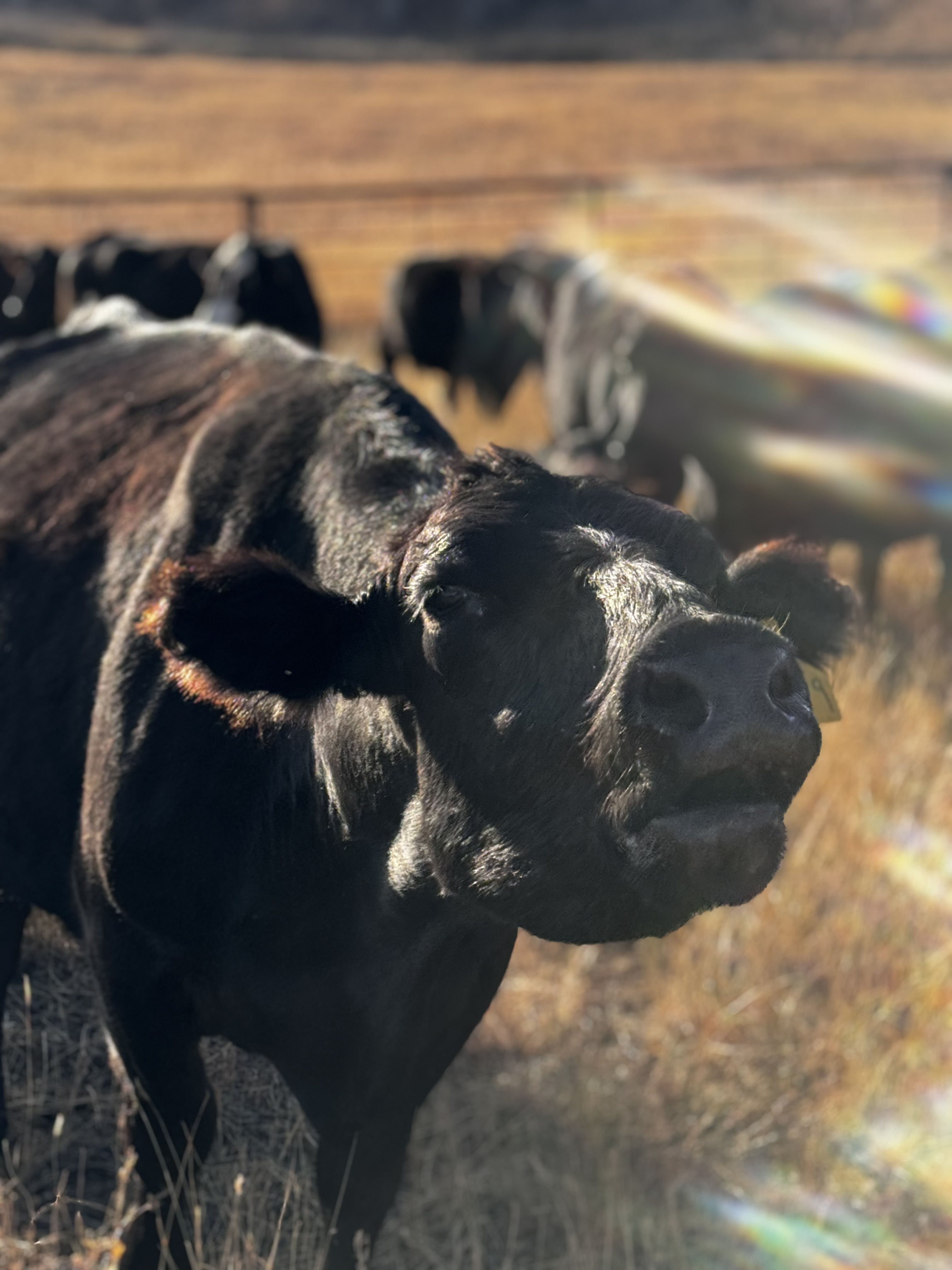
two stand out nice and dramatically from the herd of uniform black future mommas we
picked to keep building our herd and we’re all fine with it around here. It’s a family
operation, as it goes.
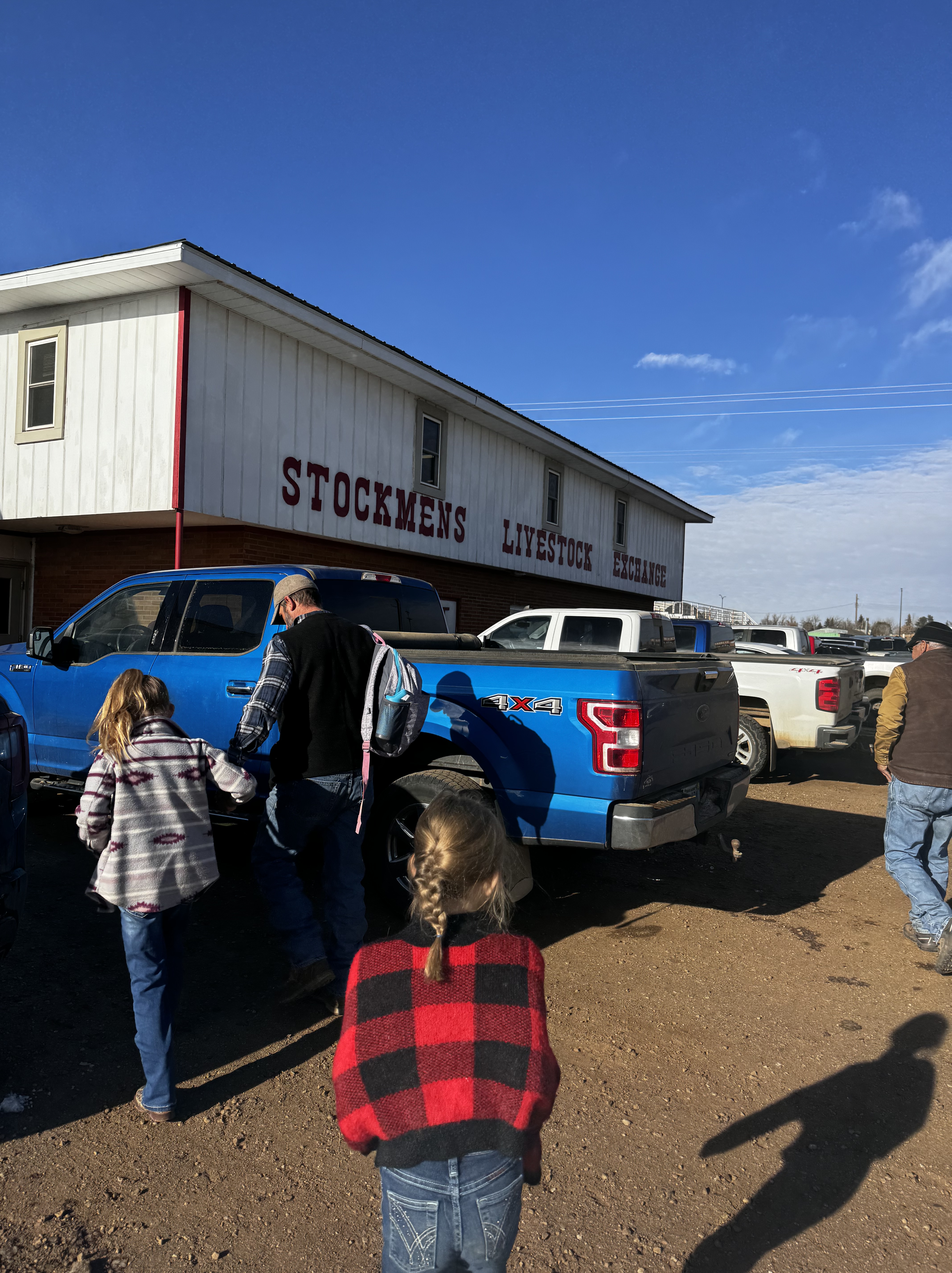
Which is pretty clear when you see us all filtering into Stockman’s sale barn, unloading
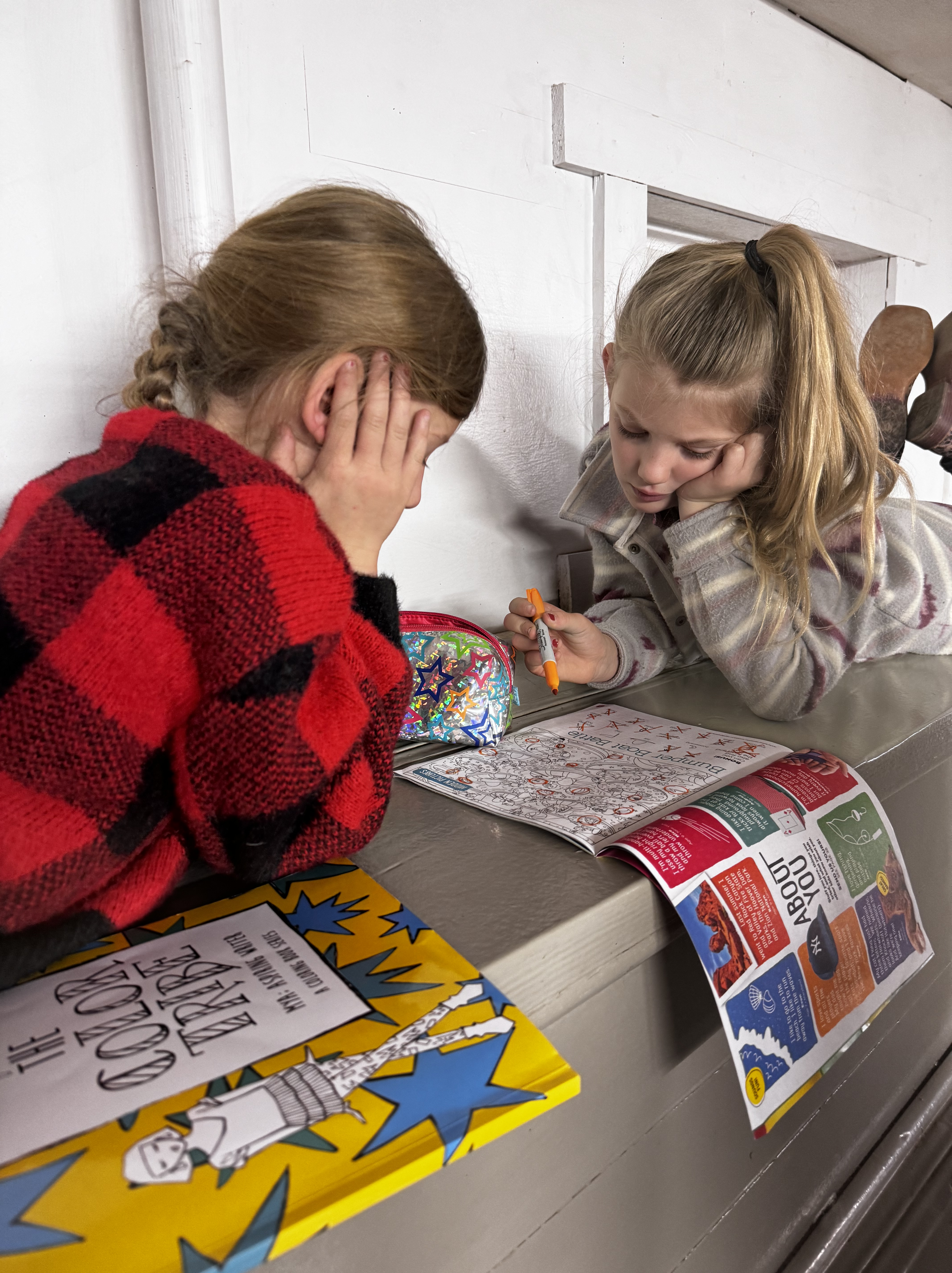
daughter after niece into the gravel parking lot, each one packing some sort of tote,
purse or backpack full of notebooks and art projects to take up to the steep seats and
entertain themselves while we wait for our pen of calves to come through.
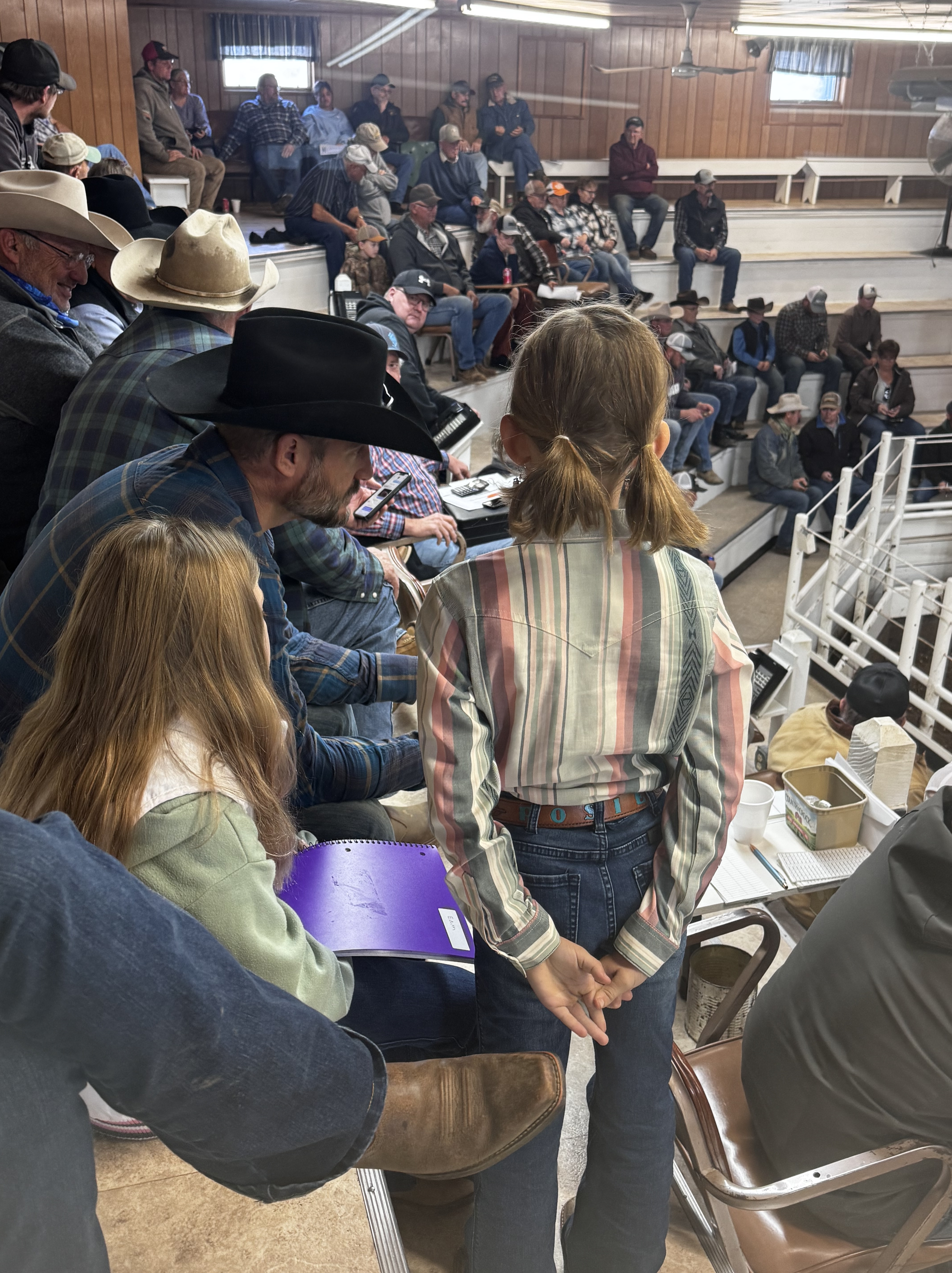
“Look, there’s Eyelee!” Rosie hollered to her youngest cousin across the seats when the
heavy set of steers came through the ring. “Remember we named him that because he
has white eyelashes?” That’s the fun part about running Herford bulls on black cows, it’s
easier to name them and tell them apart. Emma, my five-year-old niece and lover of
every cow she ever met, wasn’t thrilled to see all our babies go. I’m thinking Rosie’s
explanation about what was happening from her seven-year-old perspective while
watching the calves get loaded on the trailer that morning probably didn’t help ease her
mind. It wasn’t that long ago when my husband and I had to haul both our daughters out
of the sale barn, bawling because they just realized the calves weren’t coming back
home, but it seems they’ve come to terms with the process these days.

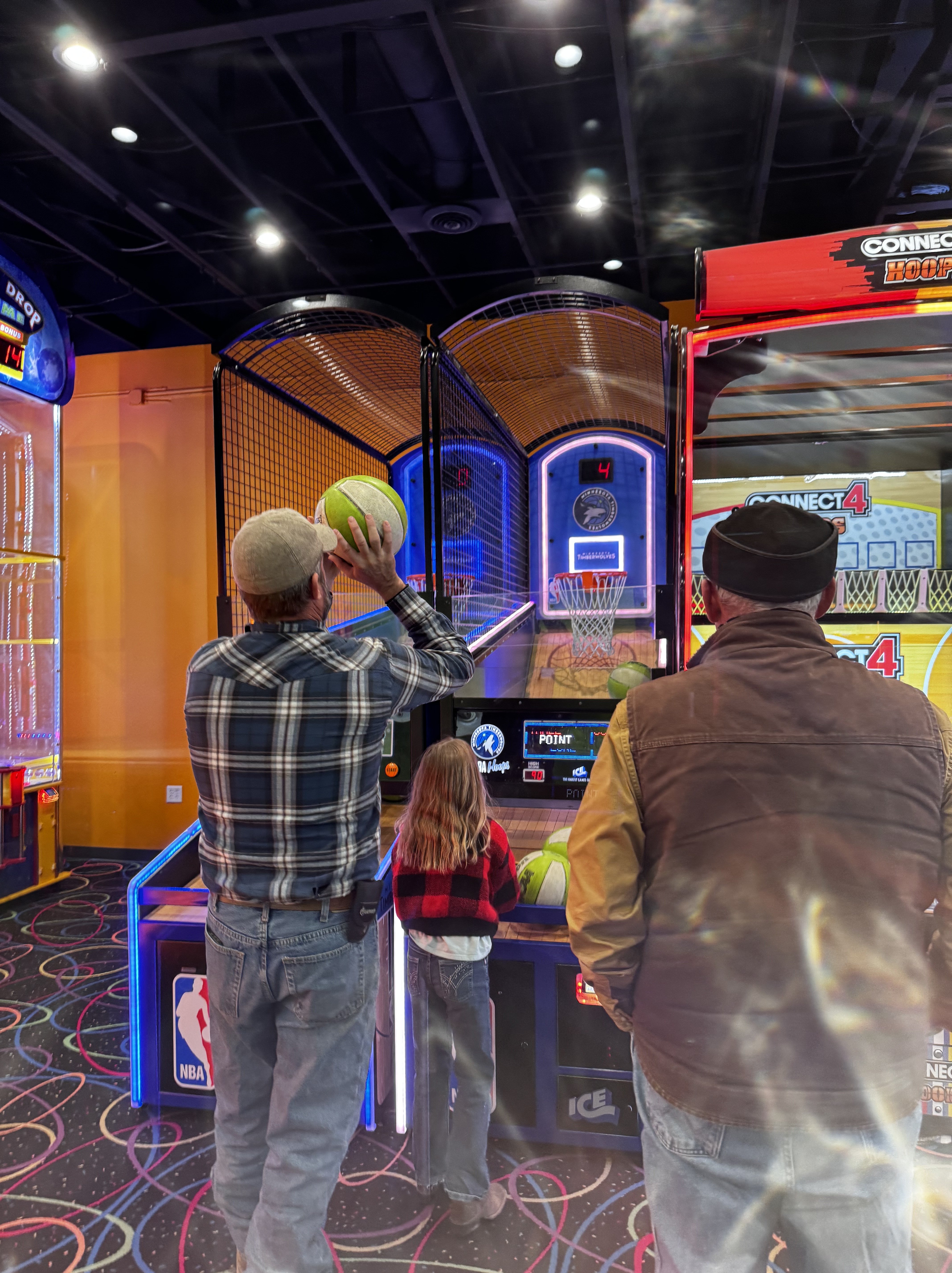
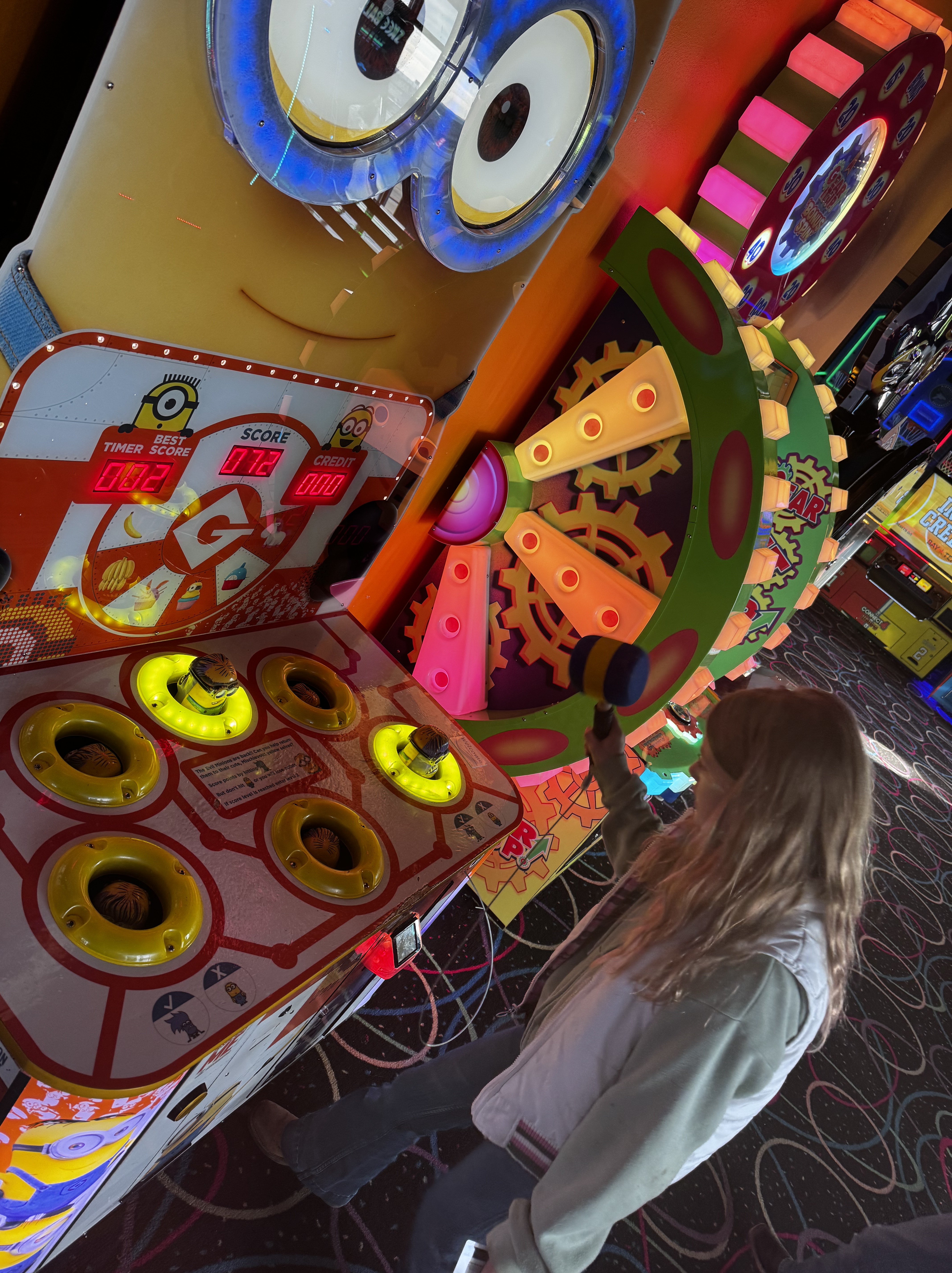
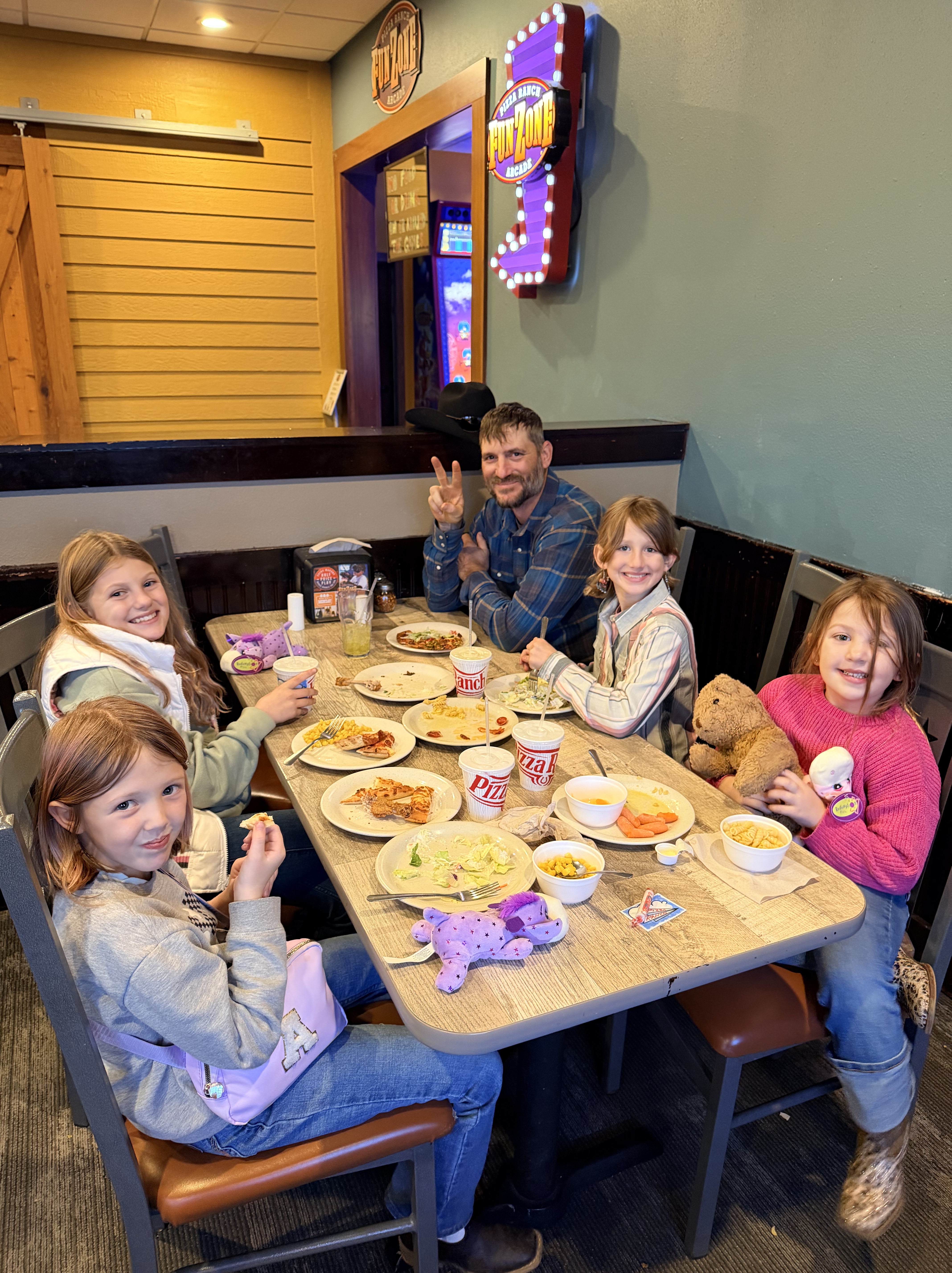
And it’s nothing a little trip to the pizza and arcade place won’t fix, a little tradition my
family decided on a few years ago to celebrate making it to sale day. Because nothings
says success like wining 600 tickets on ski-ball and cashing them in for a long, neon
plastic hand with a lever that picks things up and allows you to bug your little sister and
mother from at least three feet away.
Anyway, all this is to say we’re grateful for another year on this place raising happy
healthy kids and a happy, healthy herd into a new season. This time of year definitely
makes me feel nostalgic, which usually, for me, results in a song. To honor that feeling, I
thought I’d share one I wrote while riding through that bitter wind a few weeks ago
alongside my husband who hadn’t yet switched from a cowboy hat to a wool cap. The
change has been made now, that’s for sure.

Stay warm. Stay cozy. Stay grateful.


Cold Weather
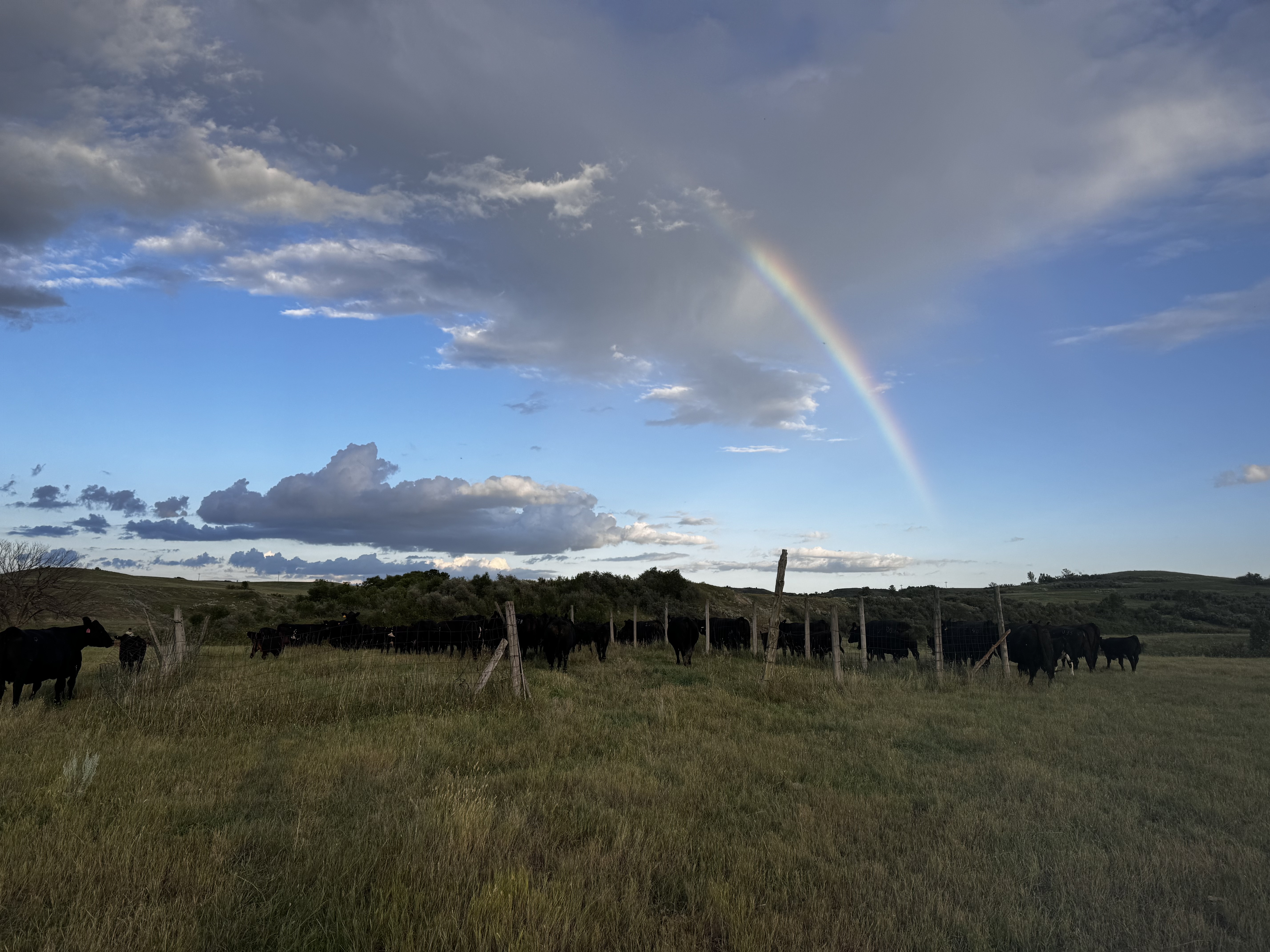
Summer is over, I heard him say
The breeze isn’t cool anymore, anyway
It’s hard and it’s bitter, it cuts through the layers
Of denim and leather and good-hearted neighbors

Summer is over, my fingers are froze
The horses in pastures are growing thick coats
You put yours on too and I’ll switch my straw hat
For the wool cap and new scarf you bought me for Christmas

You get the gate and I’ll keep the coffee on
I take mine with cream, you take yours black and strong
There’s things that I know, how it rains, then shines, then snows
For worse or for better, count on me, counting on you and cold weather

Summer is over and we’re getting older
And so are the kids used to ride on your shoulders
And now they are stretched long and lean like the blue stem
That bend in the wind trying to duck out of our hands

Summer is over, the furnace just kicked on
The dew on the grass turns to frost at the dawn
The flies on the windowsill got tired of spinning
Tell me, you think it’s the end or beginning?
The bull curse


This spring toward the end of calving season I remarked about how well things seemed to be going after my father himself remarked how well things seemed to be going. And then, even though I knew better, I dared to add, “No bottle calves yet,” and he told me, quite seriously and repeatedly that I had cursed the entire ranch.  

My dad, in case you missed it, is one of those superstitious ranchers.

What was I thinking?
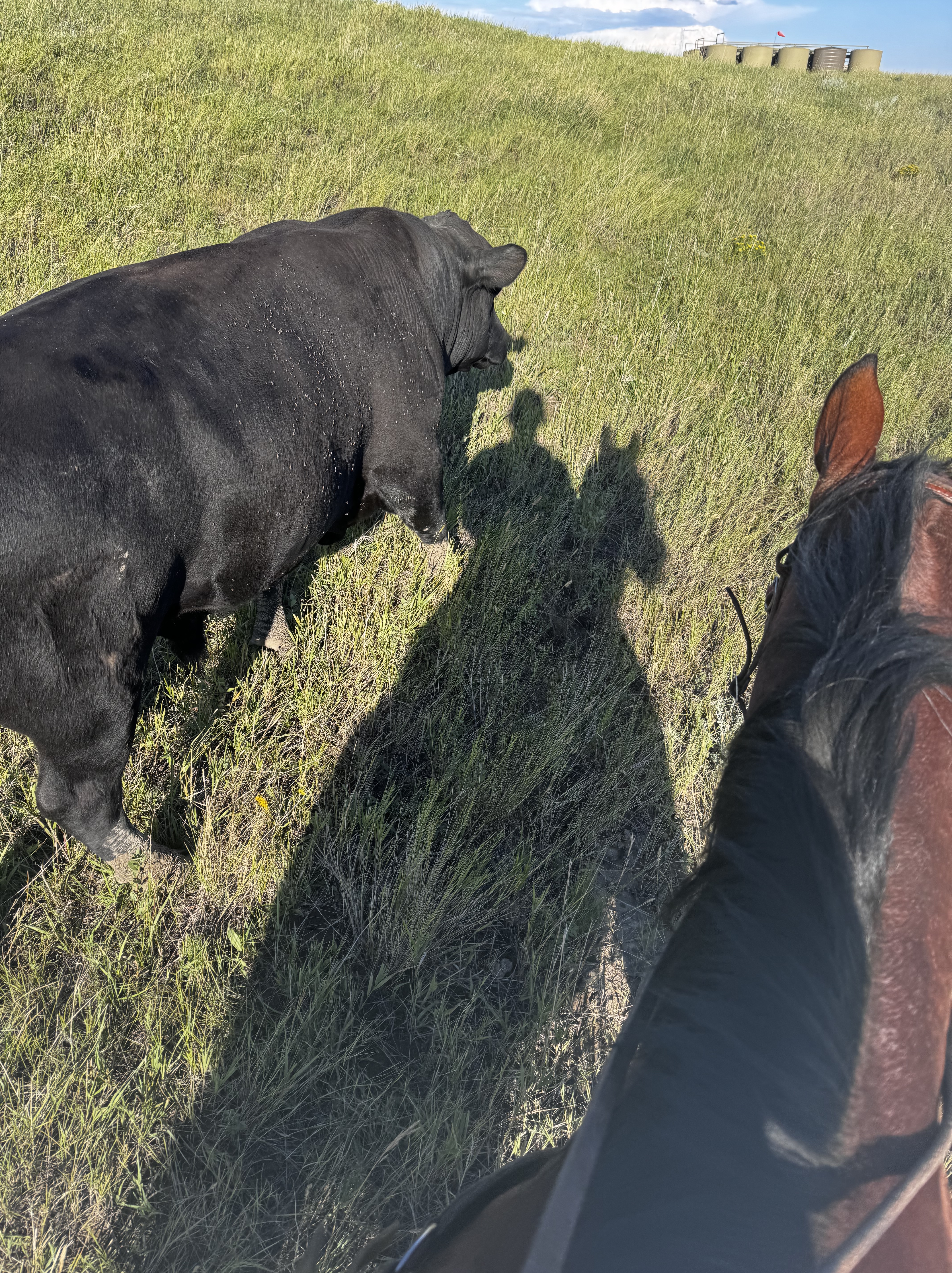
Fast forward a few months and we had a nice young Angus bull go missing, as bulls tend to do. Dad finally caught up with him in our neighbor’s pasture hanging out with his pretty black cows and enlisted the help of my sister to go round him up. Now, if you have any experience in the art of chasing cattle, you know that trying to break one lone male bovine away from a herd of females is not a task for the armature or the faint of heart. It usually never, ever goes well or smoothly or without cussing and sweat, prayers and thorns and then more cussing and in that order. But that evening, my dad and my little sister hit the trail horseback, miraculously found the stray bull and even more miraculously were able to walk the big guy back to the adjacent pasture so he could finish off breeding season with his betrothed cows. The plan in Dad’s head had come to fruition, things went smoothly and from what was reported there was no swearing and no praying and no thorns.

The other miracle? The fact that, after years of being traumatized in her childhood by helping Dad chase bulls, my little sister actually agreed to go along.

It was a brag-worthy experience and we all heard about it that evening. What a great bull. Can’t believe it. He worked so nicely. Went smooth. Easy as could be.

But the rancher’s dream was cut short when Dad went out the next morning to find the bull was gone again.

Vanished.

And so, this time Dad enlisted the help of my husband and me (because my sister had fled to Arizona, probably to avoid this very situation). Off we went with horses, back to the neighbor’s pasture to, sure enough, find that bull hanging out with his preferred herd of ladies. As we approached him, Dad talked through about ten difference scenarios and tactics we could employ to get this bull back into his rightful spot. Again. We could take him with a small group of cows to the pen by the road and then load him into the trailer. We could take him with the herd toward the gate and then break him off. We could go take what we could get with him to the northeast gate or we could just… ope…there he went, walking right at that bull and breaking him from the cows who went running in all directions. And so that’s the plan we landed on, all three of us pushing that bull alone, up over the hill and through a school section alley, slow and steady and easy in one gate and then another and to our pasture, all the while Dad saying, “This is great! What a nice bull. This is how easy he went with Alex. I can’t believe it. Look at how nice he is.”

And me? Well, I didn’t say a dang word. Because I knew better, having cursed the entire ranch and all. And I know from experience that, with bulls, well, it ain’t over ‘til it’s over.

But that experience has shown us that once you get a bull in with all the cows it is over. That’s the task. Uniting/Reuniting is the goal. And so, once we successfully achieved that, we all sort of sat back and carried on with the next mission of pushing those cows and that bull into the next pasture.

But it turns out Dad’s out-loud-positive-affirmations was going to do a number on us as I suspected, because I looked over to right to notice that bull veering from the herd suspiciously. So, I followed him with the plan of turning him back, which should have been easy, but the veering continued. I sent the dog in, which made the veering continue faster toward the kind of thick and thorny brush patch on a cliff that bulls tend to love. Cue my husband and dad flying in from both sides hollering, “We have this Jess, go watch the cows.” And so, I did what I was told but found a perch nearby to see if I could watch how this was going to play out.

It was about fifteen minutes into peering from the hilltop down into the winding, deep creek that cuts through the big brush in the corner of that pasture, the absolute worst place to find an animal or yourself for that matter, when I finally got eyes on them. My husband, off his horse on the edge of a brush patch rubbing his hand and my dad standing next to the fence staring over at the bull on the other side who was standing up to his neck in the water, staring back.

“Well, it’s over now,” I thought to myself as the two men came riding back toward me and the cows.

“I’ve never seen anything like it,” my dad exclaimed. “The thing jumped off a cliff and into the water and then swam under the fence!”

“I thought I heard a splash,” I said.

“He actually went under the water!” my Dad said as we retold the story to my mom and the girls over a 10 pm supper when we finally got home. “I can’t believe it!”

“I didn’t know bulls could hold their breath,” Rosie said.

“I wonder if it was my curse or yours that will keep that bull at the neighbor’s for all eternity?” I asked my dad between bites of casserole.

Anyway, if you need us, well, my husband will be digging the thorn from his hand, Dad will be looking for that bull and I’ll be keeping my mouth shut…

Kids in the Branding Pen

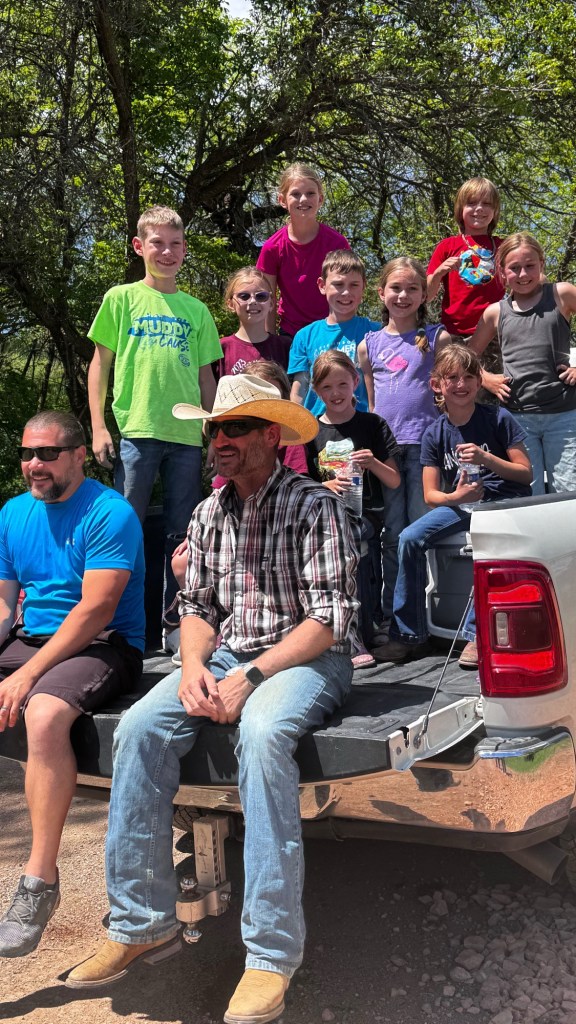
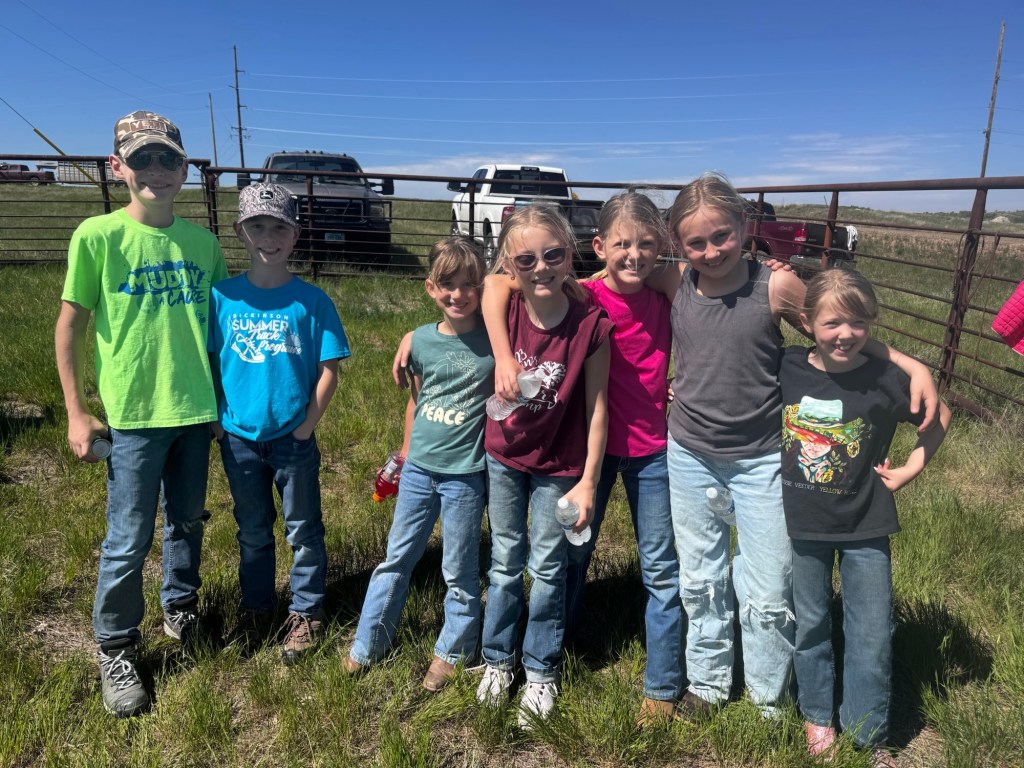
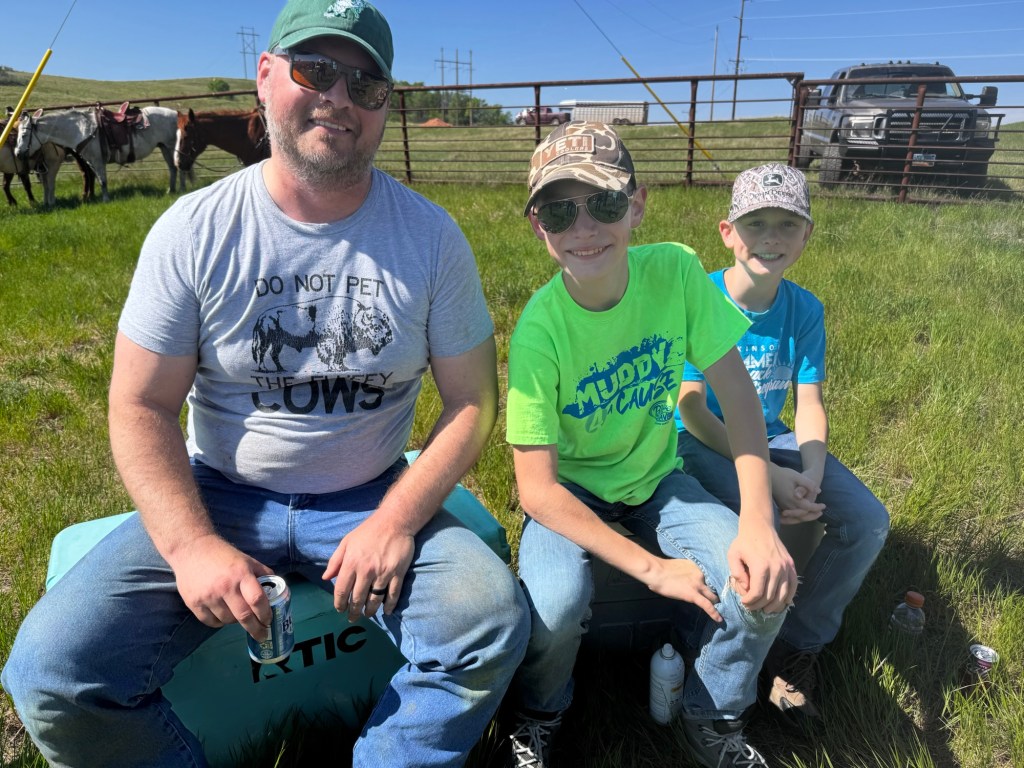
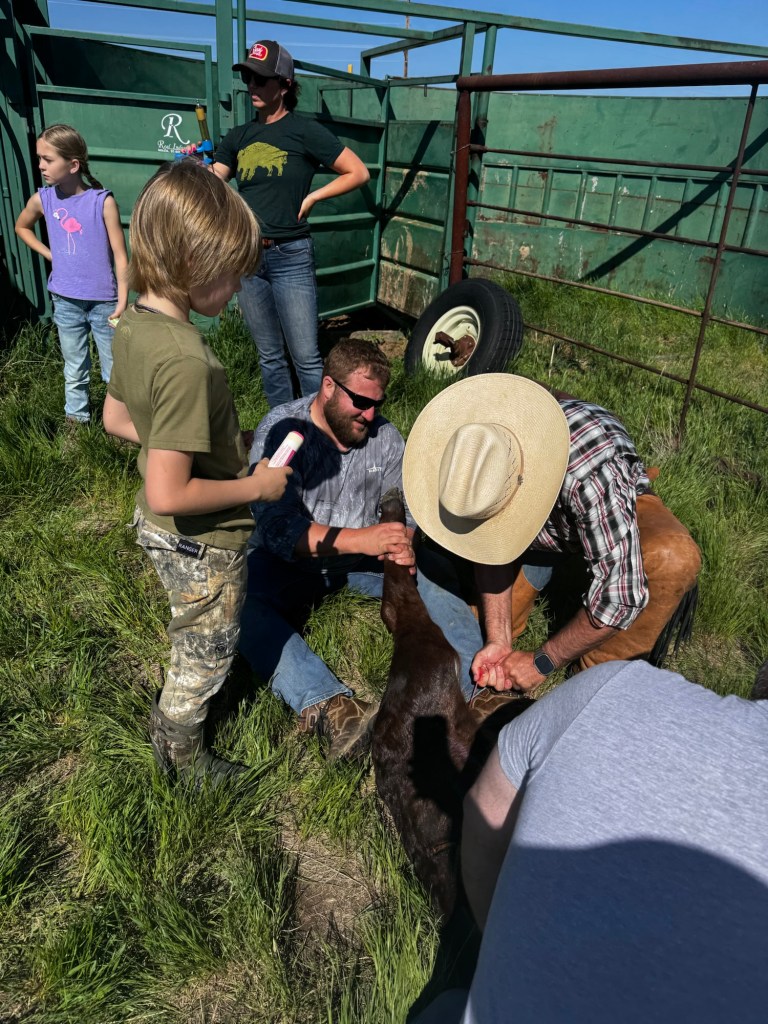
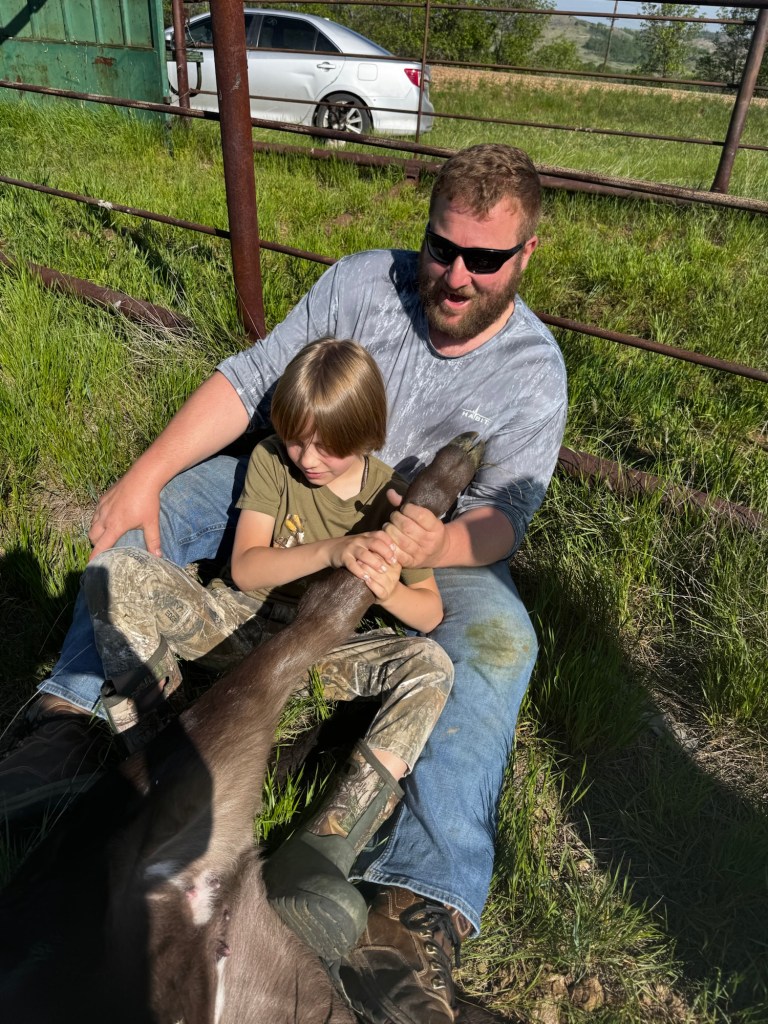
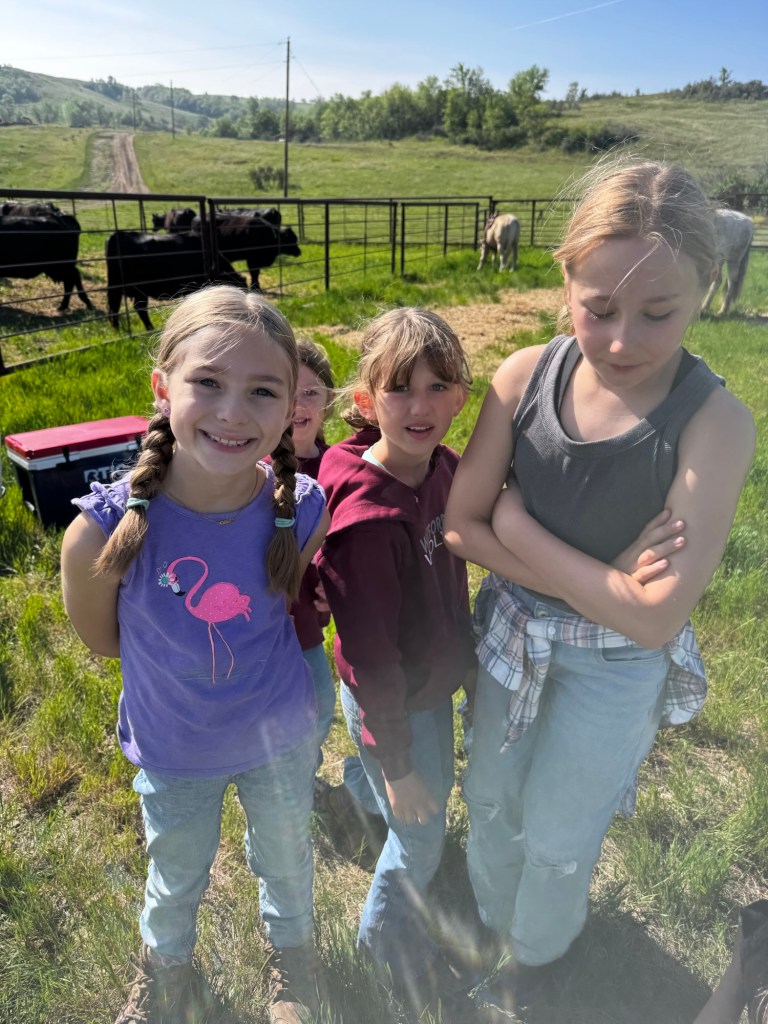
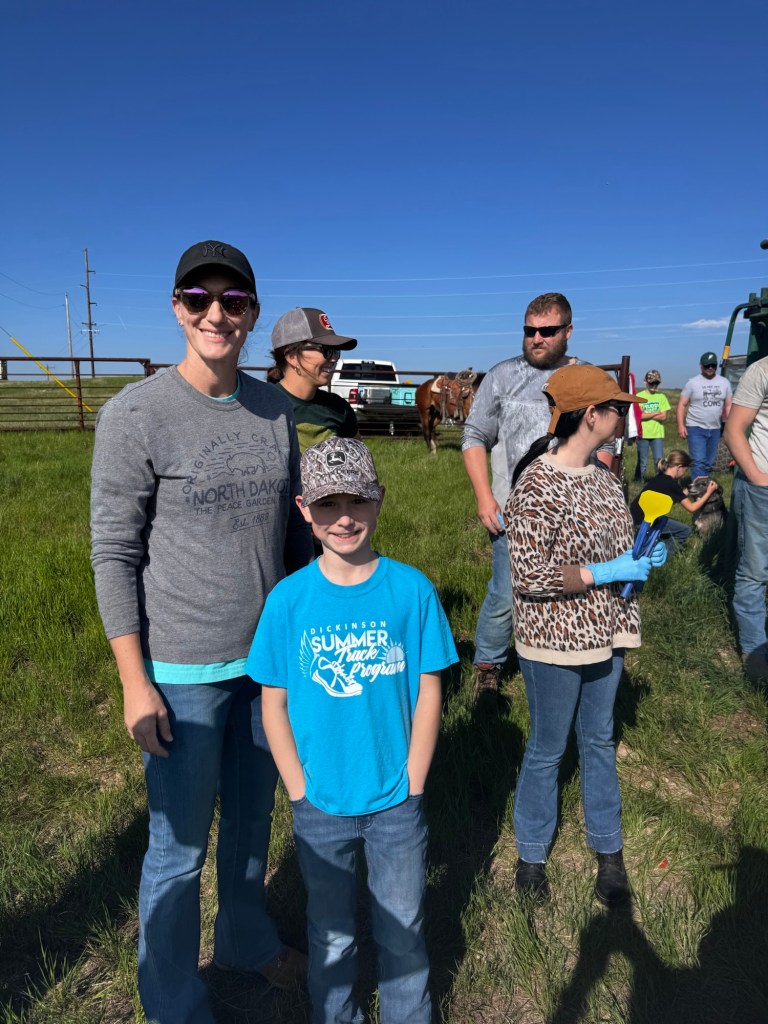
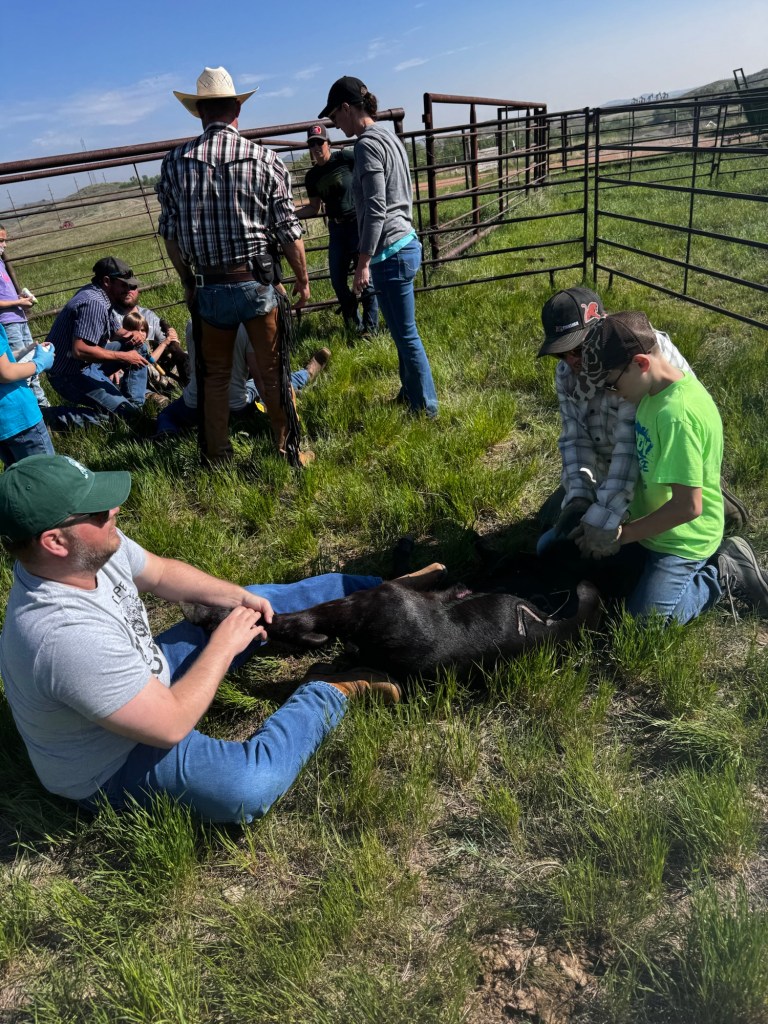
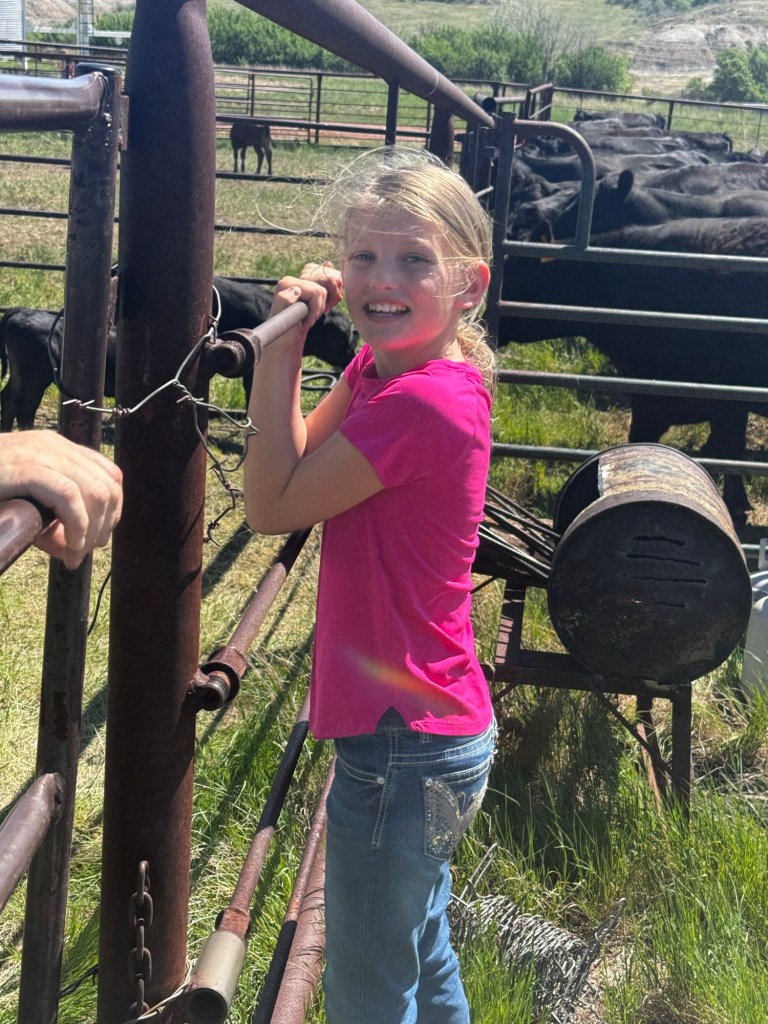
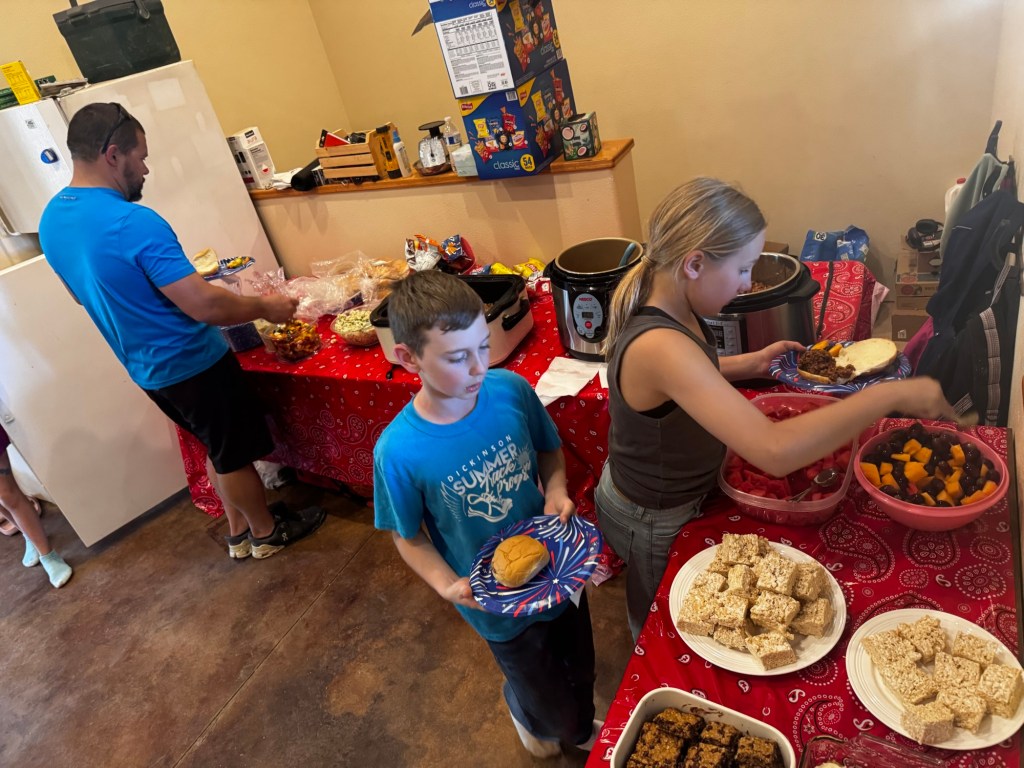
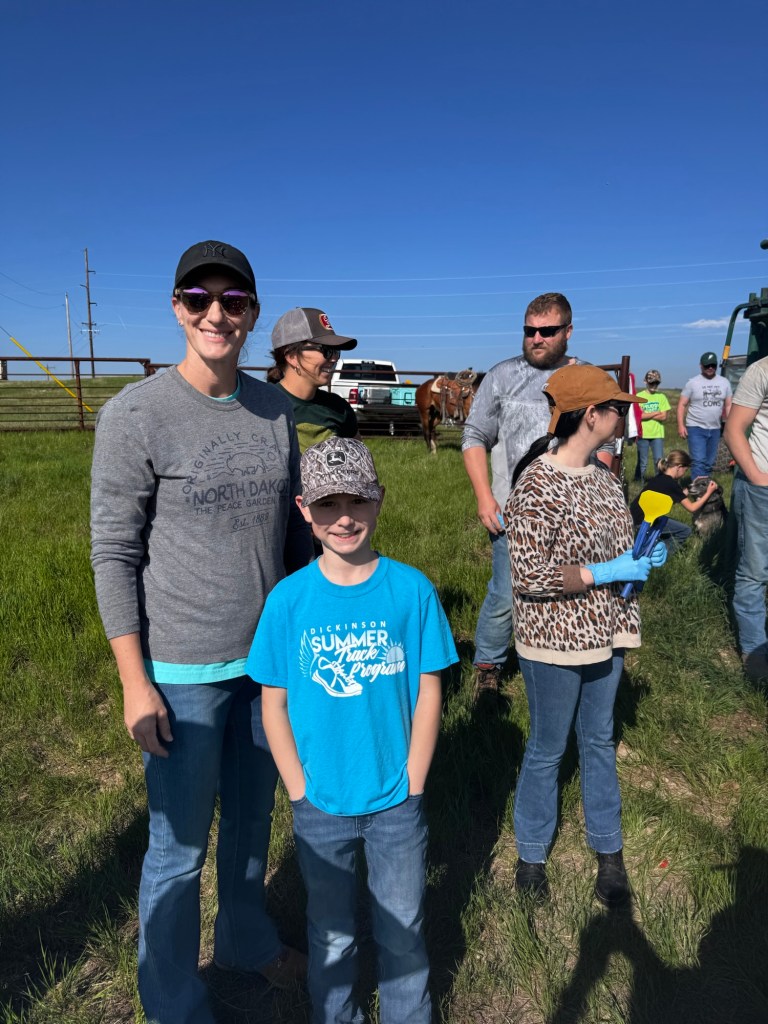
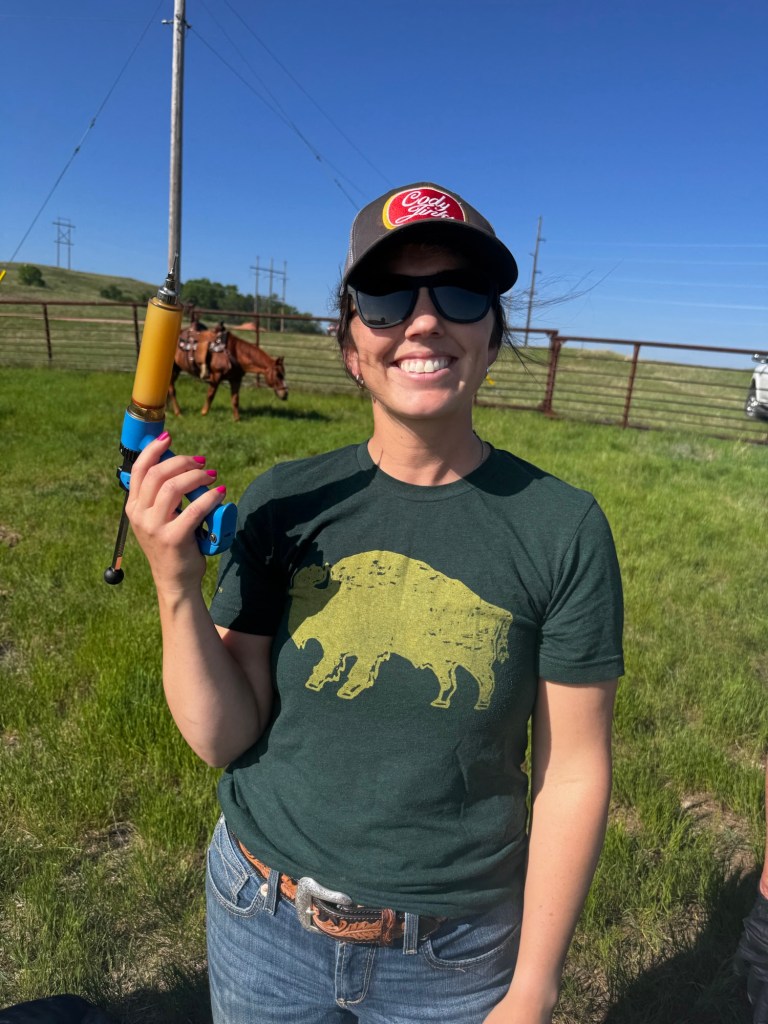
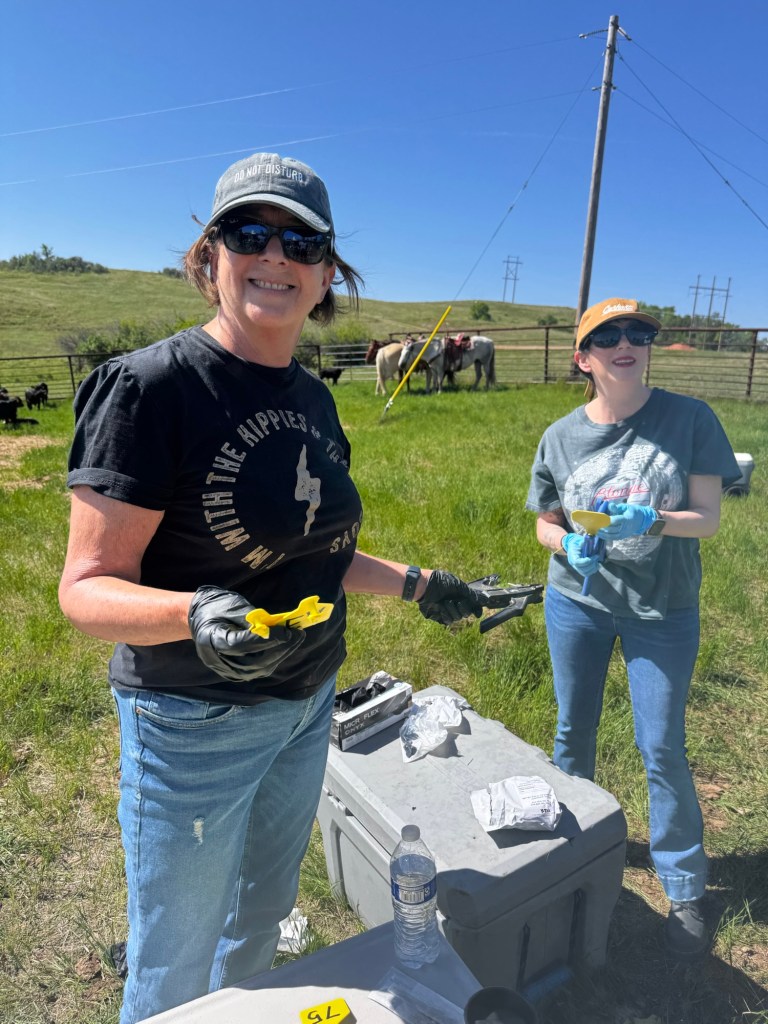
Every year at the beginning of June a group of our friends from Bismarck and Dickinson load up and come to the ranch to help us brand our calves. It’s become a tradition for them to help in the pens as a way to say thank you for allowing them to hunt turkey and deer on the place throughout the years. The gesture and the help are thoughtful and appreciated, but it’s not an expected exchange. We would gladly have them out anytime for whatever reason. But every year for nearly ten years or so, they have been making it work, no matter how much or how little notice we give them. They wake up early, load up their kids and make the drive to sort, wrestle, ear tag and stand ready for whatever other task we might throw at them. And then, when the work is done, all ten or more of the kids run wild on the dirt piles and in the trees collecting ticks and dirt on their jeans, I serve up cookies and a couple big roasters of beef and then we take the kids for their favorite part: a ride on our horses. 

This year was no different. We called last minute, and our friends were there standing by the pens waiting for us at 8 am when we finally got the cattle gathered. Which means that a pickup-load from Bismarck had to leave their houses at 5 am and our friends from Dickinson cut their weekend fishing at the lake short and then, before they left that afternoon, they handed over a big bag of walleye that we fried up and devoured on Tuesday.

I was standing in the pen next to my friend who was running the ear tagger while her eight-year-old daughter, Olivia, was charged with marking the calves who received a vaccination. Her two sons were in the pens too, one spraying antiseptic on the castrated calves and the other now big enough to wrestle. My own daughters had abandoned their post of sorting ear tags and counting calves for some sort of game of pretend in the hills with the other kids and I had just looked up long enough to realize it. I told my friend that her daughter should join them. “She can go play, she’s helped plenty already,” I said, now embarrassed that our friends’ kids were busting their butts while ours ran wild.  

“I told the kids that this is our church this morning,” my friend replied. “Helping our neighbors, acts of service, this is what it’s about.”  

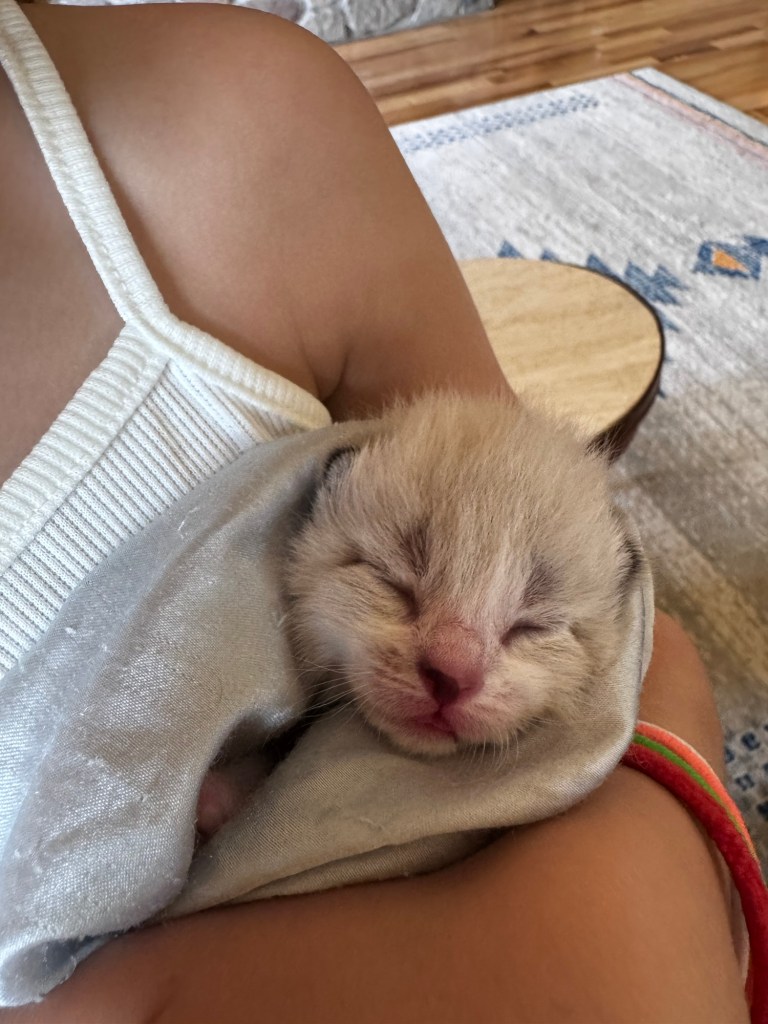
Her kids have been coming to the ranch for years, to help or to hunt or to play, since before her sweet eight-year-old daughter could walk and her boys were toddling around, fascinated by the trees and the wildlife, reminding us every time how special this place is and how lucky we are. At almost every visit our kids have wandered together to places on this ranch that my own kids barely frequent—the thick trees on the banks to the north of the house, the muddy patch of cattails in front of the dam, the old equipment on the top of the hill. When the boys were younger, after every visit we were left with a big pile of old bones and cool sticks and rocks as a collection on our front drive, little treasures they couldn’t keep their hands off. And when it comes to the animals, the horses and the baby kittens, and now, the goats, Olivia has never been able to get enough. She would outlast my daughters’ capacity for sitting horseback by hours, her smile stretched from ear to ear, falling in love with every horse on the place. This year it was no different, even in the heat of the day as we watched these growing kids navigate themselves in the saddle more independently than ever.  I looked at Olivia and wondered how we could fit one of these horses in her backyard in town. And if they would finally agree to take a kitten home. 

It might be the kids getting older, changing so much since the last time I saw them, that got me thinking how grateful I am for the reminder they provide us to not take this for granted. Eventually I got my own kids back in the branding pens for a bit to help, but the magic of the work doesn’t hit them the same way it does for these kids coming in from town once or twice a year. My hope is that I can raise them to appreciate it, to know how rare and important it is to care for a place like this, to stand side-by-side and share in the work, to bring out the big roaster of beef to feed our friends after they’ve put in the sweat alongside us at the end of the day, even if my youngest daughter eventually does run away to New York like she’s been threatening since she could talk and my oldest heads to the ocean. 

In the chaos of the branding pen I don’t know if my kids got the lessons they needed from us this year, but I hope they learned something from our friends about what it means to be there, to be reliable and to be good neighbors, happy to help.  

Rain Goats

“What are you doing?” I asked my husband in the dark of our bedroom. He had his face nearly pressed up against the screen of the open window at the head of our bed. That day in May had reached record-breaking temperatures of over 90-degrees and we soon found out that our air conditioning was on the fritz. We had just switched off the heat a few days earlier, but there we were, laying on top of the covers under the ceiling fan before spring had even officially arrived. 

“I’m counting the seconds between thunder and lightning,” he said as another loud clap shook the house, bringing only noise and not a drop of rain.

As a volunteer fireman for a rural department, he’s found himself dropping everything and rushing to the pickup to answer a neighborhood call more than ever these days. With the high winds and dry conditions and the things he’s seen go up in flames, he understands that it could be us at any time. 

Down the road my dad still doesn’t have a rain gauge. He spends his mornings checking the calving pasture and worrying about the status of our springs and the levels of our dams and grass. You can have everything out here, but you have nothing if you don’t have the rain. And if dad ever buys himself a rain gauge, he’s certain it will never rain again. I feel the same way about umbrellas.

And it turns out, maybe there is some validity to those silly superstitions. Because what came next has been over a week of soaking rain that has left us with muddy roads, rushing creeks, full dams, green grass and nearly five inches of moisture and counting. And, when I needed to run with my daughter a quarter mile through a busy parking lot in a sideways downpour to get to my niece’s graduation ceremony, of course, I didn’t have an umbrella. 

Dad, who usually relies on us for the rain report was likely a bit smug to find that the bottom fell out of our gauge this winter. Maybe that’s all it took to open the skies, the absence of rain gauges and umbrellas on the Veeder Ranch. Could we be that powerful? 

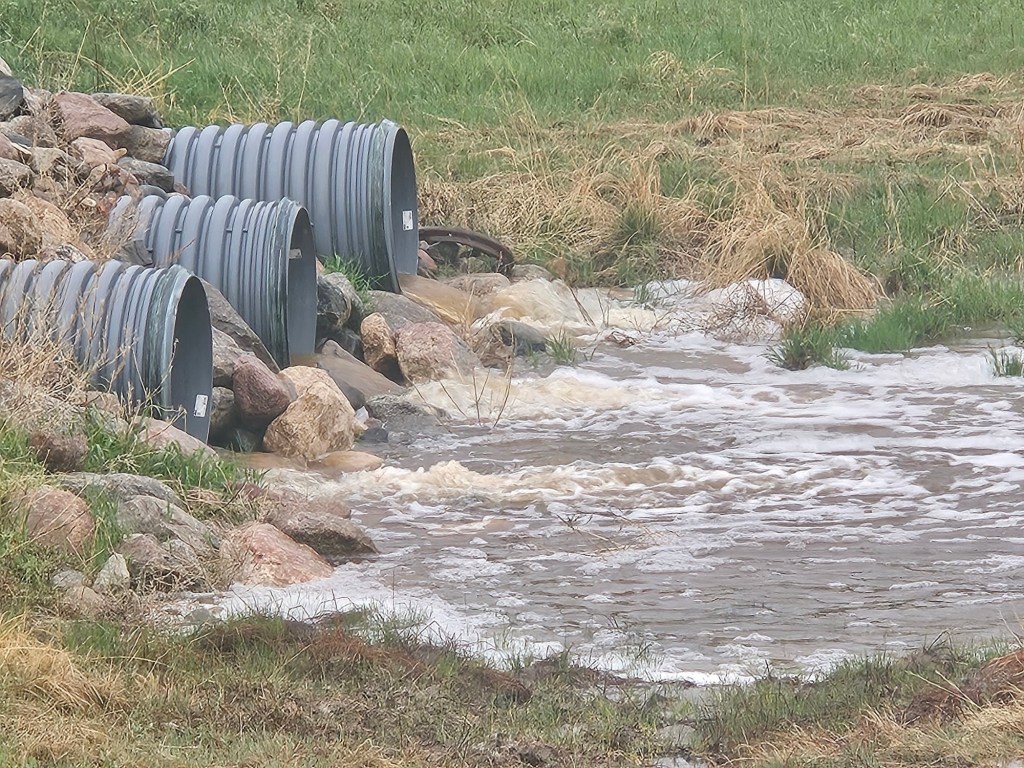
“A God send,” Dad sent me a text along with photos of water rushing through the culverts in the Pederson pasture and the creek swollen to the size of the Little Missouri River. My daughter and I sat happily soaked in our seats, our hairdos wrecked, a little shivery but smiling as we waited to watch my niece officially become a teacher that morning.  

I texted our neighbor to see how much rain they had down the road, officially turning into my father right then and there. 

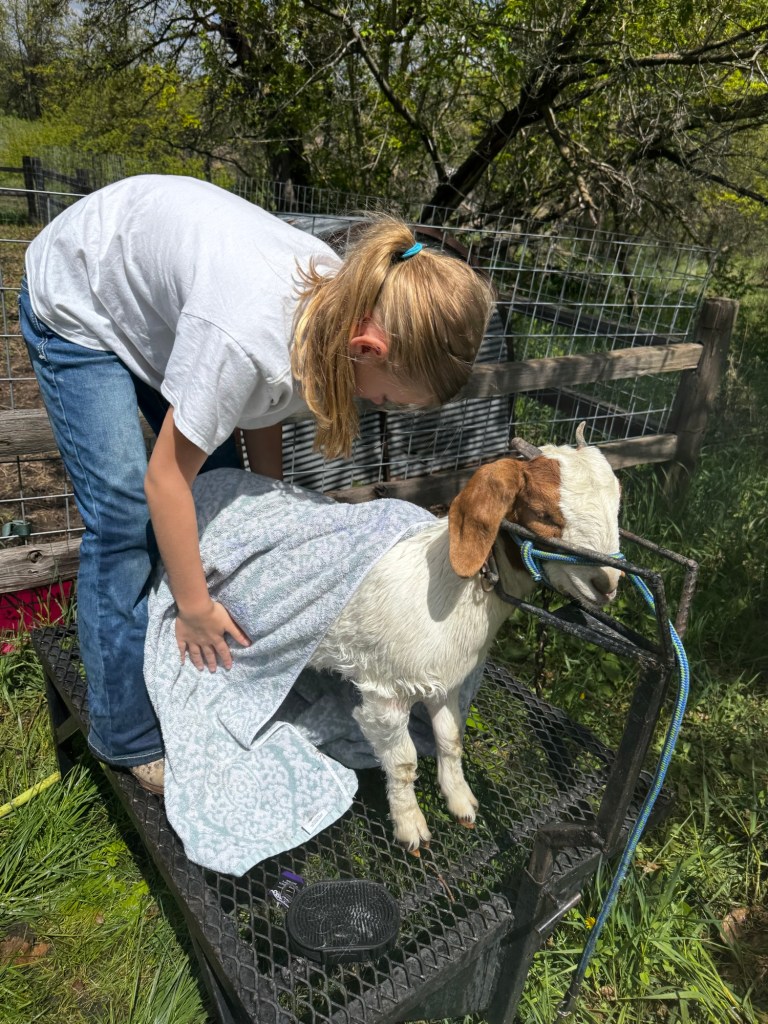
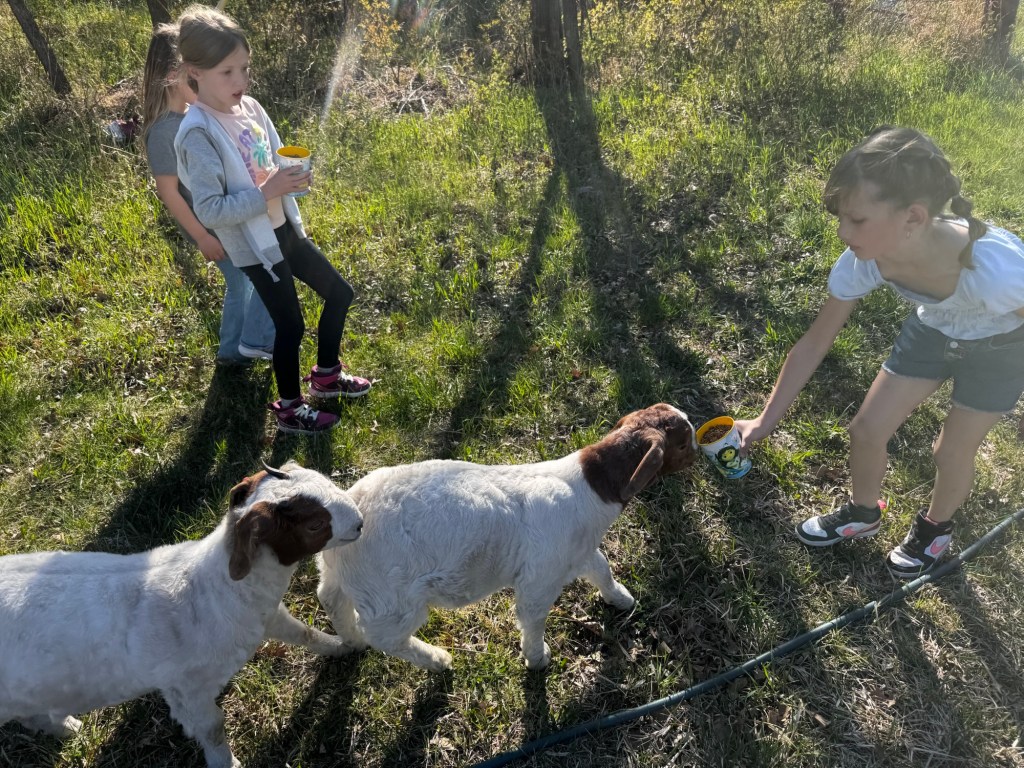
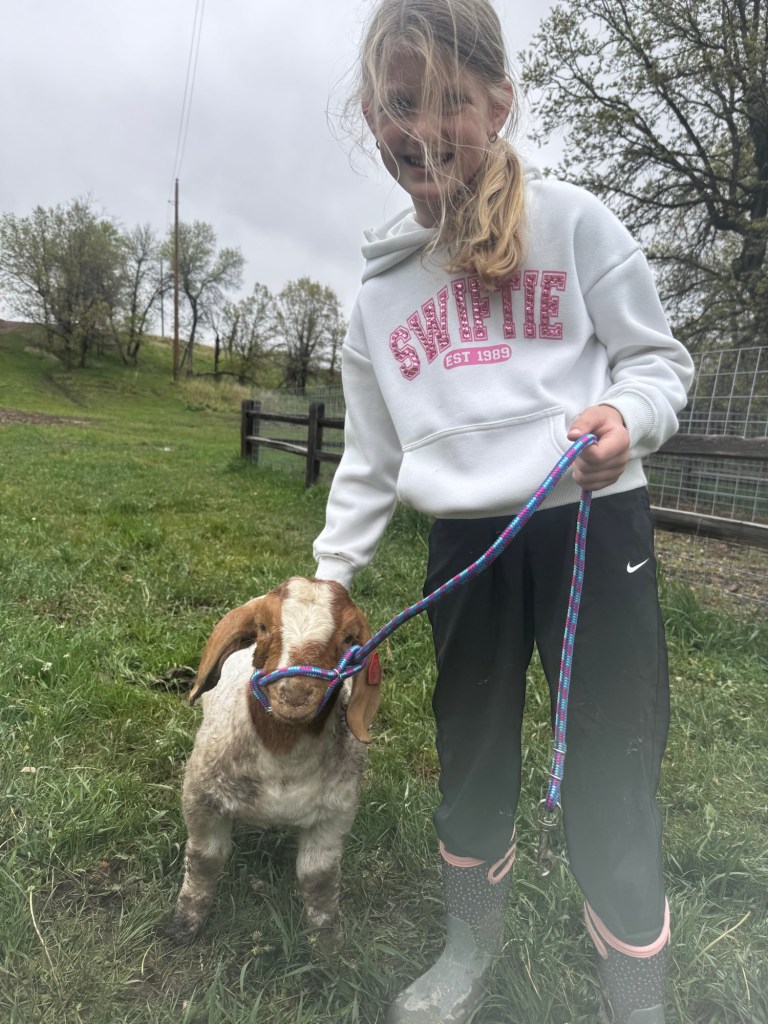
A few weeks ago we brought home two little goats to feed up and get ready for the fair. On the warm days we brushed them and shined them up. On the hot day we hosed them and shampooed them.

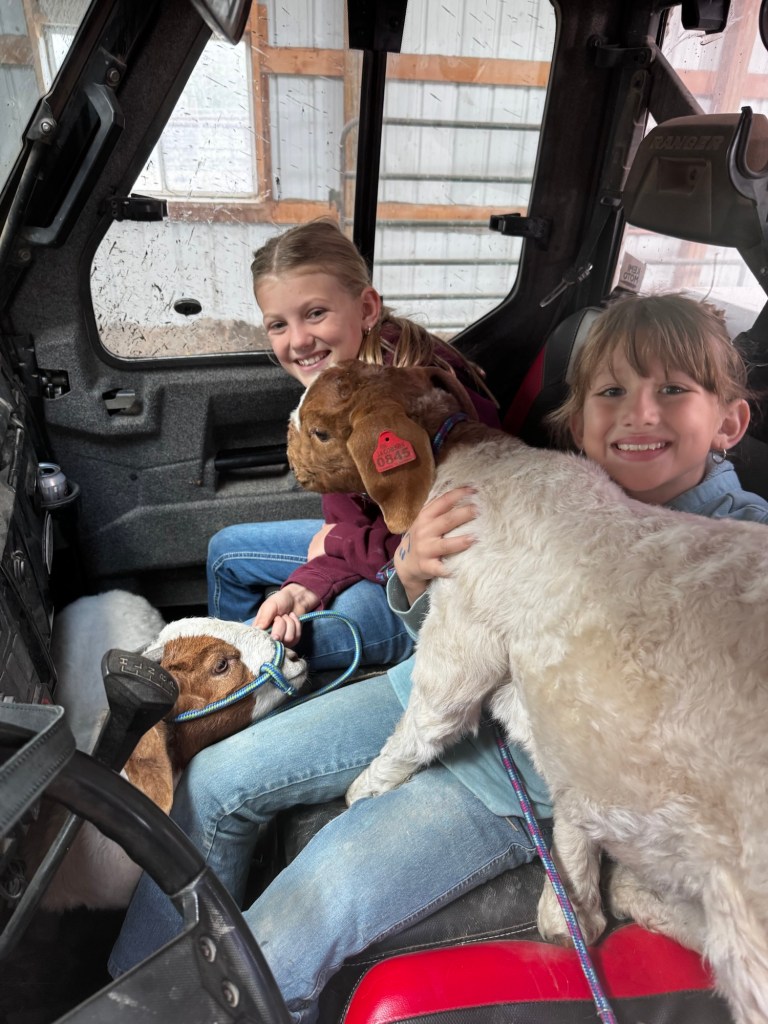
Yesterday, after looking at the extended forecast and their soggy little bodies, we decided their shelter wasn’t going to cut it anymore as the rain and chill continues. And so my husband and I arranged a goat transfer to the big barn that sounds simple enough in theory but looks like an hour of locating and moving hog panels, an unsuccessful crash course in halter breaking, two crying goats, one who just three minutes ago, successfully outran and outwitted a mom, a dad and a kid in the pen but is now suddenly unwilling to take another step, one kid standing on the road in the rain crying, one mom yelling “It’s ok! The goats are ok!” one dad yelling “Hurry up. Come here and help us!” to the other girl who, while splashing nonchalantly in a mud puddle got her boot so completely stuck that she had to take her foot out and use both hands to pry it free, which resulted in the sort of timber into the soggy ground that you can imagine before she gathered herself to sit with those two muddy, stinky goats in the side-by-side for their mile-long trip down the road to their new digs where we set up new troughs, a water bucket and a heat lamp that, oops, broke along the way, have to go get a new one, be right back…

And while I’d prefer that this debacle doesn’t make the 4H record-keeping books, I will tell you, even in the muddiest and soggiest of the situation, we never once cursed the rain. And the goats? Well, they perked up right away in that warm and cozy barn and I stand by my assertion that I’ll happily trade fire danger for goat transfer any day. 

If you need us, we’ll be standing next to the window saying things like “I wonder how much we’ve got?” and “We needed this,” like the middle-aged, superstitious cattle (and goat?) ranchers we are…

The Magpies are Back

“The magpies are back,” my dad said casually in conversation while we were driving somewhere. Or maybe he was in the middle of putting honey in his tea at my kitchen counter while the kids interrupted us endlessly?

The magpies are back.

“I saw that!” I replied. “Saw one the other day near the barn.” And that was sort of that — a nice little revelation among talk about work and ranch plans and weather. It was weeks ago, but when I opened my notes this morning, I saw that I wrote it down.

“The magpies are back.” I had put it in writing so I wouldn’t forget to think about it later.

What’s the significance of a wild black-and-white bird on our small family ranch?

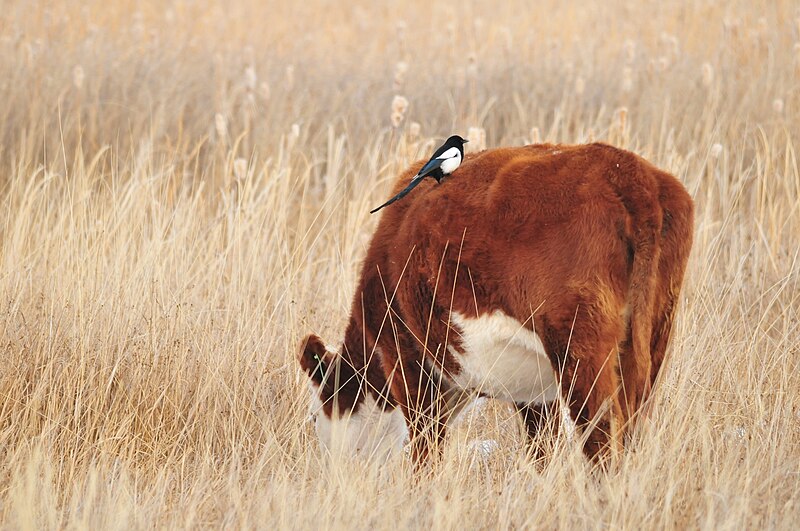
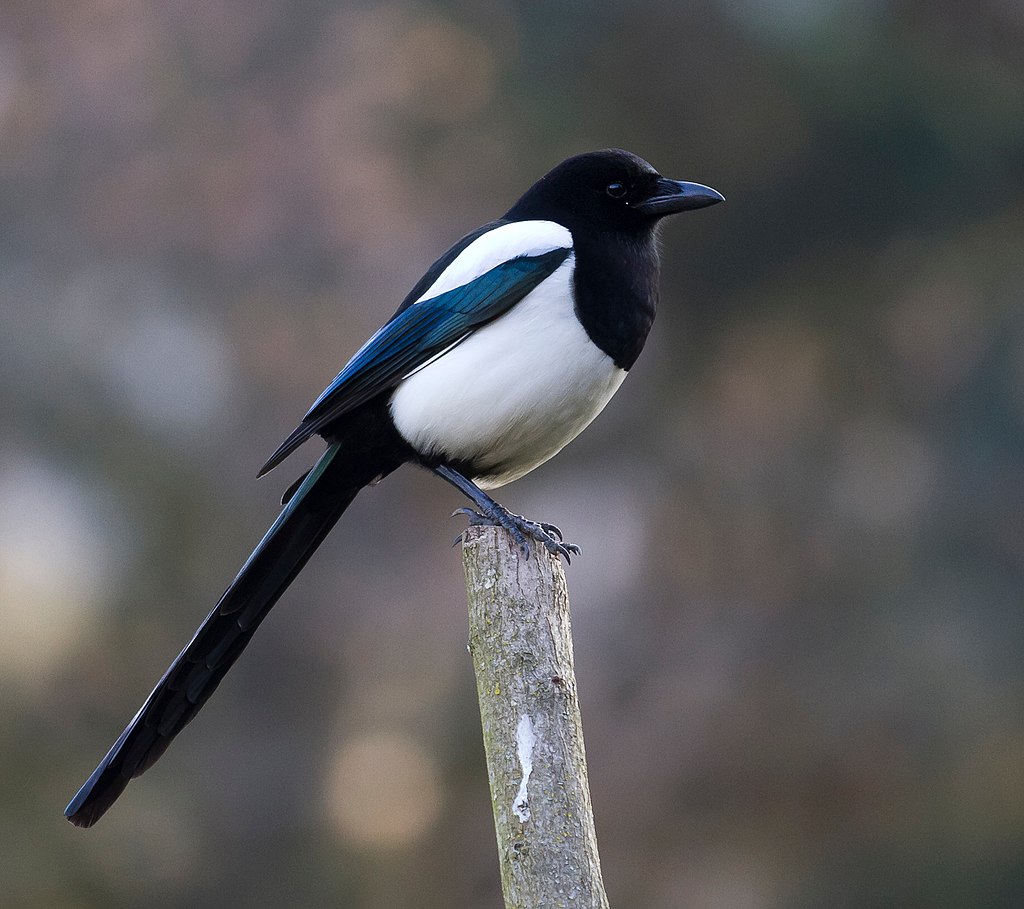
Photo from Wikipedia

I will tell you from my perspective, and that is simply that my dad used to tell me about them when I was growing up. The birds, known for their relationship with large animals, perch on the cattle and eat the grubs out of their backs. It was a little bit of a service to the cattle, and Dad remembers getting close to those birds hanging with the milk cows in the barn.

But it was there my memory sort of faded, so I had to give him a call. “I know you had a pet crow when you were a kid, but did you have a pet magpie, too?”

“Oh, yeah, I didn’t just have one, I had several,” he said on the other end of the phone (I do have to do some investigative journalism for this column occasionally).

From there, he went on to his memory of being a little boy watching their nests, and then, just before they learned to fly, climbing a tree (or, in some instances, hauling a ladder to reach the right branch) to get to the young birds.

“I would take one and raise it each spring. They would live in the barn and hop around drinking the milk we put out for the cats and eating the grain. I’d feed them scraps of bacon and meat and they would follow me,” he said. “One was named Earl — I don’t know why.”

I heard that story before as a kid, but it seemed to have faded, like the magpie, to the back of my memory until that resurrecting conversation. To me, the magpie was a magical creature of my upbringing — like a unicorn or Santa’s reindeer — and you only believed it existed because of the stories you were told. But when Dad was growing up, you could shoot the bird for a bounty, bring the legs in, and receive payment.

“People thought they would peck at cows’ brands and they didn’t like that. I don’t know if that was ever really an issue,” he said.

I suppose it says a lot about my dad, defending the bird and keeping them for pets instead.

I never saw a magpie on the ranch when I was growing up. Area ranchers at the time would use the insecticide Warbex to treat cattle for grubs and lice. They would pour the chemical on the backs of their cows with a big metal dipping ladle, which I remember well because I remember the smell. It was potent, and if you happened to get some on your hands, you would feel tingly, itchy effects for days. It did the job, I suppose, but it also killed the birds, magpies specifically, who would inevitably ingest the poison on their quest for those grubs coming out of the cows’ backs.

In time, the bird just disappeared from the area. Before I became a teenager, the practice of using Warbex went out of favor, with most countries restricting or banning its use by the 1990s.

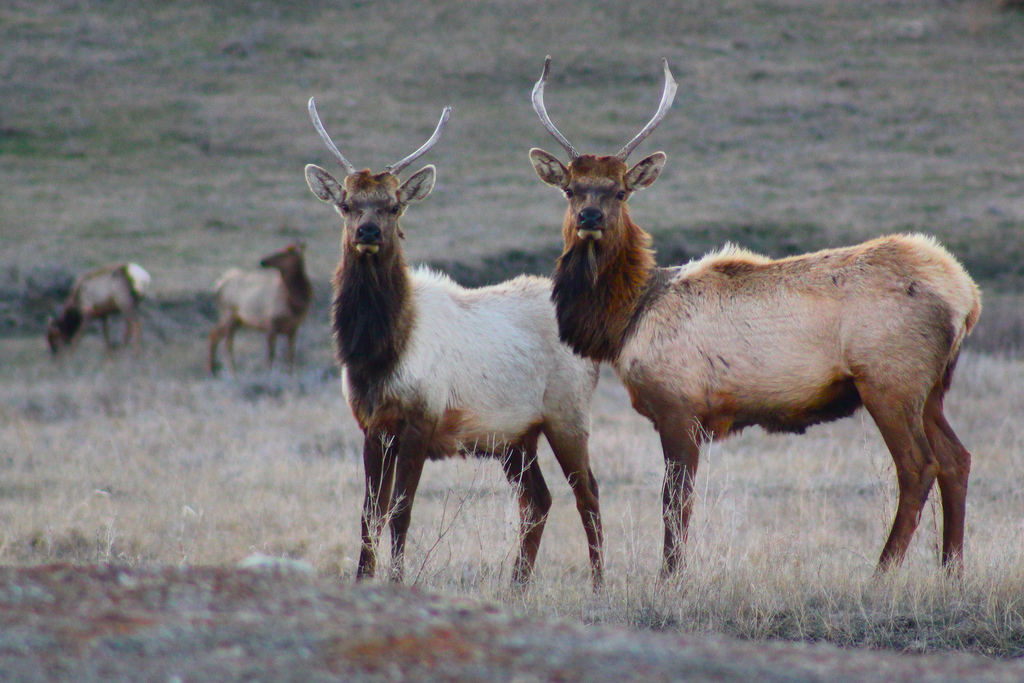
“It’s been about 30 years since we’ve seen a magpie on the place,” Dad remarked. “But then, I suppose, when I was growing up, I never saw a wild turkey or a bald eagle on the place. There were no elk, no mountain lions, no mule deer. That’s five species right there that have made a comeback.”

We went on contemplating why. With no real scientific studies to back it, Dad recalled my grandpa claiming that most of these species disappeared after the Great Depression and it’s taken this long to bounce back. This long and more education. This long and better land management. This long and just a few months ago, my sister found a moose in her backyard munching by her trampoline.

This long and the magpies are back.

If I were a different kind of writer, I might be inclined to try to pull this all together as a sign from the universe that it’s all going to be OK in the end. That feels good, doesn’t it? Without all the middle parts where we perpetrated and witnessed the disappearance of …

The story of the magpie and my dad might also make some of you mad. Domesticating a wild thing, how could he? I can hear it now. But he was a kid. A kid living and working among the wildness of it all and wondering how it all worked. Maybe then, more than anything, the story of the magpie and my dad as a kid with a ladder and a plan and then a bird named Earl following him around the barnyard is more a tale in paying attention. Noticing. Learning.

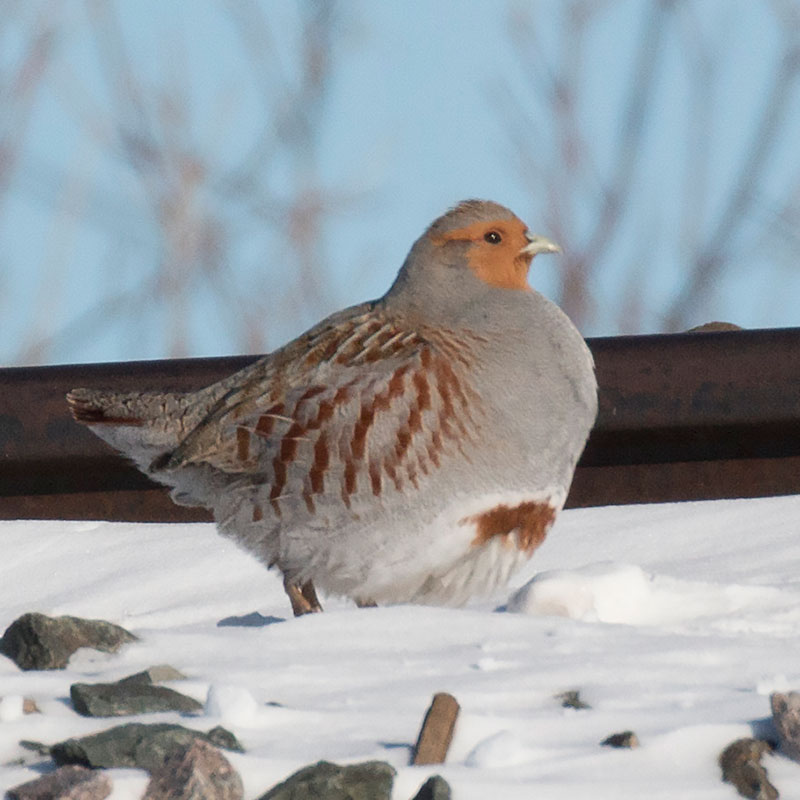
“I see the partridges are back, too,” he said before we hung up. “I wonder why? Maybe easier winters …”

ND Game and Fish

Celebrating doing what we love at the sale barn

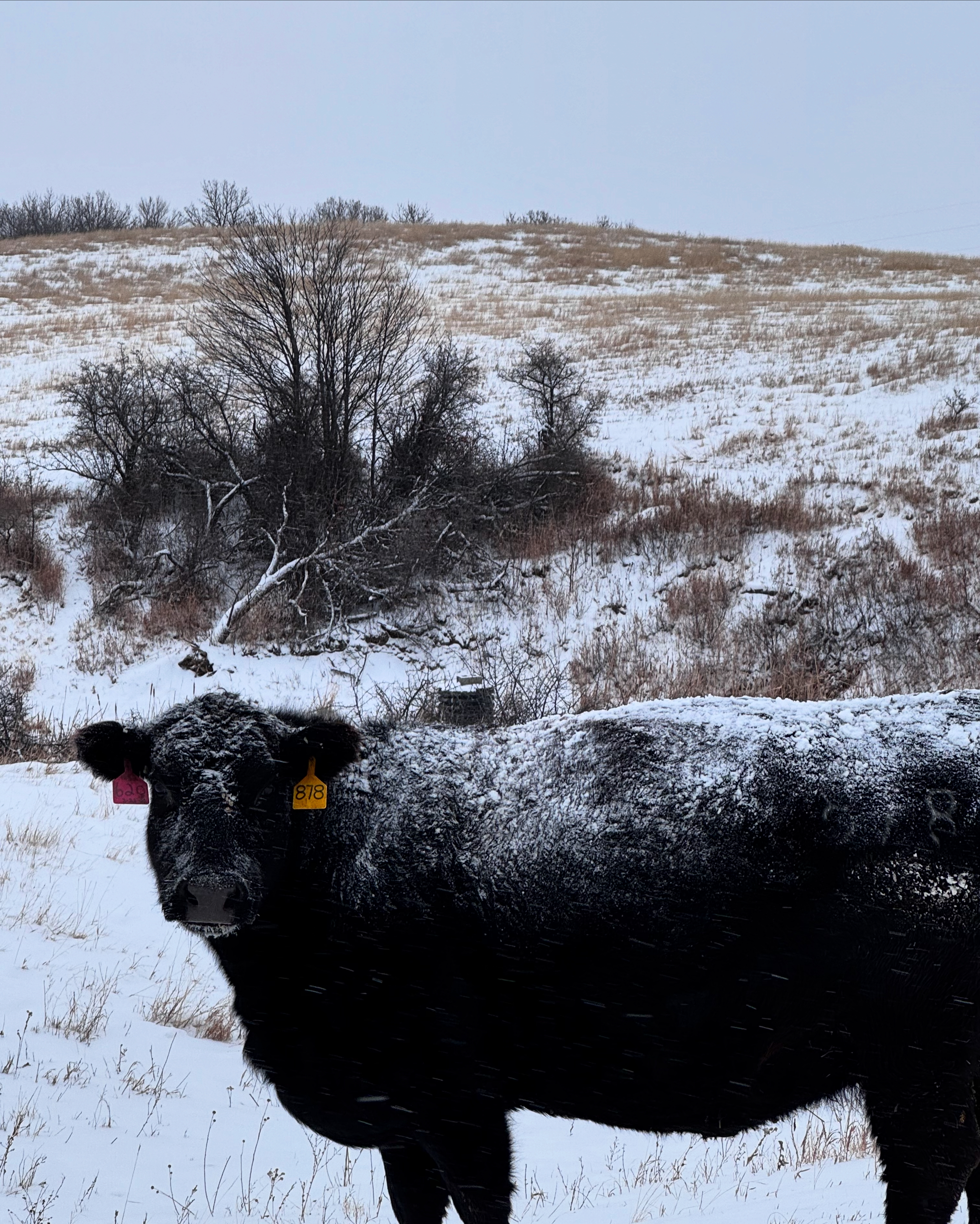
Last week, on the tail end of the season’s first blizzard that shut down schools and created precarious road conditions, we bundled up in long johns and Carhartts to work our cattle and haul our calves to the sale barn 60 miles south of us.

There’s nothing as important, nostalgic or nerve-wracking as shipping day at the ranch. The culmination of a year’s worth of water tank checking, fence fixing, winter feeding, spring calving, bum calf saving, bottle feeding, branding, vaccinating, missing and injured bull drama, pen rearranging, haying, equipment breakdowns, and number crunching comes down to four minutes, three pens of calves and an auctioneer.

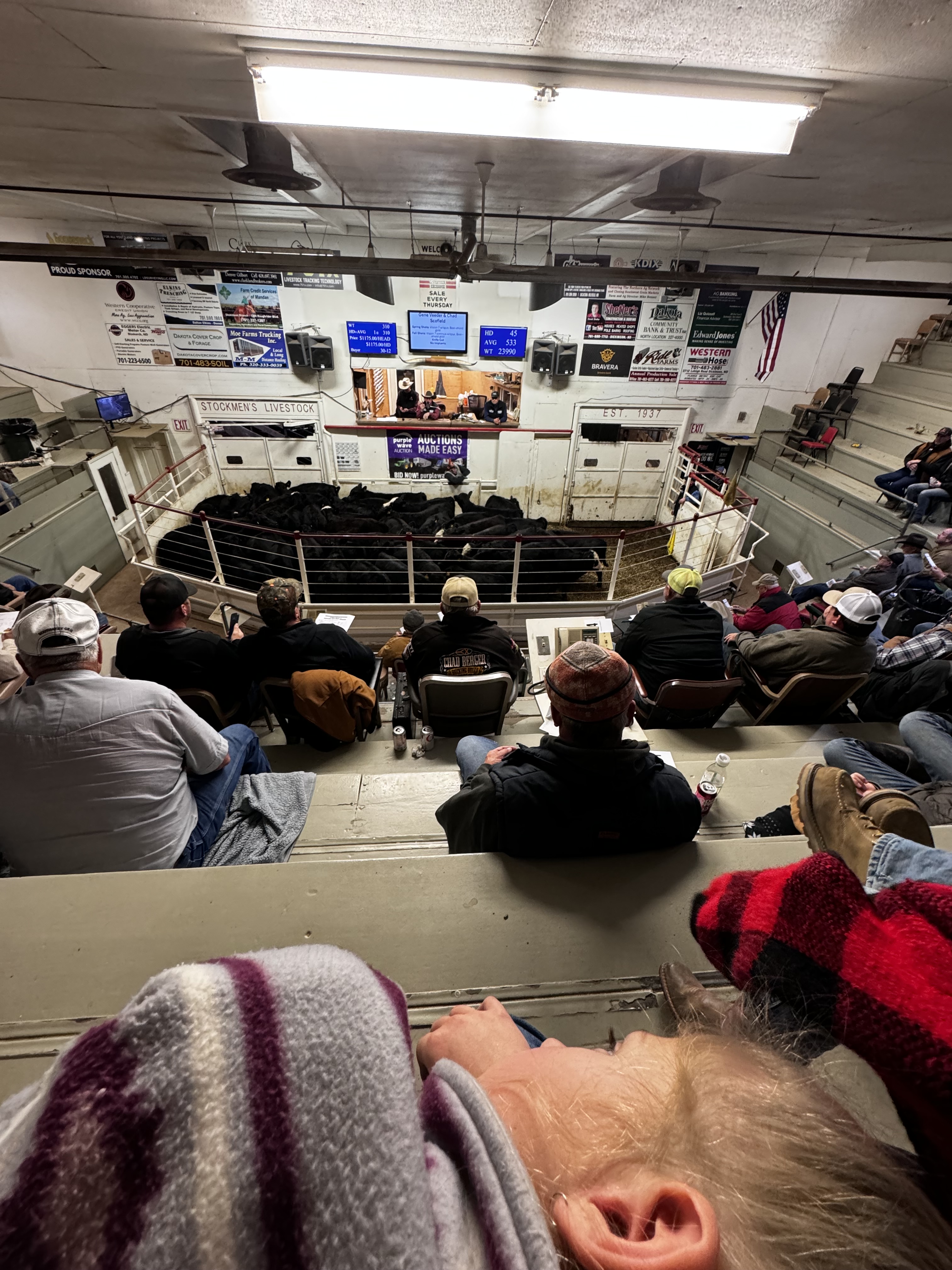
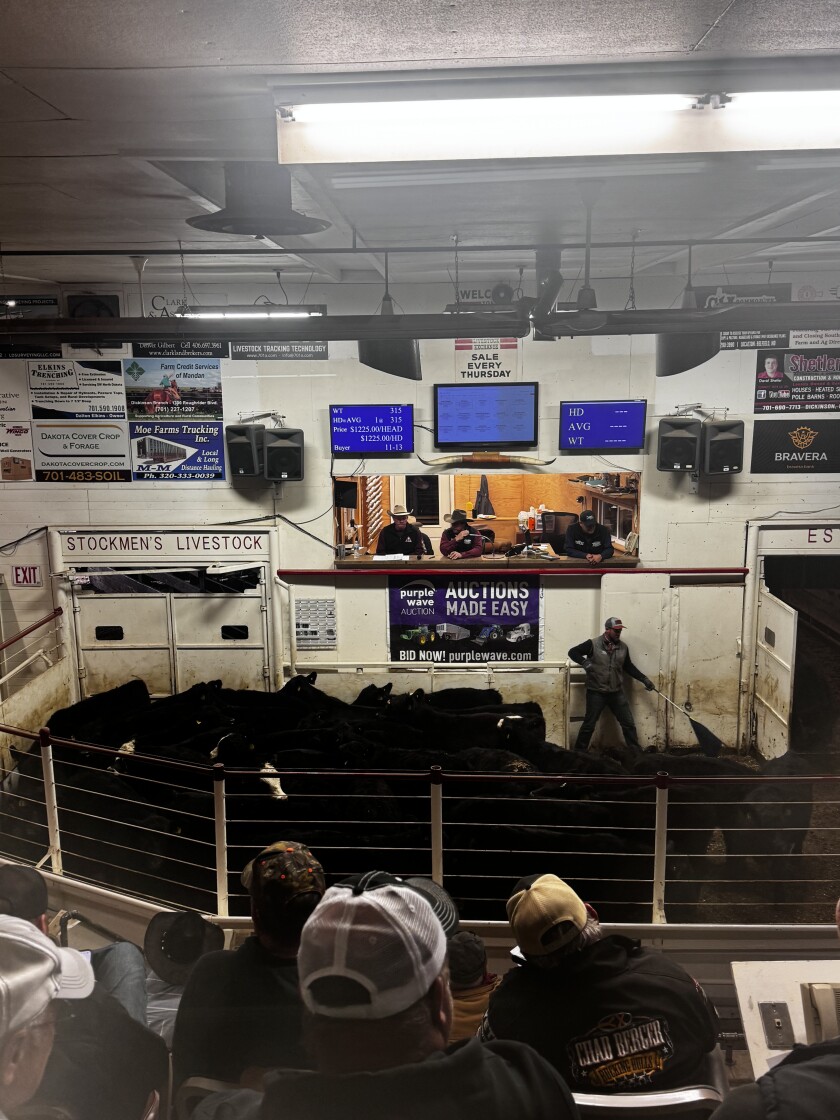
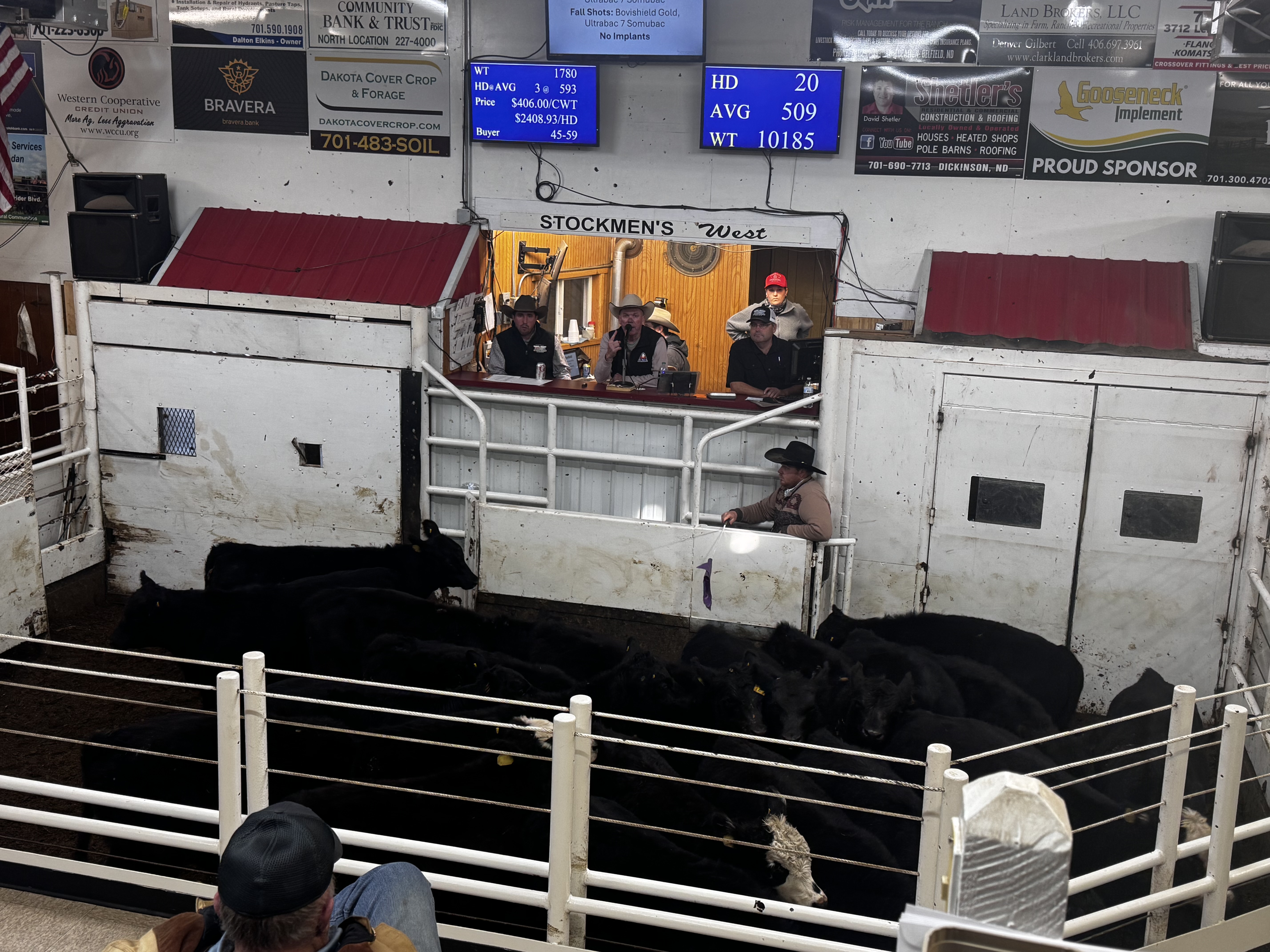
In the modern days of ranching, there are plenty of different ways to sell your calves and cattle, from online sales to direct to consumer. But for decades, we have sold our calves at Stockmen’s Livestock Exchange in Dickinson, with its wood-paneled walls, steep, concrete bleachers, and familiar faces sitting along linoleum countertops eating the best hot beef sandwich in town because you’ve been gathering and sorting all morning and drove a big trailer through the breaks and you need to thaw out, which you will, because it’s warm in there and this is what we do.

IMG_8608.jpeg

And maybe every sale barn in America looks and sounds and smells like this, and maybe every rancher or rancher’s kid who walks through the doors of a place like Stockmen’s is immediately transported to his or her first sale, if only for the moment the sharp aroma hits their nostrils. And I say aroma because we wouldn’t dare say it stinks, the scent of grit and hard decisions and risk and long days in and out in the weather.

“When I was a kid, oh man, if I could be that guy, I thought that would be the best job in the world,” my dad said, nodding toward the young man pushing calves up through the alley and into the sale ring in front of the auctioneer crow’s nest.

I sat between him and my husband on those wide, concrete bleachers, listening to the men take guesses on cattle weights, Dad coming in a bit short and Chad even shorter nearly every guess. Per tradition, our daughters got to skip school to come with us to the sale, and even at the fresh ages of 9 and 7, nostalgia took the wheel immediately upon entering the doors.

“I remember this place, where the guy sounds like he’s yodeling,” my 7-year-old declared, her backpack stuffed with markers and papers to help fill the time spent waiting for our calves to take the ring. “Let’s sit in the top row like last time so we can spread out our coloring!”

And so, we spread out the way families do here, among the buyers and the spectators and the other ranching families. I spotted a little boy with toy tractors and plastic horses playing farm beside his mom, and I said what I’ve said for the last five years or so: “Girls, when you were little, we brought you here in your pink cowboy hats and you cried so loud when you realized our calves weren’t coming home with us that I had to take you out of the building.” They laughed because they like stories about themselves and spent the next half-hour asking if it was our turn yet.

And when it was, that familiar jump hit the bottom of my stomach and did some flips as the auctioneer said our names and graciously praised our calf crop.

IMG_8612.jpeg
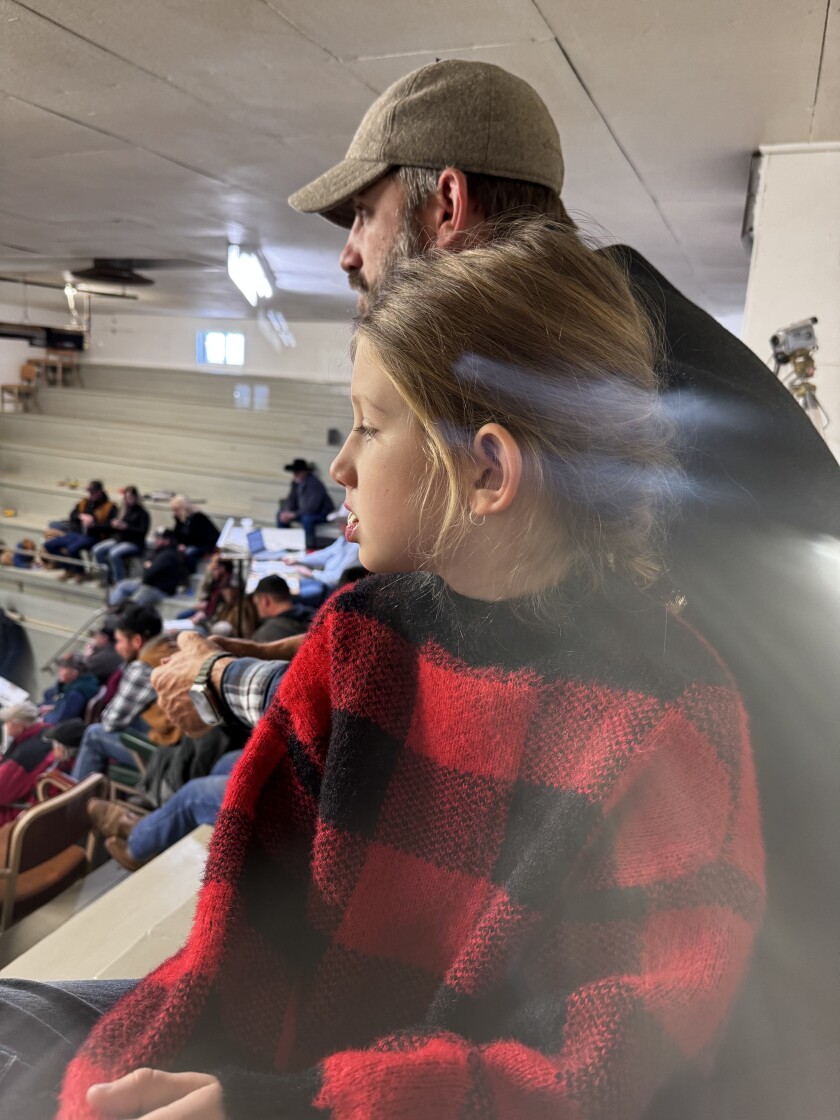
“It’s not lost on me the absolute privilege I have to sit next to my dad and my husband, with our daughters wiggling and scootching between our laps, at the pinnacle of what it means to carry on a family agricultural endeavor,” .

And in these particular moments, it’s not lost on me the absolute privilege I have to sit next to my dad and my husband, with our daughters wiggling and scootching between our laps, at the pinnacle of what it means to carry on a family agricultural endeavor. It is and always has rung profound to me in a way that makes the candy bars we got to buy at the Stockmen’s Café every year when we were kids some of the most precious treats of our little lives.

Because somehow, even at such tender ages without a prayer of deciphering the auctioneer’s yodeling, we knew the weight the day carried.

And if you’re lucky and the market is good, in those moments after the sale, the weight feels lighter and you take the family out for pizza and arcade games because it’s a tradition you’ve added to the long list of little ways to celebrate being able to do the thing we love for yet another year.

Red Barns and People Get Old

The Official Music Video for Red Barns and People Get Old has just been published. Please take a moment with this special and personal story about generational ranching and the hearts and land involved.

Thank you for listening and thank you for sharing with the people in your life who may see a familiar story in this song.

Red Barns and People Get Old: Written by Jessie Veeder
Starring: Cody Brown, Carol Mikkelson and Rosie Scofield
Special thanks to Patty Sax
Directed by: Nolan Johnson DoP Editor/Editor: Steven Dettling
Video by ‪@quantumdigital1404‬

Recorded at ‪@omnisoundstudios‬ ‬ Nashville, TN
Produced, Mixed and Mastered by Bill Warner, Engineered by Josh Emmons and Bill Warner

jessieveedermusic.com

He got stuck..

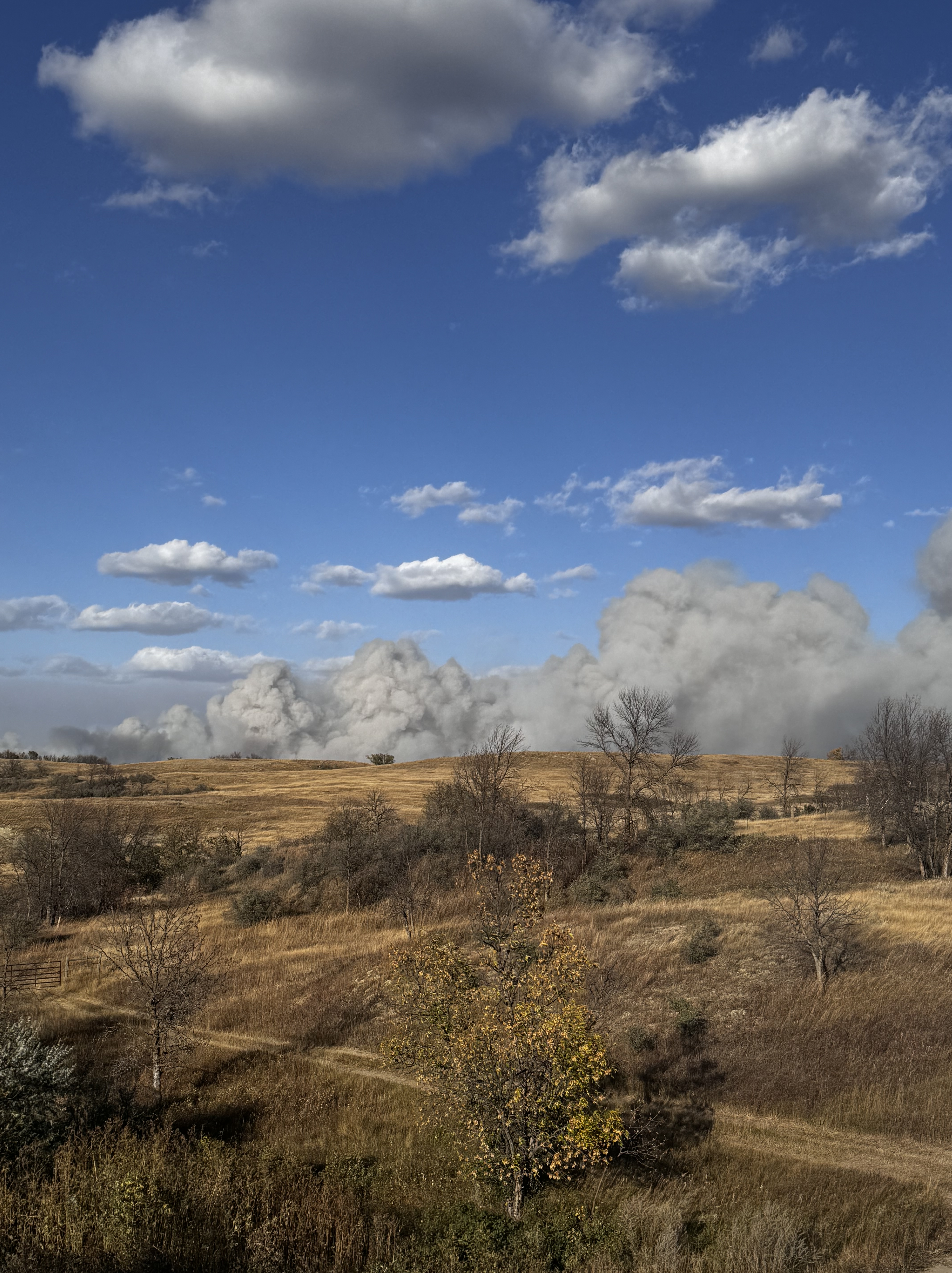
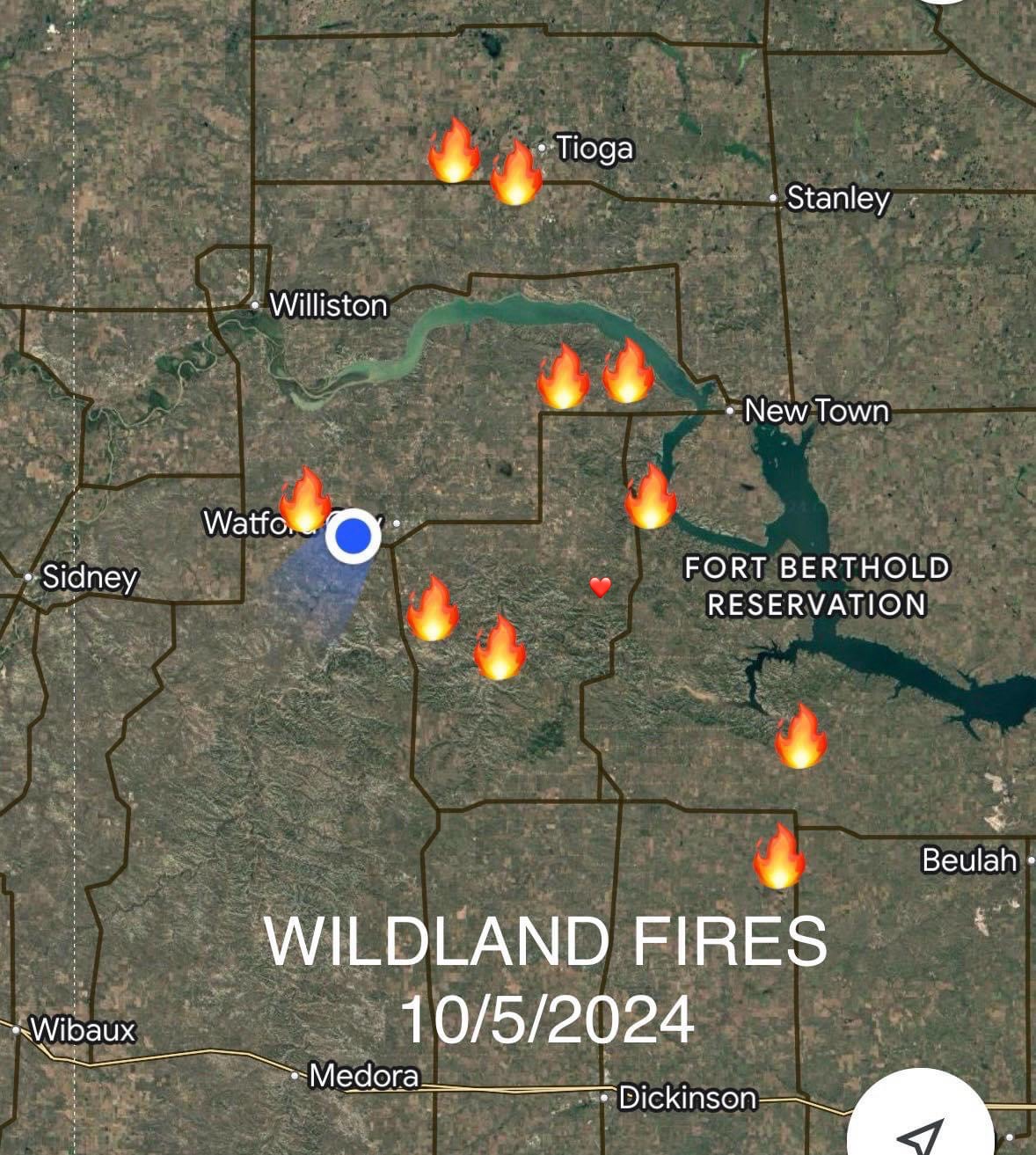
Photo out our back window on Saturday of the Bear Den Fire raging just five miles or so to the North West of the Ranch. Chad and countless other first responders, ranchers and community members spent hours and hours in 50-70 MPH winds trying their best to battle the dangerous spread.

On Saturday we had wild fires rage across Western North Dakota. Over 100,000 acres of cropland, federal land and private ranch land has burned. Two fires, one just to the northeast of our ranch surrounding the town of Mandaree, is only 40% contained as of yesterday. The National Guard has been working to contain this one and one in the badlands to the south west of us for the past five days. Homes, pastureland and livestock have been lost. Worst of all, two lives were taken by these fires, men who were trying to fight them in the area around Ray, ND. Please send us prayers for rain. And if you feel inclined, here’s a link to help aid the ranchers who lost so much this past week.

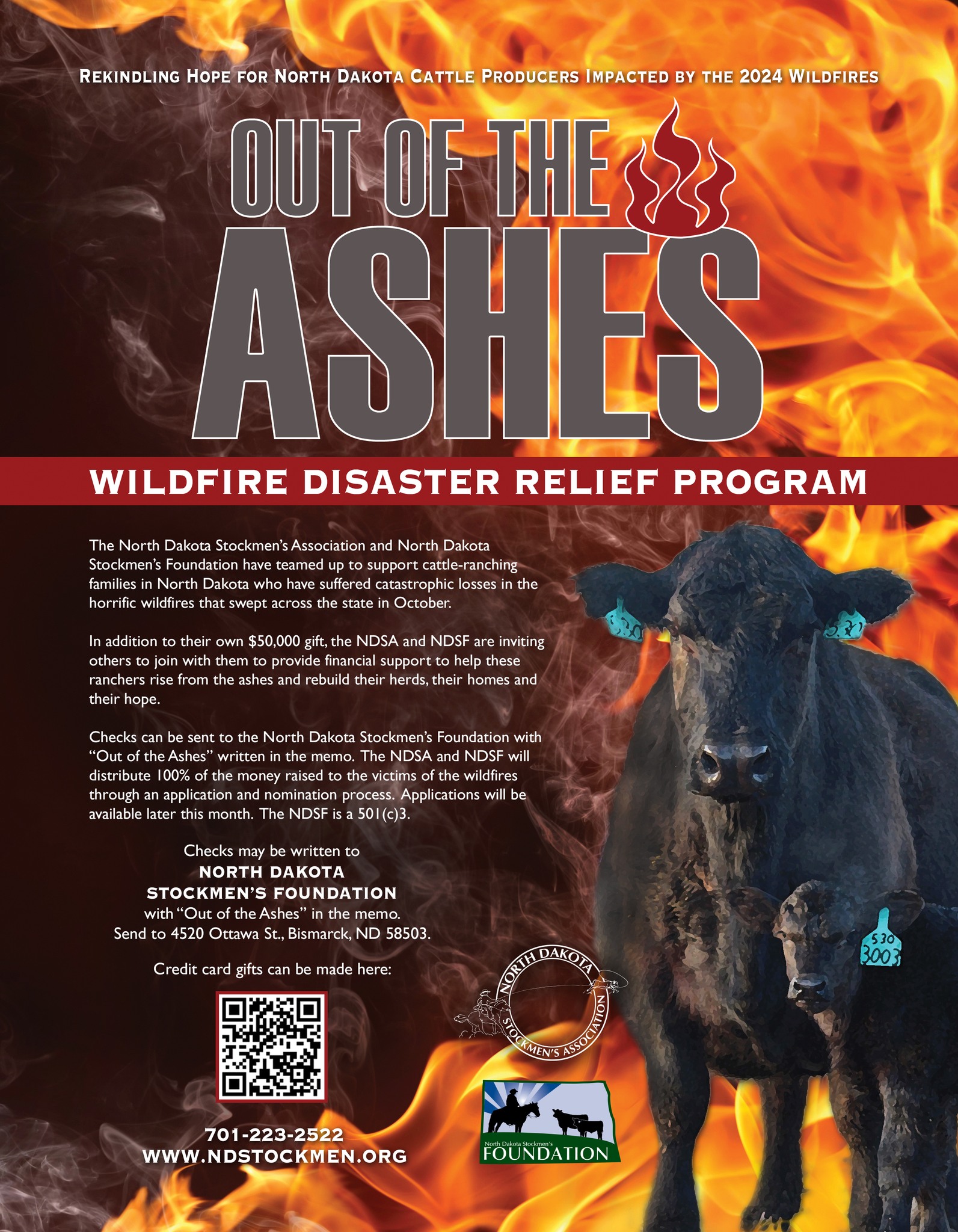
The North Dakota Stockmen’s Association and North Dakota Stockmen’s Foundation have teamed up to support cattle-ranching families in North Dakota who have suffered catastrophic losses in the horrific wildfires. In addition to their own $50,000 gift, the NDSA and NDSF are inviting others to join with them to provide financial support to help these ranchers rise from the ashes and rebuild their herds, their homes and their hope. Checks can be sent to the North Dakota Stockmen’s Foundation with “Out of the Ashes” written in the memo, or credit card gifts can be made at https://app.givingheartsday.org/#/charity/1576. The NDSA and NDSF will distribute 100% of the money raised to the victims of the wildfires through an application and nomination process. Applications will be available later this month. The NDSF is a 501(c)3.

The latest information about the state of these wildfires can be found here

Many of you have checked in on us as this news has developed. We were lucky as the wind was favorable to blow these fires away from our homes and the ranch, but many of my friends weren’t as lucky. And with the dry conditions and hot spots still looming, we’re not out of the woods until the snow falls. Thank you for your concern and thank you to the first responders who are working to keep us safe.

With that, lets move on to a more light-hearted predicament we found ourselves in last week on the ranch. I write about it in last week’s column:

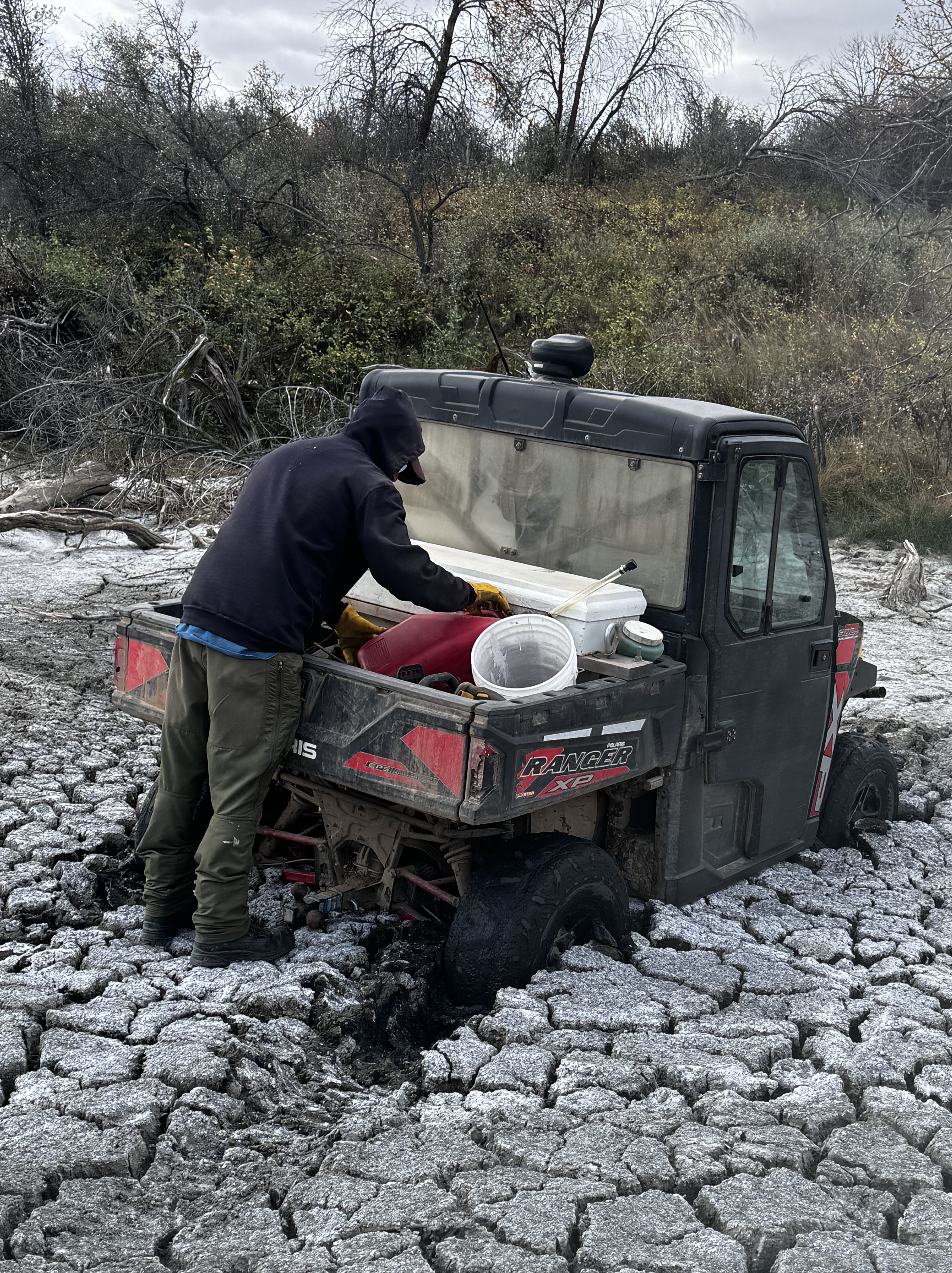
He got stuck

Last week I looked out the window to find my husband walking through the home pasture gate in the middle of the morning, like I do when I take a little stroll except my husband hasn’t taken a little stroll in his entire life. So naturally, I could only conclude that something did not go as planned.

And probably, more than likely, the man got something stuck somewhere…

Around here, no one really gives anyone guff about being stuck, because you never know when it could be you. Because, inevitably, it’s gonna be you.

But the man, he walked almost two miles in pretty cold 50 mph winds just to avoid the call to me or his father-in-law for help. I asked him why he didn’t use his “phone a friend” option and he said a guy who gets himself stuck so stupidly probably deserves to walk a good mile or so, you know, as a sort of lesson or punishment or something.

But walk-of-shame or not, he did need help, so he rounded up another side-by-side and me, his wife, who was wearing the entirely wrong outfit for traipsing around in 50 mph autumn winds miles from civilization (which is almost always my outfit choice in times of impromptu crisis.)

When I tell you this is not side-by-side or ATV country, I mean it. The denial of this fact is what lands us all in the sort of stuck-up-to-the-floorboards predicaments my husband found himself in that day. Because we live on the only quarter of North Dakota that isn’t entirely flat. We live where the hills drop down to form coulees ripe with springs and creeks that hold water and mud at different levels at different times depending on the season or the mood just to keep it sketchy and iffy and dangerous. And in those coulees the thorns and the brush patches thrive and twist and tangle over cattle and deer trails, letting enough light in to make you think you can make it through without a tree branch to the face, but usually you can’t, especially if your little sister or big brother is riding in front of you, scheduling that branch release to land just right.

Anyway, you can avoid the brush and the big canopy of oaks and ash trees if you keep to the hilltops, but you can never avoid the rocks and the holes and the craters on the edge of the badlands, so this is why we ride horses mostly. And, well, honestly, we’ve had to pull a good handful of horses out of thick mud and ravines in our days too…

But we forget all this somehow when we think we’re just gonna go check something quick, as if the fact that we’re in a hurry changes the landscape in some way. And that’s what my husband was doing that day he hopped in his all-terrain-vehicle and decided to go look for a missing bull, you know, real quick.

“What were you doing?” I asked him when het got into the house, cheeks flushed and a bit winded from the ordeal.

“Yeah, I’m stuck. Like, way back east.”

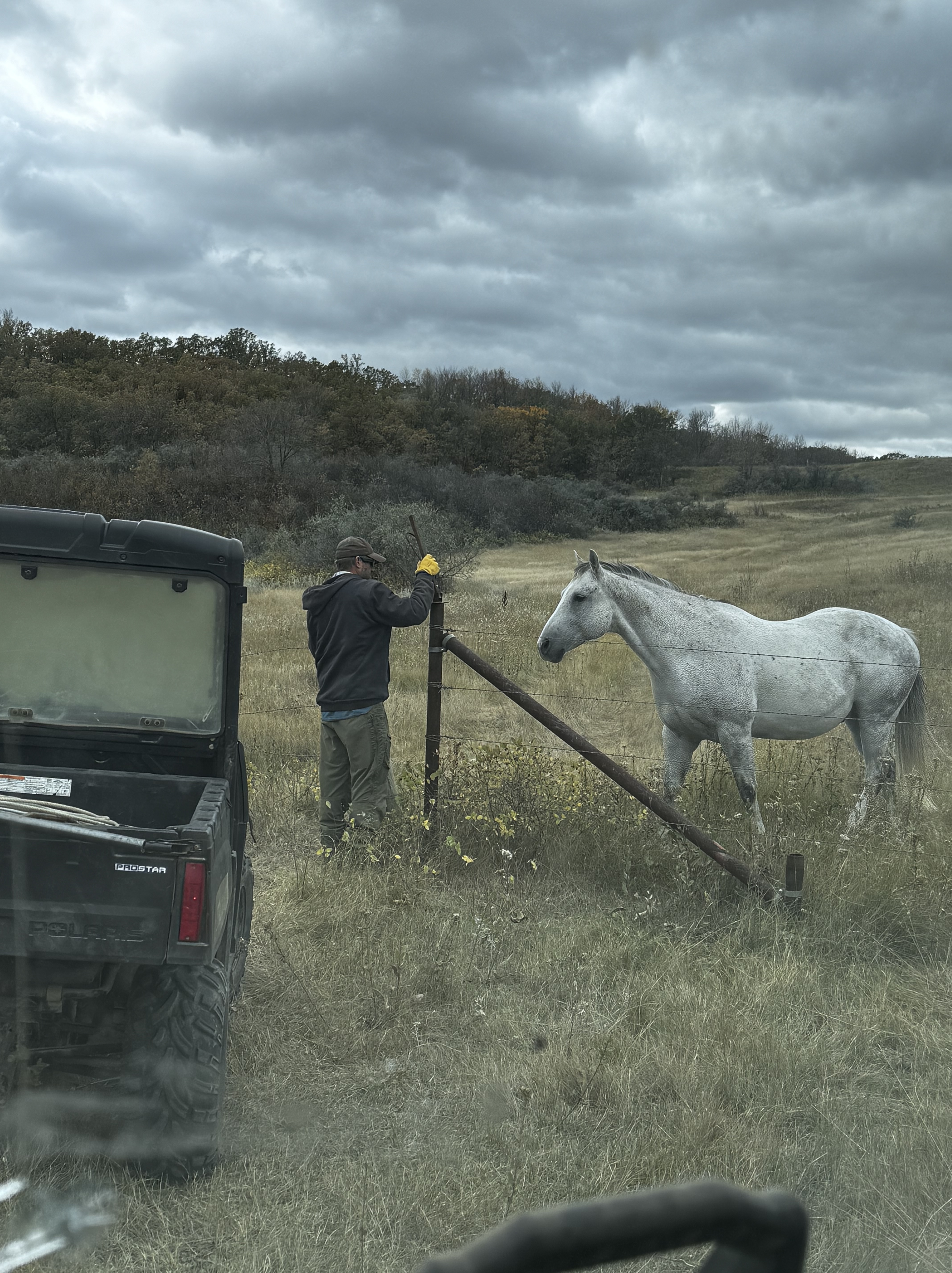
And I tell you, between being raised by my dad and being married to my husband and being, well, me, I have seen a lot of serious stuck-in-something-or-other predicaments and so I wasn’t surprised to find that this most recent one was no different. A classic case of “the crick bottom looks dry enough” and then, surprise, surprise, it gives way to the stinkiest, stickiest, black mud that Mother Nature makes. I know. I’ve been here before myself, I just happened to be a little closer to home.

And I tried not to say anything. I did. I stood there and took my directions as he hooked one bumper to the other with a random old calf roping rope that was in the back of the second ATV. I wondered to myself silently why on earth my husband didn’t bring a tow strap or a chain since he knew the task ahead of him. But I didn’t say anything. Not even when he instructed me to gas it but try not to spin the tires, but gas it, but try not to spin the tires, but gas it, and we went on like this not moving a nudge for a good 30 to to 60 seconds before his makeshift tow-rope snapped.

Then I couldn’t hold it. I had to ask, why. Why no tow strap? Why no chain?

Because he thought he had one.

Fair enough. Been there. But I was certain then that both of us would be walking home in no time and wished I wouldn’t have worn these stupid leggings and no wool cap like a dummy.

So then, because I couldn’t help myself looking at the cliff-like, brush tangled terrain in front of the stuck-side-by-side, I had to add ,“Where were you gonna go if you actually made it? “

I didn’t get a real clear answer on that one…

But the man is nothing if he’s not determined. So out came the shovel (he did remember that), a bit more rearranging of the rope, a bit more shoveling and five or six more “gun its” and well, what ‘do ‘ya know, we were out. 

So off we went, me following him following our tracks back to the house. It was a miracle!  I never doubted it! Sorta felt like a date then. I wonder if he learned his lesson…

And now, because I am publishing this for you and Jesus to read, I suppose to be fair, some day I’ll tell you how I got the side-by-side stuck between a tree and the dog kennel in our yard this summer. Well, my side of the story at least.

Stay safe out there. If you need me I’ll be hosing the black mud off the side-by-side and my stupid leggings…

Life in my car

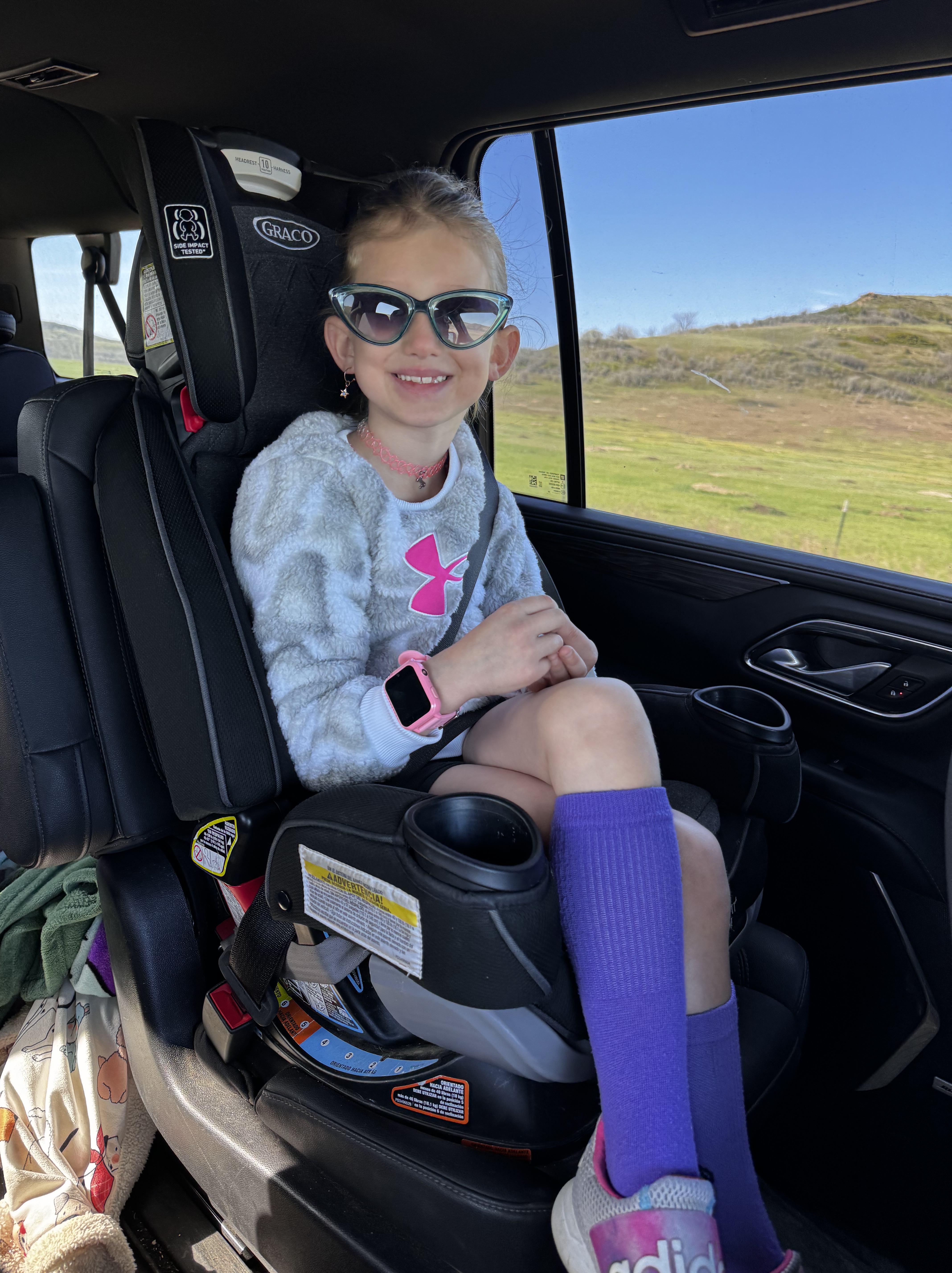
“The person who invented pants is really smart,” my oldest daughter’s voice chimed in from the way back seat of our Suburban.

“Yeah, you’re right,” I responded, not really that surprised that the comment came out of silence and, also, out of nowhere. She’s eight and that’s her resting state.

“Right because people used to just wear tiny chaps over their privates. And maybe not even over their butts!”

And that was her little sister’s contribution to the conversation as we rounded the corner to school drop off, just another Tuesday under a cloudy sky. Only this one was a little perilous because for some reason my phone had switched itself to Mountain time during the wee hours of the night, something that my husband didn’t bring to my attention until he noticed my level of calm strolling around the kitchen gathering breakfast and snacks and my thoughts for the day didn’t match the level of urgency 7:25 am warranted in our house.

Like we should be out the door in four minutes and all of us were still in our pajamas.

And so, of course I didn’t believe him or the kitchen clock that doesn’t ever change or the fact that it did, actually, look more like a 7:30 am sun situation than a 6:30 am situation, but honestly, I’m hanging by a thread here.

We shifted into warp speed then, but I didn’t have time to look in the mirror if we had a prayer of making it to school on time. And so I didn’t, knowing full well I have everything I need in my car to put myself together in a parking lot somewhere before heading into work. This is a special skill that rural women have. Well, maybe all women have it, but I can only speak from my own experience of living thirty miles from town for most of my life. Pair that with decades of working as a touring musician and I would guess the number of times I’ve applied my makeup in the visor mirror of my vehicle in a gas station parking lot might just outnumber the times I’ve used the one above the bathroom sink.

My husband pointed this out as he was putting the finishing touches on our new master bathroom. He has been making me a little vanity counter right in front of the window because natural light is the best light to illuminate all my flaws, something I’ve come to learn from that visor mirror. Indoor lighting can’t be trusted. I need nature to tell me the cold, hard truth.

He’s been working on a new closet for us as well, something much bigger and more convenient than the front seat of my car where I do quite a bit of my changing. I’ve been pushing my driver’s seat back to change in and out of tights and jeans and boots and dresses for so much of my life it’s a miracle that I haven’t created more embarrassing moments for myself and innocent pedestrians by now.

But then it’s hard to know how many people I actually traumatized in the McDonalds drive-through line as I removed my boots, belt and shapeware from under my dress while ordering a Big Mac for the hour drive back to the ranch.

If multitasking is the pillar from which I run my life, then my car is the sanctuary from which I carry out my last-minute tasks in the few quiet moments between drop off and workday, and workday and school pick-up line. Behind the dashboard is my desk, my phone booth, my five-minute nap space, my quick-bite kitchen table, my vanity, and, maybe most importantly, the place where I get to listen to my growing daughters ponder life as they count the power poles and trees zooming by their windows.

Anyway, if you happen to catch me deep in a rear-view-mirror-mascara situation, just kindly pass on by. The invisible-while-I’m-in-my-car façade is what I have to hold on to these days.

Peace, love and also, Big-Macs taste better when you remove your Spanx.  

September and what keeps it precious

This week on the podcast I sit down with my little sister and talk of the weather turns to embarrassing moment confessions. The flies and the wasps and the rooster and the tomatoes and the mice are taking over the ranch and we talk about it all. Catch it here or on Apple Podcasts or Spotify.

The evenings are getting cooler as the sun sets a bit more quickly and I’m canning tomatoes and chopping up peppers from the garden for salsa so we can have a piece of summer when winter hits hard.

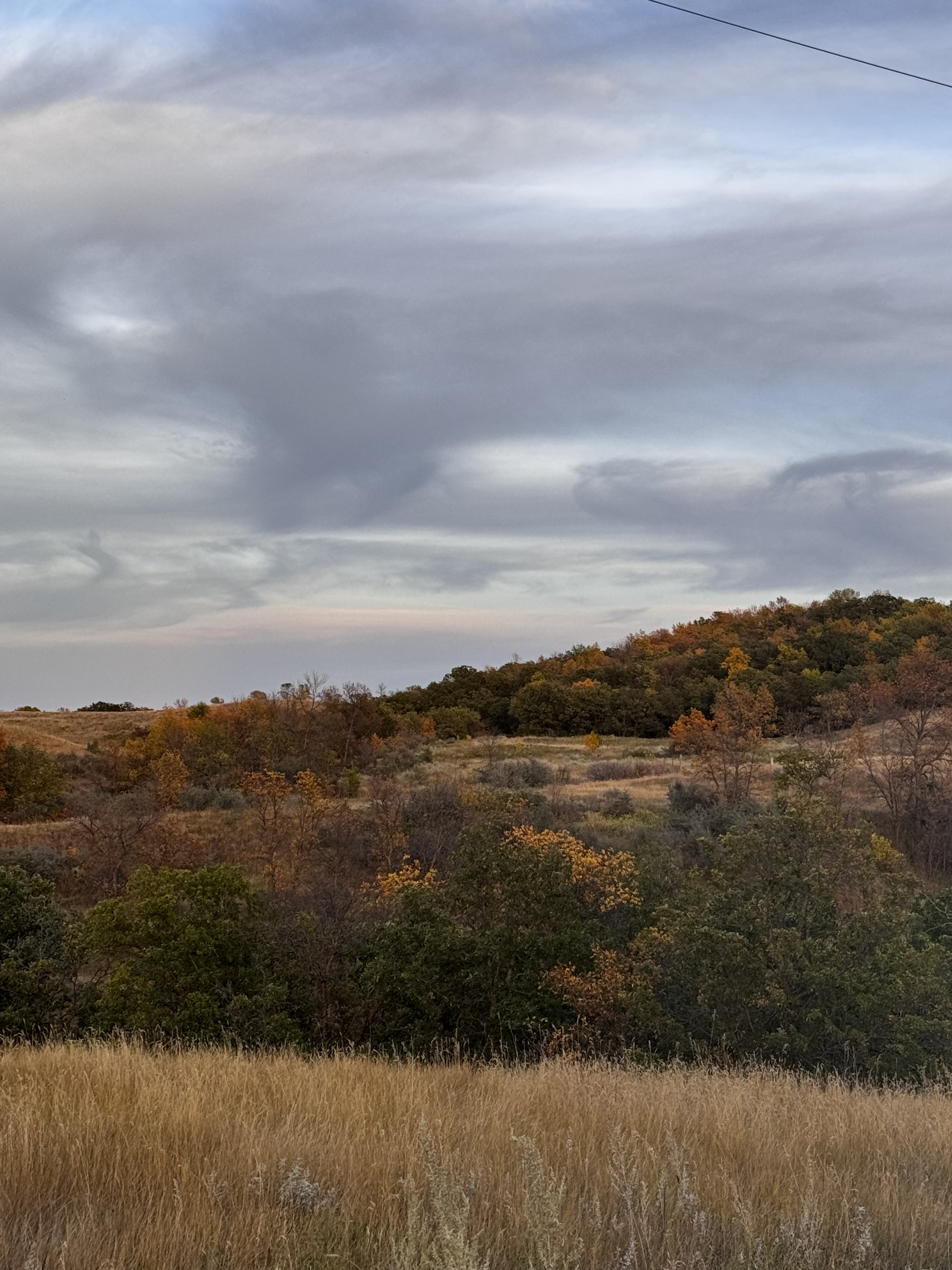
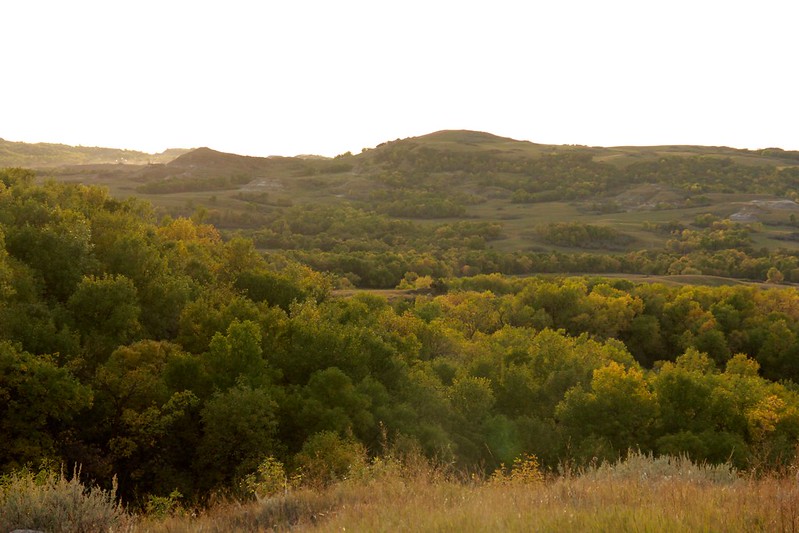
I can preserve our garden vegetables, but haven’t yet found a way to capture the smell of the season changing and the color of the green and gold leaves against an overcast morning sky. This season is so unpredictable, sneaking up on us slowly in the middle of a hot summer day and leaving with a strong gust of wind.

But this year it seems to be settling in despite the heat. The trees that were first to display their leaves this spring are the first to display their colors this September and I’m reminded of roundup season and spitting plums at my little sister on her pony, Jerry, as we rode behind our dad to gather cattle.

Working cows in the fall has always been one of my favorite events of the season. My memories find me as a young girl bundled up in my wool cap and my dad’s old leather chaps braving the cool morning and a long ride through coulees, up hills, along fence lines and under a sky that warmed the earth a little more with each passing hour.

I would strip off my cap first, and then went my gloves and coat, piled on a rock or next to a fence post for easy retrieval when the work was done. Dressing in layers is a different level on the ranch.

Moving cattle, even then, never felt like work to me—probably because I was never the one responsible for anything but following directions and watching the gate. It was during that long wait that I would make up the best songs, sing the loudest, find sticks for slingshots or the perfect feather for my hat.

Turns out these days my role working cattle hasn’t changed much. I remain the peripheral watcher, the one who makes sure the cows don’t turn back or find their way into the brush or through the wrong gate.

Recently our little ranch crew met in the morning to move cows to a different pasture. Dad, my uncle and aunt who summer up here from Texas, my little sister, my husband and I saddled horses in the crisp air of the morning and met to stretch out across the Peterson pasture and make the move through a couple gates to Hughes (every pasture has a name, these attached to the old homesteaders.)

It was pretty nice and easy because that’s the way we work cattle here. Just let them take the lead mostly, which occasionally finds you off your horse walking through the thick brush or chasing out across the pasture after a stray, or, sometimes deciding on another approach entirely because that’s the way they want to go.

With the exception of a wreck, nothing can really ruin this for me, sitting horseback on a cool morning slowly making its way into a hot afternoon.

I could walk these trails on the back of a horse forever and not get tired of them. Because each month the pastures change–a new fence wire breaks, the creek floods and flows and dries up, the ground erodes and the cows cut new trails, reminding me that the landscape is a moving, breathing creature.

And I am the most alive when I’m out here, and what makes it even sweeter is that I know the rest of the crew, my family, feels the same way too. I listen as they make conversation about the calf crop and plans for the day. I follow behind like I always have and look around to notice the way the light bounces off of cowboy hats and trees slowly turning golden.

I wait for instruction and find my direction while my husband cuts a path through the trees to search for hidden cows and my dad lopes up to the hilltop to scan the countryside.

I move a small herd toward the gate with my sister and wake a bull from the tall grass at the edge of the pasture. Dad comes up off the hill to join me, the cattle he’s found moving briskly in front of him toward the rest of the herd. We meet up quick to wonder where uncle Wade might be and find him over the hill waiting at the gate with the rest of the cattle. We push them through to taller grass and up to water to help them settle in. We wonder if we got them all.

And that’s how it goes generally, the six of us, this time with the exception of Dad stopping to take a picture of my little sister, creating the opportunity for one squirrelly calf to cut back. He laughed as he went after her, thinking what his own dad might say about stopping for a picture.

But why not take a picture? Morning makes its way into the afternoon and if we let ourselves, we might remember that we don’t get an infinite number of fall days like this in our lifetime. Isn’t that what keeps it all so precious?

We head toward home and talk about lunch and the fencing that needs to get done. And cattle prices. And the deer population. And the weather and the changing leaves and all of the things that need discussing when you’re on the back of a horse, on the edge of a season, on a piece of earth that’s constantly changing…even though, year after year, up here… I always feel the same.